Showing posts with label Dustin Hoffman. Show all posts

Tuesday, January 14, 2025

Last Chance Harvey

Most of this was written at the time of the film's release. I saw this in a theater because the cast was so good, how could I not?

 
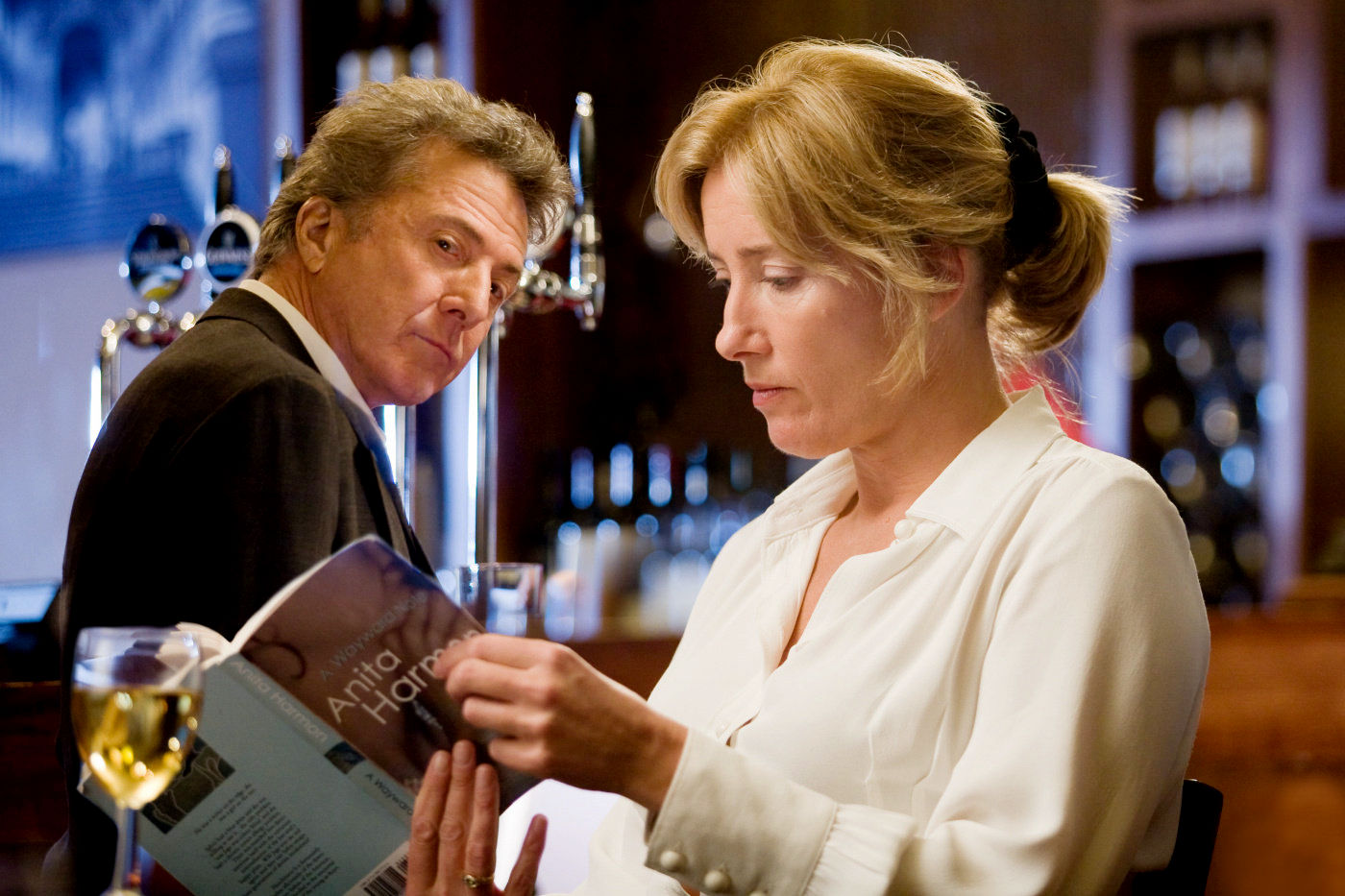
Last Chance Harvey (Joel Hopkins, 2008) Consigned to forgotten corners of the internet amid the dark alleys of the streaming services, this amiable and genial little semi-romantic semi-comedy boasts a fine casting of plucky players trying to make more of it than it is. Maybe it's only on the lists of those completists who want to see every single movie that Dustin Hoffman or Emma Thompson starred in (and certainly those are good goals), but I would be surprised if anybody had ever heard of this movie, which seems a shame. You read the reviews and practically everyone says is that Hoffman and Thompson are magical together, and if it was just them...the movie would be amazing.

The titular Harvey Shine (Dustin Hoffman) is a musician working for ad agencies writing commercial jingles, but he's always wanted to be a jazz pianist. He's been hired to write yet another innocuous ear-worm, but he's on his way to London for his estranged daughter's wedding (he at least feels the absolute need to be there). He's told, rather cruelly by his boss (Richard Schiff) to take his time, enjoy himself...because he won't have a job when he gets back.

Hey...Mazel tov!
Add to that, his estrangement from his family (his ex-wife, played by
Kathy Baker, is now married to James Brolin's character) his awkwardness with social situations in general, and that dear daughter wants her step-dad to give her away, Shine is having a very bad time of it. He spends the wedding at the back of the church (at least he's there), but he's determined to skip the reception and just slink home, until he finds his flight delayed with a long layover. Only thing to do is hit the bar, and once there, he has a strained conversation with Kate Walker (Emma Thompson, always exactly right), an airline worker he previously had blown off while she was just doing her job.
She wouldn't be there if a connection didn't happen
...not merely back to the U.S., but between the two characters...and as I said it's amiable and genial and you probably already know where it is heading. Hoffman is such an adept spur-of-the-moment actor and Thompson is such a quick wit and sharp writer that it's like seeing your two best friends spark off each other and say what you will about the rest of it, but that is a joy.
There is a complication or two of the An Affair to Remember variety—don't worry, no one gets hit by a bus—and we get to witness what may be
the longest wedding reception in history. The slight story-line is fleshed out with Kate's eccentric mother (the wonderful Eileen Atkins) who thinks that there's a Rear Window-style murderer living next door. Hilarity ensues.


Still, you could do worse than this one to kill a little time, especially with such a good cast.

Tuesday, June 6, 2023

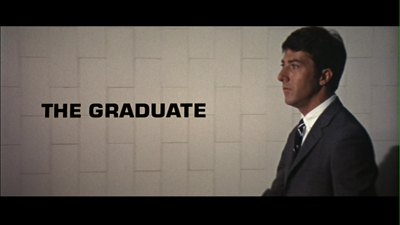
The Graduate (Post-Graduate Studies)

Ever re-visit a film from your youth and realize that it was saying something you hadn't realized at the time? The movie hadn't changed (unless it was directed by George Lucas), but you had. You'd gotten older, maybe wiser, but certainly had learned a few things as you gained time and experiences in the intervening years. The Graduate was one of those films for me. I wrote this a few years ago—but neglected to bring it over from the old blog-site—and things keep changing, but the movie—and it's message—still remains. It just wasn't the vision that was planted in my brain when I first saw it as a self-obsessed romantic youth.


The Graduate (Mike Nichols, 1967) During the summer of 2009, the small rom/com (500) Days of Summer contained a line that hit home on many fronts. The romantic hero (says the police blotter-like narrator) formed his romantic ideas at an impressionable age due to "a mis-reading of The Graduate."

An easy thing to do.

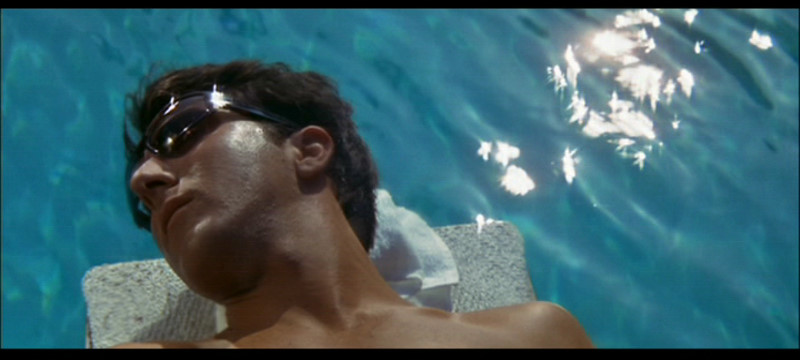
Lots of young romantic kids—I was one of them—grooving on the surface-tension of the movie, missed Mike Nichols' (and scenarists Calder Willingham and Buck Henry's) wise, dispassionate warning of a life led for instant gratification, something that went right over the heads of a clan preparing for "The Summer of Love." When we first find Benjamin Braddock (Dustin Hoffman) he's going nowhere mighty fast: first, stuck in a plane seat, then on an airport's "moving sidewalk"—life going by, him standing still. He'll spend his first summer out of college in much the same way. His first night home, he'll be hiding in his room (to avoid his parents' celebratory welcome home party) "worried about (his) future."
But the world will have none of it. Along with the free advice ("plastics...") and the pinched cheeks that will continue through his adulthood, Ben is coerced into driving the wife of Ben's father's partner home from the party. Once there, "things get a little weird." Dressed in her leopard-print coat,* Mrs. Robinson (Anne Bancroft) reveals herself to be quite the predator, as well as revealing that she's neurotic, alcoholic and...oh, by the way, Mr. Robinson (Murray Hamilton) won't be home for hours. Yes, as a matter of fact, she is trying to seduce him,** and Ben barely makes it home uncompromised by Mrs. and Mr. Robinson, who gets home sooner than expected.
But Ben is feeling pressure at home. Dad wants him to think about graduate school and is trying to hook him up the Robinson's daughter, Elaine (Katharine Ross). To an extent he does a little bit of both by spending time in post-graduate studies with Mrs. Robinson, who becomes fiercely adamant against Ben dating her daughter. He also finds out that the Robinsons have a marriage of convenience as she became pregnant with Elaine and that was the thing to do.
It's pretty apparent that after four years of schooling, Benjamin doesn't listen very well. Forced into a date with Elaine, he's determined to screw it up, succeeds all too well, then, having reduced her to tears, decides that he can't be that much of a heel and makes it good to her. A romance begins to take shape, but is quashed when Ben reveals to Elaine that he has had an affair with her mother.
Against all odds (or reason) Benjamin begins seriously pursuing Elaine, making it his goal, and, despite her initial reservations, culminating in a rescue at the church of her wedding, where they famously escape on a bus, having defied convention, their parents, and get things their way.
Orson Welles has said any story can have a happy ending...depending where you end it. If Nichols had ended with Ben and Elaine flush with revolution bussing away to their future, it would have been a happy ending.
But he doesn't. He stays on his shot of the two rebels as their expressions change from elation to confusion to...what? Ben has been so focused on the prize and Elaine, confused and pressured into marriage, that they don't have a plan...they don't even know where the bus is going. The story will go on, and Nichols doesn't cut away until the last moment—he lets us see their expressions change, her looking at Ben unsure, Ben just looking forward still in an adrenaline daze of what he's done.
And what he's done is risk something the whole movie has been warning against—becoming like his parents. Mrs. Robinson has aspirations and dreams that were exploded when she became pregnant with Elaine and she became dependent on a man for her well-being. Elaine, with no degree, is now dependent on
the adrift Ben and the only thing on his mind is domestic bliss, although how he'll get there, he probably doesn't have a clue. Their impulsive act of rebellion is a trap to becoming their parents. A lot of people missed that message in the 60's, but it's always been there for anybody not blinded by the comedy and the attraction of its stars.
It occurred to me (after loving the movie for 30 years) when someone professed to not liking it much because the character of Elaine is so ill-defined and confused. It is not a strong woman's part, despite its screen-time and seems more a fantasy—a screenwriter's convenience, her change of attitude towards Ben being a mystery and ultimately she trades one controlling force—her family—for another—Ben. And Ben is simply a mess—single-minded, shallow, without much motive other than selfish ones. He's very much his parents' son.
So, when (500) Days of Summer came out, with its shallow male pursuing a female through friendship and assuming forever is part of the bargain, and its female character who enjoys the friendship but doesn't see it "safe" enough to be permanent,*** the connection to The Graduate clicked, all too finally. It is a comedy (in the classical sense), as its protagonists don't even know that by pursuing their course of what they see as rebellion, they've condemned themselves to living the quietly desperate lives of their parents.
On the occasion of its 30th Anniversary, a lot of critics who could do so, re-evaluated The Graduate, and down-graded it accordingly. Given the new "reading between the frames," I'd actually up-graded as being far more subtle and wise than the comedy aspects of the film would suggest. Perhaps it's time to pay a visit to Sam Mendes' Revolutionary Road, as well.
What did "The Bard" say? "You say you want a revolution, well, you know/we'd all love to see the plan..."
"Everybody puts Benjy in the corner:" Dustin Hoffman and Anne Bancroft "Graduating"

* This was the 1960's—the term "cougar" would show up forty years later. Bancroft was only six years older than Hoffman at the time.

** We dissected this scene in "
Don't Make a Scene: The Graduate."

*** (500) Days of Summer has a telling scene, he takes her to see The Graduate and she ends up sobbing; what he sees as romantic, she sees as frightening, terrifying...and her situation.

Friday, April 15, 2022

Agatha (1979)

Agatha
(Michael Apted, 1979) The disappearance of Agatha Christie in 1926 is one of those black holes of history that intrigues history buffs, mystery aficionados, conspiracy theorists, and speculative fiction writers. There is the delicious irony that one of the great writers of mystery fiction would also have a mystery in her own life, one that would interest the gossipy impulses of Miss Marple and the behavioral insights of Hercule Poirot, two of her better known creations. 
 
There was a book about the "missing days" published last year—"The Mystery of Mrs. Christie" by Marie Benedict—but, before that, a screenplay focusing on the matter had been written by Kathleen Tynan, at the instigation of producer David Puttnam, after suggesting that her explorations for a Christie documentary might make a better fictional film. Michael Apted (known for the "Up" documentaries and Stardust) was chosen to direct and, after casting Vanessa Redgrave and Dustin Hoffman (Hoffman was also a producer), a re-write was done by Arthur Hopcraft and—at Hoffman's instigation—an uncredited Murray Schisgal, causing Hoffman enough tsuris that he sued the production for breach of contract after the fact. The Christie Estate also sued to prevent the film being made—Christie had died in 1976—but, the film continued on, estate approval or no.
Agatha postulates—it opens with a title that says
"an imaginary solution to an authentic mystery"— the writer (played by Redgrave) confronting a crisis in her marriage to Colonel Archibald Christie (Timothy Dalton in full "bastard" mode), who tells Christie that he is divorcing her with the intention of marrying his mistress Nancy Neele (Celia Gregory). In an earlier sequence, we've seen his disdain in the marriage and his seething impatience with Christie's fame from her writing career, a trait noticed by an American newspaperman Wally Stanton (Hoffman), who has arranged an interview with the author.
 
But, before he can meet her, she goes missing. Her car is found, wrecked, abandoned, and the Colonel is decidedly blasé about her disappearance, and is no help to the police in the matter. "She'll turn up" is his taciturn reply and makes plans to return to his mistress.
Stanton, meanwhile, instead interviews Mrs. Christie's secretary, who tells him that her employer had left her a note in code. Stanton is able to deduce from it where Agatha has gone. That would be the Harrogate Hydropathic Hotel for a two week stay under the name of Theresa Neele—the choice is not coincidental. While the police are embroiled in a nationwide search and the nation is reading of her disappearance on the front page, Agatha is taking treatments, awaiting the arrival of her husband's mistress, who she knows has also booked herself at the baths.
Stanton checks in, as well, also under an assumed name and observes and ingratiates himself with Christie, never acknowledging that he knows who she really is, or he himself is not what he pretends to be. What he finds is a vulnerable, guarded, somewhat fearful woman not sure of what she's doing herself, but as she indulges in treatments she becomes fascinated with a hydro-electricity therapy using a Bergonic chair and takes an interest in rheostats. What doe she have in mind...and how does it involve her husband's mistress?
The story is intriguing—one could even say shocking—but for all the loveliness on display thanks to Vittorio Storaro's photography,* the film is strangely bloodless, and for the very reason it stands apart from most period films. It's entirely true to its period, all the characters being very British and undemonstrative because...well, that just wouldn't do, of course. Unseemly, don't you know. Lips are upperly stiff and not even trembling under the strain of socially unacceptable behavior. We, as contemporary audiences, expect a bit of mannered stuffiness to pass (and pass judgment) for rectitude under all conditions. But, here the players aren't panto-ing melodrama, they are playing people playing by the rules of decorum and playing it very close to the vest. All the while, in bromidic anonymity, lest they give themselves away. Redgrave can be just as fascinating playing passivity as anything else, but Hoffman gives the least "ticky" performance of his career, his Stanton maintaining a straight-backed chivalry, even to those he considers cads. Speaking of which, Dalton comes off the best as the arrogant Archie, all diffident entitlement.
So, Agatha is an intriguing misfire. It's just interesting enough to keep you engaged, but so cosseted as to prevent one from being satisfied...or entertained.


* His next film would be shooting Apocalypse Now in the Phillipines.


Saturday, July 3, 2021

Dick Tracy (1990)

Saturday is traditionally "Take Out the Trash" Day...

Dick Tracy (Warren Beatty, 1990) Chester Gould's gangster comic strip, "Dick Tracy," started October 4, 1931 and, because it was so popular, it migrated to radio, movie serials, and even a short-lived television series. Gould's style was flamboyant, violent—bullets passed through bad-guy's bodies—and more than a little serio-comic (the villains had names that matched their physiques, so "Flat-Top" actually had a flat-head, and such). Gould made no mistake whose side Tracy was on, as his jaw was so square, you could slice sandwich meat on it, and sometimes ventured into the techno-exotic with Tracy's "two-way wrist radio" beating the I-watch by some 50 years. About the time I started reading it, Tracy and family was traveling to the moon on a magnetic Space Coupe and Tracy's son fell in love with the daughter of the Moon's Supreme Leader!

So much for the grit of a crime strip.
Tracy was popular, and after the successes of recycled comics on movies and Broadway, movie people started to buy up marketable properties. "Dick Tracy" was picked up in the 1980's for the inevitable film adaptation, and went through "development hell" through the hands of many creatives and studios, starting with United Artists, then a co-production between Universal and Paramount, and stars like Clint Eastwood, Harrison Ford, Mel Gibson, Richard Gere and Tom Selleck (the usual suspects in the 80's) were sought out to star as Tracy. And Warren Beatty.
Beatty'd wanted to make a Tracy movie since 1975, when the rights weren't available, and watched from the wings as the film went through script development, director changes, and studio involvement, then purchased the rights in 1985, taking the film to Disney, and directing the film himself when the studio's Jeffrey Katzenberg couldn't interest any other director to take the reins. Beatty had already left the project once when director Walter Hill wanted to make the film more realistic and violent. Beatty had another idea, making a stylized homage to the old-style strip with a limited (just seven, with no gradients), but eye-popping color pallet, supervised by production designer Richard Sylbert.
With Beatty onboard, casting came easily...almost too easily. Glenne Headly played girlfriend Tess Trueheart, Charlie Corsmo played an orphan whom Tracy will eventually adapt, Seymour Cassel as co-hort Sam Catchem, James Keane as Pat Patton, and Charles Durning as Chief Brandon. But, as he did with Reds, Beatty started to hire pals to fill up the film and take on smaller characters, particularly the villains, who—unlike the leads—would be encased in prosthetic make-up (designed by John Caglione and Doug Drexler) to resemble Gould's group of bad-guy uglies.
Entombed in polyurethane are Al Pacino (as main villain "Big Boy" Caprice), James Caan (as a "Godfather"-type), Dustin Hoffman, Paul Sorvino, R.G. Armstrong, Henry Silva, William Forsythe, Ed O'Ross and other character actors who get the make-up, while Kathy Bates, Dick Van Dyke, Alan Garfield, John Schuck, Hamilton Camp, Catherine O'Hara, Estelle Parsons, and Henry Jones get minute screen-time, just enough for recognition.
And then, there's Madonna. The pop-star's role as a "bad-girl" femme fatale was, no doubt, beefed up when "The Material Girl" was cast, and of all the cast-members she seems to get the most screen-time besides Beatty, effectively crowding out the "Tess Trueheart" storyline for vamping in the tried and true Mae West manner. To be sure, she gives the movie a lot of cross-promotional material, releasing an album in support, and doing her best with the Stephen Sondheim songs Beatty acquired for the film. But, the role is slight in importance and its prominence merely there to put posteriors in theater-seats. So, she was indulged.
Which seems to be the over-arching—emphasis on the "arch"—theme of the film. Studio-bound and slightly inert, that limited pallet (which only distracts rather than serves a purpose) makes the enterprise look cheaper than it should, and, overall, Beatty's Tracy is an over-indulgent mess, flabby with excess, and uneven in pace, when the model of the thing should have been the tight, break-away austerity of film-noir. The thing went so far over-budget and the results still look dodgy and stagey. In fact, the film reminds of something that achieved the same results with greater success but hemmed in with a bargain basement budget in the 1960's.
And that was the "Batman" TV-show. It, too, had stars as villains, with a lot of make-up and a lot of scenery-chewing, the comic aspect of the characters were played up, the fights were unbelievably choreographed and tongues were placed firmly in cheeks. However, the "Batman" TV series had a "camp" sensibility, deliberately over-staging the drama and acting styles to achieve comic effect. It knew it was over-the-top and aimed high to achieve it. It knew it was deliberately jumping the shark (before "jumping the shark" was a "thing") Dick Tracy has very little of that intentionally self-deprecating humor, and plods along like it knows it's funny...even when it isn't. And although Adam West's deliberately haughty Batman persona wouldn't play for Tracy, give West his due in finding a way to effectively tight-rope the material; Beatty plays the character fairly straight...which is a bit dull. Pacino knows that he's going for comedy, but he doesn't have the timing or comic discipline to make it work. Sure, he gives it the energy (he always does), but that doesn't make it funny.

My memory of Dick Tracy was that it was elephantine in the way the film version of Annie was, but with none of the charm, or the ability to project something genuine without hedging its bets, lest it be thought unhip. Everything is encased in artifice, even in its rooting for "the good guys" with their sense of right and wrong. If they can't even do that with a straight face, then they just don't know Dick

Saturday, September 19, 2020

Perfume: The Story of a Murderer

Written at the time of the film's release...

Saturday is "Take Out the Trash" Day.


Perfume: The Story of a Murderer (Tom Tykwer, 2006) Give the director of Run, Lola, Run a zillion dollar budget and a best-seller to adapt and you get this monstrous little curiosity, with a role for Dustin Hoffman, yet. 

Unfortunately, Twyker can't meet the film's biggest challenge-communicating the sense of smell and doing it delicately, of course. The director can do little more than ecstatic shots of Ben Whishaw's Jean-Baptiste Grenouille huffing and puffing and sniffing the air--actually the other way around. And one just can't buy the novel and film's biggest conceit—that the young amateur perfumer can sense parts per million like a super-bloodhound, hours, even days after the source has passed. It's an idea at odds with the visual of a Paris in squalor that Tykwer has (quite rightly, I'd bet) presented. Young Grenouille has this incredibly sensitive snoot in a town of open sewers, outdoor markets and the thousand natural scents, both beautiful and repugnant, including the perfumery used by the citizenry to cover it all up. It doesn't read that he'd be so olfactorily fine-tuned.
That's the major hurdle. The other is the coarse rankness of the material, where women—it's always women—are killed serially, covered in animal fat to immediately preserve their scent, then the fat is scraped off and reduced down to its basic (one would presume) pheromone, and collected as an eau de copse. The plot all comes down to a...boil...when Alan Rickman's protective father suspects his daughter is being stalked by the little stinker, and highs her to the hinterlands at full gallop. Despite his precautions, Grenouille is able to track them on-foot despite the daughter's intoxicating scent being mixed with that of a sweating horse.
This is where Tykwer's inability to sell the scent works to his advantage. You're not supposed to think about that in the absence of evidence.
There are other troubling aspects to it, but let's come right to the nitty of the gritty. Perfume is just another in a series of serial killer movies which (sorry) boils down women to objects with an aspect to be coveted and destroyed for. It's not unlike House of Wax (whichever version) or the skin-suits of The Silence of the Lambs. Despite being gussied up with period detail, sophistication of technique and aspects of subject matter, Perfume: The Story of a Murderer is just another horror movie with pretensions of grandeur. Despite all the attempts to cover it up, you can't hide the basic stink.

Saturday, June 13, 2020

Mr. Magorium's Wonder Emporium

What has happened to Zach Helm? Written at the time of the film's hapless release.

 Saturday is "Take Out the Trash" Day.

"...And Maybe Avoid the Slimy Girl!"

"Having myself endured the ignominy of watching the Technicolor train-wreck that is 'Mr. Magorium's Wonder Emporium' multiple times every day for over a year, I can attest to it being the perfect Kafka-esque Hell for a character of such moral ambiguity as Walter White." *
Writer/director Zach Helm about his film being featured in "Breaking Bad"

I loved Stranger Than FictionMarc Foster's direction gave depth and substance to the unique voice of Zach Helm's script. And every part was expertly cast and the peripherals presented in CGI gave a sprightly twist to the action on-screen. When I heard that Helm was directing his own script for Mr. Magorium's Wonder Emporium, I thought "Great! Now we'll see what this Helm guy is capable of!"

Be careful what you wish for.
Magorium is such an insubstantial froth of a movie that before you get five minutes into it, you're saying "I'm not buying this!" And with good reason--it's Stranger Than Fiction all over again, but from another perspective and far more precious. When I say "far more" I'm saying "falling-into-a-vat-of-Krispy-Kreme-dough" precious. The kind of gooey sap that half an hour of scrubbing with Boraxo can't shake. The same way that cake frosting turns hard as a rock after five weeks in the desert sun. Despite some clever touches and the occasional funny line, it still makes you want to walk out and punch a nun.
What's it about? A magical toy store run by a 243-year old toy impresario, wonder aficionado (and avid shoe-wearer) Mr. Magorium who has decided that it's time to go. "You're dying?" wails Mahoney (Natalie Portman), the piano-prodigy, who at 23 has not lived up to her potential. "Light bulbs die, my sweet," he bubbles. "I will depart." 
To get his affairs in order, he hires an accountant ("Must be someone who counts and is a mutant," says Magorium, and thereafter Henry Weston (Jason Bateman) is referred to simply as "Mutant"), who is so button-downed he doesn't play one whit, not even checkers (exactly like Will Farrell's character in Stranger Than Fiction? you say, and you're awarded a gold star). 
What's worse, the toy store is starting to bubble underneath the velvet wall-paper and turn a tainted shade of gray.
It's all just icky—icky in the way a wet lollipop collects dog hair. Dustin Hoffman finds a pretty good balance for his twee little toy-maker, looking like he's been sticking his fingers in wall-sockets for years and elocuting like Bullwinkle. Natalie Portman is the film's biggest draw-back, tamping down any effervescence by screwing up her face and looking concerned. It's really bad when instead of carrying about what the character is going through, you wonder what kind of exfoliant the lead actress is using. Any glow she has is purely pharmaceutical. Jason Bateman plays the stick-up-his-sphincter accountant...like he has a real stick up his sphincter. He managed to make straight-laced funny in "Arrested Development" Wha' hoppened? And as the Narrator/Obligatory Little Kid, Zach Mills plays it with a seriousness and dignity that seems to say "I will rise above this." Attaway, kid. Hope you're not knocking over Winn-Dixies in ten years.
Now, see? This movie didn't enchant me or make me feel warm inside. It made me think bad thoughts. Cruel thoughts. There's a lot of surface detail to Mr. Magorium's Wonder Emporium,** but no depth. It needs some grit and sand beyond having the lead character kicking the Big Beach Bucket. As it stands, it's just a wad of cotton candy that you want to throw water on...just to see it disappear.


* The instance was in the second-to-last episode of BB where White is hiding in an abandoned cabin and the only distractions he has for entertainment are two DVD copies of Mr. Magorium's Wonder Emporium"That is exactly two more copies than are allowed in my house," said Helm.  The film is also mentioned rudely in Borat and I Love You, Man.

** Another thing: Who is the audience for this thing? Kids won't get it or be upset by it, and adults will find it just cloyingly annoying. But then a lot of kids won't get a lot of jokes. For example: there's a shot of a Buster Keaton marionette trying to untangle itslf from its own strings--a pretty funny reference, but little kids don't know Buster Keaton. The same goes for the bit where Zack starts buildings stuff out of Lincoln Logs and when he's finally finished, he's made...a life-size Lincoln! Funny, huh? But not if you don't know what the Lincoln Logs are, and nobody under 30 DOES!