A lot of times I write and I "make do." It's alright. I think I got the point across.
And sometimes, I nail it. It's rare, but I'm capable of it. Even if the movie is just about toys. I remember a comment for this post (on that "other" site) was simply "Dude. It's Toy Story 3." (Where are you, Simon?) Yes. And good movies about love can come from anywhere.
Written at the time of the film's release...
"And if You Can't Be with the One You Love, Honey..."
One has suspected a subtle sub-text in the "Toy Story" series—every Pixar film has evoked that feeling (which is why they tower over Dreamworks and every other animation supplier and make even their rivals' three-dimensional films seem more two-dimensional) since the first film premiered (what was it?) fifteen years ago.
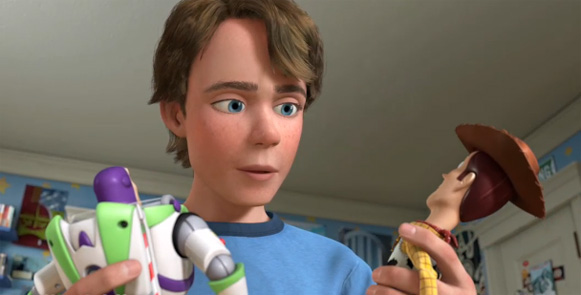
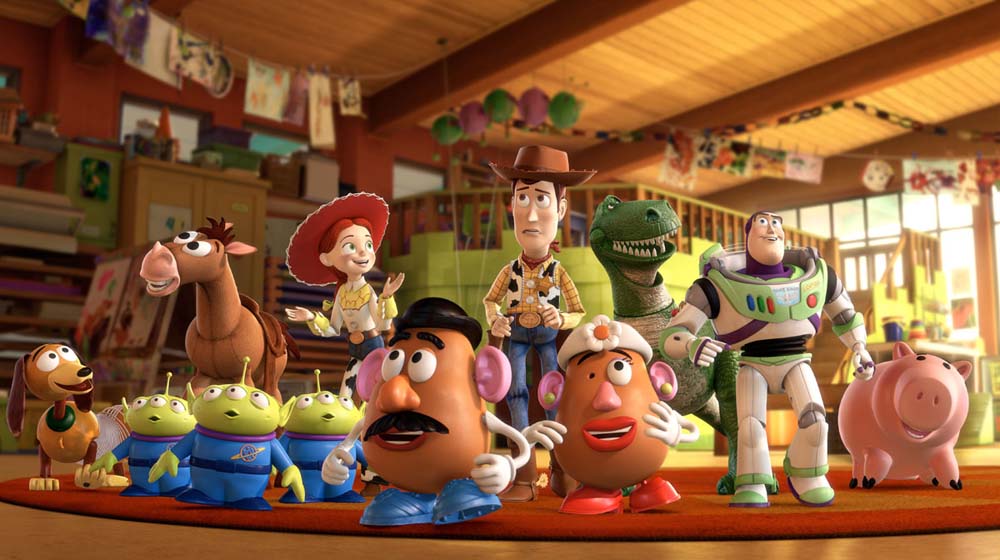
Toy Story 3is no less rich in sub-text. Sub-texts like the given that the toys have stayed the same, but their little owner Andy has grown up and is on his way to college by the time we hit 3; First sub-text: Change or be passed over. Any one looking for a job in these troubled times has had to be confronted with their inadequacy in some department while they're winning the daily bread. And like the toys of "Toy Story," time may be their enemy, staying consistent while the world evolves too quickly.
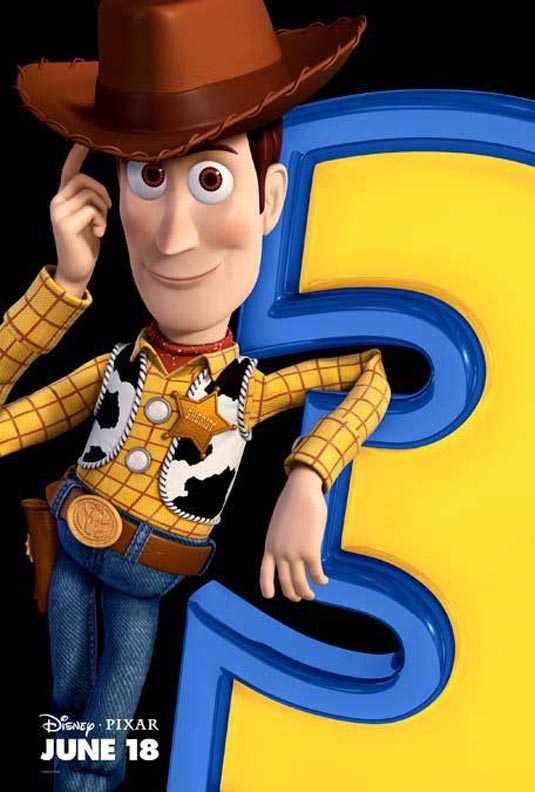
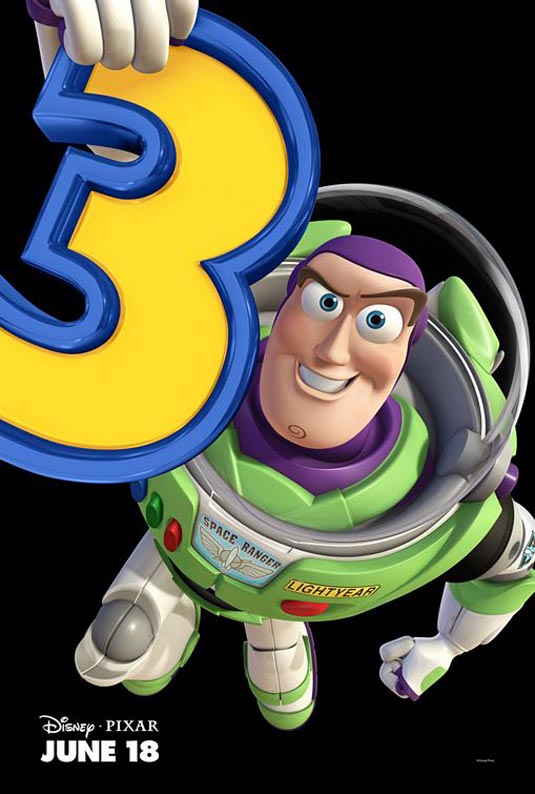
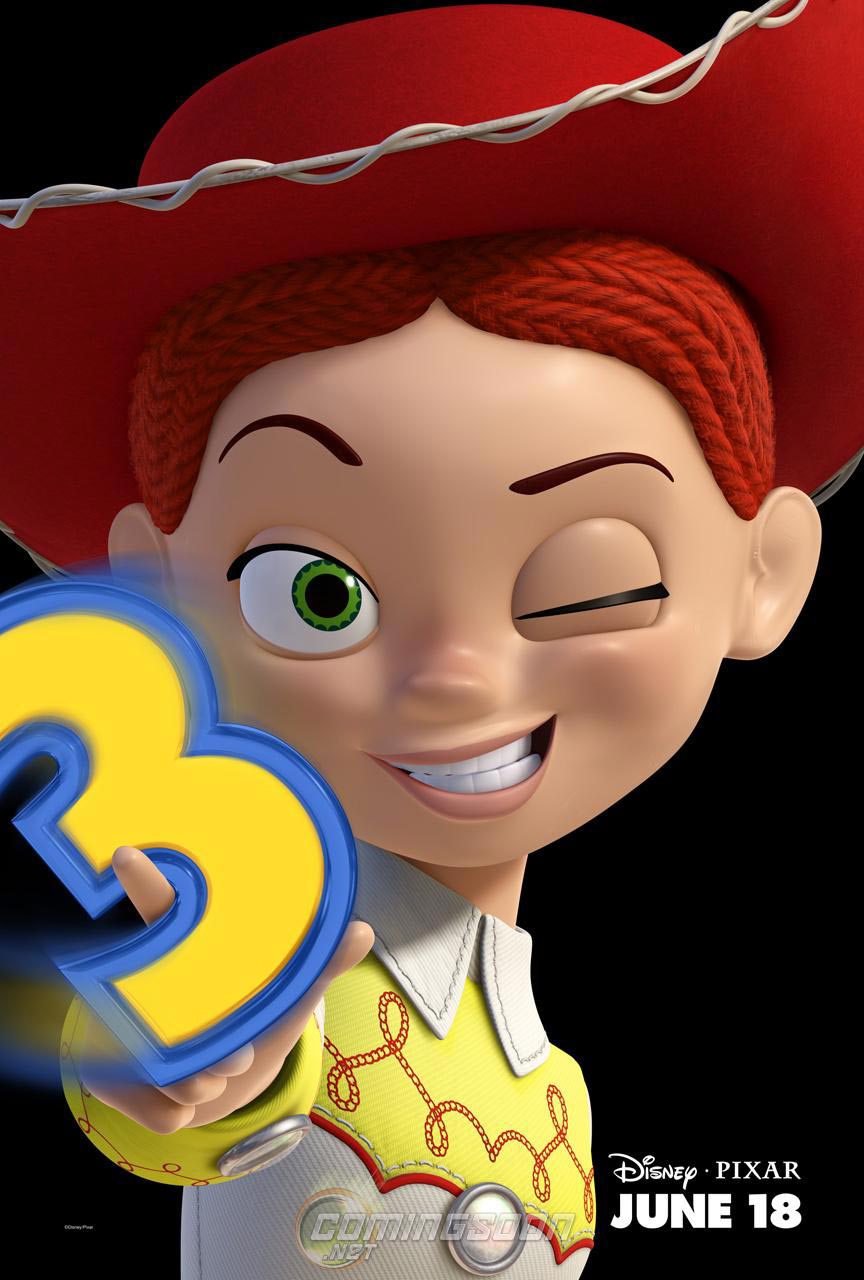
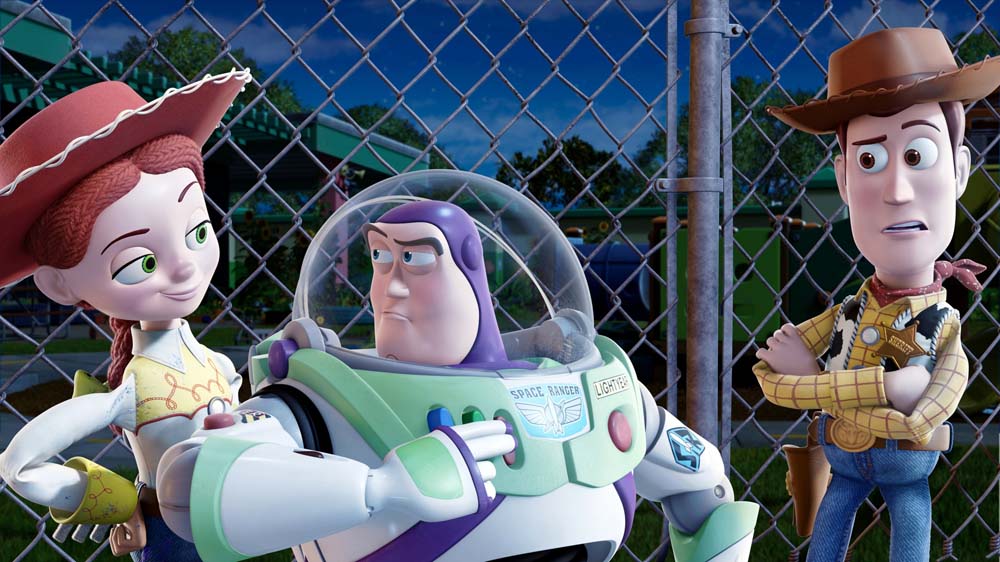
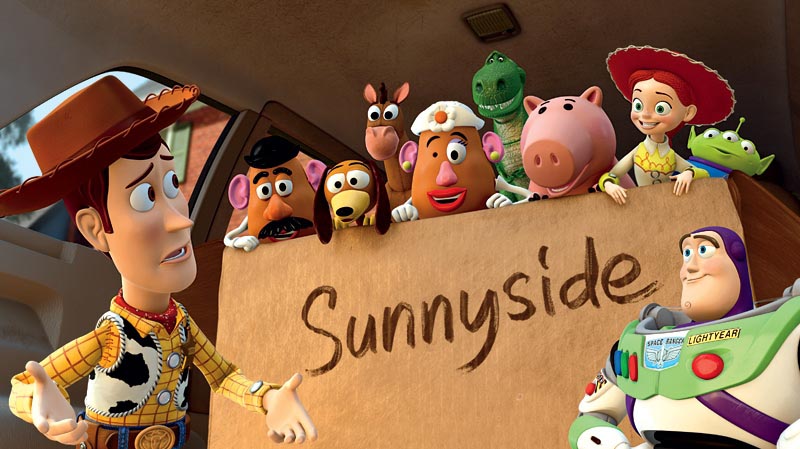
But, at the pace-making heart of the "Toy Story" movies has been one constant, and that is its contemplation of the nature of Love, which puts it in the same movie-case with such seminal works as Vertigo and A.I. In the first Toy Story, cowboy-doll Woody (voiced by Tom Hanks) watched in horror as the affection of his beloved Andy was supplanted by the new space-age toy Buzz Lightyear (voiced by Tim Allen). The stakes doubled in Toy Story 2 when we witnessed the discarding of cow-girl Jessie (voiced by Joan Cusack) as her owner grew up and put away childish things (see the video below). And we witnessed Woody turned from an object of play to a rarified objet collectionner, the very definition of a "trophy love." Toy Story 3 takes Jesse's plight and applies it to the entire toy corps, facing abandonment (the attic) and, worse, discarding (at the sidewalk on garbage day). The toy soldiers take action and evacuate the premises first: "Once the garbage bags come out, the army men are the first to go" barks the commander (R. Lee Ermey) before para-sailing out of Andy's bedroom window.
The others are left to contemplate their fate.
Play-time's over.*
There is one axiom I've held to my heart from the moment I first recognized its truth—I'm sure it originates elsewhere, but I first read it from thriller writer John D. MacDonald: "Love is not the opposite of Hate; love and hate are merely two sides of the same coin. The opposite of love is indifference."
The forging of the community has been a theme running throughout the history of film (especially Westerns) since Edison, certainly John Ford, and we've all seen those films where the protagonist loses a family in order to gain another, sometimes not by choice. Those bonds are infused with strength to take on all comers and all challenges, but the heart of that coming-together has always been the one unofficial but over-arching Commandment: Love thy Neighbor.
I mentioned putting away childish things earlier. That's from The Bible (1 Corinthians 13), and looking over that verse again, I saw images spring up from Toy Story 3—"And though I bestow all my goods to feed the poor, and though I give my body to be burned, and have not love, it profiteth me nothing," particularly. But especially its last devastating quality in its check-list of Love's qualities, which always makes me tear up a little when I contemplate it, and I contemplate love and loss. For toys break, batteries corrode, fabric burns and plastic will melt. But Love "never faileth."
Love never dies.
To Infinity.
And Beyond.
* How many times have we said that, as adults, mourning the loss of childhood from adult responsibilities?
** But, man, you want to see Pixar push the envelope? Check out the sophisticated opening short Day & Night, a wordless combination of 2-D and 3-D, line animation and computer graphics, filled with rich imaginative ideas and a brilliant sound design. The work of animator Teddy Newton, this little gem, puts him at the top of exciting animators to watch.
Agatha (Michael Apted, 1979) The disappearance of Agatha Christie in 1926 is one of those black holes of history that intrigues history buffs, mystery aficionados, conspiracy theorists, and speculative fiction writers. There is the delicious irony that one of the great writers of mystery fiction would also have a mystery in her own life, one that would interest the gossipy impulses of Miss Marple and the behavioral insights of Hercule Poirot, two of her better known creations.
There was a book about the "missing days" published last year—"The Mystery of Mrs. Christie" by Marie Benedict—but, before that, a screenplay focusing on the matter had been written by Kathleen Tynan, at the instigation of producer David Puttnam, after suggesting that her explorations for a Christie documentary might make a better fictional film. Michael Apted (known for the "Up" documentaries and Stardust) was chosen to direct and, after casting Vanessa Redgrave and Dustin Hoffman (Hoffman was also a producer), a re-write was done by Arthur Hopcraft and—at Hoffman's instigation—an uncredited Murray Schisgal, causing Hoffman enough tsuris that he sued the production for breach of contract after the fact. The Christie Estate also sued to prevent the film being made—Christie had died in 1976—but, the film continued on, estate approval or no.
Agatha postulates—it opens with a title that says "an imaginary solution to an authentic mystery"— the writer (played by Redgrave) confronting a crisis in her marriage to Colonel Archibald Christie (Timothy Dalton in full "bastard" mode), who tells Christie that he is divorcing her with the intention of marrying his mistress Nancy Neele (Celia Gregory). In an earlier sequence, we've seen his disdain in the marriage and his seething impatience with Christie's fame from her writing career, a trait noticed by an American newspaperman Wally Stanton (Hoffman), who has arranged an interview with the author.
But, before he can meet her, she goes missing. Her car is found, wrecked, abandoned, and the Colonel is decidedly blasé about her disappearance, and is no help to the police in the matter. "She'll turn up" is his taciturn reply and makes plans to return to his mistress.
Stanton, meanwhile, instead interviews Mrs. Christie's secretary, who tells him that her employer had left her a note in code. Stanton is able to deduce from it where Agatha has gone. That would be the Harrogate Hydropathic Hotel for a two week stay under the name of Theresa Neele—the choice is not coincidental. While the police are embroiled in a nationwide search and the nation is reading of her disappearance on the front page, Agatha is taking treatments, awaiting the arrival of her husband's mistress, who she knows has also booked herself at the baths.
Stanton checks in, as well, also under an assumed name and observes and ingratiates himself with Christie, never acknowledging that he knows who she really is, or he himself is not what he pretends to be. What he finds is a vulnerable, guarded, somewhat fearful woman not sure of what she's doing herself, but as she indulges in treatments she becomes fascinated with a hydro-electricity therapy using a Bergonic chair and takes an interest in rheostats. What doe she have in mind...and how does it involve her husband's mistress?
The story is intriguing—one could even say shocking—but for all the loveliness on display thanks to Vittorio Storaro's photography,* the film is strangely bloodless, and for the very reason it stands apart from most period films. It's entirely true to its period, all the characters being very British and undemonstrative because...well, that just wouldn't do, of course. Unseemly, don't you know. Lips are upperly stiff and not even trembling under the strain of socially unacceptable behavior. We, as contemporary audiences, expect a bit of mannered stuffiness to pass (and pass judgment) for rectitude under all conditions. But, here the players aren't panto-ing melodrama, they are playing people playing by the rules of decorum and playing it very close to the vest. All the while, in bromidic anonymity, lest they give themselves away. Redgrave can be just as fascinating playing passivity as anything else, but Hoffman gives the least "ticky" performance of his career, his Stanton maintaining a straight-backed chivalry, even to those he considers cads. Speaking of which, Dalton comes off the best as the arrogant Archie, all diffident entitlement.
So, Agatha is an intriguing misfire. It's just interesting enough to keep you engaged, but so cosseted as to prevent one from being satisfied...or entertained.
* His next film would be shooting Apocalypse Now in the Phillipines.
"Tourist Class" or "Just the Thing I Need...How Nice"
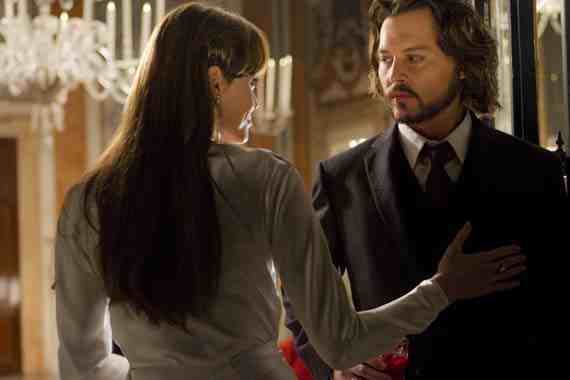
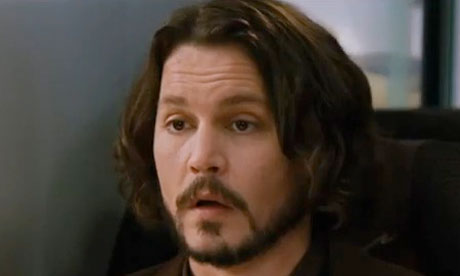
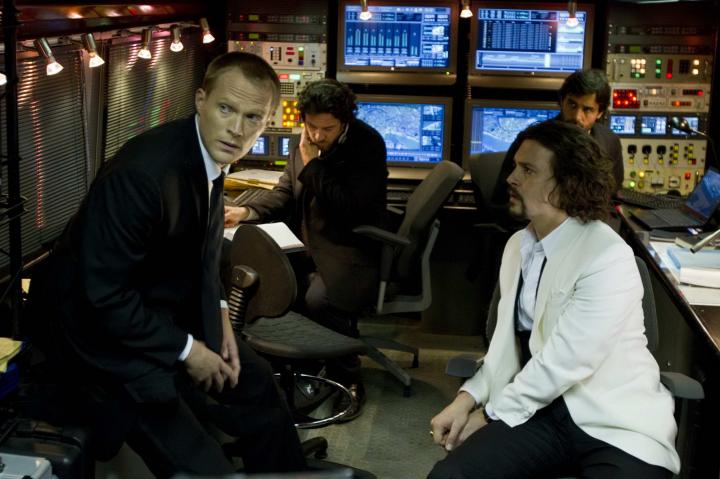
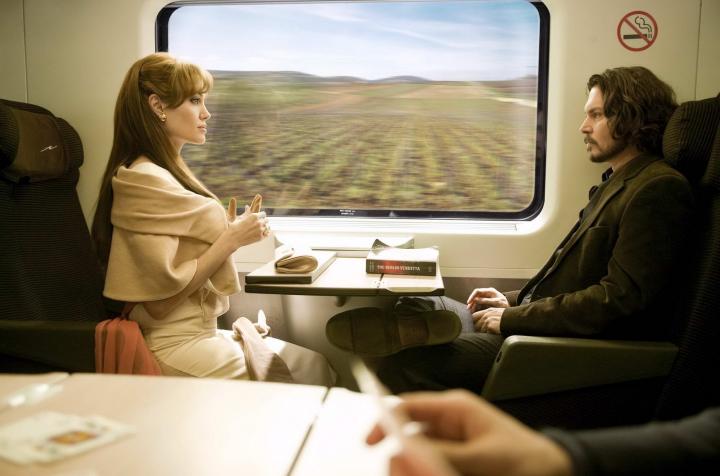
In between "Pink Panther" movies and his other comedies, director Blake Edwards used to make elegant truffles of movies with big stars, great locations, and high production values. But whatever the veneer of stylishness they showcased, there was always a kernel of truth to what he did. Edwards understood that even though the wrapping may be exquisite, the present it surrounded should be pretty special too. So, I guess what I'm saying is The Touristis a pretty lousy Christmas present. Oh, it looks spectacular, jetting (training and gondoling, actually) from Paris to Venice, all chi-chi and ritzy, but it falls flat as a caper, a romp, or even a good time.* Hell, it even falls flat in the half-hour review of its particulars with so many plot-holes and needless complications that, given the film's resolution, it makes little sense. Oh, you can see how it might work...but if it is what they say it is, then why....??? (Oh, don't ask why, oh, don't ask why....)
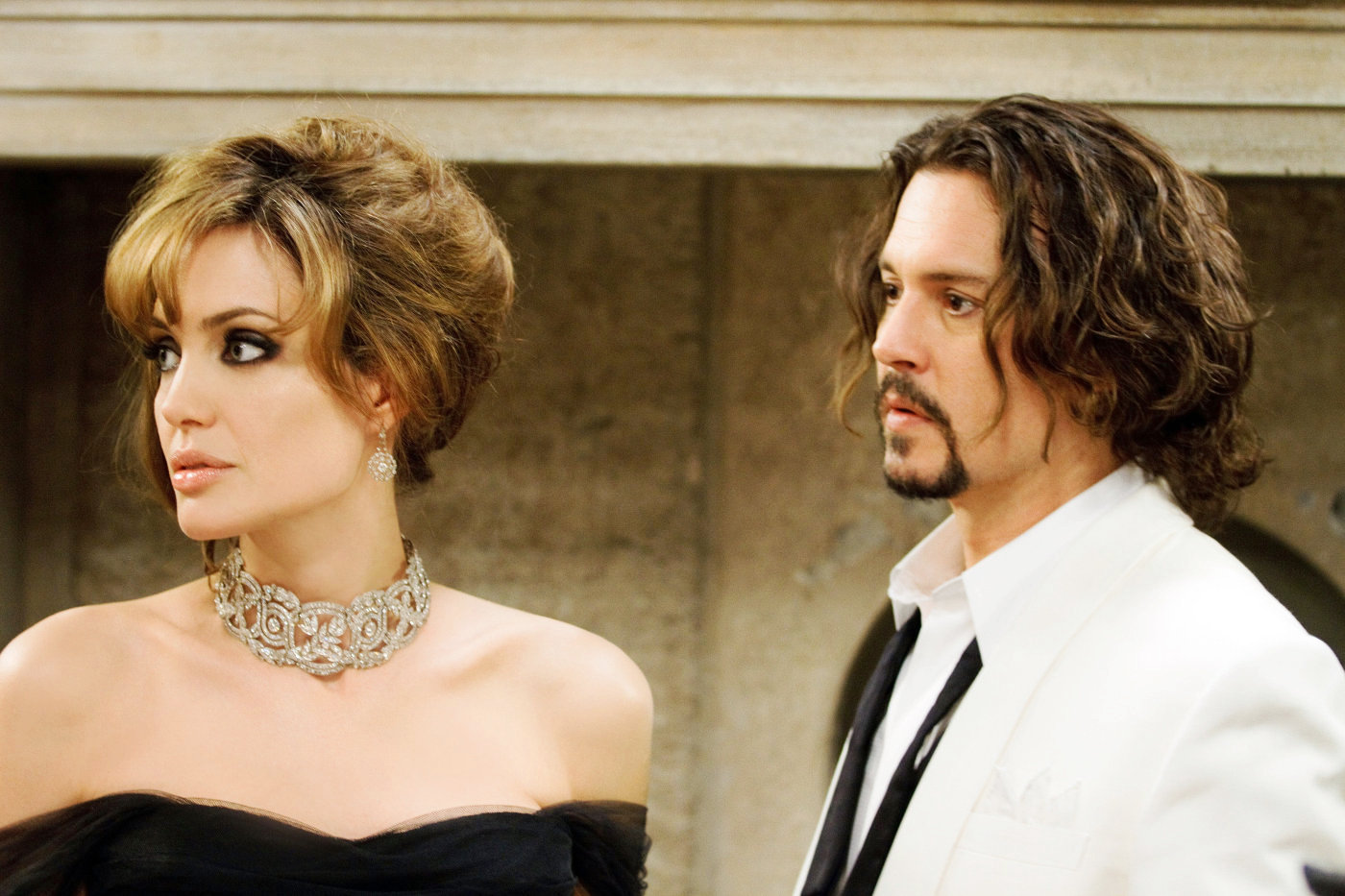
And when you start doing that analysis, you know that the thing hasn't really been thought through...they were just making it up as they were going along and hoping nobody would notice that the film only makes sense five minutes at a time. You're supposed to be distracted by the gorgeous decors, the elegant suits (and suites), Angelina Jolie's wardrobe (and how she fits in it**), andJohnny Depp's clowning*** to actually figure out that the movie is a shell-game, and a shell of a movie, as hollow as a chocolate bunny on Easter, and with as much nutritional value beyond being sugary.
Add to the script problems the lack of any frisson between Jolie and Depp, both of their characters going through the motions acting as cool as cucumbers (him, comically; her, glacially). He tries to throw some bits of business around, but they're fairly subtle (and inconsistent)—like his language malapropisms (which will fly over most Americans' heads) and a tipsy act—that they get lost in the shuffle.
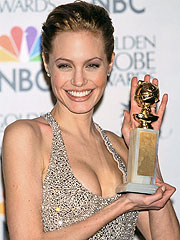
Jolie has a tougher problem; she has to fight herself and her image. This is the second feature (after Salt) where Jolie is tasked with a poorly written role that requires no acting challenge, so much as present herself in an iconic way. In other words, she has reached the point in her career where she no longer has to be good, as she does to look good. This is a movie in Liz Taylormode, Audrey Hepburn-style, the queen bee with drones hovering to do her bidding. But, she receives no help at all, not from the script, not from the cast (which includes Paul Bettany, Timothy Dalton, and Steven Berkoff—the latter two impressive, as always), the director lighting her well and showing her at her best. She is set apart—the only woman in the cast; she might be able to carry the box-office, but she can't carry the movie, poor as it is, and as enticing as it might look. She is a fine actress, as her awards-gatheringearly in her career demonstrated. But a few more of these vehicles and she may have to de-glam her career—as Charlize Theron (who left this project) did.
They should have called it "The Tourist Trap," instead.
* I'm sure it wasn't the movie, but I started to develop chest pains during it, and I began to think that all this sumptuousness was starting to clog my arteries, maybe I was just distressed, so, I shut my eyes...oh, for about 20 minutes...just listening to the soundtrack, and when I opened them again...gosh, I hadn't missed anything.
** In one sequence, French police are tracking Jolie's Elise Ward with cameras as she glides down a Paris street. Two of the officers zoom in to see if they can see a pantie line, and their superior admonishes them "Be more professional, guys." And as if to show just how professional the filmmakers are, director Von Donnersmarck cuts to a tight shot of Jolie's ass. No VPL. They may have been going for self-deprecation there, but, actually, I think, they nailed the problem. "Be more professional, guys."
*** Okay, I am now calling "b.s." on Depp's maintaining an artist's pose. This and the "Pirates" sequels point to a man picking up a paycheck. I used to have a lot of respect for him...but now...(According to IMDB, Tom Cruise was supposed to play the part—he and Jolie have been circling each other for awhile, as he was supposed to, play Salt—then Sam Worthington, who left over "creative differences")
The Existential Angst of Contemplating One's Own Shelf Life or "Thanks a Lot, Inner-Voice!"
“When I was a child, I spake as a child, I understood as a child, I thought as a child: but when I became a man, I put away childish things.”
1 Corinthians 13:11
I have a nasty habit of burying my lede. I start a post with what should be the last line of the thing, the zinger. But, I start writing with what I feel is the most important thought and find that when I finish up, the last line falls a bit flat. I'm not happy with it, at least. Should have ended the entry with the first line of it. It disappoints me. But, I'm gonna do it again, because it's the most important thing to say: Pixar is the most amazing producers of the finest films extant. You fan-boys can have Marvel—their percentage is nowhere near what Pixar manages to do. Marvel's film series usually peter out with the second one. The Harry Potter films were a mixed bag. And nobody's done what Pixar has done with their Toy Story series—each new chapter of the story is better than the last one, the most recent (that being Toy Story 3) was an emotional wringer and the best of the films.
Best one, that is, up to that time. Because Toy Story 4 is an improvement over it on all fronts: animation, story, presentation, screenplay, and direction. And it's deeper and more profound than anything we've seen yet, sophisticated in its themes, and makes changes to the characters and the dynamics of established tropes and story assumptions to challenge the audience and bring them along for the ride of growing up.
And it's about toys. Toys, for pity's sake. And it does all that while still being funny and extraordinarily entertaining to boot (with a snake in it).
When last we left Andy's collection of toys, they had been saved from incineration, and transported by Andy to little Bonnie, a shy 4 year old toddler with a rich inner life. The movie begins in flashback with a crisis: it's raining and Andy has brought in his toys from playing outside. All except one. The mechanical race-car, RC, has been left outside and is struggling to keep from being swept away in a gully-washer. Woody (voiced again by Tom Hanks) organizes a rescue party and with the help of Slinky-dog (voiced by Blake Clark) rescues RC. But, another toy is about to be lost—Bo Peep (voiced by Annie Potts) and her three-headed sheep is being given away as her lamp is no longer needed in Andy's sister's room. Woody tries to rescue her—it's what he does—from being exiled to another home, but Bo Peep will have none of it. She accepts her fate. "Sometimes, toys get lost in the yard or put in the wrong box. It's okay. I'm not Andy's toy. It's time for the next kid." And she gets carted away, while Andy can only watch hopelessly, lying lumped in the car-port in the rain.
Cut to now—and Bonnie's world. Woody organizes the toys—it's what he does—calming their fears as they're consigned to the closet on cleaning day. Bonnie comes back from the dust-up and pulls the toys from their temporary confinement, all except Woody, who can only watch and wonder what's changed.*A lot, it turns out. It's the end of summer, and Bonnie is now five—time for a big transition (there a lot of them in Toy Story 4), as the shy little girl is about to be thrust into the world of an unprotective collective—kindergarten, and she is required to go to "orientation." Bonnie has always been a shy child, tremulously so. And the prospect of going to kindergarten without a parental leg to hide behind is devastating to her, causing a melt-down. What she needs is a sheriff to come to the rescue—or, at least, that's what Woody thinks—so he stashes himself in her back-pack, a stowaway to school.
It's a scary place with other kids, kids without borders or boundaries and unchecked id's. When she sits down for activities, another child swipes all her arts supplies. Woody observes all this and manages to find a way to sneak out of his hiding place and toss Bonnie with supplies in the trash. She's inspired to take a stick, a spork, pipe-cleaners, and some play-doh and makes her own toy and companion—"Forky" (voiced by a wonderful Tony Hale)—who manages to sustain Bonnie through the day and give her a sense of accomplish. Good enough. But, when Bonnie gets home ("I finished kindergarten!!" "Uh...honey?"), Woody introduces Forky to the other toys.
But, Forky has issues. He's a bit pre-verbal and can't quite see himself as a toy, but, rather as trash. It's an instinctual fixation and he must be restrained from constantly throwing himself in the nearest dumpster. Leave that to Woody, who has his own instinctual fixation—it inspires composer Randy Newman (Yay!) to write a lovely gospel song entitled "I Can't Let You Throw Yourself Away" exposing Woody as a plasticene guardian angel, a caretaker—and he wails to Buzz Lightyear (voiced by Tim Allen) "I don't know if you remember what it was like when Andy was a kid, but, I don't remember it being this hard!"
A road trip with Bonnie and her parents as a final Summer fling before school provides ample opportunity for Forky to trash himself and for Woody to come to the rescue, whether the little spork wants him to or not. It also provides him the opportunity to re-unite with Bo Peep, who has changed considerably after leaving Andy's house and, ultimately, escaping from an antiques shop called "Second Chances" (heh).
As Bo tells Woody, "I don't want to sit on a shelf waiting for my life to happen." But, Woody is in a different place. For Woody, it's all about The Child, or any toy in crisis that might adversely effect said child. It always has been. And so much of his time has been about taking care of other's needs—he's taken his fake sheriff's badge too literally—and the movie spends much of its time with Woody coming to the rescue and realizing that seems to be his sole reason for existence, because he knows no other pattern of behavior.
Bo provides another perspective; she has a good life on her own without the need for a child in her life. But, Woody is stuck in his ways—there are only so many phrases in his talk-box if you want a literalness to the concept. It's all in service to the child. It always has been and always will be.
That's the crux of the movie: a toy's need to be needed, and the damage that such activity can cause to one's own shelf-life. Along the way, Toy Story 4 delves into parallel stories of toys' needs to be given purpose—of the toys at the antiques shop waiting to be given a chance at being taken home, and a pair of prizes that never seem to be claimed at a shooting arcade at a nearby carnival—all the while the toys are working overtime trying to get Forky back to Bonnie.
The major story is at the antiques store, which is given a creepy atmosphere recalling Kubrick's The Shining—at one point, an old 78 plays "Midnight, the Stars, and You"—with the long-abandoned Gabby Gabby (Christina Hendricks), a talking doll with a damaged voice-box that she believes is keeping her from being taken home to some needy child. She keeps Forky hostage in the hopes of taking Woody's so she can have her chance, and she runs the antiques store like her own personal führerbunker with demented ventriloquist's dummies as her shock-troops. Creepy.
Then, there are the plush arcade animals, Ducky and Bunny (voiced hilariously by Keegan Michael-Key and Jordan Peele), who've been hanging around as shooting gallery prizes for so long they've developed something of an attitude waiting for kids to just hit the damn targets. They get roped into the whole "Second Chances" plot and they have a rather aggressive way of handling problems. Probably been at the range too long. Also aiding is a Canadian stunt-toy called Duke Kaboom, whose stunt skills are used for an elaborate rescue, and who is voiced by Keanu Reeves, still nailing the mock-heroic voice.
Pixar ups the artistic quality a notch—the world is a bit more complicated and messier with dust-bunnies, cob-webs and dust-motes that dance in sun-beams, little details that one didn't realize were missing until the animators made it essential (Andy, too, in the flashback sequences looks far more real than the crude animator grids in the first movie allowed). But, it's also more sophisticated in the way the film questions the series trope—that a toy is useful only if it's needed by its possessor. This one dispels that idea as a given and makes it relevant, not only to the film's characters, but to the larger issues of the audience's as well...as we all (as Bob Dylan observed) gotta serve somebody. And that's if we're a caretaker, or just a work-a-day 9 to 5'er, a Mom or a sheriff. Yeah, we gotta serve. But we also gotta know that we're not just what we work at. We gotta know when the job is done. We've got to know ourselves.
Remember Toy Story 3? Remember how it had the perfect ending, even though it was kind of sad and changed things? How it worked outside your comfort zone, but you also knew it was the perfect ending for the story? Turns out that it was for its time. But, another story needed to be told. We just didn't know it yet. And Toy Story 4 tells it with such care and such skill...and wisdom—without taking its eyes off the entertainment value—that you might think it's a perfect ending.
You might even think—like me—that it was even better than Toy Story 3, which, as I said at the beginning, was the best of the series so far. And I wept like a baby at it. I'm at the point, now, where I wouldn't mind another Toy Story movie, so good are these creators at telling a story and making it essential. Making movies that matter and increasingly raising the bar...for themselves and for us.
So exceptionally well done.
* He is consoled by some other toys, which Pixar casts with some essential voices—Alan Oppenheimer, Carol Burnett, Carl Reiner, Mel Brooks, and Betty White. That seems so right. Maybe not essential, but a lovely gesture.
** Newman does another brilliant score with two new amazing songs, and I always imagine Seth McFarland gritting his teeth and thinking "I write better stuff than THAT." No. No, he doesn't. But he tries so hard to do something better than what Newman seems to do so effortlessly. That's because Newman is a genius who makes it look easy. McFarland just studies and copies...and comes up short. Professional jealousy is a terrible thing...and not very professional
That would have been a good plan if only The Rocketeer hadn't flamed out and fallen to Earth. The Rocketeer under-performed badly at the time of its release.
It became popular on the rental circuit, but the damage was done. No sequels (a trilogy was planned), the other studios chortled about Disney's memo hubris, and went back to paying stars (and their agents) $20 million for a movie (and Disney took to raiding already established franchises to create pre-fabricated tent-poles for their releases—first, The Muppets, then Marvel, then Lucasfilm, and even re-making live-action versions of their own animated features).
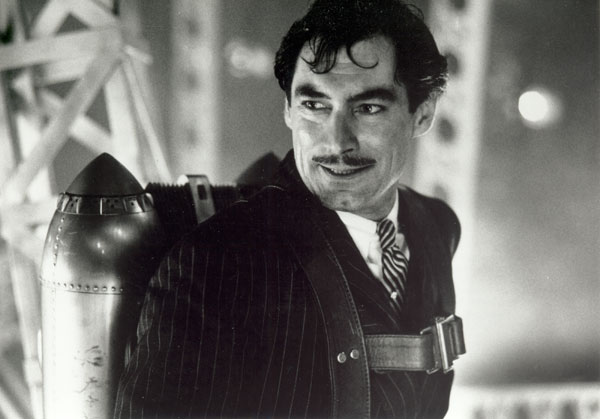
Too bad. The Rocketeer is a flawed adaptation of a wonderful property, but if it had inspired similar "value" films, it would have been worth it. The thing is, its heart is in the right place, it's sweet and affectionate about the period it's in, the romance is chaste and makes no concessions to modern audiences, the players are adept—Billy Campbell was born to play "The Rocketeer," he looks just like Dave Stevens—and any movie with Alan Arkin and Paul Sorvino, AND Terry O'Quinn, it goes without saying that they're always enjoyable...plus, Timothy Dalton got to bust up his Bond image a bit.
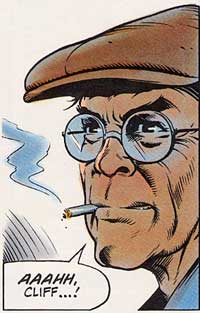
It is 1938. A down-on-his-heels "fly-boy" Cliff Secord (Campbell) has just managed to screw up his flying career by crashing his stunt-plane at an aerodrome just outside of Los Angeles. Luck falls in his lap when he discovers a rocket-powered jet-pack (recently stolen by mafia gangsters from engineers at Hughes Aircraft at the behest of the Nazi's). With the help of his mechanic-mentor Peavey (Arkin), Cliff is able to get the pack working and even enhancing some features so he becomes his own one-man airplane. Howard Hughes (O'Quinn), however, thinking the prototype destroyed in the attempt, scraps the project now knowing that it is of interest to Germany for their war effort.
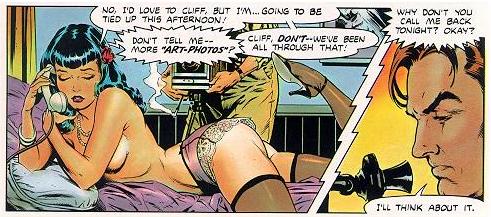
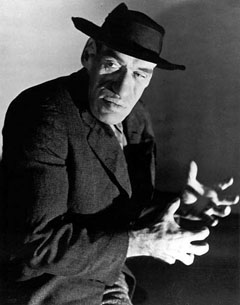
Complicating matters is "Jennie" Blake, a hopelessly aspiring actress (she was an "art-photo" model in the comics, but...Disney), who happens to be Cliff's somewhat-serious-if-he'd-get-serious-girl-friend. As long as Cliff is gainfully employed, she takes him seriously, so he lies to her about crashing his plane. Visiting her on the set where she's working as an extra, he tells her about finding the rocket-pack, a conversation that is overheard by the film's star Neville Sinclair (Dalton), who is a secret Nazi agent and who engineered the stealing of the jet-pack at the behest of Hitler's regime as a possible tool for invading America.***
Sinclair, being a talented, but no-good-snake and now knowing the prototype exists, takes an interest in Miss Blake (which she mistakes for a career opportunity). This does two things: it makes Jennie an innocent victim of the plot of the movie and an unsuspecting damsel-in-distress; it makes Cliff insanely jealous of a much more privileged rival who might take his girl away. Neither one suspects that both of them are at the center of a much wider conspiracy that would have world-wide complications if they come about. Actually, it's kind of neat how it comes about, like a superhero-Hitchcock film.
The movie only really takes off, logically enough, when the rocket-pack fires, then things zip, zoom, loop-dee-loop and go slightly out-of-control in a giddy display of pyrotechnics. The rest of the time the film stays firmly rooted to Earth, refusing to soar. Oh, Dalton has fun with his role—he was always better suited playing bad-guys, anyway—And Jennifer Connelly adds some brief spark to her role as "Jennie," Cliff's naively ambitious actress girl-friend. That's the problem. Sweet as it is, The Rocketeer could use some spice, which Disney was just too timid to provide. "Jennie" was "Bettie" in the comics, specifically "Bettie" Page, who was far more world-wise and ambitious than the screen incarnation could capture. There was a bit of the real Page's persona in the original character, all too aware that she was the type of girl "men like," and all too willing to exploit her looks to be exploited. That was way too hot for Disney, who gussied Connelly up from head to toe, effectively neutering her character. That the real "Bettie" Page was still alive at the time, and fully capable of contacting lawyers, probably influenced Disney's decision, as well.
Plus...Disney.
And that's too bad. The Rocketeertakes chances, but it still feels "safe," something the comic was having too good a time to worry about. Perhaps the difficulties the filmmakers were having trying to get the story onto the screen half-way resembling Stevens' vision of things (they wanted it contemporary, they wanted Cliff to wear a space helmet (toy potential, merchandising...blah blah blah), made them thankful for small victories along the way to devote more energy to the project.
* Mike Grell's "Starslayer" #2 featured the first appearance of "The Rocketeer"
** She wouldn't stay forgotten for long. The Rocketeer re-generated interest in her long career as a photographer's model, and "nudie" dancer, and she was able to see some money from the marketing of her image. The Notorious Bettie Page is based on her life. She didn't like it much, reportedly. An old review of it will be up in the future. *** Amusingly, there is a Disney-animated "propaganda film" that is shown at one point in the movie, and in its "live" footage, the hapless German test-pilot who gets scorched in their pack's first attempt is played by "Rocketeer" creator Dave Stevens.
I "met" Dave Stevens (actually I was one of zillions at a comic-con he was appearing at) and he signed a promotional poster he had done for the film. He was as fastidious about the signature as he was about his work: "Now...make sure you wait a little bit because the paper has a high gloss finish and you should allow the ink to dry before it touches anything because it's kind of nappy right now and it'll smudge..." Thanks, Dave.

 But, at the pace-making heart of the "Toy Story" movies has been one constant, and that is its contemplation of the nature of Love, which puts it in the same movie-case with such seminal works as Vertigo and A.I. In the first Toy Story, cowboy-doll Woody (voiced by Tom Hanks) watched in horror as the affection of his beloved Andy was supplanted by the new space-age toy Buzz Lightyear (voiced by Tim Allen). The stakes doubled in Toy Story 2 when we witnessed the discarding of cow-girl Jessie (voiced by Joan Cusack) as her owner grew up and put away childish things (see the video below). And we witnessed Woody turned from an object of play to a rarified objet collectionner, the very definition of a "trophy love." Toy Story 3 takes Jesse's plight and applies it to the entire toy corps, facing abandonment (the attic) and, worse, discarding (at the sidewalk on garbage day). The toy soldiers take action and evacuate the premises first: "Once the garbage bags come out, the army men are the first to go" barks the commander (R. Lee Ermey) before para-sailing out of Andy's bedroom window.