Showing posts with label T. Show all posts

Wednesday, November 13, 2024

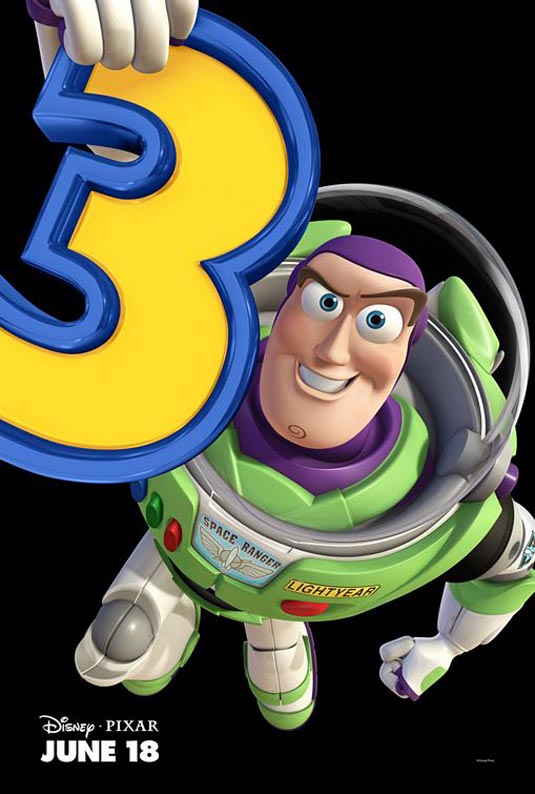
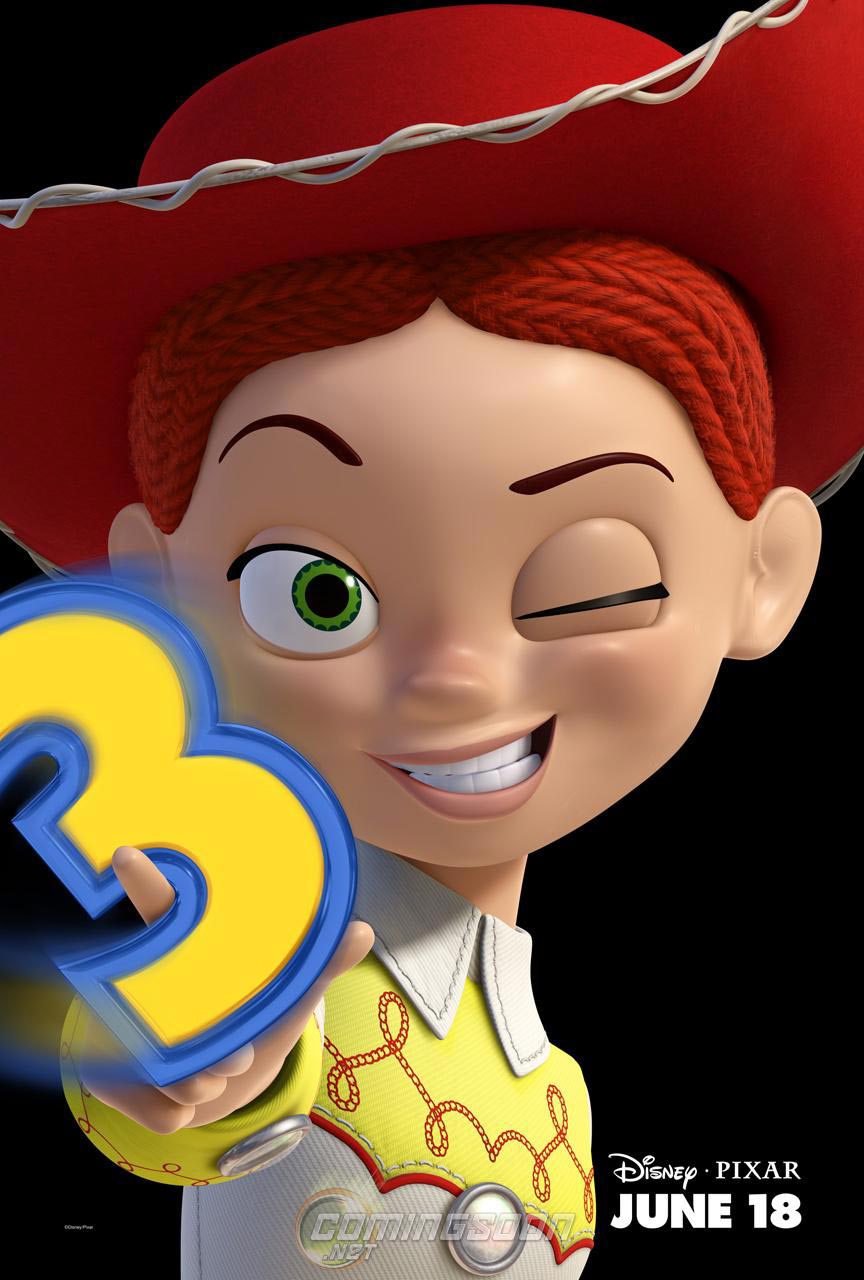
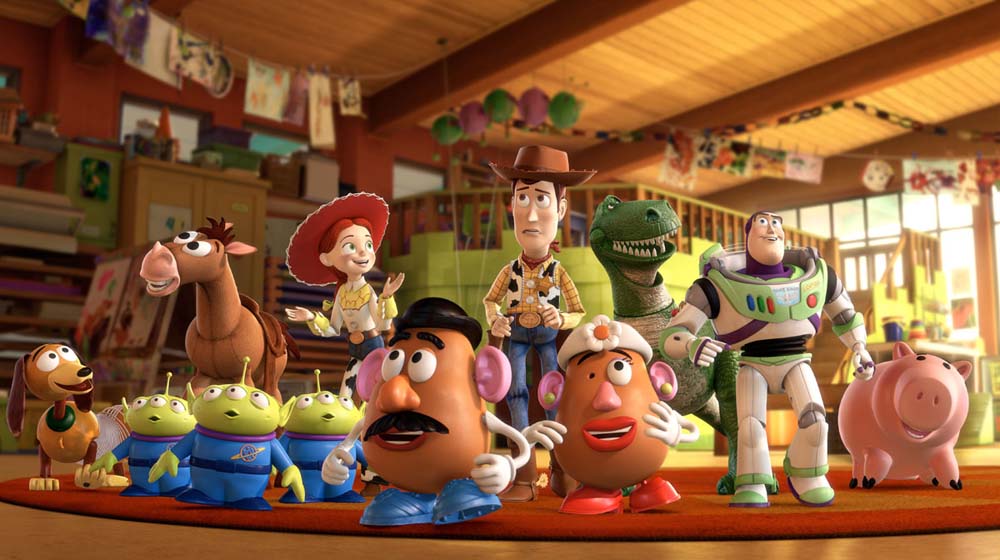
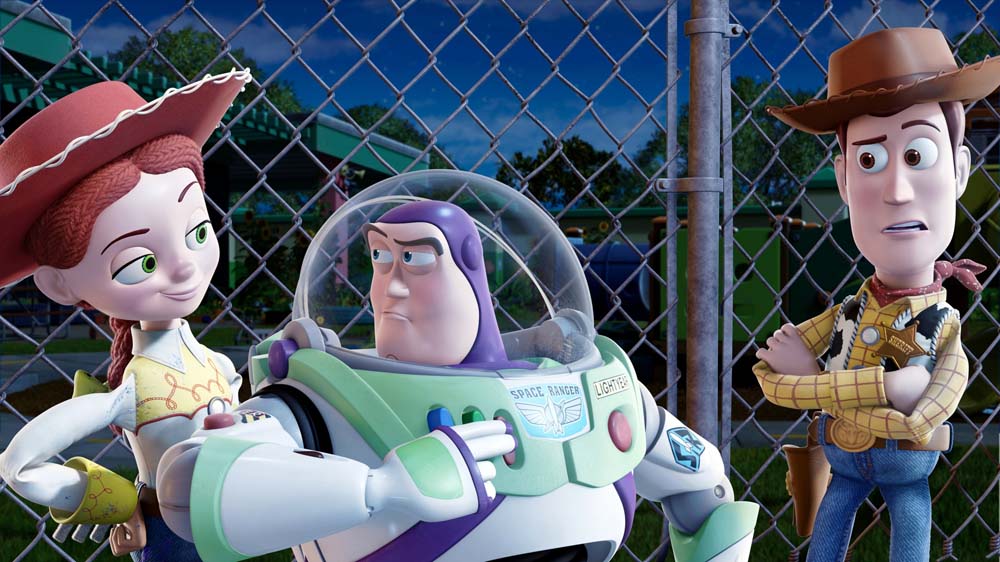
Toy Story 3

A lot of times I write and I "make do." It's alright. I think I got the point across.

And sometimes, I nail it. It's rare, but I'm capable of it. Even if the movie is just about toys. I remember a comment for this post (on that "other" site) was simply "Dude. It's Toy Story 3." (Where are you, Simon?) Yes. And good movies about love can come from anywhere.


Written at the time of the film's release...

"And if You Can't Be with the One You Love, Honey..."

One has suspected a subtle sub-text in the "Toy Story" series—every Pixar film has evoked that feeling (which is why they tower over Dreamworks and every other animation supplier and make even their rivals' three-dimensional films seem more two-dimensional) since the first film premiered (what was it?) fifteen years ago.
 
 Toy Story 3 is no less rich in sub-text. Sub-texts like the given that the toys have stayed the same, but their little owner Andy has grown up and is on his way to college by the time we hit 3; First sub-text: Change or be passed over. Any one looking for a job in these troubled times has had to be confronted with their inadequacy in some department while they're winning the daily bread. And like the toys of "Toy Story," time may be their enemy, staying consistent while the world evolves too quickly.
But, at the pace-making heart of the "Toy Story" movies has been one constant, and that is its contemplation of the nature of Love, which puts it in the same movie-case with such seminal works as
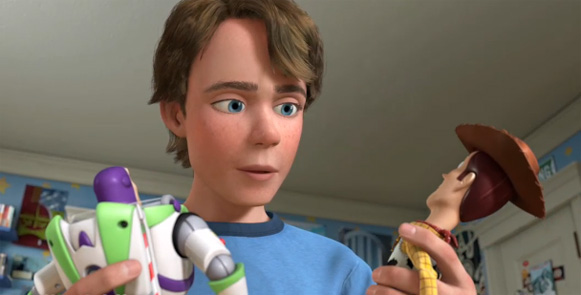
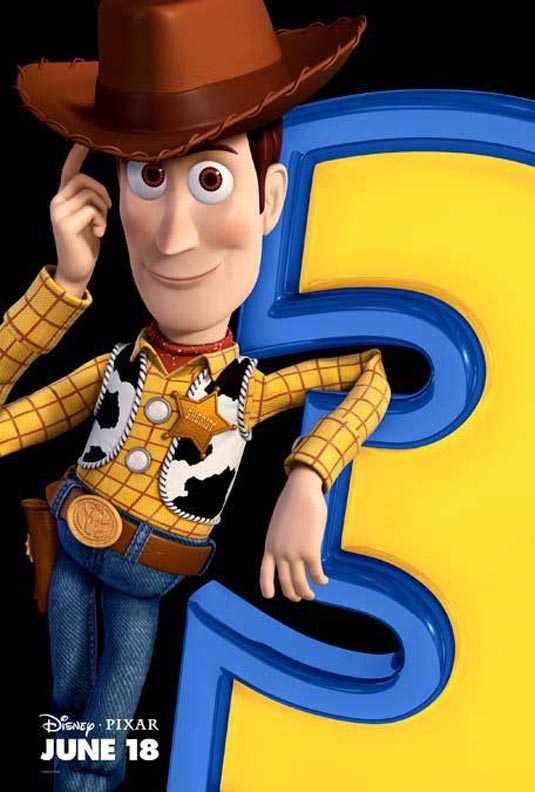
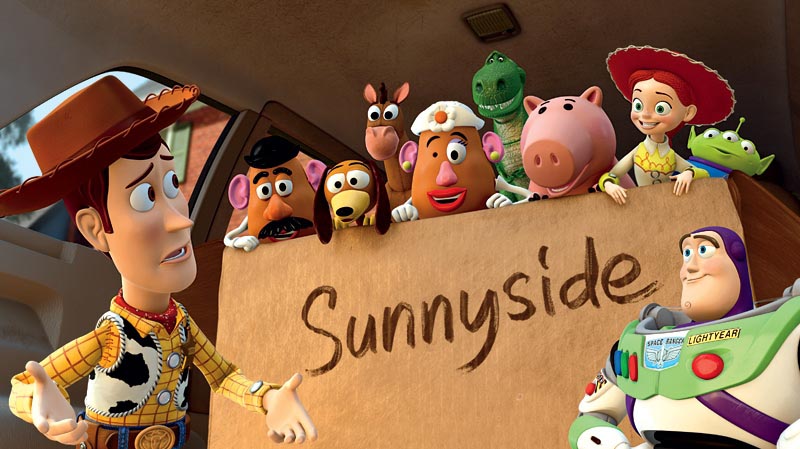
Vertigo and A.I. In the first Toy Story, cowboy-doll Woody (voiced by Tom Hanks) watched in horror as the affection of his beloved Andy was supplanted by the new space-age toy Buzz Lightyear (voiced by Tim Allen). The stakes doubled in Toy Story 2 when we witnessed the discarding of cow-girl Jessie (voiced by Joan Cusack) as her owner grew up and put away childish things (see the video below). And we witnessed Woody turned from an object of play to a rarified objet collectionner, the very definition of a "trophy love." Toy Story 3 takes Jesse's plight and applies it to the entire toy corps, facing abandonment (the attic) and, worse, discarding (at the sidewalk on garbage day). The toy soldiers take action and evacuate the premises first: "Once the garbage bags come out, the army men are the first to go" barks the commander (R. Lee Ermey) before para-sailing out of Andy's bedroom window. 
 
The others are left to contemplate their fate. 
 
Play-time's over.*

There is one axiom I've held to my heart from the moment I first recognized its truth—I'm sure it originates elsewhere, but I first read it from thriller writer John D. MacDonald: "Love is not the opposite of Hate; love and hate are merely two sides of the same coin. The opposite of love is indifference."
 
There are a lot of instances of indifference on display in Toy Story 3 (though certainly not at the hands of the creative team behind it, who have filled it with pithy circumstance and finely-wrought detail in a cartoonish 3-D photo-realism
**). But, so is love, in the through-line from the first movie, first warbled in Randy Newman's opening song "You've Got a Friend in Me." It is the banding together of the community, standing stuffed shirt to plasticene shell through adversity, the toys' answer to "Can't We All Just Get Along?" All the movies have centered around the toys—diverse as they are—keeping the group together, and welcoming the new. That reaches its dramatic climax here as the team locks hands as they face absolute destruction in a truly frightening version of Hell.
The forging of the community has been a theme running throughout the history of film (especially Westerns) since Edison, certainly John Ford, and we've all seen those films where the protagonist loses a family in order to gain another, sometimes not by choice. Those bonds are infused with strength to take on all comers and all challenges, but the heart of that coming-together has always been the one unofficial but over-arching Commandment: Love thy Neighbor.

 
I mentioned putting away childish things earlier. That's from The Bible (1 Corinthians 13), and looking over that verse again, I saw images spring up from Toy Story 3—"And though I bestow all my goods to feed the poor, and though I give my body to be burned, and have not love, it profiteth me nothing," particularly.  But especially its last devastating quality in its check-list of Love's qualities, which always makes me tear up a little when I contemplate it, and I contemplate love and loss. For toys break, batteries corrode, fabric burns and plastic will melt. But Love "never faileth."
 
Love never dies.
 
To Infinity.
 
And Beyond.
 
* How many times have we said that, as adults, mourning the loss of childhood from adult responsibilities?

** But, man, you want to see Pixar push the envelope?  Check out the sophisticated opening short Day & Night, a wordless combination of 2-D and 3-D, line animation and computer graphics, filled with rich imaginative ideas and a brilliant sound design.  The work of animator Teddy Newton, this little gem, puts him at the top of exciting animators to watch.

Saturday, October 12, 2024

The Tingler

It isn't Hallowe'en month unless we put in a mention of a William Castle production—and we'll actually have a couple of them this month. The producer of low-budget—high concept "stunt" movies (aided by little tricks he'd add at theater showings) were nobody's conception of "art", but there was something altogether entertaining about the lengths (and depths) he'd go to put patrons into seats—and attempt to scare them OUT of them.

Today's movie may be a high-water mark for the tricks he'd play on the audience...and the movie he built around it may be the campiest, goofiest film he ever made. Of course, it has to be presented on "Take Out the Trash" Day.


I am William Castle, the director of the motion picture you are about to see. 
 
I feel obligated to warn you that some of the sensations—some of the physical reactions which the actors on the screen will feel—will also be experienced, for the first time in motion picture history, by certain members of this audience. 
 
I say 'certain members' because some people are more sensitive to these mysterious electronic impulses than others. These unfortunate, sensitive people will at times feel a strange, tingling sensation; other people will feel it less strongly.
But don't be alarmed—you can protect yourself. At any time you are conscious of a tingling sensation, you may obtain immediate relief by screaming. Don't be embarrassed about opening your mouth and letting rip with all you've got, because the person in the seat right next to you will probably be screaming too. 
 
And remember this—a scream at the right time may save your life.
What might have caused that mentioned "strange, tingling sensation" was not the titular "Tingler"—the microbial life-form that the movie makes pains to inform us lives in all of us, only to grow into a large pinching life-form that can crush your spine in moments of terror—so much as the WWII surplus airplane de-icing motors that Castle had strategically wired under certain seats in the major theaters where he was showing The Tingler. Basically, he spent $250,000 of the film's budget to plant industrial "joy-buzzers" under the keisters of his audience—a process (along the lines of past years' 3-D craze) that he dubbed "Percepto!"
Sure, it was cheesy, but Castle was a cheesy film-maker with the heart of an eccentric carny-barker. A cut-rate Hitchcock* who wasn't satisfied with keeping his thrills on the screen, he delighted in breaking the fourth wall separating film and audience and violating his paying customers' safe-space. Nothing may have delighted him more than seeing explosions of popcorn.
And The Tingler may have been his presentational masterpiece. The movie follows a prison pathologist, Warren Chapin (Vincent Price, delightfully straight), who, when performing autopsies on executed convicts, notices a spine-encrusting form on their X-rays that he reasons is a microbial life-form mutated by the fear of its hosts. He makes this disturbing assumption while performing an autopsy on a former prisoner in front of the guy's brother-in-law, "Ollie" Higgins (Philip Coolidge), who had just been hanging around after witnessing the guy's execution. Chapin speculates to this guy he just met that, evidently, screaming will negate the effects of what he dubs "The Tingler."
Chapin offers Higgins a ride from the prison to the revival-house movie theater run by him and his deaf-mute wife Martha
(Judith Evelyn)
—they only show silent pictures (naturally) and live in the flat above the auditorium. Martha is an over-excitable type and when Chapin cuts himself on an offered cup of coffee—the guy's an expert surgeon, after all—she has a reaction that causes her to faint dead-away. Chapin treats her for her nervous condition ("barbituates"), but she wakes up to nightmarish hallucinations: opening windows, zombie creatures coming alive, thrown axes, even red blood coming out of the tap...in a black-and-white movie!
Poor woman dies of fright. Ollie calls Chapin for help and rather than call the police, they take Martha to Chapin's home-autopsy room (he takes his work home evidently), where—in the cleanest medical procedure in the movies—he removes the fully-grown "tingler" from her spine—because she couldn't scream, the thing stayed full-size...and alive!
"It's IN the theater?"
There's an awful lot of unnecessary travel going on merely so that director Castle can make sure that the "tingler" ends up back in the movie theater, where it will escape and he can pull a meta-switcheroo, showing us the silent movie the audience is watching, so that the "tingler" can interrupt the movie-movie, plunge the real theater into darkness, and set up a panic in both fictional and real movie theaters. 
Castle did this with those "joy-buzzers" under the seats, and "planted" patrons who would scream on-cue in the dark, only to have them on stretchers (with EMT's) when the black-screen stopped and the movie once again began...in the movie and in real-life.
Sound confusing? Sure, but, Castle does it so fast, with the deliberate technical issues of a broken film and a purposely black-screen that audiences are "primed" for an unexpected jolt—which will be coming from a place they least expect it. And this was "back-in-the-day" where theaters weren't required to have aisle-lights for safety—you'd have a theater plunged into absolute blackness with only a glowing "EXIT" sign for comfort. Considering the number of "feints" and tricks that Castle had already pulled off in the film, the transposition of movie-audience with movie audience was just a third-act topper.
Castle fills the film with goofy conjecture, duplicitous wives, duplicitous husbands, even an early experiment with LSD—"the walls, the walls!" yells Chapin, tripping under the effects only to be weirded out by a skeleton in his lab. Then, during the freak-out sequence with Higgins' wife, Castle suddenly changes expectations with the black-and-white film itself, by incorporating color into the sequence—a combination of using color film into a scene where the bathroom scene is painted in shades of gray, even the actress was made up with gray make-up. By the time, the rubber "tingler" creature is brought into the film, you're not sure what to expect. Frankly, given the nature of what is ultimately presented on screen, the most effective way to show it is to turn the lights out and not show it at all.
All movies manipulate. We're shown only what the director wants us to see, cut in a way to jolt our expectations and sell the illusion. Castle, however, wasn't satisfied with that, given his limited budgets and his unlimited imagination. Mise en scène and montage weren't enough for him. Not when he could move the manipulation out into the audience and play more tricks with an audience's complacency. And he did it with a con-man's cunning and a prankster's glee. How do you get a horror-movie crowd into a theater? You tell them not even the theater is safe. That's something you can't get at home from television.
"The walls! The walls!"

* I'm reading Laurence Leamer's rather tawdry collection of mini-biographies, "Hitchcock's Blondes" right now and there's a pull-quote of a conversation Hitchcock has with writer Ernest Lehman after they'd worked together on North By Northwest that sounds a lot like Castle: 
"After a number of martinis sufficient to limber up his vocal chords and open up his emotions, he put his hand on Lehman's. 'Ernie, do you realize what we're doing in this picture?' he said in a whisper, announcing that what he was about to say was only for the screenwriter's ears. 'The audience is like a giant organ that you and I are playing. At one moment, we play this note on them and get this reaction, and then we play that chord, and they react that way. And someday, we won't even have to make a movie—there'll be electrodes implanted in their brains, and we'll just press different buttons, and they'll go 'ooooh' and 'aaaah' and we'll frighten them, and make them laugh. Won't that be wonderful?'"
Leamer, Laurence. Hitchcock's Blondes. Penguin Random House, 2023
 

Friday, August 9, 2024

Trap (2024)

In Concert With a Serial Killer
or
"Take Your Daughter To Work" Movie
 
M. Night Shymalan hits the nail on the proverbial head calling his new thriller Trap and then doubles, triples and quadruples down on it in an obsessive way that he's never done before, with layers and layers of traps for the the film's central figure, who has to find ways out of them, even though to do so, will only keep him trapped in an endless cycle that he is unwilling to free himself of—he is compelled to repeat the cycle over and over again.
 
Well, to paraphrase the old saying, when one trap closes, another one opens.
 
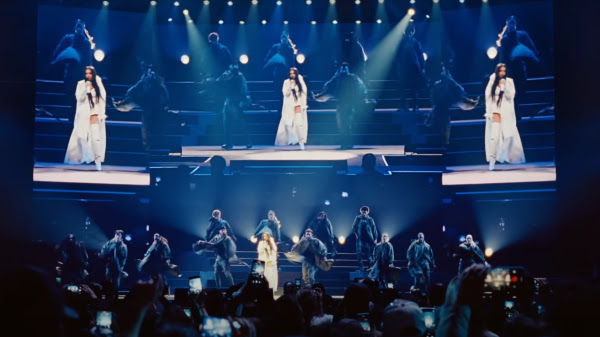
Cooper (Josh Hartnett, in a tour de force performance that is entertainingly mercurial) is a good dad taking time off work as a fire-fighter to treat his daughter Riley (Ariel Donoghue) to the hottest ticket in town for her good grades. Riley, you see, is obsessed with pop-phenom' Lady Raven (Saleka Shyamalan, the director's daughter) and Dad's managed to get tickets right on the floor. Riley couldn't be more excited.
Which is why she doesn't notice that Dad's a little distracted. Concerts always have tight security, but the police presence for the Raven concert seems to be amped up a little bit and Dad can't help noticing. So, once they've got their seats secured, Dad starts to disappear for awhile—with a protective "Don't you move. Stay here."—to do some reconnaissance. Seems that all the cops and security are there because it's suspected that the local serial killer "The Butcher" is going to be attending the concert—yes, it seems strange that the authorities would be so certain of that and a good length of the movie will be spent in "plausibility mode" doubting it, but writer-director Shyamalan does manage to plug that plot-hole and rather neatly. The concert-goers—except for one individual—are entirely oblivious of this circumstance, thinking that it's just the usual security detail.
That one individual is "The Butcher" and it just so happens that Cooper is the guy they're looking for. He spends his absences from the concert, checking the exits, making distractions—there plenty in a busy concert-hall, gathering information, and making in-roads with the security staff. By the end of the concert, by grace and guile, he will have secured a staff badge—gaining him entry to employee spaces, the password to identify security staff and has even managed to lift a police radio, so he can listen in to alerts. Seems like he has the advantage.
But, he doesn't. He's still stuck at a concert with his daughter (who doesn't know his secret) in a loud, thronging fortress, that is person-by-person, questioning the adults in the hall looking for their quarry. "Trap", indeed.
He's trapped because he's in a maze of a concert-hall, surrounded by armed security, but also because he's trapped by the presence of his daughter in the situation, and by his own need to keep the roles of good parent/serial killer separated. It takes an awful lot of artful dodging, lying, subterfuge, and slight of hand to keep the predicament he's in from closing in on him. At the same time, he keeps checking his phone—he has a potential victim locked up in an abandoned fire-trap and the remote ability to kill the guy with carbon monoxide. Then, things start to escalate when the FBI shows up.
The thing of it is, we're trapped, too. As a helpless audience-member*, we're stuck at looking at the movie from "The Butcher's" perspective—the same way we're left with Norman Bates after the murder of Marion Crane in Hitchcock's Psycho, the only difference being that we find out quickly that Cooper is "The Butcher" and we still follow with interest, albeit conflicted. We're stuck in his situation, and it could be extraordinarily claustrophobic were there not another show going on the full time—Lady Raven's concert.
Say what you will about the obvious nepotism—I certainly did in the title—but, at least Saleka Shyamalan is talented and obviously heavily influenced by Beyoncé, and it does provide a distraction from the constant tension of Cooper's obsessive paranoia. Besides, what Dad wouldn't give their daughter their own Eras tour?
If the movie has a failing, it's that it can't sustain the suspense, that it has to open up in order to fully resolve the situation...and then doesn't resolve it in ways that really do strain credulity. If there was any film of Shyamalan's** that could have wrapped things up neatly and cleanly with a certain amount of resonance, it's this one, but for some reason the film-maker could not help not ending the movie satisfactorily, which is strange as Shyamalan made his career by finishing his movies with a gut-punch.
 
So, what you get is a strange amalgam of concert film and suspense thriller with an extraordinary performance by its lead. And one of the better Shyamalan films in years. 

* "Helpless?" You bought a ticket, friend-o!
 
** I'll bet you're wondering if Shyamalan does his customary extended cameo. I was wondering myself when the movie had gone a considerable length without showing up. "Where's Night?" I found myself thinking...only to discover that he showed up in the very next shot.

Wednesday, July 3, 2024

Thelma (2024)

A "Going-Back-To-The-Buffet" Situation
or
Is a Bad Mother... (Shut Your Mouth!)

One suspects that I'm the perfect demographic for Thelma*, seeing as I'm on the waning edge of the Boomers and having looked at life from both sides now. One sees mentors and peers and Alphabet-gens in the cast and nods one's head in sage recognition. 

If only theater seats could rock it would be perfect.
 
I've seen movies about scammers and hackers and other denizens of the sight-unseen chicanery of cyber-criminality, which if my google search is correct is 2328 times a day, 8 million in a year. That's a lot of possible stories to tell, but at some point, one becomes numb to the stories as they seem so commonplace these days, whether its victims are corporations, infrastructures, or the most common among us. No one seems safe except those off the grid or those without cards of any kind, I.D. or credit/debit. And out rush to make things so "convenient" seems to have made us more vulnerable, oftentimes, ironically, with our enthusiastic permission.

When was the last time you read the "Terms and Conditions?"
But, I can't recall—except implied for heist movies, government conspiracy films, or spy flicks—of anyone telling the story about a victim of one of these things. But, then...my memory isn't what it used to be. Movies either, for that matter.
Thelma
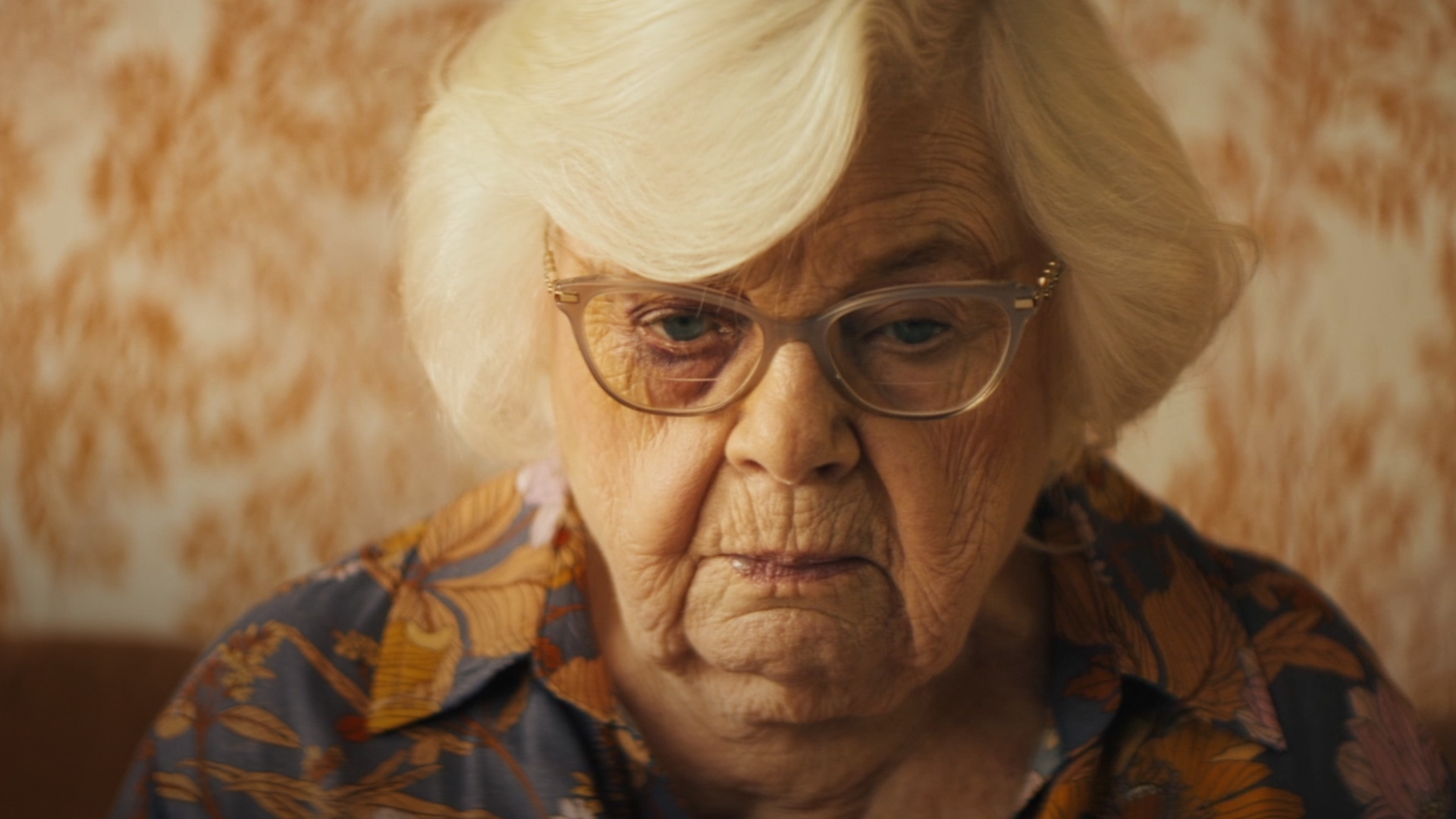
puts a face on the news stories of oldsters being conned out of their legitimately-earned savings and that face is June Squibb's, all 94 years of it, where she finally has a lead-role—and executive produces at the same time, no doubt for back-end compensation (way to go, June!)—playing the title character, who not only is getting "up there", she's reached the top and is looking down. She has a little trouble navigating new technology—she needs the help of her grandson, Daniel (
Fred Hechinger), who has his own issues, but loving gramms isn't one of them—she is a perpetual quilter, is ambulatory, and can take of herself. Not only physically but also in attitude. She plays mah-johngg on the computer and hates wearing that Life-Alert button. Her memory for trivia isn't good, but she's still sharp as a tack—her motivation hasn't dulled at all. She's a little creaky, but when she has a goal...
One day she gets a phone call. It's Daniel. He's been in an accident and he's in jail. He needs $10,000 to get out. She's given an address to a lawyer and she's to mail the money immediately to spring Danny. She calls her daughter Gail (Parker Posey), but she's in a therapy session and lets it go to voice-mail. Thelma can't drive, but gets a cab, gathers the money up and sends it. Gail gets the voice-mail, panics and calls Daniel—he's asleep—calls her husband Alan (Clark Gregg) and everybody tries to call Thelma, goes to her place and are alarmed that she's not there! When everybody manages to get to the same place, they all are relieved that Danny is safe...but, who called Thelma? They come to the realization that she's been scammed, but filing a police report does no good.
There is much discussion of what to do about Thelma—Danny feels responsible, but doesn't think he's good enough to take care of her and Alan and Gail, who are the most helicoptering of parents start to consider whether Thelma should be put in a home. Thelma, however, has one thing on her mind—getting the money back. The kids want to let it go, but not her, and while they're deciding what their next steps are going to be, Thelma decides what she's going to do. She has the address of where she sent the money, and all she needs to do is get some wheels. The kids aren't going to help, so she calls as many friends as she can, only to find that everybody on her contact list is either dead or incapacitated. 
Finally, she calls her friend Ben (the late, great
Richard Roundtree) who has an electric scooter and they embark on a journey across L.A. to find her money and get it back. Hilarity...and a substantial dose of what the hurdles the elderly face in this ultra-teched but indifferent world. It could be maudlin, it could be a shallow romp about "those frisky oldsters", but it deftly negotiates those pit-falls and turns into something funnier and a bit more life-affirming. Thelma's kids tend to lean toward caricature, but in the hands of Gregg and Posey, less damage is done toward the proceedings, and Roundtree and Squibb are delightful all the way through.
It's a better-than-you'd-think version of a geriatric heist movie, and, if you see it, stick around for the credits for a little surprise as to its inspiration. It'll bring a smile to your face and a warmth to your heart. And that never gets old.

* No, it's not Selma with a lisp.

Wednesday, June 5, 2024

They All Laughed (1981)

They All Laughed (Peter Bogdanovich, 1981) There's something sweet and low-down about Peter Bogdanovich's They All Laughed, a mid-summer night's urban romance-a-thon set to country music in the heart of New York City. Part detective story, part romance, part Altman-esque roundelay, part screwball comedy, it's another of those Bogdanovich love-letters to the style of old movies that reflected life through a rose-colored filter. 


It isn't life as it is, or life as it should be, but life as you'd want it to be, suffused with the pangs and dangers that new love energizes into life and makes it crisp. New York has never looked better, because it's seen through the eyes of a hopeless romantic—all of the excitement with none of the hassles. Would that the same were true of the various trysts and liaisons zipping through the movie.

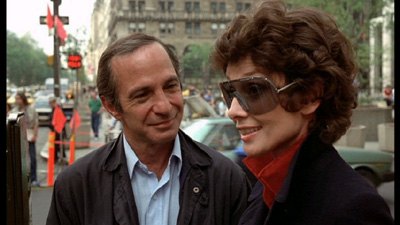
They All Laughed also has a fresh feel to it, with a mix of movie veterans and spry new-comers (and some of the production crew) all intermingling and bringing some zing to the proceedings. Ben Gazzara proves himself the best heir to Bogart for portraying tough guys with a tarnished heart of gold, and Audrey Hepburn is indescribably Audrey Hepburn, coquettishness shimmering through the worry-lines of experience. John Ritter fulfills the promise of a leading man capable of grace and ungraceful slapstick that was only hinted at in the leering farce of "Three's Company." Then there's the trio of model-actresses in various stages of crossing that dash--Colleen Camp, Patti Hansen, and the doomed Dorothy Stratten. Of the production staff, Blaine Novak, the film's co-screenwriter makes for an entertaining odd-ball/voice of reason, and producer George Morfogen plays, appropriately, a harried boss.
Gazzara, Ritter and Novak are all investigators for a Big Apple detective agency, and the first two are sent to trail two supposedly errant wives in the city, and before you can sing "
Laura is the face in the misty light," the stalking has turned to love...completely the opposite from what you'd expect in New York City.
Put aside the on-set intrigues and backstage stories, They All Laughed is a sweet-spirited romp. The country-western music dates it a bit, and a sad nostalgia permeates it now. But it's one of the best of Peter Bogdanovich's productions that doesn't retreat into the past to garner its good graces. And with his mixed cast of professionally-minded veterans and star-crossed amateurs, he probably felt more freedom working on this film than three of his previous elephantine-proportioned ones (Daisy Miller, At Long Last Love and Nickelodeon). Certainly with his guerrilla crew (working without permits) led by Wim Wenders DP Robby Müller, the film has the energy and snap of what one would consider an indie hit these days. But in 1981, critics and industry folk had the knives out for Bogdanovich, making this an overlooked gem—a true labor of love in a medium that held a lot of heart-break for the director.
The View from 2024: I was surprised that I hadn't moved over my review of They All Laughed from the old web-site to the new one. My memory of the movie is still fresh—and my memory of writing the review is fresh, as well—that it still feels like it was yesterday.

I remember taking anybody I could think of to see it—it was playing at The Egyptian Theater in Seattle—in an exclusive run from a print owned by Bogdanovich (the movie had a less-than-good distribution deal and Bogdanovich, still grieving over the death of Dorothy Stratten, bought back the film and determined to distribute it himself, a move that bankrupted him).

It was good enough to be a hit, but the director had that trio of earlier failures and had become box-office poison. He'd made a slight critical comeback with Saint Jack—which also starred Gazzara—which was executive produced by Roger Corman, Bogdanovich's old boss at AIP...and Hugh Hefner of Playboy magazine. It was through Hefner that Bogdanovich met Dorothy Stratten...and everything fell apart.

They All Laughed didn't make money, but over time, it has become a cult favorite, its caché increasing over the years, now it's championed by Wes Anderson, Quentin Tarantino, and Noah Baumbach. For the rest of his career, when he had the chance, Bogdanovich kept trying to recreate the magic of They All LaughedIllegally Yours, The Thing Called Love, and She's Funny That Way—they all have their charms, but never recreated what he had in that film.

Tuesday, April 2, 2024

The Three Stooges (2012)

It's a little late for April Fool's Day, but here's a legit review of the Farrelly Bros' take on "The Three Stooges" (Legit'!)

Written at the time of the film's dropping like an anvil on the head ("Why, I oughta....")

Going Through a Series of Stooges
or
A Reboot Right in the Keister

Last week, a Catholic bishop made headlines by comparing President Obama to Hitler (one suspects for the mandate that birth control—a Catholic "no-no"—be provided as part of health care, instead of only God being allowed to service the reproductive equipment) and beating his breast over "the culture war against the Catholic Church."  

"Why, I oughta..."

Two things: Any recent problems the Papists have had lately, they've brought on themselves (and frankly, some of those priests should be practicing birth control);* and, it's funny that he's invoking Hitler now, when his Church took a virtual vow of silence on Der Fuerher during the Second World War, during what was a real flesh-and-blood religious war and not some fantasy "culture war."  That argument does not hold holy water, which one is starting to suspect is made up of crocodile tears.
But...wait.  After seeing
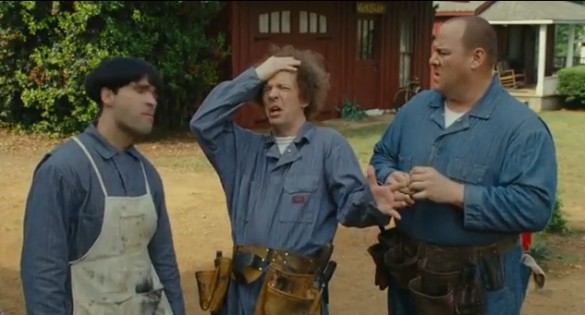
The Three Stooges,** one might concede the bishop a point or two...right in the eye-balls. The plot concerns the new version of the Stooges ("Moe"=Chris Diamantopoulos
, "Larry"=Sean Hayes, "Curly"=Will Sasso) trying to raise money for the orphanage they grew up in (shades of The Blues Brothers). The boys are left there as infants and grow up to be complete idiots (while the nuns age not a day***).
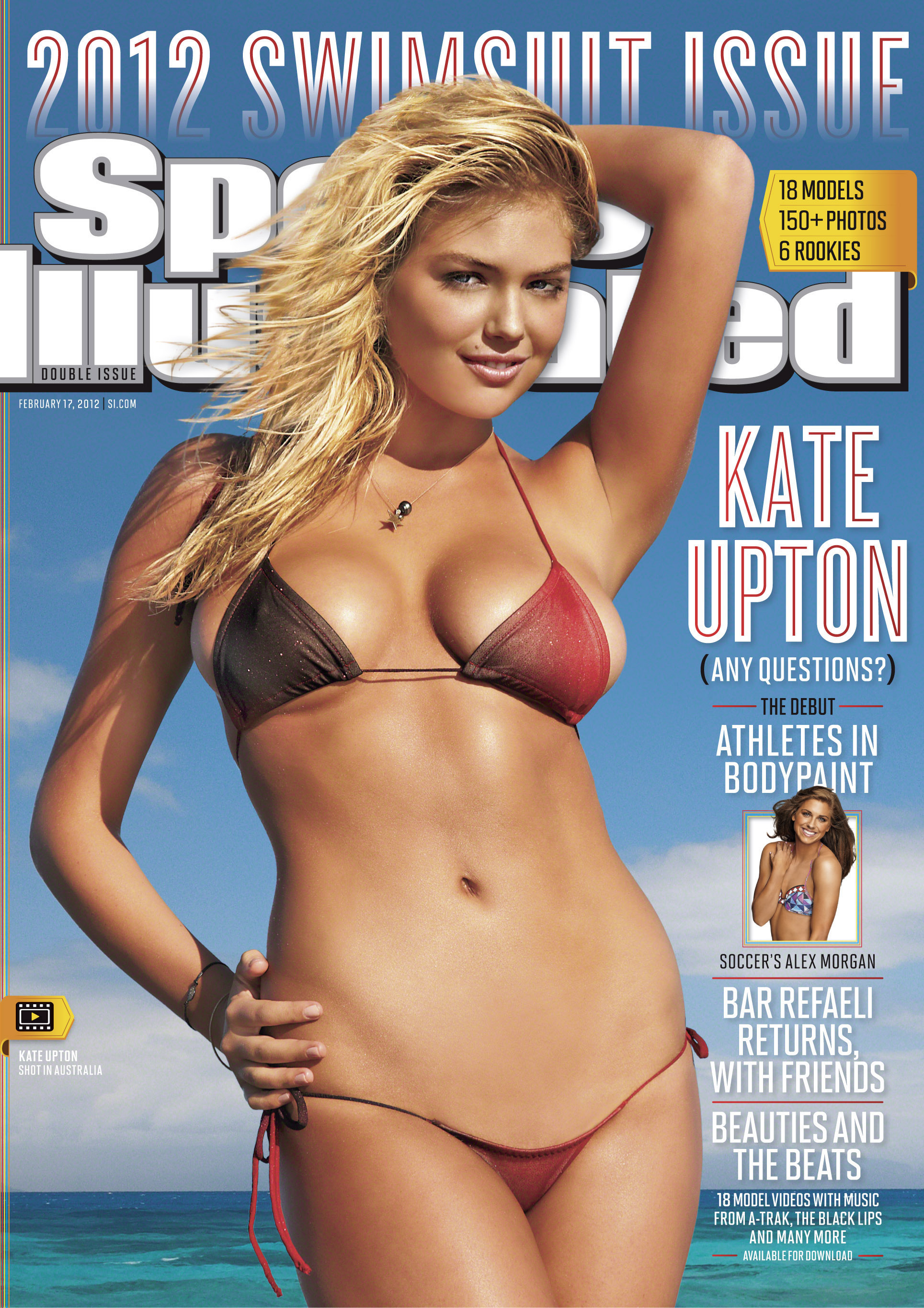
The nuns include Jane Lynch (unfortunately, dialed down from her potential), Jennifer Hudson, Kate Upton (Sports Illustrated's latest bikini cover-girl), and...Larry David (as Sister Mary-Mengele). It's a small shock to see David in the role, but apt, as he (she?) gets the lion's share of the abuse from the boys (and after years of cringing at David's antics on "Curb Your Enthusiasm" a little cathartic), but once the plot gets going, the hi- and lo-jinks get spread out for all sorts of guest stars, including Stephen Collins, Sofia Vergara, and the cast of "Jersey Shore" (also particularly satisfying, when "Moe" briefly joins and abuses the cast). The film is divided into three episodes that eventually come together at the end. It works, and surprisingly well, as the Farrelly brothers are fans enough not to mess with what worked in the past (and, of course, made them fans).
"Nng-yaaangh-yangghn!"
This director team is hit or miss for me. They can "work" (as in the anarchic There's Something About Mary) or not (Dumb and Dumber, where I didn't laugh once and kept checking my watch). But, this one clicks along at a good pace, generated by the facile performances of Hayes, Fasso and Diamantopoulos. The brothers are very aware that this one will be mostly for kids—their other PG-rated film was Osmosis Jones—and there's even a post-script (by Faux-Farrelly's) warning youngsters "don't try this at home" and showing how eye-pokes are done and the rubber hammers props. So, this is a diluted version of what they could have done with it, and one can only imagine how much further they could take it.
"Nng-yaaagh-yangghn!"
But then, one wonders what would have happened if the original casting had gone through: Jim Carrey as "Curly," Sean Penn as "Larry," and Benicio Del Toro as "Moe." All fell through for one reason or another. "Creative differences," maybe. Gee. Ya think? With those three involved, things might have been a bit more socially-oriented—having The Stooges involved in the banking industry, or maybe involved with the initial Hurricane Katrina response. But, I'd like to think that a great comedic vehicle ripe with with possibilities would be the one place they might naturally fit in—Congress. "Soitanly!"
"Helloooooo"
         "Helloooooo" 
                        "Helloooooo"
The original Larry Fine, Moe Howard, and Curly Howard (Rest in Pieces)

* I'm a recovering Catholic, by the way, take that for what you will.
**  Should we be calling it "Three Stooges 2.0?"  Or after the "Shemp" and "Curly Joe" years, is "Three Stooges 4.0" more accurate.  At what Stooge are we?)
*** This is a quibble and thinking WAY too hard for a Stooges movie—any Stooges movie—and that is one thing the Farrelly brothers do really well here: keep the comedy simple and stupid, on the order of the comedy era in which the originals wreaked havoc.  There's always a tendency in remakes and re-boots to complicate matters, as if to legitimize it in some way.  Not here.  You can't take this stuff seriously in any way, shape or form.  But, the sheer visceral joy of the Stooges is amped up slightly, matching the already precise vaudevillian timing of the first Stooges.

Wednesday, March 27, 2024

To Rome With Love

Written at the time of the film's release...

Around the World in Woody's Malaise
or
The Ozymandius Melancholia Gambit ("Turbulence!  My Favorite!")

Far be it for me to suggest that Woody Allen might actually be comfortable in his own skin as a storyteller. but when it has come time for him to do his own "Roman Holiday" film, To Rome With Love, there's not a hint of Fellini in it (Been there, done that—specifically, way back in 1980, when he made his Stardust Memories in tribute to the great Italian film-maker). 

Truth to tell, his latest has more in common with the Italian "anthology" films of the 1960's, where directors would tackle similar themes in short personal films.

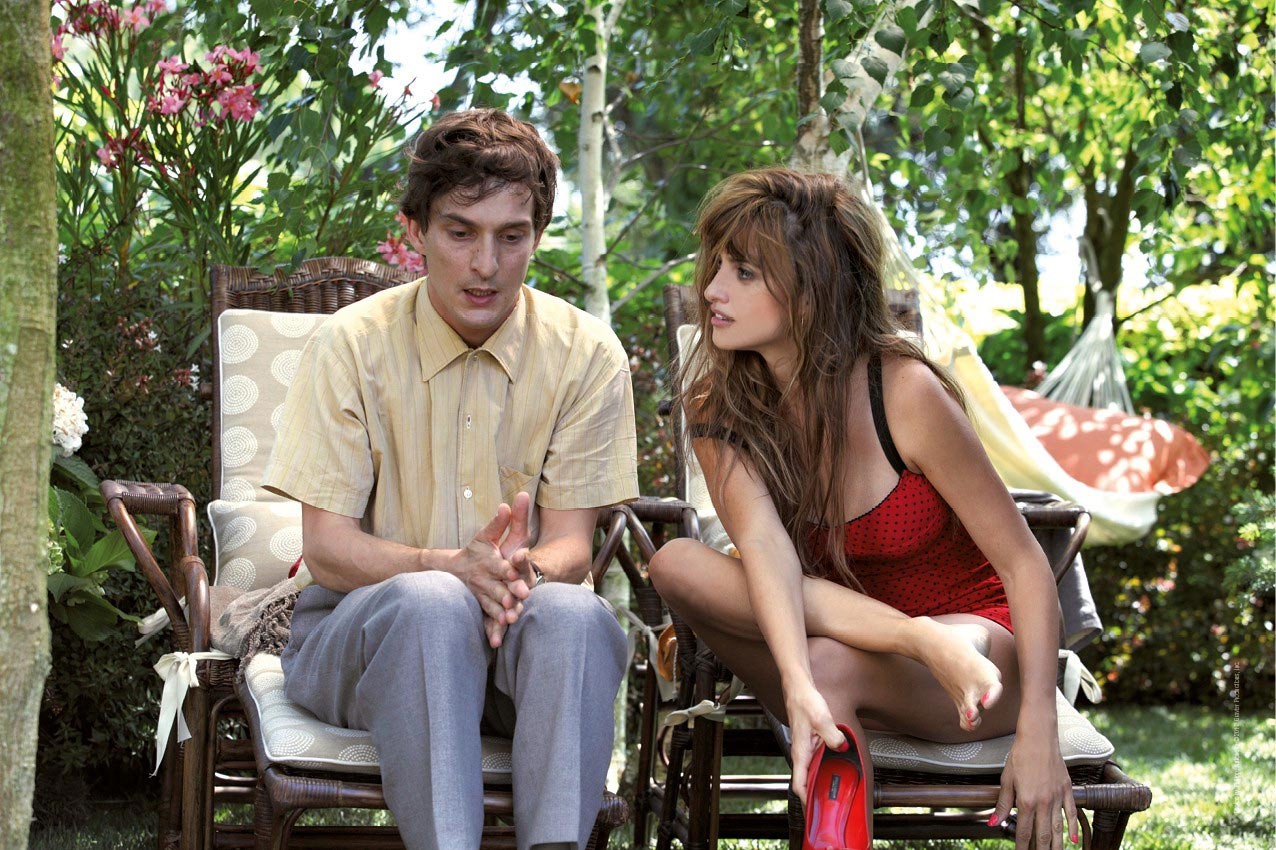
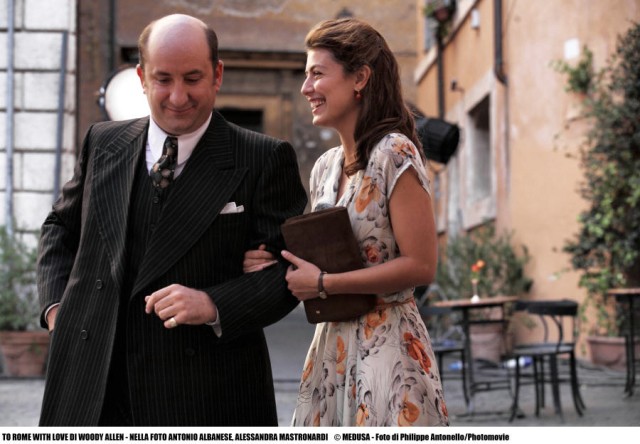
To Rome With Love has four interlocking fantasias about love and personal dissatisfaction: in the first, a young married couple (Alessandro Tiberi and Alessandra Mastronardi) come to Rome, where he is to be introduced to his new work situation—eager to make a good impression, the wife goes shopping and ends up getting lost and involved with an Italian film-star, and hubby, thanks to a case of mistaken identity, must go to his functions in the company of a pre-arranged hooker (Penelope Cruz); the second involves two architects, one seasoned (Alec Baldwin), the other just starting out (Jesse Eisenberg) who become each other's fantasy figures (of a sorts) when the young architect, already attached to Sally (Greta Gerwig), falls for her best friend Monica (Ellen Page), a self-involved, if fascinating, actress.
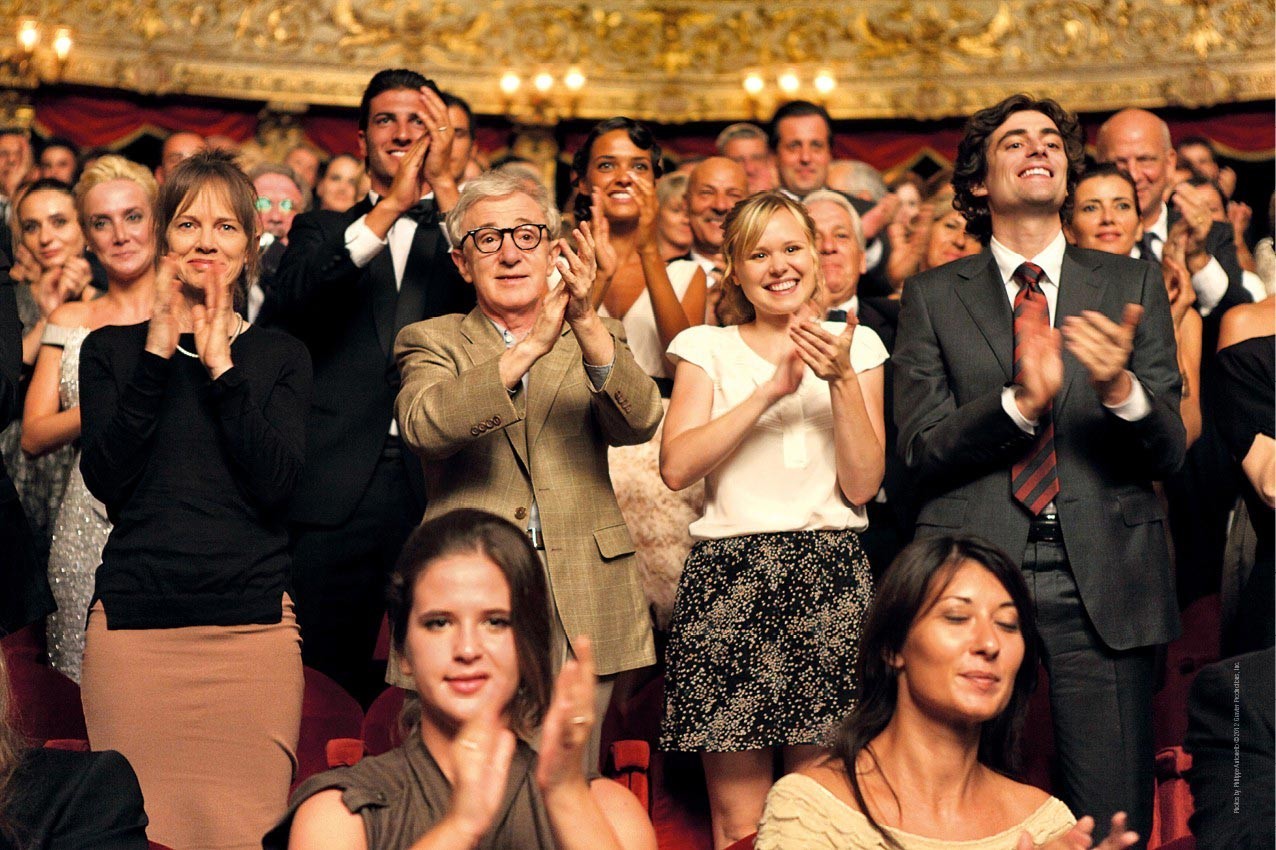
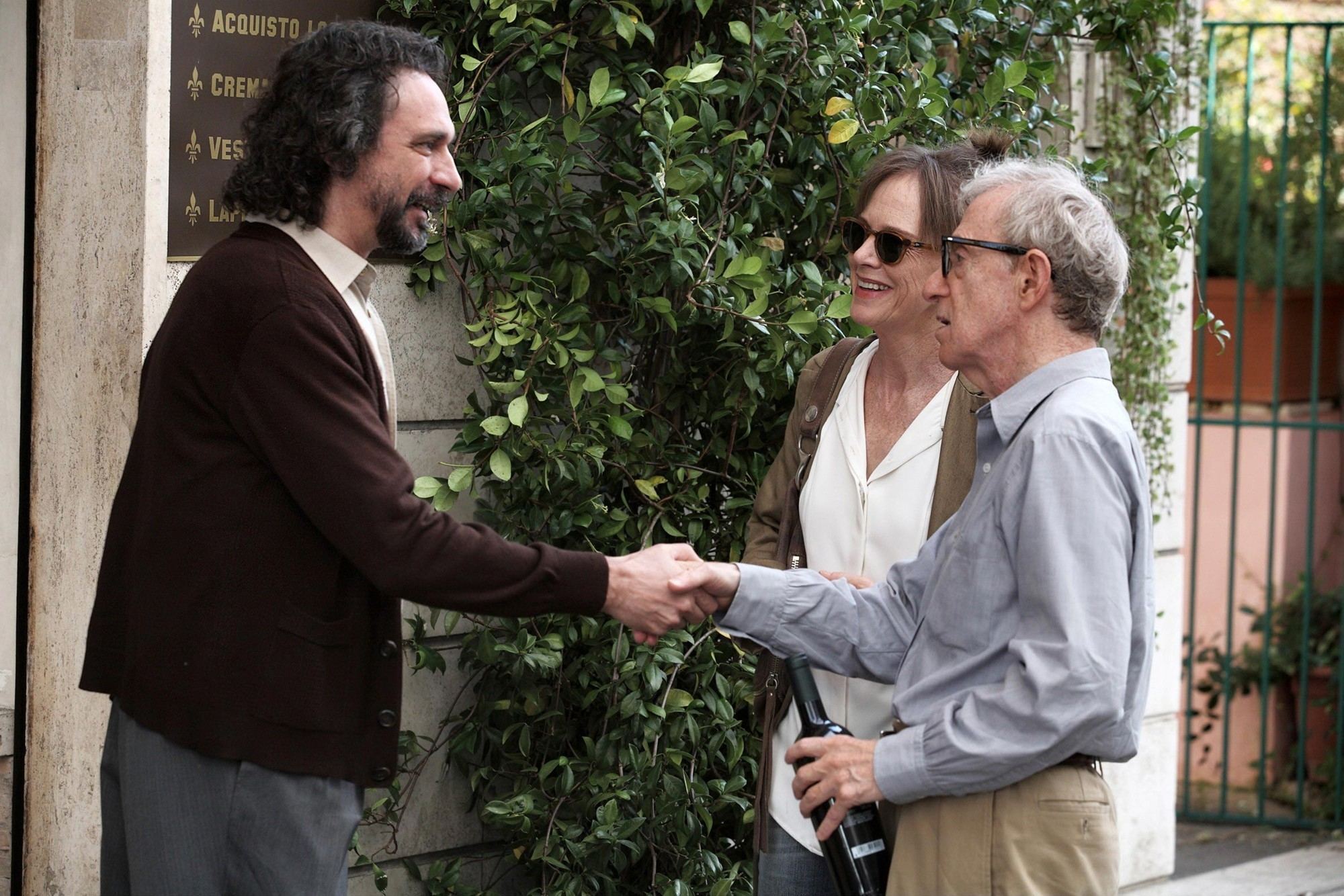
The third involves a "normal member of the middle class" in Rome (Roberto Benigni) who suddenly becomes "famous for being famous," and is pursued and interviewed by an indiscriminate paparazzi; the fourth involves a former classical music executive (Allen), who discovers a great opera singer (Fabio Armiliato) in the family of his potential son-in-law..with conditions.

The setting is Italian, but the themes are pure "Allen-town." Each of the characters get a brief glimpse of "life on the other side," gingerly placing their toes where the grass is greener, and find it wanting, but themselves enriched from the experience, survived without harm or consequences paid. Baldwin's architect gets to play devil's advocate (much the same way as Bogart did in Play It Again, Sam) with a realist's wisdom, as opposed to a romantic's fool-hardiness—a good cure for his nostalgia. The Italian couple experience romantic fantasies before settling down to domestic bliss, not older but wiser.
Benigni's civil-functionary briefly enjoys cultural significance, with all the invasiveness and dissection of minutiae, before returning to anonymity and the value of a private life, and Allen's retiree gets to witness a fulfillment of his dreams by providing a channel for another, and, having achieved it, returning to his normal life.
Any of these stories could be set anywhere. Rome provides a nice catalyst for these quick short pieces that summarize the Allen world-view: "Life is terrible, but it beats the alternative." And it's buttressed by the standard "Volare"...which mean "to fly." 
Happy landings.