The Piano(Jane Campion, 1993) This award-winning film by New Zealand's High Priestess of Ostracism is an off-putting drama that slowly seduces and mesmerizes.
We first meet Ada McGrath (Holly Hunter in her Oscar-winning role) in a way that no one else does—in her own words. Purposefully mute since the age of six, she finds herself sold by her father after an affair in her native Scotland and bought as a wife to a set-in-his-ways settler, Alisdair Stewart (Sam Neill) in a rain forest territory of Kiwi natives, a tribe of Māori. Think of it as a counter-clockwise Western of sorts, Down Under rather than Out West and Campion's themes start to come into focus. Ada and her child, Flora (Anna Paquin, in her Oscar-winning role) arrive by boat in widow's clothes and immediately stand out from the New Zealanders like...well, like a piano stranded on a beach.
Just as she carries her grief in the past with her muteness, she also carries her most prized possession—a grand piano—along on her semi-circumnavigation to the Outback. Seemingly an albatross, the piano is ultimately her most effective means of expression and also her passage to letting go of that past.
Dismissed as pointless by husband Alisdair, the piano is rescued and settled in the home of Baines (Harvey Keitel), who has forsaken civilization and lives with the Māori people. Baines barters with Alidtair, first for the piano, and then for lessons from Ada. Attracted to her, Baines then barters advances for keys of the piano—one key for a touch, two for a kiss. Thereby, Ada can buy back her piano, notes at a time, but there is more in the bargain.
What she's buying back is her soul. What she's buying back is her self. What she's buying back is her sexuality and everything that actually has been bought like a commodity in her arranged marriage to Alisdair. But the piano only reinforces burgeoning ties to Baines, and compromises whatever shaky freedom she attains with it. Alistair and his marriage are a prison that holds her against her will, when she already is so self-contained, of her own accord. That Baines takes possession of it, then acquiesces by offering the freedom of it back is too much for Ada to resist. And so, to have her soul, she must give some of her freedom away. It's a bittersweet rebellion that doesn't take into account her oppressor. When Alisdair hears of her infidelity, his revenge is to sever her connection to the piano in the most intimate way possible.
Campion is a lyrical film-maker who buries her messages as deep as a Kiwi rain-forest, but the films always ring true with a stark brutality that cuts through any mawkishness. In The Piano, her metaphors are more obvious than her past films. When, at one point, Ada is nearly taken to the bottom of the ocean by the piano, one can't help but think of the implications of materialism.
But, one is ultimately led to the thought that a woman needs a piano, like a fish needs a bicycle. And if one so chooses and loses one, there are plenty in the sea.
"It's Always Darkest Just Before Eternal Nothingness..."
Oh, they have been hypingJurassic World: Dominionto the point where one doesn't have to see the movie to feel harassed by dinosaurs. There's a glut of advertising tie-ins, a "look-back" television special (which I admit I watched), and I'm sure there's a breakfast cereal ready to hit shelves ("T-Chex!").
If there is, I'm sure it will be rather stale.
This is the sixth "Jurassic Park" film in the franchise, the third in the "Jurassic World" sub-set, which, when written and published by Michael Crichton, seemed like the flimsiest of his high concept novels. The whole thing started as a 1983 screenplay about a lone geneticist creating a dinosaur with disastrous Frankensteinian results. But, Crichton couldn't crack the reason "why" a geneticist would do such a thing. He decided that the only reason to do it would be for entertainment purposes, so he spliced Americans' fascination with theme parks*with kids' fascination with dinosaurs, and (of course!) the thing was a massive best-seller.
And a hit movie; Universal Pictures only agreed to Steven Spielberg's passion project Schindler's List (which they "knew" would not make money) if he first agreed to make Jurassic Park (which they knew would), and both films garnered the studio tons of money and awards. Spielberg even waived his own rule to not make sequels when he directed The Lost World years later. He is an Executive Producer on all the films.
But, that's all pre-history. What's this one about? Well, it's all about ecological catastrophe. The filmmakers have brought back the character of Lewis Dodgson (now played byCampbell Scott), head of the rival genetics company BioSyn who has hired geneticist Dr. Wu (BD Wong again), who has engineered a super locust that decimate crops that are not grown with BioSyn seeds, thus cornering the market on food production and threatening a world shortage unless his products are not used. The Jurassic Park island of Isla Nublar was destroyed due to volcanic eruptions, but Lost World's Isla Sorna (or "Site B"), where the engineering work was done is still a preserve for some of the creatures. Dinosaurs are now migrating throughout the Earth, which would seem like a big deal. Raptor whisperer Owen Grady (Chris Pratt) and Claire Dearing (Bryce Dallas Howard) live in the Sierra Nevada Mountains, carrying for Maisie Lockwood (Isabella Sermon), the cloned daughter of an InGen executive. The surviving member of three trained raptors, Blue, is also living in the Sierra Nevadas.
Got all that?
BioSyn has been very busy, not just planning a world food crisis, but also trying to track Maisie and Blue's child Beta (wait, I didn't say that Blue reproduced?) to bring back to their Alpian HQ for study. Meanwhile, there seems to be a black market for capturing the animals—something that Dearing is involved in trying to stop. That's when Ellie Sattler (Laura Dern) starts to become interested in those locusts and their ties with BioSyn. She recruits Alan Grant (Sam Neill), who is always glad to see her, for a little tour of the BioSyn plant to see what's going on. And guess who's working for BioSyn now: chaos theorist Ian Malcolm (Jeff Goldblum)!
Meanwhile, back at the ranch, Grady and Dearing discover that Maisie and Beta have been clone-napped by BioSyn and they set off to get them back, using contacts from the CIA. They track them to Malta—where there is evidently a big black-market—and meet up with a pilot Kayla Watts (DeWanda Wise), who had seen Maisie being transferred to a flight to Italy. So...everybody's going to the same place!
So...everybody's going to the same place and there will be dinosaurs there. You can guess the rest of the movie. Dinosaurs and humans do not mix unless it's in a dinosaurs stomach, so there's going to be a lot of threatened mastication going on. And a lot of running and hiding, and even more distracting dinosaurs with flares. In fact, there are so many of those, they could have just done it in one instance with a single J.J. Abramsmovie.
But, except for running around and hiding from dinosaurs, that's the rest of movie. The entire set-up has been explained and there's really nothing left to do. The trouble is the movie is set up like a bad Bond movie with a minimum of plot that merely threads action sequences. And, unfortunately, the stunt coordinator and second unit director is Dan Bradley (he's not listed in the movie on IMDB but his name is in the credits), who scurries through action sequences with quick shots that they barely register.
How's the cast? Well, Dern, Howard, and Goldblum do the best work—they also have the best lines—and Wise does some nicely laconic work as an Indiana Jones type. But, Pratt seems slightly disengaged as if he was thinking about the next project he's doing. And Neill is always a welcome presence, but his character has relatively little to do, so he goes in for that Harrison Ford-style mugging that was done in Return of the Jedi, just so he's got something to do.
But, the main attraction for the movie is usually the dinosaurs—and with the characters going by the numbers in this one, they have to be—and even there, this movie isn't all that impressive. Oh, the CGI wizardry has advanced so far from its origins in the original that you can practically see a brontosaurus' uvula for all the detail they put into it now. But, the CGI versions have less credibility than the puppets and animatronics—although a couple of triceratops babies look a little dodgy, too. There is no sense of wonder anymore, or sense of awe, especially as the 'saurs are moving so fast that they have less sense of mass...or threat.
As a result, Michael Giacchino's score has very few places for John Williams' celebratory, awe-filled theme for Jurassic Park—just a couple of snippets here and there—and that tells you all you need to know about the movie: fast and transitory, not pausing enough to take anything in, or dwell on it. The ideas have all been mined, so it just jumps from danger sequence to danger sequence.
Perhaps it's time to take a break, not make any of these for awhile, and, in the meantime, take some of Michael Crichton's DNA and recreate him, just so we can get some new ideas.
A sequence that was supposed to open Jurassic Park: Dominion but was cut for time. Do you think anybody would be interested in a Director's Cut?
* Crichton had used the same theme of parks in his directorial debut, Westworld.
"Use the Gizzard, Luke" or "Not So Much 'Hoo' as 'What' and 'Why'"
I loves me my fantasy films. You give me a good fantasy film, and I'm back to being 5 years old, giddy with the possibilities of a world-view that has no knowledge of mortgages, property tax, paralyzing self-doubt, and Glenn Beck.* Innocence makes a comeback, the world seems simpler, and it gives us something to aspire to besides not hitting the "Snooze" alarm in the morning. I miss those pre-cynical days.
Which is why a lot of the current crop of kids' flicks leaves me cold. Harry Potter used to be fun, but they've gotten increasingly dark and creepy, and they're going to end with an inevitability that's telegraphed and a bit morose (and I wouldn't be surprised if the last one were just a black screen). I mean, c'mon, the kid has an invisibility cloak and flies a broomstick for crying out loud, what's he got to be depressed about? The Star Wars films were fun before Darth Freud came waltzing in, then they careened into the side of the Death Star trench—impressively, one must say, but they weren't too much fun trying to present their civics lessons.
One goes into these things with that same innocence. Tell me a story. Gladden my eyes. Charm me. Seduce me. Make me not think about the $10 admission and the two hours I'm wasting of my too-short life. Give me something new and let me walk out with a spring in my step and a song in my heart, and maybe...maybe...a fresh, better way of looking at the world. We don't have to be friends, just don't make me regret the time I spent with you. I'm easy. I came to buy.
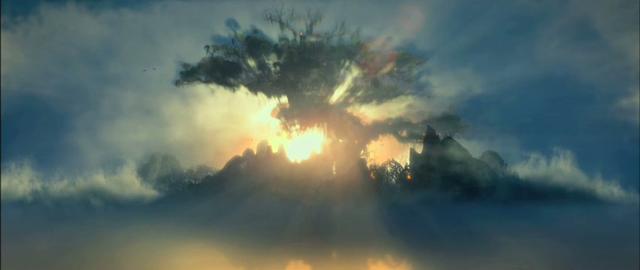
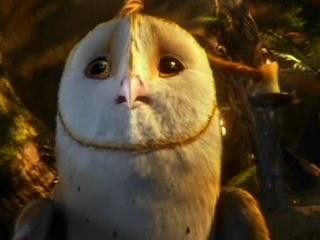
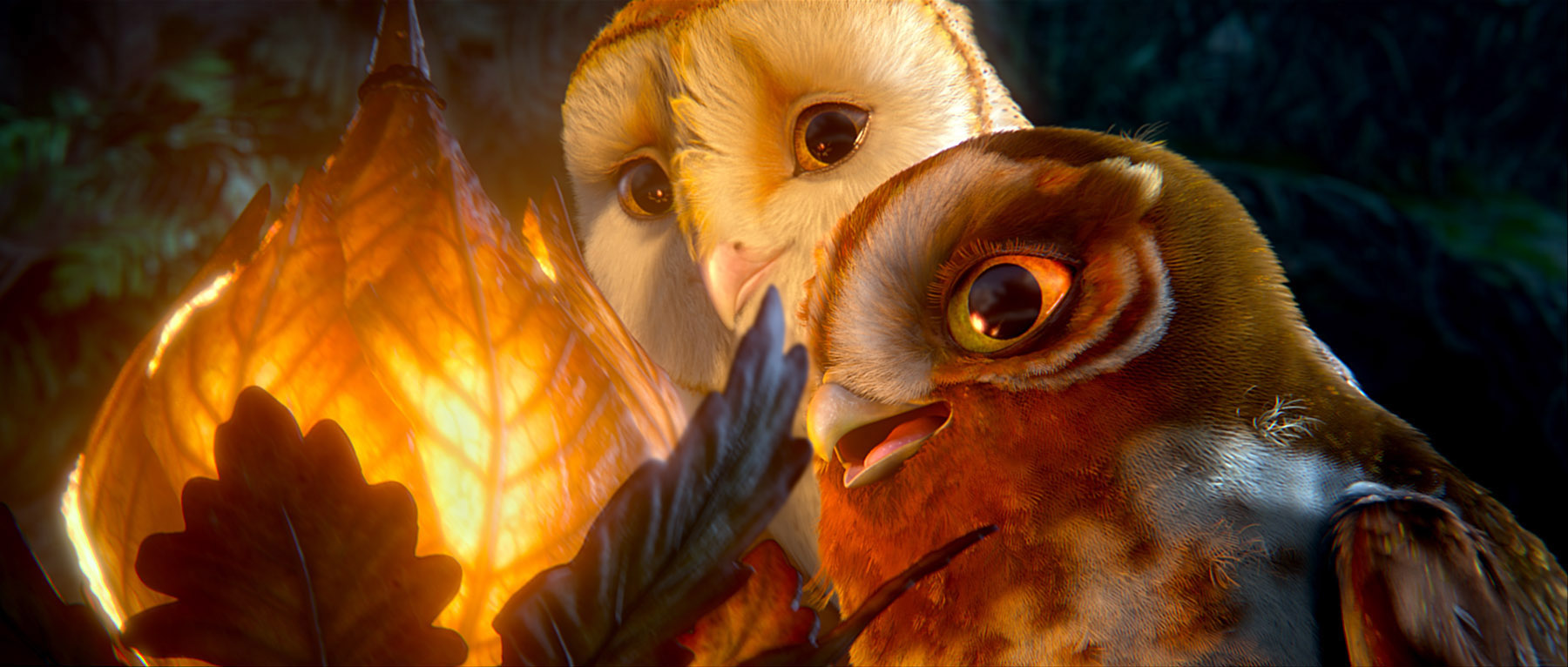
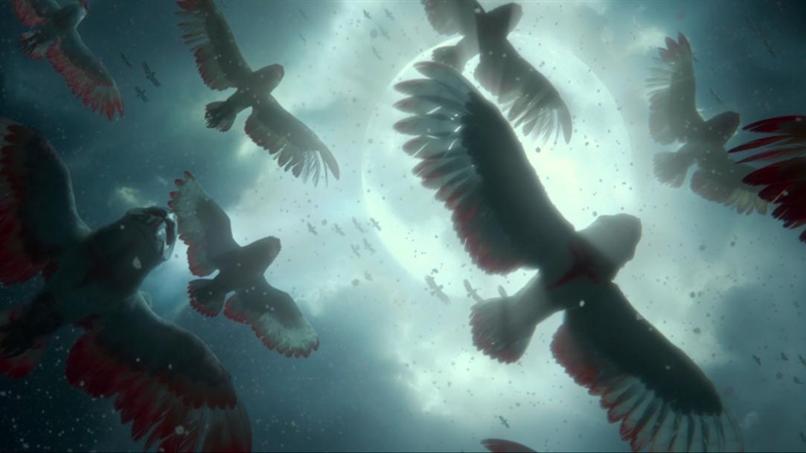
So, an animated owl movie sounds like just the ticket. I like owls, even though they're predators. They impress me, and I've enjoyed a couple of them as neighbors. But,Legend of the Guardians: The Owls of Ga'hoole(they needed the post-colon part, as the title couldn't be more generic) left me wanting to repeal the Endangered Species Act. Yeah, I know, the thing's popular with kids, but I remember kids used to like Clutch Cargo, which was the lowest form of animation there was.
The story is Template No.2 in the Fantasy genre—ostracized something-or-other must prove its worth against big, bad oppressors, while putting aside its childhood loyalties in some small way. But I couldn't help but think the authors just did a cut-and-paste job putting owls into Star Wars (yes, they really DO say "Use the gizzard" as a euphemism for instinct). The complete lack of anything original in the plot can sometimes be overcome by clever film-makers with style. Zack Snyder, as successful as he can be adapting other media—specifically graphic media—to a cinematic form, seems to be up a tree when making the leap from prose to image.
Now, I'm sure there will be some parent out there who'll read this and immediately take umbrage ("My child LOVED this movie!!"**) and want to go on the attack, as if I was writing this with their precious issue particularly in mind. For all you potentially psychotic parents, I don't question your child's taste (although I'd be willing to bet they were as fidgety as the kids I saw it with—and as I was—and I'd also wager that if they liked it, it was because they were familiar with the source material, and would be happy if there were a Ga'hoole breakfast cereal consisting of twigs and feathers), but this is a BAD movie. Really bad.
A reasonable child can like bad stuff (I loved the TV-show "Supercar" as a kid—which was a marionette show about a flying car, and I never questioned why all the cars were convertibles—so I speak from experience), but this is cotton candy movie-making, spun to give an ephemeral surge of interest, but with zero nutritional value (perhaps the calories should be posted in the End-Credits, I didn't stay to find out). When one considers how much time and money has been spent digitizing (one hesitates using the word "creating") this exercise, you begin to fantasize staking yourself out in a field, wearing a mouse-suit ("Come and get me, owls, you can't do anything worse than you already have!!). Better to salve your inner child with a daily dose of Babe, or Charlotte's Web.
If your child does drag you to this mess, I would suggest texting your friends throughout the entire movie...or even watching another movie.
I can't help but think that Ga'Hoole is a cynical writer's malaprop of "Go to Hell."
* The problem with re-posting old reviews is that there are references the reader might not have any clue about—like Glenn Beck who used to be somebody. Billy Wilder ran the same danger when he put in topical references into his movies. Unless he was very careful, 50 years on people wouldn't know what he was talking about, cultural-reference-wise.
** I still remember the time some parent castigated me for hating Speed Racer. The movie sucked...and it's a deeply cynical thing to show a child. I'm unremorseful in my assessment. (2021 Update: I'll be re-posting reviews of Speed Racer and Watchmen next week).
Dead Calm(Philip Noyce, 1989) Around 1966, Orson Welles decided to make a thriller, with a small cast and the simplest of plots in an effort to appeal to a mass audience, who had not supported his Shakespearean films of the 1950's and 1960's. It was more like his pulp-thriller films, that he would alternate with his more serious films—The Stranger, The Lady From Shanghai, Touch of Evil, and Mr. Arkadin. The film, entitled The Deep, was based on a 1963 pulp novel by Charles Williams called "Dead Calm" about a couple sailing on their honeymoon who encounter the lone survivor of a sailing disaster. The straggler's story doesn't quite add up, so the husband steers towards the imperiled ship, while the "guest" sleeps down below. When they arrive, the husband goes to investigate, discovering that his suspicions are correct, finding two other survivors who tell him that the man who had rowed to his ship had managed to kill another passenger and suffered a psychotic break. The information comes a little late as, back on his ship, the man has awakened and taken control, sailing away and kidnapping his wife.
Welles shot the film from 1966 through 1969, self-financing (as he usually did) and getting his minimal cast together (himself, Jeanne Moreau, Michael Bryant, Oja Kodar, and Laurence Harvey) when funds were available. At some point, the film was abandoned without a climactic scene being shot, and in 1973 Harvey died, which effectively prevented the film from ever being finished without extensive re-shoots. Welles moved on.
Welles passed on in 1985. Before then, producer Tony Bill had been trying to obtain the rights from Welles, but was always rebuffed. After Welles' death, he gave the book to director Noyce, who persuaded George Miller and Terry Hayes, fresh off their international hit, The Road Warrior, to see if they could acquire the rights from Kodar, Welles' mistress at the time of his death. The story was bought and plans started for a new film made by the now-burgeoning Australian film industry, with Miller producing, Hayes writing, Noyce directing and, as the two leads, Sam Neill and Nicole Kidman—who had appeared in Hayes' mini-series "Bangkok Hilton" and Hayes' and Noyce's "Vietnam". American Billy Zane was cast as the lone survivor of the ship mis-hap. Hayes' screenplay eliminated any other survivors. The story would be a triangle on the high seas.
Noyce's film begins with interior shots of a car making its way through disorienting low-vision rain squalls only to end in an accident that kills the child of Royal Australian Navy officer John Ingram (Neill) and his wife, Rae (Kidman). To deal with their grief, Ingram takes his wife sailing across the Pacific on their elaborate yacht. For awhile, it's just the two of them and their dog and an extensive ocean far from land and memory.
Enter Hughie Warriner (Zane), or more specifically, his ship which the Ingrams see is taking on water. John sails over to the ship to find that a survivor is rowing over to them. They take Hughie on-board and he says that he is the lone survivor on the ship, the others having died of food poisoning.
But, John is suspicious of the story, so once the exhausted Hughie is asleep below, he rows over to the ship, only to find that it is indeed sinking, but the bodies on-board did not succumb to food poisoning, but to a violent attack, the evidence pointing to none other than Hughie—the very guy who is on-board his ship with his wife. The stowaway takes control of the ship, leaving Ingram alone on the disabled vessel to try and keep it afloat long enough to get it back under power in an effort to pursue the vessel.
The movie then concentrates on two fields of struggle: John Ingram on the abandoned boat, trying to keep it afloat and under power; Rae with their dog (who is, frankly, no help) and a deranged individual who isn't afraid to knock her out in order to commandeer their boat—she has no idea what John has discovered on the wrecked ship that he is now stuck on. While John is struggling to keep things afloat, Rae has to manage with Hughie who vacillates between bi-polar mood swings of fawning neediness to homicidal rage (with over-lying delusions of grandeur). One is not sure which Hughie one is going to get at any moment, so toad-like is his squirming mind.
Noyce ramps up the tension with obvious sexual dynamics. The marriage between John and Rae is an visual mis-match—Neill was in his 40's at the time of filming while Kidman celebrated her 20th birthday during that time. We've become inured to the age differences between romantic leads in the movies—well, you have if you've watched John Wayne or Bogart movies—but, the disparity in their ages creates a risk factor for the solvency of the marriage even before Hughie's third wheel makes the cramped boat too crowded.
And they are on this trip because of the recent tragedy of losing their child. What frame of mind Rae could be in and how vulnerable she could be in a crisis is always in the back of the mind. How does she resolve the issues, how does she fend off Hughie, who, though unstable, IS a bit of a hunk and closer to her age (even though he is a childish maniac). Hayes and Noyce run a razor's edge of tension for the audience, but the key ingredient in their conspiracy is their barely-out-of-her-teens lead actress, Nicole Kidman.
The role would be tough enough for anybody (Barbara Stanwyck does something similar in the 1953 thriller Jeopardy, but that's Stanwyck) but for someone that young, the idea must have been daunting. Kidman, however, is a quick study, able to turn her mood on a dime that is quite convincing to Hughie—and, at times, the audience. Kidman's Rae is a daunting opponent, but her youth makes you worry about her. By turns seductive and wary, she splits her time trying to communicate with John, while seducing Hughie—trying to delay a situation that will turn outright sexual, and conniving time to plan dealing with him if the situation turns violent, stockpiling weapons and her sleeping prescription to knock him out. It's a very contained cat-and-mouse game. But, one begins to suspect her character does not have allies in the writer or director, putting her at constant risk.
At one point, they make it unavoidable and she does have uncomfortable sex with Hughie because she runs out of ways to deflect it. But, once she does, she amps up the attack, drugging him into unconsciousness and taking back command of the ship to steer it back to her husband. Still, the audience's edginess is not calmed.
For all the jolts and fireworks in the film's conclusion, the filmmakers were forced to go back and add a coda, a "sting in the tail," as the original cut left audiences dissatisfied with the way Hughie's fate is left unresolved and providing a more definitive end with a bit more...flare. It's over-the-top and a lot more jarring than the rest of the film, even if audiences wanted a more dramatic death-stroke. Also, the way it's presented is a bit unfortunate as it weakens Rae's character a bit, making her a damsel in distress that can only be rescued by John's timely arrival, which upturns the partnership the couple have spent the entire movie bonding to dispatch him.
It's a blunt "playing for keeps" ending that snaps so much of the work done by everyone in the film, which is less of a thriller, than a "tensioner," from the gamut from sexual to circumstantial, never leaving the audience comfortable or complacent. It doesn't quite scuttle the picture, but it does take some of the wind out of its sails.
The Hunt for Red October(John McTiernan, 1989) We're grudging fans of Alec Baldwin in the BXC household, so every so often it's nice to go back and see "serious actor" Baldwin before he stretched his comic chops (an opportunity made common by this film's seeming omnipresence on cable channels these days). "The Hunt for Red October" was a dry-as-a-bone Tom Clancy novel based on a long-rumored incident involving a Russian nuclear submarine accident that Clancy turned into a cat-and-mouse game between a defecting Russian sub commander, and the American and Russian fleets in the North Atlantic. In the book, the action was sometimes intriguing, but the characters were non-existent, right down to the motivations of Captain Ramius, and the novel's Clancy-stand-in-hero Jack Ryan. Producer Mace Neufeld (who must have had the patience of a saint given his long-term producing relationship with the late Clancy) turned it into a first-class film of intrigue top-heavy with male actors (by my count the only females are two stewardesses, Gates —Star Trek's "Dr. Crusher"—McFadden as Mrs. Ryan, and the kid who plays Ryan's daughter). So, here's the run-down: Baldwin, Sam Neill, James Earl Jones, Scott Glenn, Courtney B. Vance (making the most of a great part), Richard Jordan, Joss Ackland, Stellan Skarsgard, Peter Firth, Jeffrey Jones, Tim Curry, Fred Thompson, plus comedian Rick Ducommun and I swear I see Michael Biehn in the helicopter scene. And as the man everybody talks about, Sean Connery as the Scottishly-accented Lithuaninan Comdr. Ramius.*
It all works, as a spy/adventure story, as a detective story, a military exercise, and a submarine movie...and a character piece. Nobody comes out and says anything about their feelings, but actions define the characters, and with all the sub-time, there's a lot of celluloid of people standing around talking..and for the most part it's good functional talk that propels the movie along. Plus, you'll come away with a gloss of submarine tactics, of sonar capacities, the strategies of "arming" torpedoes, and a healthy respect for the difficulties of landing a jet-aircraft on a carrier during bad weather.**
Respect also for Baldwin, who managed to make a human being out of the cypher of Jack Ryan through the force of his own personality--his Ryan is something of a geek, like Ben Affleck's later interpretation--and proved himself an adept for actor imitations (nice skewering of Thompson and Connery there, Alec) Plus, a crisp snap to the brim for suggesting and making good on the overhead shot of Ryan cutting his tether from a helicopter to gain entry to an American sub during a violent storm, and looking UP at the camera to make sure we all know it's actually him (pre-CGI) doing the stunt.
There was minimal CGI involved—and in fact, due to budget constraints, the filming of the underwater scenes were as low-tech as you could get—suspended model shots of subs were puppeteered through underwater landscapes filmed in a dry warehouse filled with smoke. Crude particle and wave generation was all that was needed to complete the image. But it's indicative of the back-to-basics approach to The Hunt for Red October--an old-fashioned sea-hunt that satisfies.
* The script, by Donald E. Stewart and Larry Ferguson (who also wrote himself a good part in it) is augmented by dialog commissioned by Connery from one of his favorite writers at the time, John Milius, his director in The Wind and the Lion, and Milius provided him some lovely chewable dialog throughout the thing, as in...this scene. ** But my favorite moment in the movie is a brilliant stroke--the smooth transition in dialog from Russian to English as Firth's Political Officer reads a passage from a bible owned by Ramius' late wife: the camera moves in on Firth reading the passage--Revelation 16:15-17--(in Russian) and stops on one commonly-pronounced word--"Armageddon"--and when the camera begins to pull back, he continues...in English. It's a neat trick, perfectly strategized and played...like so much of the movie.
Shit...Just...Got...Real! or "I've Got Me Own Thing: Ricky-Town. Population: Ricky"
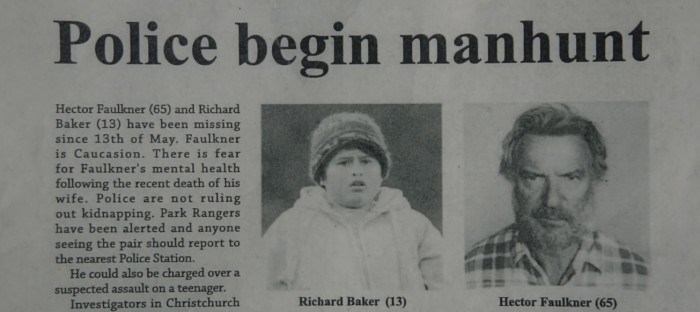
New Zealand Child Services pulls up to a house at the edge of a "million hectares of wilderness" and drops off a lump of a kid, Ricky Baker (Julian Dennison)—an incorrigible ("A real bad egg...He's a bit of a handful—and that's just the stuff we know about")—who's been bounced from foster-home to foster-home and lands here in the care of Bella (Rima Te Wiatta), who couldn't be more delighted with the prospect.
The kid wanders around the humble farm-house, instantly hates it and gets back in the car, while the CS woman, Paula (Rachel House), talks down just how difficult the kid is. She pulls the kid, Ricky Baker, out of the car (which he does reluctantly) and sniffs: "Alright, time for the inspection!" She stays in place, looks around casually and says "Up to our high standards! Looks fine" and heads out in the local squad car (with a joking "...and remember, no returns!", leaving Bella and Ricky to get acquainted.
Ricky may be a bad egg, but Bella is a good one and she is delighted with the prospect of the Maori pre-teen becoming part of the family. She shows him around the farm—such as it is—and they encounter Hec' (Sam Neill): "You can call him 'uncle' if you like" "No, he can't!" is Hec's gruff reply. Heck is a generally disagreeable sort, off set by Bella's force of nature maternal generosity that seems to overflow, admonishing Hec' when he says at dinner "So, have you ever worked on a farm or are you just ornamental?" Bella has an innate ability to figure out what a kid needs, supplying Ricky with a cozy room, a hot water bottle under the sheets and a large knife on the nightstand "to kill monsters in your dreams."
Although Ricky appreciates the hot water bottle, his nature ("I didn't choose the skuxx life, the skuxx life chose me") compels him to grab a torch and run away, traveling all night in the wilderness until he falls asleep. When he wakes up, there's Bella, congratulating him that he made it that far after traveling all night, and telling him breakfast is ready. He's made it 200 metres. Ricky may fancy himself a bad-ass, but he's clearly a bad-ass with no discernible (or broad) goals. But, breakfast sounds good. He follows Bella back to the farm-house.
Life is relatively good. He and Bella have a good relationship—after Bella kills a wild boar with only a knife, he realizes she has far more street cred than he does—and considering that, after a series of bad matches with foster-homes, his next stop would be "juvey," he decides to make the best of it, making friends with the farm-dog "Dag" and grunting acquaintances with Hec', who sees Ricky as a passing phase, not even being impressed that Ricky composes primitive haikus for his anger management. That fringe of a relationship will be tested by circumstance, forcing the two to come to grips with their situation and each other, as they go on the run in that "million hectares of wilderness," living by their wits and, ultimately, becoming outlaws, running from authorities who have no understanding of their situation. What starts out as an odd-fellow relationship comedy turns into a tall-tale of a chase movie, where two vagabonds discover the value of family, however loose that definition may be.
Hunt for the Wilderpeopleis odd, quirky, and laugh-out-loud funny, a Twain-ian coming-of-age story (based on the book "Wild Pork and Watercress" by beloved Kiwi author Barry Crump—known affectionately as "Crumpie") adapted by filmmaker Taika Waititi, whose last film was the hilarious vampire comedy What We Do in the Shadows. Waititi has the innate ability to mine laughs out of the corners of the lives of outsiders, who must deal with the same everyday inconveniences that we all do, that, combined with their own idiosyncrasies, makes them simultaneously curious and relatable. He is helped immeasurably by kid actor Julian Dennison, who has the inscrutable quality of not appearing to be doing much acting while projecting at full volume, and with a razor-sharp sense of timing in his dialog. As so much of Waititi's humor is pacing, Dennison is an able co-conspirator.
And Sam Neill is a revelation. So much of what he's relied on in the past has been star-charm and a twinkle in the eye, but there's none of those old tricks here. This is some of his best work since his very early unsentimental film days. His "Uncle Hec" is crusty and not very likable, but, like the kid, grows on you the more screen-time he has, which is considerable, as Dennison and Neill soon become the sole focus of the film.
It's one of those rare instances where the less said about the film, the better so as to not spoil it, other than to say that I was actually sorry to see the movie end. And movies like that are getting few and far between.
 The Piano (Jane Campion, 1993) This award-winning film by New Zealand's High Priestess of Ostracism is an off-putting drama that slowly seduces and mesmerizes.