Showing posts with label Laurence Fishburne. Show all posts

Saturday, September 28, 2024

Megalopolis

Marcus Unrealius
or
Utopias Turn to Dystopias
 
"Look back over the past, with its changing empires that rose and fell, and you can foresee the future too."
Marcus Aurelius, Meditations

More than a decade ago, at a second-hand book store, I picked up a tome called "The Greatest Movies Never Made,"* which detailed a lot of films that had been proposed, had gotten to the script stage or pre-production and then for whatever reason, it was never made—films like Jodorowsky's conception of Dune, Hitchcock's Kaleidoscope, Philip Kaufman's Star Trek film: Planet of the Titans...
 
 
Now, that book was written a couple decades ago, but the sound of it was intriguing, although a little vague about the details.** It sounded like Fritz Lang meets Ayn Rand in a sci-fi setting. But, Coppola was determined to get it made.
A concept drawing of Megalopolis that I remember from that book.
 
And now, using his own money, he has, at the age of 84. 
 
"A man's worth is no greater than the worth of his ambitions."
 Marcus Aurelius, Meditations
 
Based very loosely on events known as the Catilerian Conspiracy, Coppola's film tells the story of Cesar Catilina (Adam Driver), nephew of the rich and powerful Hamilton Crassus III (Jon Voight) and head of the Design Authority of New Rome in the "Third Millennia, 21st Century," a city divided between the extremely rich and the poor. Catalina has access to a wonderful substance called Megalon—another wonder-element along the lines of adamantium or unobtainium—the purpose of which is simultaneously vague and omni-versatile. With it, Catilina intends to build a "perfect school-city for the future" in the heart of New Rome, while the Mayor of New Rome, Francis Cicero (Giancarlo Esposito) would rather build a new casino, another pleasure-dome for the rich and idle. At a televised unveiling for the proposed gambling complex, Catilina interrupts by reciting Hamlet's soliloquy (almost all of it) and accusing Cicero of being nothing more than a slum-lord.
But, before one gets any further into the plot, there is one curious thing to mention: In the preliminary sequence of the film, it's shown that Cesar seems to have the ability to stop time. Walking precariously to the edge of the Chrysler Building, he leans over and stops time—the fleeting clouds halt and the traffic below comes to a standstill with nary a honk. And in that gap, Cesar rights himself, defying gravity and moves back away from the edge. That would seem to be a really big story-point, but except for another sequence where he does it and some business about losing the ability later in the script, not much is done with it. Is it a fantasy (could be)? A vision (there is evidence of such in Megalopolis)? A delusion (there, too)? As a thesis statement for a movie, it's a powerful one, but rather than hammer it home, it's a neglected conceit. 
 
The movie will have a lot of those.
"The art of living is more like wrestling than dancing, because an artful life requires being prepared to meet and withstand sudden and unexpected attacks."
 Marcus Aurelius, Meditations
 
If Cesar was just in conflict with Mayor Cicero, things would be easy, despite the considerable clout the Mayor commands (aided and abetted by characters played by Jason Schwartzman, Dustin Hoffman, and others). But, there's others including his cousin Clodio Pulcher (Shia LaBeouf), heir to the Crassus fortune, who despises Cesar and seems to live for outliving his uncle to gain his inheritance, a deep-seated attraction to debauchery and finding any means to thwart Cesar at any cost. Then there's Wow Platinum (Aubrey Plaza), a tele-"journalist" with a ravenously ambitious streak attracted to power, starting first as Cesar's mistress and then marrying Crassus with the aim of becoming a rich and powerful widow. 
All of these characters are, to say the least, self-obsessed, but, then, so is Cesar, even if his devotion is to seeing the creation of his Megalopolis and done to his precise vision of what could be possible with Megalon. Aiding him in his quest are his chauffeur/historian Fundi Romaine (
Laurence Fishburne), and a fascinated acolyte, former good-time girl Julia Cicero (Nathalie Emmanuel), daughter of the Mayor, who begins to become fascinated with Cesar after witnessing him stop time during the demolition on the Megalopolis site (how come she isn't frozen and does anybody else notice that...?...let's not quibble as you're not going to get any answers).
The film follows the burgeoning relationship between Julia and Cesar and the various machinations to discredit our hero and his ambitions, even as we're led through the decadence and the moral lassitude of the upper-crust of New Rome, living like there's no tomorrow while the vast majority of New Rome can only gawp at them through chain-link barriers. Oh...and there's one other complication—A Russian space station has become de-stabilized in orbit and will probably land square on New Rome causing mass destruction on a convenient scale.
Coppola has been working on this project since Apocalypse Now, actually starting filming it in 2000—that's where he's getting the city-spires reflecting golden hour magic on a grand scale—but financial ruin, studio cold-feet, 9-11, and his fortune-making wine business all delayed progress, while he dabbled in small films with smaller budgets to see how he could make things more economically. All the time events in the press influenced the script, concept-artists came and went, and Coppola tinkered, re-wrote and tinkered again, the idea always in the back of his mind.

"It is the responsibility of leadership to work intelligently with what is given, and not waste time fantasizing about a world of flawless people and perfect choices."
 Marcus Aurelius, Meditations

So, how is it? A bit of a mess, really. But, a glorious mess. Not unlike his movie Twixt, and not unlike the Redux cut of Apocalypse Now—with the pace-killing French plantation scene which the under-the-gun Coppola finally cut completely, making a tighter more-focused film. One should always be wary of Directors' so-called "dream projects"—sometimes they're just too close to the things to be rigorous about it and lose the sense of the audience's dispassionate perspective. It's nice to have complete control, as long as you don't Ayn Rand the thing to death with the "purity" of your vision. There are whole little bits where the actors are encouraged to improvise (I'm thinking of a scene in Cesar's office where he's supervising co-workers in forming an odd human pyramid to create a geometric shape that—although it might have been fun to do on-set at the time—seems completely nonsensical and...unnecessary to advancing the story) that might have been better left on the cutting-room floor.

Though this be madness, yet there is method in't. 
 Hamlet (Polonius, Act 2 Scene 2)
William Shakespeare
 
But...but...there are moments where the imagery is just too exquisite to ignore. Coppola has always had a great eye, whether as a consumer or as a producer of movies, and there are odes to Fritz Lang (especially his Metropolis which is a spiritual cousin to this), German expressionism in general—even an ending nabbed from The Great Dictator—and his own experiments with practical effects in Bram Stoker's Dracula, Apocalypse Now, and techniques of the silent era—so many irises, split screens, and layered images (his way of showing the satellite's destruction of New York is far more interesting than just another CGI shock-wave and he had one act of violence that propelled me out of my seat) that you can't help but be dazzled.
But maybe not seduced. For all the luxuriousness of the visuals, the story is a little threadbare, lacking some connecting tissue that might have propelled the story along, little details (something Coppola is so good at) that might have prevented some thought-stuttering that wrenches you out of the flow of  experience that a more assured story-narrative would ensure. There are just too many leaps of faith that make the watching less comfortable and more precarious.
It also might have something to do with Coppola being much more versed in the Catilerian Conspiracy than your average movie-goer. Although there's nothing wrong with aspiring to connect with the lowest common demoninating audience, I doubt that many folks will recognize his references—"Oh, yeah, that 'vestal virgin' thing!"—and be merely puzzled as they go over your head like so much satellite debris.
"Everything we hear is an opinion, not a fact. Everything we see is a perspective, not the truth."
Marcus Aurelius, Meditations
 
So, what do we have in Megalopolis?  Let's call it a tentative failure. One should always be cautious with first impressions, even though one should trust their instincts. But, the shock of the new may blind-side you—it happened with Apocalypse Now, after all—and I'm always a bit cautious with late-era directorial efforts, like the casual dismissals of Stanley Kubrick's Eyes Wide Shut or John Ford's 7 Women, both of which get better with every viewing. And one should always give extra credit to a director swinging for the fences even if they never get out of the infield. 
One might go forward by looking back. Coppola has made a wide variety of films, some of which have connected with audiences and some that haven't. With very few exceptions—I'm thinking The Conversation—they have dealt with interconnectedness, of people relating to each other despite differing perspectives, and different personal agendas.
And they're about family, whether it's a formalized family or not, nuclear or not—of the stoic and disciplined against the passionate and unprincipled. And they're about ambition and how it can inspire...or destroy. Those conflicts can exist in any person, but most obviously in artists. It's like Coppola has been making autobiographies about his own conflicting artistic instincts in the same way Howard Hawks' "teamwork" movies were inherently metaphors for making movies. A much younger Coppola would have made Megalopolis end as a cautionary tale. The older, wiser, more hopeful Coppola ends this one with positive reconciliation.
 
Perhaps reappraisals can start with that.

“The first rule is to keep an untroubled spirit. The second is to look things in the face and know them for what they are.” 
 Marcus Aurelius, Meditations
 

* Or something like that. I lent it to someone and, as I'd read it cover to cover, I didn't care if I got it back. Since it's publication, there've been a couple of other books with similar titles about the same subject. 
 
** Coppola always played things tight to the vest. I read an interview with Coppola in Andrew Sarris' "Interviews with Film Directors" where he was asked about what his next movie was (this was around the time of The Rain People) and he answered "I've written a script called "The Conversation". It's about a guy on his 50th birthday." Technically true, but he left a lot of it out.

Friday, August 5, 2022

Predators (2010)

The new "Predator" film, Prey, premieres today...and it's getting great reviews (Rolling Stone calls it "a masterpiece"—probably right before a fashion or fragrance ad), so guess what? Disney/Fox isn't releasing it to theaters, and has it streaming on Hulu.  Another "Mickey-Mouse" move from a studio that has surrendered to the online challenge and given up on "presentation".

And The Movies.

Here's a review of one of the series I thought was pretty darn good, written at the time of its release.

"Its Jungle. Its Game. Its Rules. You Run. You Die."
or
"Last Tango in the Game Preserve"

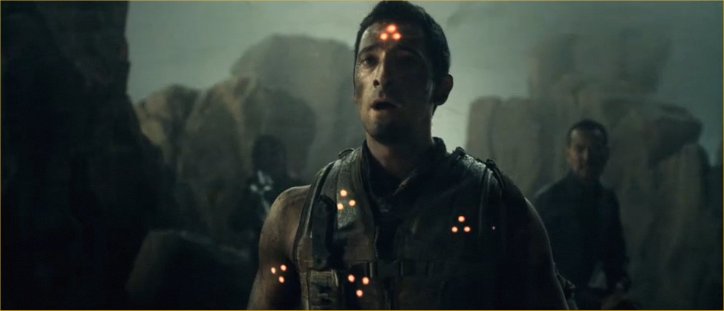
"Predators" drops you, literally, into itself. It opens as one of its combatants (Adrien Brody) is in free-fall, with no idea where he's dropped from and no idea where he's dropping to. All he knows is he's in free-fall. He doesn't even know if he'll survive the landing. Or how. All he knows is the panic, the wind, and the thing beeping on his chest in an increasingly accelerating rhythm.
 
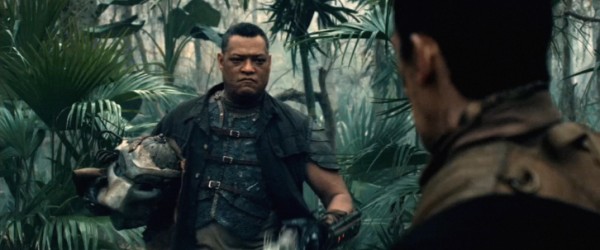
Once he makes land-fall, he finds himself surrounded, by an impenetrable hostile jungle and a rag-tag clutch of mercenaries (Alice Braga, Walton Goggins, Danny Trejo—a new trailer for Machete is attached to the print—Oleg Taktarov, Louis Ozawa Changchien, Mahershalalhashbaz Ali, Laurence Fishburne—doing something very, very different this time, brilliantly) and a doctor (Topher Grace?!), an odd-man-out in a team of hostiles from every hot-spot corner of the Earth.
First, they must learn to trust each other—
they're all loners, but Brody's character is more of a lone-wolf than others, interested only in survival, names are not important, and familiarity breeds empathy and weakness—which quickly becomes irrelevant when they discover that they are part of a deadly game—they are ruthless predators being pursued by an invisible implacable enemy for sport; these hawks have become quail, and they must use their inherent killer-instincts to put themselves in the running foot-steps of so may of their victims. The predators have become prey.

The "Predator" series
was never a great series of films. The first one, with Arnold Schwarzenegger (which is referenced here) was the only good edition and it quickly degenerated into an also-ran cousin of the "Alien" series (and Agatha Christie's "And Then There Were None"). The concept didn't have anywhere else to go; it was a "one-idea" pursuit film that resisted expansion or depth...until this one. Predators (directed by Nimród Antal) slightly expands the concept and heaps on the irony of cut-throats getting their just desserts, while also giving the participants more back-story than the "Dirty Half-Dozen-or-so" of the first film.
Antal crams a lot into the story, never sacrificing pace, suspense or the "wtf?" quality necessary for this kind of "out-of-their-depth" story. It also manages to pay homage to fiction's Rosetta Stone of this sub-genre,
Richard Connell's "The Most Dangerous Game." TMDG was at the core of the original, but "Predators" manages to take it several steps further, even incorporating that other "man-hunters-in-the-jungle" story, Joseph Conrad's "Heart of Darkness" (yes, the basis for Apocalypse Now) in a sub-plot.
Busy, busy film. And adroit. Tough-minded and unsentimental. Perverse and holding deeper truths...there's even a hint of a mystery story in there.  Entertaining and satisfying, if this is your bucket of blood.* Personally, this one tops the original, with a fine cast—who'd have though Academy-Award-winner Brody would be so effective in a role like this?**—and higher ambitions that it handles efficiently. A product of Robert Rodriguez's Troublemaker Studios, it shows how excellently this brand of B-movie entertainment can be produced.


* And it is violent...one scene has a predator ripping the spine and skull of a victim from its carcass and bellowing in its victory.  Despite the implausibility of such an act (ever try to do that with a chicken?), it's a powerful scene.  Filmed obliquely—the film is a hard "R," but doesn't stray into "X" territory (which you have to be REALLY over-the-top to earn from the Ratings Board)—it's a visceral moment.
 
** Roman Polanski, probably.  On second consideration, the whole of The Pianist is a similar story of being hunted during WWII, and Brody made you feel every twitch of his nerves in that one.  If you haven't seen that film (and I also delayed watching it for a long time because, frankly, I didn't want to see another film about The Holocaust), you owe yourself to get a copy and view it. Predators also features another Oscar-winner, the always terrific Mahershala Ali (under his original stage name).

Friday, March 6, 2020

Contagion

I had planned to put up a review of Soderbergh's The Laundromat today, but this seems a more appropriate choice from his work. 

Written at the time of the film's outbreak. 

"Night of the Coughing Superstars"
or
"Please Wash Your Hands Before Exiting the Theater"

It's not nice to fool Mother Nature.  Or even to crowd The Bitch. Because, sooner or later, she's going to look at all that nice smooth asphalt we've laid across her, and send up some crab-grass to seek out the weak spots and crack it.

"How do you like them pot-holes, Ozymandias?"*

Steven Soderbergh's "pandepic" Contagion fits quite well in the movie medical chest that includes such plague-filled films as Panic in the Streets, The Satan Bug, and The Andromeda Strain (one could also mention "The Stand," I Am Legend and the recent Rise of the Planet of the Apes—even, if we're talking Gaia's uprising, such natural disasters as The Happening (2008) and The Birds)—an organized, technologically advanced, scientifically-disciplined infrastructure is helpless against a simple organism that spreads through the sheer inevitability of exponentiality.**  
It also cross-germinates into the "Butterfly Effect" genre (see Babel, 21 Grams, Crash)—you know, where we're all so interconnected that if a butterfly sneezes in China, we'd better cover our mouths in the United States or else we'll keel over into the Stone Age.***  And with so many stars (all very good, actually), it also reminds of one of those Irwin Allen SAG-slaughter disaster movies of the 1970's, that featured tag-lines like: "Who Will Survive?"
Contagion comes a few years after the majority of us could dismiss SARS and H1N1 in the real world with a blithe "where's the pandemic?" (completely dismissing such very real threats as AIDS and the hair-trigger Ebola and Marburg viruses).**** But, it is chilling that with all our research capabilities, we'd still be running behind any new threat, simply because the little suckers can evolve faster in the gut than we can be creationists in the lab. And Scott Z. Burns (who wrote Soderbergh's The Informant! and is updating "The Man from U.N.C.L.E." for him*****) has taken an...er...clinical approach with his screenplay, starting moments after "first contact," following the progress of the disease from China, to the United states, its spread and detection by the Center for Disease Control and their efforts to isolate the cause, and, possibly, find a cure. However fast they go (and it's a process hampered by testing schedules and production runs...and which pharmaceutical companies will profit from it), it's not enough to prevent wide-spread death and a near-collapse of societal structures throughout the world. 
"It's figuring us out faster than we're figuring it out," says one of the techs (Jennifer Ehle) to her boss at CDC (Laurence Fishburne)...and it doesn't have a bureaucracy to work through. The drama is situational, so don't go in expecting ambulance chases and LED countdowns to disaster, but, instead, situations where families are ripped apart, investigators become victims, and desperation becomes just another symptom. It's a procedural with a widely-flung spray pattern.
The cast is amazing...Matt Damon, Gwyneth Paltrow, Jude Law, Fishburne, Marion Cotillard, Kate Winslet...and just when you think they've run out of actors, up turns John Hawkes, Elliott Gould, Demetri Martin, and Bryan Cranston...you half-expect the full cast of Ocean's 13 to show up and cough out cameos. No one dominates, everybody underplays, and the heroics are human and low-key. 
Nicely done, and food for thought, just wash your hands before eating.

Now, if you'll excuse me, I have a 2:00pm appointment for a flu shot.


* "Ozymandias" by Percy Bysshe Shelley

I met a traveller from an antique land
Who said: `Two vast and trunkless legs of stone
Stand in the desert... Near them, on the sand,
Half sunk, a shattered visage lies, whose frown,
And wrinkled lip, and sneer of cold command,
Tell that its sculptor well those passions read
Which yet survive, stamped on these lifeless things,
The hand that mocked them and the heart that fed.
And on the pedestal these words appear --
"My name is Ozymandias, king of kings:
Look on my works, ye Mighty, and despair!"
Nothing beside remains. Round the decay
Of that colossal wreck, boundless and bare
The lone and level sands stretch far away.'


** We could also mention The War of the Worlds, but there, the bugs are the good guys.

*** A better example would be: "If Greece doesn't raise its debt-ceiling, should I rollover my 401k into doubloons?"

**** And yesterday, I heard people are dying from Listeria-infected cantaloupes! 

***** At the time this was written, Soderbergh was attached to direct the project which was in development since 2005. Guy Ritchie eventually directed a screenplay written by himself and Lionel Wigram.

Friday, December 28, 2018

The Mule (2018)

Mr. Day-lily
or
"Regrets I've Had a Few, But, Then Again, I Made The Rookie"

Glenn Close: This is Cameron's first nomination and he's in extremely good company. Tonight he joins fellow best actor nominee Paul Newman for "Coot", Clint Eastwood for "Codger", Michael Douglas for "Primary Urges" and Steven Seagal for "Snowball in Hell".
In & Out, 1997

It's a bit of a shock to see Clint Eastwood return to acting, his first appearance since 2012's Trouble with the Curve, at the age of 88. Then you relaize: who else could play The Mule, based on the New York Times article "The Sinaloa Cartel's 90-Year Old Drug Mule"? Who else would an insurance company bet on any other actor, other than Eastwood, to complete the film? After all, he has continued to direct films during his hiatus. As budgets bloom and special effects extravaganzas mushroom through the multi-plexes, Eastwood continues to make simple movies, under budget and under schedule. It is also an opportunity to work again with screenwriter Nick Schenk who wrote Eastwood's first "swan song" Gran Torino in 2008, ten years ago.
But, Eastwood is definitely looking his age: he's frailer, the skin on his arms—which one would have referred to as "guns" back in the day—has turned crepey, and a certain careful feebleness has crept into his movements. But, the crooked smile is still there and the enthusiasm is never less than present.

Never seen the fear, though.
Eastwood plays Earl Stone*, a commercial horticulturist with a specialty in day-lilies, those plants that flower one bloom at a time lasting 24 hours. He's done it for the last few years, carefully tending his wares, then traveling to horti-conventions where he likes to mingle and sell his starters, usually be sheer personality. He's always the life of the party and he makes a good living at it.
But, not a good life.

His time on the road makes him an absent father and grandfather, estranged from his wife Mary (Dianne Wiest) and daughter Iris (Alison Eastwood, appropriately, who played Eastwood's daughter in Tightrope), but still viewed with hope by granddaughter Ginny (Taissa Farmiga). Stone would rather be schmoozing in the bar than walk Iris down the aisle for her second wedding. Perhaps it's his age, but more than likely it's that he can't stop pursuing the bright shiny objects that he's afraid he'll miss. He's not into The Big Picture, or making a five-year plan, and he only looks down the road far enough to make his destination. He's lived far longer than is practical, given his short sight. 
For instance, his business. His nursery is a humble arrangement, but the business model gets changed by the internet. Pretty soon, his orders start to wither due to competing online sales. He loses the nursery and is left with his battered old truck and no visible means.

As he says, "I'm not a Plan-B kind of guy."
But, at his granddaughter's pre-wedding dinner—which deigns to attend, causing his wife and daughter to walk out in disgust—he gets an offer: how would he like to drive transport for "some guys?" His money situation is critical, so he takes the given address and drives to a nondescript garage, no questions asked.
He's looked at with suspicion by the guys at the garage, one of whom totes an automatic weapon. The job is simple; drive up to Illinois to a certain hotel, park the truck, leave the keys in the glove-box, and then...walk away. For an hour. Go get something to eat. When he comes back, the keys will still be there, but so will his payment. Then, just drive back.
Stone makes the first run, and is amazed to find an envelope with a stack of "benjamins" inside when he returns. His contact on that end makes an unprecedented appearance outside his window, saying he did good and that there is more work if he wants it.
Stone is flush—the pay for these drug runs is a thousand per kilo of cocaine delivered—and he buys a new tricked-out truck to replace the old one, and he is able to indulge. But, then some "need" will come along—his VFW hall is shutting down, his granddaughter is going to a cosmetology college—there's always something, and despite his years, Stone is well-regarded by his handlers, even friendly to him. Stone knows how to schmooze, when to play the fool, when to stand his ground, and he's respected. Sure, he's an ornery SOB at times, but he soon becomes known as "Grandfather" and "Tata."
Even Laton (Andy Garcia), who runs the whole operation from his sumptuous villa, thinks highly of Stone, because he's agreeable, somewhat efficient, and easily plied. It doesn't make any difference to him what he's traffiking. Nobody's going to suspect a friendly octogenarian.
Not even the DEA? The head of a local chapter (Laurence Fishburne) has just welcomed new recruit Colin Bates (Bradley Cooper) to his squad to be working with another agent (Michael Peña) in trying to stop the wide-spread illegal transport within the borders. He has one instruction—make a splash. This Bates does by putting pressure on a local contact who knows the routes, the people and the routine. Running parallel to Stone's story is their deliberate uncovering of the network pipeline and their planning to bust it wide open, the inevitable result of which being that, at some point, given twists in the road, the stories will merge, making Stone, once again, the center of attention, but the kind of notice that has consequences.
Eastwood's direction is simple, efficient, and not showy—as it usually is—and the performances are good throughout, with Wiest and Alison Eastwood being the stand-outs. Cooper and Peña are not given much to do other than act professional. It's Eastwood's show and a cautionary tale on the price of selfishness, hubris, and getting rick too quick—and of stubbornness without conscience.

* "The names have been changed." "The Mule" was actually Leo Sharp (pictured below). He died December 12, 2016 at the age of 92. The Mule was released on December 14, 2018.

Wednesday, July 11, 2018

Ant-Man and the Wasp

Just Another Phase
or
"Putting 'Quantum' in Front of Everything"

Ant-Man and the Wasp begins without any sort of preamble or warning. Hank Pym (Michael Douglas) recalls the day that his wife and partner Janet Van Dyne (Michelle Pfeiffer, who takes a LOT less CGI trickery to de-age her in the flashback sequence) was lost on a mission to stop a renegade rocket aimed at a large city. In order to gain access to the rocket's interior, Van Dyne, in her guise as The Wasp (original), had to go "sub-atomic" and was lost forever in "The Quantum Realm" never to return. Since that fateful day, Pym and his daughter Hope (Evangeline Lilly) have sought to reach her, and until the time that current Ant-Man Scott Lang (Paul Rudd) entered the Realm (in the last film) and survived, they have been working to try and find a way into the Realm to rescue her, with the help of the information that Scott might have retained that allowed their not-exactly-reliable ally to not only enter the Realm, but to return, as well.  Even if he could remember what it was he did. The odds, like everything else in this movie, are shrinking.
It does not help that Scott, due to his mis-adventures in Germany in Captain America: Civil War, is under two-year house arrest by the FBI, confined to his house with an ankle bracelet for both violating parole and crossing international borders, and getting media-attention-noticing giant-size while doing it. He's getting a little buggy doing it, learning magic with an online course (of COURSE, it's going to become a plot-point later on!) and restricting his Dad-time with daughter Cassie (Abby Ryder Fortson) during his custody-weekends.
Well...ya know...not really. Because, before you know, it Scott has been shrunk too small to keep his ankle-bracelet on, replaced with a large size ant, and kidnapped in a super-tiny car by Hope. Seems that Scott has been having "Quantum Realm dreams" in which it is thought that he might be channeling the small thoughts of Janet and, of course, Hank and Hope believe that Scott just might hold the key to finding her in the vast infinite expanse of what used to be a completely unknowable and scary dimension...when it manages to suit dramatic purposes.
Pym has improved his shrinking technology, so he can do it remotely, with seemingly no range and with no limitations to shrink things to absurd levels—he can take his research anywhere he wants by merely shrinking his office building to a handy portable size and expand it anywhere he can find a city-block size area (I hope the lights and toilets are self-contained). This seemingly limitless tech has caught the attention of arms-trader Sonny Burch (Walton Goggins in a performance that can best be described as "unfocused"), especially as he's been approached by Pym for a super-power-cell needed to juice up his "Quantum Tunnel." But, Burch's ambitions—they are never much explained beyond sheer avarice—are to steal the research lab (I suppose) once he learns its expanded and shrinking capabilities.
Geez, talk about taking your work home...
Also wanting it is "The Ghost" aka Ava Starr (Hannah John-Kamen), who has the rather ubiquitous power of "phasing"—becoming intangible and tangible at will— an unstable (except when dramatically necessary) power developed after her father, a researcher who had a falling out with Pym, attempted to activate his own in-development Quantum Tunnel causing a massive explosion.* Ava became a government orphan—we've all seen how well that works—who was supervised by Prof. Bill Foster (Laurence Fishburne), another in the seemingly endless disgruntled employees of Hank Pym. Foster's determined to cure Ava of her condition, and, somehow, he seems to think it involves finding Janet Van Dyne in the Quantum Realm...
Hey, maybe, these guys should work TOGETHER as they seem to want the same thi...Oh! Oh, yeah,  I forgot, it's a superhero movie. "When Titans Clash" and all that.
So, that (and Scott's issues with a suspicious clutch of FBI-minders) are all dealt with in the first hour and fifteen minutes. The following half an hour is, basically, an extended chase throughout the Chase-Scene Capitol of the U.S., San Francisco, as the various participants play "who's got the lab" keep-away, allowing Pym to travel through the Quantum Tunnel to the Quantum Realm (at one point, Scott says "Do you guys just put the word "quantum" in front of everything?") to try to find some quantum of solace with Janet (in a completely arbitrary time-limit straight out of "Star Trek") before she's trapped there for the next one hundred years...for some reason.
"Ghost" goes through a phase...and a mini-van.
This is one of the side-issues with Ant-Man and the Wasp: the sort of "magical thinking" when it comes to science (if you can call this stuff "science"). It's more like dramatically challenging mumbo-jumbo that offers the most conveniently dramatic challenges at the most appropriate stages of the story—it's the science of Star Wars, in other words. One can imagine Neil deGrasse Tyson holding his head throughout the thing.
It's just plain sloppy.  That goes for the film-making, too, as this one is again directed by Peyton Reed, but without the rigorous planning and plotting that Edgar Wright brought to the first one before he was fired by Marvel Studios over "creative differences." There are points in the movie with rough transitions (this thing had five writers), dicey motivations, unbelievable "saves" (how DOES tiny little Ant-Man TRAVEL so fast?!) and a mandate to "call-back" things that were clever in the first movie, but seem less clever when trotted out to remind you that this one's supposed to be clever, too—Scott ran across a pistol in the first one and the Wasp gets to run across thrown knives here (anybody thought of using "Raid?") or when Scott's business partner Luis (National Treasure Michael Peña is given truth serum—no, actually it IS truth serum and goes off on a rant that is lip-synced by many members of the cast.
Ant-Man and the Wasp, despite not having the "2" digit in it, runs afoul of the same issue most of the Marvel Studio's** "freshman" movies in their series seem to have***—they're eager to please but not eager to innovate, **** that is, until somebody comes in and shakes things up a bit...if it escapes Kevin Feige's attention, that is.
But, what am I griping about? At least the Marvel series manage to actually MAKE it to a no. 2 movie....
The "Quantum Realm" looks like recycled bits from the Fantastic Voyage re-boot.
Entertaining in fits and starts, but you really see the Quantum gears grinding on this one.  Oh...and stay for the mid-credit sequence, it ties in nicely with Avengers: Infinity War. (Somehow, I think they'll find a way out of it.)

* Lesson: don't do your highly unstable experiments around your kids.

** Their logo is starting to threaten becoming its own mini-movie these days.

*** The one exception to the rule being Captain America: The Winter Soldier, which had the dramatic advantage of not being set in the past, like its predecessor...and one can also point to Spider-Man 2 (but that wasn't a Marvel Studios movie).

**** I find that a shame, but if Marvel (and their Disney owners) are listening to all the gnashing of Star Wars fans' fangs, there is no incentive to.