Showing posts with label Disaster Movie. Show all posts

Saturday, June 1, 2024

Meteor (1979)

Saturday is traditionally "Take Out the Trash Day"...

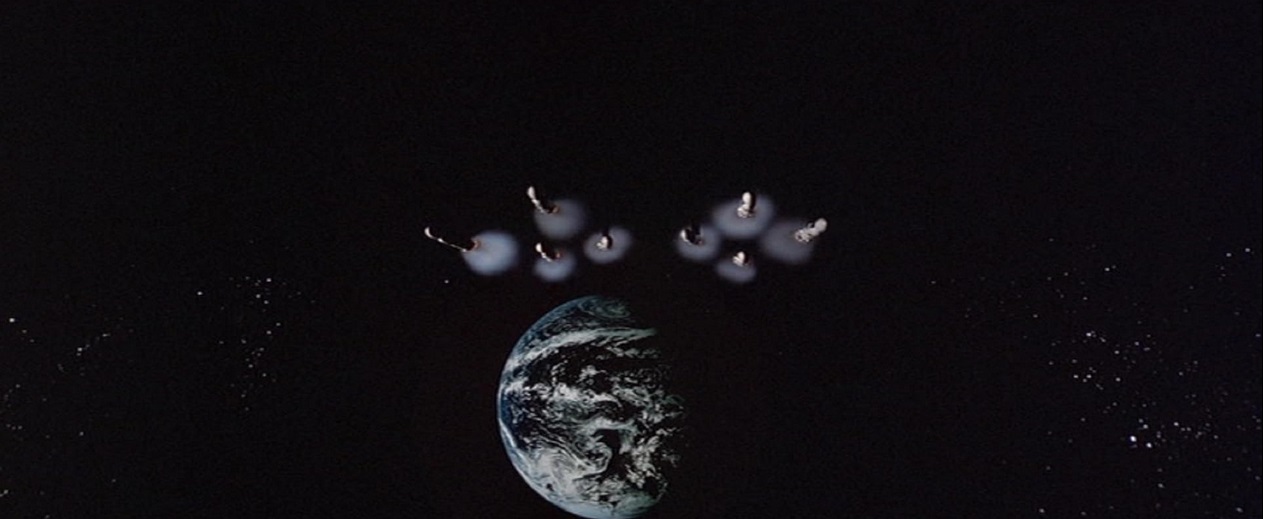
Meteor (Ronald Neame, 1979) A co-production between Shaw Bothers Studios, Warner Brothers, Nippon Herald Films and American International Pictures, featuring a script by Edmund H. North (who wrote The Day the Earth Stood Still and co-wrote Patton) and Stanley Mann (who wrote a couple of Sean Connery's early films) and featuring a cast that probably ate up most of the movie-budget—ConneryNatalie WoodBrian KeithKarl MaldenHenry Fonda, Martin Landau, and Trevor Howard all under the direction of Ronald Neame, who directed The Poseidon Adventure. The story was the most high-profile of topics—an asteroid (called "Orpheus") is headed for Earth and American and Russian scientists must cooperate and use their own orbiting nuclear defense systems to destroy it before it hits Earth and creates a global catastrophe.

What could possibly go wrong?
 
Budgeting. That's what could go wrong.
 
Although a lot of the writing in Meteor is overwrought, the cast does alright with it, and Neame's direction isn't particularly flashy, but manages to keep things moving briskly.
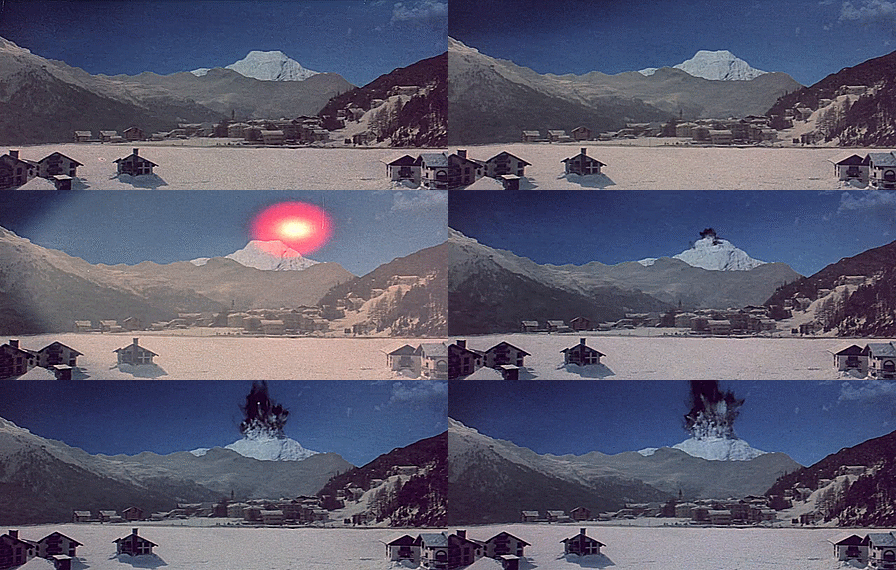
But, by the time all of that was done, the movie's coffers had little room left for post-production and special effects. It didn't help that by the time attention was being paid to the post-production, the group assigned to do the effects of the large threatening asteroid and the missiles designed to destroy it was summarily fired for the work for being below expectations.*
Now, there's a lot of grousing these days that "special effects don't make good movies." Goodness knows there have been a lot of movies where the special effects were sub-par, even in the 1970's (Logan's Run, for instance), even after the water-shed moment of the Star Wars premiere. And one has merely to look at the output of AIP's
post-Star Wars coat-tails films to see that their effects work was "made-in-the-garage" quality.
So, one is left with a Frankenstein-monster of a movie: An able cast with a somewhat shaky script (with some truly cringe-inducing dialogue), spliced with sub-par special effects sequences that—despite the many limitations—seem to go on forever, with no real editing scheme to create tension, but plopped into the film to fill the time with the shakiest of continuities.
There's no finesse to it at all—how could there be when the film was being pieced together so close to the premiere? One can only console oneself with a sequence where the all-star cast gets drenched in mud while trying to escape their command headquarters through the New York City subway system. The images call to mind so many derogatory descriptions for the movie. "Disaster" being the kindest one.
Hollywood wasn't quite done with the concept yet: 1998 saw the release of not one, but two "asteroid-threatening-the-Earth" movies: Armaggedon and Deep Impact

Apparently, there's a lot of "rockery" in neighborhood-space. And nothing new under the sun.

* Actually, two groups of special effects studios were let go, sucking up a lot of the "post" budget and pushing the time-line for the eventual team—they had a mere two months to complete the work before the premiere!

There was another major up-ending of expectations in the post-production: John Williams was given the job of writing the score for Meteor, but the production delays and the revolving door of special effects artists prevented any sort of semblance of "picture lock" for him to compose music for it before he had to go off and work on Steven Spielberg's 1941. Laurence Rosenthal was then hired to compose the score, which ended up being rather good—amazing, given his time-constraints.

Thursday, December 14, 2023

Leave the World Behind (2023)

Everything is Disconnected ("Siri, What's This Movie About?....Siri?.........Siri?.....Do I Hear Chuckling?") 
 or
"Ain't That a Shaymalan?"
 
I just got a new cell-phone. A smart-phone. I'd had a "dumb-phone" before...for like 15 years—can't be that dumb if it's lasted for 15 years, can it? Very dependable. Always worked. Made phone calls. Text. The occasional picture. But, now a year in to smart-phone land, I find myself depending on it more...more time spent on this one than the last one. Too much time, really. I'm at that stage of life where I really shouldn't be wasting the amount of time I have left.

And I do it anyway ("idiot").

And I've been quite amazed on how much I depend on this phone for features that I quite happily lived without for so many years. And how much everything is now so tied up together with the phone, my car, my bank, my messaging...everything. And it scares the crap out of me. What happens when they don't work? Will I be able to go back to "analog mode" in order to get things done? Probably...it will just take more time (hopefully).
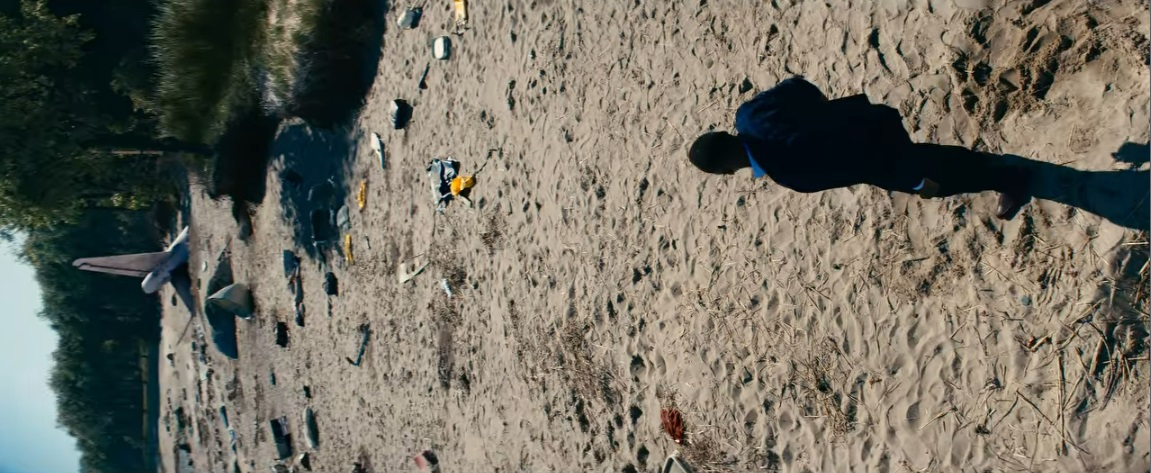
So, along comes Leave the World Behind
this year's end-of-year doom-and-gloom Netflix release (last year's was White Noise and the previous year Don't Look Up)--based on the 2020 best-seller by Rumaan Alam, and written and directed by Sam Esmail (creator of the cult series "Mr. Robot"). In it, a New York couple, the Sandfords, Amanda (Julia Roberts) and Clay (Ethan Hawke)--they have two kids, Archie (Charlie Evans) and Rose (Farrah Mackenzie)--rent an Airbnb for a short vacation out of the city...to Long Island. Amanda's a bit "prickly" from her work (advertising, natch) and Clay's work as a media studies professor is stressing him out, so the "vacay" is spontaneous and short, much like Amanda. 
And it's fine...a very neat well-designed house...with a pool...close to a beach. Then things get weird. An oil tanker heads right for the shore without slowing and runs aground. Then, everybody's cell phone goes out. Radio stations stop broadcasting. Computers work but can't connect to the internet, so they're a bit isolated for news. The place is still nice, and they're provisioned if they have to stay longer. Sit and wait. That's the best thing to do given any lack of evidence.
Until there's a knock on the door late at night. It's the house's owner, G.H. Scott (
Mahershala Ali) and his daughter Ruth (Myha'la), dressed to the 10's after an evening at the symphony in New York. They've shown up at the doorstep because New York is in the middle of a blackout and they've come to their Long Island retreat for safe haven from the craziness the blackout has created. Amanda is suspicious—they could be anybody—but Scott has keys to the liquor cabinet and knows the email address Amanda contacted to get the place, and he even offers a bit of a refund for the inconvenience of sharing the place overnight. Some haggling and repercussions are interrupted by a notice that comes over the TV announcing that all stations have ceased functioning due to a national emergency. Reluctantly, Amanda agrees with Clay to let them stay...but there are questions. And nobody has any answers.
Some come through in the morning—Amanda awakes to some brief alerts on her phone's news-feed. The U.S. is paralyzed by a massive nationwide hacking attack on U.S. systems that have darkened New York and interfered with broadcast and navigation systems. But, more things have happened and continue to happen—there are distant explosions and a crippling sonic attack that shatters windows and deafen inhabitants. Wildlife is acting strangely—deer appear out of nowhere and the house pool is invaded by flamingos. Visiting a neighbor's home to commandeer a satellite phone, Scott finds that it doesn't work, indicating that U.S. satellite systems have been compromised. Drones drop leaflets that translate to "Death to America" and airplanes start to drop from the sky.
The Sandfords attempt to leave the island, but find the routes snarled by miles of Teslas drawn to the same spot by self-driving systems (interesting that this week Tesla has recalled models with that system
; the publicity from the movie must not be good). Complications ensue and the Sandfords and Scotts must join forces to seek shelter as advised by Scott's contractor, a suvivalist (Kevin Bacon), who has prepared for the end-times.

It's a clever little conceit that plays on all sorts of modern fears of weak power grids, infrastructure lapses, "Havana syndrome," and hacker gangs and provides all the doom-scrolling you need for the modern world in one neat 2 hour package. That is if one can ignore the temptation of complacency and is paying attention. Snatches of "Special Reports" and recognition of this week's hole of fallibility go off in one's head as one keeps watching things for these people get worse and worse (the flamingos I've never seen covered on "60 Minutes", though) and it's all done for straight tension, not for any satiric purpose as in Don't Look Up.
It's aided and abetted by strong performers who are very good at playing "I have no idea what's going on but I'm not comfortable with it" and with a particular nod to Roberts for daring to risk her reputation as "America's sweetheart" with a performance that is flat-out vexing for its negativity and pure harridanism. One wonders how her character could function in the world of advertising with her ability to say exactly the wrong thing at the wrong time. Her results must vary.
One must also admire the direction of Esmail, who, as if the events in the teleplay weren't off-putting enough, manages to present them in such a disorienting fashion while still keeping you aware of who's where and what their relationship to their surroundings are. One should always be aware of directors calling attention to themselves with camera tricks, but Esmail does them in such a clever way that one follows fascinated to see what he's going to do with it, rather than merely dismissing his tricks with a dismissive "show-off" remark. He also employs a nifty editing scheme: like author Dan Brown's way of ending chapters just as things are getting interesting, Esmail will cut away to another sequence when there's a slight escalation in tension, then cut back once that situation starts getting busy, and continues to see-saw with ever-building tension until a viewer is ready to snap. I've been seeing a lot of dismissive comments saying that Leave the World Behind is boring; there is no way it could be with this editing scheme—maybe those commenters upped their daily medication.
I found it to be a compelling little slow-burn thriller of the M. Night Shyamalan school—every-day situations are up-ended by some weird phenomenon that then goes to great pains to try to explain it all away, however tortured that explanation may be. Here, the speculations seem a bit more plausible, even if they are horrific in scope. Toss in some
Fincher-style transition tricks, and one is slowly pushed to the end of one's seat...with the occasional check to make sure your devices are still online.
Even moreso, it reminds one of one of the better "Twilight Zone" episodes from that series' first incarnation. Leave the World Behind is the "The Monsters Are Due on Marple Street" for the 21st Century, and the coming Trumpocalypse.
 
And it still works.

Saturday, April 15, 2023

2012

Despite what "The Last Word" blurb—at the bottom of the page—says, I don't like writing reviews of bad movies. I just don't. (I don't even like WATCHING bad movies!)

But, I have to admit: I enjoyed writing this one.

Saturday is traditionally "Take Out the Trash" Day.


"...And I Feel Fine"

Earth to Roland Emmerich: "Cut it out!"

Between
Independence Day, The Day After Tomorrow, and, now,
2012, the German director has personally destroyed the world three times.

Well, enough is enough. Gaea's getting pissed.

And so am I.

Seventeen special effects companies, including Sony and Digital Domain (two heavy-weights and they're not even the first ones listed) were employed to create the global carnage on display in this flick, and there's still a recession going on. The attention to detail and dedication to photo-realism is the only evidence of professionalism in the enterprise. That's entirely appropriate as the only reason to see this monstrosity is to witness things blow up "real good." That they do.
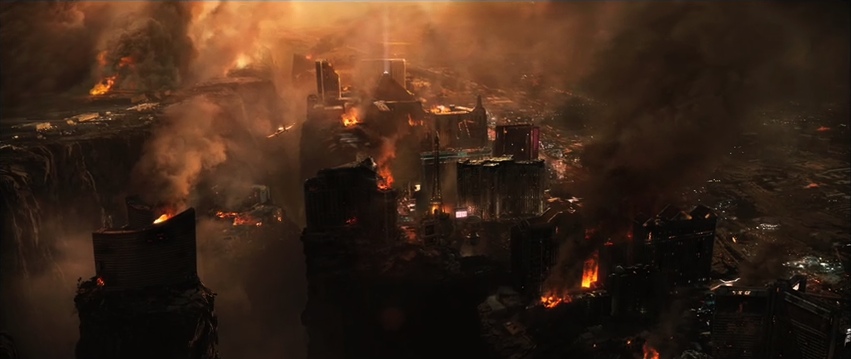
Los Angeles develops wrinkles and cracks that even Joan Rivers' supply of Retin-A can't erase and schlumpfs into the Pacific. Yellowstone faithfully incinerates in a verrry slow pyroclastic flow that the hero can out-run. Las Vegas becomes the new Grander Canyon (they were going to knock those buildings down anyway!). Hawaii's a volcano (but the surfing's great!). Washington D.C. becomes more chaotic than it already is.
I'll admit it. There is a giddy, monstrous 2-year old's glee in seeing the White House (which
Emmerich imploded with a shiny blue destructa-beam in Independence Day) being destroyed again—this time by the aircraft carrier John F. Kennedy, propelled on a Potomac tidal wave (That's about as "high concept" as this film gets). And St. Peter's. Tibet.
* All the hots spots become much hotter. The fly-over-and-through of Los Angeles over the splintering clover-leafs and under collapsing buildings is a thrilling roller-coaster ride through Hell with digi-people clinging to collapsing floors, all manner of auto-mayhem and even violence by Rolling Donut sign. But if you were to take out all the countdowns to disaster in 2012 ("We've got five minutes before everything blows!!") and just include the disasters, you'd have a 20 minute highlights reel, rather than a 158 minute poorly written series of contrivances and coincidences.

And everything blows, anyway.
You'd almost think the thing was worthwhile with
Chiwetel Ejiofor, Oliver Platt, John Cusack, Danny Glover, George Segal and Thandie Newton in the cast. But they're only mouth-pieces for exclamatory dialog with brows a-furrowed. Seems the whole thing starts with a planet re-alignment, which triggers solar flares which sends out neutrino's that miraculously microwave the Earth's core and destabilize the Earth's tectonic plates, reverse the Earth's magnetic field and create monster tsunami's.
Now, in this world-wide scenario, everybody in the cast has only one degree of separation to everybody else, so that they can look with surprise at their monitors and intone "Wait! I know that man/woman/dog!" Coincidences are the order of the doomsday, and little dialog goes unmatched without
the appropriate chunk of irony whistling through the air and squishing the speakers with a thud. It's the kind of movie where hubby says to wife "I feel like there's something pulling us apart" right before a fissure opens up between them. When St. Peter's Basilica starts to collapse, the cracks split down the Sistine Chapel right between Man and God's fingers. Roland Emmerich is not a subtle director. No man whose ambition is to make a better "Godzilla" movie can be.
And what Emmerich is re-making here is
When Worlds Collide,
** a 1950's sci-fi flick that imagined Earth hit by another planet, and its treasures, two-by-two's of animals and a lottery-chosen clutch of humans are rocketed off to the convenient companion planet that precedes it. Here, the art is rounded up, libraries accumulated, animals airlifted, and although a lottery is mentioned, the folks who go in the arks are world leaders (naturally), the folks who can afford to pay 1 billion euros per seat, and anyone conniving enough to smuggle themselves on-board. The Best and the Brightest, The Cream of Humanity. Everybody else becomes part of the new petroleum deposits the survivors will profit from in the future. Talk about your disasters. Imagine a world where among the survivors are Dick Cheney, Mahmoud Ahmadinejad, Hugo Chavez, Rod Blagojevich, Paris Hilton, Mike Tyson and Pat Robertson, but no research scientists—not even the guys who invented Post-it Notes! That's a version of Hell even Milton wouldn't have conjured.***
It was at this point, I would have been happy to see everybody die, but no such luck. The last few minutes of the film are
disaster heaped upon disaster, with survival dependent on the actions of one man—guess who? But, my concern was what exercises I could find to relieve the pain in my eyes from rolling them so much. They don't sell aspirins at the concession stand. Not even chocolate-covered ones.
Truth be told I don't enjoy writing reviews for bad movies, as there's more inspiration in good ones. But I'll leave it with this quote from the director (in a New York Times profile by Tyler Gray) complaining about people's reactions to his making a film like 2012 in a "post-9/11 environment."

"If I cannot destroy a big high-rise anymore, because terrorists blew up two of the most famous ones, the twin towers, what does this say about our world?”

Our world is fine, Rollie, no thanks to you. But it says your priorities are really shitty.

And the only way to make it good to us is to make all your digital models of people caught in wholesale slaughter based on your likeness.

Verstehen sie?

Verstehen sie nicht.

****
"thoughts and prayers..."

* But not Mecca. Fatwa's need not apply. Kinda lily-livered of Emmerich to not risk personal destruction when destroying the world for his art. Don't they have "sins of omission" in Islam?

** And just our luck, that master of the cinematic form Stephen Sommers (The Mummy, Van Helsing, G.I. Joe: The Rise of Cobra) is making his own direct re-make of "When Worlds Collide" to be released in 2010. Oh, the joy.
(As of 2023, IMDB lists it as still "In Develpment").

*** Not to politicize too much (or think, God help me) but given the Ark scenario envisioned by the movie, with the whole "two-by-two" concept, I'm imagining the passenger list is restricted to "breeders," meaning there are no gays and lesbians on the boats. Emmerich is gay. What is he thinking?

**** Part of the mission of these reviews is to promote the theatrical experience when it is deemed important to the presentation of the story. It is tempting to say that "The Big Screen" is the only way to watch 2012, because there are so many little demons in the details. But, no. The story is so lunk-headed and gleefully clap-happy nihilistic that the best presentation is merely putting a bow on a cess-pool.

Saturday, February 6, 2021

The Towering Inferno

Saturday is usually "Take Out the Trash Day".  
 
For this particular entry, a "Burn Ban" is strictly enforced.

The Towering Inferno (John Guillermin, Irwin Allen, 1974)
"Inferno!
See the flames light up San Fran-cisco
While us lesser-paid stars fry like Crisco
Inferno!
We're trapped in this dreadful In-fer-no!"
 
From Mad Magazine #182 (April 1976) "Go to Blazes!" ("New Musicals Based on Big Movies")
(sung to the tune of "Maria" from "West Side Story")
It was one of those situations where two studios were going to be making competing movies on the same subject, in this case, the story of a high-tech skyscraper that experiences a devastating multi-floor fire. 20th Century Fox had the rights to the book "The Glass Inferno" by Thomas N. Scortia and Frank M. Robinson. Warner Brothers had the rights to "The Tower" by Richard Martin Stern. Rather than going into competition with each other (and potentially undermining each others' box-office potential), Fox (and "Glass Inferno") producer Irwin Allen convinced the two studios to join forces on one project to be called The Towering Inferno. In this first-of-its-kind arrangement, the two studios would share production costs and split the domestic and international box-office receipts. After Allen had a hit with Fox's The Poseidon Adventure, both studios were amicable to make money on the burgeoning disaster movie wave, with Allen, the self-dubbed "Master of Disaster" leading the project. Screenwriter Stirling Silliphant mixed and matched characters and incidents from both books to create the screenplay. 
Then, the casting began. With the budget afforded by two studios footing the bill, Allen upped his game by top-loading this movie with two of the biggest box-office draws at the time, Paul Newman and Steve McQueen (the two had only worked on one movie—McQueen's film debut—Somebody Up There Likes Me, and had had careers where both eyed each others' movies covetously, narrowly avoiding being paired in Butch Cassidy and the Sundance Kid). But, who got top billing is a little controversial. It would take an art director's creativity to come up with the poster—McQueen's name appeared (reading left to right) as first, but Newman's (reading top to bottom) would be slightly over his. Faye Dunaway's career was in resurgence, so she played the love interest, and William Holden, after being rebuffed for top billing, settled for third. Fred Astaire and Jennifer Jones both came out of retirement to work, and the rest of the cast was filled out by the journey-men television actors (like Richard Chamberlain, Robert Vaughn, Susan Blakely, and Robert Wagner) who received scripts with prominent coffee-rings staining them.
The plot is as straight-forward as a fuse: a San Francisco multi-use skyscraper catches fire on the night of a big gala celebrating its completion. In attendance at the swank top-floor Promenade Room are developer James Duncan (Holden), architect Doug Roberts (Newman), his fiancee Susan Franklin (Dunaway), as well as local dignitaries including the Mayor, a Senator (Vaughn) and the developer's duplicitous cost-cutting electrical contractor/son-in-law (Chamberlain). During a routine test of the electrical system during the day, a short occurs that starts a fire on the building's 81st floor. Roberts is alerted to this by Security Chief Jernigan (O. J. Simpson), who mans a monitoring system that appears to be ripped out of the submarine "Seaview." (Dammit, those things always sparked!)

This gets compounded when the public relations man for Holden's firm (Wagner), quite understandably, wants to turn on every light in the building once it hits dusk. Roberts objects—turn on all the lights at night? Are you crazy?—but is over-ruled for the photo op. (Oh, you'll get pictures, alright). One wonders how the thing got built with such a light-weight electrical grid, although I'm sure it wasn't done with candle-power as everything in the building seems to be combustible. But, then, we are talking about a company that would consider building the world's tallest glass building on one of the shiftiest fault-lines in the Americas, indicating a lot of unhelpful shaky thinking. Architect Roberts can gripe about people not doing their jobs, but shouldn't architects be thinking "location, location, location?"
The fire, when it starts, begins in a storage room on the 81st floor—high enough to make it nearly impossible to reach with a hook-and-ladder, central enough to do damage to core-stair-wells once it gets going and embedded enough that you can't hose it down from the air. But, smoke is seen from the floor via the closed circuit TV system and the San Francisco Fire Department is called. Investigating the system alert, Roberts head for the floor in question and one of his engineers is roasted trying to save a security guard. 
Roberts calls Duncan to the danger, but the developer has too many politicians upstairs he wants to talk to about zoning for other projects. With the certitude of the beaches being safe, he doesn't order an evacuation. That doesn't occur until the SFFD shows up and a grousing Battalion Chief Mike O'Halloran (McQueen) forces the issue. While the VIP's decide between men, women, children, and well-placed politicians—and stars who have a back-end deal—to leave the top-floor party room, Halloran and Co. decide what will be the best way to get the fire out, and as it's starting to jump up floors, the height of the building becomes the crux of the problem. Exploding gas-lines exploding only amplify the problem.
While Roberts works to evacuate people in the building not in the Promenade Room, O'Halloran works on the fires below the 81st floor, trying to reach the 65th floor where the Duncan Enterprises offices are located, but too late to save Wagner's P.R. man and his mistress from being consumed in the flames. Up at the Promenade Room, those gas explosions stop the express elevator carrying passengers down right into the fully-engulfed 81st floor and stopping the main way to get down the tower.
An attempt is made to land a rescue helicopter on the skyscraper's roof, but high winds destabilize the chopper and send it crashing to the roof, exploding and causing even more fires. Stairways from the top are engulfed by smoke, and those venturing into them soon find that the explosions have smashed floor-lengths of stairs. That leaves only two ways down—the outside scenic elevator and a make-shift way the fire brigade are fighting hard to set up.
That involves setting up a breech's buoy system stretching from the tower's roof to the roof of a neighboring skyscraper across the street, which can hold a limited number of people and is susceptible to those treacherous winds. But, that is looking like the only option as a building-wide power failure has rendered the observation elevator worthless. So, an alternate plan is made to secure a gravity brake to the elevator, snip it away from it's cables, and control the descent using the brake. 

Because everything has worked so well so far. 
It starts to look like The Glass Tower has been designed mostly to sabotage any effort to get around in it...(criminy, at one point, one of the emergency fire-doors is stuck because it's blocked by spilled concrete...who built this thing?) And by this time, there are so many floors and people on them to keep track of that one is ready to just throw up their hands and say "Okay, I'm going to change the batteries on my smoke-alarm!"—if not for the fear that even that might cause a horrendous burst of flames. It's wearying and disheartening and the bodies pile up so that you might become numb to it—like Faye Dunaway in the picture below.
Sure, it's a Disaster Movie—that's very well understood—and one goes into these things expecting a high body count. I mean, the posters used to scream "WHO WILL SURVIVE?" Plus, this thing just bores right into the primal fear centers with fire scenarios and great heights from which to fall. There's a hysterical element to The Towering Inferno that is almost gleeful in its ability to snatch hope from any kind of rescue scenario, leaving it to a revelation that is rather preposterous for a building so high to miraculously solve all of the problems in one swell...flood. But, at that point in the movie, you're willing to just accept it so the damned thing can end.
Frankly, one wonders what the fascination is beyond pyromania. The film was one of the biggest money-makers of its years and is generally sited as the "greatest" (whatever that means) of the "disaster film" cycle. After this torch-song, the cycle ran out of gas...or any other flammable material; Irwin Allen had to resort to killer bees for his next film. Perhaps the appeal is the one I have watching the yearly Academy Awards—hoping against hope that something will go wrong. But, seeing Hollywood Elites get some sort of comeuppance cannot overcome someone's tendency to acrophobia and pyrophobia.* Especially when the characters are such flammable paper tigers.

There's an added element to the dis-taste. Can anyone have any fun watching this movie post-9/11, when the world watched in real time while the Twin Towers were attacked and very real human beings fell from the sky. Accuse me of being a namby-pamby all you want. Anyone who doesn't think of that extended nightmare watching this and feel one's gorge rising a bit, probably hasn't been born yet.   
Jennifer Jones and Fred Astaire contemplating why they came out of retirement for this.

It appeals to all of our worst instincts. That tendency to watch catastrophe and not turn away. Even if that catastrophe is this dumpster-fire of a movie. 
"I got first billing." "I got TOP billing." "I play 'the girlfriend'"

* As far as I know there is no officially-designated, diagnosable fear of bad movies. Will have to consider some names.


Tuesday, July 7, 2020

Wings of Hope

Wings of Hope (Werner Herzog, 2000) The most extraordinary things happen by accident. I watched this rather amazing documentary due to a Facebook post that was culled from one of those "Weird History" click-bait things that pop up and disappear like mushrooms in our digital forest. The accompanying picture of that article showing a somewhat immaculately dressed young woman wading through what appeared to be a swamp may have come from an exploitive 1974 Italian movie based on the incident (Miracles Still Happen, 1974—I watched it and you can skip it), but other than that, the story is absolutely true.

Absolutely, weirdly, almost unbelievably true.

Skipping details, it is about a 17 year old girl, Juliane Koepcke, who was on a Christmas Eve 1971 flight that was repeatedly struck by lightning over the Andes, the plane broke apart, and she was sent hurtling out of the plane, strapped to her seat, fell 3000 feet into the Amazon rain-forest, survived the impact, and for 10 days made her way to an encampment where she was found the next day by fishermen, who started the process of getting her back to "civilization." She was the only survivor.
Parse out that paragraph and any of those things brings up a myriad of questions that all begin with "How...?" When you delve into the history and the details, you might assume (as I did) that she was the perfect person to be able to survive such an ordeal and her chance survival from the catastrophic plane mishap was simple luck and a fortuitous series of happenstances. 
So, how does director Werner Herzog fit into all this? Why would he make a film about it? The reasons—as usual—are personal. Herzog was supposed to be on that doomed plane. Scouting locations for Aguirre, the Wrath of God, a last-minute change in the plane's itinerary cancelled Herzog's reservation. His narrow escape haunted him for decades, and was understandably fascinated by Koepcke's survival. He sought her out with the idea of going back to the crash-site (not necessarily a cruel thing as she had been back a few times) and telling her story in the areas in which they occurred. Koepcke, who had been avoiding publicity and media contact for years—Herzog doesn't reveal her married name in the film—thought this would be therapeutic and agreed, accompanied by her husband. Koepcke is very transparent about her experiences, expressing jitters to be sitting in the same designated row and seat on the flight out, but once in the jungle, she's in her element—"the casual way she dealt with mosquitoes and other vermin was the first thing that struck us about Juliane" says Herzog in his narration—and her commentary reveals her jungle-upbringing and studious approach to discoveries, calm and curious and sympathetic to make the story as relatable as possible, but with no sense that anything done at the time was remarkable, merely necessary. She is the perfect field-guide. 
In fact, she and Herzog are so matter-of-fact in their approach that one becomes accustomed to the extraordinary. Floating down the Amazon? It's the best approach to civilization and not disturbing wildlife. But the crocodiles and piranhas? Not a danger, especially when floating calmly down the river. And unlike that Italian movie (which Koepcke amusingly mocks in the film) or any other presentation I've seen, it is refreshingly free of histrionics and pumped-up-doco drama (as if it were necessary) for a story that even "Dateline" would reject as being too fantastic. A lot of that is helped by Herzog's customary dead-pan narration which tamps down the drama while still being mordant (a commenter on YouTube opines that "Herzog could make a film about a Swiss chocolate factory...and make it seem macabre").

It's a fascinating story, as studiously told as could be in the documentary, making an unfathomable story seem comprehensible and that, in a chaotic world, miracles still happen (uff, that movie)...but only if one is prepared and capable of taking advantage of it, however it occurs.    

Wings of Hope is available for viewing on YouTube (as is Miracles Still Happen)
...at least for a little while (don't be surprised if the link dies).

Friday, March 6, 2020

Contagion

I had planned to put up a review of Soderbergh's The Laundromat today, but this seems a more appropriate choice from his work. 

Written at the time of the film's outbreak. 

"Night of the Coughing Superstars"
or
"Please Wash Your Hands Before Exiting the Theater"

It's not nice to fool Mother Nature.  Or even to crowd The Bitch. Because, sooner or later, she's going to look at all that nice smooth asphalt we've laid across her, and send up some crab-grass to seek out the weak spots and crack it.

"How do you like them pot-holes, Ozymandias?"*

Steven Soderbergh's "pandepic" Contagion fits quite well in the movie medical chest that includes such plague-filled films as Panic in the Streets, The Satan Bug, and The Andromeda Strain (one could also mention "The Stand," I Am Legend and the recent Rise of the Planet of the Apes—even, if we're talking Gaia's uprising, such natural disasters as The Happening (2008) and The Birds)—an organized, technologically advanced, scientifically-disciplined infrastructure is helpless against a simple organism that spreads through the sheer inevitability of exponentiality.**  
It also cross-germinates into the "Butterfly Effect" genre (see Babel, 21 Grams, Crash)—you know, where we're all so interconnected that if a butterfly sneezes in China, we'd better cover our mouths in the United States or else we'll keel over into the Stone Age.***  And with so many stars (all very good, actually), it also reminds of one of those Irwin Allen SAG-slaughter disaster movies of the 1970's, that featured tag-lines like: "Who Will Survive?"
Contagion comes a few years after the majority of us could dismiss SARS and H1N1 in the real world with a blithe "where's the pandemic?" (completely dismissing such very real threats as AIDS and the hair-trigger Ebola and Marburg viruses).**** But, it is chilling that with all our research capabilities, we'd still be running behind any new threat, simply because the little suckers can evolve faster in the gut than we can be creationists in the lab. And Scott Z. Burns (who wrote Soderbergh's The Informant! and is updating "The Man from U.N.C.L.E." for him*****) has taken an...er...clinical approach with his screenplay, starting moments after "first contact," following the progress of the disease from China, to the United states, its spread and detection by the Center for Disease Control and their efforts to isolate the cause, and, possibly, find a cure. However fast they go (and it's a process hampered by testing schedules and production runs...and which pharmaceutical companies will profit from it), it's not enough to prevent wide-spread death and a near-collapse of societal structures throughout the world. 
"It's figuring us out faster than we're figuring it out," says one of the techs (Jennifer Ehle) to her boss at CDC (Laurence Fishburne)...and it doesn't have a bureaucracy to work through. The drama is situational, so don't go in expecting ambulance chases and LED countdowns to disaster, but, instead, situations where families are ripped apart, investigators become victims, and desperation becomes just another symptom. It's a procedural with a widely-flung spray pattern.
The cast is amazing...Matt Damon, Gwyneth Paltrow, Jude Law, Fishburne, Marion Cotillard, Kate Winslet...and just when you think they've run out of actors, up turns John Hawkes, Elliott Gould, Demetri Martin, and Bryan Cranston...you half-expect the full cast of Ocean's 13 to show up and cough out cameos. No one dominates, everybody underplays, and the heroics are human and low-key. 
Nicely done, and food for thought, just wash your hands before eating.

Now, if you'll excuse me, I have a 2:00pm appointment for a flu shot.


* "Ozymandias" by Percy Bysshe Shelley

I met a traveller from an antique land
Who said: `Two vast and trunkless legs of stone
Stand in the desert... Near them, on the sand,
Half sunk, a shattered visage lies, whose frown,
And wrinkled lip, and sneer of cold command,
Tell that its sculptor well those passions read
Which yet survive, stamped on these lifeless things,
The hand that mocked them and the heart that fed.
And on the pedestal these words appear --
"My name is Ozymandias, king of kings:
Look on my works, ye Mighty, and despair!"
Nothing beside remains. Round the decay
Of that colossal wreck, boundless and bare
The lone and level sands stretch far away.'


** We could also mention The War of the Worlds, but there, the bugs are the good guys.

*** A better example would be: "If Greece doesn't raise its debt-ceiling, should I rollover my 401k into doubloons?"

**** And yesterday, I heard people are dying from Listeria-infected cantaloupes! 

***** At the time this was written, Soderbergh was attached to direct the project which was in development since 2005. Guy Ritchie eventually directed a screenplay written by himself and Lionel Wigram.