Showing posts with label Faye Dunaway. Show all posts

Friday, May 14, 2021

Anytime Movies #7: Chinatown

While I catch up on the reviews still in "Draft" phase here, I'll re-run a feature I ran when I first started this blog seven years ago,****** when it was suggested I do a "Top Ten" List.

I don't like those: they're rather arbitrary; they pit films against each other, and there's always one or two that should be on the list that aren't because something better shoved it down the trash-bin.

So, I came up with this: "Anytime" Movies.


Anytime Movies are the movies I can watch anytime, anywhere. If I see a second of it, I can identify it. If it shows up on television, my attention is focused on it until the conclusion. Sometimes it’s the direction, sometimes it’s the writing, sometimes it’s the acting, sometimes it’s just the idea behind it, but these are the movies I can watch again and again (and again!) and never tire of them. There are ten (kinda). They're not in any particular order, but the #1 movie IS the #1 movie.

This is one of the “Anytime Movies” that falls into the category of “Lost Causes and the Futility of Good Intentions,” but lest anyone think these films are depressing, they’re not.

Well, okay, this one is. But, a good movie never depresses me. It impresses me.

It’s also perfect. Given the nature of the trio of men who oversaw its creation—screenwriter Robert Towne, director Roman Polanski, and producer Robert Evans—the thing could have self-destructed like a fragment grenade. And, in fact, the planned trilogy of films featuring detective JJ “Jake” Gittes investigating three big changes to California's landscape (water, land, and no-fault divorce—which would put Gittes out of a job) stopped after the personality clashes that derailed the first attempt at filming The Two JakesPolanski couldn’t set foot on American soil due to rape charges, and Evans (who was producing the film and co-starring in it) and Towne (writing and directing this time) clashed on the set. The combination of expanded roles and egos this go-round, following upon the first film’s success, caused the production-gears, already turning, to stall (necessitating the destruction of returning production designer Richard Sylbert's already finished sets), and it was only the patience and dogged efforts of star Jack Nicholson, who took over directing, that allowed the film to be made...ever. They say that great films need a miracle – Chinatown had it, but its sequel The Two Jakes didn’t have a prayer.

“Middle of a drought and the water commissioner drowns. Only in L.A., huh?” 

Based loosely on the development and construction of the William Mulholland designed aqueduct, and the real estate swindles it engendered, Chinatown starts out as a mystery even more steeped in the locale of L.A. than Chandler’s Marlowe stories. Here, the very city is a part of the crime and corruption is steeped in its soil and water. Water is the heart of Chinatown. Its ebbs and flows are constantly monitored –the original object of investigation is the city’s head of the Department of Water and Power who then becomes the victim of a grisly murder. Water is never too far from the surface of the story. Even Jerry Goldsmith’s shimmering score suggests water in its low harp trills, and the sighing of, yes, water phones.
Chinatown gets all its details right—the language, the costumesRichard Sylbert’s period work is amazing, and a perfect cast makes the most of Robert Towne’s wise-acre dialog. A perfect cast? Right down to the smallest part. There’s a favorite moment of mine when Gittes, after badgering the secretary of the new head of Water and Power, is distracted by an odd squeaking noise. He, of course, has to investigate, and opens the outside door on the two work-men who are scraping the dead man’s name off the door. The one guy looks irritated—the other guy smiles, nods, and as the door is closing shakes his head ruefully—“Happens every time.” It’s a tiny little moment that feels so authentic, so much more than a mere movie might provide, it provides a moment of truth in a continuous string of truths.
One of Chinatown's weird echoes:  the face of Mrs. Mulwray (Faye Dunaway)
while Jake and she talk about his past, walking the beat in Chinatown.

But, that is a moment you can appreciate as it happens. Chinatown lives on in the memory. After the mystery is solved, moments come back, as the pieces come together and the journey to the conclusion coalesces. They haunt. On repeat viewings, Chinatown is a treasure trove of call-backs and foreshadowing’s.* Little things, like the odd cadence of a name, mispronunciations that can be traced back, a birth-mark—lead you downstream to a resolution that you should, in retrospect, have seen all along. Like Gittes, its only at the end that you get the full story. Of course, like him, you follow the most obvious things that seem out of place or arouse suspicions. ** But the world is a more complicated place and long after the film is finished does it strike you that the two most suspicious people while watching the film are actually the most decent and altruistic ones acting with the best of intentions. Of course, in this world they come to a bad end.
“Do you know how long I've been in this business?

And here’s where that mix of personalities comes in. Towne’s original screenplay (before the Polanski re-write) is very grey—Jake Gittes at the beginning of the film—the very beginning—gets angry and abusive with his moaning client, Curly (In the film, there’s only an impatient irritation). Later dialog casts a sympathetic spin on water magnate Noah Cross. The original screenplay ends with, if not a happy ending, then a triumphant one. Evans loved the screenplay (though he didn’t quite "get" it), but in one of those odd bursts of inspiration that sustained him throughout an eccentric career as a producer, decided that the film needed a European sensibility, and so, brought in Polanski, who had left the country and Los Angeles following the murder of his wife Sharon Tate by the Manson family

His perverse take on the city and the material focused it, and made a stronger delineation between good that is good and evil that is truly evil—and provided the ending that doomed those most in need of rescuing. Chinatown ends in shock, and with a sense of tragic inevitability. That Jake, in a moment of selfishness and hubris, sets up a series of events that ends up completely bollixing up his good intentions, completes a circle and a character arc that had been percolating below the surface the entire time. He ends up ignoring the lessons he learned in Chinatown (the district, not the film), and paying the same consequences. The final words are ironic--“Forget it, Jake. It’s Chinatown.” Forgetting isn’t his problem. Remembering is. Towne would hammer the point home with the last line of The Two Jakes—“Kitty! You never get over it.”

But by that time it wasn’t necessary to say.
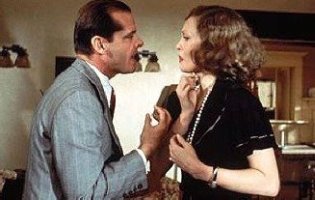
Jake wants the truth.
He can't handle the truth.

Anytime Movies:

Above, you'll see a link to a fascinating book by Sam Wasson called "The Big Goodbye: Chinatown and the Last Years of Hollywood." I just finished reading it, and it has a nifty little conceit: it takes the four principles—Polanski, Towne, Evans, and Nicholson—and relates how they struggled (separately and together and against each other) to make the film, saw its stunning successful and quite unconsciously (maybe) turning their lives into a version of the story...with ample help from history, ego, hubris, toxic masculinity, rampant sexism, too much opportunity and too much cocaine. Their failings get the better of them, and, with their eyes wide shut, they no longer become the heroes of their own stories. None of them come out looking good, and the one hero of the story seems to be composer Jerry Goldsmith (yay!), who received a knock on his door from Robert Evans one day, begging him to help replace a score that wasn't working to Evans' mind, and within 10 days had created a full score, the main theme of which made Evans weep. Fascinating read, with a lot of threads to it, and Wasson's style is fast moving and doom-laden. But, it doesn't have a happy ending.

* On my most recent viewing, I noticed a moment that shocked me. After Jake and Evelyn flee a scene in her car amidst a hail of gunfire, the superbly coiffed Evelyn touches her left eye—as if she has something in it. Whether it was Polanski’s or Dunaway’s choice, it’s a brilliantly sick one. 

** Towne’s screenplay is so fully formed that, unlike Chandler’s Marlowe stories, a first person narrative isn’t necessary. We are always aware of what Gittes is doing, and thanks to Nicholson’s performance, what he’s thinking.
"Forget it, Jake."

And...an extra.


This was part of a series of reviews of the ASUW Film series back in the '70's. Except for some punctuation, I haven't changed anything from the way it was presented, giving the kid I was back in the '70's a bit of a break. Any stray thoughts and updates I've included with the inevitable asterisked post-scripts. Chinatown was part of a "detective" double-bill with The Thin Man.

Chinatown (Roman Polanski, 1974)


Gittes: Hello Claude. Where'dja get the midget?
Midget: Yer a nosey fellow, kitty-kat, huh? Ya know what happens to nosey fellas, huh? No? Wanna guess? Huh? No? (slices Gittes' nose). Next time you lose the whole thing. Cut it off and feed it to my goldfish. Understand? Understand?!
Mulvehill: Tell 'im you understand, Gittes.
Gittes: I unnerstand!
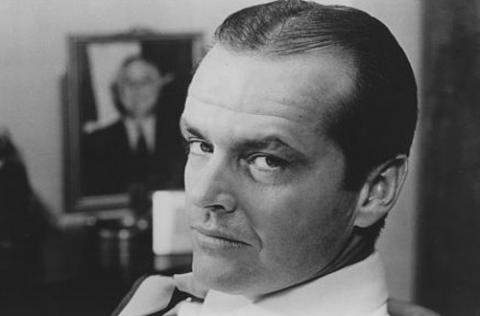
As opposed to the whimsy of The Thin ManChinatown is a film of deadly earnest, a perfect example of what is termed "film noir"-which means, in melodramatic terms "when the streets are dark with something more than night," usually the feeling of purveying evil. That is certainly there in Chinatown, although it would be hard to pin that evil on the influence of the film's all-encompassing villain, or the influence of its director, Roman Polanski, who incidentally played that strangely accented "midget" with a knife you heard in that tape segment.*** Polanski shaped this film into a first-rate thriller, even more, into the best film coming out of a major studio in 1974, deserving of every Oscar that The Godfather Part II won that year.**** As with most of these films, each and every performance is perfectly played from the starring performances of Jack Nicholson, Faye Dunaway, John Huston and John Hillerman, down to a lowly sign painter.*****
Chinatown--a section of Los Angeles inhabited mostly by Asian-Americans due to a suppression of their people.

Chinatown--the former beat of two L.A. patrolmen, J.J. Gittes and Lou Escobar; a beat they think in "bad luck" for "you can't always tell what's going on."

Chinatown--the symbol of all evil to Jake Gittes, private detective, for it reminds him of his own tragic failures.

"Mrs. Mulwray, have you ever heard the expression 'let sleeping dogs lie?"

Jake Gittes is hired by a Mrs. Mul'-wray to investigate her "philandering" husband. But as Jake investigates, he realizes that Mr. Mul-wray' is not what he seems, Mrs. Mul'-wray is not what she seems, and Jake finds himself investigating a larger scandal, one encompassing city-wide fraud and personal tragedy. Jake knows all the moves he is supposed to make while investigating--tailing, picking up clues, following them to the next step--and the whole way, he thinks he has the whole case going smoothly. But he doesn't. It is much too big for him to stop. He ignores those little details that he, and we, only can remember later. And Jake Gittes, when the case is over, relives a tragic part of his past, and can only take consolation in the caring words of an associate--"Forget it, Jake. It's Chinatown."
"But, Mrs. Mulwray, I goddamn near lost my nose. And I like it. I like breathing through it.
And I still think you're hiding something."


The ending of Chinatown is a complete reversal of what the film had, supposedly, been leading up to. It will undoubtedly shock and disappoint you. Some critics have said it is ill-considered and "tacked on." But it isn't. It is perfect for the film that Roman Polanski made, and it makes the experience of viewing Chinatown that much more resonant.

Broadcast on KCMU-FM November 11th and 12th, 1975.

Some revisions should be made to this (if I were making revisions). I was being too much of a "nanny" critic, telling people how they should feel. And I kind of blew any surprise that ending SHOULD have had by telling an audience to expect it.

And Chinatown isn't "the symbol of all evil" for Gittes. That's giving him too much thought for the place. It's just a place to be avoided. Bad luck. Fool me once, shame on you. Fool me twice--

And Walsh's words to Gittes aren't "caring," he says it because there's nothing more to say. "Get over it. What'd you expect?"

I've written about Chinatown more extensively here (actually the article at the top of the page). But there's more to say. Reading a nearly final script by Towne of this film tells you that Polanski brought more sense of moral rage to the film (interesting, for Polanski). Evil is evil. Good is good. I've always "gotten" the sense that Hollis Mulwray is not only a good man, but practically a saint. There are things implied in Polanski's direction that point even further in that thought. But, in Towne's screenplay, more sympathy is ascribed to the villain. He is not pure evil as the film would have him appear. He is merely weak, and anything can happen in a moment of weakness. Evelyn Mulwray is also less of a victim in that screenplay, though her actions are seen to be a trifle hysterical. There are no easy answers in Towne's early screenplay. Things are not black and white, merely shades of gray. And given Polanski's history--the concentration camps, and his wife, Sharon Tate's grisly murder at the hands of the Manson gang, and his own past films, one would see why he'd tilt it to the side of the devils.
"He OWNS the police!"

In 1991, Chinatown became a part of the National Film Registry.

*** Yeah--you don't get the taped segment. Sorry. The transcript will have to do. I've always loved the way Nicholson drawled out "Hello, Claaaahde. Where'dja git the midgit?" It runs a close second to my favorite Nicholson line, from Five Easy Pieces: "Don't tell me 'bout the GOOD life, Eldon, 'cuz it makes me PUKE!"

**** Although The Godfather, Part II also deserved every Oscar it won. Except maybe score. And I don't think that's hyperbole saying the best film coming out of a major studio that year. That's also due to its Executive Producer, the extremely savvy producer Robert Evans. Say what you will about Evans, but under his stewardship, Paramount could not be topped as the dominant movie studio in Hollywood. Look at 'em now, folks.


***** Actually, Chinatown is one of the few films where every performance is perfect. And that sign painter--it's one of my favorite bits in movies, because it rings so true. The guy's watching his assistant scrape the name off a door, and that scrape gets detective Gittes to investigate, opening the door. The painters look up at Gittes, who, realizing what it is, shuts the door...and AS IT'S CLOSING, the guy in charge replaces his nodding greeting with a rueful shake of his head "Happens every time." Of course it does. But it's the sort of detail Chinatown is full of, as so few movies are.

****** And, on Sunday, we'll put up a "Don't Make a Scene" feature from each week's film.

Saturday, February 6, 2021

The Towering Inferno

Saturday is usually "Take Out the Trash Day".  
 
For this particular entry, a "Burn Ban" is strictly enforced.

The Towering Inferno (John Guillermin, Irwin Allen, 1974)
"Inferno!
See the flames light up San Fran-cisco
While us lesser-paid stars fry like Crisco
Inferno!
We're trapped in this dreadful In-fer-no!"
 
From Mad Magazine #182 (April 1976) "Go to Blazes!" ("New Musicals Based on Big Movies")
(sung to the tune of "Maria" from "West Side Story")
It was one of those situations where two studios were going to be making competing movies on the same subject, in this case, the story of a high-tech skyscraper that experiences a devastating multi-floor fire. 20th Century Fox had the rights to the book "The Glass Inferno" by Thomas N. Scortia and Frank M. Robinson. Warner Brothers had the rights to "The Tower" by Richard Martin Stern. Rather than going into competition with each other (and potentially undermining each others' box-office potential), Fox (and "Glass Inferno") producer Irwin Allen convinced the two studios to join forces on one project to be called The Towering Inferno. In this first-of-its-kind arrangement, the two studios would share production costs and split the domestic and international box-office receipts. After Allen had a hit with Fox's The Poseidon Adventure, both studios were amicable to make money on the burgeoning disaster movie wave, with Allen, the self-dubbed "Master of Disaster" leading the project. Screenwriter Stirling Silliphant mixed and matched characters and incidents from both books to create the screenplay. 
Then, the casting began. With the budget afforded by two studios footing the bill, Allen upped his game by top-loading this movie with two of the biggest box-office draws at the time, Paul Newman and Steve McQueen (the two had only worked on one movie—McQueen's film debut—Somebody Up There Likes Me, and had had careers where both eyed each others' movies covetously, narrowly avoiding being paired in Butch Cassidy and the Sundance Kid). But, who got top billing is a little controversial. It would take an art director's creativity to come up with the poster—McQueen's name appeared (reading left to right) as first, but Newman's (reading top to bottom) would be slightly over his. Faye Dunaway's career was in resurgence, so she played the love interest, and William Holden, after being rebuffed for top billing, settled for third. Fred Astaire and Jennifer Jones both came out of retirement to work, and the rest of the cast was filled out by the journey-men television actors (like Richard Chamberlain, Robert Vaughn, Susan Blakely, and Robert Wagner) who received scripts with prominent coffee-rings staining them.
The plot is as straight-forward as a fuse: a San Francisco multi-use skyscraper catches fire on the night of a big gala celebrating its completion. In attendance at the swank top-floor Promenade Room are developer James Duncan (Holden), architect Doug Roberts (Newman), his fiancee Susan Franklin (Dunaway), as well as local dignitaries including the Mayor, a Senator (Vaughn) and the developer's duplicitous cost-cutting electrical contractor/son-in-law (Chamberlain). During a routine test of the electrical system during the day, a short occurs that starts a fire on the building's 81st floor. Roberts is alerted to this by Security Chief Jernigan (O. J. Simpson), who mans a monitoring system that appears to be ripped out of the submarine "Seaview." (Dammit, those things always sparked!)

This gets compounded when the public relations man for Holden's firm (Wagner), quite understandably, wants to turn on every light in the building once it hits dusk. Roberts objects—turn on all the lights at night? Are you crazy?—but is over-ruled for the photo op. (Oh, you'll get pictures, alright). One wonders how the thing got built with such a light-weight electrical grid, although I'm sure it wasn't done with candle-power as everything in the building seems to be combustible. But, then, we are talking about a company that would consider building the world's tallest glass building on one of the shiftiest fault-lines in the Americas, indicating a lot of unhelpful shaky thinking. Architect Roberts can gripe about people not doing their jobs, but shouldn't architects be thinking "location, location, location?"
The fire, when it starts, begins in a storage room on the 81st floor—high enough to make it nearly impossible to reach with a hook-and-ladder, central enough to do damage to core-stair-wells once it gets going and embedded enough that you can't hose it down from the air. But, smoke is seen from the floor via the closed circuit TV system and the San Francisco Fire Department is called. Investigating the system alert, Roberts head for the floor in question and one of his engineers is roasted trying to save a security guard. 
Roberts calls Duncan to the danger, but the developer has too many politicians upstairs he wants to talk to about zoning for other projects. With the certitude of the beaches being safe, he doesn't order an evacuation. That doesn't occur until the SFFD shows up and a grousing Battalion Chief Mike O'Halloran (McQueen) forces the issue. While the VIP's decide between men, women, children, and well-placed politicians—and stars who have a back-end deal—to leave the top-floor party room, Halloran and Co. decide what will be the best way to get the fire out, and as it's starting to jump up floors, the height of the building becomes the crux of the problem. Exploding gas-lines exploding only amplify the problem.
While Roberts works to evacuate people in the building not in the Promenade Room, O'Halloran works on the fires below the 81st floor, trying to reach the 65th floor where the Duncan Enterprises offices are located, but too late to save Wagner's P.R. man and his mistress from being consumed in the flames. Up at the Promenade Room, those gas explosions stop the express elevator carrying passengers down right into the fully-engulfed 81st floor and stopping the main way to get down the tower.
An attempt is made to land a rescue helicopter on the skyscraper's roof, but high winds destabilize the chopper and send it crashing to the roof, exploding and causing even more fires. Stairways from the top are engulfed by smoke, and those venturing into them soon find that the explosions have smashed floor-lengths of stairs. That leaves only two ways down—the outside scenic elevator and a make-shift way the fire brigade are fighting hard to set up.
That involves setting up a breech's buoy system stretching from the tower's roof to the roof of a neighboring skyscraper across the street, which can hold a limited number of people and is susceptible to those treacherous winds. But, that is looking like the only option as a building-wide power failure has rendered the observation elevator worthless. So, an alternate plan is made to secure a gravity brake to the elevator, snip it away from it's cables, and control the descent using the brake. 

Because everything has worked so well so far. 
It starts to look like The Glass Tower has been designed mostly to sabotage any effort to get around in it...(criminy, at one point, one of the emergency fire-doors is stuck because it's blocked by spilled concrete...who built this thing?) And by this time, there are so many floors and people on them to keep track of that one is ready to just throw up their hands and say "Okay, I'm going to change the batteries on my smoke-alarm!"—if not for the fear that even that might cause a horrendous burst of flames. It's wearying and disheartening and the bodies pile up so that you might become numb to it—like Faye Dunaway in the picture below.
Sure, it's a Disaster Movie—that's very well understood—and one goes into these things expecting a high body count. I mean, the posters used to scream "WHO WILL SURVIVE?" Plus, this thing just bores right into the primal fear centers with fire scenarios and great heights from which to fall. There's a hysterical element to The Towering Inferno that is almost gleeful in its ability to snatch hope from any kind of rescue scenario, leaving it to a revelation that is rather preposterous for a building so high to miraculously solve all of the problems in one swell...flood. But, at that point in the movie, you're willing to just accept it so the damned thing can end.
Frankly, one wonders what the fascination is beyond pyromania. The film was one of the biggest money-makers of its years and is generally sited as the "greatest" (whatever that means) of the "disaster film" cycle. After this torch-song, the cycle ran out of gas...or any other flammable material; Irwin Allen had to resort to killer bees for his next film. Perhaps the appeal is the one I have watching the yearly Academy Awards—hoping against hope that something will go wrong. But, seeing Hollywood Elites get some sort of comeuppance cannot overcome someone's tendency to acrophobia and pyrophobia.* Especially when the characters are such flammable paper tigers.

There's an added element to the dis-taste. Can anyone have any fun watching this movie post-9/11, when the world watched in real time while the Twin Towers were attacked and very real human beings fell from the sky. Accuse me of being a namby-pamby all you want. Anyone who doesn't think of that extended nightmare watching this and feel one's gorge rising a bit, probably hasn't been born yet.   
Jennifer Jones and Fred Astaire contemplating why they came out of retirement for this.

It appeals to all of our worst instincts. That tendency to watch catastrophe and not turn away. Even if that catastrophe is this dumpster-fire of a movie. 
"I got first billing." "I got TOP billing." "I play 'the girlfriend'"

* As far as I know there is no officially-designated, diagnosable fear of bad movies. Will have to consider some names.


Tuesday, February 13, 2018

Olde Review: Bonnie and Clyde

This was part of a series of reviews of the ASUW Film series back in the 1970's (I actually think I need to put the century in now). Except for some punctuation, I haven't changed anything from the way it was presented, giving the snarky, opinionated, and woefully inadequate kid I was back in the '70's a break. Any stray thoughts and updates I've included with the inevitable asterisked post-scripts.

This Friday's ASUW Films in 130 Kane may comprise the best double-bill, with one notable exception, in the entire series. They are Arthur Penn's Bonnie and Clyde and Robert Benton's Bad Company.

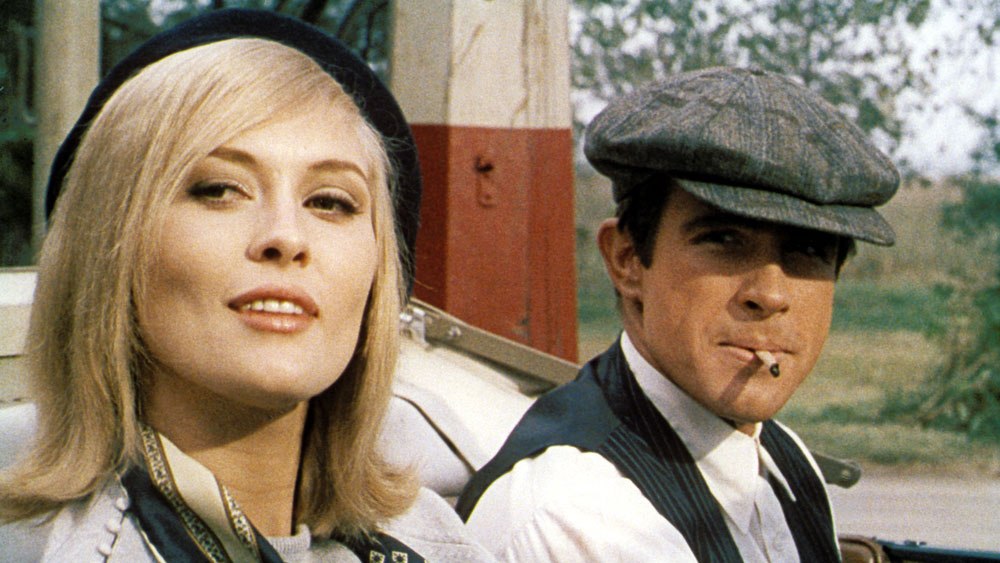
Bonnie and Clyde (Arthur Penn, 1967) Bonnie and Clyde caused quite a stir when it was released in 1967. It was one of the first gangster movies, at least within most casual movie-goer's memories (which isn't much) to treat these people not as psychopaths, but as ordinary people who were caught in the Depression's whirl-pool and didn't know any other way to fight it. In other words, it attempted to de-mythologize the Barrow Gang. Unfortunately, the film created as many myths as it debunked. But then what else can you expect when you have two "beautiful people" like Warren Beatty (who does a fine impression of Warren Oates*) and Faye Dunaway (whose acting wasn't equaled here until Chinatown in 1974).

William Bayer in his book "The Great Movies"** has said "what is also personal about Bonnie and Clyde, and constitutes its unique flavor is its curious blending of comedy and horror, its romanticization of crime as something that is fun, and that also leads to violent, bloody death. Bonnie and Clyde is both real and abstract, a gangster-movie and a comedy-romance. It is a comedy that turns dark, a romance that ends with death."
Death in Bonnie and Clyde is of an explicit nature. It was the first popular film to use the modern film technology to present a heightened violence that created the trend that is still going on today. Of course, no one forgets the slow-motion slaughter of the two at the end--"the dance of death"--it's dream-like quality, because Death's constant presence in their lives has turned it into a dream. Slo-Mo violence has been used after ad infinitum with no imagination and less effect.***
There are other moments: the first violent death of a clerk;**** the performances of Gene Hackman, Estelle Parsons, Michael Pollard, Denver Pyle and Dub Taylor; Bonnie's escape in a corn field; the death of Gene Hackman; the comedic perfection of Evans Evans and Gene Wilder (in his first movie); and probably, best of all, the reunion with Bonnie's parents before their world falls apart.
Yeah, it is Arthur Penn's finest film. Borrowing from the past, but also using his own sense of cinematic imagery, Penn has made a complete, whole film--something that can't be said of his Little Big Man, Night Moves, or The Missouri Breaks with their only occasional moments of brilliance.

Maybe the reason Penn was so successful with Bonnie and Clyde is the material he had to work with--the script by Robert Benton and David Newman.***** Newman and Benton wrote it hoping that Francois Truffaut or Jean-Luc Godard would direct it. Arthur Penn was extremely lucky that they were unavailable. The two later scripted There was a Crooked Man, and, with Buck Henry, co-scripted What's Up, Doc? In 1972, after writing for others and seeing them reap all the laurels, Benton-Newman wrote a script and Benton got to direct it, It was called Bad Company and in many ways it's a better film than Bonnie and Clyde.
Broacdcast on KCMU-FM January 20th, 1977
* I sense "snark" there. I don't think it was related to Oates playing Dillinger in 1973—a film that owes a lot to Bonnie and Clyde, one should mention—but, rather the hyper roles that Oates played in the early 1960's. If you watch Dillinger (which came out six years after Bonnie and Clyde), with Oates as the titular gangster, you'll notice that he plays his role with more gravitas. It's the difference between Oates changing his intensity from a supporting actor getting himself noticed to a star role where there is more depending on the lead.
** Sadly, out of print, and not to be confused with Roger Ebert's "The Great Movies" series of books. Bayer's book was a fairly non-controversial heavy tome with well-written appreciations and beautiful photographs. I've still got it, and still treasure it. I became acquainted with Ebert's two-book series over a weekend, and found them both very enjoyable in Ebert's typically "personal-relationship-with-the-movies" style. All totaled, before his death, he increased the number of "must-see" movies to 379. You can find the list here. *Sigh* No rest for the wicked.

*** The thing that makes Bonnie and Clyde's death-scene in under-cranked motion so well-done (as opposed to most that came after) can be attributed to the editing of Dede Allen, whose scrupulous work for Penn and Sydney Lumet, raised it above the typical use of slow-motion, which is generally used for exploitation purposes. I might have been harping on Sam Peckinpah at the time I made this point, but, despite his reputation, even he only used flashes of slow-motion amidst a fast edited sequence to highlight a story-point, or prolong a moment of shock. Nowadays, the "dance of death" sequence (as it became known) looks a little tame compared to today's cinema carnage. It's still arresting, though.
****Based on a similar shot in Eisenstein's Battleship Potemkin--folks were getting into film-school references at this point, and I think it marks the bifurcation point where directors stopped drawing inspiration from life and, instead, drew inspiration from other movies—to the medium's detriment, I think.
*****Benton-Newman also wrote the book for "It's a Bird, It's a Plane, It's Superman," the short-lived Broadway musical, which paved the way for them working on the re-writes of Mario Puzo's scripts for Superman and Superman II. Benton went on to direct such great films as Kramer vs. Kramer (which won the 1980 Best Picture Oscar), and my favorite of his films, Places in the Heart.

Tomorrow: Bad Company

Wednesday, May 13, 2015

The Three Musketeers/The Four Musketeers

The Three Musketeers: The Queen's Diamonds/
The Four Musketeers: Milady's Revenge (Richard Lester, 1974/1975) These rollicking films were originally planned as a two and a half hour epic (no matter what the Producers now say!) may just be one of the best adventure films (and adaptations of a classic novel) ever adapted, balancing the demands of the story, the tenor of the times in which it was made and the idiosyncrasies of its director.

When approached, Richard Lester (who hadn't made a film since
The Bed Sitting Room in 1969) wasn't enthused. Then he read the story, and did some research...and heartily agreed. One can see why. For The Three Musketeers, as Lester and his screen-writer George MacDonald Fraser envisioned it, is a story of intrigue done in high places, but carried out by the lackeys and foot-soldiers who live only to serve. Forget that the palace-dwellers are either snakes or dullards—they provide an opportunity for income and adventure--two qualities lacking amongst the citizens of France and England, who, at the time, are at war. The opportunities for thrills, humor and rapier-pointed satire are rich and mined well by the film-makers.


And Lester's direction is masterful—simple set-ups and multiple cameras are used during the swash-buckling to make sure there's a glimpse of every buckled swash. And those scenes are choreographed as a group participation so that every Musketeer has "business." Lester also worked to make sure that the fights were inelegant affairs--not balletic, as had been the tradition, but more like street-fights, with few rules and the use of landscape and surroundings as equal strategies to the sword technique (and every part of the sword is used, as opponents are sometimes conked with the ornate handles). And, as Lester was renowned as a "one-take" director, opportunities for mis-haps, mess-ups and stumbles only added to the verisimilitude. Sure, the action was rehearsed, but any imperfections made things seem more real.

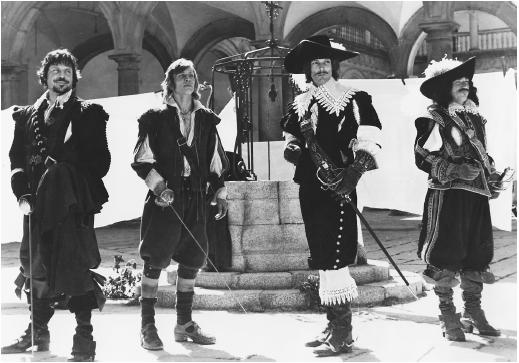
Reed, Finlay, Chamberlain, York and Kinnear enjoying the fruits of their labors.
Lester surrounds the royalty with games and idle amusements that have a slight tint of mindless cruelty to them, and that extends to the villains, whose elaborate machinations involving the Royals are merely extensions of those same games, with regime-toppling consequences.
A royal chess-game with dogs and capuchins
And the cast! As the musketeers, Oliver Reed as the surly Athos, Richard Chamberlain as the effete Aramis, Frank Finlay as the clownish Porthos, and Michael York as the young and naive D'Artagnan. As the Royals, Jean-Pierre Cassel as the foppish King Louis XIII, Geraldine Chaplin as the frail Queen Anna of Austria, and Simon Ward as the rakish Duke of Buckingham. As the villains, Faye Dunaway as Lady De Winter, Christopher Lee as the villainous Rochefort, and Charlton Heston in one of his best performances as the Machiavellian Cardinal Richelieu. Rounding out the cast are Raquel Welch as the Queen's seamstress, the accident-prone Constance de Bonacieux,* Spike Milligan as her randy husband, and Lester regular, the great Roy Kinnear as D'Artagnan's man-servant, Planchet. A superb cast, rarely equalled.
Welch and Dunaway as good girl/bad girl
It's long been contended that the film was supposed to be one movie, but that the Salkind's split it into two to maximize profits. That's the rumor—there is a natural split of the film at the half-way point that features almost all the actors for a sort-of bow, but it could have easily been used as the starting place for an intermission. It's born out by the fact that there is less movie in The Four Musketeers, it being padded with an "up-to-that-point" narrated prologue.
Charlton Heston in one of his best performances as Cardinal Richelieu
 
The two-film scheme is helped by the fact that there are two very distinct stories of different tones, both of which are resolved, the first being the intrigue-filled, but relatively light-hearted The Queen's Diamonds story (in which Athos, Aramis and Porthos are wounded, but not killed), and the second, Milady's Revenge where the Palace forces seek to disrupt whatever kept them from succeeding in the first one. That story, with its be-headings, extended back-story and several prominent deaths, is less fun (although certainly as clever) and considerably darker. Where Part 1 is rollicking fun with minimal consequences, the stakes in Part 2 are very high, passions flare, and the sword-play becomes deadly and fraught. The humor is darker than the first, too. Despite the same cast and crew,** the two are very different films. The combination of the two of them would have left audiences winded and less ebullient (and more anticipatory of a continuance).
Two other highlights: David Watkins' exquisite cinematography
and the hysterically ornate costumes.
Taken together, they have a moralist's sensibility of the costs of frivolity and duplicity; adventure can be fun, but in a poisonous political atmosphere, one adventures at one's own risk. You can have a good time watching The Three Musketeers, but the story is incomplete without the paid dues in The Four Musketeers. Together, they make one of the finest adaptations of a classic novel ever put to film.

* Welch, not the most versatile of actresses, won the Golden Globe for her hilarious performance in The Three Musketeers and tearfully told the crowd "I've been waiting for this since One Million Years B.C.!"


** ...except for the score composers--Michel Legrand for The Three Musketeers and Lalo Schifrin for The Four Musketeers.