Showing posts with label Mahershala Ali. Show all posts

Thursday, December 14, 2023

Leave the World Behind (2023)

Everything is Disconnected ("Siri, What's This Movie About?....Siri?.........Siri?.....Do I Hear Chuckling?") 
 or
"Ain't That a Shaymalan?"
 
I just got a new cell-phone. A smart-phone. I'd had a "dumb-phone" before...for like 15 years—can't be that dumb if it's lasted for 15 years, can it? Very dependable. Always worked. Made phone calls. Text. The occasional picture. But, now a year in to smart-phone land, I find myself depending on it more...more time spent on this one than the last one. Too much time, really. I'm at that stage of life where I really shouldn't be wasting the amount of time I have left.

And I do it anyway ("idiot").

And I've been quite amazed on how much I depend on this phone for features that I quite happily lived without for so many years. And how much everything is now so tied up together with the phone, my car, my bank, my messaging...everything. And it scares the crap out of me. What happens when they don't work? Will I be able to go back to "analog mode" in order to get things done? Probably...it will just take more time (hopefully).
So, along comes Leave the World Behind
this year's end-of-year doom-and-gloom Netflix release (last year's was White Noise and the previous year Don't Look Up)--based on the 2020 best-seller by Rumaan Alam, and written and directed by Sam Esmail (creator of the cult series "Mr. Robot"). In it, a New York couple, the Sandfords, Amanda (Julia Roberts) and Clay (Ethan Hawke)--they have two kids, Archie (Charlie Evans) and Rose (Farrah Mackenzie)--rent an Airbnb for a short vacation out of the city...to Long Island. Amanda's a bit "prickly" from her work (advertising, natch) and Clay's work as a media studies professor is stressing him out, so the "vacay" is spontaneous and short, much like Amanda. 
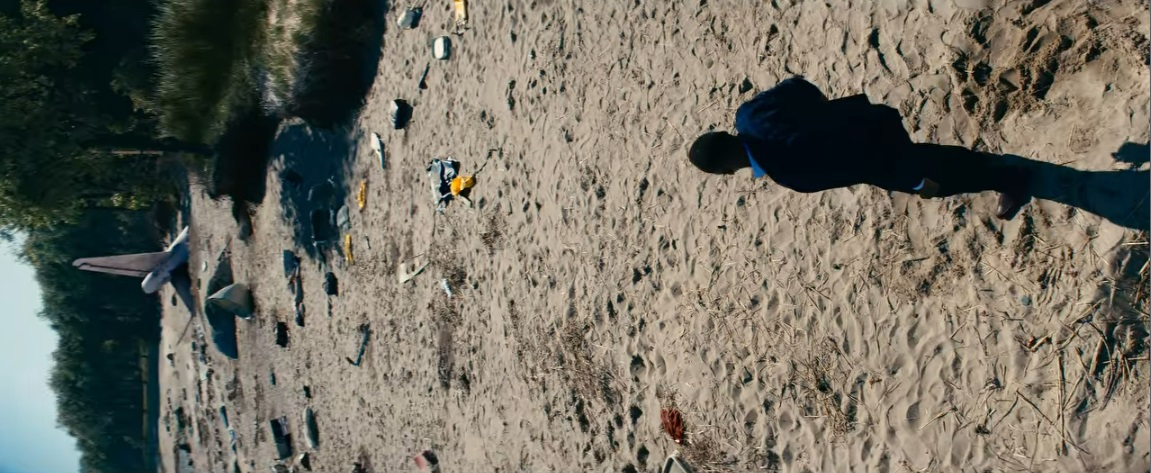
And it's fine...a very neat well-designed house...with a pool...close to a beach. Then things get weird. An oil tanker heads right for the shore without slowing and runs aground. Then, everybody's cell phone goes out. Radio stations stop broadcasting. Computers work but can't connect to the internet, so they're a bit isolated for news. The place is still nice, and they're provisioned if they have to stay longer. Sit and wait. That's the best thing to do given any lack of evidence.
Until there's a knock on the door late at night. It's the house's owner, G.H. Scott (
Mahershala Ali) and his daughter Ruth (Myha'la), dressed to the 10's after an evening at the symphony in New York. They've shown up at the doorstep because New York is in the middle of a blackout and they've come to their Long Island retreat for safe haven from the craziness the blackout has created. Amanda is suspicious—they could be anybody—but Scott has keys to the liquor cabinet and knows the email address Amanda contacted to get the place, and he even offers a bit of a refund for the inconvenience of sharing the place overnight. Some haggling and repercussions are interrupted by a notice that comes over the TV announcing that all stations have ceased functioning due to a national emergency. Reluctantly, Amanda agrees with Clay to let them stay...but there are questions. And nobody has any answers.
Some come through in the morning—Amanda awakes to some brief alerts on her phone's news-feed. The U.S. is paralyzed by a massive nationwide hacking attack on U.S. systems that have darkened New York and interfered with broadcast and navigation systems. But, more things have happened and continue to happen—there are distant explosions and a crippling sonic attack that shatters windows and deafen inhabitants. Wildlife is acting strangely—deer appear out of nowhere and the house pool is invaded by flamingos. Visiting a neighbor's home to commandeer a satellite phone, Scott finds that it doesn't work, indicating that U.S. satellite systems have been compromised. Drones drop leaflets that translate to "Death to America" and airplanes start to drop from the sky.
The Sandfords attempt to leave the island, but find the routes snarled by miles of Teslas drawn to the same spot by self-driving systems (interesting that this week Tesla has recalled models with that system
; the publicity from the movie must not be good). Complications ensue and the Sandfords and Scotts must join forces to seek shelter as advised by Scott's contractor, a suvivalist (Kevin Bacon), who has prepared for the end-times.

It's a clever little conceit that plays on all sorts of modern fears of weak power grids, infrastructure lapses, "Havana syndrome," and hacker gangs and provides all the doom-scrolling you need for the modern world in one neat 2 hour package. That is if one can ignore the temptation of complacency and is paying attention. Snatches of "Special Reports" and recognition of this week's hole of fallibility go off in one's head as one keeps watching things for these people get worse and worse (the flamingos I've never seen covered on "60 Minutes", though) and it's all done for straight tension, not for any satiric purpose as in Don't Look Up.
It's aided and abetted by strong performers who are very good at playing "I have no idea what's going on but I'm not comfortable with it" and with a particular nod to Roberts for daring to risk her reputation as "America's sweetheart" with a performance that is flat-out vexing for its negativity and pure harridanism. One wonders how her character could function in the world of advertising with her ability to say exactly the wrong thing at the wrong time. Her results must vary.
One must also admire the direction of Esmail, who, as if the events in the teleplay weren't off-putting enough, manages to present them in such a disorienting fashion while still keeping you aware of who's where and what their relationship to their surroundings are. One should always be aware of directors calling attention to themselves with camera tricks, but Esmail does them in such a clever way that one follows fascinated to see what he's going to do with it, rather than merely dismissing his tricks with a dismissive "show-off" remark. He also employs a nifty editing scheme: like author Dan Brown's way of ending chapters just as things are getting interesting, Esmail will cut away to another sequence when there's a slight escalation in tension, then cut back once that situation starts getting busy, and continues to see-saw with ever-building tension until a viewer is ready to snap. I've been seeing a lot of dismissive comments saying that Leave the World Behind is boring; there is no way it could be with this editing scheme—maybe those commenters upped their daily medication.
I found it to be a compelling little slow-burn thriller of the M. Night Shyamalan school—every-day situations are up-ended by some weird phenomenon that then goes to great pains to try to explain it all away, however tortured that explanation may be. Here, the speculations seem a bit more plausible, even if they are horrific in scope. Toss in some
Fincher-style transition tricks, and one is slowly pushed to the end of one's seat...with the occasional check to make sure your devices are still online.
Even moreso, it reminds one of one of the better "Twilight Zone" episodes from that series' first incarnation. Leave the World Behind is the "The Monsters Are Due on Marple Street" for the 21st Century, and the coming Trumpocalypse.
 
And it still works.

Friday, August 5, 2022

Predators (2010)

The new "Predator" film, Prey, premieres today...and it's getting great reviews (Rolling Stone calls it "a masterpiece"—probably right before a fashion or fragrance ad), so guess what? Disney/Fox isn't releasing it to theaters, and has it streaming on Hulu.  Another "Mickey-Mouse" move from a studio that has surrendered to the online challenge and given up on "presentation".

And The Movies.

Here's a review of one of the series I thought was pretty darn good, written at the time of its release.

"Its Jungle. Its Game. Its Rules. You Run. You Die."
or
"Last Tango in the Game Preserve"

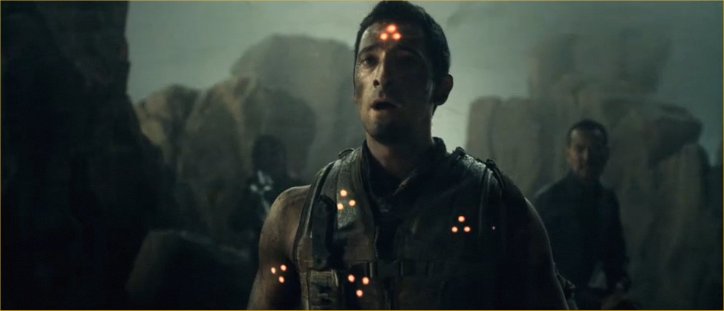
"Predators" drops you, literally, into itself. It opens as one of its combatants (Adrien Brody) is in free-fall, with no idea where he's dropped from and no idea where he's dropping to. All he knows is he's in free-fall. He doesn't even know if he'll survive the landing. Or how. All he knows is the panic, the wind, and the thing beeping on his chest in an increasingly accelerating rhythm.
 
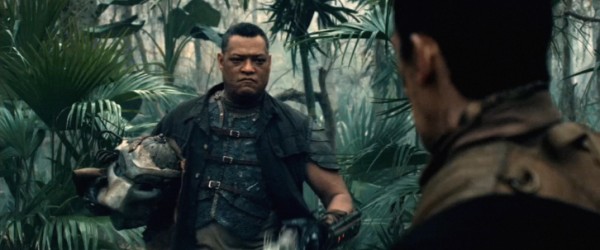
Once he makes land-fall, he finds himself surrounded, by an impenetrable hostile jungle and a rag-tag clutch of mercenaries (Alice Braga, Walton Goggins, Danny Trejo—a new trailer for Machete is attached to the print—Oleg Taktarov, Louis Ozawa Changchien, Mahershalalhashbaz Ali, Laurence Fishburnedoing something very, very different this time, brilliantly) and a doctor (Topher Grace?!), an odd-man-out in a team of hostiles from every hot-spot corner of the Earth.
First, they must learn to trust each other—
they're all loners, but Brody's character is more of a lone-wolf than others, interested only in survival, names are not important, and familiarity breeds empathy and weakness—which quickly becomes irrelevant when they discover that they are part of a deadly game—they are ruthless predators being pursued by an invisible implacable enemy for sport; these hawks have become quail, and they must use their inherent killer-instincts to put themselves in the running foot-steps of so may of their victims. The predators have become prey.

The "Predator" series
was never a great series of films. The first one, with Arnold Schwarzenegger (which is referenced here) was the only good edition and it quickly degenerated into an also-ran cousin of the "Alien" series (and Agatha Christie's "And Then There Were None"). The concept didn't have anywhere else to go; it was a "one-idea" pursuit film that resisted expansion or depth...until this one. Predators (directed by Nimród Antal) slightly expands the concept and heaps on the irony of cut-throats getting their just desserts, while also giving the participants more back-story than the "Dirty Half-Dozen-or-so" of the first film.
Antal crams a lot into the story, never sacrificing pace, suspense or the "wtf?" quality necessary for this kind of "out-of-their-depth" story. It also manages to pay homage to fiction's Rosetta Stone of this sub-genre,
Richard Connell's "The Most Dangerous Game." TMDG was at the core of the original, but "Predators" manages to take it several steps further, even incorporating that other "man-hunters-in-the-jungle" story, Joseph Conrad's "Heart of Darkness" (yes, the basis for Apocalypse Now) in a sub-plot.
Busy, busy film. And adroit. Tough-minded and unsentimental. Perverse and holding deeper truths...there's even a hint of a mystery story in there.  Entertaining and satisfying, if this is your bucket of blood.* Personally, this one tops the original, with a fine cast—who'd have though Academy-Award-winner Brody would be so effective in a role like this?**—and higher ambitions that it handles efficiently. A product of Robert Rodriguez's Troublemaker Studios, it shows how excellently this brand of B-movie entertainment can be produced.


* And it is violent...one scene has a predator ripping the spine and skull of a victim from its carcass and bellowing in its victory.  Despite the implausibility of such an act (ever try to do that with a chicken?), it's a powerful scene.  Filmed obliquely—the film is a hard "R," but doesn't stray into "X" territory (which you have to be REALLY over-the-top to earn from the Ratings Board)—it's a visceral moment.
 
** Roman Polanski, probably.  On second consideration, the whole of The Pianist is a similar story of being hunted during WWII, and Brody made you feel every twitch of his nerves in that one.  If you haven't seen that film (and I also delayed watching it for a long time because, frankly, I didn't want to see another film about The Holocaust), you owe yourself to get a copy and view it. Predators also features another Oscar-winner, the always terrific Mahershala Ali (under his original stage name).

Friday, March 22, 2019

Alita: Battle Angel

Spare Parts
or
Little Orphan Gally (Sappiness is a Warm Gunnm)

It is the year 2563 and the separation between the have's and have-not's is evident at all times. Floating above "Iron City" is the pleasure-dome of Zalem, and the city in disrepair below it is, literally, its dumping ground. It is where Dr. Dyson Ido (Christoph Waltz), a brilliant cyber-surgeon of limited means, finds an angel...or part of one, anyway. 

Doc has been living in a self-imposed exile in Iron City, repairing its citizens, providing them with replacement parts for whatever has been ripped from them in the rough world of Iron City. Money is not a concern—he will take a bag or oranges for fixing a busted cyber-arm, if it will do the most good. He could have made good money creating freaks and cyber-monsters for the Moneyball tournaments that serve as bread and circuses for the disadvantaged to take their minds off being disadvantaged ("better football than revolution, right?")
Hunting for spare parts to use in his work, he finds the head and torso of an android female and looks at it and takes it home. using the discarded android body he had designed for his paralyzed daughter—murdered when a cyber-ruffian burst into his lab looking for drugs—Ido puts the little android together and calls her "Alita,"(Rosa Salazar, motion capped) his daughter's name. He doesn't know her background, doesn't know her history or function. But, he takes on the role of father-mentor and protector in a world where "people do terrible things."
Alita: Battle Angel went through "development hell" for many years, acquired by James Cameron after being introduced to the manga and its video by Guillermo del Toro, some time after he'd made Titanic. Cameron tinkered with a script, developed technologies, and ultimately used them to make Avatar and its (how many are anticipated?) sequels. Alita was put on a very back-burner until Cameron approached Robert Rodriguez, a director with a great sense of economy, but often not the vision to try and make something out of the property, or at least get it back on track. Rodriguez's first job was to try and fashion a script out of the many begun by Cameron that never seemed to gel. But, Rodriguez managed to squeeze into his script the first four books to the satisfaction of Cameron and producer Jon Landau, and the movie got made to the tune of 170 million dollars, Rodriguez's biggest budget by many factors.
The film that is cobbled together from the first four "Gunnm"/"Gally" books has the establishment of the Zalem-Iron city dichotomy, the murder of some women "Jack the Ripper"-style (which briefly makes Ido himself a suspect-perp), Alita's relationship with a street-punk named "Yugo" ("Hugo" in the film, played by Keean Johnson), and her emergence as a star-participant in a vicious roller derby game thoroughly based on the one in Rollerball; it's called "Moneyball" because...lawyers.
Frankly, they could have done without the "Ripper" sub-plot, even though it establishes a strata of Iron-ites as "hunter-warriors"—vigilante/bounty hunters who dis-assemble the most predatory of the cyber-human hybrids, who all seem to be associated with the Moneyball games, if only tangentially, through the person of one of the many bad-guys, Vector (Mahershala Ali*), who seems to be the Iron City mega-promoter of the games and its chief supplier of cyber-enhancements to keep the games...interesting.
There wasn't a need to make a third version of Rollerball. The movie wasn't a success in 1975 (nor was its 2002 re-boot), either financially or artistically, when Norman Jewison made it, and its same point about distracting an oppressed populace can be made, far more directly and relevantly, by making a football film. There is virtually no difference between Alita's "Moneyball" games and the "rollerball" concept right through to the no-holds-barred playing strategies or the "jam-the-ball-in-the-hole" concept of what constitutes a goal. Rollerball had motorcycles involved, but that's about it.
Alita rivets together Rollerball with "Tinocchio" and "Chromeo and Screwliet" with some seams showing through the solder, as they try to crunch four of the "Gally" stories into one movie. It gives short-shrift to Ido's development (which may be why Waltz gives one of his "uncommitted" performances) as there's never a point where he changes attitude from paternalistic protectiveness to his eventual "show 'em what you're made of" boosterism when she decides to enter a rigged Moneyball championship.
Rodriguez gets the spectacle down cold, but some of his futurism is a bit weird—the one wheeled motorcycles that pop up seem ludicrously stabilized for their design. Alita—the character—has big Disney-princess-eyes (the only one who does, curiously) to reflect its manga origins, but the movie is very Anglicized, with touches of Rodriguez's latino roots thrown in, more than its Japanese origins. Some of the editing is very rough with those continuity flaws "they" love to throw in IMDB's "Goofs" sections, and I'm still trying to figure out how Alita got her feet back after Ido replaces them with some nifty plug-in skates for the tournament. I'm sure some of it can be explained that it messed up the pacing, but given the other things, I think it was done "because they had to." "It's only a movie, Ingrid."
However, some of the work is stellar, especially when Rodriguez and his technicians stop reaching for photo-realism and make the thing move with an almost Chuck Jones-cartoon precision. As, below:
Now...let's wade hip-deep into Alita: Battle Angel and its place in the current political climate. Of course, it doesn't need to be and is a false flag in any political discussion because Alita is hardly political, making its point in sociological terms, merely. 
But...a certain sub-strata of internet commentators have chosen to make it political by bitching that Alita is a better representation of a female character than a "woke" "social warrior" movie (in their view) than say, Captain Marvel. This is not true. That sub-set just "feels" that way because Alita—to them—is a better representation of women, with her big eyes and her doll-like proportions (would that be more structurally sound for a robot rather than being heftier?) because it adheres more to the concept they prefer, which can be described as "the kind men like." Even if Alita wasn't petite and reminded one of a emaciated gymnast, she is also emotionally naive...in the way men like.
The second Alita story-line involves her becoming emotionally drawn to a street-tough named Hugo, whose dream is to live in Zalem, is working for Vector, makes his livelihood by dismembering hybrids for their spare parts and even sets up Alita for being demolished in the Moneyball tournament. Alita knows nothing of this—save for his Zalem upward-mobility—but even when she learns that he has worked against her, she loves him so much, she still forgives him and wants to be with him, despite it all.
What jerk wouldn't be attracted to that concept? Alita's devotion is unconditional, while his is based purely for his benefit. It doesn't matter that he's a scumbag, she Capital- loves him, no matter what crap—or cyber spine—he pulls. This does not compute, and makes sense only in a male fantasy of uneven relationships and warped power dynamics.
At one point (and I started giggling uproariously while watching this, upsetting some in the theater) Alita offers Hugo her heart—her mechanical heart, pulling it right out of her chest and holds it out to him. One wonders how seriously this was taken by the film-makers: is it "on the nose" what they meant to represent, or was it meant to be a satirical joke because, hey, she's a robot. I chose to think of it a third way...as ridiculous. 
Personally, I would have liked her to grab him by his mullet and say, "Ya wanna get to Zalem, meat-monkey? Let's see how far I can THROW ya!" I think that would have been far more cathartic than Alita playing weak and deferential to her inferior-in-all-ways man-child.

But, I'm sure it played well for the boys still playing with girl-toys.

"It's only a movie, Ingrid"


* This is the first performance by this wonderful actor (two Oscars?) where he seems a bit lost and so, takes the role slowly, while still managing to differentiate between the character when normal and when "possessed"—never actually explained how (or why he doesn't do it to everybody) by the Big Heavy "Mabuse"-like Zalem kingpin named Nova (played by Edward Norton—and where has he been outside of Wes Anderson movies?) who runs the games like an overlord.

Wednesday, December 26, 2018

Spider-Man: Into the Spider-Verse

The Ultimate Spectacular Amazing Spider-Man
or
"Aw, Did That Feel Like a Cartoon?"

Back in "the day", before the super-hero glut in multi-plexes, James Cameron was trying to untangle the web-like rights to the Spider-Man character to make the first Spider-Man movie. Rumors were that it was going to be prohibitively expensive as well, as Cameron's story involved multiple dimensions—that was a rumor, but in those pre-Titanic days, everything associated with Cameron was considered prohibitively expensive, despite the fact that he could squeeze every last drop of screen quality out of his budgets just by clever movie-making legerdemain. It also seemed like a big leap in concept for that first introductory "Spidey" movie—audiences needed to be able to "buy" into things like radioactive spiders, web-shooters, urban web-slinging, sticking to walls, and fooling your old "biddy" aunt that you were at the library when you came home bruised after fighting a giant lizard before we got into any story with any real dimension—or many of them. With great powers comes great amounts of time justifying them to an audience that still doesn't quite believe a man can fly.
But, if you're going to crank out comics monthly (or bi-weekly), you have to come up with something besides a story about a villain that dresses up like an aardvark for the hero to fight, so writers—being writers—came up with the "multiple earths" theory where you could have stories with a "what if?" hook. DC started it with their "Flash of Two Worlds" story in a 1961 issue of The Flash comic book, where that book's hero visited the alternate Earth of "The Flash" from the 1940's—although Wikipedia makes a case for it starting in a 1953 issue of "Wonder Woman." Marvel started their multiple Universes with 1984's "Captain Britain" series, but, recently, the various media in which superheroes appear have dabbled with "Alternate Earth" story-lines, the most recent (and I'd argue at first viewing) and among the best of any super-hero films is Spider-Man: Into the Spider-Verse with a story written by Phil Lord and Rodney Rothman and energetically directed by Bob Persichetti, Peter Ramsey, and and Rothman.
Meet Miles Morales (voiced by Shameik Moore), a high school student living in New York. Dad (Bryan Tyree Henry) is with the NYPD, and his Mom (Luna Lauren Velez) is a nurse. He attends Brooklyn Visions Academy, a charter school, although he'd rather be at Brooklyn Middle with his pals. It's just Miles is brilliant—he can't even fail a test to get kicked out. Miles is more of an artist than academic, and despite the pressure from his folks, he'd rather be spending time with his Uncle Aaron (Mahershala Ali), although his father disapproves.
His Dad also disapproves of Spider-Man (voiced by Chris Pine), who starts out the movie with a "Okay, let's do this again" narration that introduces you to who Spider-Man is—he will remind you a lot of previous "Spider-Men" in other Spider-Man movies, at least THIS Universe's Spider-Man movies—talking himself up and ending with "The only thing standing between this city and oblivion is the one and only Spider-Man."
A bit premature, that. After another spat with Dad about having to go to BVU, Miles goes to visit his Uncle Aaron, who encourages his graffiti-art and takes him to the subway, where Miles gets to practice painting the wall of a blocked-off section. It is here where Miles gets bitten by a radioactive spider, because, hey, it's happened before, and he finds that things get a bit sticky and has him climbing the walls...quite literally. That's something that doesn't happen with puberty, and it causes all sorts of mishaps that he can't explain and does not understand.
Standard stuff, right? At least standard for a Spider-Man movie. But, this is where things get good. Very good. Because with great powers come some great graphics and some very imaginative film-making. The directors go full-tilt comic book with narrative boxes, emoti-squiggles, dramatic freeze-frames, and some onomatopoetic effects that seamlessly interact with the action going on, and become a part of the landscape of its hero's experiences. At times, it is positively thrilling to watch Spider-Verse unfold, so creative are the choices to enhance it made, without sacrificing the momentum of the film or the story. Nobody's tried this since Ang Lee made his Hulk movie, but this is far more successful in every way.
At the same time, look at the picture of Miles looking at the spider that irradiated him. Click on it. Look at it large and look at the light. It's made of dots, not unlike how the old comic-books used to make graded colors out of the primaries. It's subtle, but noticeable and they do that throughout the movie, creating an image that isn't pure white light, but has an ethereal glow to it. It's done quite a bit in the movie, but never to the point where it's really distracting, but gives it "an edge" being in a movie, although it elicited a nostalgic sense of memory for this old comics reader.
One more technical thing which I loved (then I promise I'll get back to the movie): the three directors do a wonderful thing with focus and distance—they take it slightly off-focus, by merely shifting color gradients a bit, like an old-time comics printing error, while they keep the area of intended attention sharp. This was particularly effective in 3-D (which, for once, I recommend) where it looks a bit like the stereoscopic errors that plagued the close perspective images in the early versions of the latest generation of three dimension-pushing films. This is a great choice and one more cleverly innovative way the directors create their comic-book world. By comparison, look at the difference between the shot above, and their photo-realistic city-scape below.
End of technical geek-out
While strolling up the side of a building, he's noticed by Spider-Man—the established Spider-Man—who takes Miles under his web to learn the...webs. Unfortunately, on that night, Wilson Fisk—the New York gangster called "The Kingpin" (voiced by Liev Schreiber) is testing a new device that creates a trans-dimensional bridge because...well, that's a spoiler that's revealed in a lovely sequence based on the art-style of Bill Senkiewicz...but Fish doesn't care that it causes city-wide earthquakes and a "glitching" transformation of pieces of New York. He's a big, bad dude, after all, and he proves it by killing Spider-Man when he tries to stop the destruction.
New York mourns Peter Parker, the twenty-something who was Spider-Man, except that...he's blond! The Peter Parker "we" know has dark hair and we have that verified when he shows up on Miles' Earth, having been sucked out of his world due to Fisk's foolhardy experiments. THIS Parker—Peter B. Parker (voiced by Jake Johnson)—is also 20-something, not in the best of shape (Miles calls him the "brink old-joke hobo Spider-Man") and is going through an emotional upheaval after the collapse of his marriage to Mary Jane Watson (Zoë Kravitz). Despite that, he's the only "one-and-only" Spider-Man in town, and Miles looks to him to help him become the Spider-Man he wants to be. As Peter B. wants to get back to his own world, he agrees, especially since Miles has a doo-hickey needed to shut off the Fisk-machine—except that...he broke it. So the two make a trip to Fisk Tech-Labs to try and find a replacement, because, as Peter B says, "the best way to learn is intense, life-threatening pressure."
They also get help from that Earth's Aunt May (voiced by Lily Tomlin, bless her) and other dimensional Spidey's who show up at her door-step—because they all have an Aunt May. There's Spider-Gwen (Hailee Steinfeld) from the dimension where Gwen Stacy becomes a Spider-person, Spider-Noir (Nicolas Cage) who comes from a gritty, black-and-white Universe, Peni Parker (Kimiko Glenn), who, with her robot spider-kick is an anime hero, and, finally, Spider-Ham (voiced by John Mulaney), the Spidey from a cartoon universe. The six web-slingers form a team to try and get back to their own worlds...and teach Miles that "with great abilities come great accountability" (or something like that) because it takes a village of Spider-people.
Sound complicated? Not really, certainly not the way the film-makers tell it. Entertaining? That, it CERTAINLY is. Turns out it takes SIX Spider-Men to change a franchise...for the better. Given the whole package, story, direction and animation imagination, one is confident in saying Spider-Man: Into the Spider-Verse is the best of this particular hero's films—even better than the live-action Spider-Man 2—and certainly, animation aside, the best directed of the Spider-Man films (which never really managed to convey good Spider-Man action no matter how much they tried) even given its many changes of perspectives and often vertigo-inducing sequences.
Speaking of which, while I was watching the film, some of the more (shall we say?) "flashy" effects seemed to be extreme and given the pace of the film, a might strobe-like. There was a time when I wanted to end the review by saying that the only way you could not like the film would be if you had no interest in animation, visual presentation or prone to epileptic seizures. When I went to another theater the next day, there was a warning placard at the concession stand warning of those prone to epilepsy of such effects as they were displayed. There is some internet chatter about making an online petition. Duly noted. Take note. Some dimensions you don't want to fall into.
Still, I enjoyed the flashing lights. My admiration for the film has only grown since the day I saw it, and my distance from it has not dimmed my enthusiasm or admiration for this, one of the best presentations of the superhero genre, ever.