Wednesday, September 11, 2024
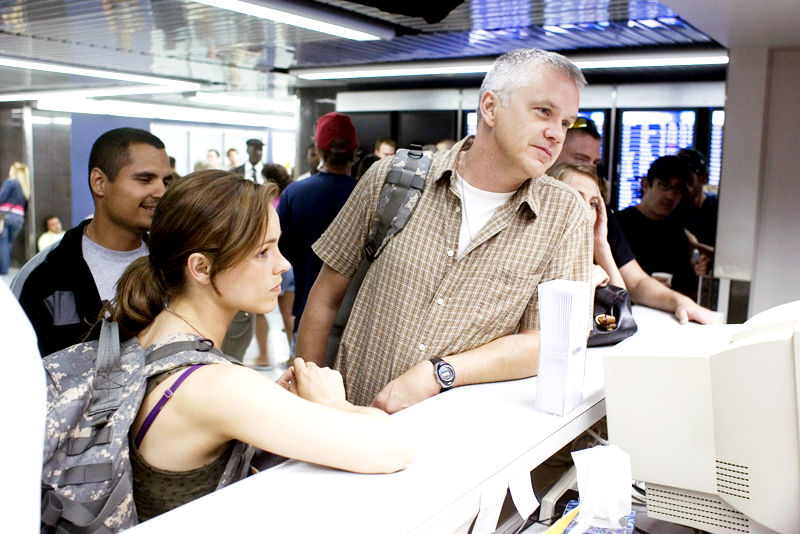
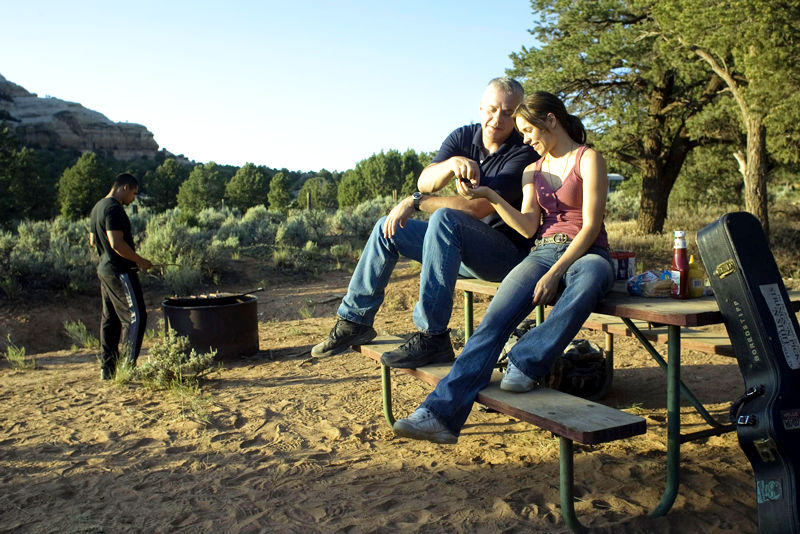
The Lucky Ones (2008)

Wednesday, March 6, 2024
Babel
A nice little movie that no one has ever heard of is John Sayles' City of Hope made in 1991—it presents a limited space in time in the life of Philadelphia where the decisions of every character over the disposition of a single city block affects every other character in a way that negates any sense that lives can escape the self-imposed limits inflicted by others (and placed on themselves). Everyone is trapped and without any hope.
Saturday, September 2, 2023
Gangster Squad
If one is looking for a history lesson, one should look elsewhere. This is a glamorized, fictionalized version of the events set in some art-deco post-war version of Los Angeles that doesn't seem to have existed anywhere except the Warner Brothers gangster films and Brian de Palma's The Untouchables, to which this film owes a great debt. The gangsters all wear dark clothes with long coats (the better to identify them) and are all greasy and ugly, while the police are all good-looking guys in nice suits who bend the rules a bit (with the possible exception of Chief Parker, played with a gruff somnambulance by Nick Nolte, who headed up the similar "Hat Squad" in Lee Tamahori's Mulholland Falls).*
Fleischer is more interested in flash than being true to the source. His fights are surprisingly well-staged, one shot per flying fist, but not Bourne-edited so one can easily follow it—an early fight in an elevator borrows heavily from a similar scene in a James Bond movie but actually goes places the 007 film merely used for suspense. Once in awhile, he'll go for a Matrix-y slo-sloo-slooo-mo effect (rather than a fleeting Peckinpah image) just to make a point of something, like cartridges flying out of a machine gun, or a Christmas ornament exploding due to gunfire, but it's just slowing things down as opposed to telling a story. Brolin's fine, nuanced even, but Gosling's McQueen-ish hipster act is wearing a little thin, and the chemistry exhibited between he and Emma Stone from Crazy, Stupid Love is completely missing here. Mackie, Peña, and Patrick are far more engaging probably because they don't fit the established mold.
It's entertaining, to a certain extent, but one gets the feeling, after patterns have been set that bring to mind other films, that one is being sold a bill of goods, and we are.
![]() |
| The real Mickey Cohen, photographed in 1950 |
![]() |
| The real "Gangster Squad" |
Saturday, April 22, 2023
30 Minutes or Less
or
"30 Brain-cells or Less"
30 Minutes or Less is the latest film from director Ruben Fleischer, who had previously been in charge of the movie Zombieland (which was fresh, funny and smart) and I think that in the current movie climate, as damp and soggy (and derivative) as it is, that we might want to re-think the auteur theory—the critical bon mot from the 1950's era Cahiers du Cinema crowd that the director is the true "author" of a film, despite it, by necessity, being a collaborative medium. You can make a case for it with some—Hitchcock, Kubrick, Welles, Hawks, Ford, Capra, Leone, Fellini, Scorsese, Kurosawa, Spielberg, Woo, Malick...Michael Bay, Lars von Trier (hmmm).
Well, for good or ill you can make the case.
Mr. Mason, your witness. "Call to the stand, Ruben Fleischer..." (and the prosecution then puts its head in its hands).
"Move to dismiss..."
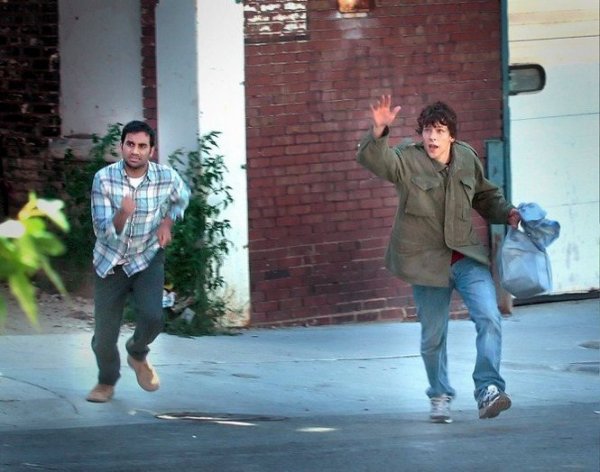
As I said, I liked Zombieland (which, although it had moments when it dragged, was a hilarious take on zombie-movie traditions). But, I despise to the core of my critical thinking 30 Minutes or Less. And it shakes my faith, because the guy who brought so much to the former brings nothing to the latter, not even the smarts to know when something's not working and, in so realizing, makes the attempt to change it. That's what direction is all about, isn't it? There are the occasional stylistic flourishes—liked the pan up from headlights of both the protagonists and antagonists linking the two, and a fire-flash of seriousness there towards the end—but, for goodness sake, scene after scene of this nightmare falls as flat as a two hours old pizza (thin crust), bereft of story sense or any humor, other than a chain-link of easy crudities and a nasty streak of hooting at the flailing of the morons on display. The plot—such as it is—involves slacker Nick (Jesse Eisenberg, looking a bit lost but doing so at 90 mph), a pizza-delivery boy, who, despite driving like a maniac, seems incapable of delivering a pizza on time. He crosses paths with two even slacker bone-heads (Danny McBride, Nick Swardson—evidently the next big star of terrible films), who claim to be entrepreneurs—although they seem to have trouble pronouncing the word—even though they have no business sense, no ideas on how to make money—other than cleaning the pool of the lottery-winner-father of the former (Fred Ward, you should be ashamed), and could be considered troglodytes if only they had a hint of hunter-gatherer skills. They decide to raise $100 grand to hire a hit-man (Michael Peña) to kill off said father—their only means of support—by robbing a bank, or rather forcing someone else to rob a bank by attaching a time-bomb to them, the not-agreed-to heist to be completed before bomb and bearer go boom. At least, their characterizations are consistent—they don't want to take responsibility for anything or for doing anything. They should probably re-think starting a tanning business and going into politics.This is where Nick comes in. He delivers a pizza to the slackers, they drug him and attach the bomb while he's "out." In a panic, he must (for once) be on time, or he's dead. He recruits his pal Chet (Aziz Ansari) to help in the robbery, but, even though they get away with the money, it's a botch-job (no doubt inspired by the making of this picture), then comes the inevitable complications over the money hand-off and a resolution of sorts...lots of explosions that we are to believe people survive, as if this were some kind of Road-Runner cartoon (except those are entertaining).
The whole thing has a slap-dash feel to it, with a lot of ad-libbing between McBride and Swarsdon that comes off as "'Off'-Night at the Improv." The thing is totally devoid of wit and is just a string of sketch comedy riffs held together by the robbery plot. It's a movie best seen drunk or stoned or sleeping. After bearing with the thing for 45 minutes, I chose the latter.
Here's the thing—a variation on this really happened: On August 28th, 2003, a bank in Erie Pennsylvania was robbed by Brian Douglas Wells, a pizza delivery man, who was abducted and a bomb placed around his neck. Wells pleaded with everyone during the bank heist that he was doing it against his will and begged to get the bomb off him. Unfortunately for Wells, the bomb squad showed up four minutes after the device exploded, killing him instantly. Now, just imagine the brainstoming session between the script-writers where someone relates this horrible crime (it was attempted a couple weeks ago in Australia, as well) and said "This would make a great comedy!" ("Laugh? I thought I'd die!")
According to Wikipedia's entry on the movie, the scriptwriters, Michael Diliberti—his first screenplay after being an assistant to producer Scott Rudin—and Matthew Sullivan claim that they were only "vaguely aware" of it. "Vaguely aware" are the perfect words, I think. It seems that was the state in which the whole movie was developed and made. It's a bad idea for a movie, badly made. And now, in a moment of justice, Fleischer, Diliberti and Sullivan have their own "bomb" tied around their necks.
And they're going to have to carry it around for a very long time.
Tuesday, September 21, 2021
Lions for Lambs
"Never engage the enemy for too long, or he will adapt to your tactics"
The trouble here is that the issues are so immediate that the arguments the film is making were too late four years ago. So, it's a bit like soft-ball preaching to the choir. The arguments are sound, but they have very little relevance to extricating us from the tar-pit of this conflict, and, yes, people are getting chewed up by it, but that's the business of war, and why you try to avoid it, rather than rush in like a damned fool. It's great to be able to say all this with 20-20 hind-smugness, but it's essentially useless. Now tell us something we don't know, and how we can avoid it the next time. "Is he failing you?" a fellow frat asks the student about his meeting. The movie certainly is.
* The title derives from a phrase from World War I, but, the exact nature of the quote is subject to debate, and its history, like the film, is a bit muddled.
Wednesday, May 19, 2021
End of Watch
Cops, the Home Movie
or
"...More Capers in One Deployment Than Most Cops Will See Their Entire Career."
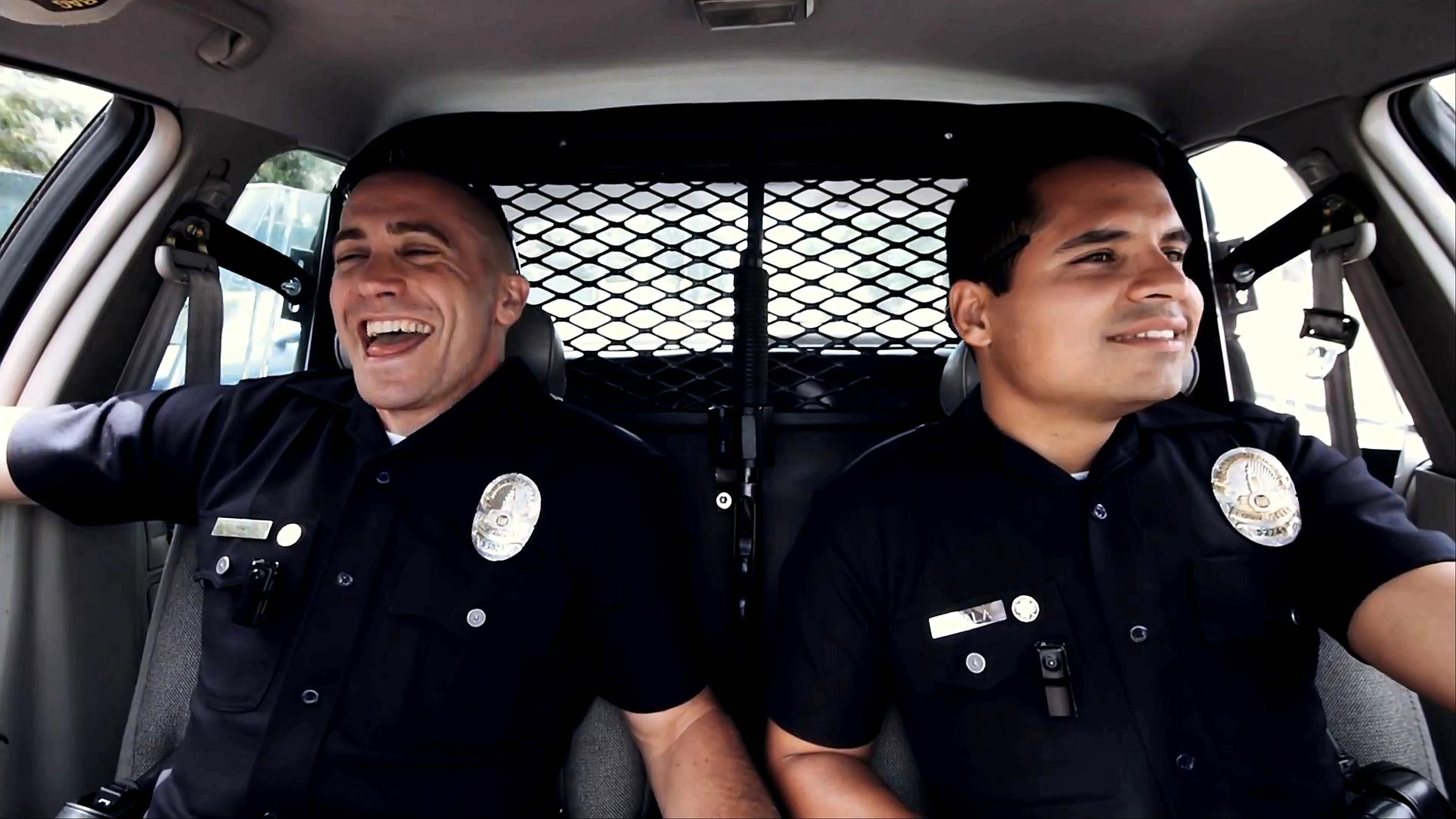
It's a war out there "once upon a time in South Central." And Officer Brian Taylor (Jake Gyllenhaal) is the front-line reporter documenting the whole thing "for a project." He's carrying a camera—not that he really needs it, the dashboard cam will pick up everything needed for an investigation. But that camera can only look forward—it's myopic. It can't see around you, it can't check the perimeter. And it can't look into your soul. It can look at your back, but it can't have it.
It starts with one of those dash-cam chases, so familiar to "reality" chase shows. No overlayed sound, save for Gyllenhall's narration, said in a monotone as if he was giving you your Miranda.
I am the police and I am here to arrest you. You have broken the law. I did not write the law. I may even disagree with the law. But I will enforce it. No matter how you plead, cajole, beg or attempt to stir my sympathy, nothing you do will stop me from putting you in a steel cage with gray bars. If you run away, I will chase you. If you fight me, I will fight back. If you shoot at me, I will shoot back. By law I am unable to walk away. I am a consequence. I am the unpaid bill. I am fate with a badge and a gun. Behind my badge is a heart like yours. I bleed, I think, I love, and yes, I can be killed. And although I am but one man, I have thousands of brothers and sisters who would die for me and I for them. We stand watch together. The thin-blue-line, protecting the prey from the predators, the good from the bad. We are the police.*
And with that, the law of the film is laid down. The dash-cam goes away and the camera goes into cinema verité, the camera pointing from inside Taylor's locker as he goes through basic introductions—himself, his partner Mike Zavalla (Michael Peña, never better), his equipment (and a conversation from Rio Bravo pops into one's head: "That all you got?" "That's what I got."), and the beginning of the look inside—the harsh joshing, the tensions, the coolness and coldness and camaraderie of the corps. Joseph Wambaugh had an apt phrase for them in his book (and subsequent film), "The New Centurions." But Rome was never like this.
The turf in South Central is tough and hard-scrabble. Poverty is on display on every street corner, and behind the boarded-up windows of the houses in various states of disrepute are secrets for the outside world not to know, but will see the light of day once the front door is kicked in. The war is in the streets, but inside cook the warning signs that something is about to explode, the stakes rising, the limits of human degradation dropping, the calibers of the weapons increasing, the risks increasing and the only good side of it being that they're not increasing exponentially.
It's a tough film, directed and written by the guy who wrote Training Day and the original The Fast and the Furious, David Ayer, who has a knack for keeping things on the down-trodden path no matter who's behind the camera or what the subject matter is. It's not a film for continuity buffs, who will be driven crazy if they think "Okay, who's taking that shot?" with every change of perspective. Very quickly, the strictures of the snatch-and-grabbed shot are forgotten to gain perspective. The film would have been a pretentious (and claustrophobic) confusion if the conceit was maintained throughout, (I can see the review headline now: "The Blair Watch Project"), but as it is, breathes enough air into it while maintaining a feeling of impromptu recording—keeping the spirit of the law, rather than the letter of it. That, along with the ad-libbed spark of the dialogue gives it an edgy immediacy that, again, "seems" right, while never fully escaping the feeling of planned manipulation (not that it ever could). Game try, though. And manages to show the life—long stretches of tedium punctuated by moments of terror—that one imagines the life to be, even though blown up with steroids to fulfill the needs for melodrama and tension.
Friday, December 28, 2018
The Mule (2018)
or
"Regrets I've Had a Few, But, Then Again, I Made The Rookie"
Glenn Close: This is Cameron's first nomination and he's in extremely good company. Tonight he joins fellow best actor nominee Paul Newman for "Coot", Clint Eastwood for "Codger", Michael Douglas for "Primary Urges" and Steven Seagal for "Snowball in Hell".
It's a bit of a shock to see Clint Eastwood return to acting, his first appearance since 2012's Trouble with the Curve, at the age of 88. Then you relaize: who else could play The Mule, based on the New York Times article "The Sinaloa Cartel's 90-Year Old Drug Mule"? Who else would an insurance company bet on any other actor, other than Eastwood, to complete the film? After all, he has continued to direct films during his hiatus. As budgets bloom and special effects extravaganzas mushroom through the multi-plexes, Eastwood continues to make simple movies, under budget and under schedule. It is also an opportunity to work again with screenwriter Nick Schenk who wrote Eastwood's first "swan song" Gran Torino in 2008, ten years ago.
But, Eastwood is definitely looking his age: he's frailer, the skin on his arms—which one would have referred to as "guns" back in the day—has turned crepey, and a certain careful feebleness has crept into his movements. But, the crooked smile is still there and the enthusiasm is never less than present.
Never seen the fear, though.
His time on the road makes him an absent father and grandfather, estranged from his wife Mary (Dianne Wiest) and daughter Iris (Alison Eastwood, appropriately, who played Eastwood's daughter in Tightrope), but still viewed with hope by granddaughter Ginny (Taissa Farmiga). Stone would rather be schmoozing in the bar than walk Iris down the aisle for her second wedding. Perhaps it's his age, but more than likely it's that he can't stop pursuing the bright shiny objects that he's afraid he'll miss. He's not into The Big Picture, or making a five-year plan, and he only looks down the road far enough to make his destination. He's lived far longer than is practical, given his short sight.
For instance, his business. His nursery is a humble arrangement, but the business model gets changed by the internet. Pretty soon, his orders start to wither due to competing online sales. He loses the nursery and is left with his battered old truck and no visible means.
As he says, "I'm not a Plan-B kind of guy."
But, at his granddaughter's pre-wedding dinner—which deigns to attend, causing his wife and daughter to walk out in disgust—he gets an offer: how would he like to drive transport for "some guys?" His money situation is critical, so he takes the given address and drives to a nondescript garage, no questions asked.
He's looked at with suspicion by the guys at the garage, one of whom totes an automatic weapon. The job is simple; drive up to Illinois to a certain hotel, park the truck, leave the keys in the glove-box, and then...walk away. For an hour. Go get something to eat. When he comes back, the keys will still be there, but so will his payment. Then, just drive back.
Stone makes the first run, and is amazed to find an envelope with a stack of "benjamins" inside when he returns. His contact on that end makes an unprecedented appearance outside his window, saying he did good and that there is more work if he wants it.
Even Laton (Andy Garcia), who runs the whole operation from his sumptuous villa, thinks highly of Stone, because he's agreeable, somewhat efficient, and easily plied. It doesn't make any difference to him what he's traffiking. Nobody's going to suspect a friendly octogenarian.
Not even the DEA? The head of a local chapter (Laurence Fishburne) has just welcomed new recruit Colin Bates (Bradley Cooper) to his squad to be working with another agent (Michael Peña) in trying to stop the wide-spread illegal transport within the borders. He has one instruction—make a splash. This Bates does by putting pressure on a local contact who knows the routes, the people and the routine. Running parallel to Stone's story is their deliberate uncovering of the network pipeline and their planning to bust it wide open, the inevitable result of which being that, at some point, given twists in the road, the stories will merge, making Stone, once again, the center of attention, but the kind of notice that has consequences.
Eastwood's direction is simple, efficient, and not showy—as it usually is—and the performances are good throughout, with Wiest and Alison Eastwood being the stand-outs. Cooper and Peña are not given much to do other than act professional. It's Eastwood's show and a cautionary tale on the price of selfishness, hubris, and getting rick too quick—and of stubbornness without conscience.