Showing posts with label Ernest Borgnine. Show all posts

Saturday, January 11, 2025

Marty

Marty
(
Delbert Mann, 1955) It was a strange dichotomy—the motion picture studios were fighting off the insurgency of television sets into American house-holds, competing against it by offering exotic locations, widescreen aspect ratios and other innovations like 3-D and stereophonic sound (we won't even get into what William Castle was doing!), even air-conditioning, in an attempt to get people off their convenient couches and away from the primitive flickering black and white images on their square TV sets and back into theaters for their distractions. At the same time, writers and other craftsmen were finding work in the nascent television field where home-grown stories with a less spectacular dimension requirement could be produced quickly and with less studio interference (for them, sponsors were the problem).
 
Marty began as a television play broadcast in 1953 on The Philco-Goodyear Television Playhouse, starring Rod Steiger in the titular role. Movie rights were bought up by the Hecht-Lancaster Production company (formed by Burt Lancaster and his agent Harold Hecht) and it was their first project without Lancaster starring. Steiger bowed out, not wanting to be tied to a multi-picture contract to Hecht-Lancaster and the part went to an unlikely candidate, Ernest Borgnine, with whom Lancaster had worked on From Here to Eternity and Vera Cruz, and who had just finished filming Bad Day at Black Rock. The casting couldn't have been more against "type"—Borgnine was usually being cast as heavies, bullies, villains, or even (in From Here to Eternity) a downright sadist.
But, Marty was different. Marty Piletti (Ernest Borgnine) is an approaching-middle-age butcher (he's 35) in the Bronx. He makes an okay living—he gets by, has some money saved and could see himself buying his own place—but still lives with his mother (Esther Minciotti) for the usual reasons: Dad's gone, Mom's living alone (except for him), she's a bit of a noodge, and he has a severe failure to launch.
Not that he doesn't want to. He's just not the sort of man who attracts attention. "I gotta admit, whatever it is women like, I ain't got it!" He's a butcher, fercryinoutloud, he doesn't even get any respect from his customers who don't even expect a thumb on the scale when they tell him he "oughta be ashamed of himself" for not being married when his younger siblings got married long ago. He's a nice guy. But "an ugly, fat" nice guy. And "time goes on, boy" and the years pile up and before you know it, you haven't done nothing.

But, what do you expect when the weekend comes and you end up with the same crowd on the same street-corner and you say the same thing over and over again like a mantra (but a mantra that doesn't DO anything): "Whadaya wanna do tonight, Marty?" "I dunno, Anj' (
Joe Mantell), whadda YOU wanna do?" His contemporary pals are basically running in place, not going forward with their lives for fear of rejection or just plain lethargy. You develop a hard skin, like an antipathy towards women, or, worse, an antipathy towards yourself. Why have your worst faults thrown in your face again and again? Why have it proven again that you don't measure up? Why get your hopes up only to have them dashed? Why risk the pain? Better to just drift with what you're used to. It may be boring, and it may even be irritating, but it's comfortable.
Marty is a movie about being alone in a city of millions, where the opposite of love isn't hate—it's indifference. People collide into each other and don't even notice the collision. But, the next day they'll notice the bruise and wonder where that came from. It's intimate. It knows people. And it recognizes how you can want the best AND the worst for someone, if it comes out a little bit in your favor. There's something a little sweet and a lot of sour about it.
There's a lot of irony there. But, the big irony is that it wasn't something in widescreen Vistavision and Hi-Fidelity sound. It wasn't even in color, but the same black-and-white you'd find on your humming television set back home (and it was in Academy ratio too, which is what the TV tube was).
And the biggest irony is that this product of television—that looked a lot like television—won The Best Picture Oscar for its year (and the Palme D'Or at Cannes!) over the movies that were being put out to compete with television. And Best Actor. And Best Screenplay. And Best Director.
 
Writer Paddy Chayevsky must have had a good laugh at that. The heads of the studios probably didn't get the joke.


Wednesday, July 1, 2020

Red (2010)

Written at the time of the film's release.

"Better Dead Than Red"
or
"Who Wouldn't Want to See Helen Mirren with a Sniper Rifle?"*

Cute.**

That's the word for Red. Not good. Not bad. Just "cute." I mean, what's not to like? A movie top-heavy with talent in front of the lens—in fact, there are so many Emmy/Oscar-winning actors (including Ernest Borgnine and Richard Dreyfuss buried in the credits) that one wonders why there wasn't a better project for them to do than this. Yes, it's entertaining (if you turn the brain off). Sure, it's occasionally funny—it's especially nice to see Bruce Willis back in his lighter mode, reminding one of how damned good he was in his "Moonlighting" days, and John Malkovich taking full advantage of his "crazy coot" part without pretensions of doing anything serious. And it's nice to see a full cast of "mature" actors in a movie based on a comic book series, so that the potential audience demographic is as wide as Morgan Freeman's smile. For a reviewer of my advanced age (55), it is a little disconcerting to see these storied thesp's I've grown up watching (often from their first filmed roles) being sold as "old farts in the pasture,"*** despite how easily they deal with their younger counterparts, like fine actors Karl Urban and Mamet collaborator Rebecca Pidgeon, though it's presented in a somewhat condescending manner.
The main problem I have with the movie is that (timing aside), it's just another in the series of "Dirty Dozen" discarded mercenary movies we've seen so many of this year, and it's an uninspired entry, at that. Oh, sure, it's tricked up with animated post-card location bridges (that get tedious), a coy break-away editing style, and a pyrotechnic fetish that mushrooms every explosion into a lens-searing extravaganza, and the occasional "see-this-I-wonder-how-they-got-this" shot that is, basically, the director trying to draw attention from his actors ("I'm helping!!"). Wish he'd paid a bit more attention to what was going on in the script, rather than in how to present it.
There's a little too much reliance on exposition that telegraphs what will happen in the movie (and it doesn't help that the actors tend to "wink" the importance of those lines at times). And if there's a script problem, the director just figures out a way that he can draw attention away from it, rather than make it better.

Take, for example, an early shot of a line of gun-men—a nice, easily raked-over straight line of gun-men (wouldn't even need to go through a whole clip!)—advancing on a house that Willis' character Frank Moses lives in a quiet suburban neighborhood.  It looks impressive, until you realize how damn dumb it is. These jack-booted thugs (and in a NRA wish-fulfillment, they are government ops) advance on the house, not breaking formation, swiss-cheesing the house back to its foundation in the dead of night. Wow! Cool! One could make a case for "stylized comic action," if it wasn't so stupid-looking at first glance.
But, remember, I said "quiet suburban neighborhood?" You actually, earlier, do see neighbors. So, where is everybody? No one comes outside, the sequence goes on for many minutes, without a dog barking, a siren in the background, someone clappering-on the lights, or an actual NRA member shouting protest. That's just dumb. And it's the first of many "fish-bowl" sequences where things happen in only a world where this movie exists, as it has nothing to do with how "the real world" works—despite playing on the populace's paranoid delusions about "how the real world works." One wishes that one could forgive the contrivances, but you can't, as the movie hinges on them. And as sure as a bullet wound that was excruciating a few minutes ago, will be forgotten in the next few minutes, the director will find a way to wave something shiny at the camera (right before it explodes) to make you forget. I don't mind having my disbelief suspended, so long as someone isn't constantly cutting the cable to sabotage it.
Director Schwentke (The Time Traveler's Wife) is more interested in the kill-shot (with minimal blood-loss) than story-logic. But, lest one think I'm unappreciative, there is a neat shot, however it was done, of Willis stepping outside his skidding car firing his gun as the vehicle cantilevers around him.  Nice.
That's fun and all...even cute...but, I tend to like my spy stories to have a little more substance than cotton-candy to it, a bit more fiber, something at risk, so that when folks do go in harm's way, they do so because it is necessary to do so and the personal risk matters. So that they matter. Or else, what's the point of all the point-and-shoot? I'm not interested in watching a bunch of good actors having fun picking up a paycheck.
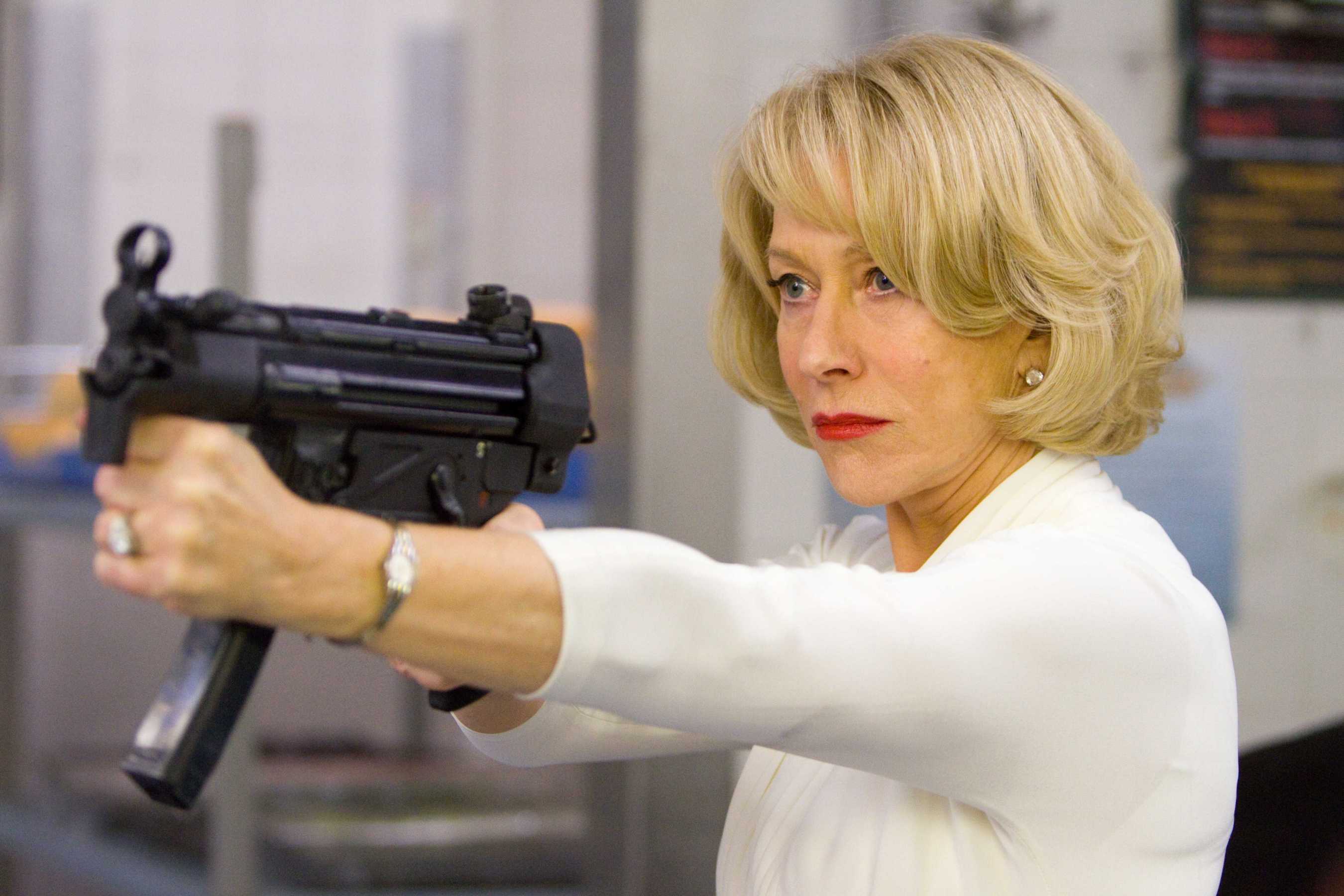
Still, want to know the coolest thing about Red? Seeing Helen Mirren firing an automatic weapon without so much as a flinch or an eye-blink, deliberately keeping those flinty eyes wide open, while the burly male extras playing the disposable agents firing back are fluttering their eye-lids right and left. Now, that's a Dame.****


* A quote from "Red" comic series writer Warren Ellis.

** Tommy Lee Jones revealed this (with a sneer) to be his least favorite word on "Inside the Actor's Studio." Yup.

*** The title refers to the group's designation as "Retired: Extremely Dangerous."

**** There was a sequel, that eliminated Urban and added Lee Byung-Hun and Academy Award winners Anthony Hopkins and Catherine Zeta-Jones. Haven't seen it and haven't because life is short.

Wednesday, April 8, 2020

Olde Review: The Wild Bunch

This was part of a series of reviews of the ASUW Film series back in the '70's. Except for some punctuation, I haven't changed anything from the way it was presented, giving the kid I was back in the '70's a break. Any stray thoughts and updates I've included with the inevitable asterisked post-scripts.

This Friday's ASUW films in 130 Kane are Masaki Kobayashi's Hara-Kiri and Sam Peckinpah's The Wild Bunch.


The Wild Bunch (Sam Peckinpah, 1969)
"When you side with a man, you stay with him and if you can't do that, you're like some animal! You're finished! We're finished! All of us!"
This is the credo of the films of Sam Peckinpah. Throughout his film career--even before Peckinpah had William Holden speak those words in The Wild Bunch--it has been the thread that has bound his films together, formed their basis, given them a purpose. And this credo doesn't just apply to a band of outlaws as it does in The Wild Bunch, but also to employer and employee (as in The Killer Elite) or to husband and wife (The Getaway and Straw Dogs) and to former friends, even if they are on opposite sides of the Law, as in almost all of Peckinpah's films. In the realistic morality of Peckinpah's worlds, the combatants, though on opposite sides of their battlegrounds, are neither totally pure or totally evil. They are amoral, with aspects of both, and thus that credo--the credo of loyalty--is the only means we have of separating them and determining the better men.
"If they move, kill 'em"...right before Peckinpaw's director credit
Peckinpah has always been accused of being nothing but a "macho" film-maker, and though it may be true that he primarily focuses on the male world, I think the term macho is inappropriate. If "The Wild Bunch" are macho, they are blithely ignorant of it. They are not dedicated to their maleness as much as to their survival, and to the spirit of the credo.
Another thing that is popular to hit Peckinpah on is his use of violence--his explicit use of violence. And while The Wild Bunch is violent--even by today's standards**--it might be wise to keep in mind the work of a lot of hacks around these days*** who make more violent films and do so with less imagination and regard for anything. Peckinpah's uses of slow motion violence are not prolonged, they are quick vignettes of an individual confrontation with death, that much like the life itself, is here, then gone, leaving an impression in one's mind no matter how many deaths one sees.
Also, it might behoove you to keep in mind that Peckinpah doesn't just make Wild Bunch's and Straw Dogs'. He has made two recent films which I would urge you to see--Junior Bonner and The Ballad of Cable Hogue which are boisterous but gentle, apply Peckinpah's credo, but also celebrates life. Not only are they my favorite Peckinpah films, they are his, too. The reason he doesn't make too many films like them is that they don't make money.
The Wild Bunch has an all-star cast, uniformly excellent in their roles: William HoldenRobert Ryan, Ernest Borgnine,**** Ben Johnson, Warren Oates, Edmund O'Brien, Strother Martin, and L.Q. Jones (who, only incidentally, wrote and directed the film of A Boy and His Dog). These are just the stars, but this film is filled with people and faces that you will never forget. Nor will you ever forget the experience of The Wild Bunch.
Broadcast on KCMU-FM October 28 and 29th, 1975
The Wild Bunch (led by William Holden) and the motley crew that pursues them (led by Robert Ryan)

I'm still a big fan of The Wild Bunch and Junior Bonner and The Ballad of Cable Hogue, and Ride the High Country and Cross of Iron and Pat Garret and Billy the Kid, and Major Dundee, now that they've been released in versions that are closer to the way Peckinpah intended them. Producers had a habit of hiring him and then firing him and re-editing his films themselves (often into confusing plot-line dangling confusion), and I think that had a lot to do with The Peckinpah Credo about loyalty. He wanted them to know that if you hired him, you'd better trust him to make the film, but there's always disagreement about that when the red ink starts to flow.
I think Sam would crawl into a bottle if he saw how corporate loyalty invaded politics to create administrations of co-conspirators who couldn't think beyond their loyalty to their jobs and bosses. It goes to show that too much of anything can turn into a problem.
The Wild Bunch grows more interesting with age as a film about the old guard being unwilling to change in the face of the modern world, and convinced of their own transitory nature, while sticking to their code. It also shows layers of greed, between the outlaws and the members of Ryan's gang that have no moral hedge against body-robbing. There's a very fuzzy moral line there, but Peckinpah's morality could be very fuzzy. As fuzzy as the world lets it, I suppose.
The film was made part of The National Film Registry by the Library of Congress in 1999.

** Not so true today. Nowadays, The Wild Bunch looks tame. But, this film came out after audiences had been prepped by the "Dance of Death" in Bonnie and Clyde—the sequence influenced the editing and blood-spatter of the "Battle of Bloody Porch" sequence in The Wild Bunch—and even the relatively tame Butch Cassidy and the Sundance Kid.

***Don't know who was thinking of here, but, at the time, maybe Tobe Hooper, and Paul Bartel. But, the era of bloody violence—with wounds that would take more than a band-aid to heal—were in such mainstream films as The Godfather, Beneath the Planet of the Apes, Dirty Harry, and other films that came out during the "ultra-violent" Christmas Season of 1971 (which included Peckinpah's Straw Dogs).

****I've become convinced that Ernest Borgnine played one of the atypical roles of his life when he played "Dutch" Engstrom--who, from the evidence I see in the film, is gay (Ernest Borgnine?!). Dutch doesn't join in with the Bunch's whoring activities, and his cries for Pike Bishop during the finale show a definite emotion more than loyalty. Of course, there have been gay sub-texts before in Westerns, and in the classic ones, long before Brokeback Mountain made it seem revolutionary (Well, yeah, if nobody was watching...) Peckinpah snuck it right by--that's why I like the director so much.

Saturday, December 7, 2019

From Here to Eternity

From Here to Eternity (Fred Zinnemann, 1953) One shouldn't study war, but my family has a personal connection with Pearl Harbor. My Dad was there and survived it...barely. And, as a result, never wanted to go to Hawaii again. My mother told me that when he returned from the war—he was in it for the duration—for the first year, he would wake up every night screaming.

That says more to me about the events of Pearl Harbor than any movie, documentary, or chronicling...and there have been many, many of them, starting with Remember Pearl Harbor (in 1942), John Ford and Gregg Toland's documentary—December 7th—from 1943 and Howard HawksAir Force (also 1943), which were rushed into production soon after the event, when most of what was known about the incident was heavily censored by the government—relatives got post-cards from attack survivors that allowed them to check boxes about their condition but that was it. And that was all.
There have been quite a few movies since and it seems most of the films coming out of the 40's paid lip-service to Pearl, producer Darryl Zanuck made a by-the-book film about it in 1970, utilizing both American and Japanese directors (at one point Akira Kurosawa was attached) and Michael Bay saw good explosion material when he saw it, so he made his in 2001, which I resented a bit as he paid more attention to the bombs than he did the people.
But, the one that most people (of a certain age) remember is From Here to Eternity because of its rather mature story, its all-star cast at the top of their respective games, and as it's settled into its own folklore—George Reeves' part in it, "that" kiss in the surf (Criminy, it's the scene on the cover of all the video releases), the "Sinatra story"—a timelessness that, even though it couldn't go as far as the book in its themes, keeps it in its status as a classic even today as the people who have claimed to watch it dwindle. It's still fresh, it's still surprising, despite the restrictions put on it "in the day."
The basic idea behind it is a variation of the Casablanca line: "The problems of two little people don't amount to a hill of beans in this crazy world." Pearl Harbor in the days before the attack is a little too concerned about matters other than defense that—along with the strategic issues explored in Tora! Tora! Tora!—sets it up to be a very complacent sitting duck for any well-planned and coordinated attack...for those willing to take advantage of it. If, as the apocrypha says, that Admiral Yamamoto compared America to a sleeping giant, most of the sleeping around, according to From Here to Eternity, was going on at Pearl.
What the novel—and the movie (at least as much as the Armed Forces allowed it)—implied was that there was a lethargy where the company commander, Captain Holmes (Philip Ober) is more concerned about a boxing competition than the defense of the base, so much so that he allows the systemic abuse of Robert E. Lee Prewitt (Montgomery Clift) for his refusal to participate in that competition. Prewitt is enough of an obstinate outlier that he takes the abuse—the beatings, the extra duty, the demeaning—rather than give in. It's not that Prewett is a bad soldier, he's just different. He plays trumpet, but not for the service. He's more a jazz man, playing outside the lines—disciplined, sure, and will do a by-the-book rendition of taps for his pal, Maggio (Frank Sinatra) because it's right—but Prewitt is not a lock-step marcher. He will take the abuse for his principles, but will not tolerate it being applied to others.
The situation is noted by Sgt. Milton Warden (Burt Lancaster), who cannot go against his company commander, but can encourage Prewett, even defend him in specific circumstances. That this view is complicated by Warden's affair with his commander's wife (Deborah Kerr) only makes him more conflicted, maybe slightly hesitant, to not buck the system, even in the face of seeing things he knows is wrong. Warden chooses his battles. And when one comes to him on December 7th, it is he who leads the defensive efforts.
If you haven't seen it, it's another one to put on the Bucket of Popcorn List. It's intelligent melodrama—although it is melodrama (most movies are, kids)—that dares to not end on a happy or even hopeful note, but ends with shattered men and shattered lives—with a war going on in the background. It also puts a lit to the trope that "All's Fair in Love and War."

No. Nothing's fair. In either. And the only victory is to survive it.

Like my Dad did.


Thursday, March 8, 2018

Bad Day at Black Rock

Bad Day at Black Rock (John Sturges, 1955) WWII vet John J. Macreedy (Spencer Tracy) steps off the train at Black Rock—the first time the train has stopped in four years. He's looking for a man named Komoko, and he is treated with an inexplicable hostility that he can't fathom and no one will explain. Macreedy, stoically—though increasingly crankily—sets out to find the man he's looking for, and has his life threatened several times by the town toughs (Ernest Borgnine, Lee Marvin and the town "boss" Robert Ryan). And though Macreedy may only have one hand, he's quite capable of using it to defend himself, and discover the town's secret that would force the tiny town's residents to kill.

It's hard to believe that Bad Day at Black Rock was considered "subversive" by its studio M-G-M when it was being made but, ten years after the end of World War II, it was considered a hot potato, especially while its production was going on in the waning days of the McCarthy hearings. One couldn't mistake the metaphor of a town cowed by a single man who bends rules to his favor, and harasses outsiders who ask questions.

Right off the bat, one is struck by an over-earnestness that feels false. The wide-screen titles* of a train careening through the Southwest desert is backed by a semi-hysterical Andre Previn score, full of sound and fury and signifying...a train. It feels overdone and pointlessly busy.
"No, I don't understand. But, while I'm pondering it...
why don't you get a room ready for me..."
Previn will keep popping up, goosing the action like a teen-ager playing his radio too loud at a funeral,** and everything is done with such brutish heavy-handedness and self-importance that one could mistake this for a Stanley Kramer production.
Tracy is reliably lived-in as the maimed vet who comes to town, but he's a shade long-in-the-tooth for the role. Robert Ryan starts subtle and ends up chewing the cactus in much the same way that Lee Marvin and Ernest Borgnine do their dirty work.*** Walter Brennan, Dean Jagger and Anne Francis (the only female in town) round out the cast as sycophants and victims, weak in one way or another.
Spencer Tracy shows Ernest Borgnine what's what.
Ultimately it all comes down to a secret and the conspiracy to keep it that way beyond all reason; obviously, all these guys must have been part of the Bad Rock City Council. There are bursts of action including Tracy taking on Borgnine ("I'm part mule, part alligator") with one mutilated hand in his pocket,  accomplishing some fancy karate and judo moves, something not often seen in '50's films. But one acknowledges that though the film's heart is in the right place, too much of it has spilled out onto its sleeve.

* Can someone explain to me, for the love of Mike, why this small-scale film about a veritable ghost-town of few actors was filmed in the widest of Cinema-scopes?

** In five years that "goosing" of slow material would pay off like gang-busters with Elmer Bernstein's energetic score for The Magnificent Seven.

***Ironically, Tracy would be nominated for a Best Actor Oscar that year and lose to...Ernest Borgnine, playing the title role of Marty.

Thursday, April 6, 2017

Ice Station Zebra

Ice Station Zebra (John Sturges, 1968) The movie that was (supposedly) the favorite movie of billionaire-aviation pioneer Howard Hughes—one that he would watch obsessively.

One can only wonder why. It is not exactly inspired entertainment, although somewhat competently directed by John Sturges (who was at his best with genuine location work, rather than with effects-heavy set-bound shows, such as this and Marooned).


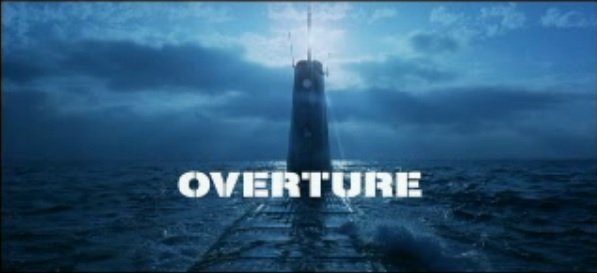
It was also one of the last of the prestigious "roadshow" presentations, shot in "Super-Panavison-70" and featuring "Overture" music and an Intermission at the theater. After this one, the "roadshow" concept was abandoned, in order to squeeze in extra showings per night, sounding the death-knell-by-chopping-block for such ambitious projects as Billy Wilder's The Private Life of Sherlock Holmes and Richard Lester's originally conceived three-hour version of The Three Musketeers. But, beyond that, the film may be one of the dullest thrillers ever filmed. 
Ice Station Zebra has the same stolid air of other adaptations of Alistair MacLean adventure yarns (The Guns of Navarone, Where Eagles Dare). It's just not as adventurous, and the locations—studio-created—are claustrophobic and closed-in, as opposed to having any dramatic vistas or the intriguing foreign locales of other MacLean stories. Here, it's meeting rooms, a submarine and a burned out polar station on a floating ice flow. People don't get out much, and the whole film feels close and boxed-in (quite a trick in "Super-Panavision-70). 
Oh, there are intrigues—it wouldn't be a MacLean story if there wasn't one or two double-crosses thrown in—but they're fairly typical. The sub' has to have a debilitating leak, and as befitting a Cold War drama (the coldest!), there are dueling loyalties and the to-be-expected double-agent (but who?). It never rises from the slightly edgy to the exciting and is mostly cliché-ridden, especially when it comes to the "whodunnit" aspects.
It's a fairly good cast with not much to do except glower at each other, and top-liner Rock Hudson isn't at his best at that, and is ham-strung by the script (by MacLean, Douglas Hayes—he wrote Kitten with a Whip, after all—Harry Julian Fink, and W.R. Burnett, no slouches, any of them) from doing anything interesting, like humor. Patrick McGoohan has one interesting scene where he loses it, but mostly he's clipped and acerbic in hyper-"Danger-Man" mode.  Jim Brown matches him frown for frown—twin performances by actors playing characters hating each other—and Ernest Borgnine does a risible Russian accent. A lot of testosterone, mostly going to waste, in material which is stretched to the ice-breaking point.
Patrick McGoohan recreates my expression watching this movie.
Supposedly there's going to be a remake, so there's a lot of room for improvement.
Given that it's a submarine movie, shouldn't it be called an "Underture?"

Thursday, September 18, 2014

The Dirty Dozen

The Dirty Dozen (Robert Aldrich, 1967) Another one of those films I've had (uh..) dozens of opportunities to see, but never bothered is this, Aldrich's off-set war-genre film, combining the heroics of The Guns of Navarone with the nihilism of The Magnificent 7.  

The Army chooses a loose cannon, Maj. John Reisman (Lee Marvin) to train and command a squad of brig-rats on a suicide mission behind enemy lines before D-Day. The inmates are a motley crew of renegades, degenerates and non-com's (as in non-conformists), who need no training to be bad to the enemy. If they survive, their jail sentences (and for some, death sentences) will be commuted. If they don't, well, war is Hell.

But it's not a cell. And these guys have nothing left to lose, and given the situation, they're American kamikaze's, who might just make it to freedom, like any other soldier...if they make it through.

The movie is top-heavy with male character actors.  Besides Marvin, there's Robert Ryan, Ernest Borgnine, George Kennedy, Robert Webber, Richard Jaeckel, and Aldrich's Mike Hammer, Ralph Meeker. Those are the good guys. The cons include Charles Bronson, Clint Walker, Telly Savalas, Jim Brown, John Cassavettes, Donald Sutherland, and Trini Lopez (hey, where's Don Rickles and Bobby Darren?)
Bronson gets a promotion in this one, becoming the Steve McQueen to Marvin's Yul Brynner, Cassavettes has the biggest character arc and the showiest performance (despite underplaying his death scene) winning a Best Supporting Actor nomination, Savalas has the most colorful role as a Bible-spouting psycho, and Jim Brown has the moment everybody remembers—sprinting across a courtyard throwing grenades down air vents, moving so fast the camera crew can barely keep him in the view-finder.
Aldrich—never one to be very conventional no matter what genre he was tackling—manages to make his anti-war, anti-authority statements in the story set-up; these guys have little choice but to hang it all out in combat, and, ironically, they're the best-suited to do all the dirty work, even if nobody is shooting at them in the initial stages. At the time of its release, the film got all sorts of flack for its violence, which Aldrich manages to get away with by merely suggesting things with quick cut-aways, but it looks extraordinarily tame today (and, in fact, would look tame two years after its own release when The Wild Bunch would take movie violence to a whole new level). It might even get by with a light PG rating today.
But despite the dirt-dog-grubbiness of the whole thing, the director still manages to throw in some testosterone-laced sentimentality into it, then pulls back during the big action sequence as more and more men fall in battle and the director only affords them quick shots in death. Pretty soon, you lose track of who made it and who didn't, and a pre-End-Credits roll-call of the dead is the only verification—not everybody gets their death scene, further undercutting any sense of heroics, despite the war-time setting. And let's face it, most of the deaths occur by trapping the victims (party-guests mostly) in a cellar and burning them alive by drenching them in gasoline, and setting them alight with grenades. It's never made clear why this might help the Normandy Invasion effort, but one shouldn't look too closely at the movie for any sort of authenticity.