Showing posts with label Frank Sinatra. Show all posts

Tuesday, June 18, 2024

The Detective (1968)

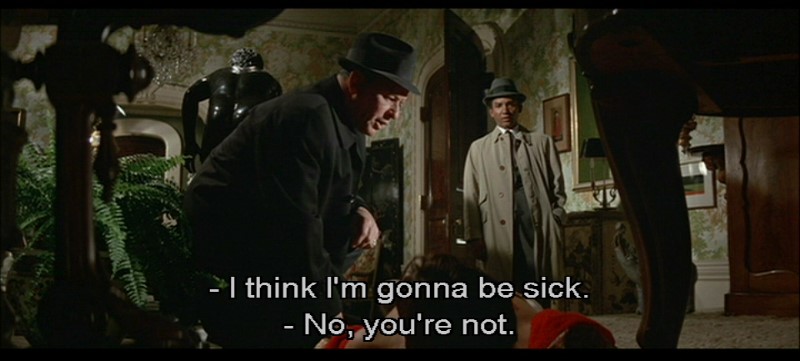
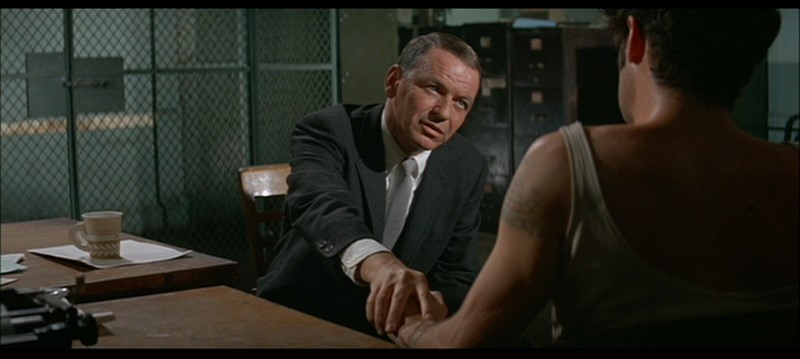
The Detective (Gordon Douglas, 1968) You spend a lot of time looking into the wearily dead blue eyes of Frank Sinatra in this one, as he tries to come to grips with a world he no longer understands, driving in the rain, looking for the clue to where it all went wrong.

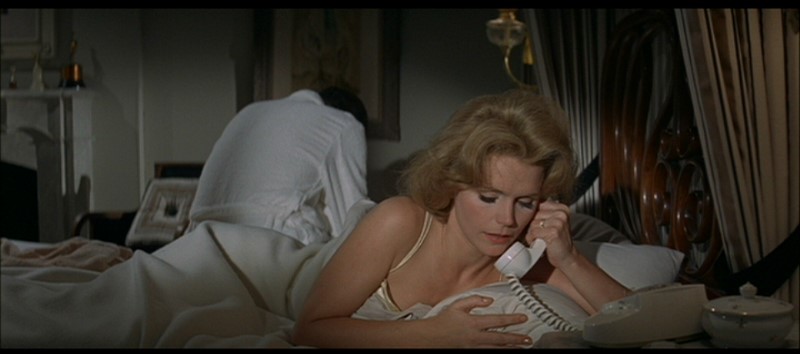
There are some notable behind-the-scenes things that merit a footnote in Sinatra's career and in movies. For one thing, the film rights to the novel were bought by a guy named Robert Evans, a former actor associated with the Evan-Picone fashion line, and he got the ball rolling on the film for 20th Century Fox. But, before any film started rolling, he was offered the title of head of production by Paramount Studios (where he would oversee Paramount's glory days shepherding such films as True Grit, Love Story, and The Godfather, among others). Once at Paramount, he concentrated on their planned film of Rosemary's Baby, which starred an actress who'd become popular on television, but was also the then-current wife of Frank Sinatra, Mia Farrow. Sinatra was adamant that his wife appear with him in The Detective. She refused, convinced by Evans that she'd win an Oscar for her work in Rosemary (a tactic he used quite often, ironically, to persuade cast and crew to do his bidding). Farrow stuck with Rosemary's Baby and Sinatra served her divorce papers on its set. Jacqueline Bisset was cast, instead, sporting a wig of short hair that was reminiscent of Farrow's chopped hair-style.
The Detective hasn't aged well. What was daring and "adult" at the time of the film's release (the forced underground homosexual culture, along with nymphomania) now seems dated and "quaint," even. More compelling, and ground-breaking is the police procedural in the foreground—a murder investigation that has a ritual aspect to it. The victim's house-mate (Tony Musante) is noticeably absent, and Sinatra's Det. Joe Leland leads the investigation to track the man down, leading to his arrest, trial and execution. Textbook, it's thought. 
But, later, he's approached by Norma McIver (Jacqueline Bisset) the wife of a prominent suicide (William Windom), who committed the act very publicly, and Leland's investigation leads him to question his earlier actions and those of his authorities. All this, while reconciling his difficulties with his wife (Lee Remick). The fallibility of the cops to follow their prejudices, and pressure from corrupt superiors was something new to the genre. These cops had flat-feet of clay.
Director Douglas—not one for subtlety—overlays the execution
scene rather than just letting the character's grief tell the story.
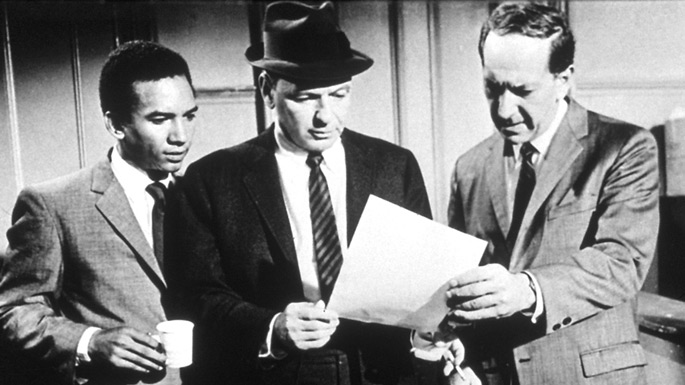
The director, Gordon Douglas, was a favorite of star Sinatra, shooting quickly and efficiently, letting Sinatra do his set-up's in the minimal number of takes that he preferred. The cast also has prominent roles for Ralph Meeker, Jack Klugman, Al Freeman Jr. and Robert Duvall as other detectives in Leland's squad.
If the film has passed into the discount bin of film history, it does have one more tangential link to claim some significance beyond itself.
There were other novels in the "Leland" series by author Roderick Thorp, including one, "Nothing Lasts Forever," in which The Detective tries to save his family from terrorists in a high-rise professional building. 
 
That's right, it's the book on which Die Hard was based. Per his contract, Sinatra had first refusal reprising the character and as he would be the age of 73 at the time of filming, he passed. Now, just imagine if John McLaine had said "Dooby-dooby-doo" instead of "Yippie-Kye-yay..."

Friday, November 17, 2023

Guys and Dolls

Guys and Dolls (Joseph L. Mankiewicz, 1955) I'm not a big fan of musicals, although there are musicals I'm quite fond of. It's the form that bothers me—the interruption of narrative flow for a serviceable song that may or may not have anything to do with what came before or after it. If it's an operetta, sure, I can go with that if everything is mostly sung, anyway. If the musical involves the musical field, breaking into song is a natural extension. I admit it's a small-minded prejudice and, despite my grumpy attitude, it isn't absolute—I admire things that are exceptions to the caveats. Hey, nobody's perfect. And when I lean away from my prejudices, it's usually because a song is so musically magical or the lyrics so damned clever that they would be sorely missed if they were taken away. Plus, there are musicals that elevate the inherent emotion with song in ways that merely dialog, however well-written, could not achieve. So, my collection of cherished musicals is sparse, with subject matter all over the map and in different formats, animated and live-action. They thrill me, rather than having me carp through a song: "Get on with it..."
"Guys and Dolls" is one of those exceptions. Based on two Damon Runyon stories—"The Idyll of Miss Sarah Brown" and "Blood Pressure", it was a Broadway "smash" when it debuted in 1950 (directed by George S. Kauffman!), with a book by screenwriter Jo Swerling, which was rewritten by Abe Burrows, with songs (composed between the two drafts) by Frank Loesser. The later script had to merge into the songs from the earlier draft, which causes a little bit of a fracas here and there, but it makes for an entertaining and charming evening. 
So, you'd think when the movie adaptation came along, after 1,200 Broadway performances and 555 in London, everything would be on the square and level. But, the movie adaptation, produced by the Samuel Goldwyn Company, compounded issues by dropping songs—some of them ("A Bushel and a Peck,""Marry the Man Today,""More I Cannot Wish You," and "My Time of Day") already made very famous by the Broadway run—and then added three new songs...to accommodate the casting, which was done with an eye toward box office returns, rather than production logic. More on that later, but first give us to introduce personae dramatis:
The story revolves illegal betting in New York City. One of the high rollers is one Nathan Detroit (played in the film by Frank Sinatra), who, through his connections, runs a necessarily "floating" crap game from many locations throughout the city. But, due to the efforts of the local police constabulary, Nathan Detroit, one particular night, cannot get one of his usual locales to provide the hosting duties for the evening's festivities. The Biltmore Garage might do it...but with the first presenting of a security deposit of one thousand clams. This, Nathan Detroit does not have.
But, he happens upon another high roller in the well-tailored form of Mr. Sky Masterson (Marlon Brando), who is a good bet to never turn down any bet. Nathan Detroit then wagers with Mr. Sky Masterson that he cannot convince any woman of his choosing to go to a romantic dinner in Havana, Cuba. To Masterson, this is a cinch of the lead-pipe variety. Until, of course, Detroit chooses Sergeant Miss Sarah Brown (Jean Simmons) of the "Save a Soul" Mission. For Masterson, this is akin to drawing a Nothing card hand, or rolling Snake Eyes.
The film then follows Masterson's efforts to win the bet, thus saving himself a thousand G's, and Detroit's efforts to secure a hospitable roost for the Big Game in the happenstance that he should be the loser of the bet. Oh...and to further put-off his fiancee of fourteen years, Adelaide (Vivian Blaine—the only hold-over lead star from Broadway*), a nightclub dancer at the Hot Box Club.
Goldwyn was thinking Gene Kelly for the role of the smooth Masterson, who is the romantic lead role and has quite a few songs to sing, but Kelly's studio—M-G-M—would not loan him out (which is ironic as they ended up distributing the movie for Goldwyn, anyway). The next choice, naturally, would be Frank Sinatra, who desperately wanted to play Masterson. But this circumstance was not to be. Goldwyn chose, in his stead, to give the role to the biggest box office bonanza at the time, which happened to be Marlon Brando. Marlon Brando, who could not sing...maybe could dance a little. It was fine with the director, Joseph Mankiewicz, who had directed Brando in Julius Caesar, a role of some considerable acclaim and status...and moolah made at the box-office. Brando got the role. 
This did not impress Mr. Sinatra, who could sing and could dance and had displayed these abilities in many a previous musical production. The Masterson role was played on Broadway by Robert Alda (father of Alan Alda), who had a rich voice and who could acquit himself well with a song. But Sinatra was stuck in the Nathan Detroit role, which was more of a character type, played by Sam Levene on the stage (and one must say that Levene was not too accomplished a crooner) and so, received simpler "talky" songs. This was a situation for which Sinatra could not be feeling gratified about. He was much aggrieved and could only wish that a stage light would fall on his co-star, so as he might be able to step into the role.
But, he was given a conciliatory song—"Adelaide" (which he sang out of character)—and sat back while the actor he called "Mr. Mumbles" was given voice lessons that he might warble the songs that Sinatra could do at the drop of a down-beat.
 
The results, however, for all the effort, were none too shabby.   
Sure, they had to splice together a usable version of the ditties from many Brando attempts, but Brando brought Method to the madness and "acted" his way through it, which was compelling enough for Mankiewicz and the paying rubes who hadn't taken in the stage version.
And, by the by, it's not a bad production. Mankiewicz doesn't try to make it realistic in any way, creating a stagey New Yawk gangster bubble-world where everything is immaculate—even the sewers!—and there is merely the suggestion of rough-house among these sharps, but nobody really gets hurt...or "offed". No "rods" are produced, and no legs get broken. Not even a nose gets bent out of shape.
And the only "singing" that is done is...well, it's a musical, no matter how many "takes"...it takes.
But, it's not the Tony Award-winning stage version. Oh, folks did get to see a version of Vivian Blaine's performance (with a couple of her songs axed). And they got to see the performance Mankiewicz was most grateful for--
Jean Simmons' turn as Sarah Brown. She was a third-choice compromise after the director had been turned down by, first, Grace Kelly, and, second, Deborah Kerr. Simmons was accomplished and well-known (and already Oscar-nominated...for playing Shakespeare, fer crying out loud) and she had the added advantage of already having worked with Brando before (in Désirée the year before). He called her "the dream...a fantastically talented and enormously underestimated girl. In terms of talent, Jean Simmons is so many heads and shoulders above most of her contemporaries, one wonders why she didn't become the great star she could have been."

And, of course, they got to see "the show-stopper" in the play's last act--"Sit Down, You're Rockin' the Boat" performed by the stage-show's 
Stubby Kaye (who played the role of Nicely-Nicely Johnson in both versions).
It was one of the "sure things" in a production that spent a lot of its time rolling the dice, hoping for the best.

* Marilyn Monroe lobbied for the part.

Saturday, December 7, 2019

From Here to Eternity

From Here to Eternity (Fred Zinnemann, 1953) One shouldn't study war, but my family has a personal connection with Pearl Harbor. My Dad was there and survived it...barely. And, as a result, never wanted to go to Hawaii again. My mother told me that when he returned from the war—he was in it for the duration—for the first year, he would wake up every night screaming.

That says more to me about the events of Pearl Harbor than any movie, documentary, or chronicling...and there have been many, many of them, starting with Remember Pearl Harbor (in 1942), John Ford and Gregg Toland's documentary—December 7th—from 1943 and Howard Hawks' Air Force (also 1943), which were rushed into production soon after the event, when most of what was known about the incident was heavily censored by the government—relatives got post-cards from attack survivors that allowed them to check boxes about their condition but that was it. And that was all.
There have been quite a few movies since and it seems most of the films coming out of the 40's paid lip-service to Pearl, producer Darryl Zanuck made a by-the-book film about it in 1970, utilizing both American and Japanese directors (at one point Akira Kurosawa was attached) and Michael Bay saw good explosion material when he saw it, so he made his in 2001, which I resented a bit as he paid more attention to the bombs than he did the people.
But, the one that most people (of a certain age) remember is From Here to Eternity because of its rather mature story, its all-star cast at the top of their respective games, and as it's settled into its own folklore—George Reeves' part in it, "that" kiss in the surf (Criminy, it's the scene on the cover of all the video releases), the "Sinatra story"—a timelessness that, even though it couldn't go as far as the book in its themes, keeps it in its status as a classic even today as the people who have claimed to watch it dwindle. It's still fresh, it's still surprising, despite the restrictions put on it "in the day."
The basic idea behind it is a variation of the Casablanca line: "The problems of two little people don't amount to a hill of beans in this crazy world." Pearl Harbor in the days before the attack is a little too concerned about matters other than defense that—along with the strategic issues explored in Tora! Tora! Tora!—sets it up to be a very complacent sitting duck for any well-planned and coordinated attack...for those willing to take advantage of it. If, as the apocrypha says, that Admiral Yamamoto compared America to a sleeping giant, most of the sleeping around, according to From Here to Eternity, was going on at Pearl.
What the novel—and the movie (at least as much as the Armed Forces allowed it)—implied was that there was a lethargy where the company commander, Captain Holmes (Philip Ober) is more concerned about a boxing competition than the defense of the base, so much so that he allows the systemic abuse of Robert E. Lee Prewitt (Montgomery Clift) for his refusal to participate in that competition. Prewitt is enough of an obstinate outlier that he takes the abuse—the beatings, the extra duty, the demeaning—rather than give in. It's not that Prewett is a bad soldier, he's just different. He plays trumpet, but not for the service. He's more a jazz man, playing outside the lines—disciplined, sure, and will do a by-the-book rendition of taps for his pal, Maggio (Frank Sinatra) because it's right—but Prewitt is not a lock-step marcher. He will take the abuse for his principles, but will not tolerate it being applied to others.
The situation is noted by Sgt. Milton Warden (Burt Lancaster), who cannot go against his company commander, but can encourage Prewett, even defend him in specific circumstances. That this view is complicated by Warden's affair with his commander's wife (Deborah Kerr) only makes him more conflicted, maybe slightly hesitant, to not buck the system, even in the face of seeing things he knows is wrong. Warden chooses his battles. And when one comes to him on December 7th, it is he who leads the defensive efforts.
If you haven't seen it, it's another one to put on the Bucket of Popcorn List. It's intelligent melodrama—although it is melodrama (most movies are, kids)—that dares to not end on a happy or even hopeful note, but ends with shattered men and shattered lives—with a war going on in the background. It also puts a lit to the trope that "All's Fair in Love and War."

No. Nothing's fair. In either. And the only victory is to survive it.

Like my Dad did.


Saturday, July 9, 2016

The Pride and the Passion

The Pride and the Passion (Stanley Kramer, 1957) Not the easiest production to direct with all the backstage drama going on, but Kramer did his best to keep this adaptation of a C.S. Forester* novel picturesque and fulfill his duties to the studio, United Artists.

You can't go too far without mentioning the casting. The story takes place during the Napoleonic wars and the attempts of a British captain (Cary Grant) to take possession of an outsized discarded cannon before it can be seized by Napoleon. His orders take him to a Spanish guerilla, Miguel (Frank Sinatra) who has a personal aim to capture the town of Avila from the French...and the cannon would be a loud and persuasive way of doing so. While the two men grouse at each other about their differing missions and the logistics of getting a huge hulking cannon across rolling hills and across rivers to their respective targets, they also compete for the affections of Juana (Sophia Loren), a Spanish dancer and Miguel's mistress.

Grant's captain is familiar with the cannon and its capabilities, firepower and the precise means of producing its full potential without it blowing up in people's faces, whereas Miguel doesn't have a clue about what to do with it, merely with its promise of how such an ultimate weapon can be used against French battlements. But, both men need the other, and it is just as well to get it to Avila as to keep it out of French hands. And if it can be used against them...well, so much the better.
One could make a point about cannon envy here as there is a lot of pointless bickering over who's the alpha male and whose aims have priority, despite the fact that neither man can accomplish their personal missions alone, and Juana is just a representation of both men's single-minded and covetous natures underneath the brio and the sense of duty. Loren is basically an ornament here, as she was in too many films that didn't know what to do with her.
Now, Grant "works", maybe—he was, after all, British, and when did he not work?—but he was never at his best in historical parts, always more comfortable as a man of his times, no matter what his age. But Sinatra as a Spanish loyalist? And Sophia Loren, as well? It was Loren's first role in English, so any burbling of lines is understandable. But Sinatra, as good as he can be in other films, is horrible here, with a terrible kind of "Jou Gringko" accent. And it's apparent that he's marking time and not going for an Oscar this time.
I've never been one for gossip, but The Pride and the Passion was very much a project of other interests for the stars than picking up a pay-check. The troika of stars seem very distracted: Grant by Loren with whom he would fall in love, and Sinatra because he only took the job to be close to Ava Gardner who was filming The Sun Also Rises in Spain. That did not go well, and Sinatra decided to go back to the States, asking Kramer to get his scenes taken care of early to do so. How this affected the finished product is hard to say, but Kramer seems to be doing his best work where the stars aren't involved, making far better use of statues and architecture and crowd set-pieces than his above-the-title players.
And that's where the movie is at its most fascinating and more succesfful, far more than the squabbling in the love-triangle which doesn't generate any real sparks, positively or negatively. But, the challenges of that big old hurking cannon and moving it through unforgiving open country and unrelenting French forces make for interesting location filming and viewing (and, in particular, one overnight hiding of the cannon in a city's least likely location) and makes The Pride and the Passion rise above the conventional issues raised among the human actors...rather odd in a war film, where the human aspects usually are of the most importance. I don't think they planned it that way.


* Quick reference: Forester wrote the "Horatio Hornblower" books and the novel on which The African Queen was based.  Hollywood was paying attention to him during the 1950's.

Saturday, March 7, 2015

Double Dynamite

Double Dynamite (aka It's Only Money, Irving Cummings, 1951) You've probably never heard of Double Dynamite—it's a slight musical comedy that isn't exactly successful in its intent, or commercially, due to the sabotage perpetrated by then-head of RKO Studios, Howard Hughes, who sold it as something else, entirely—focusing in its marketing on the things that had proved successful in the past, those being Jane Russell and her breasts.

A stupid move, that—a huckster's move, because not only is Russell under-utilized in the movie—as the romantic focus of two disparate bank employees—she's also costumed like a normal human being, not sexualized, not provocative, just normal. Hughes' marketing tried desperately to make the movie (filmed in 1948 and held back from release) something it wasn't, while also dismissing entirely what it actually is—a Frank Sinatra musical comedy. A not very good one, at that.
Chairman Blue Eyes plays Johnny Dalton, a bank teller without prospects for advancement, despite being a whiz with numbers. Perhaps it has something to do with the bank president's son (Don McGuire), working for the old man and making goo-goo eyes at Johnny's girl Mildred Goodhue (Russell). She's crazy about Johnny, but she wants security, something a teller's job paying $42.50 a week just doesn't provide.
But the movie starts on Johnny's lucky day—a visit to his favorite Italian restaurant brings an encounter with waiter Emile J. Keck (Groucho Marx...Groucho Marx!) and continues with his saving the life of a notorious bookie (Nestor Paiva), who repays Johnny by giving him a benjamin and convincing him to bet on the ponies...and keep betting...and keep betting until he has a wad of cash—$60 grand, in fact. Now, Johnny and Mildred can get married.
But, those thousands come at a very inopportune time..which just happens to be when $75,000 seems to have been embezzled by the bank Johnny works for. So, he's had all this good fortune—but can't tell anyone about it because they'll suspect he's the robber and his windfall are ill-gotten gains. What to do? What to do?

One would use the cliched "hilarity ensues," but it just doesn't. It sputters along, with only two songs for Sinatra—duets with Groucho and with Russell. Groucho's in fine form and Frankie and Jane are eager enough, but the movie's pretty small-potatoes for all the potential of the cast. All would do bigger and better things, and that's the real happy ending to this movie.