Showing posts with label Olga Kurylenko. Show all posts

Saturday, July 17, 2021

Black Widow (2021)

Giving the Widow Her Due
or
Lord Help the Min'ster Who Comes Between Me and My Sister.

The Marvel character, Black Widow (played eight previous times by Scarlett Johansson) has appeared in almost as many Marvel movies as Robert Downey Jr.'s Iron Man (and Samuel L. Jackson's Nicky Fury)...but, without a feature of her own. Sure, Marvel can crow about being progressive on roles for women after Captain Marvel, but, look at the facts: BW has appeared in an Iron Man movie, two Captain America films, an unbilled cameo in Captain Marvel, all four Avengers movies...and was the sacrificial lamb in the last one. Er, except that more attention was paid to the death of Tony Stark, and the Big Funeral at the end—with "everybody" in it—was for Stark. Just Stark.

At the end of Avengers: Endgame, Black Widow's sacrifice was merely an after-thought...maybe something was said at the reception (oh, except everybody was more concerned with who'd be the next Captain America...). Bowed heads was all she got. And then "Phase 3" ended.

Almost as an afterthought, Marvel Studios has given the character her own movie...now that she's safely dead and all—they'd been talking about it since 2004—and, like most initial Marvel films in a franchise, it's a good one (Marvel's second movies tend to be inferior bloats—the exceptions being the Captain America franchise—where all three films were good, and "Thor" where there wasn't a good film until the wildly irreverent third one).
Black Widow in Iron Man 2
But, Black Widow is on a par with the good introductory Marvel films, seeming fresh and giving much more back-story than had been given Natasha Romanoff in her previous appearances. In the MARVEL series, Nat was the glue that held people and missions together—if Nat was on your side, you were alright. Yet, her abilities, which were not super-powered, managed to put in her in the fray of most of the fights with the "Big Guns." Plus, she knew how to manipulate—calming down The Hulk, tricking Loki—she does something similar here ("Thanks for your cooperation" she says again here)—siding with Captain America while ostensibly trying to arrest him. She was a team-player while being her own person. And there was no questioning it that, after "The Blip," she would be the acting leader (as if they had one before...) of What Was Left Of The Avengers. Nat was the good soldier who didn't whine about things—she'd sit at conference tables with furrowed brow listening and thinking, while "The Boys" mansplained and postured. Not Nat, though. Just got 'er done, dude.
So, her self-titled movie is a good run—Johansson even got to Executive Produce *ka-ching!*—and it's a fast moving kind of "James Bond movie"—with several of the tropes on display, one former Bond "girl" in the cast and the plot of one of them taken whole-cloth (and combined with elements of the Mission Impossible franchise and In Like Flint)—but amped up to 11...It's a Bond movie for those who think a typical Bond movie is You Only Live Twice or Moonraker...with the stunts and situations moving beyond the outlandish to the preposterous. I was chortling in the theater watching Russian soldiers firing automatic weapons in free-fall. Tough to get volunteers with that kind of work.

Which is rather the point of the movie.

But, I digress. The movie, however, regresses.
We start out in Ohio, where two undercover Russian agents, Melina and Alexei (Rachel Weisz and David Harbour) live as "tyeepical" Americans (as long as the don't use the words "moose and squirrel") with their daughters Natasha and Yelena, when one night they make their escape to Cuba from agents of S.H.I.E.L.D. and report back to their contact Dreykov (Ray Winstone). Melina has been wounded in the escape and Alexei, part of the USSR's "super-soldier" program as "the Red Guardian" reassures the kids that "Uncle" Dreykov will take care of them, but he doesn't tell them it's by imprisoning them in the "Red Door" facility and training them to become killers in the Black Widow program.
Cut to a Main Title sequence which fast-forwards through their training and some history—set inexplicably to "Smells Like Teen Spirit!"—to the film's proper timeline, nestling between Captain America: Civil War—because Hawkeye, Falcon and Ant-Man are in prison and William Hurt's "Thunderbolt" Ross is on the hunt for Nat—and Avengers: Infinity War where things get hairy. Nat has gone to ground, and her mail has piled up while in hiding—one of the packages contains glowing red vials and puts her in the cross-hairs of a villain called "Taskmaster" who can duplicate an opponent's moves merely by watching them.
Hey! Taskmaster's watching that first gif on this page!

It turns out the mail came from step-sister Yelena Bovel (Florence Pugh, who is spot-on perfect—and she better be because the movie is her audition for any sequels), who, while working as one Russia's widows got a snoot-full of one of those vials, which released her from Dreykov's psychotropic grip, breaking his mental hold over her to do whatever evil deed he has put into both their minds. Yelena is as dedicated as a QVC host to get these vials into people's hands, so she sends them to Natasha because 1) she's not hiding from Dreykov in Budapest like she is, she's hiding from S.H.I.E.L.D, who is looking for Nat all around the whole frickin' world and 2) she's an "Avenger" so her scientific friends can make more of the glowing red stuff in the vials. So, what does Nat do?—she goes to Budapest to find her sister. Because..."movie"
Together, they plan their revenge on Dreykov, starting by springing Alexei from the gulag hell-hole where he's imprisoned and finding Melina at her compound/lab—as she knows where the secret "Red Door" facility is and planning their attack. Sounds simple—there's barely enough plot for a full movie—but they have to do this while being pursued by Dreykov's army of widows and Taskmaster, so there are lots of action set-pieces, lots of bone-crunching (with seemingly little effect) and bickering—so much bickering—between the reunited family. It's funny, fast-paced, and barely believable...but when has believability stopped a superhero movie?
It all leads to an action set-piece in one of those "yeah, I'm not buying it" supervillain lairs that beggars the imagination that it could ever maintain itself without a lot of expenditure and a lot of luck, making one believe that it's powered by "suspension of disbelief," which may be the most powerful force in the Marvel Universe. As I said, I was repressing giggles, even as people are running up the sides of blown apart architecture that is hurtling to the Earth. I'd heard some pre-publicity talk about the action being "gritty" and "down to Earth" but it isn't in any way shape or form, heavily dependent on CGI wizardry (all the big names and quite a number of small digital companies are in the credits) and "down to Earth" is only applicable on letting you know where everything lands...in conveniently sparse locations. 
We also get some check-boxes ticked off—if anybody had been keeping score—about Natasha's past activities, one of which comes back to haunt her. It's one of those convenient stories that drive continuity-conscious comics fans nuts, but what can you do? They're different worlds and the movie doesn't have the run-time to accommodate any lengthy back-story, or do justice to "Taskmaster" fans.
Director
Cate Shortland does wonderful work with the performances and the actors keeping the dialog breezy, overlapping and understandable (and the picture-editing that complicates it is adroit and nimble). Everybody's good when they're talking and interacting. But, the action scenes? Not so much. They seem to be story-boarded and shot to accomplish one move and it may or may not be related to the next shot/action or the one before it, as opposed to a cohesive whole that can be followed and a sense of the challenges and the surroundings inherent in it. It builds suspense and makes the action even more thrilling. Here, it's just a shot of an actor doing the action, there's a cut-away reaction, or meld with the stunt-double, but that's about it, and the next shot may be a larger perspective, or an insert of some particular aspect of the resulting conflagration. But, there's no flow to it—you get a kick-shot and the next shot is the kicked guy hitting the opposite wall. You know the two should be linked, but it's a leap for the audience.
And so much of it is action that it's a major chore to make your way through them, and once the Big "Blow-Uppy" Final Round starts happening, you might be forgiven for giving up and just letting things happen, looking at things uncritically. It's then that things get very dubious with a lot of fights happening in mid-air and shots of Natasha plummet/flying around hurtling debris and even a sequence where Nat crawls up some facade in free fall approaching terminal velocity with apparently no wind resistance. And then, you remember that Black Widow ultimately will die (or has already died if you're looking at it in movie-sequence) from a long fall* and one that isn't even as long as this one.
Okay, that's all dubiously on the surface. What made me smile as I was leaving the theater was that Black Widow, with all its talk about, and taking steps to stop, Dreykov's sapping of so many women's free will to do his nefarious bidding (without any dissent) makes it (when you reduce it down) a pro-choice movie. Pro-choice in a way that might impress both liberals and conservatives (but, I doubt it, I don't trust ideologies to be logical or consistent). With women executives and a woman director, I find that a lovely little shot-across-the-bow of the patriarchy, and gives this after-thought of the Marvel Studios...worth.
 
*
From Avengers: Endgame

Tuesday, July 13, 2021

Oblivion

Written at the time of the film's release...

Finding Oneself in the Future

or
Scavenging the Sci-Fi Landscape

The new Tom Cruise vehicle Oblivion (written and directed by Joseph Kosinski from his "unpublished" graphic novel* and whose previous film was Tron: Legacy) is a science fiction tale that borrows very liberally from the last 30 years of movie sci-fi to the point where you swear you've seen the movie before. 

You have, but which one depends on the reel of the film you're watching.  

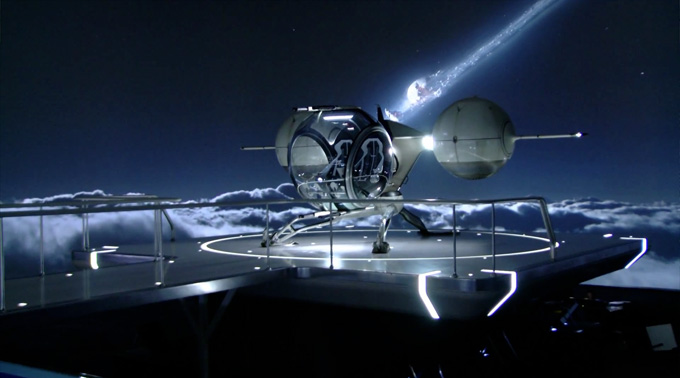
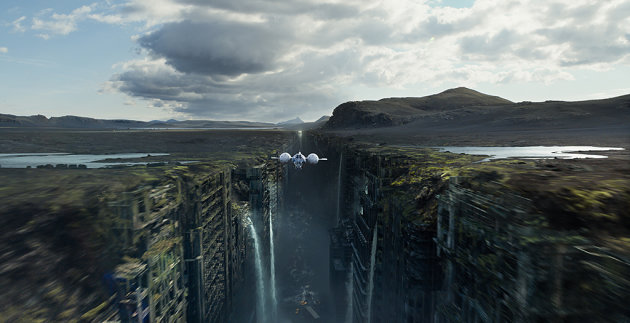
The year is 2077.** Earth has just survived a long, devastating war with an alien race that, in its final act to "poison the well" destroyed Earth's moon, creating dire ecological conditions for the planet, wiping out civilization and leaving its coasts under hundreds of feet of silt from tsunamis and tidal devastation. Folks have moved to the moon Titan, off the rings of Saturn, the last remaining humans being Jack Harper (Cruise) and Vicca (Andrea Riseborough), a mated team of tech-mechanic and monitor whose job it is to keep the giant moisture evaporators running Titanville or wherever and keep them up and running from complications, both natural and unnatural. The natural being wear and tear and the unnatural the last vestiges of the die-hard combatants—Scavengers—who are still trying to tear apart the fragile mining of Earth's resources to defeat the human race. Jack monkey-wrenches and Vicca runs data, all under the watchful work-schedule of Sally (Melissa Leo) who oversees their efforts from a large rectangular control station in orbit around Earth, called the Tet.***
So far, so hum-drum. Yes, there's a lot of background that Cruise has to spew in the first ten minutes, but basically he's playing another working class stiff doing a dirty job in the future.


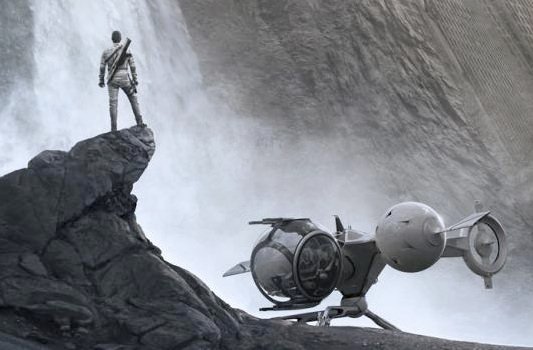
Jack and Vicca are a happy-in-love working team, awaiting the day when they can get off this rock and join civilization on Titan. Jack, bothered by dreams of the observation deck on the Empire State Building and a smiling beauty (Olga Kurylenko) in the New York crowd, gets in his dragonfly of a jetcraft, repairing busted defender drones, and keeping a wary eye on "scav's."  
Cruise's futuristic mechanic keeps an eye on those moisture-vaporators
That's just the set-up.  Things, as they are wont to do, "get complicated" and to say how would start a cascading spoiler effect that will ruin the movie. I can't even talk about influences without giving away key pieces of information that will kill the "reveals" (even if one does see some of this stuff coming from light-years away), so let's just say that you'll spend the same amount of time playing "name that reference" in post-screening mode, as you do actually watching the movie. (Would one call that deja-viewing?  And shouldn't a science fiction movie be looking forward, rather than backwards?****
One key sequence echoes Planet of the Apes. Jack's patrol sector is the former northeast coast of the U.S. (and we get a respectful nod at the decimated Statue of Liberty), but only that section, as there's a radioactive "border" he can't cross. He is told at one point to go explore beyond his limitations and into the radiation zone if he wants answers. One could easily hear Dr. Zaius echo the words "You won't like what you find..." in the background. This leads to the biggest revelation of the film, but, instead of answers, it just leads to more questions, which the film goes into warp-drive trying to explain, not very successfully, as plot-holes and logic disconnects begin to eat away at the movie like nano-viruses.
And science-fiction movies usually have a message for us livers-in-the-now, either cautionary or revelatory.  Oblivion fails there by having as its message that we are replaceable cogs in the wheel of society's meat-grinder. That message was delivered by Fritz Lang's Metropolis way back in the silent era of movies in 1927. Here we are in the 21st Century (when we should all be wearing jet-packs) and that's all we get...besides the obligatory shoot-outs and chase sequences? If there's a message there it's along the lines of "Take out the recycling."

*—"well, then, it doesn't really count, does it?"—

** The film is extraordinarily exposition-heavy in the beginning in a long narration spoken by Cruise.  So much so, that one wonders why they didn't just make a movie of the events spoken of in the exposition. The reason why makes up the plot of the movie and reveals the Cruise character to be the most unreliable of narrators.

*** Amusingly, the first sign we get of the orbiting Tet is a glimpse of it, traversing the globe on the new logo for Universal Studios at the film's beginning.

**** And, appropriately, into the future. One of the previews preceding Oblivion is for Elysium, the new film by District 9's Neil Blomkamp, where the 1%ers have moved to an idyllic space station, while the rest including cyborg-ish freedom fighter Matt Damon robo-cops attitude against the machinery of the uber-klass. The two movies could be book-ends for each other.  Think of the double-bill (and the headline): "Oblivion /Elysium/ Expatriatic/ Tedium"

Tuesday, June 18, 2019

The Man Who Killed Don Quixote

To Dream The Impossible Film
or
The Very Definition of "Quixotic"

Say this for director Terry Gilliam, he won't let anything go. He wrote The Man Who Killed Don Quixote in 1987, started filming it in 2000 when it was beset by terminating issues both meteorological and financial (as was well-documented in the film Lost in La Mancha—at that point the film was starring Jean Rochefort and Johnny Depp) and consequently had enough aborted starts that would lurch to a stop, it became known as "the most cursed movie in history."

I wouldn't say that—a lot of movies have long gestation periods and get penciled in and erased faster than a sports team visit to the White House. And most cursed? I don't know about that, either. It makes for what passes for "good" Hollywood journalism these days. As for "cursed" I'd say that would fit such films as Battlefield: Earth and Myra Breckenridge, and I was the one who was cursing at them.


Gilliam directing Jean Rochefort in 2000
But, the film is done and in limited release—it's been made a "Fathom Event" like a Met opera or a "Dr. Who" premiere—designed to bring in more of the inspired, rather than the casual film-viewer, and that is probably a wise choice. Because The Man Who Killed Don Quixote is made for those who know of it, have anticipated it, and are likely to have some attachment to it or to director Gilliam. My own relationship to the film-maker is very specific and odd, but I'll leave that until after the synopsis.
Adam Driver plays Toby, a former film-maker who now directs commercials and is fairly jaded, sassy and comfortable in the more marketable role, despite the fact that the current job, a commercial being shot in Spain featuring Don Quixote, is behind schedule and over-budget. "The Boss" (Stellan SkarsgÃ¥rd) is putting pressure on him—the psychological kind—to get things done, while also taking advantage of the location to indulge in what he indulges in. The Boss' younger wife Jacqui (Olga Kurylenko) is also putting pressure on him—the physical kind—as the Boss is not paying much attention to her. 
Toby would care a bit more, but, he's creatively stuck and it is only a chance encounter with a DVD of his ten year old student film of "Don Quixote" while at a crew dinner that seems to interest him.  Going back to the Boss' apartment with Jacqui, he has more interest in his movie than her attempts to seduce him. Well, he can say that, of course, but when the Boss comes back to his room, a desperate and disheveled Toby can only knock the older man over and race down the hotel corridor, hoping he hasn't been recognized.
That night, Toby reminisces about the making of his student film, done with the most modest of budgets and using locals to star—the old cobbler Javier (Jonathan Pryce) that he found by accident and hired to play the Don despite his never acting before, and the innkeeper's daughter, Angelica (Joana Ribeiro), whom he becomes enamored with, telling her that she could be come a big star someday. It is only when she is being harassed by a crew member that Javier defends her honor, and realizes that he just might be Don Quixote.
But, that's in the past, and Spain's windmills are replaced by wind turbines. Things aren't any better the next day on set and Toby's even more paranoid about the next appearance of The Boss, given the previous night's activities. He absconds with a crew-member's motorcycle to "scout locations" but mostly to make his escape, tooling around the country-side that he remembers from ten years ago. He re-visits the inn, only to find that Angelica has moved away to pursue the dreams that Toby put in her head—to the innkeeper's grief.
He also finds a tourist attraction—directed by signs—to "Quixote." There he finds a dilapidated farm with a makeshift theater, where his film is being shown, with the added attraction of having its star performing alongside the film—it's Javier, only the shoemaker is completely lost in the role, thinking that he truly IS the one—the only—Don Quixote. Not only that, he thinks that Toby is his Sancho Panza. In the panic and confusion, the theater is set ablaze, and both men flee in panic: Toby, back to his set and The Don, to seek adventure.
At the movie-set, the police are waiting—a suspect has been picked up for the break-in at the Boss' room the previous night, and he wants Toby to identify him (while the police eye the motorcycle suspiciously as it was noticed at the town's fire). Toby begins to panic, but he is rescued by Javier, now on horseback, still under the mania that he is Don Quixote, who needs his squire by his side to regale him with his past adventures, and to ride the countryside to find new ones.

Toby begins to suspect he'd be better off with the local police.
Adventures they have—involving hidden Spanish gold, the usual assortment of dastardly windmills, terrorists, the missing Angelica and Russian oligarch's...but are they really? Toby starts to become unstuck in reality, not knowing what might be true and what might not—especially when he and the Don come across a village where residents are from the 17th century. Toby begins to suspect that he is losing his mind and that the old man might be the cause.
Intriguing story, right? But, it's at this point that the plot starts to bog down and become a bit too complicated at almost the same place where the film-making begins to get a little spare. It is difficult to know where Gilliam should have gone with this—make it longer with more exposition and more of the fantasy-reality confusion, or tighten it and eliminate a couple sub-plots and incidences. The film is 2 hours 20 minutes, but feels much longer, which is rarely the case with Gilliam's films, which usually deserve the time to enrich the story, even while he pushes the pace to cram it all in..
I've always had a weird physical reaction to Gilliam's films: they make me fall asleep. It has nothing to do with exhaustion or losing sleep the night before. It usually has to do with sensory overload...or more accurately, information overload (as I can sit through any hyper-kinetic film and not fall asleep—I might get bored, but never fall asleep). It's a particular affectation with Gilliam—he throws so much information at you...but my reaction is for my brain to shut down and and go into "sleep" mode. I'm not proud of that fact—embarrassed by it, actually—it just happens. No other director can do that with me, and it usually happens when Gilliam is firing on all antic cylinders on a film I consider good.

I stayed awake throughout The Man Who Killed Don Quixote. Take that for what it's worth.
To sum up: long wait, which it doesn't live up to. But, the kernel of the idea wasn't lost in La Mancha. Sure, they might have updated it with the perfidy of Russian oligarchs (which seems fresh and new—and it is certainly not from 1987) and displays the dangers of dealing with them as opposed to benign sugar-daddies (like George Harrison) for funding—there may be some sword-grinding going on there , given the many attempts to jump-start. It merely hammers home the point that flights of fancy or madness can be communicable where intentions coalesce (much like film-making*).

But, not just film-making. More grandly, it can also be in the pursuit of the altruistic, which flies in the face of the more jaded reality in which we all must live. Think of "The Greater Fool Theory," but with nothing so mundane as money or finances applied to it. Think instead of the value of Values and Virtue. The Real "Golden Rule."

Okay, maybe it isn't that great a movie, but I'm glad it's there, just to know that impossible...even "cursed"...things are possible. It gives me a reason to get up and put on my armor in the morning.

* Francis Coppola makes much the same point in his Tucker: the Man and his Dream, in the scene where his accountant tells Tucker why he stuck around for so long with the failing company:

Abe: [to Tucker] ... When I was a little kid, maybe five years old, in the old country, my mother used to say to me; she'd warn me, she'd say, 'Don't get too close to people. You'll catch their dreams... '... Years later, I realized I misunderstood her... 'Germs', she said, not 'dreams', 'You'll catch their *germs*'...[they both laugh] I want you to know something, Tucker. I went into business with you for one reason - to make money. That's all... How was I to know...[chokes up, head down]... if I got too close, I'd catch your dreams...

Thursday, April 19, 2018

The Death of Stalin

Dr. Strangebedfellows: or How I Learned to Stop Worrying and Bury the Politburo
or
"How Can You Run and Plot at the Same Time?"

"The Death of Stalin is aimed at inciting hatred and enmity, violating the dignity of the Russian (Soviet) people, promoting ethnic and social inferiority, which points to the movie’s extremist nature. We are confident that the movie was made to distort our country’s past so that the thought of the 1950s Soviet Union makes people feel only terror and disgust."
Petition from the Russian Cultural Ministry

"[a] western plot to destabilise Russia by causing rifts in society"
Public Council of the Russian Ministry of Culture


Oh, those poor Russkies.  They finagle our elections, annex territories, disrupt social media, and conspire with tyrants, while bagging as many rubles for themselves in their so-called "everybody-is-equal" political system. 

But, criticize them and they bleat like sheep.


Never mind that the director has been making fun of the British and Americans with his past work—like In the Loop and "Veep"—that no doubt cheers them and think are a laugh riot. But, turn the same satirical eye against them and it's a plot to "destabilise" Russia. As if they needed any help doing that themselves.

In a rather reflective "coalition of the willing" The Death of Stalin combines French, British and American forces; it started as a french comic book, and is a combination of Brit and Yank talents to bring it to the screen. Maybe the Culture Ministry feels that's a little too much attacking from the same forces. Satire does raise hackles. However, the satire of In the Loop and "Veep" produced an echoing silence (tacit approval?) while The Death of Stalin creates howls of protest and conspiracy concerns. What's good for the goose is not always good for the self-satisfied gander. 


So, what's causing the fuss? The Death of Stalin looks at the scrambling done by the prominent members of the Politburo following Stalin's death by a cerebral hemorrhage on March 5, 1953.
The events begin when Stalin (Adrian McLoughlin) requests a recording of a performance he'd heard on Radio Moscow that night. Unfortunately, when the live concert was broadcast, a recording was not made—but one does not disappoint Stalin (one might get shot). So, a second impromptu concert is staged, paying off the piano soloist (Olga Kurylenko), to repeat the performance and rousting a replacement conductor from his bed, after the original one suffers a debilitating accident while fainting at the prospect of any potential consequences. The pianist includes a note with the recording, deriding the Premier, whose reaction (either from the note or the poor rushed recording) prompts his stroke. The guards outside his door hear him collapse, but, having orders not to disturb his sleep under penalty of death, do nothing but hold their post.
The next morning, the dacha housemaid enters the room and finds Stalin unconscious on the floor. Phone calls are made—not to any "good" doctors as many of them have been purged—but to the senior officials under Stalin. They include Georgy Malenkox (Jeffrey Tambor)—who has been rumored to be replaced (and killed) in Stalin's plans, Lavrenti Beria (Simon Russell Beale), the security director of the secret police, the NKVD, and Moscow Party Leader Nikita Krushchev (Steve Buscemi), who is awakened by the news and is so exercised about the event that he arrives at the dacha in pants and pajamas. Beria manages to get there first, finds the body and searches for the key to Stalin's files and manages to smuggle some out. Before Krushchev and Lazar Kaganovich (Dermot Crowley) can arrive, Beria convinces Malenkov that he should be the next Premier, knowing that he's weak and easily influenced. When Krushchev and Kaganovich enter the room, Beria and Krushchev begin to butt heads over who can out-blackmail the other to gain a stronger footing.
But, one should never count their hens. When Stalin is moved by the four (with the help of Anastas Mikoyan (Paul Whitehouse) and Nikolai Buganin (Paul Chahidi) to his bed and examined by the best doctors not currently in prison or a gulag, it looks like the Premier might make a recovery, and the group returns to the fawning postures that (of course) they hope for a full recovery and everything will stay just the same—until Stalin actually dies and they return to dividing the spoils. No sooner do Beria and Krushchev curry favor with Stalin's daughter Svetlana (Andrea Riseborough) while marginalizing his drunken son Vasily (Rupert Friend) and leave the premier's quarters, that the NKVD move in and evacuate the building, take over all the possessions and furnishings and murder any witnesses.
Once Vyacheslav Molotov (Michael Palin) is brought on board (Beria has released his wife from prison where she was imprisoned for supposedly being anti-Stalinist), the group can start having rather tentative meetings and votes on how to proceed—everyone eyes each other to see how the other will vote, hands tentatively half-raised before committing—and is decided that Comrade Krushchev should be kept busy planning the late Premier's funeral...where the personal positioning for power can really move into full swing.
The political fandango is based (advisedly) on true events, with comedic license for interpolations. To see the power elite of Moscow at their most insecure, even while the stakes are life-changing is a hilarious dance of desperation that shows how petty and craven the instincts of those in power can be displayed (even before Twitter). That's what satire does—expose the frailties, whether in people, in systems, in governments, and how the best-laid plans have beach-like foundations. It's a release valve for the toxic stress involved in the absurdities of flawed circumstances. But, the only way to see the humor of it is to admit the flaws. To not do so runs the risks of making the same mistakes over and over...which really is the height of both tragedy, as well as comedy, comrade.


Wednesday, November 29, 2017

Seven Psychopaths

Written at the time of the film's release....

The Spanish Have Bull-fights
The French have Cheese
The Irish have Alcoholics
What Do Americans Have...?

or 
Write What You Know

Martin McDonagh, the Irish playwright turned filmmaker, made one of my favorite movies of the last few years, the nastily violent yet good-hearted In Bruges, the story of two hit-men who hide out in the Danish tourist-trap after a botched kill.  One shouldn't anticipate when going to the movies, but this one was such a surprise, one couldn't help thinking about what else he might have up his sleeve.
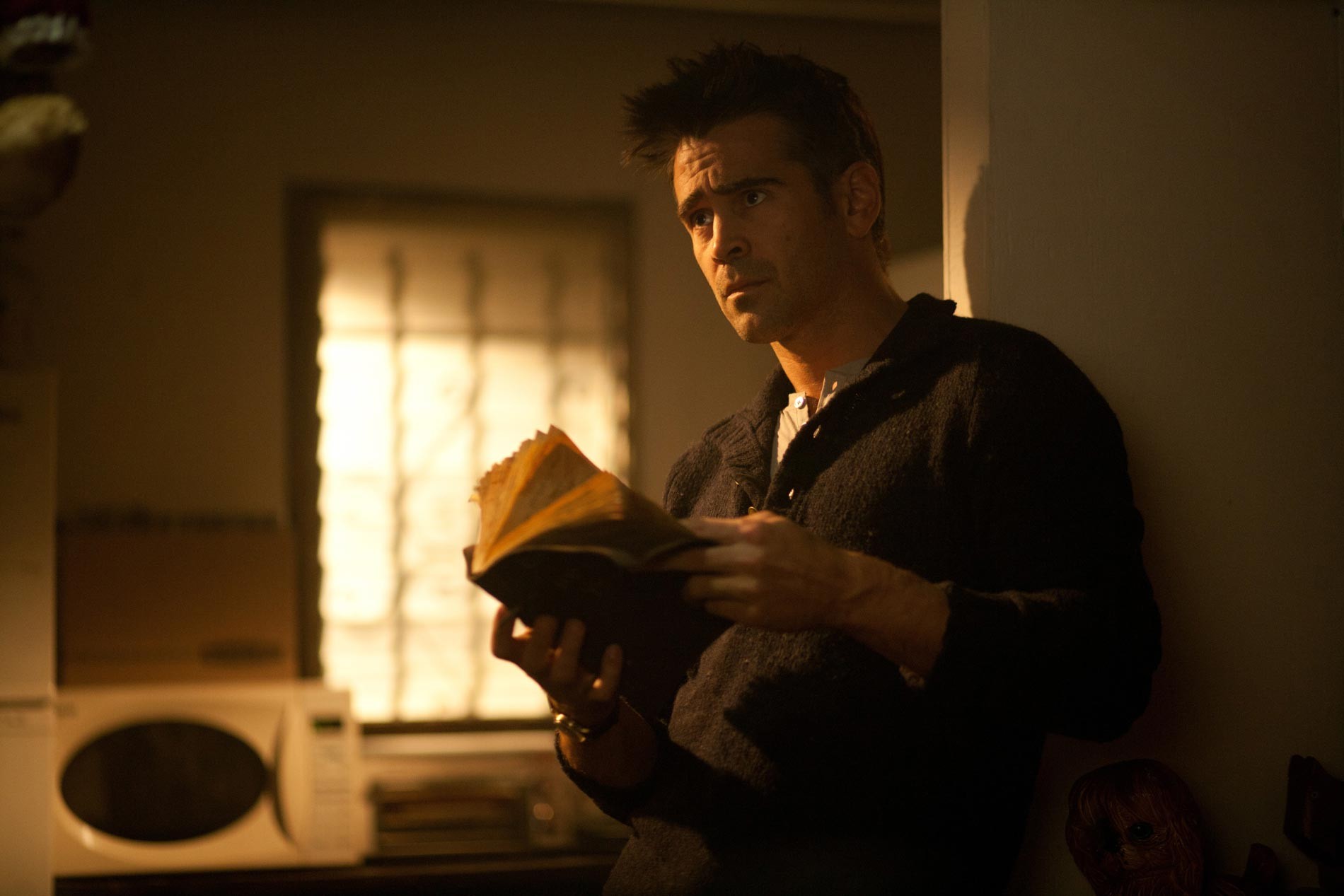
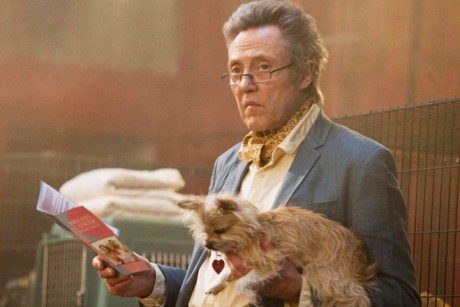
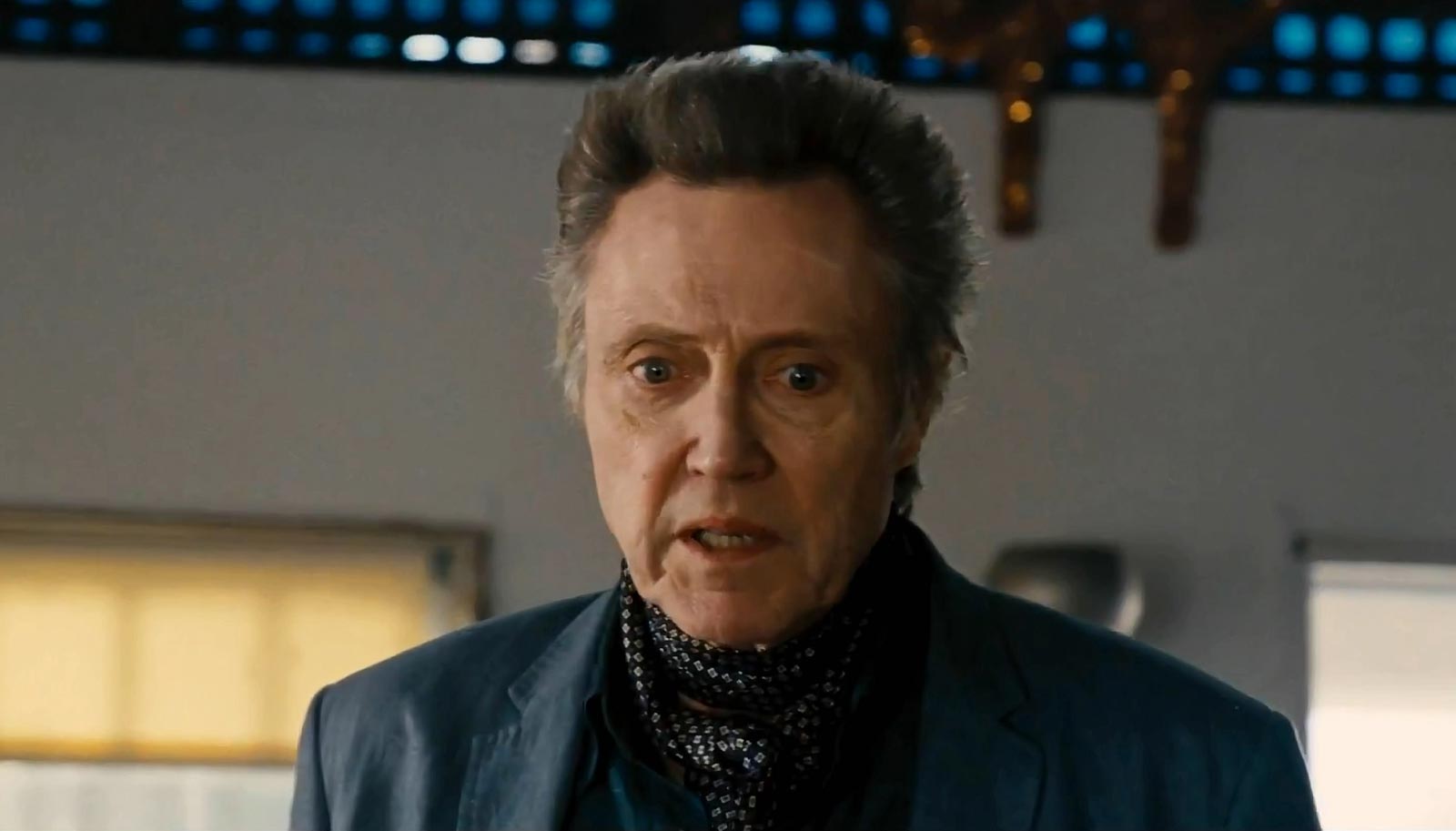
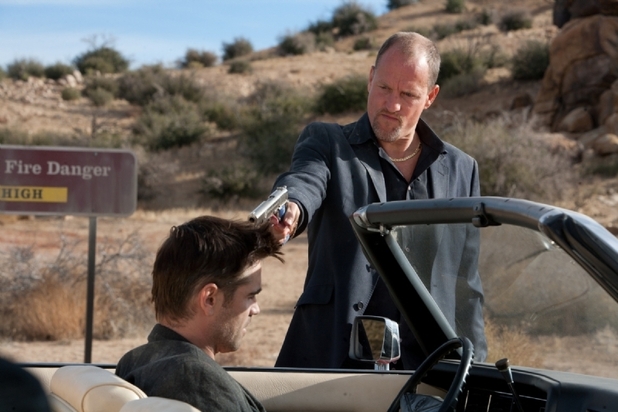
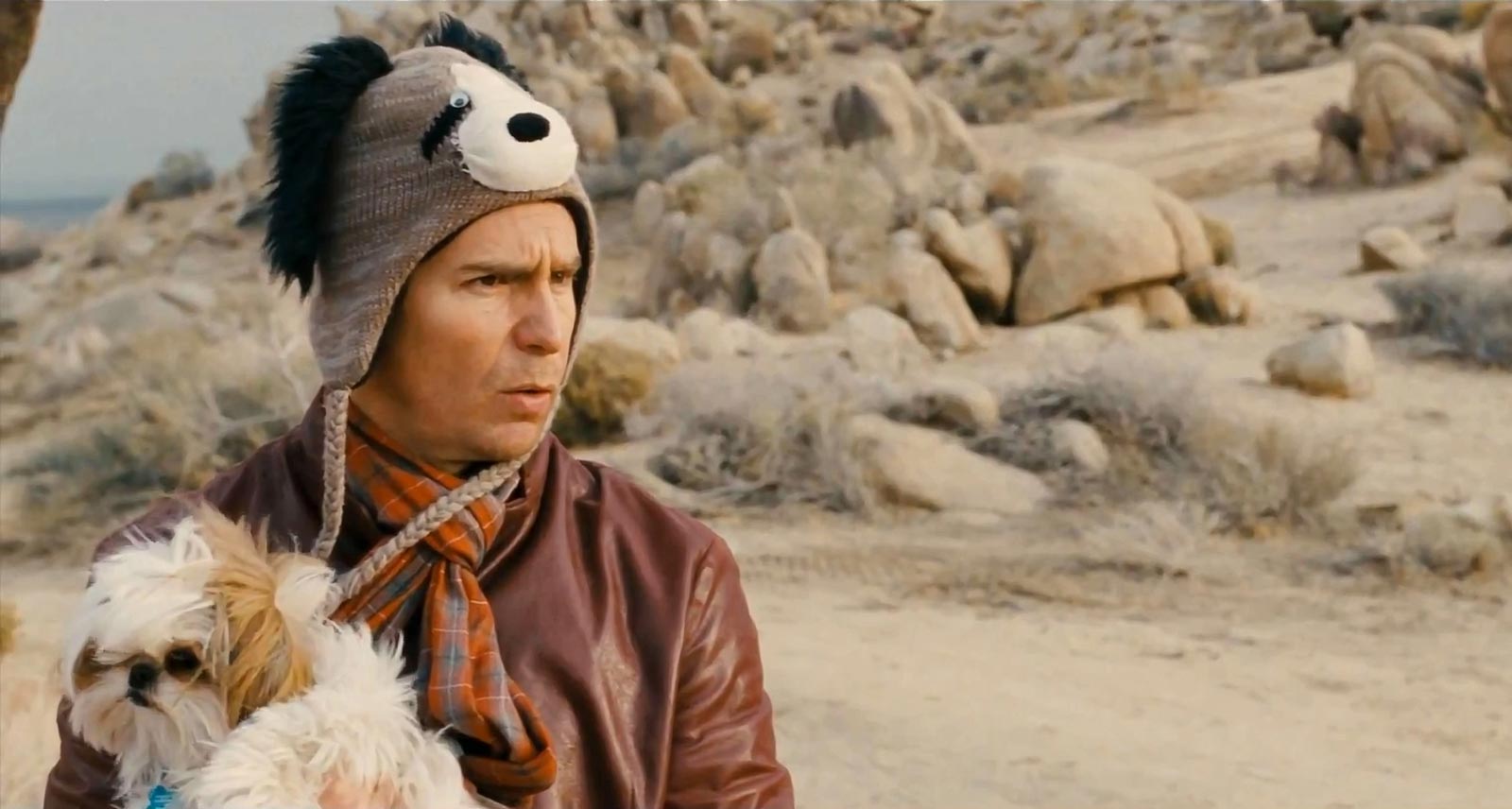
Well, he must have seen Adaptation., because this one is playing the same trick, but with better results, I think.  Seven Psychopaths is about Marty (Colin Farrell), who's a struggling screenwriter (aren't they all?). His friend Billy (Sam Rockwell) is an aspiring actor (aren't they all?) who may or may not have the weirdest "day-job" of any thespian—he's a dog-napper, in partnership with Hans (Christopher Walkenthere's no one like Christopher Walken). Billy is trying to help Marty with his screenplay entitled "Seven Psychopaths," with mixed results. Marty should take the advice of Ernest Hemingway who said "Write what you know." He has enough psychopathy in his life to fill up ninety minutes of screen-time. And if the dog-napping ring wasn't enough, Marty could take some pointers from Charlie (Woody Harrelson), whose shih tzu has just been the latest target of the canine-caper ring and is hell-bent to get his dog back and wreak havoc on the pooch-nappers.
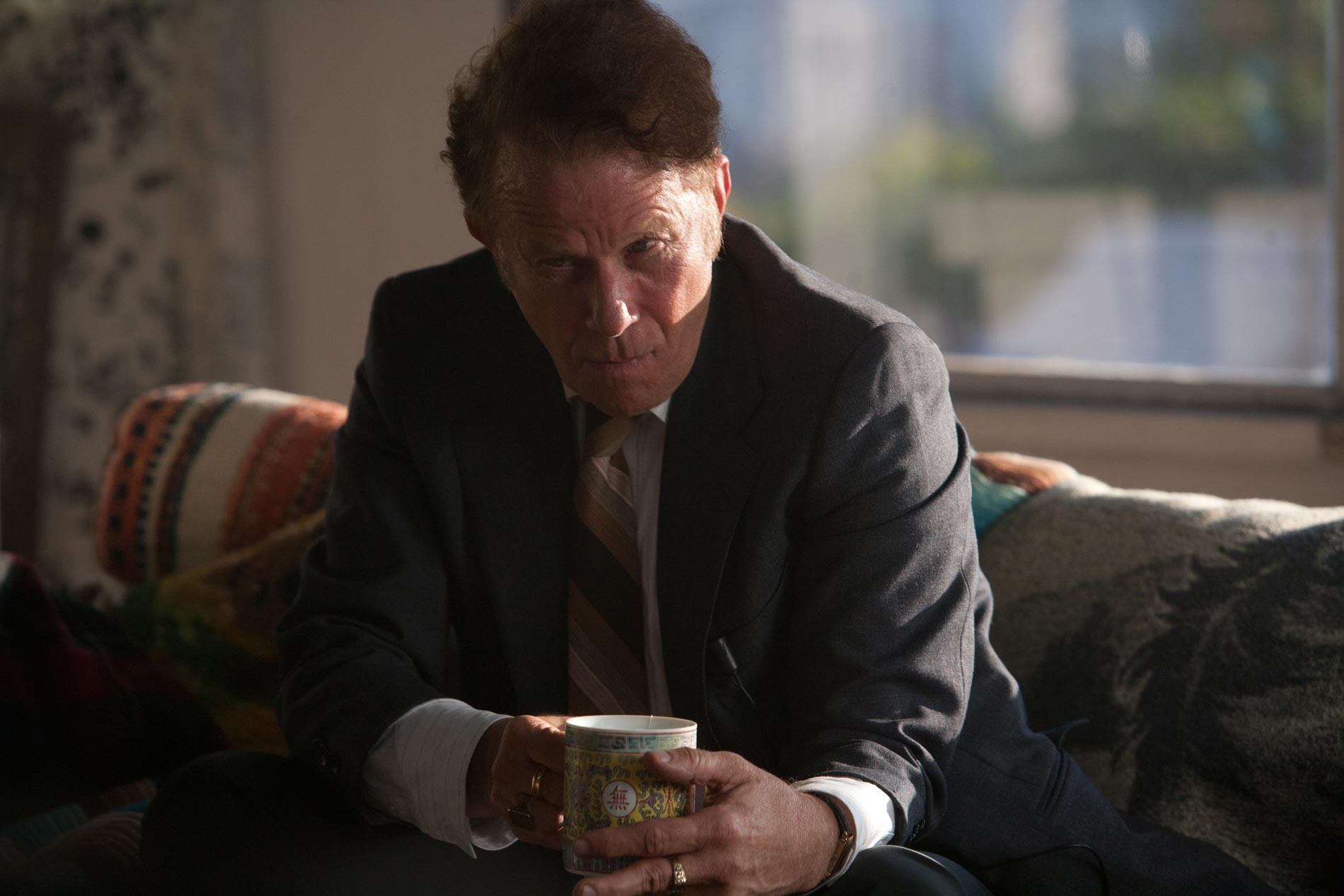
Bizarre. But, it gets even more bizarre when the stories start coming.  he newspaper is full of headlines of the "Jack of Diamonds" vigilante, who kills criminals and leaves that particular card on the bodies. Marty has a few kernels of ideas for his screenplay, which make sidebars in the film but nothing coalesces into a fleshed out screenplay. And then there's the contributions of the folks who answer an ad Billy puts in the paper to help Marty find inspiration, which produces a genuine fiend find in Zachariah (Tom Waits), who recounts a tale of serial vigilante justice in an effort to find his lost love, who inspired the killings.
What is going on here?  It's an interesting mix of truth and fiction, of apocrypha and legend that morphs with the story that the real life director Marty Martin McDonagh is weaving like a tapestry of varying skeins. The story of writing a screenplay is not the most interesting of movie ideas (although that didn't stop Sullivan's Travels, Barton Fink and others from being great movies). But, sometimes the gathering of material can be interesting—the Coen Brothers put a good spin on it by making Fink about an author who chooses to ignore what's happening around him—as it fills the requirements of a quest movie. 
And McDonagh is doing something interesting here (benefiting from a superb cast—with only the top-billed girls Abbie Cornish and Olga Kurylenko going to waste—and quick appearances by Michael Stuhlbarg, Harry Dean Stanton, Gabourey SibideCrispin Glover (I swear I saw him), and look for a great performance by Linda Bright Clay) in a way that Adaptation. only touched on with the Robert McKee script-tutorial segments: making a comment for what passes as a screenplay these days.  
Movies have changed as subsequent generations have indulged in the art-form—where films were written and directed from other sources, now movies, by and large, are created by students of film, creating a reflexive diluted (and deluded) quality that does not so much reflect reality, as the movie-realities we're used to. From Leone to Tarantino, Lean to Spielberg, Hawks to Carpenter, Powell to Scorsese, Hitchcock to DePalma, we now see films refracted through the prism of other movies, and what inspired the makers about movies in the first place.  With Seven Psychopaths' emphasis on revenge and revenge fantasies, it's squarely where movies sit right now with both the action genres and its current focus on superhero properties. 
And the character of Billy (Rockwell is brilliant in this) is an actor completely out of touch with reality, staging his life as if it was following a movie-script ("This is supposed to be the Final Shoot-Out") with the internal logic of a movie—but only a current formula-film, created by people who've learned about life from watching movies (as opposed to..ya know...living a life).  Life is messier in real life than what's up on the screen (even one with the violence of Seven Psychopaths)...guns jam, mistakes happen, we forget our promises, and the wrong people die. It's part of why we go to the movies in the first place—to escape the randomness of life, and let artifice try to paint it in such a way to give us perspective...the way dreams are supposed to work.
This is quite a heavy burden to be laying on a quirky film that's frequently laugh out loud funny, and stomach-turning violent in parts. But McDonagh continues to be a fresh voice with an odd perspective that manages to entertain while making one think, simultaneously. Quite unique, that.