Showing posts with label James Arness. Show all posts

Friday, April 3, 2020

The History of John Ford: Wagon Master

When Orson Welles was asked what movies he studied before embarking on directing Citizen Kane he replied, "I studied the Old Masters, by which I mean John Ford, John Ford, and John Ford."

Running parallel with our series about Akira Kurosawa ("Walking Kurosawa's Road"), we're running a series of pieces about the closest thing America has to Kurosawa in artistry—director John Ford. Ford rarely made films set in the present day, but (usually) made them about the past...and about America's past, specifically (when he wasn't fulfilling a passion for his Irish roots).


In "The History of John Ford" we'll be gazing fondly at the work of this American Master, who started in the Silent Era, learning his craft, refining his director's eye, and continuing to work deep into the 1960's (and his 70's) to produce the greatest body of work of any American "picture-maker," America's storied film-maker, the irascible, painterly, domineering, sentimental puzzle that was John Ford, John Ford, and John Ford. 


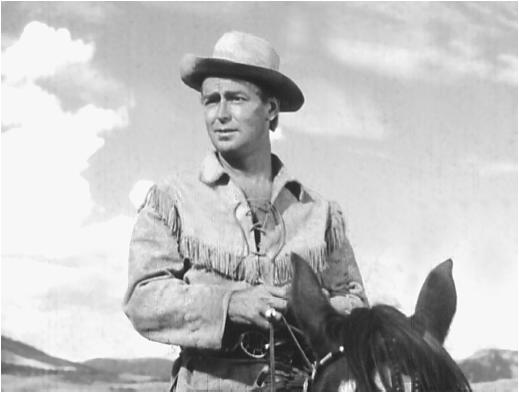
Wagon Master (John Ford, 1950) The western expansion of the American frontier is a standard theme of...the Western. John Ford had featured prospective settlers (and settling prospectors) in many of his films, but made the phenomenon the center of his film Wagonmaster, a modest black and white western, made in between When Willie Comes Marching Home and Rio Grande. Wagonmaster could well be the pilot episode of the television series "Wagon Train" (1957-1965)—which also starred Ward Bond in the first four seasons. There are no A-list stars—just the "Ford Stock Company" stepping front and center in the film, rather than filling the corners and back-stories.

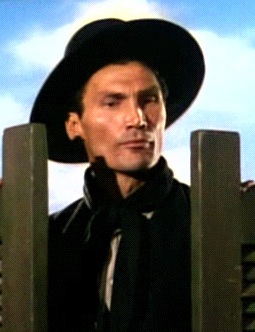
Ford begins the movie bluntly with an almost silent sequence (Ford learned his craft making silent pictures)—the Clegg's (Charles Kemper, James Arness, Hank Worden, Fred Libby, and Mickey Simpson) are robbing the Crystal City Bank, resulting in Pa Clegg being shot in the wing, and, incensed by the inconvenience and the impertinence, shooting the chief clerk in the back without regard to the escalation. The bank's sole source of internal light, a hanging hurricane lamp, swings with the force and the temerity of it. There have been no titles, no studio accreditation, no introduction. The movie begins with a terrible act with no word of warning.
It is only then that the titles appear proudly, diametrically, over footage of a dogged wagon train (complete with dog) accompanied by the "Song of the Wagonmaster" by The Sons of the Pioneers emphasizing the highs and lows of the rolling life. There is a lot of music in Wagonmaster, over such montages, that one might be distracted from some of the more beautifully comp0sed shots, or the rigors it took to achieve them, but to say it's a "musical" (as some appreciative writers have stated) may be stating it too strongly, considering the amount of song and group-musicianship in others of his works.

As the Clegg's silently take to the hills, watching their backs, two horse-traders ("That's my business!"), Travis (Ben Johnson) and Sandy (Harry Carey, Jr.) ride  out of Navajo Country with their latest acquisitions, trying to calculate their fortunes at $30 a head. They pull into Crystal City, the town still recovering from the recent murderous bank robbery and the Sheriff makes a show of checking the ponies while actually appraising the men attached to them—they're neither the type nor the number.
Convincing the Sheriff enough of their innocence to sell him a pony—and play a prank that sets the horse, with the Sheriff temporarily attached, careening into the streets—the two plan to rest up in town to play a few rounds of "High-Low-Jick, Jack, Ginny and the Bean Gun," which, besides the passing of funds, will give Travis his own assessment of the town and his future fortunes, given a conversation he'd had previously that day.
"I'm in"
The film proper doesn't get underway until Travis and Sandy meet the blustery ("I repent my words of wrath") Elder Wiggs (Ward Bond) and a small contingent of his party of Mormons who are being run out of Crystal City by the "fine" folk there who do not like their ways ("that's why I keep my hat on—so the horns won't show"), Their aim is to wagon-train to a "valley reserved for us by the Lord," by the San Juan Rover, hoping to get there before the winter rains come, to set up an outpost for their brethren to follow to. They want to buy the ponies and are in need of "wagon-masters" to negotiate the trail. During an extended negotiation that involves whittling interspersed with some volatile umbrage by the elder over price and the pony-men's lack of availability (even though they don't drink, don't chaw, don't cuss—much—and display no vices, other than a propensity towards gambling), the elder walks away merely with horseflesh and the responsibility for the journey.
Well, if there ever was a gamble...; when the Mormon party is escorted to the city limits, Travis and Sandy are there to meet them as they inform Wiggs that his group is not facing hundreds of miles of unknown alone. Wiggs is grateful for the help, but not all of the party are thrilled, chafing from taking orders from ruffians not part of the flock—they have women and children, after all. Wiggs has to be peace-maker, which is an unusual role for him, and one he's not accustomed to.
It's a big country out West—it was filmed in Moab, Utah (out-of-reach in order to discourage visits by producers) and parts of Monument Valley (to take advantage of extras from the Navajo nation, some familiar faces from other Ford productions can be seen among the Natives), but being close to the outskirts of civilization—that being Crystal City—the wagon train comes across others of their outcasts, which the sheriff listed as "Mormons, Cleggses, showfolk, horsetraders." The Mormons are far enough along that water is in short supply when they come across #3 in the list: Dr. A. Locksley Hall (Alan Mowbray), travelling showman and rumored dentist, selling a healing elixir, accompanied by two women no one would confuse with nurses Fleuretty Phyffe (Ruth Clifford) and Denver (Joanne Dru, who had just featured in Ford's She Wore a Yellow Ribbon). When they're found, they have run out of water, and are staying alive—but not on their feet—with the doctor's snake-oil.
Liquor and loose women are usually not a good mix with Mormons, but as the party is in a terrible spot, they're allowed to be party to the train, at least until they reach water. Being show-folk, they don't quite understand the necessity of rationing water with no shaving and no showers.
But outcasts attract, and though the Mormons keep the "show-folk" at arm's length, Elder Wiggs has enough of a past with (what he calls) "hootchy-kootchy shows", he can see Miss Fleuretty as "a fine figure of a woman" (she's loyal to the doctor, however), and Travis and Denver have one of those passive-aggressive flirtations that pop up in Ford films with strong women and cowed boys. Although the journey involves struggle, generally everyone is doing the right thing, perhaps due to their empathy with their lot as outsiders or undesirables, perhaps to their religious beliefs, regardless of their faith—extending to the Native Nahajo's who welcome them into their camp, as Mormons have a reputation for being less dishonest than other whites.
And far less than the "Cleggses." It is inevitable in the rules of drama that in all the wilderness that they should eventually meet up with antagonists. It's where the good feelings generated within and by the wagon train are challenged and where their dreams are threatened. It's also crucial in the Ford Universe; sure, everybody is an outcast from "polite society," but that doesn't make everyone a saint by default. That list of "Mormons, 'Cleggses', show-folk and horse-traders" has one rough-hewn peg in it and the "Cleggses" have no best intentions other than fulfilling their basic needs with no aspirations beyond that. Ford's heroes, no matter their place in society (or outside of it) have hopes, dreams...plans...purpose.
But, his villains: they may have dreams, but also have no qualms ruthlessly—or cluelessly—quashing the dreams of others. In Wagonmaster, community is all, and once the stakes rise high enough to affect the future, that's when ultimate action must be taken against oppression, even on a wagon train that now, thanks to being overrun by the "Cleggses", has no guns.
Wagonmaster has no stars to bank on, (but, then, neither did Stagecoach)—the one Oscar winning actor of the bunch, Jane Darwell, has very few lines (maybe five) in the entire thing. Stars have a tendency to dominate story, and in the case of Wagonmaster, would distract from it. Better that the story remain distributed among the many, and that the focus be on the journey and the collective that it forms. As it's the story for the quest for settlement and the forging of a community with the best of intentions and with an eye toward the future.
It was one of director Ford's favorite films, despite it lack of success at the box-office. That maybe entirely due to the vision that he held for it and his view of how well the task was accomplished—what we now call the "signal to noise" ratio.* 
Better than The Searchers, though? To my mind, no. But, then, The Searchers is a study in human nature and its worst qualities in regards to race prejudices, whereas Wagonmaster points to the best instincts, despite the impact of such things. Wagonmaster has hope and looks ahead, not back.

It's a beautiful film to watch, and one to cherish.

* A modern example is George Lucas' Star Wars: Oh, sure, everybody loved it, but it was a film that he was disappointed in, despite its success—that he felt that need to tinker with it, erasing the flaws he constantly saw in it, to make it closer to what he originally had in mind.

Thursday, October 10, 2019

Them!

Them! (Gordon Douglas, 1954) "When Man entered the atomic age, he opened a door into a new world. What we'll eventually find in that new world, nobody can predict." What no one could predict is that giant atomic-mutated ants would spoil The Big Picnic. Somehow, one expected the splitting of the atom to have more profound effects.

But nature abhors a vacuum or tampering with things on the atomic level, and, apparently, so did the world-wide movie industry, because, by 1953, two films that displayed horrific effects from atomic testing exploded on (appropriately, I guess) American and Japanese theater screens: The Beast from 20,000 Fathoms (Eugène Lourié) and Gojira (Ishirô Honda). Neither film exactly bombed.

And as The Bomb (and a popular 1952 re-release of King Kong) begat The Beast..., so did that Warners film beget Them! (which became Warner Brothers' box-office champ in 1954)*, inspiring a subsequent fallout of atomic themed films featuring Incredible Shrinking and 50 ft. metamorphoses that have had a half-life of (going on) 60 years. Them! may not be the glowingly cheesiest of them all—some of the writing's not bad, and despite the subject matter, some of the performances are surprisingly good—but, then, what can you expect with such an early entry in the genre, everybody was trying hard, and the writers managed to throw in some scientific fact mixed in with the hokum. But, it does have an exclamation mark in the title, which immediately makes it suspect.
And it has a good intro: a little girl (Sandy Descher) is found by police wandering in the desert, mute, in shock. Tracing her back to the family trailer (!), they find it split open—but from the inside. Hmmm. Mystery abounds, and at one point Sherlock Holmes is invoked (appropriately, as he once had to do battle with The Giant Rat of Sumatra, "a story for which the world is not yet prepared").  
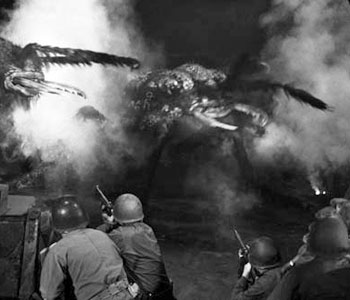
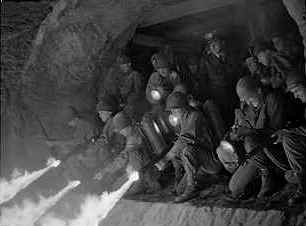
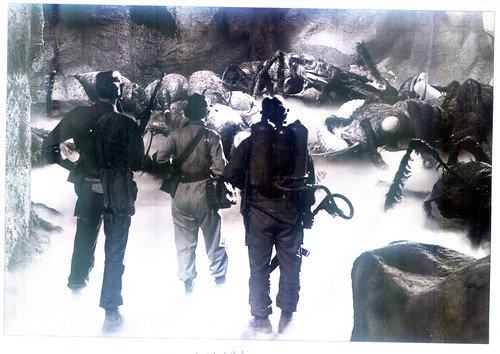
But, you can't hide a gargantuan ant for very long, not even in the desert, and soon the local constabulary and the army (with the help of a couple of myrmecologists (you know, "ant-thropologists") take on the formidable formicidae with all manner of WWII surplusflame-throwers, bazookas (that look really cool!), cyanide gas cannisters, and rocket-propelled grenades—one wishes for the huge Monty Python foot to appear, or a monstrous can of Raid...better yet, turn New Mexico into a giant ant-farm

There is no trying to "negotiate" with the ants (it was the 1950's, after all, at least they weren't hauled up before the House Un-American Activities Committee), and even one of the scientists—the cute female one (Joan Weldon), after making her observations, documenting them, and taking her corroborative pictures,** turns to her companions with the flame-throwers and says, "Burn it. Burn EVERYTHING!" O-kay...
This one was directed by Gordon Douglas,*** who worked his way up from "Our Gang" comedies to Laurel and Hardy and became to go-to director for 20th Century Fox when they needed a fast turn-around on a sequel or a Frank Sinatra movie, and sports all sorts of good actors trying to take it all seriously: Edmund Gwenn, James Whitmore, James Arness, Fess Parker (in an odd role as a man driven lunatic by the sight of giant ants), and look for glimpses of Richard Deacon (reporter), William Schallert (doctor) and Leonard Nimoy**** (fleetingly) as a soldier with some interesting information, and with no less than four employments of the giddily hysterical "Wilhelm" scream (performed by Sheb Wooley) shrieking throughout.  "The Wilhelm" was recorded for the 1952 film Distant Drums and became part of the Warner Brothers stock sound effects library under the title "man being eaten by alligator." 
And giant ants. Lots of giant ants. Zillions of them. Although, for budgetary reasons, we only see three at a time.
"The Wilhelm," however, probably wouldn't be classified as one of those "profound effects" previously mentioned.
"Look...it was a paycheck, okay?"

* Interestingly, though, no Academy Award nominations....

** Dialogue that came to mind: "I need to get one of you officers close to one, so I can get some perspective. Would you...?" "Lady!  You nuts??!!

*** And, you can tell that it was SUPPOSED to be shot in 3-D, with some shots hurtling at you...and evidently in color (only the title is), but someone in Warners accounting wisely decided not to "splurge" on a giant ant movie.

****

Wednesday, August 16, 2017

Hondo

Hondo (John Farrow/John Ford, 1953) Out on the prairie, it's a tough life for Angie Lowe (Geraldine Page in her film debut), but evidently not a lonely one...or a quiet one. First, Hondo Lane (John Wayne) lopes in, horseless and all too full of advice. Then Apache Chief Vittorio (Michael Pate) stops by, befriends her son (he likes the way he draws down his next-in-command), and makes him part of the tribe...and gives her a lot of advice, as well. A lot of man-splaining in the old West.

Already you start thinking that Hondo and his player on the other side have a lot in common. They test each other, and when the other doesn't give the answer they want to hear, well, that just means you can trust 'em to speak the truth. Hondo's part Native, speaks the patois,* and in a past life lived among them. He also knows that the U.S. Government made a treaty with the Apache that Ulysses S. Grant has already broken. "The Apache don't have a word for 'lie,'" he says, with a curled lip, so he knows they're going to attack the settlements. That doesn't mean he has to like it, and it doesn't mean he's going to betray either side doing it.

There's a lot of Yojimbo in Hondo for the adults and a bunch of Shane for the kids—that is, if Alan Ladd had killed Van Heflin. Truth to tell Hondo Lane is a cross between Ladd's Angel and Jack Palance's Devil. Hondo's only attachment is to his dog Sam and he won't feed Sam, knowing the animal will fend for itself. "He's independent. It's a good way to be." That doesn't mean he won't shoot a man for threatening Sam, and then kick the dog for getting in the guy's way in the first place. He's described as a "mean ornery son-of-anything-you-wanna-call-him." They were oblique back in the days of the West, they didn't use the word "conflicted."
Hondo was financed by Wayne's Batjac Productions,** made on the cheap in Mexico by director John Farrow (father of Mia, and director of The Big Clock and Ride, Vaquero!) and, for the climactic action sequences, by John Ford (which is readily apparent—they look like sequences from Stagecoach). It was also shot in 3-D, with a minimum of arrow-in-your-face shots (except by Farrow in a not-too-convincing knife fight, but Ford goes to town making sure his stunt riders fall right in front of the camera, kicking dust into the lenses). It would be interesting to see it in that format, but Hondo has been monocular since its first road-house presentations.*** But never say "never:" a restored 3-D version of Hondo had its American premiere at the Samuel Goldwyn Theater in Hollywood. Give it a look-see.
"...man oughta do what he thinks is best"


* The language in Hondo is a bit more colorful than in most westerns—it's not afraid to lose its audience with a colloquialism. For instance, you don't holster a pistol, you "leather" it.

** The original cast was supposed to be Glenn Ford and Katherine Hepburn, but Ford had a bad experience working with Farrow that he didn't want to repeat, and Hepburn didn't like Wayne's right-wing activities at the time. By the time of Rooster Cogburn she had changed her mind.


*** And I've been reminded that "Hondo" was shown nationwide in 3-D..on television...in 1991.

Thursday, July 24, 2014

Now I've Seen Every "Thing" Dept.

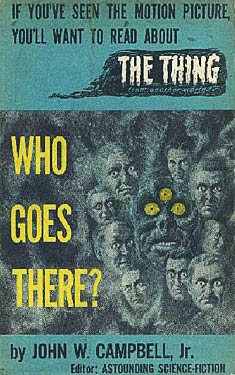
"Who Goes There?" by Don Stuart (a pseudonym for sci-fi pioneer John W. Campbell) is one of the acknowledged "great" stories in speculative fiction.

Part science-fiction, part horror and part psychological thriller, it tells of an isolated Antarctic research facility that discovers a flying saucer long buried in the ice.  Investigation leads to finding the saucer's sole inhabitant not too far away and taking the
BEM-sicle back to the Ice Station for analysis.

Of course, it escapes and this particular ET has a special talent—it can "pretend" to be anyone it has killed and "absorbed." Hiding in plain sight, the "Thing" starts picking off the scientists one by one, while the humans among them start to worry which of their (dwindling) number could be the wolf in sheep's clothing.

Paranoia strikes deep, but "The Thing" strikes deeper, able to replicate the men down to their blood-cells, which provides them with a nifty test to see who's genuine and who's a "Thing"-a-ma-job—take a blood-sample and dip a hot wire into it, and the alien-cells react and start to metamorphose, while the human hemoglobin merely sizzles.

Eventually, the alien is trapped by the scientists, while it is constructing an anti-grav ship to escape, forcing it outside into the cold, where it is torched by the scientists. Humanity triumphs that the alien has been thwarted from fleeing or spreading itself to another outpost. All's right with the world, especially considering that no other visit has occurred since the first ship crashed twenty million years before. No other invasion is expected anytime soon. The end.

From its origins in the August 1938 issue of "Astounding Stories," the tight, compact story was first adapted for the screen by Charles Lederer (with assists from Ben Hecht) and the film's producer, one of the great directors of American film, who put such a personal stamp on it that, to this day, there is debate about just how much work on it the listed director of record actually did.  And that man's influence has taken over the DNA of his film's clones, so powerful is his influence and legacy.
The researchers take a measurement of the saucer.
Hawksian team-work in The Thing (from Another World)
  

😀😀😀😀😀😀😀😀😀😀😀😀😀😀😀😀😀😀😀😀😀😀👽😀😀😀😀😀😀😀😀😀😀😀😀😀😀😀😀😀😀😀😀😀

The Thing (From Another World) (Christian Nyby, 1951).  Yes, it says "Christian Nyby" in the credits, but the film is such a prime example of Executive Producer Howard Hawks' style that folks just assume he had a hand in directing it as well.  He almost certainly re-wrote the script, as it crackles with wit, banter, and includes the requisite "Hawks woman" who's tough enough to play with "the boys."  In fact, the dialogue and human interplay are better than the film deserves and is more entertaining than the "monster movie" that is at its frozen core

Hawks puts it in the arctic, then tossed out Campbell's psychological element—his military/scientific crew are Hawksian professionals and suspicions about each other would drive a wedge into that mix (it's enough that one scientist want to emphasize research over self-preservation to cause some heated exchanges*), fraying the team-spirit necessary to get through the crisis and the simple goal of staying alive. Nope. It's simple. The "Thing" is bad. "It" wants to kill us. We kill "it" before "it" kills us. Research? That's what autopsies are for!
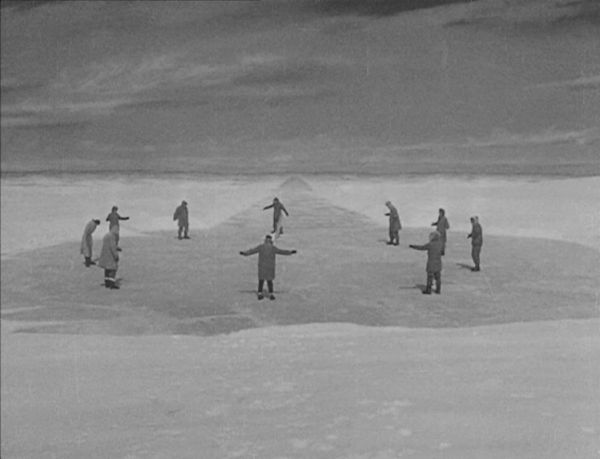
So, The Thing (From Another World) is much more of a monster movie than the study of paranoia the story is. Teamwork towards a common goal is emphasized—you can say that a lot of Hawks' films are analogies to the disparate gypsy-camp of film-makers working together to create a single film—and it boils down to survival. Besides the interplay of the characters, the film also boasts some iconic scenes: the Air Force officers and scientists spreading out on the ice to determine the size of the saucer;
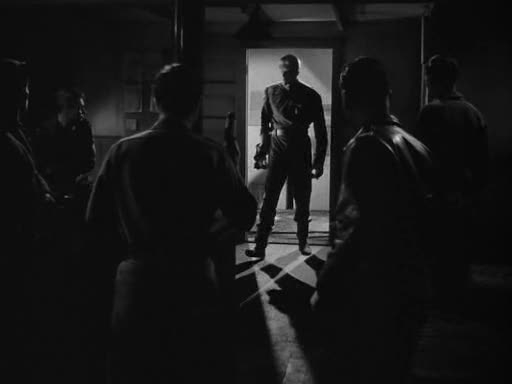
the sight of "the creature" (explained in simple unscientific jargon by one of the researchers as "an intellectual carrot") silhouetted in light as it kinetically bursts open the door of the room hiding the crew; the truly eerie scene of growing blood-sucking creature-clones like they were lethal daisies.


The Thing (From Another World) is a tough, no-nonsense monster movie with sides clearly drawn: us against them. But the only hint of the original tale's paranoia comes from the film's final line: "Watch the skies!"
Braised carrots are on the menu at the arctic station tonight.
James Arness (in a role he hated) gets fried in The Thing (From Another World)

😀😀😀😀😀😀😀😀😀😀😀😀😀😀😀😀😀😀👽😀👽😀👽😀👽😀👽😀👽😀👽😀😀😀😀😀😀😀😀😀😀😀😀😀

The Thing (John Carpenter, 1982) Director Carpenter has long been a disciple of Howard Hawks (his Assault on Precinct 13 is an urban remake of Rio Bravo, and Halloween is merely The Thing in costume), so it was only natural that he would take on the sole horror movie in Hawks' CV.

Bill Lancaster's script hews a little closer to Campbell's story, re-introducing the character conflicts and the assimilating alien (and eliminating Hawks' lone female character, making the station very much a "boys' club," comprised of Carpenter's "go-to" top-liner Kurt Russell—as chopper pilot McReady—and a "who's who" of veteran '80's character actors, Wilford Brimley, T.K. Carter, David Clennon, Richard Dysart, Charles Hallahan, Donald Moffat, Keith David, and Richard Masur).

In the Hawks version it was "us against them;" with Carpenter, it's back to "we have met the enemy, and he could be one of us."

Kurt Russell as MacReady in Carpenter's version
The tone is decidedly different, too. Carpenter's film is dark and brooding and creepy, punctuated by sequences of crazily unnerving violence concocted by make-up wizard Rob Bottin's creative realizations of the creature's ability to turn any part of a human's anatomy into a potential source of weapon or defense. It's icky and gooey and strangely goofy to see heads sprouting spider legs and skittering through the facility, or to see the detached head of one of the researchers pull itself along by whipping its tongue around a table leg and pulling itself out of harm's way.
Rob Bottin's creature creations for The Thing (1982) emphasize
a strange versatility when utilizing its human hosts.
Ultimately, though, for all the anarchic lunacy of the monster sequences, the movie boils down to a claustrophobic, paranoid fight between the men amongst themselves in their search for who is the monster among them, and Carpenter ends the film on a decidedly down note as the survivors of the carnage eye each other, each suspecting the other of being a creature, while they await certain death from the freezing elements, their previously secure station decimated by the events of the previous hours, providing no safety, no sanctuary or any warmth. There are no winners in the decidedly small intergalactic battle zone. 
And, though we're left with no ending and only a stalemate, we can be assured there will be no survivors, either. Any victory is hollow, and one is left pondering if any "thing" human came out of it.

😲😲😲😲😲😲😲☹️☹️☹️☹️😬😬😬👽👽👽👽👽👽👽👽👽👽👽👽👽👽👽👽👽👽😬😬😬☹️☹️☹️☹️😲😲😲😲😲😲


The Thing (Matthijs van Heijningen Jr., 2011) A direct prequel to Carpenter's film,** but basically the same plot. Spaceship found. Creature in the ice. Thaws out. Starts absorbing people.

What's interesting is that van Heijningen also pays tribute to Hawks, by turning the sex-tables on the story, making paleontologist Kate Lloyd (
Mary Elizabeth Winstead from Scott Pilgrim, who looks unnervingly like Zooey Deschanel and can rock a mean flame-thrower) the "guy-in-charge" after the official authority structure breaks down. Just as Hawks up-ended The Front Page by casting Rosalind Russell in one of the men's roles for His Girl Friday, van Heijningen provides an interesting dynamic by putting a woman in control of a station full of panicking men.
One doesn't have to have seen the Carpenter version to appreciate what is going on in the film, but if one has there are touchstones that one can appreciate (and check off if one is a "completist" or continuity-obsessive) along the way—especially at the end once the credits have started rolling—there's the merged double-creature that is briefly seen in the earlier film, the axe in the door, the suicide, the fleeing dog pursued by snipers. But, the giddy, manic quality of the creature-creations has been muted for straight-out horror effects—van Heijningen even has a cheap-shot "Boo" effect early on that still makes one jump—but Carpenter's (and Campbell's) blood-test sequence is neatly sabotaged for a simpler, more organic, and slightly creepier, test that anticipates a potential attack every time someone opens their mouth.
It does its job well, but one is left feeling it really wasn't necessary to make this entry, as it its only function seems to be to ride the coat-tails of its predecessor and fill in some blanks of an already competent version that left some audience-members behind (in the same way that
2010 did for 2001).

Kate Lloyd (Mary Elizabeth Winstead) rocks a flame-thrower.


* And we all know how disastrous heated exchanges can be at an ice-station!

** The film literally ends where Carpenter's begins, with a Norwegian helicopter  and gunman chasing a dog over the Antarctic wastes.