I'm going to try to cut down some of the long-drafted posts that I haven't gotten around to. So, since we haven't done too many of these Saturday posts in awhile, let me re-acquaint you that the spot is traditionally "Take Out the Trash Day."
The Unholy Wife (John Farrow, 1957) One of the last films produced by RKO's film division, this one is an exercise in pure pulp, originally a TV presentation on the CBS "Climax!" anthology series (the second season episode called "The Prowler") gussied up with some religious pretensions to assuage those who didn't show up to ogle starlet Diana Dors portraying a "bad girl" who confesses to committing "the perfect murder" just hours before her execution.
Well, to say it's "the perfect murder" may be a delusion of grandeur, nor is it in any way shape or form true, so the audience is already having to deal with an unreliable narrator as we watch her unfold the tale. But, given the convoluted machinations that Dors' Phyllis Hochen takes to get what she intends, one is tempted to just give up on the character and have them gas her early.

But, the film (filmed in Technicolor—and one is tempted to say that, despite the poor quality of the available images, it's not likely anyone will mourn it not being remastered) begins with a black and white view of morality that will be ignored throughout the film: "I know that in your book, there's no such thing as a perfect crime. Right always comes out on top. Good always triumphs over evil. The guilty always punished. And yet, I did manage it. The perfect crime." Then, in flashback, she walks out the front door of "the house I hated—the one they now call "The House of Death" and fires a deliberately aimed bullet from a revolver.
Subtle.
It's a hell of an opening, but it's a false flag. She's not shooting anybody. She's just trying to convince her doddering mother-in-law (Beulah Bondi) that there's nobody out prowling around the house. This may be a little extreme outside anything but an NRA convention, but extreme is usually the way Phyllis plays it, as will become evident throughout the movie, even if Dors' performance of it is rarely above the cool, calm, and colluded variety. At any rate, daughter-in-law randomly firing a gun outside the house seems to assuage Mom's jitters (eh?), so off she goes to bed.

That allows Phyllis to have a little rendezvous in The House of Death's kitchen—The Kitchen of Death?—where she meets up with rodeo cowboy San Sanders (Tom Tryon), the fellow who's been prowling outside the house, who she's evidently having a fling with, as her husband...well, who the Hell knows where her husband is at this point because Phyllis is telling her story in flashback and only gives us the set-up—she doesn't tell us how it all started.
And it starts with her being a floozy.
Phyllis is a single-mother, originally from England (in case Dors' accent slips), married to an Air Force sergeant who seems to have flown leaving her with a young son while she hangs out at bars trying to latch onto a high-roller. In comes sauntering vintner Paul Hochner (Rod Steiger) from the Valley and his pal, Gino (Joe DeSantis). Paul's in a good mood and finding Phyllis (not a tough thing to do) just makes him that much happier. Paul is smitten and proposes that they spend the next day at the beach, so he can get to know her son, Michael. Paul, due to a war-wound, can't have children, but Michael would realize his dream of having an heir for the vineyard that has been in his family for generations. Phyllis sees Michael as a burden, but Paul and Michael bond, despite Michael's jealousy of Paul's new attention to his mother.

Phyllis tries to warn off Paul by telling him of her past, but he is not swayed and the two marry. But, from her perspective, the marriage is not a happy one, and Phyllis takes up with the rodeo cowboy. Phyllis tries to send Michael off to a boarding school so she can have more time unsupervised, but Paul refuses the idea and so, thwarted, she begins to plot. That shot in the dark at the beginning of the movie sets up the circumstance. When there's a dust-up between Paul and Gino at an industry fair, Phyllis runs home to shoot Paul when he comes in the door. When the person she kills turns out to be Gino, returning to apologize, Paul determines to take the blame to keep her from being deported, rather than calling the sheriff and portraying the shooting as an accident.

Phyllis plants evidence on the body implicating Paul, and the police arrest him and charge him with murder. This might seem like enough for Phyllis, but when she learns—from Paul's priest-brother—that the judge may acquit him, she doubles-down testifying on his behalf, implicating herself in such an amateurish and clumsy way that everyone believes that she's just lying for her husband and so he MUST be guilty. It's tortured logic and how everything get resolved is even more tortured and a bit convenient for things to come around to the point at the beginning of the film.

If you're wondering why the emphasis on "Unholy" in the title, it's because of the presence of Paul's brother, a priest, who spends a lot of time doing unpriestly things, but still has enough credibility—despite his obvious prejudices—of being able to convince a lot of righteous people about the errors of their ways. Everything is just a little on the hysterical side, but, then the thing has so much pulp in it, you wonder if it might even extend to the wine Paul produces. Everyone tries gamely, especially Dors (who could be better and seemed to excel at comedy), but no one can rescue this one.

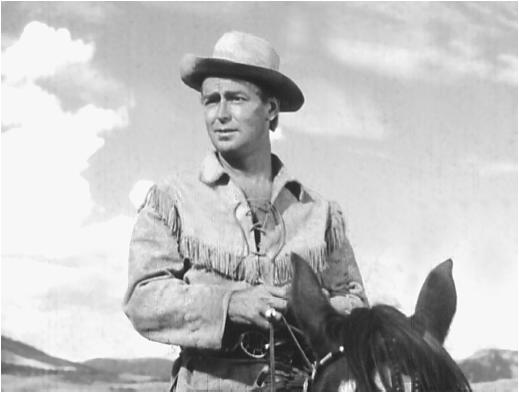
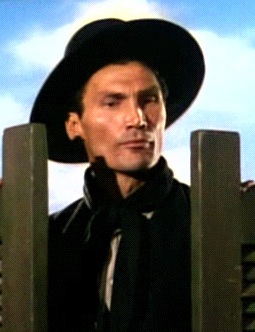
Speaking of pulp, you can't find a DVD of The Unholy Wife anywhere—the only copies available are on VHS (hence the quality of the screen-grabs—inspiring one of those rare "I cleaned my glasses for this?" moments)—but until that time when some video-house decides the time is right and the demand is there for a "Diana Dors Collection" there won't be any remastering project in the future. So don't hold your breath, but considering holding your nose when watching this unholy mess.