Showing posts with label Hal Holbrook. Show all posts

Saturday, August 6, 2022

Jonathan Livingston Seagull

Saturday is typically "Take Out the Trash" Day. Hope the birds don't pick at it.
 
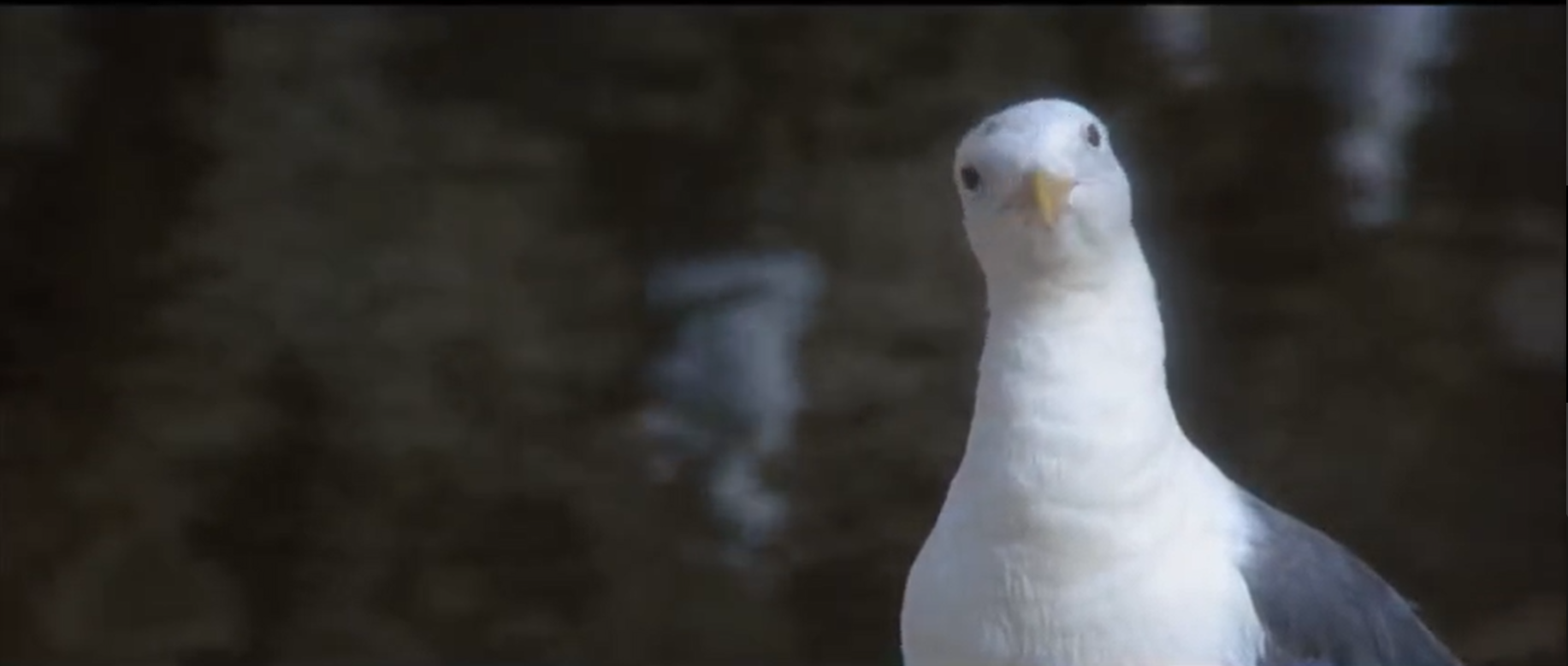
Jonathan Livingston Seagull (Hall Bartlett, 1973) The 1970's were a weird time for book publishing. The literary landscape hadn't even seen the first novel of Steven King published, but was suffering the throes of such literary lites as Jacqueline Susann, Harold Robbins, and Arthur Hailey, while seeing the last published works of Agatha Christie and Ernest Hemingway. "Love Story" was the surprise of 1970—a very (very) slim novel by Erich Segal that moved people to tears and rang bells on cash registers (no beeps!) for a year.
 
Then, an even slimmer tome (144 pages, many of them black and white photographs)hit the racks in 1970 with a limited run of 3,000 books. "Jonathan Livingston Seagull," sold out, but didn't become a "thing" until 1972, where it seemed ubiquitous, not just in bookstores, but in places where "notions" and tchotchkes were sold. It remained on the NYT Bestseller List for 37 weeks.
 
As a book, it was an "odd bird," seemingly born out of the "love generation" but with a metaphorical slant towards enlightenment through self-improvement at the same time that things like Dale Carnegie, Scientology, and EST were gaining a mind-grab on the consciousness along with the multi-verse of belief systems that sprang up out of the 1960's.
The book tells the story of Jonathan—a seagull—who has become dissatisfied with his lot of fighting over food sources (usually garbage) and, instead, concentrates on flight—its possibilities, its mechanics, and the conquering of its limitations. This puts him at odds with the rest of his flock and he is cast out for his beliefs, to continue his process on his own, which he finds to be rather rewarding without the constant squawking and fighting.
Finally, Jonathan is led by a couple of other gulls to "a higher plane of existence" where he meets the seagull Obi-Wan Kenobi, Chiang, who helps Jonathan realize that he can be anywhere he wants in the Universe if he only apply himself and "begin by knowing that you have already arrived" (which sounds suspiciously like "no matter where you go, there you are"*). Finally, Jonathan decides that, rather than wander the Universe by himself, he'll return to terran roots and teach what he's learned to other gulls.
There are those who say that the best movies are made from novellas, rather than novels, because it allows you to stretch out the ideas, rather than try and condense the book for a two hour presentation. But, the film that director Hall Bartlett (he made Zero Hour!, which was the serious inspiration for Airplane!) has a hard time expanding the slight story-line into a 99 minute movie, even padded as it is with VERY serious songs by Neil Diamond. It doesn't help that it is basically a Nature film—of seagulls—where they talk to each other in voice-over (by the likes of James Franciscus, Juliet Mills, Richard Crenna, Dorothy McGuire, Hal Holbrook, and Philip Ahn), when one suspects it would be better to just feature a narration by David Attenborough—that man makes fossils fascinating.
Not sure what he could do with this, though. The film, while boasting excellent cinematography is just ham-strung by a slim story, disconnected dialogue, opaquely expressive seagulls and so many endless (and one must say) loosely interpretive and pretentious songs.** I remember watching it in the theater and being so thoroughly unimpressed that I wanted to fly out the nearest exit (something I've only done once) whether on this plane or any other. I consoled myself by watching the screen and cynically repeating the line of the woman concierge in The Producers: "Boids!, Dirty, disgusting, filthy, lice-ridden...boids!" Maybe a little humor would have helped. Maybe it should have been animated. You could do wonders with it these days with CGI and maybe a little more imagination.
"Speak for yerself, bub"

But, no. The problem is the story. Look, I've been moved by efforts of self-actualization and improvement by Larry Darrell from The Razor's Edge and even from Remy the rat from Ratatouille. But, somehow, in this context, the message just doesn't squawk through. There is nothing about a seagull trying to break the air-speed record/time-space continuum that isn't risible, physically and spiritually, and treating it so religiously with such heavy-handed profundity makes it an easy target for the Doubting Thomases, like me. There should have been something celebratory about this, not something torturous. And if I can be just as obnoxiously obvious and "on-the-nose," Jonathan Livingston Seagull is..."for the birds."
 
"Boids..."
 
 
* From the teachings of Buckaroo Banzai .
 
 ** Diamond ended up suing the producer-director for not using ENOUGH of his music, and that he had to share a music credit with composer Lee Holdridge. Richard Bach ended up suing, also, saying that Bartlett's screen-story deviated too far from the book and his screenplay. The movie crashed and burned in theaters, so I guess you have to make your money SOME way!

Wednesday, July 8, 2020

Into the Wild

In a time when the toppling of statues and monuments have been making the news, one may have missed your attention. Officials have removed the "Into the Wild" bus from its position in Denali National Forest in Alaska. The bus, where the body of adventurer Chris McCandless was discovered, has been a macabre destination for tourists and fans of the Jon Krakauer book and Sean Penn film made from it. But, many came ill-prepared. Many rescue operations had to be dispatched, and there were some deaths. And so, authorities flew in on one last rescue mission to end all rescue missions and end the possibility of any more tragedies that might echo that first one. 
Here's the review of that film, written at the time of its release.


Finding Oneself and Getting Lost

There is a pleasure in the pathless wood,
There is a rapture on the lonely shore,
There is society, where none intrudes,
By the deep sea, and music in its roar:
I love not man the less, but Nature more,
From these our interviews, in which I steal
From all I may be, or have been before,
To mingle with the Universe, and feel
What I can ne'er express, yet cannot all conceal.

Lord Byron

The films of Sean Penn's directorial career have all carried the underlying theme of obsession. But until now, he has always shown the dark side of it—The Indian RunnerThe Crossing GuardThe Pledge (the latter two focusing on revenge, of sorts)—the Need to get even, to balance the books, to set the world and Nature right. But with his Oscar-winning role in Clint Eastwood's Mystic River, he seems to have cauterized that need from his system. His new film, Into the Wild, is just as obsessive but presents more of a spiritual quest. Nature is already balanced. Now one must become a part of it. Based on Jon Krakauer's book (which is expanded from his articles on "Outside Online"—originally called "Death of an Innocent" and not available on the site at this time), it dogs the footsteps of Christopher McCandless, who upon graduating from college, disappeared on a journey across the country and eventually to Alaska, where he tried to live off the land, and his body was found by moose hunters in an abandoned bus. If he wanted to become one with Nature, he achieved it. But there's no great trick doing that. As so often happens, the destination isn't as important as the journey.
Penn (who also wrote the complex screenplay) presents McCandless' Odyssey as a rite of passage, literally divided into chapters, starting with his shedding of everything tying him to a middle-class life like his parents (played cold and shrill, by, respectively, Willian Hurt and Marcia Gay Harden), and simply disappearing, leaving no trace, and ensuring that he would have at least a couple months head-start before anyone knew he'd left. These chapters serve as flash-backs of a sort (given the opening of the film, the whole thing could be a flash-back) to McCandless' day-to-day life living in the abandoned bus/hunting drop that would unwittingly be his last stand. 
The narrative is punctuated by McCandless' writings in dreamy, floaty script, and a journal-like view from home from the perspective of his sister (played by Jena Malone). Each chapter begins with an extended montage played over songs by Eddie Vedder (which sounds like it could be horrendous, but Vedder's introspective lowing is the perfect counter-point to the images and one begins to look forward to the transitions). The results are never less than hopeful while never losing sight of the hardships along the way, the lessons learned and the experiences along the way.
Or the people. Along the way in the form of jobs worked, beds crashed, and meals shared, McCandless (who travels by the name of "Alexander Supertamp") encounters reflections of his parents and free spirits who push him to abandon his mental baggage, that, instead of establishing lasting ties, only steels his determination to complete his trek to Alaska. Here the movies shines with wonderful performances by Catherine Keener, Vince Vaughn (who's great), Hal Holbrook (who is heart-breakingly good-he should be recognized for this) and some folks that Penn just found on location (including a guy named Brian Dierker, who runs a ski shop in Flagstaff, Arizona--first movie--endearing performance). 
And its here that if the movie has a weakness, it is that Everybody Loves Chris, wanting him to settle, and by having that be the sole reaction, one's manipulation-shield is engaged, wondering if Penn is stacking the deck, making his McCandless not merely charismatic, but near-messianic. Counter that with the fact that these people are road-blocks to his purposes, while being necessary way-stops on the journey, and those quibbling mountains become mole-hills.* 
I suppose one could have done more to balance his character (for example, including the opinions of the native Alaskans who thought him merely "stupid"), but short of showing him rolling a drunk, I'm not sure that such a pruning would be all that worthwhile. His encounters are already showing the roads not taken, it is THIS path that is the subject of the film. Anything else would be a detour.
I didn't want this film to end, frankly. It's truly exciting to see a director use a kaleidoscope of techniques to tell a story that celebrates life.

Even if it ends in death.

* I wrote this entire review without mentioning the amazing work of Emile Hirsch as McCandless--the guy's in the ENTIRE movie, and if McCandless is too much of a good thing, it's because Hirsch's performance is so constantly winning, and focused. You're compelled to keep watching this kid, and fear that his next step will be wrong. It's an involving, remarkable performance. While Penn's work is astonishing, he has the best co-conspirator in Emile Hirsch. His next role? He's playing "Speed" Racer. Sure, he looks just like him, but...I mean, c'mon, man. AAAAUGH!

Tuesday, July 23, 2019

Capricorn One

Capricorn One (Peter Hyams, 1978) And then came the backlash.

The Moon landings happened between 1969 and 1972, with six landings—more were planned but were scrapped due to budget cuts and general disinterest in "Man's Greatest Adventure"—and one mission (Apollo 13) that had to be scrapped due to equipment malfunctions. In 1976, a book was self-published by a former technical writer for Rocketdyne (who'd manufactured the Saturn 5 rocket engines) that the Moon landings were faked, based on his theories and his Bachelor of Arts in English.

Peter Hyams was working on the CBS broadcasts of the moon landings, which included—in lieu of real pictures from space—video simulations, animations, and staged views of a life-size Lunar Module on a Moon-simulated stage. He wrote a treatment of a Moon landing hoax in 1972 and after the Watergate scandal, began shopping it around where it was eventually sold to Sir Lew Grade in 1975.
The premise for Capricorn One is that NASA discovers—at the last minute—that the environmental system on-board just plain doesn't work, that despite astronauts supposedly testing the suits and spacecraft before launch, or even having test flights, and despite that keeping the astronauts alive during the mission might be "job 1." So, Head of NASA Dr. James Kelloway (Hal Holbrook) has the three man crew (James Brolin, O.J. Simpson, Sam Waterston) taken out of their capsule before launch and flown to a Nevada base where a planned faux-Mars walk will take place five months hence.*
The studio is a humble affair where all the action—all the action—would take place in a 90° arc around the landing craft—forget that a mission to Mars would be a long time affair requiring months of transit time and and a long staying time, a few months at least, to make the trip worth it, and, you know, "distance". Not to mention that the equipment to be used is the 1969 moon landing vintage—the real lunar lander couldn't support its own weight in anything more than the 1/6th lunar gravity (for some unknown reason—but I'll speculate money—NASA cooperated with this project). 
Anyway, the astronauts, for the good of the country, decide to go along with the subterfuge—and there's also the little matter that if they don't, their wives will be blown up on the trip back to Houston after the launch. Given that threat, you would think these pilot-engineers would be able to connect 1 to 1 and realize that if they're threatening to kill the wives (who wouldn't know about the conspiracy), then it's a small step (rather than a giant leap) to kill three of the  people in the know.
The spend the length of the mission in that desert location—not too different from that Rocketydyne writer's premise that the Moon crews spent their missions in Vegas with hookers and showgirls (they weren't recognized and the women didn't talk or brag about it?). But the crew have no such amenities (and being on Earth, neither can they simulate zero-g conditions—a staple of televised crew activities in space—during their broadcasts**), and once their scheduled broadcasts have concluded, they start to realize their vulnerability (they're not needed anymore) and so they plan to make an escape to try to get back to civilization before the execution can take place.
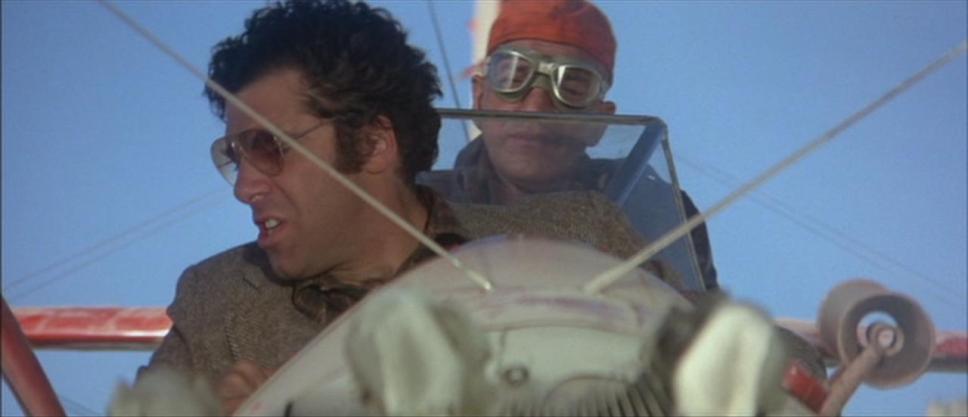
Once the hoax is accomplished, the crew make their escape, hijacking a jet used to carry the would-be assassins to the desert facility and ditching it when it runs out of fuel—there wasn't enough for a return trip (just how well funded is this conspiracy?)—the astronauts split up to make it more difficult to find ALL of them. They are pursued by your standard conspiracy theory "black helicopters" that are not so smart to separate but pair up in their search. In fact, the black helicopters are rather comically imagined and shot. Looking like bugs, at one point they face each other as if talking in a forced perspective shot*** that belies the fact they'd be chopping each others' blades off if they were really facing each other.
Meanwhile, NASA announces that the astronauts were killed during re-entry. While the nation mourns, one of the cap-techs (named Elliott and played by Robert Walden) tips off an intrepid reporter Robert Caulfield (Elliott Gould) that the television signal for the broadcasts beats the telemetry signals from the space-craft. 
Of course, it would. But what did they do with the spacecraft? Did they shoot it into a course for Mars—in which case it would take 21 minutes to reach Earth and that's a lot of difference—or is it in Earth orbits—in which case tracking stations around the globe would be receiving it at a rate once every 90 minutes (the time it takes to orbit) rather than the regular speed of the Earth turning into the signal (See how this gets less and less likely?).
Anyway, Caulfield starts to follow leads and signals and enlists the aid of an eccentric crop-dusting pilot names Albain (Telly Savalas—okay, mock if you want, but Gould and Savalas are the most entertaining thing about this picture) to help find the desert studio and find the astronauts who might've survived—spoiler alert: they have better luck than two "black helicopters").
The unlikely team of Gould and Savalas really are the best thing about the movie. The worst performance is a real surprise—Sam Waterston gives a horribly overly-emotive performance in times of crisis, and I'll put that down to his playing the Command Module pilot because they never get the attention that the other two in the crew get.
The movie is absolute hokum, but it's visuals were tantalizing enough to inspire all sorts of conspiracy theories, to give pictures to the specious theories that were circling like vultures—and shots from the film were used in some garage videos as a basis for likelihood. In this case, those images were more powerful than any logic, as nothing is mentioned in the film about where the actual rocket has gone and no one in the film questions the limited field of view of the faked Mars signals (something you couldn't say about the vistas of the moon missions—even Apollo 11 did a 360° sweep of the landing area with the television camera) or even why the camera couldn't be moved to show the back of the spacecraft (thus showing the stage). Details. For the movie-goer, that's not brought up. Out of sight, out of mind. Plus, if a reporter can figure out a deception is going on—while it's going on—it's not much of a deception. In a post-Watergate world, it was easier to believe a case of malfeasance from the government than it would be to believe that it's easier to actually make the trip than to fake it.
Capricorn One is a mediocre film, but its imagery is compelling enough to charge the imagination...and fool the gullible. In fact, it's just like a conspiracy theory—all surface and no depth and enough holes to fly a Saturn 5 through.

Still, in a 1999 Gallup poll, 6% of Americans believe the Moon landing was faked (Post 9/11, a Pew research poll said that the number had "skyrocketed"...to 7%). 25% of British citizens believe it was a hoax (8 of the 1009 interviewed think Louis Armstrong was the first man to walk on the Moon).

https://news.gallup.com/poll/3712/Landing-Man-Moon-Publics-View.aspx
https://www.scientificamerican.com/article/moon-landing-faked-why-people-believe-conspiracy-theories/
The posters for Capricorn One played up the conspiracy angle.


* At one point Kelloway grouses that Apollo 17 started getting complaints that the coverage was pre-empting re-runs of "I Love Lucy." As I remember it, it started with Apollo 12. If we had the same adventurous spirit at the time of Columbus, we'd be speaking Spanish!

** And this is is rich—during the televised Mars-walk, when they have to simulate Mars' lesser gravity, a director snaps his fingers and says "Slo-Mo" and the picture slows down—and if such a thing WERE possible, they'd still have to find some way to make up the time differential the longer "slo-mo" images would take when things go back to normal speed.

***

Tuesday, May 8, 2018

Julia (1977)

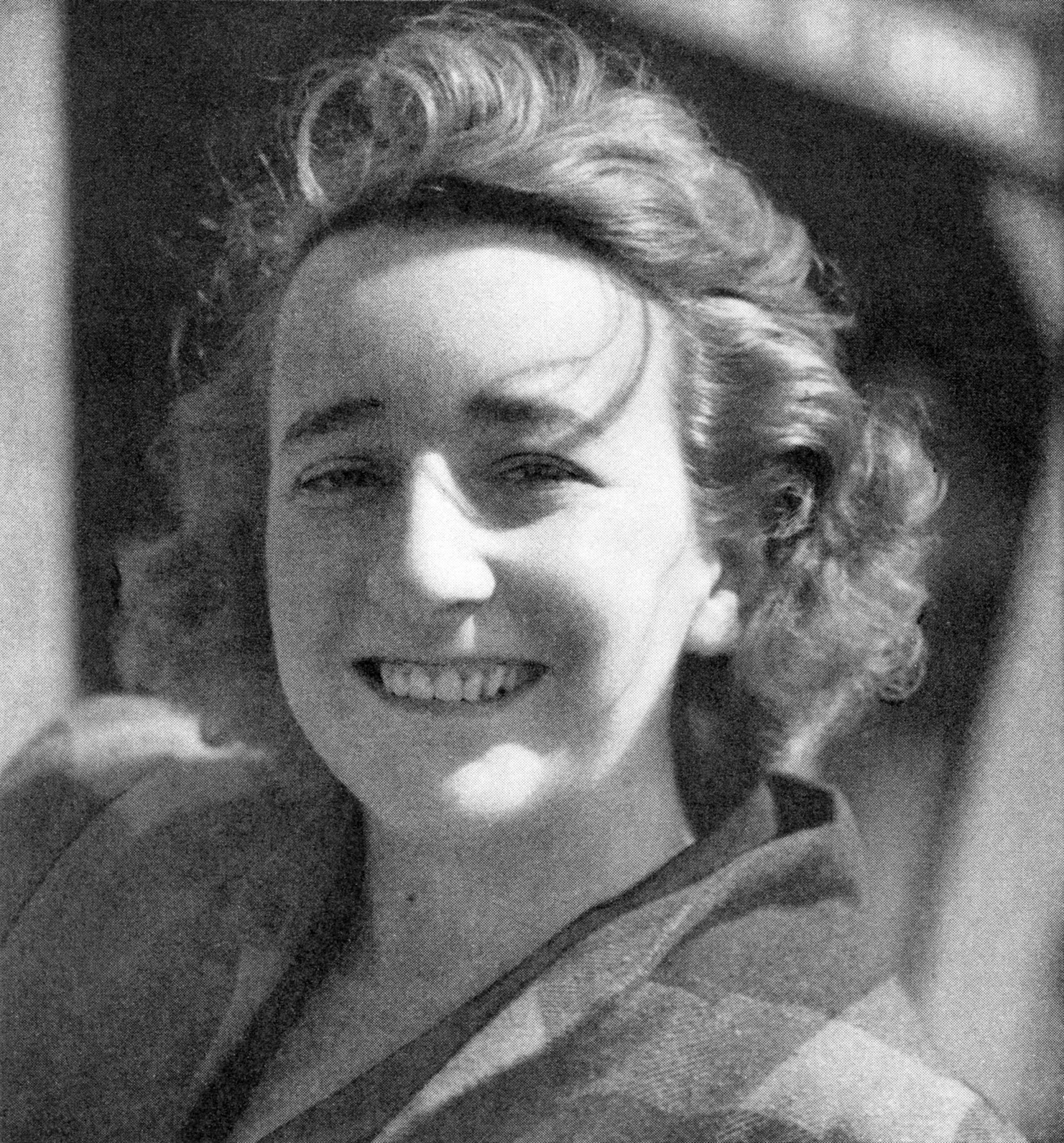
Julia (Fred Zinnemann, 1977) I won't get into the actual veracity of the story behind Julia (other than this article isn't tagged with "Based on a True Story" (not that any movie that claims that distinction is probably being very truthful). But, the movie (and Hellman in her book, "Pentimento") hedges its bets by opening with an atmospheric shot of Lillian Hellman (and, according to entertainment myth, it actually IS Lillian Hellman in that boat) and Jane Fonda's voice-over narration:

“Old paint on a canvas, as it ages, sometimes becomes transparent. When that happens it is possible, in some pictures, to see the original lines: a tree will show through a woman's dress, a child makes way for a dog, a large boat is no longer on an open sea. That is called pentimento because the painter "repented," changed his mind. I'm old now and I want to remember what was there for me once and what is there for me now." 

Cut to memory of days gone by: Lillian Hellman (Jane Fonda) is writing...or trying to, anyway. It's a struggle.  She chain-smokes, stabs at the typewriter in frustration, and, even goes so far as to throw the damned contraption out the window. All of this is not lost on her lover, Dashiell Hammett (Jason Robards), himself a writer (currently living on royalties) who goes about his day keeping up their New York coast beach-house and observing the recalcitrant chaos which is "Lilly" composing. "You know you don't have to do this," he rather sarcastically counsels. "It's not like you've written anything before. No one'll miss you. It's a perfect time to change jobs." 
He suggests that if she's blocked, she should do something else, another job, a vacation, go to Paris, see her friend Julia. "Just don't go crying about it!" he scolds. "If you're gonna cry about it, go stand on a rock!" But, she doesn't leave, just retreats to her memory. Her childhood friend Julia (Lisa Pelikan as a child, Vanessa Redgrave grown up)she remembers with absolute clarity, how she was a restless spirit, raised by her entitled grandparents (who tell her when she sees some injustice "don't look at it") and finally escapes when she is accepted at Oxford to study medicine and does graduate studies at the University of Vienna. She decides to go to Paris, re-purposes herself to write her play...and to see Julia. After many missed phone-calls, she gets a mysterious phone-call that Julia is in hospital, injured from an attack from fascist demonstrators on campus.
Once in Vienna, she find her friend badly beaten, unable to talk, and she is told that she has a reservation for her stay at the Hotel Imperial, provided by an "Herr von Fritsch" who is not staying at the hotel and cannot be reached. Julia disappears from the hospital and her records expunged, leaving Lilly confused, searching, frustrated, and unable to finish her play. She returns home and resumes writing.
But, the memory of the events in Vienna haunts her. She finishes her play, but finds Hammett in the morning, reading it, and more than critical. "You want to be a serious writer," he says. "I don't know what happened, but you better tear that up." A long torturous second draft produces "The Children's Hour," high praise from "Dash" and interest from Broadway, where she becomes the toast of the town. But, there is no word from Julia, although Lilly writes her regularly.
On a goodwill trip to Russia (along with Hal Holbrook's Alan Campbell and Rosemary Murphy's Dorothy Parker), Hellman is contacted in Vienna by a "Mr. Johann" (Maximillian Schell), who carries a message and a request from Julia—come see her in Berlin on the way to Moscow, in that way, with her help, anti-Nazi organizations can smuggle in $50,000 of Julia's money to bribe the release of some fellow dissidents. The mission is, of course, not a little dangerous; she will be detouring, travelling to Nazi Germany and Lillian Hellman is Jewish. Although she is warned that, as in childhood, she is "afraid of being afraid," she is cautioned by Julia's message not to be a hero, if she thinks she cannot do it.
Of course, she does it, although it attracts the curiosity of Campbell and Parker, and Hellman boards a train for a tense journey to Berlin, where, unbeknownst to her, she is being kept under watch by the Nazi's and under wing by the sympathizers, who anonymously supervise her every nervous move for a rendezvous she can't begin to imagine.  
The film won the BAFTA that year for Best Picture. It also won three Academy Awards: Vanessa Redgrave's supporting performance as Julia (frankly, every time Redgrave acts she should win an Oscar); Jason Robards won for Best Supporting Actor for his wry romanticized portrayal of Hammett (Schell was nominated as well) and Alvin Sargent's spare, episodic screenplay that, although it never stays in one place for very long, is nonetheless amazingly rich in detail. I also think this is probably Jane Fonda's most relaxed, most versatile and least mannered performance of her entire career—she was nominated for a Best Actress Oscar, but lost to Diane Keaton's Annie Hall. Her portrayal is "scrappy" (as described in the screenplay) but also vulnerable, tremulous, but never weak, and Fonda takes major advantages of those moments for subtle drama and opportunities for comedy.
Fred Zinnemann was 70 when he made Julia and was approaching his fourth decade making movies (this would be his second to last film). His direction is meticulous, but like much of the director's work over the years, not so much as to be stodgy—he frequently punctuates the steadiness of the compositions with ones that are "catch-as-catch-can" to bring life to the story-telling. He is aided by editor Walter Murch—doing his first editing work outside the USC Mafia film-making tent—who is positively brutal in his cutting, but creates a dramatic tension through it that might not be there if he weren't so fastidious. George Delerue's score is uncharacteristically unromantic, relying more of the tension he employed in his work for The Day of the Dolphin. If there is any weakness to the film, it's in Douglas Slocombe's too-veiled photography, which looks like a bad imitation of Geoffrey Unsworth's fine-grained work. It may be a film of memory, but, if so, it's awfully fuzzy.
The film has been criticized for its emphasis less on Julia, but on Hellman's story, which seems odd. It is Hellman's story, and if hers is less dynamic, more flighty, and a bit specious in her pursuit of fame and fortune (and acceptance), then so be it. That's what her story was. "Julia" (if she existed) was out of sight, a creature of moments and not continuity, and ultimately, a mystery as unknowable as one of Hammett's femme fatale's. And she was a reflection of what Hellman wanted to be—worldly, passionate, committed, and independently wealthy. In some form, Julia existed, if only in a case of need.
I can't tell you how many times I've seen Julia, but I saw it a lot. It was the favorite film of a gal I was going out with at the time, and it was the "go-to" movie on date night. But, personal history aside, the film still resonates for its unresolved story, the questions, the regrets, the "what-could-have-been's" at its end and the sense of unreality that the world was drenched in during the 40's before, in our fear, paranoia, and triumphalism, we produced our "Scoundrel Time" in the 1950's. It's a deftly handled film of flawed individuals trying to do the right thing and falling short.


Lilly and Dash (left)
Lillian Hellman in 1939 (right)


Julia was also the film debut of an actress with the unlikely name of Meryl Streep
(wonder whatever happened to her?)

Wednesday, March 14, 2018

Water for Elephants

Written at the time of the film's release...

"To Talent and Illusion..."
or
"Jacob Jankowski, The Only"

Really, there's nothing too special about Water for Elephants, other than it's a well-told tale that doesn't treat its audience like they're idiots, showing you things that happen, rather than showing you and having some helpful person with a grasp of the obvious tell you what you're seeing. This is nice. And before the film goes South in its last third, it's a cut above your standard romance story. Told in flashback (the framing sequence features Hal Holbrook  and Paul Schneider and I could've used a lot more of them), it's mostly a period piece set in 1931 during the days of Prohibition of a young veterinary student, Jacob Jankowski (Robert Pattinson), who must drop out due to circumstances of Fate.  Without inheritance and no foreseeable future, he hitches a ride on a passing train and barely escapes being tossed off it.
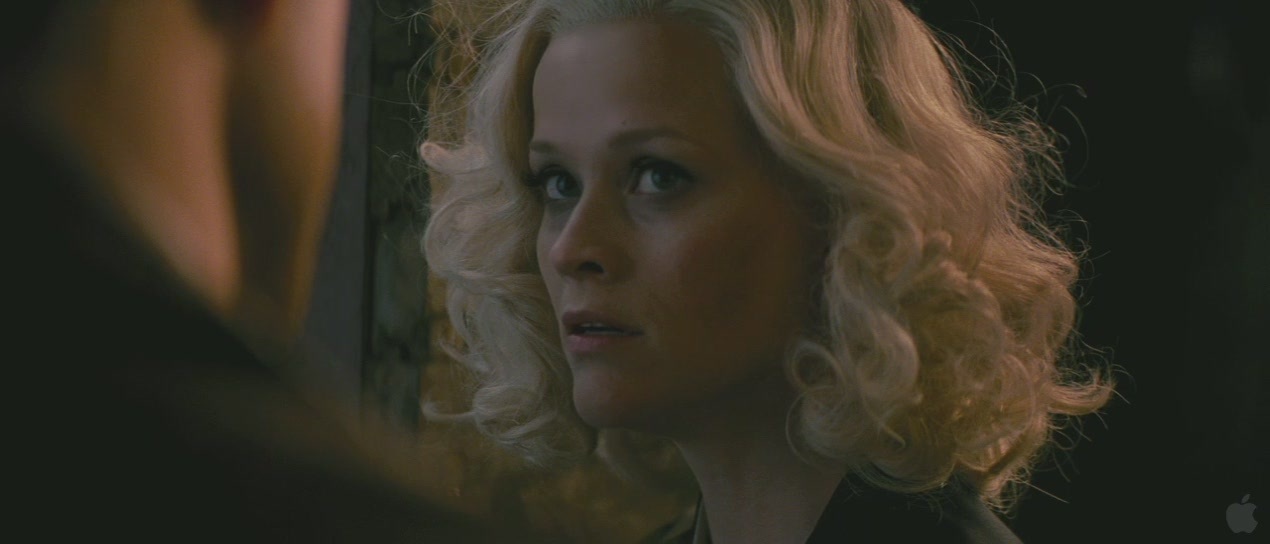
In the morning, in a lovely shot that moves out of the freight car he's been sleeping in, he discovers he's hitched his way into the circusthe Berzini Brothers circus, specifically, a down-on-its-luck travelling menagerie of animals and people just one rung up from them trying to eke out an existence during the dark days of the Depression. He finds temporary work mucking out the cages but it isn't too long before his veterinary skills make him indispensable to the inscrutable owner August (Christoph Waltz, finally finding a project worthy of his talents) and his main attraction, a stunt equestrienne named Marlene (Reese Witherspoon, all platinum blonded and permed, almost resembling Madeline Kahn).
It doesn't take a genius to know where this is going, but director Francis Lawrence (I Am Legendthe best parts of his movies seem to involve animals) manages to make it interesting before the romantic sub-plot kicks in. Until then, Water for Elephants is quite interesting in its portrayal of carny life amidst the human mis-fits. Things become very interesting when August, picking among the scraps of a dead circus—one of the many that are going broke during the hard economic times—finds his new star attraction, onto whose hide he pins all of the circus' economic hopes—a bull pachyderm named Rosie. Dismissed by its previous owner as being none-too-bright, it is Jankowski's job to take care of and train the elephant to become the star of the show, aided and abetted by Marlene. Where August is content to just beat the animal into compliance, Jankowski develops a bond with the beast, throwing him at odds with the ring-master and closer to the woman.
I remember working at a radio station in a small town when a circus set up stakes in the same parking lot of the local Montgomery Wards' the station perched on. Walking out the studios' back door led you straight to the holding area for the elephants and I would spend my lunch hours, watching them rock back and forth, their only restraint being a coil of rope around their foot and the memory of the chain that used to be there. I could never tell whether that huge elephant was content, bored or crazy, but I knew that it was huge, that it could have taken me out, and maybe the station and maybe the Monkey Ward's, given the time, inclination and a substantial telephone pole. But for now, it was content to watch me watching it, and swaying, forever swaying—something to do before the food arrived. Was it the elephant version of rocking in the corner, or was it dancing?
I thought about that elephant a lot during Water for Elephants and what was in its mind as I sat watching it while it watched me.  I wondered where it is now and if it remembered the kid that sat contemplating it on those hot Summer days.  Probably not.  But, I remembered it, as well as a couple of the actors appearing in this movie that I'd worked with and admired (Good work on their parts, and I noted how they'd made something more of their small parts that didn't require the breadth of their talents—nice stuff, Scott and John).  Everybody's good in it and I was amused that more attention seemed to be paid lighting Pattinson than Witherspoonthat might please his fan-base.
But, as I said...nothing too special, although there is solid work throughout, and not too unlike a circus—a pleasant diversion that manages to take you away from the real destruction going on in the real world.