Showing posts with label Tim Burton. Show all posts

Friday, October 11, 2024

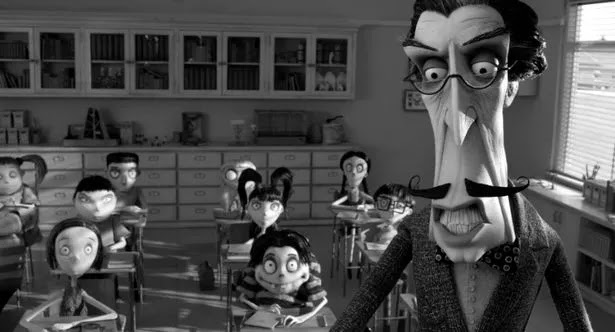
Frankenweenie (2012)

In this recycled review, I spend a lot of time complaining about Tim Burton recycling material...("...the nerve!")

Speaking of nerves and things, this was written at the time of the film's exhumation....

Recycled Material From the Grave
or
"I Can Fix This..."

Really, it's a little soon for Tim Burton to be re-making one of his own films—albeit his first live-action short for Disney. One worries that maybe he's run out of ideas, or that he's simply doing what he's always done—take a property and combine it with that goofy blend of the kinky and ghoulish that he has made his own...it's just that this time the property is his...and he's already made it his own once. Maybe, he looked at this product of his younger self with limited resources and thought "I can do better. I can do more." Or along the lines of young Victor Frankenstein, he looked at it his earlier creation and vowed "I can fix this."
At the time of the live-action short, Disney looked at the product of their young animator...and promptly dumped it...only acknowledging it when Burton became an A-list director (with some studio hesitancy) with the first "Batman" film.
* Now, Disney is crowing about its brand new Burton movie, and one can only imagine the wry smile that must produce for the director. It was natural for Disney to want an expansion—they owned the property—and although this new version of Frankenweenie has a lot of (dare I say) re-animation of material, it did give Burton a chance to give it a little more depth and play around without the inhibitions of live action.
I say inhibitions rather than limitations because the differences are exhibited in a weird and rather contrary way, given that the film is done with puppet figures: emotion. The character of
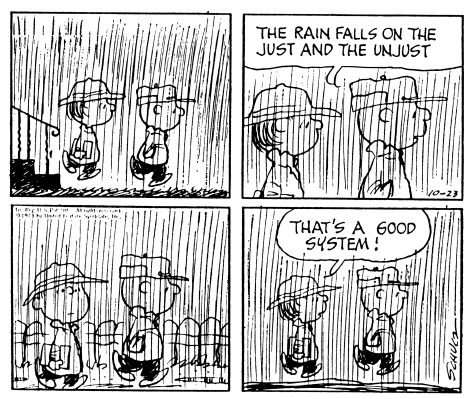
Sparky exhibits a far greater depth of moods than a trained pit-bull terrier could exhibit in live action, not only in its darker moments, but especially in moments of joy—the animation of the dog running elicits fond feelings immediately, as the puppet is rarely touching the ground in motion, not unlike Charles Schulz's "Peanuts" kids who hover over the ground in transit. And although the human figures are Burton cyphers (resembling the human character designs of his first film Vincent) they are still soulful, their eyes expressing more emotions than their faces will betray.
Given that the subject matter is about a mad scientist of a little boy who runs the parallel path of his literary namesake to re-animate his beloved dog, killed in a traffic mishap, there's a lot of room for high emotion there, and far more than in the motivations of the original story.

But, Burton takes it further and makes it more than about young Victor. Taking pages from The Nightmare Before Christmas and Batman Returns, he stages the denouement at a city festival that brings all parties together in one spot, the communal experience gone awry.
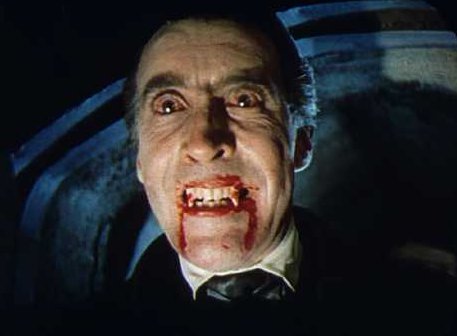
Seems that Victor's work has attracted a lot of attention among his classmates, and as there's a science fair going on, all the kid's are doing the same thing—literally, the same thing, bringing to life their dead pets with very mixed results, and providing Burton a chance to explore other species of monster movies (and recreating scenes from them) than just the one, paying tribute to each, just as he does by including a scene from friend Christopher Lee's turn as "Dracula."
Like Victor's experiment, this is a labor of love as Burton—just as with the earlier short—resurrects the movies he loved as a kid, long-buried memories that never really leave, and have influenced Burton throughout his career. It's a fun, resonant electrification of his earlier work, with just enough fresh in it to make it worth the effort and bring it back to new life in leeched black-and-white (which Burton always manages to make look sumptuous). Now, if only we could see something wholly new and original from him, that would be some experiment.

The original Frankenweenie


Brad Bird's "Family Dog" (from Steven Spielberg's "Amazing Stories") based on animation designs by Tim Burton

* It did find it's way to Paul Reubens who'd been trying to find a suitable director to collaborate on his long-in-the planning Pee-Wee Herman movie he'd been dreaming about.  Frankenweenie convinced him to contact Burton.


Tuesday, September 10, 2024

Beetlejuice Beetlejuice

Revisiting Old Haunts
or
"I Dont Think That I Can Take It/
'Cause It Took SO LONG to Bake It/
And I'll Never Have That Recipe Agaaaaain"
 
Beetlejuice was an unlikely hit when it debuted away back in 1988. Director Tim Burton was virtually unknown. He'd made two shorts, one called Vincent and the other, his live-action version of Frankenweenie, the second of which convinced Paul Reubens to give him the directing job on Pee-wee's Big Adventure. That one had made money and when Burton became friends with writers Michael McDowell and Larry Wilson after directing their modern re-telling of "The Jar" for the television anthology re-boot "Alfred Hitchcock Presents", they began collaborating on McDowell and Wilson's original screenplay "Beetlejuice". As closely identified as he is with the film, it did not start as an original idea—Burton had already been working on his next film, Batman with writer Sam Hamm, but the project hadn't gotten out of the Warner Brothers' development Hell, when the McDowell-Wilson script found its way to him.
 
Beetlejuice changed everything. Burton's bizarre approach to the material garnered a large audience, and seeing the success that the young director had made of such a strange concept, Warner was more than happy to finance Batman. And Tim Burton became, if not a household name, a guarantor of original concepts and oddly-tilted projects that audiences fancied.
A sequel to Beetlejuice has always been talked about...but Burton has always been busy. For the longest time, it had been going through a series of concepts from many Burton collaborators under such titles as "Beetlejuice Goes to Hell," "Beetlejuice in Love" and..."Beetlejuice Goes Hawaiian" (I think that might have been a joke-title for the press) but Burton always seemed to find something that attracted him more. Now, a whopping 36 years—and several Batmen—later, it's finally manifested itself in theaters.
A bit of personal back-story here: I must confess that the first Beetlejuice movie...at first viewing...I wasn't that crazy about. Brilliantly designed, yes. Ingenious and funny, sure. Keaton, terrific...if used a bit sparingly. All the elements were there, but it just seemed a bit wanting. Some of it might be attributed to Alec Baldwin's performance—this was before he became "Alec Baldwin"—which was a little bland, almost protective of himself as an actor. But, the big thing is I got the impression that the movie wasn't exactly true to its own rules...like if something needed to be resolved, Burton would just come up with something and excuse it as "it'll work" rather than making sense. This was before I started to appreciate Burton as Burton.* With a couple more films, I learned to let Burton be Burton and my reservations blew away like dust that obscures a snow-globe. Oh, he could still do a less than satisfying film, but a fully-engaged Burton film is a joy to behold...and experience.
Which is why I found
Beetlejuice Beetlejuice such a breath of fresh air, albeit with a creepily crypt-like funk. One recalls that when Burton does a sequel—he's only done one, Batman Returns, far different in tone than the first one—he approaches it the same way he does one of his re-makes...as a "re-imagining." Yes, there will be call-backs (and there are plenty in Beetlejuice Beetlejuice), but, for the most part, Burton is vampire-staking new ground, and here he's doing it with such wild abandon that one turns giddy with each new development...however grisly or grotesque.
 
The story has three arcs that will progress and come together at the end.
1) It's 36 years later than the events of the first film and Lydia Deetz (Winona Ryder), the girl who could "see dead people," is the host of a cable-TV show called "Ghost House" where she visits haunted places. She has the experience. She is currently having the experience of seeing flashing visions of Betelgeuse (Michael Keaton)—well, he isn't "flashing" per se, but one wouldn't put it past him—which is making her more neurotic than normal and has her reaching for her anti-anxiety pills, much against the wishes of her producer/boyfriend Rory (Justin Theroux). Lydia is a mess, anyway. Her surrogate ghost-family, the Maitlands have "found a loophole" and moved on. Her husband, Richard (Santiago Cabrera) has disappeared exploring the Amazon, and her daughter, Astrid (Jenna Ortega), in boarding school, hates her, blaming her for driving her father away and because she considers her mother's work with the supernatural "a sham." Lydia's mother Delia (Catherine O'Hara) is now a popular artist with a gallery opening pending, when she learns that husband Charles () has died and she insists that the three generations of women return to their old home in Winter River for a proper memorial.
2) Betelgeuse is now a functionary in Afterlife Management, running a boiler-room of shrunken-head employees and still holding a torch for Lydia, when he is called off the job by "ghost detective" Wolf Jackson (
Willem Dafoe), B-movie action star in his past life, who warns him that his past wife Delores (Monica Bellucci), a soul-sucking witch who murdered him during the Black Plague has somehow managed to reassemble herself—Betelgeuse hacked her into parts after discovering she'd poisoned him (it was the Plague Years, after all)—and is now seeking him out for revenge. Betelgeuse knows he won't out-run her for long and knows his only real salvation is to try to get back into the mortal world.
3) Astrid, on break from her boarding school (which she hates) and with her Mother (whom she hates) and step-grandmother (whom she tolerates) and her Mother's boyfriend (whom she despises), does just enough family-duty to go through with Charles' service, but then lights out on her bicycle where, by accident, she meets Jeremy (Arthur Conti)
, who feels like as much of an outcast as she does. They plan to meet up for Hallowe'en. Jeremy is the first decent boy she's met...but then, she hasn't had much experience with boys. If she wasn't keeping it a secret her mother or grandmother might tell her that boys are only after one thing...
That's a lot of story, and there are a lot of characters, and a lot of detail and the movie sails by with hardly a bump. In the meantime, Burton is having fun mixing things up with stop-motion animation (the sequence is ingenious on so many levels), or by telling the story of Betelgeuse and Delores' relationship in the style of a Mario Bava giallo film, in black and white and with Italian narration, and his parade of recently deceaseds all visually communicate how they died, usually in ways that would make them win Darwin Awards.
One of those awards would surely be deserving of someone who kept rambling on and on talking about how they loved everything about the movie and proceeded to tell you everything they loved about the movie and spoiling it. Those were just a couple of things that made me grin and grimace throughout the movie and there's so much more that should be left unsaid for full appreciation. But, leave it to say that Burton is working on all cylinders and with at least the same amount of joy he did with the first film...nearly four decades ago.
This time, I had no quibbles, from the first sequence to the last, each with their in-jokes and sense of the macabre to their giddy reveling in kitsch—a key component to understanding most of Tim Burton's work—all topped off with another happily galumphing Danny Elfman score. If I could grin any more, the top of my head would have rolled back like a PEZ dispenser. 
 
And laugh?  I thought I'd die.

* I had a REAL problem with Edward Scissorhands when the titular character stabbed his arch-nemesis to death, destroying the innocence of the character. The thing is...that was kind of the point. The "real world" of suburbia finally broke him, and it's why he HAS to go back to The Inventor's castle in self-exile. In practical terms, the death is unresolved—the police should be showing up at the castle-door (maybe with torches and pitch-forks), but—in story-terms, Edward's already punishing himself...in his own prison.
 
Burton tells stories with dream-logic. Real-world issues do not apply.

Wednesday, December 13, 2023

Wonka-vision

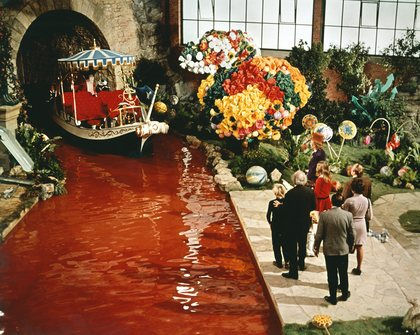
This week, we get a new recycling of Roald Dahl's "Willy Wonka"—this time starring the ubiquitous Timothée Chalamet—but before we dive into that chocolate river, let us wade into the previous films of the subject matter.

 
Come with me/
and you'll be/
in a world of pure imagination"

Well, it's pure imagination on a very limited budget, but what folks remember about this beloved musical film are the script (officially by the book's author Roald Dahl, but amply aided and abetted by 
David Seltzer) and the performances—especially Gene Wilder's risky take on the titular candy-maker who may be a couple rice-krispies off plum. Despite the meager budget (which was financed to promote a line of candy that never materialized) the ideas behind it are more than enough to keep audiences young and old entertained (and featuring mostly great songs from Leslie Bricusse and Anthony Newley including the evergreen "The Candy Man" as well as the most avaricious of all musical "I Want" songs).
In it, the mysterious head of a chocolate factory (Gene Wilder) holds a world-wide lottery—five golden tickets are hidden in the large Wonka chocolate bars. The possessor of said ticket is given an escorted tour of the wondrous (if very secret) factory by Mr. Wonka himself. The winners turn out to be four very entitled brats and one impoverished lad. The factory itself is a wonderland of confectionery delights (even if it does hold some dangers, besides the obvious ones of brain-freezes, weight-gain, and acne) and is worked by a third-world staff of the diminutive Ooompa-Loompa tribe...and the motives of the CEO are very suspect.
It's smart for both kids and adults, with only one draw-back—I tend to held out to the lobby for a smoke whenever the saccharine song "Cheer Up, Charlie" starts to extrude from the screen. Saccharine and chocolate do not mix.
 
A combination of comedy and kid-horror, Willy Wonka and the Chocolate Factory is wonderful...and semi-sweet, but never bitter.
Gene Wilder insisted on this entrance to give Wonka an edge...
"From that time on, no one will know if I'm telling the truth..."
🍨🍫🍬🍭🍨🍫🍬🍭🍨🍫🍬🍭🍨🍫🍬🍭🍨🍫🍬🍭🍨🍫🍬🍭🍨🍫🍬🍭🍨🍫🍬🍭🍨🍫🍬🍭🍨🍫🍬🍭🍨🍫🍬🍭🍨🍫🍬🍭🍨🍫🍬🍭🍨🍫🍬🍭🍨🍫🍬🍭
 
Charlie and the Chocolate Factory (Tim Burton, 2005) This was a bit of a career-rebound for director Burton on a relatively "safe" project, more in tune with his sensibilities than his previous "re-imagining" of Planet of the Apes.  
 
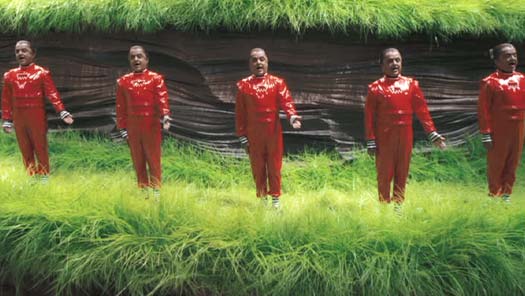
Charlie... is not so much a remake of the earlier Willie Wonka and the Chocolate Factory so much as a deconstruction/reconstruction that actually stays a bit closer to the source material (despite the fact that Roald Dahl is credited with the earlier movie's screenplay, with a huge uncredited assist from David Seltzer). With far more budget than Wonka, and a bit more slightly impure Burton imagination (and without the burden of the more sappy Anthony Newley/Leslie Bricusse songs), this version, bloated though it is, is a bit closer to Dahl's sensibilities. Danny Elfman uses the author's original texts to create crazy Oompah-Loompah songs in different genres (Bollywood, '60's psychedelia) and performed by Deep Roy in a series of special effects extravaganza's. 
The story is basically the same, but there are two weak spots: a burdensome and rather unnecessary Willy Wonka origin story (though it prominently features the always welcome presence of Christopher Lee); and then there's the matter of Johnny Depp's performance as Wonka, which feels random, is more weird than funny, and (frankly) can't hold a candle to Gene Wilder's psychotic version.
One never gets the sense of danger that Wilder's candy-man radiated, but, in its stead is a selfish cluelessness and a chocolate wizard not particularly in control of his creations...or himself.
At least, it's better than what the studio wanted—they thought Wonka should be more warm and parental, a thought that horrified new parents Depp and Burton. "That's crazy!" Burton says "He's the worst person to be a parent!" 
 
He had it right. The big difference between the two movies is the characterizations of Wonka himself: in the Wilder version, Wonka is a master manipulator with an obvious game-plan, whereas Depp's is another Burton man-child-outsider trapped by his own obsessions, who only manages to socialize at the end. Somehow, I don't think that's what Dahl intended.
The Oompa-Loompas, all played by Deep Roy

Wednesday, April 27, 2022

Sweeney Todd: The Demon Barber of Fleet Street

Written at the time of the film's release...

"Tim Burton turns everything into 'Sweeney Todd,' so this should be a natural"
Ken Levine, Nov. 18 2007
 
Truer words were never spoken. Tim Burton DOES turn everything into "Sweeney Todd" so there couldn't be a better pairing of director to subject matter. Burton has supervised two of the darkest animated musicals ever made (The Nightmare Before Christmas, and Corpse Bride) and turned them both into charming, imaginative films without once sugar-coating or denying the nightmarish imagery that unearthed those ideas. His favored composer, Danny Elfman (MIA from this film), is a disciple of Bernard Herrmann, whose work was the inspiration for the music lines of Stephen Sondheim's shock-opera. Burton's "usual suspects," Johnny Depp and Helena Bonham Carter , star and, though the major worry was whether they could carry their tunes, they both do exemplary jobs. Depp, especially, only achieves heights of performance in song, so interior is his Todd. And though Carter may not be quite as brassy so much as tremulous, she does more than hold her own with some of Sondheim's trickier tongue-twisters.
Where Burton's Sweeney Todd excels, though, is the design of the thing--from the Edward Gorey-ish 2-D titles to the Pieta-like coda, the film is a masterpiece of muted design and cinematography with a palette restricted to various shades of gray--the visual equivalent of music in minor chords.
With one exception, of course. The appearance of blood is always startling. Every murder produces a blood so red that it nearly jumps out of the screen. And Burton can't resist taking the Hammer Films one better. When
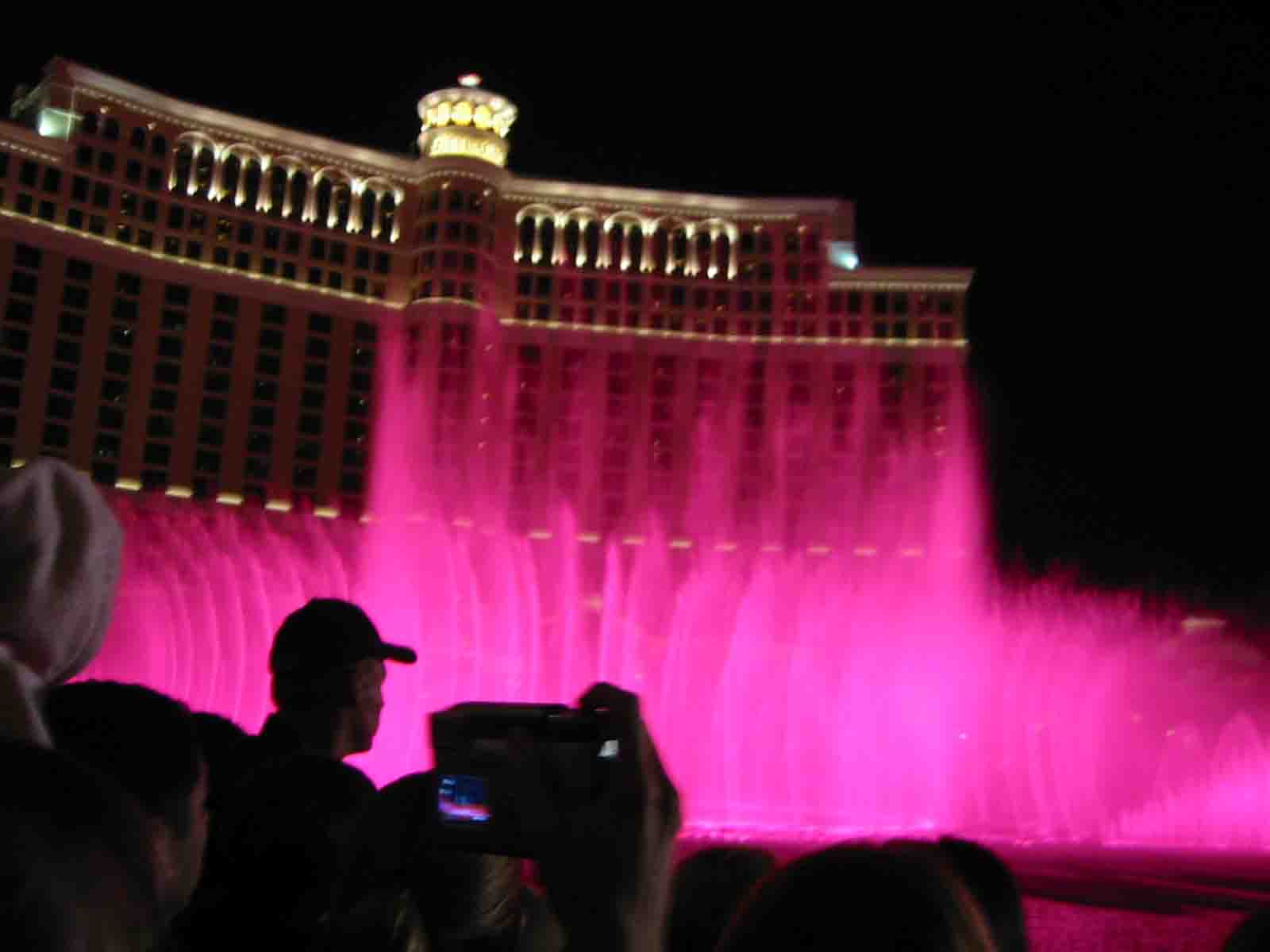
Sweeney Todd takes his razors to give his customers a once-over, there is no fanciful, theatrical whip-saw and it's over. Depp goes in and saws at the neck like he's cutting a thick roast, at which point the special-effects boys take over, producing arterial geysers of blood that spray--once, hitting the camera lens--in patterns that rival the fountains at the Bellagio. 
It's over-done, and in coagulating close-up as well, but given the interior-ness of
Sweeney Todd, it's about the only cathartic action in town. And the bodies really start piling up. I'm sure Sondheim was attracted to the subject matter of a swinish London so mired in nastiness, it more than figuratively begins to feed on its own, and the themes of a transformed man and his insatiable and destructive quest for vengeance was what drove Burton, but the gleefully torrential blood-shedding exposes the adolescent in Burton's tendencies--it's his darkest, grisliest film since Sleepy Hollow--and one wishes to see more of the Burton who could turn out a film like Big Fish. 


Friday, October 23, 2020

Dark Shadows (2012)

Written at the time of the film's bloody resurrection...

Camping Vamps and Risible Damp
or
"What Strange Terrain is This?"


"Dark Shadows" has been a cult favorite for Baby-Boomers for more than 40 years (ouch!), long before it was fashionable to have vampires as fodder for young adults. The ABC soap opera ran for several seasons of afternoons replacing the standard plot-lines of cheating spouses and long-lost family secrets with long-buried family relatives—that often didn't stay buried—and a full range of gothic ghoulery that plundered every horror story in the crypt-library, including vampires, werewolves, Frankenstein-ish monsters, time-travel, parallel dimensions and ghost stories. Why, they even robbed from "The Crucible" and "The Turn of the Screw" and got people interested in the I-Ching, for howling out loud. In fact, I kept expecting the fern in their front hallway to turn into Chthulu!
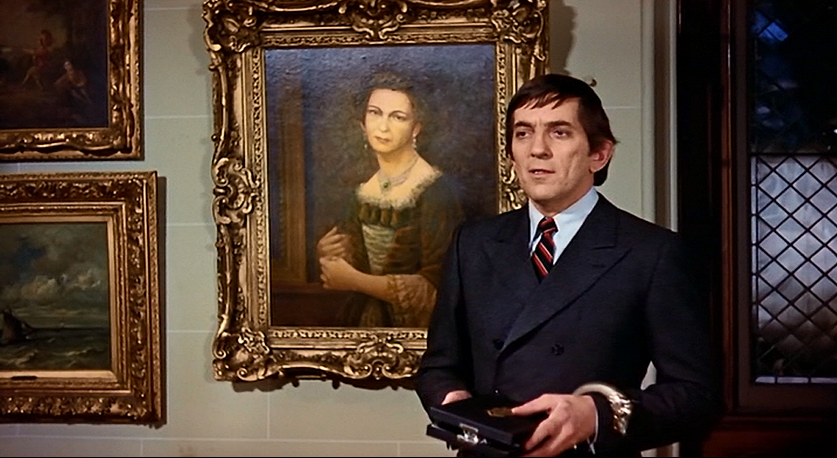
It was a TV habit of mine when I was a kid, timed perfectly to be the after-school tonic for a parochial school education, an occult chaser for the catechism, all those crucifixes I was surrounded by during the day being used for other purposes. It was also a fixation for Tim Burton and Johnny Depp, Burton digging the horror genre and Depp grooving on the character of Barnabas Collins (played by the late—or is he?—Jonathan Frid, who puts in a very brief cameo here along with a couple of other cast-mates), the reluctant vampire who pursued hearts, rather than the blood that pumped through them. The result of their dual obsessions is this version of
Dark Shadows, produced by Depp, directed by Burton.
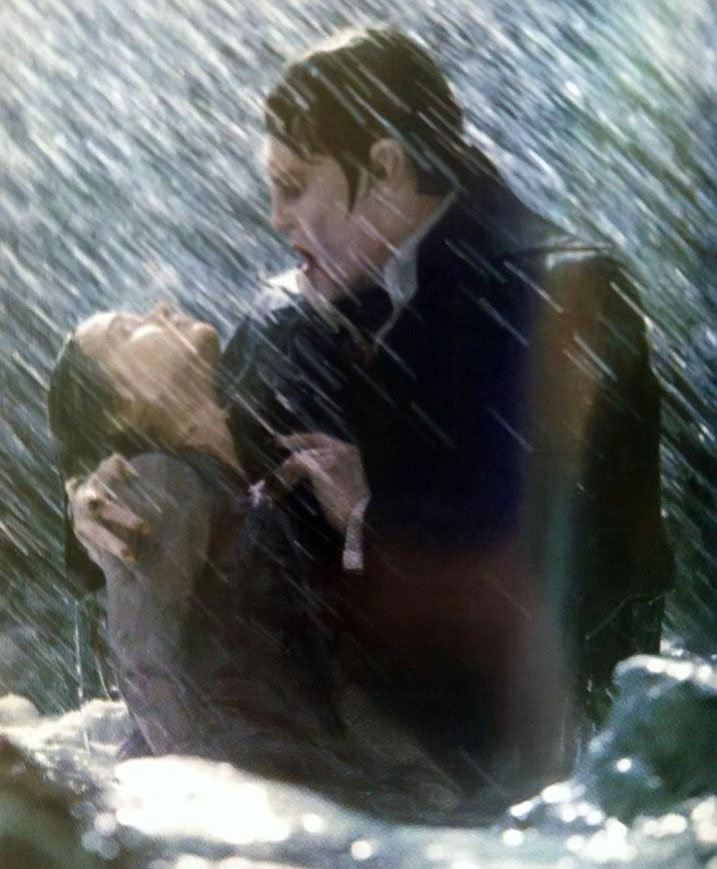
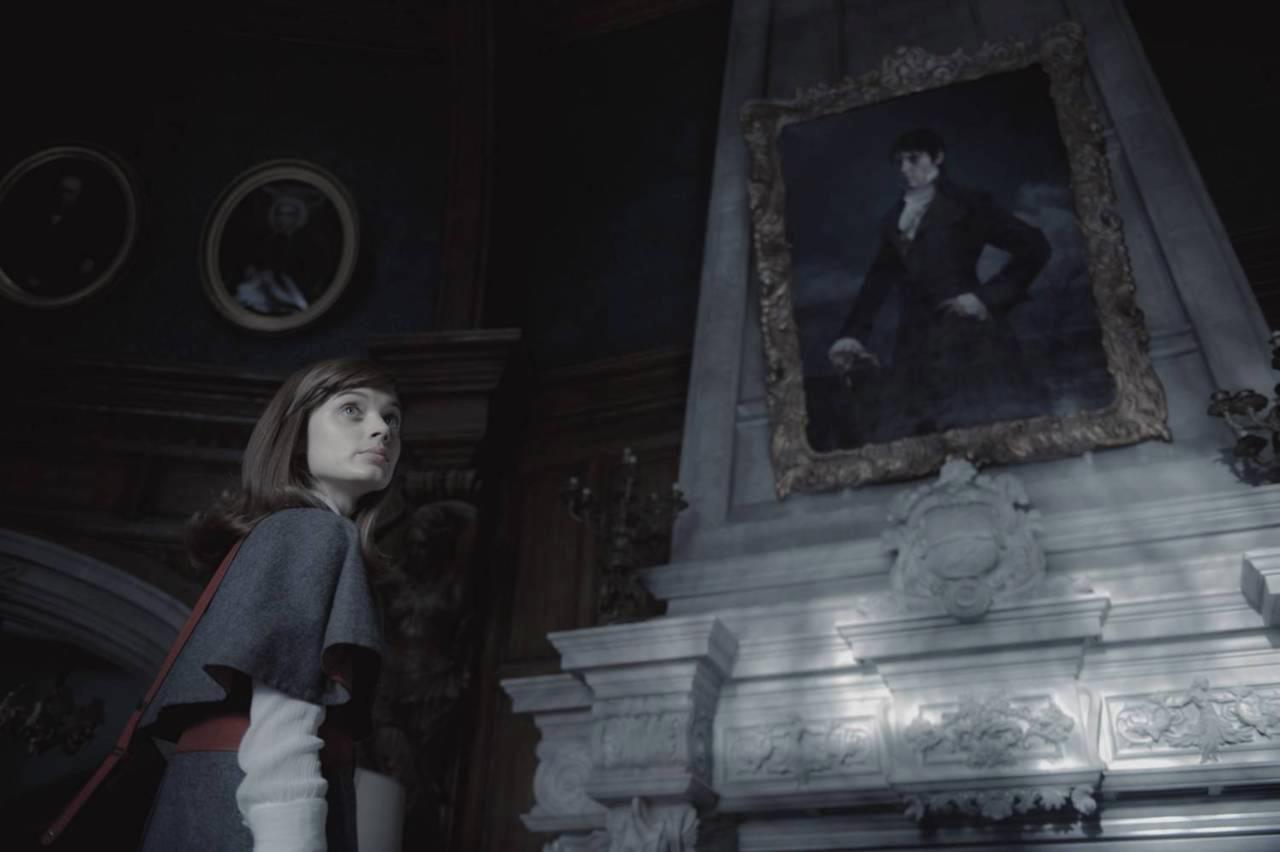
"It is said that blood is thicker than water," narrates Barnabas Collins (Depp), over the strains of Robert Colbert's alto flute-through-echoplex composition "The Secret Room" from the original series. "It binds us, confines us, curses us." For a moment, things are fairly serious as the 18th century story of young Collins scion Barnabas is unearthed, with his spurning of the witch Angelique Bouchard (Eva Green) and her subsequent dark revenge, killing the Collins elders, forcing the suicide of Barnabas' love Josette and turning him into an eternally cursed vampire. She subsequently sets the townsfolk on the monster who chain him into a coffin and bury him for all eternity.

Depp and Burton get it right at the beginning: Barnabas learns his fate.
The worst-laid plans of mages and men...Eternity is cut short around 1972 as the construction of a new McDonald's in Collinswood unearths Barnabas and he lays waste to a construction crew (who must have been getting overtime working at night!) with an explanatory "You have no idea how thirsty I am!" 
On a parallel course, Maggie Evans (Bella Heathcote, the latest in a long line of Burton ingenues with thin necks topped by big heads with huge eyes and "big" hair) is on a train to Collinswood where she has applied for a job as a governess to young David Collins (Gulliver McGrath), who is having psychological issues from the disappearance of his mother at sea. Abruptly, she decides to change her name to Victoria Winters, indicating a past she wants to run away from, as The Moody Blues tune "Knights in White Satin" burbles over the soundtrack. Hey, Burton may be onto something here. The combining of '70's kitsch and some of its more mordant songs with the gothic mood of "Dark Shadows" works well, setting the tone of the series and the morbid fascination my generation had with it. Can "Don't Fear the Reaper" be far behind?
Then, things get a little weird. She's picked up by a VW van of hippies, and there's some stoned comedy about how they're so wasted, and Vicky is cool, man, and it's easy laughs and you wish it was more clever. It becomes apparent quickly that Burton will be playing this for laughs, which is fine (he always does to a certain extent), but the original material is already so melodramatic and over-the-top that the humor undercuts the effectiveness of what drama there is that ekes through the dramatic stares and the vamping poses. "Dark Shadows" was always "camp" entertainment in the broad sense, but to broaden it even further nullifies whatever chills and thrills can be drained from it. This is why Frid's performance on the show was such an anchor for it—he played it absolutely straight, and in fact, ramrod-stiff; you didn't make fun of Barnabas for fear of his wrath—or his breaking down in tears.
Depp's Barnabas is tortured, of course, but risibly so (in a performance that's a combination of Frid's formality, some Max Schreck thrown in, and a bit of Ed Wood cast-mate Martin Landau's incarnation of Bela Lugosi). And there's the "otherness" factor that Depp brings to so many of his roles, as if he's in a different movie from everybody else—he walks through it, and everybody reacts, usually comedically and derisively. In part, that's the point: it ties in with Burton's feelings growing up as being an outsider-geek, looking on at the rest of the world that he found strange, while it found him odd (and there's a mirroring through-line of humor throughout the film of Barnabas, out of his time, observing to some horror the eccentricities of 1970's life, that reflects it).
*
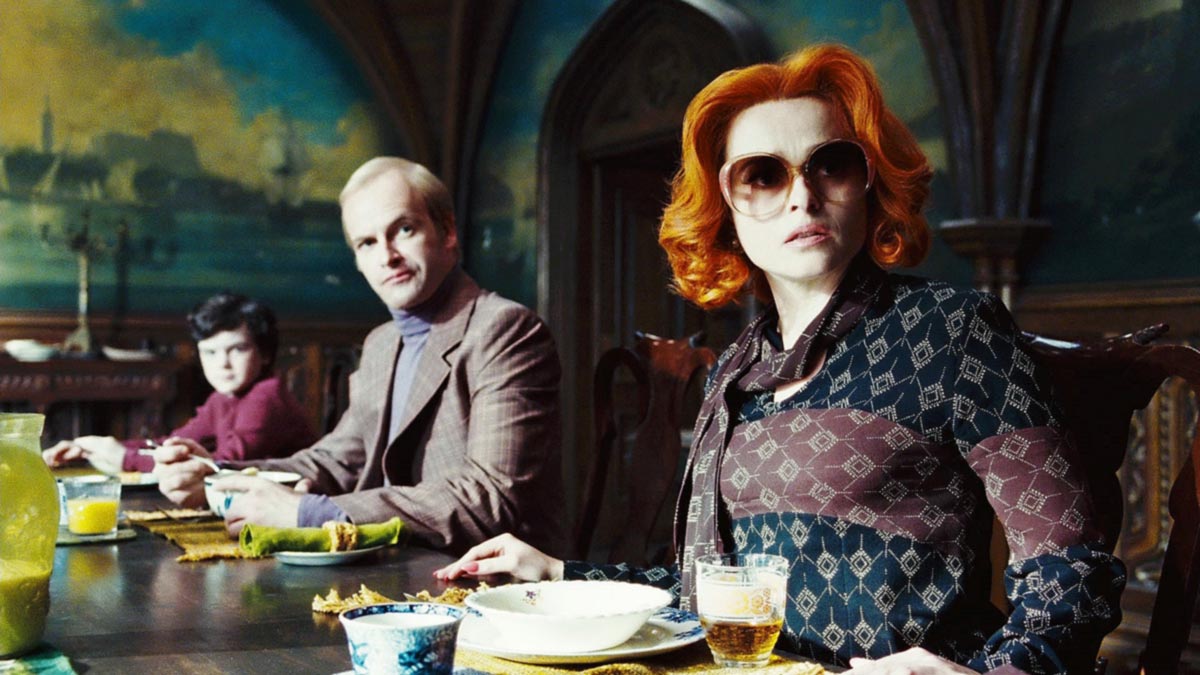
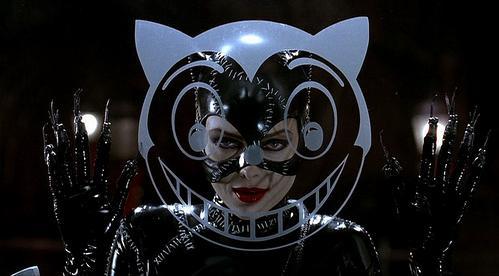
But Collinwood's odd family doesn't bat an eye when Victoria shows up and doesn't react to the disrepair of the gothic Collinwood mansion or to David's assertion that he speaks to his dead mother, and she follows quite readily when the ghost of Josette appears floating down the hallways, whispering "He's coming..." Barnabas' arrival, in Victorian array and the palest of skin, and the oddest of manners only brings up temporary suspicions, but the matriarch of the house (Michelle Pfeiffer, who played Burton's Catwoman) readily accepts him as family, even after revealing his vampirism. The cast is uniformly fine, gamely being archly camp throughout, but the one performer who's best at it is Green, who clearly relishes the villainess role and has fun with it, taking it in some very odd, even poignant places.
It looks great. Burton's films always do, with a superb design sense and his knack for picking terrific, seemingly impossible angles to shoot from. But, like a lot of Burton films, it tends to fall apart in story, snatching hasty explanations and Deus ex machina to get out of trouble, or to provide the director with a bizarre concept that may seem right in retrospective sub-context, but that comes out of nowhere, randomly and jarringly. One has to stop, back-track, only to realize that, no, this has never been mentioned before, and why now?
One suspects it's a whim, a passing "wouldn't-it-be-crazy-if" thought passed between Depp and Burton as they geek out, rocking in their corners, internal logic no longer mattering as much as a superficial entertaining notion. As such, Dark Shadows accomplished their goals. Yeah, it's entertaining, but highly insubstantial, a mere spirit of a movie.

"Yes, yes" I hear you cry. "But, don't you think it was better than the OLD "Dark Shadows"? I mean, have you seen it lately?"

In truth, I have.
My frustration with Burton is not that he desecrated the memory of a classic television show—even with the air fragrant with the nostalgic scent of Mom's Apple Pie, I'm not convinced that "Dark Shadows" was anything more than a quickly put-together variation of soap programming with elements of gothic romance/horror tossed onto it. No, my problem with Burton's version is that he didn't try to make it better, but chose to just mock the absurdity of it. Not much sticking your neck out there, even for a vampire movie. 

But, then, maybe he didn't try because he already saw what happened when somebody did try to do it semi-seriously. That someone being show creator Dan Curtis.

House of Dark Shadows
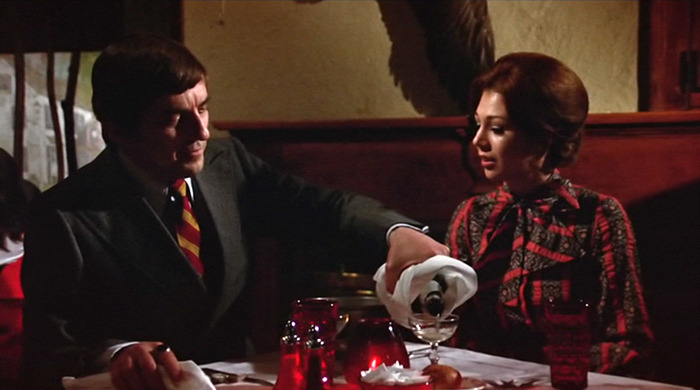
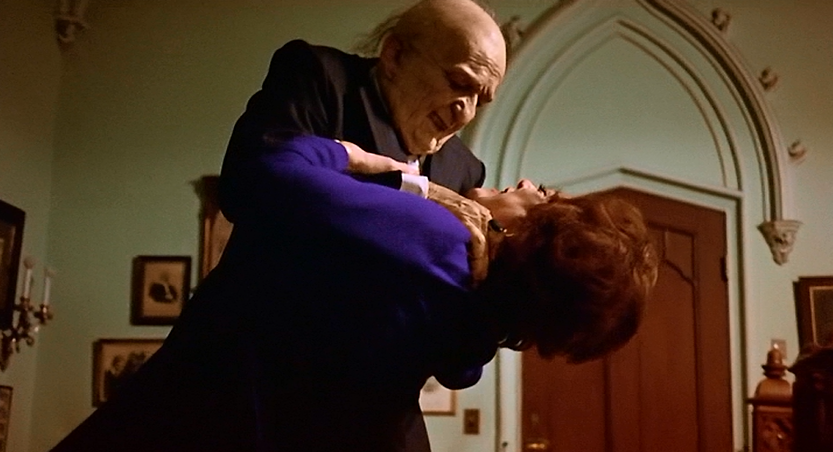
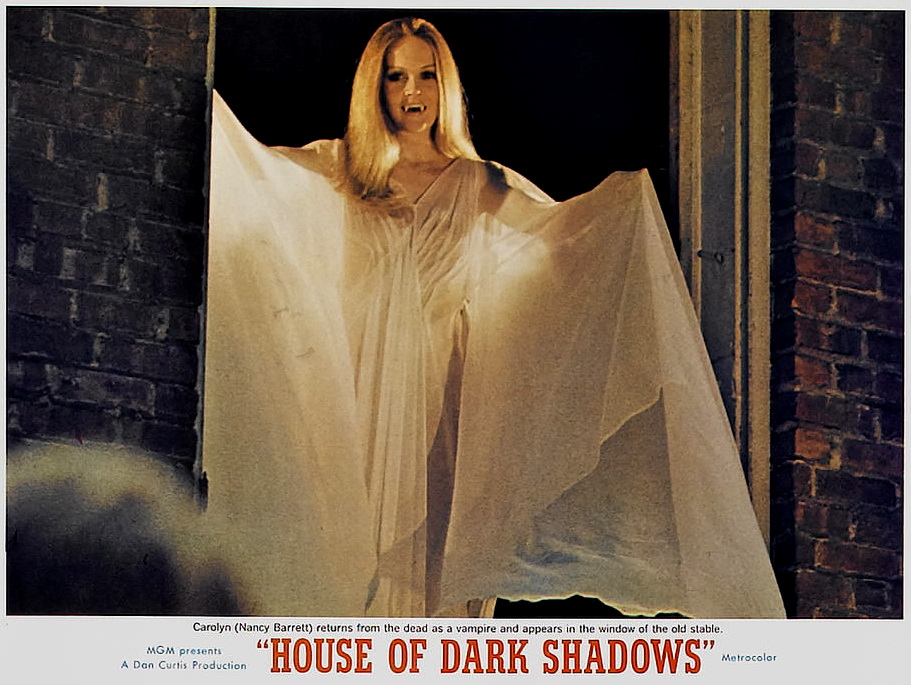
(Dan Curtis, 1970) Filmed while the soap-opera was still running (and so a lot of cast-members "disappeared" for 29 days from the taping). They dragged out the "big-guns" and did a 2 hour version of the "Barnabas Arrives at Collinwood" storyline with Jonathan Frid's character withheld from sight—except for his black onyx ringed hand—until he shows up as the "lost Collins cousin from England." He meets nanny Maggie Evans (Katheryn Leigh Scott), who bears an uncanny resemblance to his lost-love Josette, Dr. Julia Hoffman's (Grayson Hall) attempts at curing him, then, in a fit of jealousy, reneging, turning him into his aged 200 year old self (make-up by the amazing Dick Smith), and a vampire-hunt that ends in a lot of Collins-family vampires. The first is Carolyn Stoddard (Nancy Barrett) who's blond, pretty, and looks good in the Hammer label of diaphanous lingerie, so a lot of screen-time is given to her—poster-acreage, too—even though Barrett was not the most skilled of actresses. The soap languished through repeated exposition and lingering looks in its story-line Monday through Thursdays and put all the "good stuff" on cliffhanger Fridays, and so, compressing it all in one movie makes the movie feel camp and hysterical. Still, once the movie gets going, Curtis starts to be a bit more free with the camera and compositions—it's like half-way through he realized he wasn't dealing with the old studio RCA TK46's anymore and could do something beyond waist-level. Still, in such a quick time-frame, the story doesn't coagulate too well and makes you realize that long-form eased the mis-match of gothic romance and horror.

Night of Dark Shadows
(Dan Curtis 1971) House of Dark Shadows made money, enough to green-light a sequel and, as the television series had been canceled, a newly unencumbered Curtis started on a direct sequel to the earlier film. Jonathan Frid, worried about the curse of type-casting, bowed out of participating. But, the story of Angelique Bouchard, witch and  former lover of young Barnabas, had never been told, so Curtis and series writer Sam Hall cobbled together a story of a young couple (David Selby and Kate Jackson) who inherit the Collinwood estate, only for the man to be haunted, then possessed, by the spirit of his Collins ancestor, who had an affair with his brothers' wife, Angelique (Lara Parker), resulting in her being hung as a witch, and him entombed with her. A somewhat similar story had been used in the series involving Selby as Quentin Collins, but the Angelique angle was new. Returning were John Karlen and Nancy Barrett, as well as Grayson Hall (the writer's wife) and Thayer David.

Anyone who sees Night of Dark Shadows will understandably come away from it wondering what they just saw, and if they'd missed something. They had. The film, was originally 2 hours long, but M-G-M thought that was too long for a movie they'd planned to put as the B-movie in double-bills (No, really, they used to do that), and so they insisted that Curtis cut half-an-hour out of the film—and he had 24 hours to do it. With such hack-work, any slow build-up was excised, and so Night comes off as poorly as a U.S. released foreign film that only includes highlights...and a bit of a muddle. 
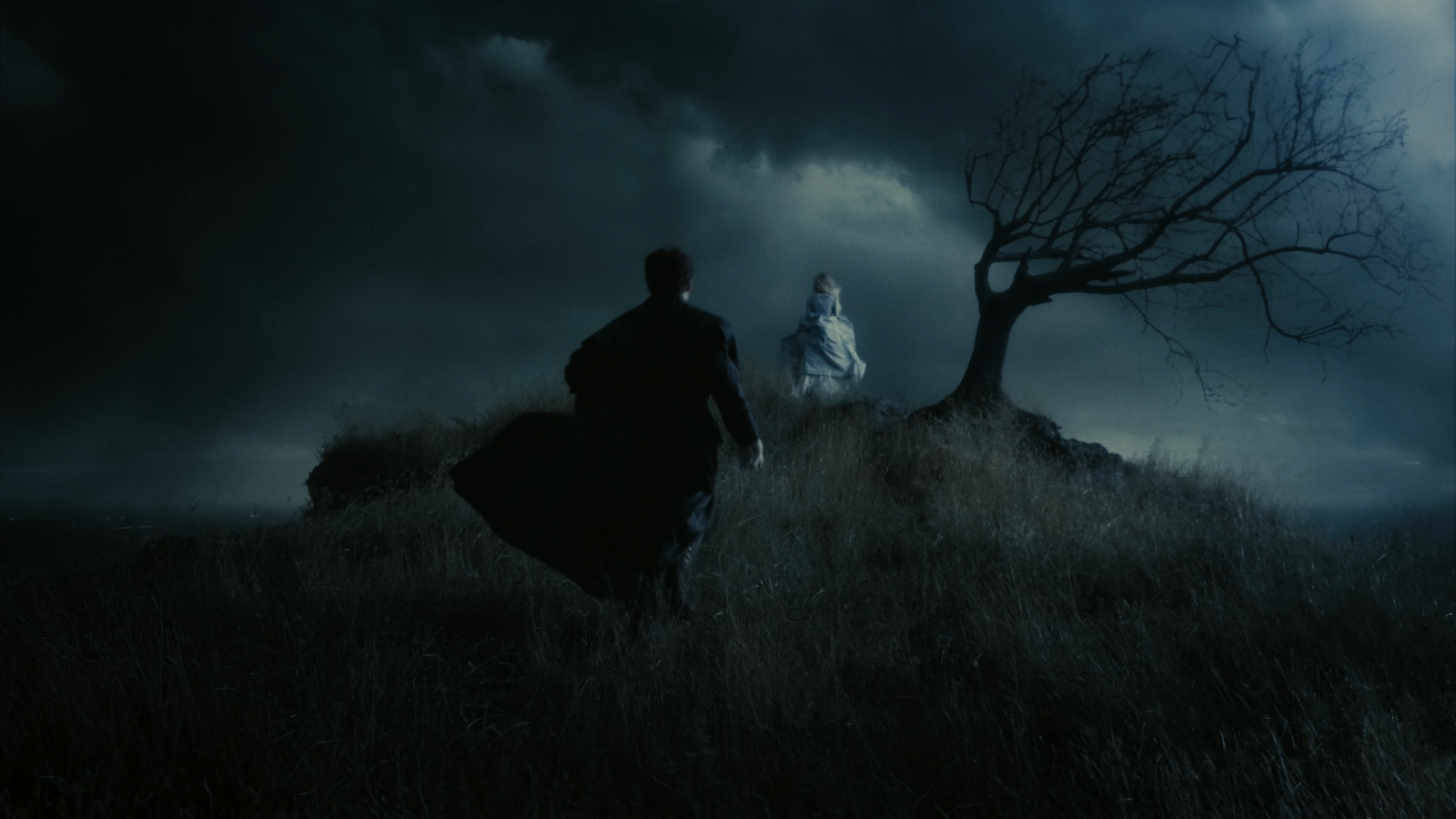
Oh...and studios still do that.

* This also sets up a series of sight-gags that are somewhat clever, as Barnabas never seems to be able to find appropriate sleeping arrangements at Collinwood.