Showing posts with label Taylor Kitsch. Show all posts

Wednesday, November 17, 2021

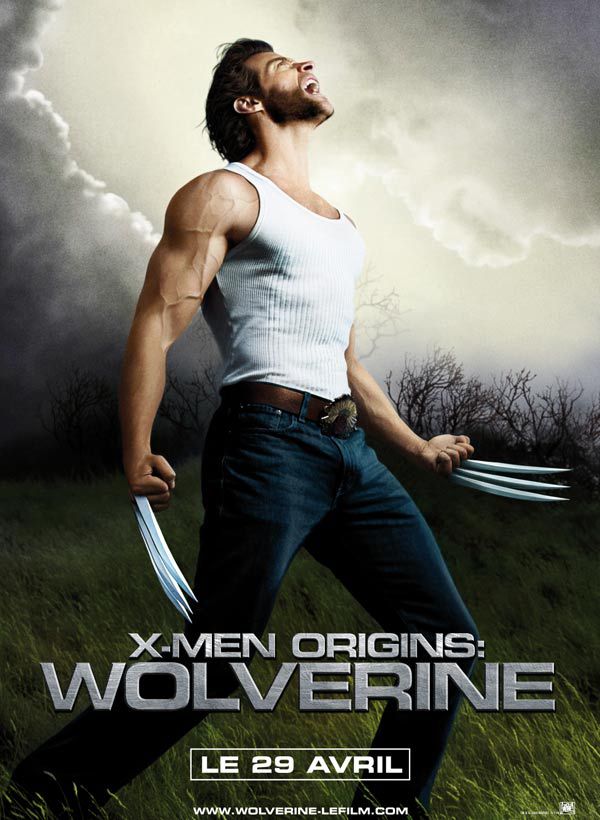
X-Men Origins: Wolverine

Noooooooo! Written at the time of the film's release....

Shmukt!: Claws for Alarm
   
When the X-Men movies lost its chief stylist Bryan Singer to do Superman Returns it was a double disappointment. X-Men III: The Last Stand was the most expensive movie ever made—at the time), and looked terrible. Top-heavy with stars that not only bloated the budget but capsized the script to fulfill their demands, it brought the X-series to a sad ending, x-hausted, x-cessive, and x-cremental (while Superman Returns felt like going to The Church of Kal-El and Klan).
 
Time to re-boot, so here we have, rising as he always does from his own ashes, "Wolverine Begins" with Hugh Jackman reprising his break-out role. It's a smart move. Jackman was "the" star of the "X-men" movies and after the first, they were tailored for him, like his strategically ripped wife-beaters. One is hard-pressed to think of another movie where he is used so effectively (and succeeded at the box-office).
But this is a curious re-boot. At a time when most super-hero movies are dusting off the cliches,
X-Men Origins: Wolverine (the title says it all) coats itself in the dust and the muck and the mire and revels in it. For instance: there is not one, but two scenes where Jim Logan (Jackman) looks up at a conveniently omniscient overhead camera and yells his frustration to the skies and his x-communicating God
.
 
Are you kidding me? Hasn't that shot been decommissioned after all the easy laughs it's garnered on "The Daily Show?"**
It has. But nobody told director
Gavin Hood (Rendition). He seems unconcerned about cliches or recycled material (or "sell-past" dates), as the movie lurches like lead villain Sabretooth (Liev Schreiber, but it was Tyler Mane in the original where they didn't know each other) bounding from one bad idea to the next, linked as they are by that most mainstream of transitions—the one-to-one dissolve. We get a lot of them in the Main Title. After the Bruce-Wayne-Meets-Oedipus childhood trauma opening, Hood shows the brothers Logan fighting in war after war, guns fading into guns and helmets into helmets. It's quite "artily" if unimaginatively done,* but Hood keeps using it until you start looking for the detail he might use in the next transition. Flames? Ocean waves? How about a dusk to dawn transition? That hasn't been done since...well, since I started writing this.
A lot of the problem is that
Marvel—"The House of Ideas," as it likes to trumpet—has culled so much from other stories that the whole Wolverine opus reads like a Reader's Digest Omnibus of Comic Literature. Logan gets recruited to join a Dirty X-Dozen black-ops unit, then declares himself "Wolverine no more" and becomes a lumberjack (and that's okay) until his school-teacher gal-pal is killed, and he swears revenge (cue the overhead camera and the underhanded cliche). 
He then submits to a "Frankenstein" experiment under the control of his former superior Stryker (Danny Huston, prequeling for Brian Cox), that coats his skeleton with indestructible adamantium. He escapes Stryker, and hides out with an old farm couple, the Kent's...er, no, the Hudson's, before being attacked—again—and hooking up with Gambit (Taylor Kitsch) for a full assault on the villain's headquarters, where like Spartacus, he leads a "mutie" revolt, that includes a young Scott Summers (Tim Pocock, looking like Ben Stiller rather than James Marsden). 
Ryan Reynolds' first depiction of Deadpool, an event which he never forgot and has inspired countless jokes about Hugh Jackman, as well as a very popular larky film about the character—...oh, and Deadpool 2.
 
There are lots of Marvel folk appearing (briefly): Bolt, Deadpool, The Blob, Agent Zero, and Kestrel. The inconsistency with their comic-book counter-parts will drive some fan-boys nuts (not to mention Wolverine's brylcreemed pompadour from the first two films is gone, too). This fan-boy had trouble with the fights, all based on other movies: the war action from Saving Private Ryan (by way of Crank), another based on John Woo's hyper-dramatics and aerodynamics, and another, straight out of the "Star Wars" prequels. 
So much recycled material to so little effect. Using the character's own onomatopoeia, it's ten pounds of snikt!TM in a five pound bag.  
"C'mere, Kid. Got a lousy movie to show ya!"

* If you ever want to see it done to death, check out Danny DeVito's direction of Hoffa. 

** A word of explanation from 2021: This refers to "The Daily Show" when Jon Stewart was hosting it...he'd make frequent use of an overhead shot (in moments of duress) and scream to the heavens "Noooooooooooooo!" Often they'd put a reverberating echo on it (That's how it SHOULD be done!)

*** Spoiler Alert: Good place to put spoilers, isn't it? In case you think you're missing something, you're not. There's a cameo by Professor X (Patrick Stewart reprising his role), although why is Scott (Cyclops) the only guy X was reaching out to?—seems he could have contacted all the escaping mutants (because it would have killed the suspense is why), and the by-now standard "Marvel Tag" at the end of the credits is no big deal—Wolverine at a bar: "Drinking to forget?" "No. Drinking to remember." Supposedly, there are three others. If they're all that "good," don't bother collecting them all.


Wednesday, August 9, 2017

John Carter

Forewarned is Four-Armed
or
"Men are for Mars, Women, Curvaceous"

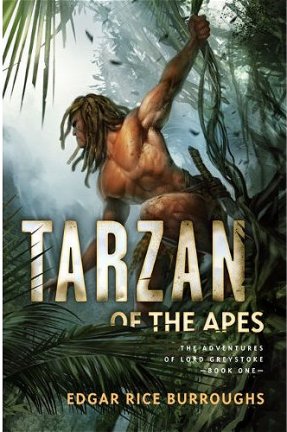
Edgar Rice Burroughs not only created Lord Greystoke (otherwise known as Tarzan of the Apes), but he created another hero who commuted between different worlds (albeit across space-time) that being John Carter, a Civil War vet, who managed to mentally displace himself from Earth of the 19th Century to the planet Barsoom—as the natives called it.

We Earthers, however, call it Mars.
 
The "John Carter" books were solid pulp (after the paper it was printed on), but they were (and are) soaring adventures, with lusty Barsoomian princesses, and warring political and tribal factions—including a race of 15 foot four armed insectoid inhabitants who were frequently at odds with the more humanoid Martians. 
 
These stories inspired all sorts of science fiction writers like Bradbury and Clarke (and scientists including Carl Sagan) and film-makers from Lucas and Spielberg to Cameron and any author whose hero leads a Walter Mitty fantasy existence on another continent, planet or Universe. 
It's the 100th Anniversary of JC's creation, and it's about time that somebody made him take the astral projection from book-paper to celluloid...or pixels—not that there haven't been attempts over the years. The books have rarely been out of print—probably inspired by the lurid covers painted by Frank Frazetta and Boris Vallejo that neatly made Burroughs' vivid descriptions real—and some sort of adaptation has been potentially in the works for the last couple of decades. Now, finally, Disney took a chance with it—although they don't seem to have a clue how to sell it—with director Andrew Stanton, one of Pixar's shining lights (directing both Finding Nemo and WALL·E).
And, hell, if they don't pull it off, making it work and seem fresh (if highly reverberant, as so many others projects in the sci-fi/fantasy field have borrowed liberally from the series for years), while also recalling the straight-faced brio of biblical epics, combined with the cheese-factor of movie serials. It's pulpy, old-fashioned, and definitely of the "white-guy-saves-the-natives" school,* but it has fun with it, playing off the duality of practically everybody in the script, reflecting the "two worlds" concepts inherent in the series.**  And why shouldn't Carter have an exploitable advantage over the Martians? The planet's lesser gravity allows him to bound like a flea across landscapes and from precipitous tower to precipitous tower (although one loses that concept when Carter is shown getting winded climbing up steep hills). 
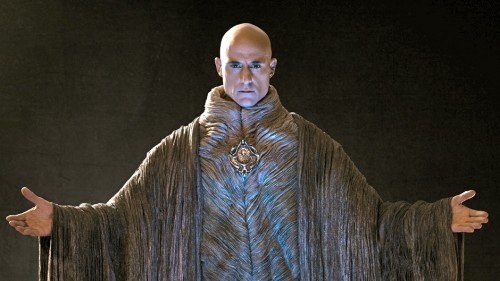
And the Barsoomian concepts of ERB-dom are in full abundance, gathering details from the series—the white apes, the Therns (the duplicitous Gods of Mars), Carter's ways of dealing with passage between worlds (and covering up his disappearances on Earth), the participation of "Ned" Burroughs in the telling of the tales, and the environmental struggles of the dying Mars (although the canals of Mars are mostly gone, Stanton and co-screenwriters Mark Andrews and Michael Chabon, have created a gargantuan crawling city of Zodanga that sprawls across the planet's surface, leaving decimation in its wake.
Yes, it's pulpy. Sure, it's cheesy. But in the same way that any romance story is, (and Burroughs wrote romance novels for men), and this is boy-hokum space romance fantasy, without much logic to it, but enough momentum and emotion to keep so many of the quibbles at bay, and Stanton has shaped it in a fine, breezy style that kicks the story along at a good clip—check out the economy he uses to make note of Carter's indefatigable fighting instinct in the film's second sequence (the first is a rousing, dis-orientingly brusque Martian air battle) in trying to escape forced re-enlistment at the hands of his former Captain Powell (the now ubiquitous Bryan Cranston), then jumping from Western tropes (filmed in Monument Valley, of course) to Bibical epic trappings, to its own weird amalgamation of the two, with a bizarre twist on familiarity. 
Where the movie roars are in the sword fights and hand-to-hand battles that bring to life Frazetta's "berserker" illustrations, that push the envelope of what can be presented in a PG-13 rating.
It's a grand ride, energetically told, imaginatively realized, with a good cast of fine actors, committed to doing it all with a straight face, and selling the fantasy, without any betrayal of the mechanics that had to go into this thing (a tough job to do that has bested others in the last few years). I've read a few reviews by some critics that strike me as rather cranky about the film being derivative (in a reverse engineering way of looking at things), but, frankly, I don't think they saw the right movie. Kill me if I ever get that sophisticated I can't have fun at something done well. To this kid, who grew up reading the Barsoom books, (as Bradbury once wrote) Mars is Heaven.

First edition depiction of John Carter and Dejah Thoris
from the initial hardcover dust-jacket
Frank Frazetta's iconic cover to "The Princess of Mars"
The production design of John Carter owes a little bit to both.

* It was, after all, written in 1912.  What's Avatar's excuse?

** Even the titular Princess of Mars has a nick-name in the film.  Carter calls her "Perfesser."  Carter's Thark name is Dojahr Sojak, but also "Virginia," after a miscommunication in greetings from Tarkus. 

Wednesday, March 5, 2014

Lone Survivor

And I Only Am Escaped Alone to Tell Thee
or
I Died With My Brothers—With a Full F**king Heart


Lone Survivor is "based on a true story"—that of the Navy Seal team involved in Operation Red Wings to capture Taliban leader Ahmad Shah, which ended disastrously for the participants—but it feels more like a testament.

It's directed by Peter Berg, who is at his best in the realm of psuedo-documentary, his roving camera acting as a fly-on-the-wall, catching the telling detail, the private moment, the feeling of a collective, like his 2004 film (and to a certain extent, subsequent TV-series) Friday Night Lights, or The Kingdom. His recent forays into A-list projects (like Hancock and the "film-of-the-board-game" Battleship) have been less successful, despite using his same camera-scheme to give them a lived-in feeling.


Lone Survivor, however, is a return to his strengths. Not burdened with a sprawling story-line or too many characters, Berg has focused his story-telling abilities and stays on the four men on the mission and their commitment to each other and their task. He's helped immeasurably by the four actors playing the small scouting task force: Taylor Kitsch (Gambit from X-Men Origins: Wolverine, the TV version of "Friday Night Lights," the lead in John Carter); Emile Hersch (Into the Wild, Milk, Speed Racer); Ben Foster (3:10 to Yuma, The Messenger, Ain't Them Bodies Saints); and Mark Wahlberg
. Each one of these actors has carried movies—big movies—on their shoulders, and each one treats their roles, supporting or not, as a starring role. Wahlberg (who, as he's moved from actor to actor-producer and gotten astoundingly better as the former in the last few years) is top-lined, but fades into the mix with an understated performance that gives the film a great ensemble balance.
Kitsch as Lt. Murphy, Wahlberg as Luttrell, Foster as Axelson, and Hirsch as Dietz
"Ensemble" is the point. Berg starts Lone Survivor with "found footage" of Navy seal training—brutal, berating, limit-pushing—training that shows the individual what they're capable of, shows the squad what they can expect from each other, building the "trench camaraderie" without the deployment. The seals are pushed to the edge, brought back, and their very existence and presence is testament to their abilities to survive in extreme situations. The fact they're going through it together bonds them, as Wahlberg's opening narration states firmly. The film ends with footage of the real men who were lost—home movies and the like—showing the individuals now that we know them apart from the squad, and it's poignant, stirring, and heart-breaking.

In between is the story of the mission and how an act of conscience in extreme conditions can cost. There's been some fabrication of the story—the Taliban were not in a numbers position to attack the village, as shown—but the facts are basically there. On a reconnaissance mission, four Navy Seals are having difficulty contacting their base. They're found out by passing shepherds whom they tie and discuss what's to be done; it's not a democracy but everybody weighs in—kill the villagers and continue then mission, or let them go and try and contact the base, as the mission has been "compromised." "Rules of engagement" figure heavily in the discussion, but it comes down to rather than kill the villagers, let them go and scrub the mission, and get the hell out of there.

That would be in a perfect world, but it's Afghanistan. Soon the hills are alive with Taliban fighters and the four must engage and get out, while constantly being pushed down the terrain. Berg shoots this close-quartered and fast with the stuttered lens/editing that's been so effective since Saving Private Ryan. And it's here that the sound department kicks in with heightened effects, as well. It never feels like a video-game depiction, but with an overall perspective that lets you know where the four are in relation to each other, and fleeting glimpses of enemy positions. It's harrowing. And then, things go up a notch when the four have to desperately drop off mountain terrain with no forethought to what awaits below...not once, but twice. The imagery and especially the sounds of those sequence are painful—Lone Survivor received one Oscar nomination (for sound) and it is truly deserving of it (but, it was a little disappointing to not see a clip from this film in any of the broadcast's "heroes" montages). The sequences are visceral, painful to watch, and gut-wrenching.


And that's where Berg's strength lies as a director in a film like this—he keeps the work centered on the soldiers—this is not effect for effect's sake, it's part of character, woven throughout the film. By the end you wonder at the dedication and gut-level heroism of the people we, as a nation, throw into battle, and one can't help leaving the film, admiring..and mourning.
Matthew Axelson (far left); Danny Deitz (center left);
Marcus Luttrell (center right); Lt. Michael Murphy (far right)