Showing posts with label Nicholas Meyer. Show all posts

Thursday, September 3, 2020

Time After Time (1979)

Time After Time (Nicholas Meyer, 1979) He really wanted to direct. 

Nicholas Meyer enjoyed a couple of best-selling books—one of them, "The Seven Percent Solution", had been made into a film for which he supplied the screenplay—and dabbled in screen-writing—he wrote the script for "The Night That Panicked America" about Orson Welles' Hallowe'en broadcast of "The War of the Worlds." But, directing...that was a tough job to get even if you were a lauded writer, screen-writer, and proved you could crack the public's consuming zeitgeist. I mean, who d'you think you are...John Huston?

Meyer had been given fifty-five pages of a novel that a friend was writing and wanted Meyer's opinion—seeing potential in it, he optioned the story which featured 19th century author H.G. Wells going into the future via time machine to pursue Jack the Ripper into the 20th Century. Meyer took that nugget of story, wrote a screenplay and sold it to Orion Pictures with the caveat that he was to direct.

Meyer's "time" had come.
H. G. Wells (Malcolm McDowell) is upset about the current times of 1893. He holds a dinner party for some friends (are you getting a sense of deja vu yet?) to show them his recent invention—a time machine, which he intends to use to seek out his vision of "Utopia" by using the device to travel into the future. But, his device isn't so fanciful as the one in his novel; it has a couple of safety features of his own devising to prevent such accidents as might happen when traveling through time...and should one mis-lay their time machine in their travels.

His little dinner party is interrupted, however, by the police who are investigating the Whitechapel murders and its perpetrator, known as "Jack the Ripper." A search is made of Wells' house and two things are discovered: a doctor's bag containing bloody gloves that belong's to Wells' guest, the surgeon John Leslie Stevenson (David Warner); Stevenson has gone missing, and with him Wells' time machine. "Jack" has escaped into the future, and Wells, with no machine, cannot pursue him.*
Ah, but those safety devices that might prevent the time machine from being used by "Morlocks" or something—here's where they come in handy. One of them is a key, or, more specifically, a "non-return key" that, as long as it's in the machine, keeps it in the designated time. Stevenson, not having it, is left in the future as Wells' machine travels back to its original time after a certain period. Pretty handy, that. As is the second device a "vaporizing equalizer," another key, which prevents the traveler from journeying through time without the device.

Wells' time machine returns like a well-fed dog and he ascertains that Stevenson has traveled into the future, specifically November 5th, 1979 and, with keys well in place, he takes the journey in his machine—a safe bet, after all, as it seems to have worked for Stevenson. Wells makes it, finding himself still in his time machine, but which seems to have made its way to 1979 San Francisco (explained because the machine—at the time—is loaned to an S.F. museum for an exhibition on H.G. Wells). Wells starts to become acquainted with 20th century customs like fast fried food, aeroplanes, television, the vagaries of fashion, and "fish-out-of-water" tropes in movies. 
But, he's after Stevenson and his first bit of detective work is to divine where a man of his century would go to exchange money of the 19th century for that of the 20th. There, he meets Bank of London employee Amy Robbins (Mary Steenburgen)—who seems to be getting more of these requests than she's ever seen in her employ. She directs him to where the previous gent asking about the exchange rate for old currency is currently keeping himself.
Wells finds Stevenson and he seems to be adapting quite well to the new age. All Stevenson has to do is turn on his hotel room television and show Wells the carnage going on in the world, telling him "Ninety years ago, I was a freak. Now, I'm an amateur." Wells insists that Stevenson return to their time and face justice, but Stevenson will have none of it, trying to get the "non-return key" from Wells, and, in a struggle that spills out of the hotel and into the streets, Stevenson gets hit by a car. Wells, thinking Stevenson is dead, stops his pursuit.
But, Wells knows nothing of cars or of modern hospitals...or of the implacability of his quarry. Stevenson is quite alive...and up to his old ways. And one of his intended victims is Amy, whom he has rightly deduced led Wells to him. And as Amy and Wells have developed a budding relationship, the stakes become very personal...especially after a short jaunt to prove the viability of his time machine has shown her that (via a future newspaper headline) that she will become one of the Ripper's victims in three days' time.
It seems strange that one could make a charming romance out of a story using one of the most infamous of serial killers, but Meyer's Time After Time manages to do it. That has less to do with the Jack the Ripper plot, but more with the way Meyers makes a romance between McDowell's Wells—who thinks he's ever so sophisticated for a man of his time—and McDowell's Amy—who's decades ahead of his Victorian thinking and is more than casual about it. Meyers has fun with it—he loved taking the Star Trek crew out of their element in Star Trek IV: The Voyage Home—and his dexterity keeping the Wells-Robbins scenes frothy are the parts that will delight someone seeing this film for the first time.
It's Meyer's first film directing, but the film has the flair of a much more accomplished director, partly because Meyer seems to have taken his direction from more classic films—it just seems to have the edge of a Billy Wilder, while also retaining his romantic quality. Part of that might be the atmosphere provided by Miklós Rósza, who provides the sort of sophisticated, ardent film score that he had previously produced for Hitchcock...and Wilder and brings the sense of a by-gone era that fits well bridging both the 19th and 20th centuries.
It's a good, literate little film that provides the thrills and wonder of its earlier inspiration—Wells' novel and the George Pal film made of it—while also bringing something new to the party, this time around.


* "Sure, he could," you say. "All he has to do is build another time machine and go" (In this instance, time does wait...) Yes, I counter, he can build it, but to go where—or more correctly, when? He doesn't know where Stevenson/Jack has gone—into the anonymous past or into the unknowable future. So, Meyer's little safety devices are necessary...or else we'd have no movie at all.

Friday, April 21, 2017

The Seven Percent Solution

The Seven Percent Solution (Herbert Ross, 1976)  The tag-line on the poster says it all: "Confounding!"

I'm a big fan of the character of Sherlock Holmes. But I'm not a purist. As long as you get the traits right, I don't mind—I've enjoyed the turns by Robert Downey Jr and Benedict Cumberbatch (and Hugh Laurie's "House") that have veered away from the typical show of Holmes—deerstalker, Meerschaum, Inverness cape—the trappings which had little to do with the character, but more with past portrayals that stuck, like barnacles, in the public mind. As long as the intellect is there, the piercing observations, the ennui, the dramatic flourishes, the personal demons, then I am happy. I am less so when injecting a romantic element to it. Holmes is not a romantic, but a pragmatist. Love is a symptom to him, a motive, to be observed and not practiced, lest he fall into the same vulnerable state as so many of his clients and their tormentors. It was Holmes' implacable intellect that was an antidote to the salacious effronteries to the morals of the Victorian era, as well as such horrifying concepts as The Giant Rat of Sumatra, "a story for which the world is not yet prepared" (although we might be ready after being ground down by the Trump Administration).

Nicholas Meyer's first novel, a Sherlock Holmes parenthetical pastiche, "The Seven Percent Solution" is a good read. The writer (and eventual director—Time After Time, Star Trek's II and VI, The Day After) has a sharp mind and sense of the dramatic. He researches and connects the dots for good drama. It is his conceit that the whole business of Holmes' obsession with Professor Moriarty, his "death" at the Reichenbach Falls in "The Final Problem," absence and reappearance in "The Empty House" are all fabrications to explain Holmes' three year absence and sabbatical from 1891 to 1894 ("The Great Hiatus") while taking treatment for cocaine addiction from the psychologist Sigmund Freud. It's a very clever thesis—Freud had used cocaine and was a proponent of it in limited quantities for medicinal purposes (especially addiction to morphine), but the addictive issues of the drug led him to disavow it and stop its use completely in 1896. 
It is October 24, 1891 and Dr. John H. Watson (Robert Duvall—let that sink in for a moment.....okay) is called to his old haunts at 221B Baker Street, four months after his marriage to Mary Morston (Sammantha Eggar), which, of course, had led to his moving out of his former residence shared with Sherlock Holmes (Nicol Williamson). The landlady, Mrs. Hudson, warns him that Holmes is behaving strangely and, indeed, Holmes is heard shouting that he may only be disturbed if it is Professor Moriarty. Watson finds Holmes' room locked and Holmes will only allow him in if he can disclose where he keeps his tobacco. 
Entering, Watson is disturbed by the disarray of Holmes' drawing room—more than it usually is—and by Holmes excitable erratic behavior. Watson suspects that Holmes has been using the needle again, and goes off to the Diogenes Club to seek advice from Holmes' smarter (and older) brother Mycroft (Charles Gray) and the two plan a deception to get the detective to Vienna and into the care of a doctor named Sigmund Freud (Alan Arkin, eventually), who has some history of dealing with addiction and hysterics. But what will be the ruse?
The two visit Professor James Moriarty (Laurence Olivier), a mathematician who has had some history with the Holmes family and was, in fact, the Holmes boys' math tutor. Moriarty is aware of the younger Holmes' ravings about him and would like the matter settled without bringing in his solicitor, but he is aghast at the suggestion that he leave London immediately...for Vienna of all places. Sherlock Holmes cannot help himself but pursue, and so, agitated, he and Watson travel to Vienna to confront his "Napoleon of crime."
What he finds, instead, is Sigmund Freud, calm, resolute, who has heard of Holmes (even if Holmes has never heard of him), but Holmes' art of deduction is not dwindled by his weaknesses, and after a long dissertation from the observation of Freud's study, he has what amounts to a complete dossier of Freud's background and character—leading him to suspect that he is not an agent of Moriarty...and so he turns on Watson, calling him "an insufferable cripple," to which Watson promptly cold-cocks him and knocks him out. Elementary.
When Holmes recovers, Freud shames him for turning on his friend, who only has his best interests in mind, and begins Holmes' treatment, which involves hypnosis, "talk therapy," and treatment for withdrawal symptoms, all done in the safety of Freud's home, where Freud's nightmarish struggles with his addiction create delusions and flashbacks of past cases and new horrors. But, once the night-sweats, trembling and visions stop, Holmes is still a depressive, not unlike Freud, and the two doctors use Holmes in the help of another of Freud's patients,  a singer named Lola Devereaux (Vanessa Redgrave), who is found by the Rhine in a seeming attempt to commit suicide over her own cocaine addiction. Her case, though, is much more complicated. Indeed, it may involve a conflict that will engulf the whole of the continent of Europe.
You can't fault the cast, even Robert Duvall makes a fine Watson despite much sniffing about his casting, and Williamson is a superb Holmes—maybe too good, in fact. His Holmes is a lightning intellect and Williamson races through his dialog—he is, after all, playing a cocaine addict—that oftentimes he leaves you in the dust about a fine point in the story that seems to need a bit more weight while he has moved onto other matters. Arkin is marvelous as always, but there is a bit of humorlessness to him that keeps the best of Arkin under wraps. Gray's Mycroft is so good that he reprised the role in Granada TV's definitive series with Jeremy Brett. Olivier and Redgrave, alas, are underused, and a cameo by Joel Grey can only be described as curious.
One wishes it were better. The problem is not in the casting, but in the director. Herbert Ross is a fine choreographer, but as a director, he has always presented a style that is rather flat and nondescript, as if he plunked the camera down and, luckily, the actors got in the way. One expects a certain amount of "stiff-upper-lip" in a Holmes story—it is Victorian England, after all—but The Seven Percent Solution is merely stiff, and belabored. The latter quality never more so than in Ross' attempts at surrealism and psychedelia when portraying Holmes' withdrawals. It's clumsy and not very convincing—like when Sidney Lumet used a distorting lens to show monstrosity in a person (as if the actor's performance wasn't enough). In an effort to convince audiences that the film is set in the past (I presume), it is photographed with a smeary-gauzy look by Oswald Morris (who seems to be trying to emulate Geoffrey Unsworth...but why?) and the production is designed by the legendary Ken Adam (with Peter Lamont) with an air towards over-stuffing every frame with detail—some camera framing suggests that Ross was more interested in the decor than the actors. John Addison's score is unmemorable, and ironic as, once again as he did with Hitchcock's Torn Curtain, he took the place of—one can hardly say he "replaced"—Bernard Herrmann, who was in line to score it before he died—but it does boast one song by Stephen Sondheim, that has since gone under the title of "I Never Do Anything Twice."
It feels like a lost opportunity: some good pieces here, some bad there, but it never adds up to a completed puzzle, something that Holmes—were he actually real—would never allow. Perhaps, someday, someone will solve it, and come up with a better Solution. 

Thursday, September 15, 2016

For the Love of Spock

The Needs of the One
or
I Will Fight Nimoy Forever

“After a time, you may find that having is not so pleasing a thing, after all, as wanting. It is not logical, but it is often true.”
"Amok Time" Star Trek Season Two, Episode 1

When there was a survey of what Washington residents "googled" the most in the year 2015, the number one entry was "Leonard Nimoy." Trace William Cowen had this to say about it at Complex.com: "Washington wisely concentrated its 2015 Googling efforts toward the late actor Leonard Nimoy, a commendable decision by any measurement, but certainly made more remarkable by the fact that their neighbors seemed far more concerned with wolves and vaccines."

The death of Leonard Nimoy, who was, after all, 83, caused far more of a seismic-shift than I might have realized. Obama commented on it, for crying out loud, and I couldn't turn on the radio without hearing regrets, sympathies, and commentaries on "what Spock meant to me," many of which focused on "otherness" and split-parentage and of the better qualities of our nature.

The guy played an alien with pointed ears, but Spock was more than that, as embodied and realized by Nimoy. So much of what is termed "Vulcan" (can I say that without Paul Allen hitting me with a lawsuit?)—in its heritage, history, sociology—emerged from the last-second improvisations and ideas from Nimoy, that no actor can play a person of that fictional race without going back to "the Nimoy template." What other acting role can say that? So much of the Vulcan trademarks that emerged from Nimoy's portrayal, like the stoicism, the blankness that could be punctuated and energized by the mere raising of an eyebrow—the restraint, most of all (and it IS active, not passive)—but also the "salute," the finger-stuff, "the nerve-pinch," all stuff Nimoy created on-set to set Spock apart and cleave him to the mostly non-violent alien who didn't lie, didn't bluff (but could intellectualize around it, very precisely), devoting himself to logic and favoring his Vulcan heritaghe over his Earth heritage. While Shatner's Captain Kirk was emoting (with a capital "E") and...gesticulating...around the paper mache boulders and faux-future-furniture, Nimoy found that he could attract eyes with stillness no matter how red in the face the captain got. No other alien race of the "Star Trek" ilk feels so complete, not even the much-focused-on Klingon's of the later shows.
My only memory of Nimoy was a story an old boss of mine told me about Nimoy in his scuffling days when he was working at a small California TV station as a crew-member and when the boss told him to move something, he grinned and said "But, Ozzie! I'm a song-and-dance man!" "Just...move the desk, willya Lenny?"

Back in those early days between sporadic guest shots on television, he was working odd-jobs, trying to make ends meet for his family of four. That same work ethic would apply when "Star Trek" hit big and he could use his name to ensure sales of record albums, poetry and photography collections, making him a 'brand," that would generate income. After "Star Wars" came out, paying its stars to use their likenesses on merchandising, he sued Paramount for a decade of unauthorized usage, winning a settlement from them after holding out appearing in Star Trek: The Motion Picture. He parlayed that into a directing career that saw two of his movies be the top-draws for the Christmas seasons of 1986 and 1987. He was a savvy businessman and craftsman, professionally.
Adam Nimoy and father Leonard on the set of "Star Trek."
Before he died in 2015, he'd already agreed to help his son, Adam*, do a movie about Spock for the series' 50th anniversary, no doubt not suspecting it would turn into a memorial. The resulting documentary, For the Love of Spock, hitting theaters and streaming sites simultaneously, is something of a mixed bag. It is at its best, when actually examining Nimoy's life and the "Spock mystique," with archival footage and interviews with Spock grokkers. 
Father and son on the set of "Star Trek: The Next Generation."
It is at its worst and most self-indulgent when the director inserts himself into the narrative, which happens more frequently as the movie goes along. It would be impossible for some of this not to come up—the director is the son, and seems to have inherited his father's addictive tendencies, struggling with drink and drugs, and wondering where he fits in with competition from an adoring public. He has suffered tragedy himself, which is touched on briefly in the film. 

It's a bit scatter-shot, wandering from subject to subject and focus to focus until Adam's struggles with coming to terms with his father seems to become the sole focus. It's his movie. He can do what he wants. And his father died during production. Public mourning is to be expected.

But, some of that time could have been filled with expansion. "Star Trek" is a phenomenon in The States, yes. But, one thing that typifies the series and Spock and Nimoy's interpretation of him is the sense of inclusion, of universality—is there any place in the world, any group, any nation, any fans besides the U.S. that might have been included to give the thing a bit more richness, a bit more perspective, a bit more reach? Was it just the United States and geek-dom that was touched by Nimoy, Spock, and his message?

I think not. And the film does a bit of a disservice in not even approaching that subject. It makes it all a bit narrow-minded, as if, yes, the message has been heard, but not really sunk-in, and as if the subject matter of the personal is more important than the perspective. Nimoy had more than an effect on his son, he affected the world and that is given short-shrift. That's a pity. And a lost opportunity.


* The two had already collaborated on an episode of the latter day version of "The Outer Limits," remaking an episode from the original sharing the name and some concepts of Isaac Asimov's "I, Robot."

Sunday, November 22, 2015

Don't...Make a...Scene: Star Trek II: The Wrath of Kahn

The Set-Up: Noel Coward said, "It's extraordinary how potent cheap music is."

Just so.

With that in mind
, I wanted to do a "Star Trek" scene. There could be only a couple of the movies I'd want to pick from: II (The Wrath of Khan) and IV (The Voyage Home),* both with scripts partially written by Nicholas Meyer, who, before directing and scripting II, had never watched "Star Trek," was mildly contemptuous of it, and still managed to breathe new life into it.** His scripts are witty, mildly respectful but not afraid to shake things up and give the cliches a fresh perspective.

But, the death of Ricardo Montalbán tore it. It had to be this deliriously put together confrontation-that's-not-a-confrontation between "old friends" Captain Kirk and Khan Noonian Singh. Both performers are gleefully chewing their respective sceneries in this: Montalbán, teeth-bared like an irritated badger, hissing across the light-minutes; and William Shatner, in full vein-popping, eye-bulging fury, taunting his nemesis even though he's trapped in the middle of an asteroid. Shatner's...ex-cesses as an...actor are...very well...documented. But, here he boldly goes where he's never gone before (And Meyer hilariously compounds it by taking his overblown screams and echoing them far off into space. In space no one can hear you scream, unless...of course, you're William...Shatner).

"It's extraordinary how potent cheap music is."

But give everybody credit. This scene is so ludicrously over-the-top, it works!*** Shatner's histrionics energizes the movie at a fairly dull spot in the proceedings, and keeps the thing afloat, amping up the competition between Kirk and Khan**** to a boiling point that hooks the audience to anticipate how it'll all come out. A few minutes later, Shatner will do some of the best acting in his career (the quiet "worn-out" scene with Bibi Besch), but here he and Montalbán give the movie so much juice, they make the movie...and "Star Trek"...fun again.

That was the problem with Star Trek: The Motion Picture: Gene Roddenberry was so mired in his self-promoted "Trek-philosophy" and Paramount Studios so respectful of the property that had seemingly infinite "legs," that they treated it like it was Holy Text, rather than a swashbuckling space knock-off of "Horatio Hornblower." In Khan, they toss out the Meaning Of It All, and let the photon-torpedoes fly. I hate to admit it as much as I love the genre, there has to be a certain amount of pulp and cheesiness to science fiction to keep it from becoming just equations...and the occasional extended ship landing.

(And I have the added advantage here of including more than just the dialog—I had access to the full script by Meyer and others—and it's entertaining to see his scripted directions with the screen-captures)

Shatner can be a blow-hard (it's like he took the Horatio Hornblower metaphor a little too literally). He has made a resurgent career out of being "Mr. Dynamic Reading" for quite awhile now—but you gotta hand it to him: he has a special genius for longevity, whether using his self-mocking image, his rather contemptuous siphoning of "Trek" profits with his "own" line of books, or his bizarre, though measured, Emmy-winning turns as "Denny Crane" on the late lawyers-on-crack series "Boston Legal."

And, also, it should be noted that when J.J. Abrams and band did their own version of Star Trek II—Into Darkness—they couldn't help themselves bringing back Carol Marcus (in the form of Alice Eve) and evoking...this very...scene, but giving the line to Zachary Quinto's Mr. Spock. It was only effective in reflection.

The Story: It is a dark time for the Galaxy. The exiled leader of a race of super-humans, Khan Noonian Singh (Ricardo Montalbán), has escaped his prison-planet and hi-jacked the Federation science ship, the U.S.S. Reliant. With it, he's lured his arch-enemy, Admiral James T(iberius) Kirk (William Shatner)and his ship, the U.S.S. Enterprise into a death struggle, which has nearly crippled both ships. Now, the Enterprise limps to a research station orbiting a dead asteroid, trying to ascertain what has happened to the Reliant's crew and the researchers (including–natch!–an old flame of Kirk's) who've abandoned the station.

Phasers on Stun! Annnd....Action!


120 EXT. SPACE - THE PLANETOID REGULA 120 CAMERA MOVES TOWARD it as the BEAM SOUND continues, with irregularity. The planetoid is ugly and dead. The sound frightens us, and climaxes with:
121 INT. ROCKY CAVERN - REGULA 121 The BEAM SOUND screeches, then settles into its comfortable mode as the FIVE FIGURES FLUCTUATE. FADE, then APPEAR. They look around in wonder and relief.
SAAVIK Admiral -
She indicates something O.S. They cross as CAMERA REVEALS a cave wall stacked with technical materials and crowned by a LARGE PROJECTILE, a giant version of the model we saw earlier. They stare, (N.B. FEATURE GENESIS ARMING CONTROL BOX.)
BONES Genesis, I presume?
They walk by a group of crates. It all happens very fast: David leaps out and tackles Kirk, throwing him to the ground and landing atop him, a knife at his throat. At the same time, Bones and Saavik reach for their phasers, but Jedda, already armed, steps out. He has them covered and helpless.
JEDDA Phasers down!
71.122 ANGLE FAVORING DAVID
122 DAVID (to Kirk) You!
KIRK Where's Doctor Marcus?
DAVID I'm Doctor Marcus!
Carol reaches the tunnel entrance to the cave -

CAROL Jim -
KIRK Is that David?
DAVID Mother! He killed everybody we left behind.
CAROL Oh, of course he didn't. David, you're just making this harder -
TERRELL I'm afraid it's even harder than you think, Doctor.
He and Chekov have their phasers trained on them.

TERRELL (continuing) Please don't move -
KIRK Chekov - !
CHEKOV I'm sorry, Admiral.
Terrell speaks into his wrist recorder.

TERRELL Your Excellency, have you been listening?
72.122 INT. RELIANT BRIDGE 122

CAMERA PANS along Khan's arm to wrist radio and up to his face.
KHAN I have indeed, Captain.
123 INT. ROCKY CAVERN 123

KHAN'S VOICE You have done well.
DAVID I knew it! - You son-of-a...

David makes a reckless bread for Terrell, Saavik instantly throws herself on him bringing him down as Terrell fires,...
...hitting Jedda, who was behind David - a killing ray. Jedda dematerializes. Carol SCREAMS and David reacts with horror and guilt. Most importantly, Chekov begins to tremble. Terrell himself is shaken by his reflexive action. He's in semi-panic.
TERRELL Don't move - Anybody!

KHAN'S VOICE Captain? We are waiting.
125 INT. RELIANT BRIDGE - FAVORING KHAN 125 Joachim over his shoulder. Others in evidence. Khan speaks into the console.

KHAN What's the delay?
126 INT. ROCKY CAVERN - REGULA 126

TERRELL All is well, sir. You - you have the coordinates to beam up Genesis...
73.127 INT. RELIANT BRIDGE 127

KHAN First thing's first, Captain. Kill Admiral...
128 INT. ROCKY CAVERN - REGULA 128

KHAN'S VOICE ...Kirk.
Reactions by all - only Kirk and Bones are unsurprised. David and Saavik, dazed, fight the urge to do something. Chekov is close to a seizure. Terrell fights conflicting mental signals.
129 INT. RELIANT BRIDGE 129

TERRELL'S VOICE Sir, that is difficult. I try to obey, but...
KHAN Kill him!

130 INT. ROCKY CAVERN - REGULA 130

TERRELL I...
As though tearing off a leach,, Terrell grabs at the wrist recorder and flings it to the ground.
A shockwave of pain hits Terrell. He recovers, trembling and tries to obey. Chekov is shaking badly. Terrell aims his phaser at Kirk. Chekov slowly raises his phaser and aims at Terrell, though his hands are like lead. We THINK Chekov is going to do the right thing. Then, shockingly: Terrell turns the phaser on himself.

KHAN'S VOICE (still emanates from wrist recorder) Kill him, Terrell. Now.
Terrell does, blowing himself into oblivion.
74.131 ANGLE - FAVORING CHEKOV 131 He SCREAMS, horribly, drops his phaser, clutching his head. Bones leaps to his side, pulls an injection device from his belt pack, jabs it into Chekov's arm. Chekov, almost with a sigh of relief, drops.
BONES God sakes!

They rush to his side, as do Carol and David

132 ANGLE - FAVORING CHEKOV 132
From the fallen man's ear, something begins to emerge.
133 VERY CLOSE - CHEKOV'S EAR 133 The Ceti eel crawls out. It has grown quite large.134 LOW ANGLE - KIRK 134 Horror from all. Kirk picks up a phaser. As the eel clears Chekov, he fires and destroys it.
He shudders, then sees the wrist recorder and grabs it.
KIRK Khan, you dirty bloodsucker!!

135 INT. RELIANT BRIDGE 135

KIRK'S VOICE You're going to have to do your own dirty work now! Do you hear me?! Do you?!
Khan reacts to Kirk's VOICE: electric shock. he clutches the communicator, his eye-whites rolling.
KHAN Kirk! Kirk, you're still alive - my old friend...
136 INT. ROCKY CAVERN - FAVORING KIRK 136

KIRK Still 'old friend.' You've managed to kill just about everyone else.
75.137 INT. RELIANT BRIDGE 137

KIRK'S VOICE But like a poor marksman, you keep missing the target.
KHAN (ironic) Perhaps I no longer need to try.

He punches several buttons.
138 INT. ROCKY CAVERN - REGULA 138 In the rocky cavern the transporter beam locks on to the Genesis torpedo and it's arming control box. As Kirk and the other watch, horrified, Khan beams up the materials. David tries to reach the torpedo, but Saavik holds him fast -
DAVID No - he can't take it - !
The beam disappears and Genesis with it, leaving them alone.

KIRK (desperate) Khan, Khan, you've got Genesis...
139 INT. RELIANT BRIDGE 139

KIRK'S VOICE ... but you don't have me! You were going to kill me, Khan! You're going to have to come down here! You're going to have to come down here!
KHAN I've done far worse than kill you. I've hurt you.
KHAN And I wish to go on hurting you. I shall leave you, as you left me -
76.140 INT. ROCKY CAVERN -REGULA 140

KHAN'S VOICE ... as you left her. Marooned for all eternity in the center of a dead planet -
141 INT. RELIANT BRIDGE 141

KHAN Buried alive!
142 INT. ROCKY CAVERN - REGULA 142

KHAN'S VOICE Buried alive!
KIRK Khan!
143 EXT. REGULA PLANET SURFACE 143 CAMERA PULLS UP and BACK over rocky surface.
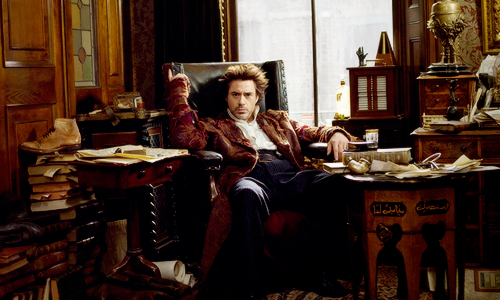
KIRK'S VOICE Khan!
INT. RELIANT BRIDGE 144 Khan closes his eyes in voluptuous satisfaction.


Star Trek II: The Wrath of Khan

Words by Jack B. Sowards, Harve Bennett and Nicholas Meyer

Pictures by Gayne Rescher and Nicholas Meyer

Star Trek II: The Wrath of Khan is available on DVD from Paramount Home Video.


* There were a couple scenes from IV I'd like to have done: Kirk's pizza dinner with Gillian–"No, I'm from Iowa. I only work in outer space" (not enough meat to that scene) and the oddball by-play of Kirk and Spock in the truck–the rhythm of which would be lost on the printed or pixelated page (Nevertheless, I did do that last one and I'll present it when the time is right).

** Meyer is still working in Hollywood, as one of the better script-doctors, having recently written two Philip Roth adaptations The Human Stain and Elegy, as well as the "Houdini" mini-series
.

*** I'll always remember going to the press premiere (at the late, lamented John Danz Theater) and as the credits rolled, looking up at the loges and seeing the then-movie critic of the Seattle Times, John Hartl, staring incredulously at the screen, not fathoming how the audience could have enjoyed this flick. He panned it.

**** And, again, I have to point out just what a difficult task it was to keep the rivalry believable, as Shatner and Montalbán were never on the same stage at the same time. The two actors took different tacks, but kept the competition alive between the characters each on their own.