Showing posts with label Jamie Bell. Show all posts

Tuesday, June 1, 2021

The Adventures of Tintin: The Secret of the Unicorn

Written at the time of the film's release...

"The Adventures of Tintin in the Uncanny Valley"
or
"Spielberg Straight Up, No Chaser"

Everyone knows how dynamic and visceral a film-maker Steven Spielberg is. At times, he can even approach overkill, bouncing along on his little adventures, then, happily, sailing right over a cliff. Take 1941, for example, or Indiana Jones and the Kingdom of the Crystal Skull, both films of such excess that they immediately inspired ridicule. That exuberance tries the patience of many film-goers who want the director who features the Moon in his corporate logos to come back down to Earth. The term "nuking the fridge" was derisively created for the fourth Indy film (as if credulity hadn't already been crossed in the  series before...)

But, imagine (if you will...or even can) Spielberg without any constraints. I'm talking the regular constraints of film-making, the type that keep things down to the possible and even legal. Things like time, budget, light, focal-lengths, physics, natural laws (like gravity), and even the constraints for safety imposed by studio legalities and The Humane Society. Take those away—take them all away—and imagine what sort of film Steven Spielberg would make.

Scary thought, isn't it?
Now, with Peter Jackson producing, Spielberg has made his first "Avatar"-style movie, with mostly motion-capture technology, but virtually all CGI—there's no angle he can't shoot from, no perspective he can't take, no transition he can't achieve...whatever Spielberg can think, he can put on the screen, with no compromises and The Adventures of Tintin: The Secret of the Unicorn (based on three of the many Hergé books), shows what an unfettered Spielberg is capable of...and it is amazing.
And a bit headache-inducing, which I imagine would happen even without 3-D (the format I saw it in). It even approached the stage where my brain started to shut down (a phenomenon I've noticed in myself with very few movies, except for those directed by Terry Gilliam), a kind of movie-narcolepsy where I have to fight sleep, so intense and detail-filled is the movie-going experience.* Fortunately, Spielberg is so intent on making his 3-D cartoon a movie-movie, that it's quite easy to put oneself in the mode that this is happening through photographic means—only shinier, and with less dust.
So, the story of the Belgy reporter (voiced by
Jamie Bellfollowing clues and bad guys to all points of the world, trying to find the answer to the riddles of a model ship he bought at a street vendor's (and why unscrupulous people like chief villain Rackham—voiced interestingly by Daniel Craig**—might want to acquire it, by any means necessary).
And it's all done in a semi-realistic style (although tribute to Hergé's cartoony style is paid early in the film). Things are made to look real, even if the human forms are semi-cartoony. That's worked better for Pixar, whose human characters have always looked better the further they diverged from realism. Here it's a bit of a problem, especially early on in the proceedingsthere's a deadness to the eyes,*** what has been identified as "The Uncanny Valley"—the point at which, when trying to create a human simulation, the human brain (that is, a "real" human brain) rejects it, and even may be horrified by it. Examples that the film industry have taken notice of have been audiences negative reaction to the CGI baby in Pixar's first full short "Tin Toy," and the reaction of test audiences to a first-draft version of the human-looking Princess Fiona in the first ShrekThe learning curve is high in Tintin, and very quickly the issue is side-stepped with squints and off-camera looks, but it's there, initially (and, to be fair, Hergé never gave Tintin or his other characters eyes, but round pools of india ink. Imagine the horror if they did a motion-capture movie of "L'il Orphan Annie?"). But soon, events overtake our heroes, and we no longer have time to look them in the eye—it's tough enough just trying to follow them.
And that is a case of pure, undistilled Spielbergia. Enjoy.
* It's hard for me to explain what is going on (or even admit to it) when this happens. Partially, it might be because I'm not thinking much or analyzing what is happening, but just letting the images wash over me without much interpretation.  When a movie makes me think—for good or ill—I can't fall asleep.  But when there's nothing to really interpret—and there isn't much in Tintin—my mind tends to drift and be lulled.  With Gilliam and Spielberg, it might be because their movies are so full-formed and specific, there's not much for me to do.  It's like TV (which always puts me to sleep), which Marshall McLuhan labeled a "cold" medium, not asking much of its participants (if there's any participation at all), as opposed to a "hot" medium, like radio or books, where the participant's mind is active and fully functioning, filling in gaps, providing pictures and imagineering the story being fed to the brain.

** One of the really keen ideas that Spielberg brings to the table is his independence in creating the characters.  None of the voice-actors resemble their real-life counterparts—stands to reason, animators and Pixar have been doing that for years—but the recent motion-capturers, like Bob Zemeckis and James Cameron have tied their actors' likenesses to their characters, in an attempt to capture the humaness to the pixel-people.  Producer Peter Jackson, though, had no qualms about abandoning any semblance to Andy Serkis when bringing full-life to Gollum in the "Ring" trilogy.

*** One is tempted to recall Quint's soliloquy in Jaws, comparing a shark's eyes to "lifeless eyes, black eyes, like a doll's eyes. When he comes at ya, doesn't seem to be livin'."


Tuesday, June 25, 2019

Rocketman (2019)

Elton! John! The! Musical! (Gooooo-tta Shop!)
or
...Burnin' Out of His Fuse Up Here Alone (And I Think It's Gonna Be a Long, Long Time).

A couple years ago, I saw a PBS documentary (co-produced by the BBC, it turns out), "The American Epic Sessions" about a recording project that would serve as a cornerstone on a documentary series about the historical recordings made of roots music during the 1920's. The plan was to reconstruct the original electrical recorder (making recordings on wax records) that was powered by a 100 pound counterweight that would allow for a 3 1/2 minute song before it hit the ground and stopped the recording. Such a device allowed the documenting of music in places off the grid at that time. Songs were played live in one take...because that's what they had. No sweetening, no overdubs. Pure performance.

That's a lot of back-story for the purpose of bringing it up. One of the participants in the project was Elton John (Sir Elton John), who sauntered into where the sessions were being done—Vox Studios in Los Angeles—looked over the reconstructed contraption, until his longtime lyricist Bernie Taupin walked in with a couple sheets of paper, on which he'd written lyrics. The two talked a bit, and Sir Elton sat at the piano and wrote the song ("Two Fingers of Whiskey") right in front over your eyes, the melody coming out almost instinctually. Once he did a run-through of the complete song—that he'd just composed—they did the one "take" and it was done. It was jaw-dropping. I've seen composers compose on the spot before, specifically Paul McCartney, but the result was underwhelming, a throwaway. The Elton John song was GOOD.

I bring this up because in the Elton John bio-pic, Rocketman, you'll see a lot of scenes about his savant-like musical abilities, and even though the film has the cheeky tag-line "Based on a True Fantasy," those abilities are absolutely true.
Rocketman—directed by Dexter Fletcher (the same guy who started the Queen-based Bohemian Rhapsody project, was replaced by Bryan Singer, then finished the film when Singer was fired)—has all the same earmarks as that earlier film: misunderstood youth, nascent talent, professional fame, personal demons, nothing exceeds like success, descent into narcissistic self-destruction, epiphany, personal triumph. It's just that this one is a bit more true. There's no ginned-up drama (although timeline liberties are taken for dramatic effect) and the movie shifts time and reality to include set-pieces that feel like show-stopping production numbers that comment on his life and serve as emotional touchstones throughout the film. John was rarely a navel-gazing singer-songwriter (seeing as his contribution was primarily melodic, Bernie Taupin did the lyrics), yet the choice of songs turn his songbook into an auto-biography of sorts if you switch them around deftly as they do here. It's actually amazing how well his work slots into the story and fleshes out the narrative.
"I know how this goes..." So do we all.
The film starts with Elton bursting dramatically into an AA meeting, wearing an elaborate devil costume.* Everybody else looks like your run-of-the-mill addict, but he stands out...well...like the devil, and one of the conceits of the film is that costume will start going away as he decreases his own inner demons. 
"I know how this goes," he grouses, as he bitterly addresses the proctor and the others in the circle. "I am Elton Hercules John. I'm an alcoholic, drug addict, sex addict, shopaholic..." and sails into flashback—to "The Bitch is Back"—as young nerdy Reginald Dwight, product of a dysfunctional home, finds his inspiration in music, partially inspired by his father's slavish devotion to music, but also to his natural gifts of being a musical savant—Reg' can hear a tune and immediately pick it up on the piano through a combination of eidetic memory and perfect pitch. These abilities lead him to the Royal Academy of Music, and the pursuit of a career as a keyboardist.
The film is not slavish to accuracy—10 year old Reg' plays a local pub and launches into "Saturday Night's Alright for Fighting" (which he didn't put to disc until 1973). But, it's what the filmmakers do with it that's fun; the young Reg' starts to sing, then leaves the keyboard, weaving through the rowdy activities ensuing, then bursts through the pub walls to the street outside as an adult Elton propels himself onto the night-time Pinner, Middlesex streets—including a carnival—jiving through a choreographed dancing crowd, singing and prancing the whole way. It's a great sequence, even if the basis behind it takes liberties. At least, they're playing with the material and not playing with the truth (as was the case with Bohemian Rhapsody).
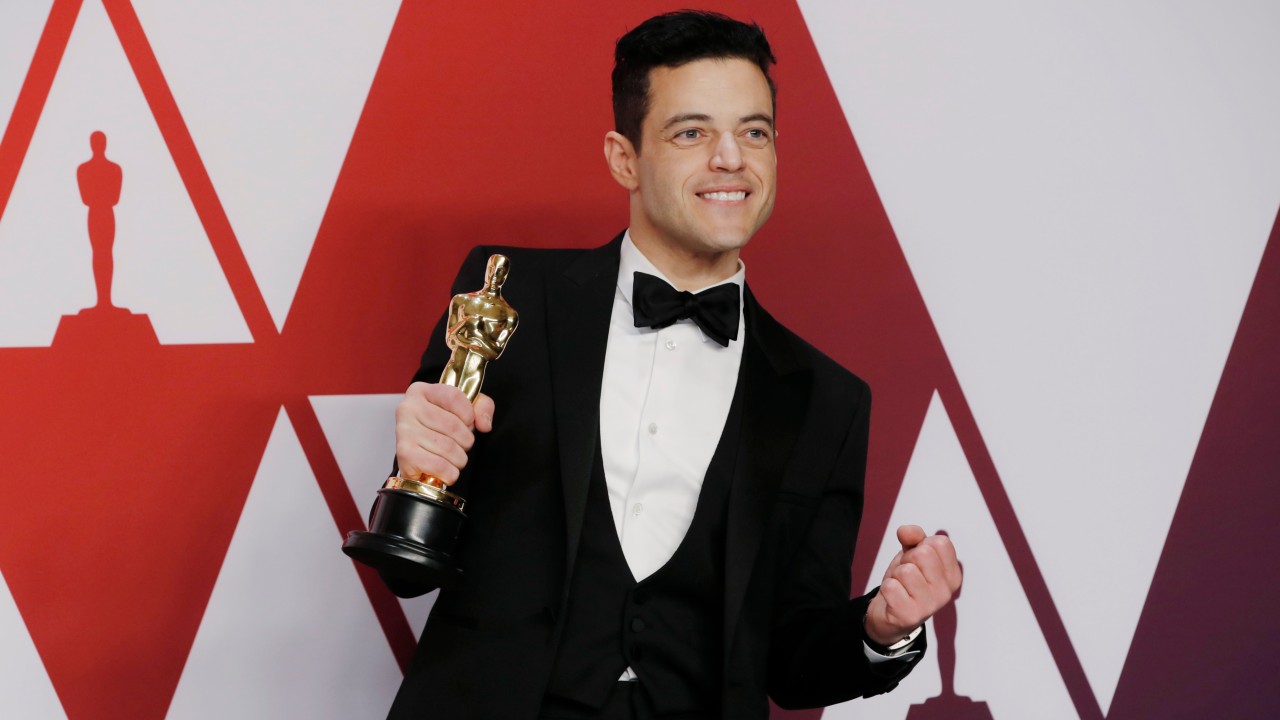
Time to bring up the film's best asset—Taron Egerton as the adult Elton. Egerton, as you may recall, played the character of "Eggsy" in the Kingsmen films and he has a nice, edgy brio in those, even if the films aren't that good—he is. And one must say it's a good thing Rami Malek got his Oscar before Egerton's Elton showed, as the actor is amazing, bringing to the role a verve that reminds one of the young Jimmy Cagney. Malek did a good imitation, but Egerton's is a performance, showing the duality of the man and the entertainer he must become when on-stage. That's a complex tight-rope to walk, much less dance around on it and Egerton throws everything he has at it. And he does his own singing (although he's helped a bit by the music being mixed a little high to drown out the vocals lest we compare too critically). Still, he's a good match, both as Reginald Dwight and the Artist Known as Elton John.
It makes it a bit of a one-man show, although Jamie Bell makes for a good Bernie Taupin,"voice of reason." Richard Madden plays his manager-lover, John Reid** with the intention of being hissable from his first appearance, but it seems you have to have villains in these things, and the "money-men" ill-picked by the stars fill the bill, so he telegraphs the job very well. What is surprising is the actress playing Mother Dwight. Bruce Dallas Howard has played unsympathetic characters before, and she does so with the cold intensity of a surgeon, with no remorse and no signs of wavering. Her depiction of Sheila Eileen Dwight Farebrother is a relentlessly self-absorbed harridan who, once she got safely into her gyroshphere, would lock the door, leaving any expendable dino-researcher to be torn apart by a rampaging T-rex.

Or, am I confusing things here? Anyway, Howard is surprising enough in the role that I spent too much time wondering where I'd seen her before.
It is an enjoyable—albeit predictable—breakdown of life for Elton, burning out his fuse on-stage alone, or—as Rolling Stone's Peter Travers brilliantly put it a " portrait of the artist as a young mess." Just so. The story of the roller-coaster rock-star lifestyle is probably familiar to anyone who's been a fan of anyone caught in the klieg-lights, it follows the same pattern as any addict, just without the abundant opportunity and being set to music. Chopin and Berlioz did opium, but we probably won't see their story any time soon. We'll probably see the same story-line when the David Bowie bio-pic comes out (starring Kodi Smit-McPhee, maybe?)
In a scene while youngish Elton is a keyboardist for a blues band, the lead singer tells him "You gotta kill the person you were born to be to become the person you want to be" (it's in the trailer). Elton doesn't so much kill the young Reg Dwight as disguise him, burying him in elaborate costumes that highlight and distract, in ever more extreme theatricality, from the reality of who he is in favor of the act. He's hiding from himself, and the epiphany of the film is so "on the nose" it risks chortles rather than mystification. But, Egerton sells it in his performance—needy, flashy, schizy—making the movie a go-for-broke triumph, even in its most saccharine moments.

At any meter, it's a rather brave act (even if generating a lot of revenue) to executive produce a movie that grinds axes and doesn't spare the grinder on the kickback, as John has. The fear and self-loathing, reverse narcissism, and petulance are all there on display. The survival of it and openness about it are to be applauded. There's healing there. Bravo, sir. 

* Bob Mackie is credited for the Elton John costumes—the man may win an Oscar for copying his own stuff.

** It's a little bit funny, though.  Reid is also portrayed in Bohemian Rhapsody by Aiden Gillen, and the two re[presentations couldn't be further apart, despite being influenced by the same director. In BR, Reid is portrayed as competent, but sympathetically, being tossed out of a car by Freddie Mercury. In Rocketman, he's portrayed as an oily, manipulative slime-weasel, basically the villain of the piece (much like Allen Leech's Paul Prenter is in BR), the gay manipulator who screws the star both biblically and financially. Does two such instances in the movies count as a vicious stereotype...or just easy shorthand for audiences who don't want things complicated?


Some personal favorite Elton songs-beyond the hits
Aw, hell...one more song...tear it up...

This would seem appropriate-always loved this song. Very noir.
Oh, man. And this...so much this. 
This was a shock for an opening track, and the whole double album holds up to it

Friday, May 17, 2019

The Battles of Iwo Jima (directed by Clint Eastwood)

Written at the time of each film's release...

Photo Opportunism

Every year, like clockwork,
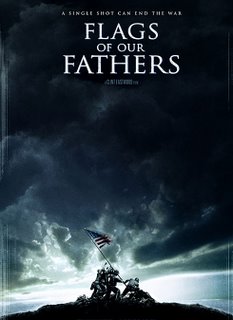
Clint Eastwood makes a new film, and they become instant Oscar-bait. His last one was Million Dollar Baby (Hilary Swank won Best Actress-her second award, and Morgan Freeman won Best Supporting Actor) The year before that, Mystic River (winning Oscars for both Sean Penn and Tim Robbins). Eastwood shoots movies fast in a calm environment and leaves actors alone to do their job. And while most directors are making movies that jump and whirl just to prove they're doing their jobs, Eastwood sets up the shot, does a take or two and moves on. He's efficient, fast, and doesn't do any fancy cutting or post-production. 
In this way, he's very much like his mentor, Don Siegel. Siegel, too, wasn't afraid to throw a little controversy into the mix. Eastwood, a moderate Republican, has made movies recently that have condemned vigilante violence and lack of process (Mystic River), and turned a sympathetic eye to euthanasia (Million Dollar Baby). His recent work is not for the complacent, and Flags of Our Fathers is just as impatient with easy myths and lazy thinking. 
Saving Private Ryan can look at "The Greatest Generation" and sentimentalize them while acknowledging their sacrifice. Eastwood's film has the audacity to question blind patriotism and that sentimentality for the purposes of hucksterism. I'm sure when some neo-con blowhard actually sees this movie there's going to be as much controversy as there was around Million Dollar Baby among panicky right-to-lifers. As it is, I've already heard some CBS radio reporter in Iraq talking about the stationed soldiers "fighting for each other, rather than the cause," a line right out of the movie. How quickly this stuff travels...
Performances are top-notch from a bunch of actors never given their due--here, they shine. Guys like Robert Patrick and Neal McDonough, good actors (whom you know from other things) with odd faces that will never be leading men are revelations here. Gordon Clapp from "NYPD Blue" has one scene of such comic ferocity that you'll never see him the same way again. Ryan Phillipe, thought of as the less-talented of a Hollywood marriage (and ironically they split up right after this film came out), belies that here. Barry Pepper, from Ryan plays an "old vet" of 25, with the slightest veneer of gravitas and bravado. And Adam Beach, of Smoke Signals and the Tony Hillerman adaptations on PBS, has never displayed the potential of his performance here. He has one devastating scene that will get him nominated him for an Oscar and probably win it for him. The day I saw it, there wasn't a dry eye or a nose unsniffled after it. The story of Ira Hayes has been told before on screen and in song, but never so effectively as here.
Eastwood's next movie will be coming out quickly, as he shot it simultaneously with Flags.... It's also about Iwo Jima...from the Japanese perspective-Letters from Iwo Jima.

Eastwood is so good, he's scary.

 -------------------------------------------------------------------------------------------------------------------------

"See you on the other side!"

Somewhere in the planning stages of
Flags of our FathersClint Eastwood had a thought—What was on the minds of the Japanese soldiers who also fought at Iwo Jima? What of the commander who took such a different approach that the badly out-numbered troops could hold off the Americans as long as they did? So with the same crew, and a completely different cast he made another movie on the heels of the previous one that showed the situations and motivations of the defenders of Iwo Jima, based on writings contained in the book "Picture Letters from the Commander in Chief," written and illustrated by the Iwo Jima forces' commander Tadamichi Kurabayashi.

The results,
Letters from Iwo Jima won the National Board of Review's "Best Picture." It's nominated for a Best Picture Oscar, and it incongrouosly won the Golden Globe for "Best Foreign Language Film" ("I guess I have to learn a foreign language now," said Eastwood laconically).
The film is 98% in Japanese with subtitles. Played by a terrific cast (assembled with Eastwood's knack for picking interesting faces) led by Ken Watanabe who after stealing The Last Samurai from Tom Cruise and going to waste in Batman Begins shows how thoroughly he can carry a film. He suggests no one less than Gregory Peck in his portrayal of the American-schooled Japanese tactician who knows the impossible task of defending the last stop to Japan and does so to the best of his ability.
Like that defense strategy Letters is an excavation. In a present day prologue the letters are unearthed by Japanese archaeologists. Flash back to war-time Iwo Jima and the soldiers are digging trenches for the initial beach attack strategy, then digging the elaborate system of tunnels that would prove to be the core of their final strategy. Letters follows several soldiers of various ranks in the days between Kurabayashi's arrival and the fall of the last man. The film wheels between the scenes of the island (filmed in a bleached monochrome broken only by the reds of the Japanese flag, the orange flame of explosions or blood), and of the men's past lives filmed in vivid technicolor. Technically, the film is a wonder. The effects by Digital Domain are photo-realistic, even amidst battles that are shot hand-held and face-close. The explosions singe.
Given the structure, the film is very much in lock-step with such traditonal war-films as, say, The Sands of Iwo Jima, where the personal lives of the individuals in the troop manifest themselves on the battle-field. But the war film it most resembles is the B-movie WWII drama Hell is for Heroes directed by Eastwood's mentor, Don Siegel. Like Letters, Hell... is a view from the trenches, where the conceits of heroism and honor--a constant hook in the dialog of the Eastwood film, everyone talks of honor...or mocks it ("Kashiwara died from honorable dysentery," says a grunt about the whereabouts of a comrade) have no place in the grime and destruction of war. The picking-apart of the hero myth has been the most frequent Eastwood subject. But not even Eastwood has gone as far as Siegel's film to suggest that the maladjusted make the best heroes.
It's interesting that Eastwood has made these two films now: Flags of Our Fathers with its focus on propaganda and the selling of a long war in the face of a populace's flagging enthusiasm, and Letters with its hollow talk of honor and pride in the worst of circumstances. At one point Kurabayashi bitterly reacts to a wire from his superiors, "The Imperial Headquarters is not only deceiving the people, but us as well." The similarities cut across time as well as the disputed borders of the combatants.
And there is a constant reminder of what unites the combatants rather than divides, managing to make the standard war-film trope of "we're more alike than different" that goes all the way back to All Quiet on the Western Front fresh and surprising (that lesson is never hammered home more than in films about the Civil War). The American-trained commanders drink Johnny Walker while grousing about the food, the conditions and their superiors. At times in the dim light the features of the participants blur--it could be any army. Eastwood and his screenwriters--the ubiquitous Paul Haggis and first-time scripter Iris Yamashita work overtime on the ironies, but one stands out. Watch the ivory-handled revolver that Karabayashi wears on his hip. "He must have taken it from an American," says one of the admiring soldiers. He did. But like so many of the twists in Letters from Iwo Jima, it's not in the way you'd think.

Letters from Iwo Jima is an extraordinary film, however, it feels 20 minutes too long (though I've struggled where one can cut it).
Of the two Eastwood Iwo Jima films, I prefer Flags of Our Fathers for being less traditional in its story-telling, and for taking up two subjects--propaganda and the selling of war and patriotism, and survivor's guilt, the practical and mysterious faces of war, that are rarely touched on despite the reels and reels of film that have been dedicated to the subject of battle.


Thursday, September 3, 2015

Fantastic 4

"It's CLOBBERIN' Time!"
or 
"This Movie!...This Monster!"

The latest Marvel superhero movie to come out is the third attempt to make a viable tent-pole of one of the comics line's most venerable titles—the first to be published by Marvel, The Fantastic Four. Four friends who, on a space mission, are turned into super-heroes by a bombardment of radiation, the four—"Mr. Fantastic" (Reed Richards), who can stretch, "The Invisible Woman" (Sue Storm) who can turn invisible, "The Human Torch" (Sue's brother Johnny), who turns into a flying human fire-ball, and "The Thing" (Ben Grimm), who is turned into a super-strong rock-like bi-ped. Together, "they fight crime" (as the cliche goes), but for this relatively human team, the challenges were more cosmic and more mind-bending as they had to contend with threats from other galaxies and other dimensions (drawn from the seemingly endless imaginative ink-well of Jack "The King" Kirby), while, at the same time, serving up the mandatory Marvel "soap opera" quotient with Reed and Sue's love story, Johnny's hipster hot-head, and Grimm's impenetrable angst over being an unlovable freak. With its combination of mind-blowing themes and (*choke*) tear-duct-blowing melodrama, it became a big hit with teens and the college-crowd.
Reed, Sue, Johnny and Ben as rendered by Jack Kirby
It was self-trumpeted (a bit prematurely on the cover of issue #4) as "The World's Greatest Comic Magazine!" but the appeal of the FF couldn't be denied. Attempts were made in 1994 (under the producing of Roger Corman and is the ONLY film in his low-budget exploitation career that was NEVER released) and revived again in 2005 (with Jessica Alba, Michael Chiklis and a flaming Chris Evans, as well as the guy who got crushed by a container on the Golden Gate Bridge in San Andreas) in two films (Fantastic Four and Fantastic Four: Rise of the Silver Surfer) that were a bit premature in the new wave of CGI mounted comic-book films. Those two FF movies are consigned to "The Zero Zone," along with Ben Affleck's Daredevil movie.

The 90's FF (Hyde-White, Staab, Underwood and Smith) and the 00's FF (Alba, Gruffud, Evans and Chiklis)


But, it seems there must be a "Fantastic Four" movie attempted every decade from now on. The latest, Fantastic 4, is no improvement on the others. The cast is younger, more diverse (despite fan-boy grumbling—the most conservative of critics), the effects improved, and an attempt has been made to update the story and make it more hi-tech for the 21st century. That it ultimately fails leads one to question if it's one of those properties that just doesn't work in any other medium than the four-color comic. Or it makes one question if any other studio than one working in tandem with Marvel can produce anything decent. The director of this one, Josh Trank (who made the interesting Chronicle) has gone public, grousing that studio interference messed up his vision of Lee and Kirby's vision.
The origin story does need some updating, however, now that we're out of the 1960's of the Four's re-birth and into the 21st century. Instead of doing some experimental space-travel, the four and their co-worker Victor Von Doom (an eye-rolling name that, if anything needed to be changed, should have been a priority), instead, are exploring matter transference—a working "transporter" being a dream project of Richards' (in this case, Miles Teller) since he was a boy. At a science fair where he demonstrates a break-through, he's invited by Dr. Franklin Storm (Reg E. Cathey, in a performance that is quite...well, "restrained" would be a nice way of putting it) to join a team involving his son Johnny (Michael B. Jordan), adopted daughter Sue (Kate Mara), and banished upstart Von Doom (Toby Kebbel) to see the project through to completion. But before a NASA administrator (Tim Blake Nelson) can start trials, Reed, Johnny, Victor and Reed's boy-hood chum Ben Grimm (Jamie Bell—remember him as Tintin in Steven Spielberg's film?  Of course you don't—you won't remember him in this, either, as his part is mostly motion-capture) who's there for some inexplicable reason, decide they're going to test it on themselves first. The mission does not go well, affecting the travelers in variant and horrific ways—it also alters Sue Storm, who is left back at the control room for some reason, but suffers the consequences, anyway.
Sue, Johnny, Dr. Storm and "Vic" von Doom.
Von Doom is left on the "Zero Planet" (as it's called), while Reed's body is turned malleable, Johnny erupts in flames, Sue turns invisible, and Ben is changed into a rock-like monster. It is horrific for all, but the NASA suits see them as an opportunity for weaponization (after some experimentation), but Reed slithers out of his shackles and escapes the complex they're being held in against their will, vowing he will free the others and turn them back to normal. For those left behind, Reed is simply a turncoat and to the government he's a threat. This takes a good hour to set up and less than that to resolve, including a return to the Hell-Planet, where the four confront Von Doom who is constructing one of those Marvel movie things that throw off an energy stream that shoots up into the sky, but you have no idea why.*
A lot of it looks good—there's a subdued color palette and a tendency to dimly light things that give it the look of a good old fashioned horror movie, which when you have people disappearing, disfigured and on fire isn't much of a stretch (hey, I just described everybody's powers in one sentence!). But, there is an awful lot wrong with it. One could nit-pick over dialogue and acting and failures in logic and potential throughout this movie. But, simply put, there are four key errors in this Fantastic 4 that makes it unique among bad super-hero movies.
1.  Consider the Source: The Fantastic 4 are superheroes at their most puerile, designed to impose a family structure on disaffected little boys. They are instantly recognizable as Mom and Dad (Reed and Sue) and the bickering kids (Ben and Johnny). Whatever conflicts they go through (and they go through a lot internally and externally), the family dynamic pulls them through. That's one thing that's consistent about the Fantastic Four and part of its basic DNA. In this film, however, "family" is given lip service. The group is quarantined after the accident and restrained by the NASA industrialists and the four turn into factions—Johnny and Sue against Ben and everybody against Reed, "the turncoat," who has escaped and seemingly abandoned the other three. Nobody trusts anybody and its every man and woman for themselves until Dr. Doom (Bwa-ha-HA!) serves as an over-arching threat that unites them. Up until the last few minutes of the film, they're not even a team at all and are actually pissed at each other. This is so fundamentally opposed to the appeal of the original concept, it may be the biggest mistake of the film. If you're going to make a superhero film about a creation that's 55 years old, at least realize what it is that's made it last so long.
2. Did You Know That You're My Hero?: That's the thing about super-heroes. They are us but better. Smarter, faster, stronger, and certainly more altruistic to the point where the whole genre might be considered science-fiction, given the proclivities of the populace. They train themselves to make use of their gifts in the service of others, and if something should befall them—a spider-bite, a lightning strike, or a birthright—they seek its use for the betterment of their neighbors. Sure, the Fantastic Four may have turned into embodiments of the four elements: Earth, Air, Fire and..Rubber, but rather than grieving, drinking and saying "how do I fix this?" they use their new handicaps, and in that very tendency they are heroes. That's not what you get here. You don't get heroes, you get victims. The explosion of the transporter makes everybody helpless and easy prey for the militarists hoping to exploit the four by "helping" them. And Reed is so beset by guilt, he wants to "fix it."** So he runs away to become a super-genius Ted Kaczynski in the woods. The victimization of the Fantastic Four here aligns them with most of the other Marvel heroes—and not just the Marvels, but others of the sub-genus—making the origins part and parcel of the cause they fight for. But that was never the Fantastic Four in the comics. There was not too much brooding to be done over their conditions (except for Ben), not when there were whatzit's to invent and cosmic crises to insert themselves into. The 4, for the most part, accepted what happened and moved on, making the most of the situation.  It would be nice to see more of that.
3. Sometimes Origin Stories Don't Matter: The origin of The Fantastic Four is completely unremarkable and gives no purpose to their being—an accident that changes them and inspires them to make lemonade out of lemons. In the comics, they are all gifted in some way (even Ben Grimm is a test-pilot, which is why he's on board the doomed space-ship) and their instincts are to use those gifts for some greater purpose. That origin does not make a mission—to find the person responsible, to prevent the same thing from happening to others or such. And yet the "How-They-Came-To-Be" story is trotted out like that's the thing to do. Unfortunately, that story (which provides no "hook" to a franchise) takes up more than half the movie, time that could have been better spent on anything else. Like story or character or "Something Big." It would have been far better to start in media res—assume the group simply is and concentrate on something world-shaking that they have to overcome. As it is, the movie is extraordinarily lop-sided, the majority of it being Origin Story followed by 15 Minutes of Action, and rather negligible action at that. Really, all they do at the end is beat Dr. Doom up and turn his "Whatever-It-Is" against him. If you're going to make a superhero movie...
4. Make it ABOUT Something, Damn It!:  There isn't much of a story here besides the origin, a quick confrontation with the motivation-less villain, and then the movie ends without the group having a purpose...merely a headquarters. Maybe that's to make the whole thing seem more in line with The Avengers, but that group has a goal before they decide to move in together, and without that there is certainly no triumph to the ending, merely a mortgage. There is no reason for the team to exist. They beat up Dr. Doom and that's it. What's the point to continuing the series—to find a cure for the mutations, to perfect the errant experiment that caused them, to block it from happening again (as it appears to be a bad place), to establish a support group for Zero Planet victims—what's the job? Hopefully, that HQ has a meeting room with a white-board or something so they can figure it out before the next movie (despite the poor box-office, Fox is already talking one up...for now).

In the end, it's all false advertising—it's not the comics and only resembles it in name and powers—and right down to the name: Not so fantastic.  And if you're into rating movies, only 1 out of 4. 
Reed Richards can make himself look like anything with that stretch-power.
So why does he choose to look so dumpy?

* Marvel Comics was always soft on science—there always seemed to be a scene where the four were looking up at some huge cosmic something-or-other with dialogue that summarized "I don't know what it is, but it sure is BIG!" 

The Marvel movie equivalent seems to be "I don't know what it does, but it sure spits out a lot of sparks!"
"I don't know what it is, but it sure is BIG!"
** Reed does want to help Ben Grimm in the comics, as that character is his friend and the most traumatized by the "accident." Everybody else is fine with their powers and set about how to use them and improving them.