Jack Kirby was "The King" of comics. That's what Stan Lee called him, anyway—and the two had their disagreements over the years. But, Kirby's influence in the funny-books from the 40's on towards infinity was immense, preceding anything Lee did. Marvel Comics, as we know it, flowed from Kirby's drawing table and legitimately his draftsmanship could be called the "soul" of that comics line, becoming its "house style". I could list the comics series and characters he created, but the list is long and there are other places you could find that information, and this is about a movie version of one of his creations, rather than some obligatory mention of its origins (which I seem to be doing, anyway).
So...briefly...this is that. In the 1970's Kirby left Marvel to go over to the DC comics line—Superman, Batman—and wrote and drew "The New Gods", a series of books joined by a singular history that had nothing to do with Krypton or anything associated with DC's previous output.* The books were canceled at some point (but the characters retained) and Kirby went back to Marvel and did something somewhat similar for them, writing and drawing "The Eternals."
Marvel Studios has now made a film of the Kirby creation,Eternals, and it has a hard duty to fulfill. Kirby basically took the2001story-line—he did a comics adaptation of the film that same year—of an extra-terrestrial "god"—called "The Celestials"—who create two off-shoots of primitive life on Earth, homo immortalis ("The Eternals") and homo descendus ("Deviants"). The Eternals defend the nascent humans from the Deviants in order that humanity evolves into a kinder, gentler race where everybody just gets along. It's going to be a long wait, but The Eternals, borrowingStarfleet's Prime Directive, are beholden to not interfering with human history and just defending us mere mortals. That's the gist. The mythos has expanded and gotten wildly complicated since the series debut in 1976.
Eternals doesn't make it any less complicated, but they do put a different spin on it, giving it a couple ofMobiustwists that have less to do with the comics and more with basic cosmology and energy equations. That comes up later, but the main thing for movie-viewers to know is that in the year 5000 B.C. ten Eternals come to Earth at the behest of theCelestial Arishem (The Judge)to fight Deviants to protect human evolution. They are (bear with me): Ajak (Salma Hayek) a healer, Ikarus (Richard Madden), with super-strength and heat-vision, Sersi (Gemma Chan) a matter-manipulator, Thena (Angelina Jolie) a warrior who can make any weapon out of cosmic energy, Kingo (Kumail Nanjiani) who can project energy projectiles, Gilgamesh (Don Lee) the strongest fighter, Druig (Barry Keoghan) who can manipulate minds, Sprite (Lia McHugh) a projectionist, Makkari (Lauren Ridloff) who's fast, and Phastos (Bryan Tyree Henry) a weapons and technology expert.
That's a lot of people to introduce in 2 hours, 37 minutes and one can look at them and go "Well, he's Superman and she's Wonder Woman and she's the Flash" and the rest have a lot of left-over powers—in fact, this Marvel movie pays lip-service to Batman's butler and Clark Kent, which is odd (I mean, they're so daaaark!)—but the basics are that over seven millennia they build up a lot of resentment towards the slow evolutionary process of mankind and they have a tendency to rebel and go their own ways. As the movie shows, that's not necessarily a bad thing, and given the proclivity of meat-puppets to do stupid stuff, one could hardly blame an eternal for self-imposed exile or discretionary mind-control.
Now, Eternals writer-director Chloé Zhao just won the Best Director Oscar for Nomadland (deservedly, I thought), and the nuance of that film, the story-telling through images, the lived-in feeling of the performances...and pretty much absent in this movie. Okay, there is some location shooting with battles out in the open instead of a disguised green-screen, but we've seen this before as the Marvel movies have been moving out of the standard New York locations since the second Iron Man movie. Performances are fine, but run the gamut of slipping dialects to "I've-got-to-take-this-garbage-very-seriously" earnestness. One gets the impression that there might be a four to five hour version of the thing because some of the transitions and montage sequences seem a bit disjointed. One says this advisedly as one realizes that the bar for audience satisfaction for these things is an action sequence every ten minutes.
For all the effort, and the obvious attempt to extend the scope of the Marvel Studio output and to make it a more inclusive film—despite stepping on some embarrassing tropes along the way—one has to say that it is considerably less than an involving experience. For all the cosmology bandied about (and it's about 5% of the "woo-woo" Kirby was capable of conveying) it comes down to trying to sell the concept that our Pale Blue Dot amounts to a hill of beans in a limitless, roiling expanse of space-time. I wasn't buying it, even if I was supposed to be rooting for Our Team. The motivations are too random and unearned...or even very well articulated. Given what has happened previously in the MCEU, I suspect that this is all some positioning of structural rebar for a bigger story to be revealed later throughout "Phase IV" of the studio's game-plan. But, at this point, I'm searching for a reason to care and I simply don't.
Elton! John! The! Musical! (Gooooo-tta Shop!)
or ...Burnin' Out of His Fuse Up Here Alone (And I Think It's Gonna Be a Long, Long Time). A couple years ago, I saw a PBS documentary (co-produced by the BBC, it turns out), "The American Epic Sessions" about a recording project that would serve as a cornerstone on a documentary series about the historical recordings made of roots music during the 1920's. The plan was to reconstruct the original electrical recorder (making recordings on wax records) that was powered by a 100 pound counterweight that would allow for a 3 1/2 minute song before it hit the ground and stopped the recording. Such a device allowed the documenting of music in places off the grid at that time. Songs were played live in one take...because that's what they had. No sweetening, no overdubs. Pure performance. That's a lot of back-story for the purpose of bringing it up. One of the participants in the project was Elton John (Sir Elton John), who sauntered into where the sessions were being done—Vox Studios in Los Angeles—looked over the reconstructed contraption, until his longtime lyricist Bernie Taupin walked in with a couple sheets of paper, on which he'd written lyrics. The two talked a bit, and Sir Elton sat at the piano and wrote the song ("Two Fingers of Whiskey") right in front over your eyes, the melody coming out almost instinctually. Once he did a run-through of the complete song—that he'd just composed—they did the one "take" and it was done. It was jaw-dropping. I've seen composers compose on the spot before, specifically Paul McCartney, but the result was underwhelming, a throwaway. The Elton John song was GOOD. I bring this up because in the Elton John bio-pic,Rocketman, you'll see a lot of scenes about his savant-like musical abilities, and even though the film has the cheeky tag-line "Based on a True Fantasy," those abilities are absolutely true.
Rocketman—directed by Dexter Fletcher (the same guy who started the Queen-based Bohemian Rhapsody project, was replaced by Bryan Singer, then finished the film when Singer was fired)—has all the same earmarks as that earlier film: misunderstood youth, nascent talent, professional fame, personal demons, nothing exceeds like success, descent into narcissistic self-destruction, epiphany, personal triumph. It's just that this one is a bit more true. There's no ginned-up drama (although timeline liberties are taken for dramatic effect) and the movie shifts time and reality to include set-pieces that feel like show-stopping production numbers that comment on his life and serve as emotional touchstones throughout the film. John was rarely a navel-gazing singer-songwriter (seeing as his contribution was primarily melodic, Bernie Taupin did the lyrics), yet the choice of songs turn his songbook into an auto-biography of sorts if you switch them around deftly as they do here. It's actually amazing how well his work slots into the story and fleshes out the narrative.
"I know how this goes..." So do we all.
The film starts with Elton bursting dramatically into an AA meeting, wearing an elaborate devil costume.*Everybody else looks like your run-of-the-mill addict, but he stands out...well...like the devil, and one of the conceits of the film is that costume will start going away as he decreases his own inner demons.
"I know how this goes," he grouses, as he bitterly addresses the proctor and the others in the circle. "I am Elton Hercules John. I'm an alcoholic, drug addict, sex addict, shopaholic..." and sails into flashback—to "The Bitch is Back"—as young nerdy Reginald Dwight, product of a dysfunctional home, finds his inspiration in music, partially inspired by his father's slavish devotion to music, but also to his natural gifts of being a musical savant—Reg' can hear a tune and immediately pick it up on the piano through a combination of eidetic memory and perfect pitch. These abilities lead him to the Royal Academy of Music, and the pursuit of a career as a keyboardist.
The film is not slavish to accuracy—10 year old Reg' plays a local pub and launches into "Saturday Night's Alright for Fighting" (which he didn't put to disc until 1973). But, it's what the filmmakers do with it that's fun; the young Reg' starts to sing, then leaves the keyboard, weaving through the rowdy activities ensuing, then bursts through the pub walls to the street outside as an adult Elton propels himself onto the night-time Pinner, Middlesex streets—including a carnival—jiving through a choreographed dancing crowd, singing and prancing the whole way. It's a great sequence, even if the basis behind it takes liberties. At least, they're playing with the material and not playing with the truth (as was the case with Bohemian Rhapsody).
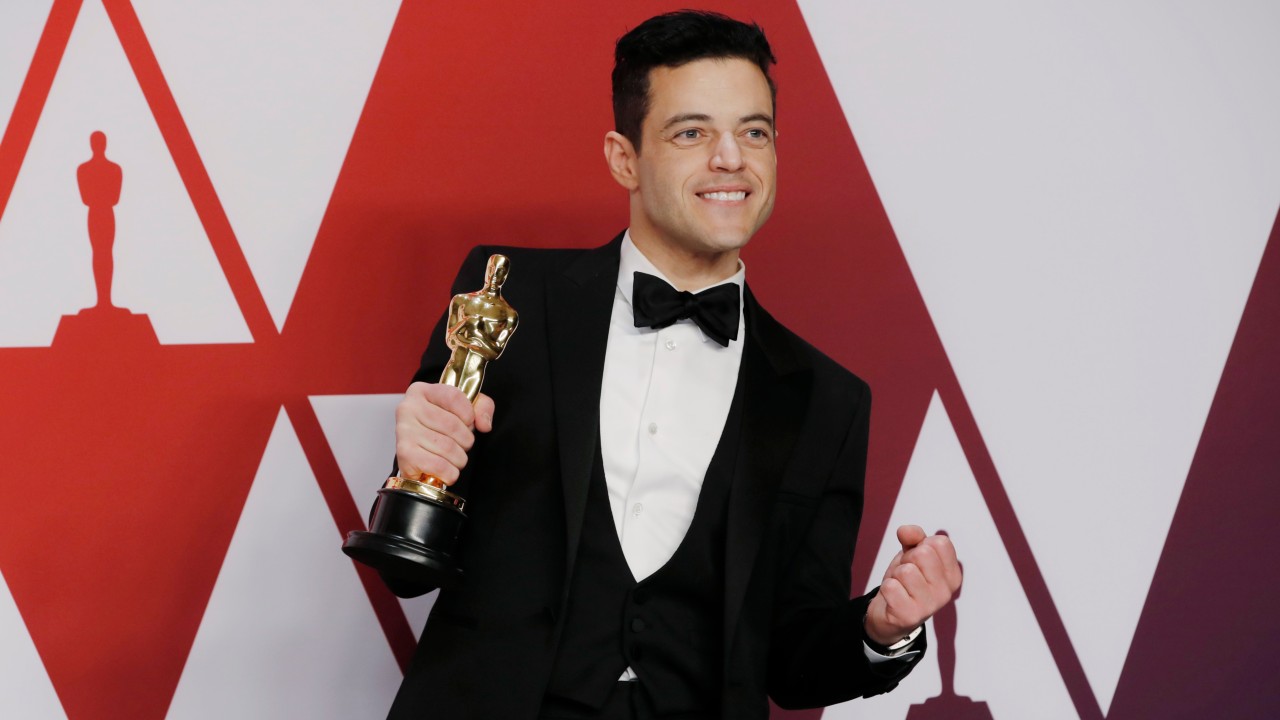
Time to bring up the film's best asset—Taron Egerton as the adult Elton. Egerton, as you may recall, played the character of "Eggsy" in the Kingsmen films and he has a nice, edgy brio in those, even if the films aren't that good—he is. And one must say it's a good thing Rami Malek got his Oscar before Egerton's Elton showed, as the actor is amazing, bringing to the role a verve that reminds one of the young Jimmy Cagney. Malek did a good imitation, but Egerton's is a performance, showing the duality of the man and the entertainer he must become when on-stage. That's a complex tight-rope to walk, much less dance around on it and Egerton throws everything he has at it. And he does his own singing (although he's helped a bit by the music being mixed a little high to drown out the vocals lest we compare too critically). Still, he's a good match, both as Reginald Dwight and the Artist Known as Elton John.
It makes it a bit of a one-man show, although Jamie Bell makes for a good Bernie Taupin,"voice of reason." Richard Madden plays his manager-lover, John Reid**with the intention of being hissable from his first appearance, but it seems you have to have villains in these things, and the "money-men" ill-picked by the stars fill the bill, so he telegraphs the job very well. What is surprising is the actress playing Mother Dwight. Bruce Dallas Howard has played unsympathetic characters before, and she does so with the cold intensity of a surgeon, with no remorse and no signs of wavering. Her depiction of Sheila Eileen Dwight Farebrother is a relentlessly self-absorbed harridan who, once she got safely into her gyroshphere, would lock the door, leaving any expendable dino-researcher to be torn apart by a rampaging T-rex.
Or, am I confusing things here? Anyway, Howard is surprising enough in the role that I spent too much time wondering where I'd seen her before.
It is an enjoyable—albeit predictable—breakdown of life for Elton, burning out his fuse on-stage alone, or—as Rolling Stone's Peter Travers brilliantly put it a " portrait of the artist as a young mess." Just so. The story of the roller-coaster rock-star lifestyle is probably familiar to anyone who's been a fan of anyone caught in the klieg-lights, it follows the same pattern as any addict, just without the abundant opportunity and being set to music. Chopin and Berlioz did opium, but we probably won't see their story any time soon. We'll probably see the same story-line when the David Bowie bio-pic comes out (starring Kodi Smit-McPhee, maybe?)
In a scene while youngish Elton is a keyboardist for a blues band, the lead singer tells him "You gotta kill the person you were born to be to become the person you want to be" (it's in the trailer). Elton doesn't so much kill the young Reg Dwight as disguise him, burying him in elaborate costumes that highlight and distract, in ever more extreme theatricality, from the reality of who he is in favor of the act. He's hiding from himself, and the epiphany of the film is so "on the nose" it risks chortles rather than mystification. But, Egerton sells it in his performance—needy, flashy, schizy—making the movie a go-for-broke triumph, even in its most saccharine moments. At any meter, it's a rather brave act (even if generating a lot of revenue) to executive produce a movie that grinds axes and doesn't spare the grinder on the kickback, as John has. The fear and self-loathing, reverse narcissism, and petulance are all there on display. The survival of it and openness about it are to be applauded. There's healing there. Bravo, sir.
* Bob Mackie is credited for the Elton John costumes—the man may win an Oscar for copying his own stuff.
** It's a little bit funny, though. Reid is also portrayed in Bohemian Rhapsody by Aiden Gillen, and the two re[presentations couldn't be further apart, despite being influenced by the same director. In BR, Reid is portrayed as competent, but sympathetically, being tossed out of a car by Freddie Mercury. In Rocketman, he's portrayed as an oily, manipulative slime-weasel, basically the villain of the piece (much like Allen Leech's Paul Prenter is in BR), the gay manipulator who screws the star both biblically and financially. Does two such instances in the movies count as a vicious stereotype...or just easy shorthand for audiences who don't want things complicated?
Some personal favorite Elton songs-beyond the hits
Aw, hell...one more song...tear it up...
This would seem appropriate-always loved this song. Very noir. Oh, man. And this...so much this. This was a shock for an opening track, and the whole double album holds up to it

 Marvel Studios has now made a film of the Kirby creation, Eternals, and it has a hard duty to fulfill. Kirby basically took the 2001 story-line—he did a comics adaptation of the film that same year—of an extra-terrestrial "god"—called "The Celestials"—who create two off-shoots of primitive life on Earth, homo immortalis ("The Eternals") and homo descendus ("Deviants"). The Eternals defend the nascent humans from the Deviants in order that humanity evolves into a kinder, gentler race where everybody just gets along. It's going to be a long wait, but The Eternals, borrowing Starfleet's Prime Directive, are beholden to not interfering with human history and just defending us mere mortals. That's the gist. The mythos has expanded and gotten wildly complicated since the series debut in 1976.
 Eternals doesn't make it any less complicated, but they do put a different spin on it, giving it a couple of Mobius twists that have less to do with the comics and more with basic cosmology and energy equations. That comes up later, but the main thing for movie-viewers to know is that in the year 5000 B.C. ten Eternals come to Earth at the behest of the Celestial Arishem (The Judge) to fight Deviants to protect human evolution. They are (bear with me): Ajak (Salma Hayek) a healer, Ikarus (Richard Madden), with super-strength and heat-vision, Sersi (Gemma Chan) a matter-manipulator, Thena (Angelina Jolie) a warrior who can make any weapon out of cosmic energy, Kingo (Kumail Nanjiani) who can project energy projectiles, Gilgamesh (Don Lee) the strongest fighter, Druig (Barry Keoghan) who can manipulate minds, Sprite (Lia McHugh) a projectionist, Makkari (Lauren Ridloff) who's fast, and Phastos (Bryan Tyree Henry) a weapons and technology expert.
 That's a lot of people to introduce in 2 hours, 37 minutes and one can look at them and go "Well, he's Superman and she's Wonder Woman and she's the Flash" and the rest have a lot of left-over powers—in fact, this Marvel movie pays lip-service to Batman's butler and Clark Kent, which is odd (I mean, they're so daaaark!)—but the basics are that over seven millennia they build up a lot of resentment towards the slow evolutionary process of mankind and they have a tendency to rebel and go their own ways. As the movie shows, that's not necessarily a bad thing, and given the proclivity of meat-puppets to do stupid stuff, one could hardly blame an eternal for self-imposed exile or discretionary mind-control.