Showing posts with label Bob Balaban. Show all posts

Wednesday, May 17, 2023

Moonrise Kingdom

Written at the time of the film's release. A re-viewing of it recently, anticipating his new film, Asteroid City (due June 16th) only reinforced my joy watching it.

A Troubled Young Person's Guide to Themes of Defiant Youth (ala Antonioni) with Kubrickian Stylistics (as interpreted by Wes Anderson)
or
Full Metal Jackasses

Moonrise Kingdom might be my favorite Wes Anderson film yet.* The films of Wes Anderson have gotten more and more juvenile, regressing in sensibility, but progressive in terms of connecting with a child-like world-view. Like his dark companion in film, Tim Burton, Anderson chooses subjects and styles that appeal to his inner kid, pulling in favorite things from his growing up years  to include in his films. But, unlike Burton, he doesn't concentrate on the dark and morose, focusing instead on a sense of wonder, even if in his world-view the adult act like children and the children try to act like adults.
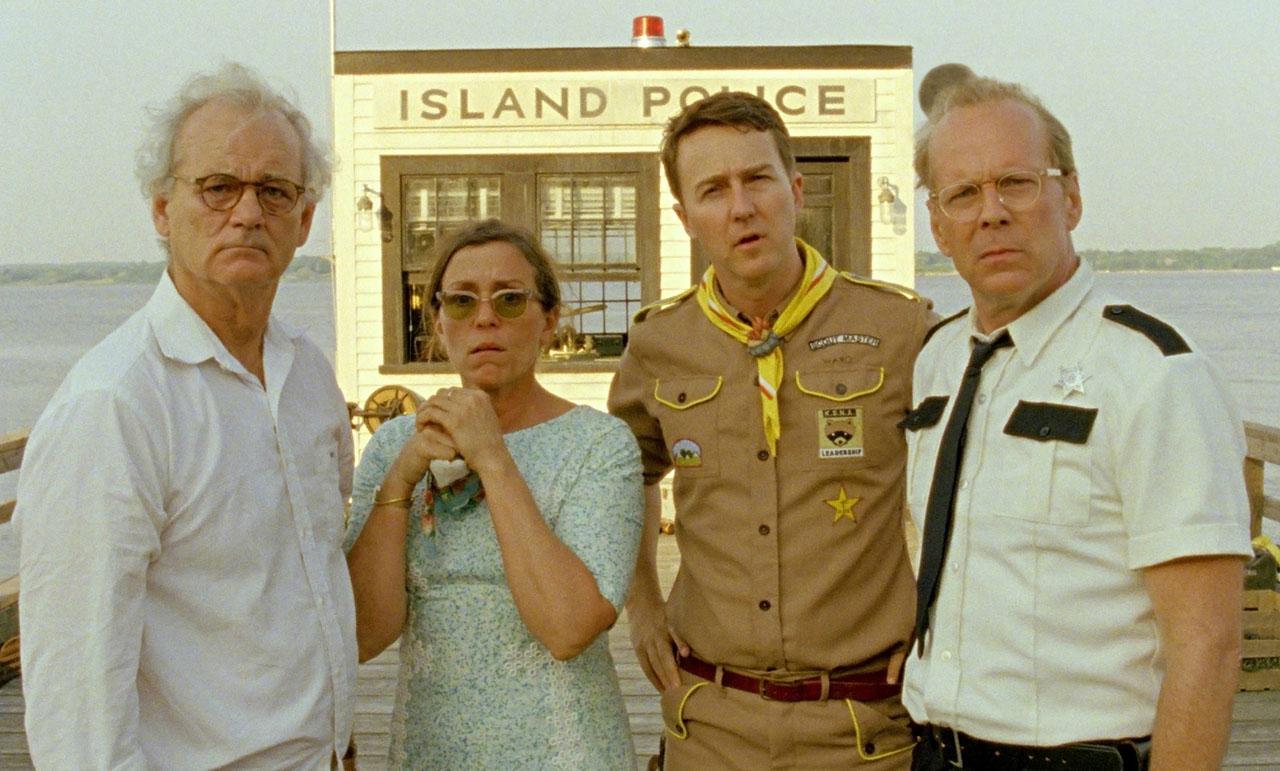
So, Moonrise Kingdom, co-written by Anderson and Roman Coppola (Francis' iconoclastic kid), set in the mid-60's and involving an East coast island community. There are two factions, the authorities, represented by island law enforcement—Captain Sharp (Bruce Willis) and the troop leader of a group of "Khaki Scouts"—Scout Master Ward (Edward Norton). There is a dysfunctional family, the Bishops (led by Bill Murray and Frances McDormand). Both factions represent authority, and empty authority at that. Their worlds are controlled, regimented, but still subject to outside forces and acts of God, like weather—there's a storm approaching as the film's exposition expert (played by Bob Balaban) is only too quick to report.

Into this mix come a pair of star-crossed likers, outcasts from both houses, like Romeo and Juliet.
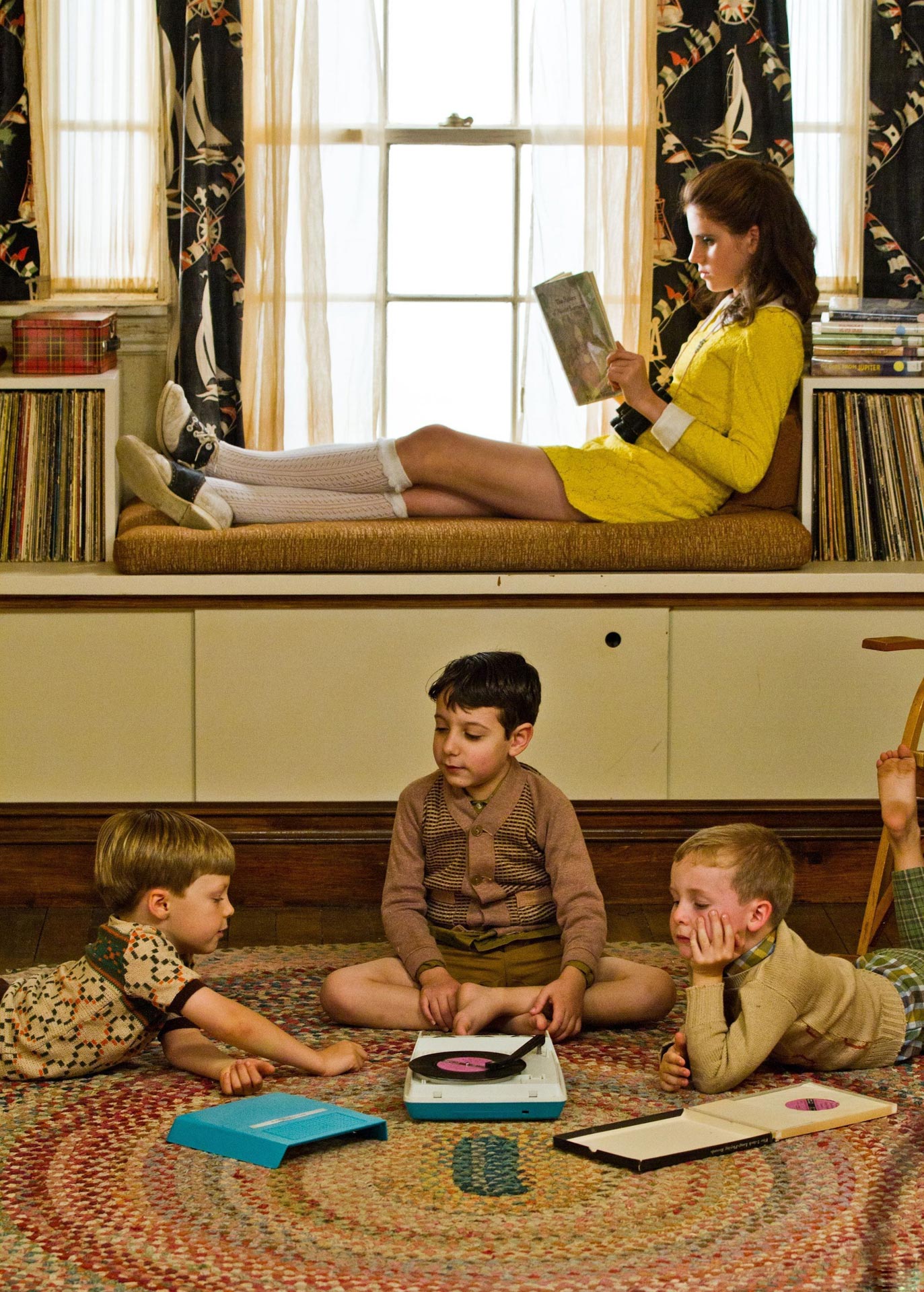
Sam (Jared Gilman) is an orphan with enough issues that his foster parents no longer want him; Suzy (Kara Hayward) is the oldest child of the Bishops and already is labeled as a "very troubled child." They meet at an amateur production of Benjamin Britten's "Noye's Fludde"
**—he's on a scout outing, she plays a raven.
They begin corresponding in secret, and then both escape their cloisters, he from the Khaki Scouts camp, she from her family home.
They live off the land, he with his survival skills and supplies, she with her books and records, a mutually dependent family with different roles. It doesn't take long for their disappearance to be discovered and the search parties form, the police led by Sharp and the Scouts, led by Ward, with the Bishops poking, prodding and threatening lawsuits. The kids lead them all a not-so-merry chase, and there are casualties along the way. But, the fugitives press on, despite the fact that, on an island, they can never really escape.

It's a romantic's version of 'the barefoot bandit" story
, but without the issues of ego, narcissism, and general public nuisance, and Anderson couches it all in an idiosyncratic format with scrupulous Kubrickian stylistic fluorishes—the measured tracking shots, the hand-held shots of freedom and chaos; the stylized expressionless acting, the structured mise en scene, perfectly balanced on a central fulcrum. On top of that, it's hilarious, with dialogue that's formal, distinct, played absolutely straight, betraying no irony, delivered in a deadpan lack of elevation.

It's charming
-no wonder these kids want out, left to their own devices. They still want structure, just their own structure, and, although self-imposed outcasts, seem far more together than those of their "betters."

It's fun
, odd, and rebellious in Anderson's over-stated understated fashion. Wonder what he'll do when he grows up.

* Oh, maybe this was premature. Anderson has since made The Grand Budapest Hotel, The French Dispatch (of the Liberty Kansas Evening Sun), and the wonderful animated Isle of Dogs, each getting increasingly richer, denser, and more sophisticated, all the while maintaining his quirky sense of humor and an almost child-like delight, as if he were playing (as Orson Welles put it) with "the greatest train set a boy ever had."

** Britten is the classical composer-thread rolling throughout Moonrise Kingdom, and his "Young Person's Guide to the Orchestra" is the starting theme for the film's opening sequence—a gliding, tracking tour of the Bishop's house.  They'll also do a version of it over Alexander Desplat's closing music over the credits.

Thursday, April 26, 2018

Isle of Dogs (2018)

No Future on Trash Island
or
"Sheesh, Igor, I Think He Chewed Your Ear Off"

The Japanese city of Megasaki is in crisis. It is determined that the city is suffering from the effects of "canine saturation" and a resulting public health crisis from a dog-flu epidemic called "Snout Fever." To ward off the risk, Megasaki's mayor, Kobayashi (voiced by Konichi Nomura—it's animated, they're all "voiced")—hiding the centuries-long grudge his family has held against dogs—institutes a plan to banish all bowsers from the city to a small archipelago called "Trash Island." To show the populace his own good will and that he, himself, will suffer from the decision, the first dog to be sent into exile is "Spots" (Liev Schreiber—yes, the dogs talk, in English), the service animal of Kobayashi's orphaned nephew Atari (Koyu Rankin, who speaks in Japanese). "Spots" is left alone and abandoned on Trash Island, but he will not be alone for long.
Soon, every dog from Megasaki is on Trash Island and it's a dog-eat-dog existence. Well, actually, no...dogs haven't resorted to cannibalism, but there is a rumor that one group did...well, let's not get into this. 99% of the population does not resort to cannibalism, as Megasaki provides a steady steam of trash for the various packs to fight over. It is not a good life on Trash Island, but at least it is somewhat sustainable.
"Is this worth fighting over?" "Yes, it is"
Isle of Dogs concentrates on one particular loose-knit pack: King (voiced by Bob Balaban); Duke (voiced by Jeff Goldblum); Boss (voiced by Bill Murray), and Rex (voiced by Edward Norton); into their midst comes an outlier named Chief (voiced by Bryan Cranston), who is far more independent than the others, probably because of their backgrounds and history, and despite his more decisive demeanor, there is a certain reluctance to take his advice on anything...despite the other four's inability to plot a course of action.  Even in a dog-pack, there can be inherent prejudice.
King, Duke, Boss, and Rex....and...Chief.
Their differences can best be explained in these lines of dialogue making the demarcation known.

Rex: I used to sleep on a lamb's wool beanbag next to an electric space heater. That's my territory, I'm an "indoor" dog.
King: I starred in twenty-two consecutive Doggy Chow commercials. Look at me now, I couldn't land an audition.
Boss: I was the lead mascot for an undefeated high school baseball team. I lost all my spirit, I'm depressing.
Duke: I only ask for what I've always had, a balanced diet, regular grooming, and a general physical once a year.
Chief: You're talking like a bunch of housebroken... pets.
Rex: You don't understand. Uh, how could you, I mean you're a...
Chief: Go ahead say it. I'm a stray, yeah.
Yeah. He's a stray. Go ahead. Make something of it.
Things change for the pack with the arrival of a mini-airplane  that has a slight accident and crashes onto a Trash Island beach. The pilot is none other than Kobayashi's nephew, Atari, who has come in search of his lost dog, Spots. The pack (who do not speak Japanese—they speak English standing in for canine) bands together to find Atari's lost guard=dog and begin an odyssey of sorts on Trash Island to find the boy's ditched dog. The trek allows Atari to bond with Chief—they are, after all, both unattached strays—a relationship that benefits both parties.  
Isle of Dogs is the product of director-co-writer Wes Anderson, who basically did a full story-board breakdown for stop-motion animators to emulate—as he did in Fantastic Mr. Fox—has stated that the film is influenced by the films of Kurosawa and the Rankin/Bass television specials of the 1960's. Sure, it's very possible. But, an awful lot of Anderson's work can be seen to be based on the stop-motion animation work he saw as a kid. But, it's also unmistakably Anderson's style, with images that have a strict one-point perspective, a rather strict symmetry and camera movements leaning on the lateral (with the occasional direct zoom that makes sure not to move the center-point). Watching one of Anderson's stop-motion movies is like watching Stanley Kubrick make a "Lego" movie.
In between Fox and this film, Anderson made the live action The Grand Budapest Hotel, which pushed the 'feel' of the live-action film into a more animated sensibility, even employing a similar stop-motion sequence to illustrate the Hotel's vertiginous tram. He continues the strict one-point perspective that he has been increasingly been using throughout his career. You can also see a major up-tick in the design of the film, far above that displayed in Fox, creating vast spaces that extend to the horizon. You also see him employing a mixed-media approach, combining the live-action with animation (particularly in television transmissions that are featured).

It's a great leap in form for Anderson, who creates a fun little adventure story with an increased sophistication that's quite fun to see.

The "Fearful Symmetry" of Wes Anderson's Isle of Dogs

Saturday, May 9, 2015

2010: The Year We Make Contact

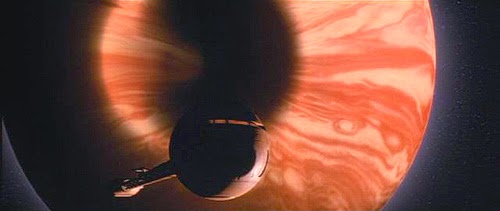
2010: The Year We Make Contact (Peter Hyams, 1984) 2001: A Space Odyssey took scientific precepts and used them as a launching pad for a philosophical adventure about humans and their place in the Universe in a suggestive and non-narrative way. It's "official" follow-up, 2010, however, tells you what it's going to show ya—then it shows ya—then it tells ya what it showed ya, thanks to a narration by Roy Scheider's character that explains everything but what he had for dinner. It's as far afield in style from its cinematic prequel as it could be—so much so that they feel like they've come from two different galaxies, or as one IMDB poster put it, "it's like comparing apples and concrete."

Based on
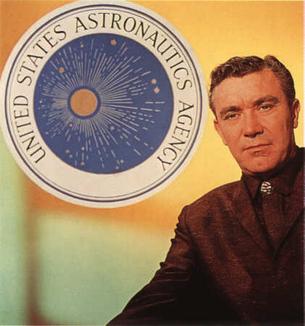
Arthur C. Clarke's "romp around the Solar System" ("2010: Odyssey Two"), it proposes a fact-finding mission by Dr. Heywood Floyd (Roy Scheider in this one, rather then the original's William Sylvester) to attempt to discover precisely what happened to the Discovery Mission to Jupiter and its crew. By hitching a ride on a Soviet space-craft (commanded by er, Tanya Kirbuk*Helen Mirren) that just happens to be passing by, Floyd and his crew—Discovery engineer Dr. Walter Curnow (John Lithgow) and Dr. R. Chandra (Bob Balaban), the computer scientist who developed the Hal 9000 and its twin in Urbana, Illinois—attempt to find out what went wrong with the mission that ended up with a dead crew and no information on where the signal sent by the un-mooned TMA-1 anomaly led. Where the first film revels in the leaps of evolution foisted on Man by "the Zarathustrians" (as I call them), Hyams' film is stuck with the earth-men and women merely trying to crack "what-done-it." 


Frankly, they should have just re-played the first film.
Kirbuk...uh...Kubrick stayed away from the machinations, unless it was visually arresting or amusing—like the zero-gravity-walking up walls, or the gravity-making squirrel-cage aboard Discovery— but Hyams, like Clarke, is only too happy to show the nuts-and-bolts of dropping into orbit with ablating bags, the stress it has on the crew by shaking the camera, the spark-emitting panels (straight out of Irwin Allen shows), and the requisite astronaut who flies across the control center in zero-g. This is the stuff of sci-fi melodrama in all its cheapness, precisely what Kubrick was trying to avoid in his film.
An interesting thing about the films of Peter Hyams: no matter the genre or concepts that he chose to direct, his films appear essentially flat—that's a weird result from a director who also chose to be the cinematographer on so many of his films (he shot 2010). Even when he chooses to shoot with some depth of field, his films feel like television productions, with a strong central object, and rarely little else of consequence (Kubrick did essentially the same thing, but his shot-compositions tended to be more vertiginous with a purposeful one-point perspecti
While everybody is fussing about the flight-mechanics of the rendezvous' with the Jupiter system and the now-tumbling-in-orbit Discovery, the Zarathustrians choose that moment to pull off a Solar System-affecting gambit, using the missing-in-action Bowman (Keir Dullea returning to his earlier role) as a secret agent appearing everywhere (now?) to pull off something spectacular—one shouldn't call it terra-forming so much as solar-forming—gravity manipulation, while Bowman runs interference, squandering the mystery of that omnipotent-seeming Star-Child (the next leap in human evolution seen at the end of 2001), to serve as a planet-skipping/morphing errand-boy who, it would appear, is discarded as soon as he accomplishes his final mission. 
Clarke's ultimate Big Surprise is a nifty one—educational, too, about the configuration of Jupiter—but by granting the unseen architects in both films motivations that seem like cosmic buttinski's very much cheapens the first film and its scope (much like the sublimation of Bowman's potential), making man's Creation merely all in a monolith's day's work. And the cosmic consequence of 2010 feels like a convenient after-thought, easing tensions of a U.S./Russian nuclear conflict (even though they seem to get along enough to launch a joint space mission together). 
It is eerie to hear the voice of HAL again (Douglas Rain) and to see Keir Dullea, through some artful make-up, look as young (and as old, unnecessarily) as he once was. And working from mere screen-captures, Hyams and his art department did a meticulous job recreating the Discovery sectionsthey can't keep the ships from looking like models in the FX sections, however, which is curious for a more late-model movie. So meticulous is their work that it seems bizarre that the Russian ship would look so different in its interior, than what the Americans had come up with by that time. Again, apples and concrete.
One wonders, ultimately, if it was worth doing: it was a toe-splash for M-G-M to explore the possibilities of one of its core properties, but its utter conventionality only points to the other film's complete unconventionality in terms of belaying cheap dramatic tricks and the standard "science fiction" obsession with mechanics (Kubrick turned all that rendezvousing into a dance). It is the only sense of wonder 2010 allows, where its progenitor was far more about wonder than the why's and wherefore's.

2010 serves as a Reader's Digest version of the original, a blunted, condensed presentation of a larger, more sophisticated work. It has highlights, sure, but there's nothing transcendent about it; it's a blue-print, a schematic of ideas, rather than a fully-formed work of art and expression. It's like a hack-magician, who can only keep an audience's interest by revealing how the tricks are done.

But, as Raymond Chandler noted with inferior movies made from his books, the originals are still there to be appreciated on their own. The creation of 2010 really doesn't diminish the work of 2001—it's still there to be seen and appreciated.
The final message to Earth is in English...and reads like a Hallmark card.

A couple of in-jokey cameo's
Pithy cover of Time: the U.S. President is Arthur C. Clarke/
The Russian Premier is Stanley Kubrick
Arthur Clarke (left) sits on a park-bench outside the White House
(Wait a minute—isn't he the President?)
* Read the last name backwards...

Thursday, February 20, 2014

The Monuments Men

Guerra Gratis Artis
or
Saving Private Collections

The Olympics are going on, which always reminds of the great debt we owe to the Greeks and to Greek mythology, all of the written records of that civilization that has enriched our lives and manage, over the centuries, to still reflect and caution us, through its stories. And we couldn't thank the Greeks, if we don't, in turn, thank the Jews, who saved those written records of Greek mythology from being destroyed in the many upheavals resulting from so many transitory religious and political conflicts. Long term accomplishments can be utterly obliterated by something so blinkerdly short-sighted. History can be erased.

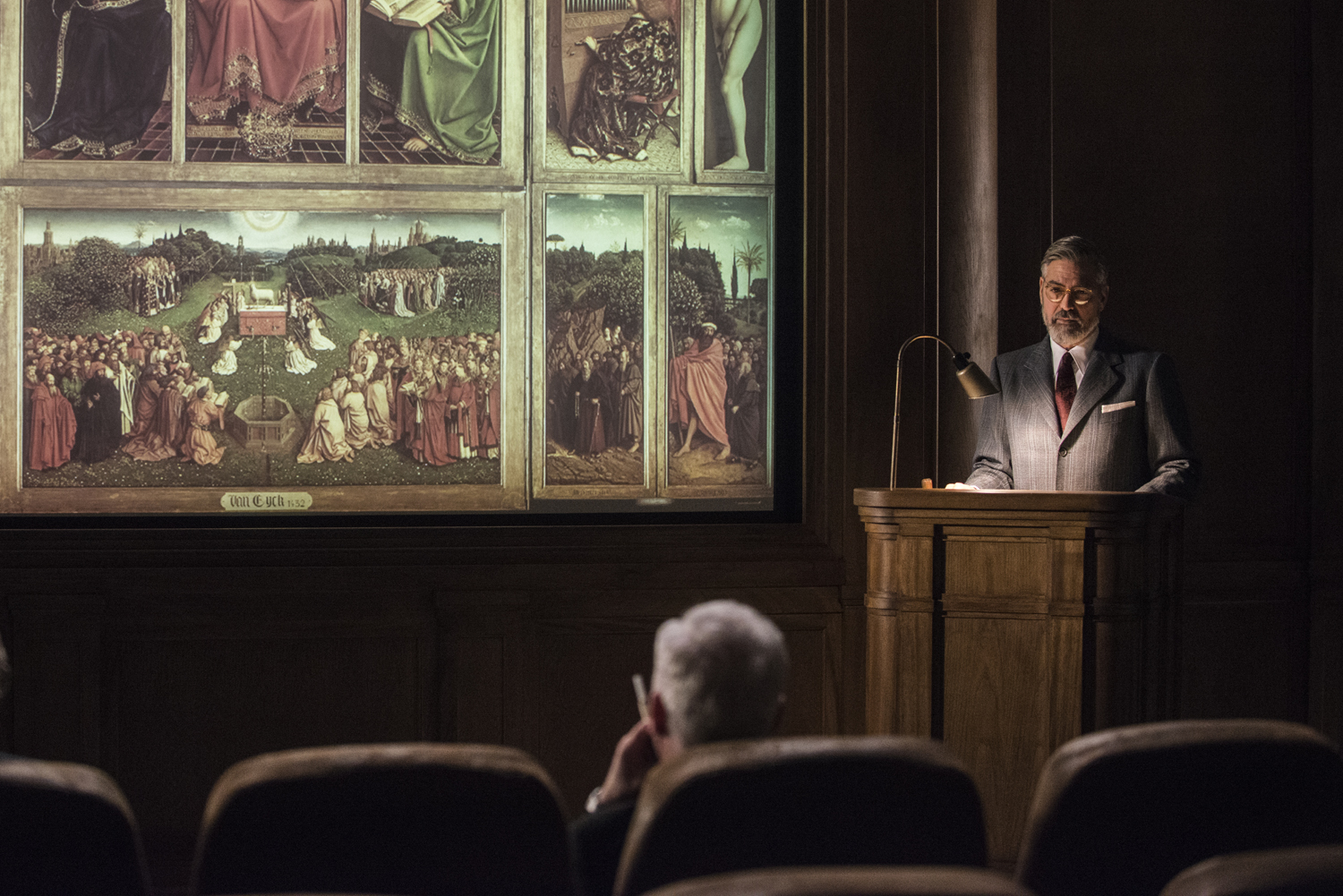
That, ultimately, and a bit ironically, is the point behind The Monuments Men, George Clooney's new movie, which he directed (and co-wrote with his regular collaborator Grant Heslov). In it is told the tale of the men who, during the second World War, tracked down confiscated art looted from Nazi occupations, if it could be found, in order to return it to its rightful place before the war. They did this during the war in progress.
It sounds like a fool's errand. War is messy. Profoundly messy. To everything. It is chaos incarnate. To think that one could actually try and put some order back into it, while the war is still waging, is more than a little wistful, it's downright barmy, like literally trying to stop a tidal wave with a teacup. It's the idea of someone with an out-sized sense of justice, or a die-hard romantic...or an academic.  

Frank Stokes (Clooney) is a man in a hurry. We meet him giving a lecture to FDR about the situation of certain art pieces in Europe that have gone missing, possibly destroyed or maybe housed for the eventual Fuhrermuseum that has been planned for the Third Reich's future after the war.  With the Nazi's defeat becoming more and more certain, Stokes wants to lead a squad of art experts to track what has become of the missing artistic culture of Europe, lost, stolen or destroyed.  

Roosevelt is a bit more practical. "But, Mr. Stokes, this is war." Stokes won't be deterred. "Who will make sure that Michelangelo's David is still standing. Or that the Mona Lisa is still smiling?" He's given the go-ahead and assembles a small team of art experts, none of whom have any business on a battlefield. And here's where the cast comes in and it is exceptional...and bit quirky. Matt Damon, Bob Balaban, John Goodman, Bill Murray, Jean Dujardin (of The Artist), and Hugh Bonneville (from "Downton Abbey") and...just to keep it from being a complete boy's club...Cate Blanchett as a museum curator who takes notes just as well as the Nazis.

The cast is diverse but quirky. They're paired up—Goodman with Dujardin, Balaban with Murray, Blanchett with Damon—as they go investigating leads. The tone is a sober Kelly's Heroes vibe, with some lightweight dramatics, and episodes of joshing cameraderie. I hate to say it, but it's a bit episodic, like an episode of the TV-series "M*A*S*H," juxtaposing serious and comedic. There are good scenes (the best being Clooney interrogating a Nazi later in the movie), but a lot of things feel slight, depriving the movie from feeling like a whole film, as a series of vignettes, a few highlights and that's it. 
Time Magazine has criticized The Monuments Men for "dumbing down" the story (and there is a certain amount of that), but ultimately it's not a matter of "dumbing down" that keeps Monuments Men from being a good film (or even a good treatment of the story) as it is a matter of scope—the story is too vast to contain in two hours, and the movie concentrates on certain pieces: Michelangelo's "Madonna and Child," and The Ghent altarpiece, and as long as those stories are complete (and we see the vast warehouses of other pieces, which would be handled, I presume, in Monuments Men II) the movie seems satisfied that it is enough.

Except for the film's central theme, brought up at the beginning and the end of the film: "Is a work of art worth a man's life?" Is it worth the lives of the men who undertake this mission (their recruitment is treated rather sketchily, and there is no doubt, waffling, or questioning of it), and is it worth the life of any soldier who might get killed in order to "protect" a building or fresco?* Monuments Men never answers that question other than to say "it's worth it if that soldier chooses it to be" (as if they have any choice, orders being orders and war being war).That answer is not good enough, given the time invested in the film and its characters. 
Still, it's an interesting story of a quixotic crusade for permanence for a world in turmoil...of trying to keep the most beautiful work of human beings from being destroyed by their ugliest instincts.


* That theme is handled much better in Saving Private Ryan, as the men question why their lives are being risked to seek out and find one dog-face.