"Inspired" as in as loose an interpretation of the term as possible. They're both about families and have Lionel Barrymore and Mickey Rooney in the credits. But, the "Hardy" series never dealt with alcoholism, sloth, and the revolutionary pangs of rebellion and first love that can raise the roof of any American domicile, until it is planed down to respectability (or some form of it). It may be the lightest of O'Neill's plays and so not threatening to the "American values" of M-G-M head Louis B. Mayer. But, the O'Neill name would have appealed to M-G-M production head Irving Thalberg (who had cut back activities after a 1932 heart attack) and his replacement David O. Selznick.
It's not all Currier and Ives at the Miller household in 1906 New England, where father Nat (Barrymore) is a newspaper publisher, sagely juggling the traumas, large and small, happening under his roof, with wife Essie (Spring Byington), children (in order of birth) Arthur (Frank Albertson), Richard (Eric Linden), Mildred (Bonita Granville), and youngest Tommy (Mickey Rooney) and Nat's brother Sid (Wallace Beery) and Essie's sister Lily (Aline MacMahon). Sid is living in his brother's house because he can't hold a job, largely due to his constant drinking. Lily is there out of charity for a spinster, which Sid would love to change, if not for her constant rejection due to his drinking and questionable past.
Then, there's Richard, about to graduate from High School and suffering the pangs of first love, two things that can puff out a guy's chest and mess with his head—as the saying goes "you can tell a Senior, but you can't tell him MUCH."*
With his mind swimming with Oscar Wilde, G. B. Shaw, Marx and The Rubáiyát of Omar Khayyam, and mooning over the girl next door (Cecilia Parker), he thinks himself a man of the world, bound for Yale, and is itching to prove himself, when, frankly, he's still living under his father's roof and hasn't even kissed a girl (or "the" girl, as she's afraid of kissing). The influences and urges set him up to become a failure like his Uncle Sid—although Sid, for all his talk and self-conceit (and self-deception) does have his uses—so, the faltering steps the kid takes to manhood have to be monitored and negotiated.
That includes not citing Marxist tracts in his graduation speech, learning how to drive the family's Stanley Steamer, his passionate love letters to his girl, Muriel, which are intercepted by her father and found to contain passages from Swinburne, leading to the parent storming the Miller residence and threatening to cancel advertising in father's newspaper. Muriel is forced to write a farewell letter to which man-of-world Richard can only blurt "Geewhillickers!" and bust out in tears.
To say nothing of his getting roaring drunk and getting rolled by a floozy.
Growing up is tough. And one is reminded of that other dramaturge John Wayne who when assured that that the immaturity of an opponent is a temporary thing and "will learn" usually replied "...if he lives." Nobody learns anything getting killed in the process.
But, O'Neill—and Goodrich and Hackett—makes sure the kid survives long enough to go to Yale. It's a sweet movie, sometimes painful, but everything promises, if not happiness, continuity, and maybe an upward trajectory from the fates of so many in O'Neill's plays, whose foibles and self-delusions are given a light dusting of sugar in Ah, Wilderness!
* “You can tell a freshman by his silly, eager look / You can tell a sophomore ’cause he carries one less book / You can tell a junior by his fancy airs and such / You can tell a senior, but you can’t tell him much.”
It's a Wonderful Life(Frank Capra, 1946) It's a legendary movie that was a failure upon release. It was the first movie by an Oscar winning populist director, an immigrant to the U.S., after serving as the chief propagandist for the Armed Services during the horrific days of World War II. The war had changed him. And when Frank Capra started work on a new project, it was a tough sell. But, Capra started a new production company, Liberty Films (with two other director-veterans, George Stevens and William Wyler) and the first project was an adaptation of a self-published short story by Phillip Van Doren Stern, "The Greatest Gift." RKO bought the film rights and after several drafts (by such as Dalton Trumbo, Clifford Odets and Marc Connelly, RKO encouraged Capra to read the short story, and Capra championed it, starting work on a script with a handful of writers—along with the credited husband-wife team of Frances Goodrich and Albert Hackett, there were contributions by Michael Wilson, Jo Swerling, and even Dorothy Parker.
It is Christmas Eve in Bedford Falls. The thoughts and prayers there are causing a stir in Heaven and an angel-in-training (Henry Travers), but not—to use Lincoln's phrase—one of the "better angels," is dispatched to help one man, George Bailey (James Stewart) from throwing away his greatest gift—his life. But, what has transpired in that life to reach that point? For fully 99 minutes of the film's 129 minute length, the potential angel Clarence—and we—are given his history.
George has big dreams, but they are always dashed by circumstance and sacrifice for "the right thing." George is a victim of that old saw "life is what happens while we're busy making other plans." Life, the Depression, the decisions of others, all conspire to make George's life one of desperation, stuck in his hometown at a job he didn't intend...that makes him forget that he has an adoring wife (Donna Reed) and a clutch of kids at home, which might be taken away from him if the prominent banker in town (Lionel Barrymore) makes good on his plot to destroy George and his family's little savings-and-loan, made possible by the banker's theft of its assets.
It's a good life, but not the one George wanted, but he might even lose that, and so on that snowy dark Christmas Eve, he contemplates taking matters into his own hands and taking his own life, before it can be taken from him. For 3/4 of the movie's length, George is put through the grinder, sees all the work and sacrifice gone to naught, and the realization—from the banker's words—that he's worth more dead than alive. In a monetary sense, it may be true, but worth is more than dollars and cents. And with incarceration looming over him, George is only looking at the bottom line. And he's reached it.
What could be worse?
It is only by heavenly intervention that George can be shown the ledger of his life by contrast. Clarence grants him a look into an alternative version of the Universe—one in which he had never been born. And everything has changed—the people he's known, the people he's helped, his families that never knew him and never existed, the city he grew up in, all are a Dark Universe version of what he had known. The big difference is that no one knows him; he was never born. He is shown the significance of his life by the void that is left in its absence. His Christmas gift is the revelation of just how much his life is worth and the difference it has made.
It's a novel way to look at life, not too far different from the fantastical approach The Archers had with A Matter of Life and Death (released at approximately the same time) in dealing with the affairs on Earth—elements of fantasy are mixed with the hammering bluntness of recognizable reality to deal with matters that might be common with the audience. At the same time, Capra uses the flashback technique (ala Citizen Kane) to tell most of his story and compress a life into pertinent highlights, the better to mix and match the contrasting realities and make them as recognizable and significant to the audience as they do to George. We experience his horror to the alternate "Non-George" reality as soon as he does.
The film starts in Heaven, takes us through Purgatory and Hell as surely as "The Divine Comedy," and lands us back to Capra's version of Heaven—a democratized solution to the issues that have, given George's nightmare vision, been reduced in significance. For Bedford Falls, thoughts and prayers are not good enough—little do they know their significance to George—but grassroots actions, good-intentioned, save the day. Money, the root of George's depression, is volunteered, and George's worth is satisfied, both in their actions to his charity, but also in a way that would impress even a banker.
Significantly, the film begins and ends with the ringing of a bell—a call to action and attention.
The film is a depressive's nightmare, yet it has endured, long past its lackluster run at the box-office, and despite—and probably because of—a slippage into the public domain due to clerical neglect, as a Christmas classic since the 1970's, cheering and warming the hearts of millions for the special film that it is. There isn't much dissension in that, and its message of the worth of one life and its impact can touch anybody. For example: I had an acquaintance, a quite brilliant writer, who, after battling a long and terrible disease, joined with his family one night, all together, to watch It's a Wonderful Life, and, satisfied, went to bed where he passed away in his sleep. I can't think of It's a Wonderful Life without thinking of him, as little interaction as I had with him, and the two are inextricably linked. That's the significance of one life, how powerful it can be, and how it can influence the lives of others. We are "The Greatest Gift" to the world when we can make it a better place, when we can change it—for the better—and when we can see the individual value of the person, despite the attempt to turn us all into statistics, metrics, hits, followers, samples or net worth. As baseball announcer Red Barber used to say, God doesn't count the net worth or toys at the end of a life, He counts the scars. Merry Christmas to you all.
A Guy Named Joe(Victor Fleming, 1943)A Guy Named Joe is a wartime fantasy film—it was made in 1943 during the second world war—that was such a favorite of Steven Spielberg's (when he was watching movies on television while he was growing up) that he remade it as his own film, titled Always, in 1989. One can see why, despite the latter film's torturous transition changing the milieu from World War II bombers to forest fire-fighting in modern times. It has a lot of diverse plot elements and crosses many genres: love story, war story, fantasy, action. Yet it's also a personal story with a character arc close to Spielberg's heart: a man-child has to learn to grow up. But, instead of committing to something, here the key to maturity is letting go...making the sacrifice. Of course, that story is only one dangerous mission away from being told in any war film. In a story about fire-fighting, not so much.
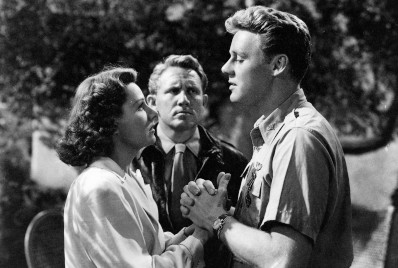
But, back to Spielbergian motivations—the best reason to remake this movie? The love story in the first one doesn't work. Whatever passes between Spencer Tracy and Irene Dunne in this movie feels more like mere tolerance than a quickening flame. One hesitates to bring Hollywood gossip into discussing the results on film; what is on-screen should be taken at face value, and the situations and logistics on-set should, if all goes well, be invisible to the casual movie-goer (and Fleming, a yeoman director who skirted the complexities of Gone with the Wind and The Wizard of Ozis better than most at surmounting them). But, the chemistry between Tracy and Dunne, that is so important to making the rest of the film work is not there. The two did not get along during filming, and Tracy's entire performance comes off as aloof and "above-it-all," not heartfelt as it should be. In his update, Spielberg overcompensated by going the other way, with Richard Dreyfuss' work being a little too smiley and treacly and trying too hard to be "winning," thereby making his character seem petty and destructively selfish during Always' darker passages. But, the story is a compelling one: Pete Sandidge (Tracy) is a chances-taking bomber pilot in the European theater of WWII. He's best buddies with Al Yackey (Ward Bond) and sweet on Durinda (Dunne), a pilot in her own right. During one mission, however, Pete is killed and, finding himself in the after-life, is tasked by "The General" (Lionel Barrymore) with helping to train a young pilot, Ted Randall (Van Johnson in his first major screen role) in the Japanese theater. Durinda comes back into the picture, still shattered by Pete's death, but at the urging of Yackey, she ends up nearby, and, though reluctant, finds herself falling for Ted.
For Pete, this is agony, watching their budding romance, and leaves him conflicted about his "mission" and his feelings, and only an extremely melodramatic act of sacrifice forces him to "see the light," as it were. The screenplay is by Dalton Trumbo, and he works hard—maybe a bit too hard—to balance the conflicting emotions in Pete, and as good as Tracy is, he can't seem to find the right balance to give Pete the depth of character integration to keep the different aspects of his personality together. The motivations are there in the script, but Tracy, fine in individual scenes, can't seem to make Pete a whole human being, giving a slightly disinterested air to the character. Some scenes were re-shot later in the studio to find a better balance (which, ironically, might have led to the problem), but the results on-screen don't pay off. Maybe it's the integration of fantasy elements with a war film that causes the conflict, and although the film comes to a resolution satisfyingly, it leaves one feeling a little melancholy, as if something more could be done. Partially, that's the film and how its elements might have more fully gelled. But, it's also the resolution of the film, too. Realistically (and bear in mind we're talking about a fantasy film here) the proper resolution is to face facts and accept and let go, for spirits on both sides of the astral plane...to accept grief and move on, parting. A bitter pill, even if for a greater good (which is always suspect). In the end, it comes down to making the best out of loss, and given the time of strife in which the film was made, that's a heartening statement to make, if superfluous, given the very real individual losses the world was producing during that war.
Interesting if not completely successful. However, three years later, Michael Powell and Emeric Pressburger would take similar themes and turn it into the far superior, and more fantastical, A Matter of Life and Death (or as it was known in the States, Stairway to Heaven).
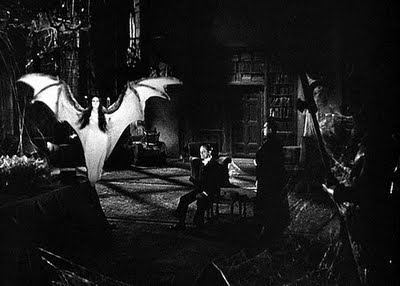
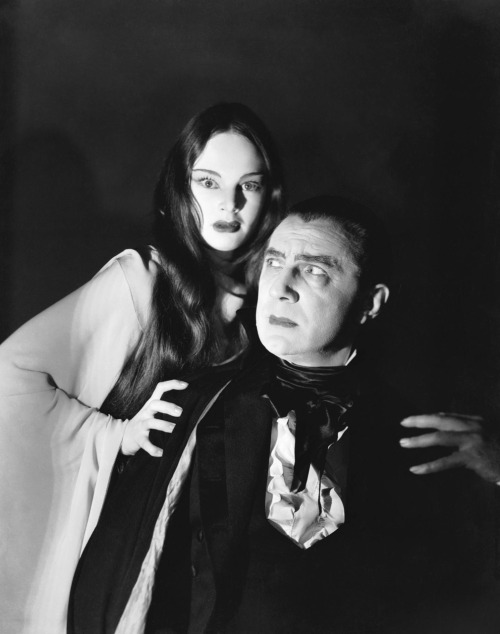
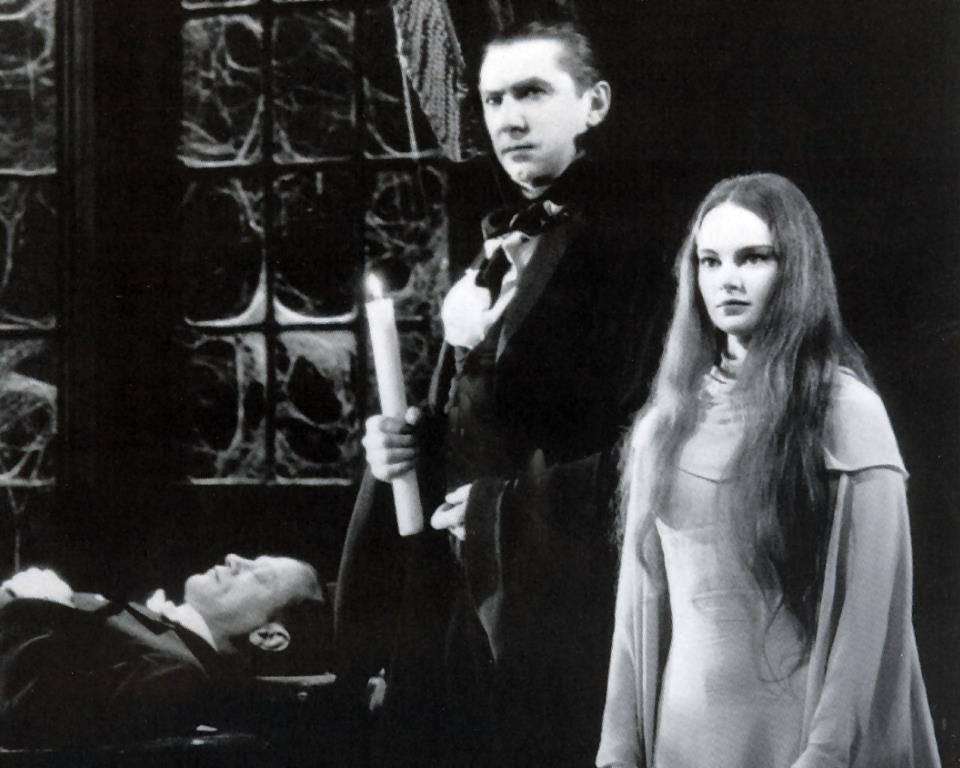
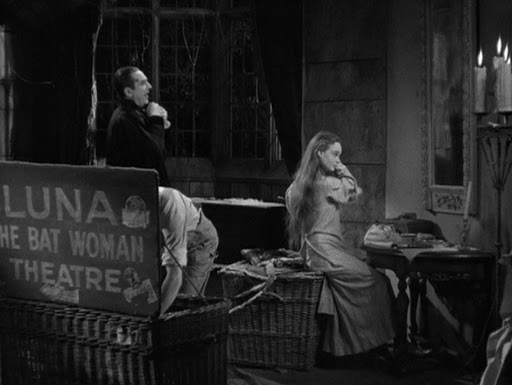
The marriage is postponed, the case, being investigated by Inspector Neumann (Lionel Atwell), goes cold and Irena goes to live with her guardian, the Baron Otto van Zinden (Jean Hersholt). And, wouldn't you know it? Right before the wedding can occur again, another attack occurs—this time Fedor turns up double punctured after walking by the Borotyn castle. Then, Irena is attacked. Things are getting to be a real pain in the neck, so the inspector brings in noted vampire specialist Professor Zellen (Lionel Barrymore), who suggests a two pronged attack (naturally), they'll dig up the body of Sir Karell to see if he in thrall to the vampire, and they'll search the Borotyn castle for Mora and Luna.
Still, before they stake these vampires, Browning's atmospherics are fun, effective and slightly risible and although it disappoints for toying with the audience (and for the many 20/20 hindsight "but if..." questions after), it's genuinely creepy.

 It's not all Currier and Ives at the Miller household in 1906 New England, where father Nat (Barrymore) is a newspaper publisher, sagely juggling the traumas, large and small, happening under his roof, with wife Essie (Spring Byington), children (in order of birth) Arthur (Frank Albertson), Richard (Eric Linden), Mildred (Bonita Granville), and youngest Tommy (Mickey Rooney) and Nat's brother Sid (Wallace Beery) and Essie's sister Lily (Aline MacMahon). Sid is living in his brother's house because he can't hold a job, largely due to his constant drinking. Lily is there out of charity for a spinster, which Sid would love to change, if not for her constant rejection due to his drinking and questionable past.