Showing posts with label Kevin Costner. Show all posts

Saturday, November 23, 2024

JFK

JFK
(
Oliver Stone, 1991) 
 
"To sin by silence when we should protest makes cowards of men."
 
At the time of this film's release, Stone's movie-collage of Kennedy assassination conspiracy theories was more than controversial, it was inflammatory. Experts in "the field" criticized it for playing fast and loose with facts and some went so far as to call it dangerous in its implications. There was so much flummery going on, some of which contradicted other speculations of the film, that it was considered a new form of propaganda, where new possibilities popped up before previous assertions were followed up on, that one was simply overwhelmed with the slew of speculations so that, finally, nothing was ever concluded. There were no answers, merely a mountain of questions, all of them vague and unsubstantiated. Stone was merely throwing stuff up at the screen and seeing if anything stuck.
Stone answered these charges by saying that he was making a new kind of film, and that he was trying to build a new narrative for the Kennedy assassination, not provide a definitive answer, but to ask questions, merely. The evidence of film bears it out—at least at first glance—as it's so filled with theories and goes down so many rabbit-holes, unchecked and unverified (Stone has stated he was using the films Rashomon and Z as his models). But, one only has to see how Stone starts the movie to know where he thinks the center of the conspiracy lies. After that quote by author and spiritualist Ella Wheeler Wilcox, he introduces Kennedy's predecessor, Dwight Eisenhower's final address as President, in which he warns of "the military-industrial complex". Like so many openings of so many movies, it is the director's thesis statement, providing that one bit of detail before launching into a history of Kennedy's recent history (narrated by Martin Sheen, who has played both John and Robert Kennedy in the past).
"I'm ashamed to be an American today."
The film proper begins the day of Kennedy's assassination as New Orleans District Attorney Jim Garrison (Kevin Costner, who had, in 1998's Bull Durham, delivered a speech in which his character states "I believe that Lee Harvey Oswald acted alone.") sees the assassination coverage on television initially in his office, then watches mournfully from a nearby bar where the local booze-hounds are free to weep in their beers or grunt their approval of the President's death. At the same point he cuts away to an argument between two men in the bar, New Orleans private detective Guy Bannister (Edward Asner) and an operative Jack Wheeler (Jack Lemmon),* which leads to a fight in Bannister's office when Martin brings up past suspicious activity. Meanwhile, Garrison starts looking into local links to the assassination and brings in pilot David Ferrie (Joe Pesci), who might have had links with Oswald. And despite Ferrie being sketchy and giving conflicting stories, they let him go.
"It's all broken down, spread around, you read it and the point gets lost."

It is only after the Warren Commission Report on the assassination is released that Garrison picks up the threads of the case again. A chance airplane encounter with a Senator (Walter Matthau), whose skepticism —"That dog don't hunt!"—about the report sparks Garrison to again call in Ferrie, but also Martin, who had seen Lee Harvey Oswald in Bannister's office and follow up leads not explored after the initial inquiry was dropped. One name keeps popping up—"Clay Bertrand" but nobody knows who that is. Turns out that "Bertrand" is an alias of Clay Shaw (Tommy Lee Jones), well known in New Orleans business circles as a wealthy benefactor and who had connections with Ferrie and thus Oswald. Garrison and his team have Shaw picked up for arrest despite their inquiries producing only denials.
 
"Oh, you are so naive"
 
One aspect of the film that is both a high achievement and problematic is the way that it mixes archive footage with deftly re-created new footage in such a way that it is nearly impossible to determine one from the other. Stone and his cinematographer, the wizardly Robert Richardson, mix and match formats, color and black-and-white, 35mm and 16mm, and all sorts of film stocks to create and re-create source footage and the results are nearly indistinguishable, especially the way they are cross-cut between each other. It lends the air of verisimilitude—and certainly adds a dynamic tension between the transitions—but one is never sure if one should believe what one is seeing. Is that press footage from the day of the shooting or is Stone just fabricating something he wants you to see?
It's troubling. There's a fine line between making it look right and obfuscation and given that film, by its very nature, is manipulative—even with documentaries—the level of distrust this attention to detail evokes is extremely high. What are we to believe? The answer is whatever the director wants you to believe. And given Richardson's deserving Oscar-winning work on this film to match the look, the grain and the confusion of archive footage, some of which might even be familiar, distinguishing the true from forgery is almost impossible. And audiences become susceptible.
One should always be aware that it's a fictional film of real-life events. And rather than speaking truth, it can only come up with conjecture.

 
"And the truth is on your side, bubba."
 
Stone makes his own case on what happened in a middle sequence where Garrison goes to Washington D.C. to meet an informant, a former military official who only identifies himself as "X" (Donald Sutherland, who's brilliant in a role of pure exposition). That Garrison would fly to D.C. to meet an anonymous source strains credulity (he surely must know his name before agreeing to meet, but then, the reality is Garrison never met this character, communicating with him in un-cinematic exchanges of letters).
It is 'X''s contention that Kennedy was making feasibility studies for withdrawing troops from Vietnam—"X" was doing the inquiries—and that this rattled the cages of the Pentagon and the CIA. "X" is unexpectedly assigned to...Antarctica...and only learns of the assassination the next day when he reads a New Zealand newspaper that has a full run-down on Oswald as the assassin when he hadn't even been charged yet. To "X" this smacks of "black ops" work (which he also used to do). Oh, and did I mention that "X" was also part of Kennedy's security detail? "X" seems to have got around.
Anyway, by the end of his exposition, "X" has a conspiracy that could involve the Pentagon, "the military-industrial complex", FBI, CIA, Cuban exiles, the Mafia, the Secret Service and Lyndon B. Johnson—he was in the fired-upon motorcade, after all—and all of them had grudges against Kennedy, but mostly, they didn't want to cease operations in Vietnam which was making a lot of people a lot of money. This is the same Vietnam War that Oliver Stone fought in from 1967 to 1968 with the 25th Infantry, which was a traumatic experience for him, and that he has made the subject of three of his films.
"X" refuses to come forward with this information and flat-out refuses to be a witness for Garrison's prosecution, but "X" tells him that his best chance is that he's the only guy conducting a trial involving the Kennedy assassination. "
Your only chance," he says "is to come up with a case. Something. Anything. Make arrests. Stir the shit-storm. Hope to start a chain reaction of people coming forward. Then the government will crack." And, with those words of encouragement, he walks away, leaving Garrison hanging. Stone cuts to the Eternal Flame at Kennedy's grave. When Stone gets in trouble, he goes for sentimentality.
The film's last hour is that most deadly of momentum killers, a trial, with Exhibit A being a long speech by one character...in this case Garrison.* That speech wouldn't stand in a court of law and it isn't made clear if it's a closing argument (that barely mentions the defendant Clay Shaw) or a part of Garrison's evidentiary overview (it starts with objections from the defense and then they are never heard from again), but Stone is dramatically stretching truth...and credulity...to make his point. And it goes on forever, like the stultifying final speech in court in Ayn Rand's The Fountainhead. It's only Stone's direction, Richardson's chameleon cinematography and Joe Hutshing and Pietro Scalia's quick-silver editing that keeps it interesting as film. And almost impossible to make counter-arguments against the assertions, they come so fast and furiously.
Stone's film ends with "what's past is prologue." Okay, so let's look at the past. All previous American political assassinations, successful or otherwise, before and after Kennedy's own, have been due to "lone gun-men" (or women). The most suspicious shooting is that of Martin Luther King, Jr.  And most damning of all, recent events have seen Presidents and Vice-Presidents questioning or ignoring, even humiliating their own intelligence or military agencies...but manage to remain very much alive. Kennedy was less of a threat...he merely wanted to wind down a war...as has been done recently...and Stone would have you think he was killed for it.
Yet, History doesn't bear that out. In fact, though they may rebel (or at least write a book), they don't assassinate. "That dog don't hunt."

Remember, "what's past is prologue."
But, the film did have an impact. 99% of the documents that were sealed after the assassination have been brought to light, particularly to the issues raised in the movie (The President John F. Kennedy Assassination Records Collection Act of 1992 was passed in 1992, the year after the movie's release). Although the stated goal of the act was to release all documents by October 2017, some still have not been released. Trump went back on a promise to release them pushing it back to when he was out of office, then Biden delayed them (COVID...for some reason) then released some in 2022 and 2023.** We're at 99% except for those that would cause "identifiable harm... to the military, defense, intelligence operations, law enforcement, or conduct of foreign relations... of such gravity that it outweighs the public interest in disclosure."
Same old excuse. "It'll keep us from doing our jobs" they say, even if those jobs have dramatically changed in 60 years. But, if JFK is worth anything, it is for its shaming of our government agencies' lack of transparency to commit them to act in that 1992 law. Six decades is two generations of secrets. Too many people and too many prominent people have expressed their doubts to not have as many answers as possible to wash away as many questions as possible.
Not that that will make a difference. We've reached the Age of Un-reason where nobody believes their own eyes anymore. If everything was released, unredacted and transparent, it is doubtful that the truth would be accepted...especially by those who make their livings as professional doubters and skeptics.

The true conspiracy has always been theirs. As in the mantra of All the President's Men, one merely has to "follow the money."
"It's up to you."
 
* The film is awash with cameo's and "guest-stars" in what Stone intended to be like the roster of The Longest Day, but it feels more like the many odd cameos in The Greatest Story Ever Told, that seem ill-though-out and are actually distracting and pull you right out of the movie. John Candy? 

** This is just part of Garrison's summation from the film:
The Warren Commission thought they had an open-and-shut case. Three bullets, one assassin. But two unpredictable things happened that day that made it virtually impossible. One, the eight-millimeter home movie taken by Abraham Zapruder while standing by the grassy knoll. Two, the third wounded man, James Tague, who was knicked by a fragment, standing near the triple underpass. The time frame, five point six seconds, determined by the Zapruder film, left no possibility of a fourth shot. So the shot or fragment that left a superficial wound on Tague's cheek had to come from the three shots fired from the sixth floor depository. That leaves just two bullets. And we know one of them was the fatal head shot that killed Kennedy. So now a single bullet remains. A single bullet now has to account for the remaining seven wounds in Kennedy and Connelly. But rather than admit to a conspiracy or investigate further, the Warren Commission chose to endorse the theory put forth by an ambitious junior counselor, Arlen Spector, one of the grossest lies ever forced on the American people. We've come to know it as the "Magic Bullet Theory." This single-bullet explanation is the foundation of the Warren Commission's claim of a lone assassin. Once you conclude the magic bullet could not create all seven of those wounds, you'd have to conclude that there was a fourth shot and a second rifle. And if there was a second rifleman, then by definition, there had to be a conspiracy.

*** Whether Trump will release any more documents in his next term one can only speculate. I don't believe a word the man says so even if he says he will, I'd be looking at updates on the website: https://www.archives.gov/research/jfk

Friday, July 5, 2024

Horizon: An American Saga - Chapter 1

Costner's Folly, Chapter 2 ("Nobody Knows Anything")
or
Going For the Fences
 
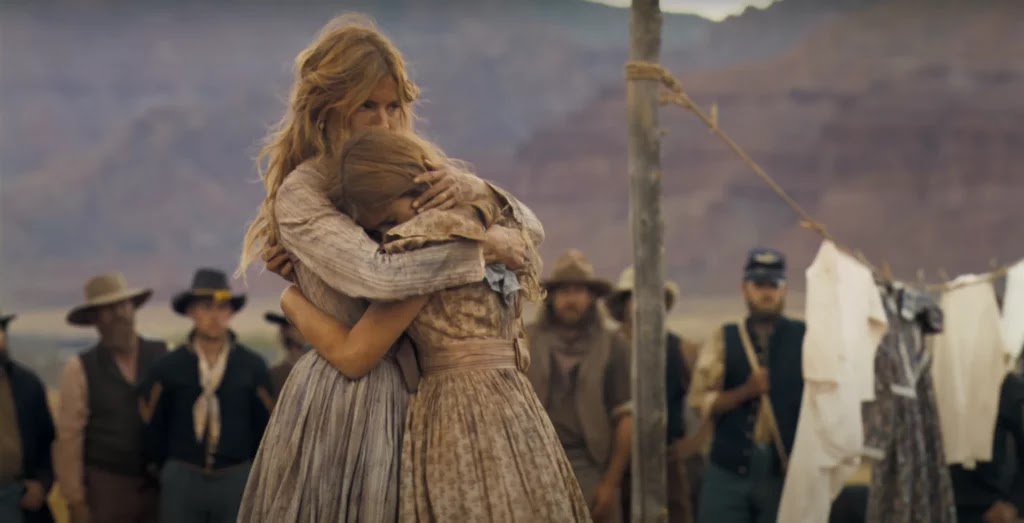
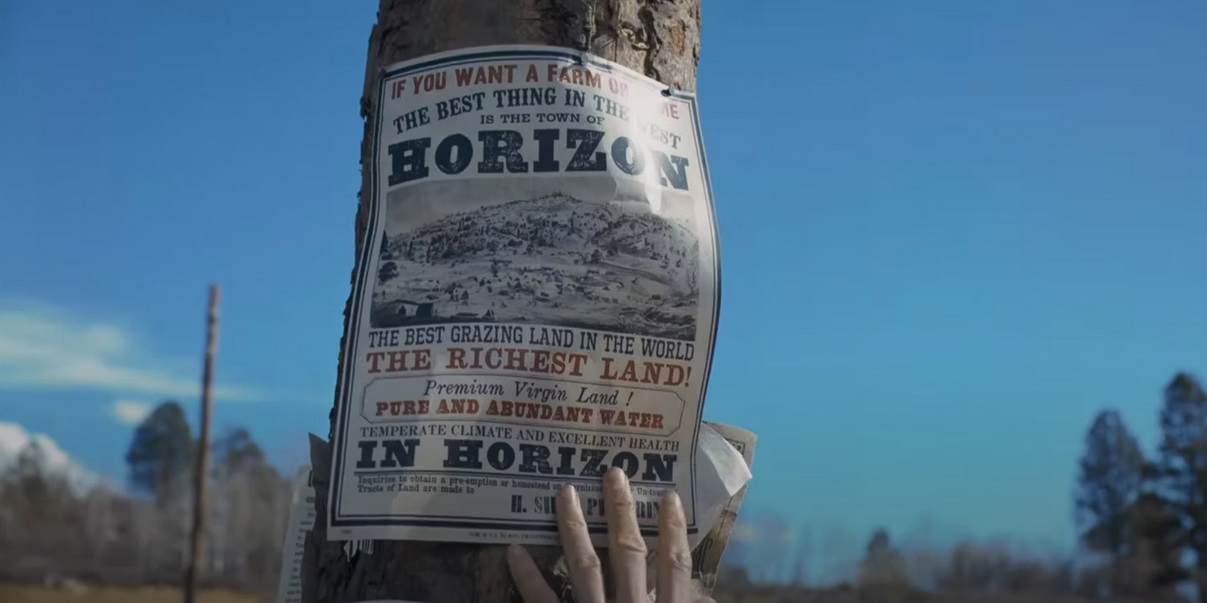
You've got to hand it to Kevin Costner. He takes chances. He's parlayed his television success on "Yellowstone" to make a movie he's been dreaming of for a couple of decades, in times both fallow and flush, cast it with a steady stream of great character actors who've never passed onto the A-list, split it into two chapters (although hopefully there will be more) and released the first one—in which various story-lines do not intersect—as a 3-hour set-up...the sum of which would spell box-office poison to a movie-going audience that wants its product pre-digested and easily grasped like fast-food.
 
And who can blame him? He's done it before. When he was making it, Dances with Wolves was being derided as "Costner's Folly" for making a Western when they weren't fashionable, for it's extensive location shooting, for the supposed grandiosity of writing, directing, producing and starring in it, for it's planned use of sub-titles, and for its cost overruns. 
 
But, as William Goldman wrote, nobody in Hollywood knows anything. Dances with Wolves became a box-office smash, its elegaic, and unconventionally seditious, story becoming a hit with audiences and garnering the Best Picture Oscar, beating out Goodfellas (which some may argue was a mistake, but, to my mind, really wasn't).
So, here's "Coster's Folly" Chapter Two, the ungainly titled Horizon: An American Saga - Chapter 1
, with a story by Mark Kasdan (who co-wrote Silverado, a favorite of mine), Costner and Jon Baird, photographed by J. Michael Muro, who shot Costner's lovely Open Range.
 
And it's great. Simply great.
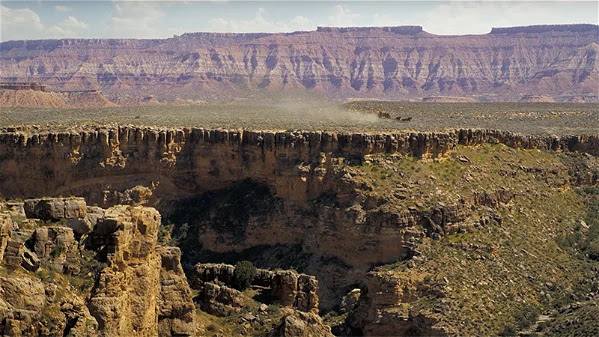
For a 3-hour movie, it sails right by, packed to the sprockets with detail, period and story-wise, never seeming to waste a frame in telling three...four? five?...stories about a plot of land in the San Pedro Valley in the American west that may—or may not —be available for homesteading, and the people who are attracted to the promise of it (whether it is true or not) and the people already living there who take it for what it is. 
 
There are the first white settlers, there to survey and parcel, but as they're alone in the wilderness and, unbeknownst to them, surveying Apache hunting grounds, they soon fall victim to a war party. Their graves are the first semi-permanent structures of Horizon. They won't be the last.
But, the pattern will remain the same. By 1863, there is a well-established colony on the site, across the river from those three original graves. They, too, are attacked by Apache, leaving a limited number of survivors: some, like Frances Kittridge (
Sienna Miller) and her daughter, Elizabeth (Georgia MacPhail) will take shelter at nearby Fort Gallant; others, like the boy who rode to the fort to get help, Russell (Etienne Kellici) form a hunting party to track down the Apache who burned down the encampment.
That attack has caused a dispute between the leader of the war party, Pionsenay (
Owen Crow Shoe) and the leader Tuayeseh (Gregory Cruz), resulting in the younger man splitting from the tribe, taking one of Tuayeseh's sons with him. 
In Montana, James Sykes (
Charles Halford) is shot by Lucy (Jena Malone), who takes her son David and flees for the Wyoming territory. Sykes' sons Junior (Jon Beavers) and Caleb (Jamie Campbell Bower) are sent to find her and the child. They catch up with her where she now goes by the name Ellen, married to hopeful lands-trader Walter Childs and living with a local prostitute Marybelle (Abbey Lee). When the Sykes boys show up, there is a confrontation between the vicious Caleb and saddle-tramp Hayes Ellison (Costner), a potential customer of Marybelle's. She and Hayes and the child escape town to avoid repercussions of the murder.
Also heading for Horizon is a wagon train, moving along the Santa Fe Trail, under the auspices of Matthew Van Weyden (
Luke Wilson), who is having trouble keeping the eclectic group of settlers (including a naive British couple and the family of Frances Kittridge's late husband) of the mind that, although they may be headed for a paradise, they're not there yet, and water and team-spirit are in short supply in a desert.
In the mix are interesting characters, like the leaders of the Army detachment at Ft. Gallant, who are straight out of John Ford's Cavalry films: Lt. Trent Gephart
(Sam Worthington, the most effective performance I've seen of his), who's a pragmatic soldier and would just as soon have settlers somewhere else and the "indigenous" (as he calls them) left to their land to keep the peace, a sentiment acknowledged but considered historically unrealistic by Gallant's leader, Col. Albert Houghton (Danny Huston) and his sergeant major, Thomas Riordan (Michael Rooker, in a slightly less garrulous version of the parts Victor McLaglan played in Ford films). One likes these people and you get the feeling everybody's doing the best they can under the conditions and the inevitability of time.
That's a novel's worth of people and a lot of stories and one suspects everybody's going to converge in Horizon (the town itself will probably end up being the focus of the series), their characters already established and with ensuing complications in the offing—Costner has previews of the next chapter at the end of this one and my appetite for it is whetted.
Despite the obvious nods towards Ford, Horizon: an American Saga, so far, feels more in the vein of the sprawling How the West was Won, but, in character, more like "Lonesome Dove", where individuals weave in and out of the fabric of the narrative, and sometimes—as in life—are never to be seen again in an indifferent Universe, lost in the stream of History. Costner may love his Westerns, but he acknowledges there's less romanticism to it when the survival rate hovers around 50%.
It was in Ford's film The Man Who Shot Liberty Valance, where a reporter states "This is the West, sir. When the legend becomes fact, print the legend." Ford's career peeled back veneers of western legend varnish in his films and in his later work stripped off more layers of his own earlier myth-making. Costner goes even farther, taking into account the grubbier myths of Leone and Peckinpah (and Eastwood) with his hard-scrabble porous towns in need of light and cleaning and extermination. He goes a step further by putting back all the practicalities of the settler experience that Ford cut out—the burying of the dead, the scarcity of water, the bugs and critters, the difficulty of killing a man with ball-shot, the necessity of self-sustainment by farming, the ritual of hard work, more important community matters than tea-dances and ceremonies.
If there's anything more to wish for, for me, it would be that there's more of it (despite others quibbling about length). A couple transition sequences seem to have been excised just to speed things along that might not have added much but may have smoothed a passage of time.
It's still early days, but one gets the sense that Costner will be making a point that the beauty of the West that we admire may not be just a matter of the dirt and stone carved by time and tide but also foundationed by the bones of those who walked before us. 

Sunday, October 8, 2023

Don't Make a Scene: Dances With Wolves

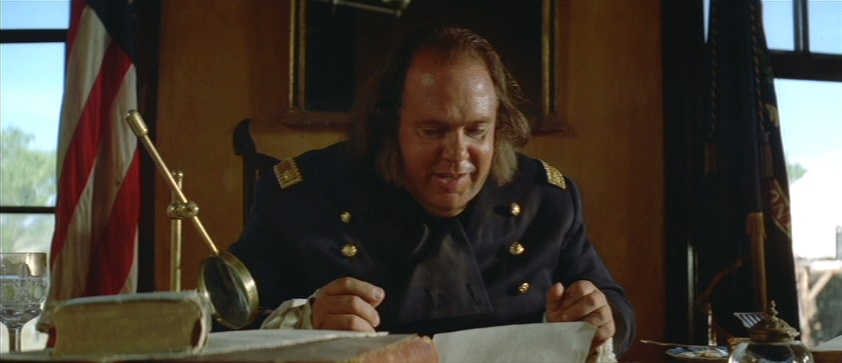
The Story: "Look at Maury!" director-star Kevin Costner enthuses in the DVD commentary of this scene from Dances With Wolves. "Boy, he really chewed this scene up...and I mean that in the best possible way!" 
 
That would be actor Maury Chaykin, who plays the clearly mad Major Fambrough, who sends Lt. John Dunbar to an abandoned fort and, more importantly in the sub-text, is the last man alive to know that Dunbar has been sent to the ends of civilization.

Temporarily.

Costner says in his commentary that he was thinking Marlon Brando for the part, but knew that the actor would be cost-prohibitive for a picture budgeted at just $10 million dollars. He lucked out getting Chaykin, who was a crazily inventive actor, who wasn't afraid to take chances and do things in a way nobody else would think of.

And the scene works—Costner underplays stringently here, lest the character of Fambrough be seen as someone comic rather than downright dangerous, and the character is just one of the many "civilized" individuals that would make "going Native" make sense. Dances With Wolves was always an indictment of what passes for "the settler experience" in most Westerns and its own radical, revolutionary way makes the case that Manifest Destiny was just another Myth of the West along with all the other outlaws.
 
The Set-Up: Lt. John J. Dunbar (Kevin Costner), is now a commissioned officer for the unlikeliest of reasons—wanting to commit suicide rather than lose a leg due to a battle wound, his act rallied wary Union troops to a victory in a stalemated campaign. For that, he gets a choice of commissions and he goes to meet the commanding officer (Maury Chaykin), who will give the orders that will change his life...forever.
 
Action.
 
LEGEND - FORT HAYS. KANSAS - 1863 
Dunbar pulls up short. He stares thoughtfully at something in the distance. 
DUNBAR (V.O.) The strangeness of this life cannot be measured. 
DUNBAR (V.O.)
In trying to produce my own death, I was elevated to the status of a living hero.
DUNBAR (V.O.)
I was also awarded Cisco
, the trusty mount that carried me across the field that very day.
DUNBAR (V.O.)
And on full recovery, was given transfer to any station... 
DUNBAR (V.O.)
...I desired.
Dunbar starts forward and the camera swings around to cover his back.
DUNBAR (V.O.) The bloody slaughter continues in the East as I arrive at Fort Hays...
In the distance we can see an isolated and dreary military post. The sky is very blue. The sun is bright. A rough-hewn, unfenced fort is straight ahead. 
DUNBAR (V.O.) ...a tiny island of men and materials surrounded by a never-ending sea of prairie.
There are several miscellaneous stone structures, a well-stocked stable, barracks, officer's quarters and in the center of it all, a headquarters building. 
Lieutenant Dunbar, riding straight and tall on his powerfully built buckskin, Cisco, passes into view.
He's headed for the center of the fort. 
INT. FORT HAYS HEADQUARTERS - DAY 
Silhouetted against the outside, Lieutenant Dunbar pauses in the wide doorway of headquarters. We can hear the distant sounds of work and life coming from the outside but in here it's strangely quiet. 
A SERGEANT sits at a desk in the foyer. Across the way, at another desk, is an enlisted CLERK. Both men glance from their paperwork at the man in the doorway. But it's only a glance and they go right on shuffling paper. 
Footfalls sound in a hallway and a blue-eyed officer with slick, black hair swings into the foyer. He too has a slackness that echoes the dreariness of this post. The blue-eyed officer, LIEUTENANT ELGIN, and Dunbar meet at the doorway. Dunbar glances down at a scrap of paper in his hand. 
DUNBAR
Where can I find Major... Fambrough? 
ELGIN
Turn right... all the way to the end of the hall. 
Being roughly the same age and rank these two might idle awhile, but Dunbar is eager.
He's already moving. 
FAMBROUGH
(O.S.) Lt. John J. Dunbar. 
DUNBAR Sir? 
Dunbar stops and turns, peering down the hallway. No one is there. 
INT. FAMBROUGH'S OFFICE - DAY 
Sitting behind the desk, holding a set of orders is MAJOR FAMBROUGH.
FAMBROUGH
Lt. John J. Dunbar. 
Lt. Dunbar is standing in front of the desk. 
DUNBAR
Yes sir? 
FAMBROUGH
(Yes sir...)
FAMBROUGH
Indian fighter, huh? 
DUNBAR
Excuse me? 
FAMBROUGH
(indicating paper) Your orders say you are to be posted on the frontier. 
FAMBROUGH
The frontier is Indian country. I quickly deduced that you are an Indian fighter. 
He arches an eyebrow, challenging the lieutenant. He has sad swollen eyes. He is an army lifer passed over too many times for promotion and right now does not look like a well man. 
FAMBROUGH
I did not ascend to this position by being stupid. 
DUNBAR
No sir. 
Fambrough returns to the order. Dunbar watches him in silence.
The major's tunic is covered with food stains. Sweat has broken out all over his head.
FAMBROUGH Yes.
His grooming is awful. His hands are trembling slightly.
Something is very wrong with him.
Now the major sees something on the official paper. He looks quickly at the lieutenant, then back at the paper, moving his lips but making no sound. 
FAMBROUGH
It says here you've been decorated. 
DUNBAR Yes sir. 
FAMBROUGH
And they sent you out here to be posted? 
DUNBAR
Actually sir, I'm here at my own request... 
FAMBROUGH
Really?
FAMBROUGH
Why?
DUNBAR
I've always wanted to see the frontier. 
FAMBROUGH
You want to see the frontier? 
DUNBAR
Yes sir... 
DUNBAR
...
before it's gone. 
The major fixes Dunbar with a sly look. 
FAMBROUGH
Such a smart lad coming straight to me. 
Still sly, Fambrough digs into a side drawer.
There is the distinct clink of glass on glass as he rummages.
Now Fambrough has what he wants, a blank official form.
He begins to fill it out,
writing in a disturbingly childish way. 
FAMBROUGH
Sir....Knight,
FAMBROUGH
I am sending you on a knight's errand. 
FAMBROUGH
You will report to Captain Cargill...
FAMBROUGH
...at the furthermost outpost of the realm... 
FAMBROUGH
Fort Sedgewick. 
He looks over his work with a schoolboy's excitement and affixes his signature with a wild flourish. 
FAMBROUGH
My personal seal will assure... 
FAMBROUGH ...your safety passage 
FAMBROUGH ...
through many miles of wild and hostile country. 
He folds the order 
and hands it to Dunbar. 
DUNBAR
I'm was wondering...
FAMBROUGH
Yes?
DUNBAR
I'm wondering sir, how will I be getting there?

FAMBROUGH
You think I don't know? 
DUNBAR
No sir,
FAMBROUGH
You think I don't know.

DUNBAR No sir, it's just that I don't know. 
FAMBROUGH
Hold your tongue. 
The major turns in his chair to stare through a single, dusty window. He can see a teamster outside, tying down canvas on a heavily-loaded wagon. 
FAMBROUGH
I'm in a generous mood and will grant your boon. 
FAMBROUGH
You see that peasant out there... 
FAMBROUGH
he calls himself Timmons... 
FAMBROUGH
he leaves this very afternoon for your Fort Sedgewick. 
FAMBROUGH Ride with him if you like...
FAMBROUGH
...
he knows the way. Thank you. That is all. 
Dunbar stands and salutes. 
Fambrough returns it snappily.
The lieutenant starts for the door. 
FAMBROUGH
(O.S.) Sir Knight... 
Dunbar turns around. 
Fambrough is standing in front of his desk.
There's a large, dark splotch on the major's trouser front.
He jams both of his hands into the front of his pants and giggles. 
FAMBROUGH
I just pissed in my pants... 
FAMBROUGH
and nobody can do anything about it. 
 
 
Words by Michael Blake
 
Pictures by Dean Semler and Kevin Costner
 
Dances With Wolves is available on DVD and Blu-Ray from M-G-M Home Entertainment.