Showing posts sorted by relevance for query Anytime Movies. Sort by date Show all posts

Thursday, April 10, 2014

Anytime Movies (Transplanted): Edge of Darkness

While I have a few reviews "in the works," It's as good a time as any to re-boot (actually transplant from the old movie blog) a feature I started years ago, when it was suggested I do a "Top Ten" List.

I don't like those: they're rather arbitrary; they pit films against each other, and there's always one or two that should be on the list that aren't because something better shoved it down the trash-bin.

So, I came up with this: "Anytime" Movies.


Anytime Movies are the movies I can watch anytime, anywhere. If I see a second of it, I can identify it. If it shows up on television, my attention is focused on it until the conclusion. Sometimes it’s the direction, sometimes it’s the writing, sometimes it’s the acting, sometimes it’s just the idea behind it, but these are the movies I can watch again and again (and again!) and never tire of them. There are ten (kinda). They're not in any particular order, but the #1 movie IS the #1 movie. And we begin in as contrary a way as possible—so as to avoid any comparison to a "Top Ten." This one is unusual in that it's a bonus (like the joke in This is Spinal Tap, Anytime Movies go all the way up to eleven). And that's not all:
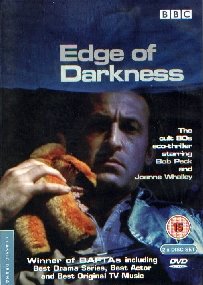
What the hell is this? It’s not a classic movie!

Oh, it’s worse than that! It’s not even a movie! It’s a British mini-series.

Okay, so what’s so special about it that it squeezes into the “Wild Card” position of the “Anytime Movies” list over, say,
Casablanca or Gone With the Wind, or your favorite film?

1. It’s a police procedural, as steeped in the gritty realism of shabby interrogation rooms and bad neon-tube-lighting as “
NYPD Blue” or “Prime Suspect.”


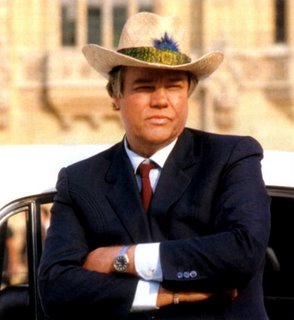
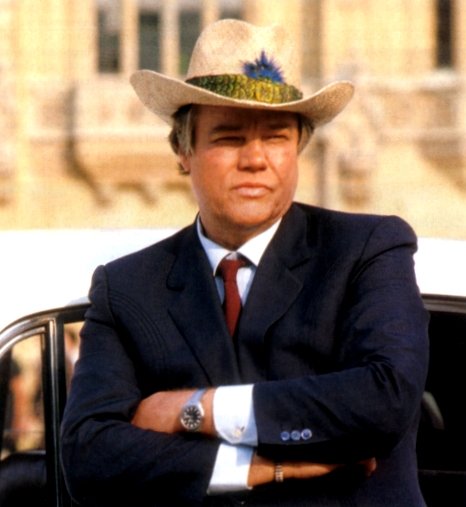
2. It’s a spy story, with rogue undercover operatives (particularly an eccentric CIA operative by the name of Darius Jedburgh, played in the performance of his career by Joe Don Baker), chases (two stand out--an edge-of-your-seat hacking exercise, and another through an abandoned nuclear facility) and intrigue on the part of goverment, and commerce.

3. It’s a political thriller, with investigations into government corruption and collaboration with a privatized nuclear industry, that involves Union-busting, suppression of environmental groups, and murder.

4. It’s a revenge story, as a police investigator attempts to find who murdered his daughter...or whether the bullet was meant for him?.
5. It’s a ghost story, as that murdered daughter keeps coming back to advise and inspire her father’s efforts, as he sinks deeper and deeper into an ever-expanding investigation, that, in the real world, he is being encouraged to abandon.

6. It’s a psychological thriller—because maybe she isn’t really there, and is just a figment of his severe grief.

7. It’s a black comedy—it has some of the most absurd sequences ever put to film (a sumptuous dinner in an underground "hot" room), and some of the funniest lines ("He's in the field," but you have to be there).

8. On top of that, it’s a story of myth, although grounded in reality, for, impossibly, one of the main protagonists (and an alarming participant in the story) would appear to be the Earth goddess, Gaea.

9. It has one of the best performances I’ve ever seen, by the hawk-faced Bob Peck (you might remember him as the game warden Muldoon in 
Jurassic Park. You don’t? One line: “Clever girrrl…” Now you know him)

10. It crosses genres, and expectations and always keeps you guessing not only what will happen next, but what COULD happen next. It seems to revel in going 90° from normal at every juncture. It is truly a thrilling film.

11. It has one of the most down-beat endings ever put to film. But it’s okay—it's assured the bad guys will lose. The Good Earth will win.

After years of kvetching about there being no DVD release, BBC Home Entertainment finally released an impressive 2 disc set of this one in 2009, directed by
Martin Campbell
, who ushered in two new James Bonds in two of the best movies in the series and the two Antonio Banderas Zorro films (and, subsequently, the theatrical film version with Mel Gibson, which doesn't compare). One should also make note of the exceptional Troy Kennedy-Martin screenplay, and the music by the late Michael Kamen and Eric Clapton. Peck is gone now, as well, and it would have been nice to see him in other things, so good is he in this. But it’s another in a long string of sad eventualities for this odd, crazy, thrilling piece of film-making.

You gotta love the British. We could never do this in the States.

They deserve the Falklands.
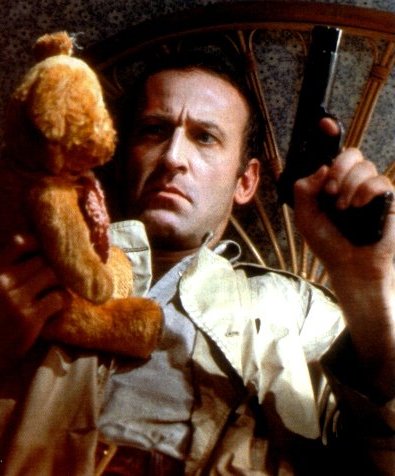
Craven (Bob Peck) finds a gun in his daughter's teddy-bear.


"Edge of Darkness" at the IMDB

Anytime Movies:
Bonus: Edge of Darkness

Friday, April 16, 2021

Anytime Movies #11: Edge of Darkness (1985)

While I catch up on the reviews still in "Draft" phase here, I'll re-run a feature I ran when I first started this blog seven years ago,* when it was suggested I do a "Top Ten" List.

I don't like those: they're rather arbitrary; they pit films against each other, and there's always one or two that should be on the list that aren't because something better shoved it down the trash-bin.

So, I came up with this: "Anytime" Movies.


Anytime Movies are the movies I can watch anytime, anywhere. If I see a second of it, I can identify it. If it shows up on television, my attention is focused on it until the conclusion. Sometimes it’s the direction, sometimes it’s the writing, sometimes it’s the acting, sometimes it’s just the idea behind it, but these are the movies I can watch again and again (and again!) and never tire of them. There are ten (kinda). They're not in any particular order, but the #1 movie IS the #1 movie. And we begin in as contrary a way as possible (so as to avoid any comparison to a "Top Ten" list). This one is unusual in that it's a bonus (like the joke in This is Spinal Tap, "Anytime Movies" go all the way up to eleven). 

And that's not all that's different about this entry:

What the hell is this? It’s not a classic movie!

Oh, it’s worse than that! It’s not even a movie! It’s a British mini-series.

Okay, so what’s so special about it that it squeezes into the “Wild Card” position of the “Anytime Movies” list over, say,
Casablanca or Gone With the Wind, or your favorite film?

1. It’s a police procedural, as steeped in the gritty realism of shabby interrogation rooms and bad neon-tube-lighting as “
NYPD Blue” or “Prime Suspect.”


2. It’s a spy story, with rogue undercover operatives (particularly an eccentric CIA operative by the name of Darius Jedburgh, played in the performance of his career by Joe Don Baker), chases (two stand out--an edge-of-your-seat hacking exercise, and another through an abandoned nuclear facility) and intrigue on the part of government, and commerce.

3. It’s a political thriller, with investigations into government corruption and collaboration with a privatized nuclear industry, that involves Union-busting, suppression of environmental groups, and murder.

4. It’s a revenge story, as a police investigator attempts to find who murdered his daughter...or whether the bullet was meant for him?.


5. It’s a ghost story, as that murdered daughter keeps coming back to advise and inspire her father’s efforts, as he sinks deeper and deeper into an ever-expanding investigation, that, in the real world, he is being encouraged to abandon.

6. It’s a psychological thriller—because maybe she isn’t really there, and is just a figment of his severe grief.
7. It’s a black comedy—it has some of the most absurd sequences ever put to film (a sumptuous dinner in an underground "hot" room), and some of the funniest lines ("He's in the field," but you have to be there).

8. On top of that, it’s a story of myth, although grounded in reality, for, impossibly, one of the main protagonists (and an alarming participant in the story) would appear to be the Earth goddess, Gaea.

9. It has one of the best performances I’ve ever seen, by the hawk-faced Bob Peck (you might remember him as the game warden Muldoon in Jurassic Park. You don’t? One line: “Clever girrrl…” Now you know him)

10. It crosses genres, and expectations and always keeps you guessing not only what will happen next, but what COULD happen next. It seems to revel in going 90° from normal at every juncture. It is truly a thrilling film.

11. It has one of the most down-beat endings ever put to film. But it’s okay—it's assured the bad guys will lose. The Good Earth will win.
After years of kvetching about there being no DVD release, BBC Home Entertainment finally released an impressive 2 disc set of this one in 2009, directed by
Martin Campbell
, who ushered in two new James Bonds in two of the best movies in the series and the two Antonio Banderas Zorro films (and, subsequently, the theatrical film version with Mel Gibson, which doesn't compare). One should also make note of the exceptional Troy Kennedy-Martin screenplay, and the music by the late Michael Kamen and Eric Clapton. Peck is gone now, as well, and it would have been nice to see him in other things, so good is he in this. But it’s another in a long string of sad eventualities for this odd, crazy, thrilling piece of film-making.

You gotta love the British. We could never do this in the States.

They deserve the Falklands.
Craven (Bob Peck) finds a gun in his dead daughter's teddy-bear.
"Edge of Darkness" at the IMDB


Anytime Movies:
Bonus: Edge of Darkness

* And, on Sunday, we'll put up a "Don't Make a Scene" feature from each week's film.

Friday, July 2, 2021

Anytime Movies Wrap-Up

While I catch up on the reviews still in "Draft" phase here, I'll re-run a feature I ran when I first started this blog seven years ago, when it was suggested I do a "Top Ten" List.

I don't like those: they're rather arbitrary; they pit films against each other, and there's always one or two that should be on the list that aren't because something better shoved it down the trash-bin.

So, I came up with this: "Anytime" Movies.

Anytime Movies are the movies I can watch anytime, anywhere. If I see a second of it, I can identify it. If it shows up on television, my attention is focused on it until the conclusion. Sometimes it’s the direction, sometimes it’s the writing, sometimes it’s the acting, sometimes it’s just the idea behind it, but these are the movies I can watch again and again (and again!) and never tire of them. There are ten (kinda). They're not in any particular order, but the #1 movie IS the #1 movie.

Making a list of this sort always has a way of bringing up more issues than it solves.

It's amazing what movies aren’t on the list. It’s amazing to me, and I made the list!
Dr. Strangelove isn’t here because 2001 is. A lot of defacto “classics” aren’t here. Where’s Casablanca? (Love it!) Where’s Star Wars? (Love that!) Where’s The Godfather? (Love…and respect...that!).  

THX-1138 was a big influence. Not here. Where’s Gone with the Wind? (Easy. I hate Gone with the Wind, though I’ve seen it five times) There’s no Hitchcock (That’s interesting). No Spielberg (ditto). The Wizard of Oz? (Not here...not in Kansas, either!) No superhero movies (Not so surprising, really). No foreign films. Hmmm. Seven Samurai and Yojimbo (natch!)—but more importantly, my favorite Kurosawa (so far), Ikiru—and The Leopard, Black Narcissus, Sounder, and Nights of Cabiria would have made the list, but my history with them is short, and I didn’t feel I could write about them well, so, no…unless you count Once Upon a Time in the West and it’s so influenced by American westerns, I don’t really consider it a foreign film.

I think
The Wild Bunch and Silverado I consider perfect screenplays. But they're not here. There’s a lot of John Ford films I love dearly along with many directed by Howard Hawks. Those gentlemen get a delegate apiece. It’s a Wonderful Life—but not as wonderful as Mr. Smith Goes to Washington. And then there are the missing persons: Where’s Bogart? Cagney? Hepburn (either of them)? Stanwyck? Patton, Lawrence of Arabia, Willy Wonka.  Hey, no musicals, though I think Singin’ in the Rain is a near-perfect film. And Goldfinger? Yeah, yeah, I know. It’s a peccadillo, but it's also my list. Go make your own.

And I hate to say it, but I must acknowledge it—the list is so "male"-oriented...and so white (To Kill a Mockingbird with it's white paternalism SO doesn't count...). As Roger Ebert used to crib from Robert Warshow: "A man goes to the movies. The critic must be honest enough to admit that he is that man." This list lays out pretty flatly that i'm a white male...and American.

There were some interesting coincidences, Two films set in Monument Valley (and it makes a cameo in a third). Two with
Jean Arthur (and Thomas Mitchell). Three (four, actually) about “lost causes.” All different genres. Different decades.

The other thing is I called them “Anytime Movies”—not the typical “desert island discs,” (or, more appropriately for what they are, "OCD Movies"). On that subject, I think I’d want a desert island movie like a Time/Warner handyman film on “How to Build a Boat” or “25 Interesting Recipes You can Make Using Sand,” or that “Gilligan’s Island” episode where
the Professor makes a radio out of a cocoanut.

And none of these movies contain my favorite moment(s) in film. That one is pretty obscure.

It’s the last fourteen minutes or so of Francois Truffaut’s Farenheit 451. The combination of Ray Bradbury’s ideas (a literal translation of RB is usually problematic), Truffaut’s screenplay and direction, and Bernard Herrmann’s yearning music make the most sublime moments of film I’ve ever loved. It’s the “Book People” sequence, where Montag (Oskar Werner), the Fireman who has rebelled against the repressive textless society and escaped never again to burn books (well, except for one) makes his way out of the city to a fragile wooded area (by a lake) and finds a village of people who have each committed to memory one beloved book. As fall turns to winter, these people walk and recite their treasures. One little vignette has a little boy being taught a book by a man, dying, and in a fade, it is the boy who recites by himself, and there is a moment…a moment…when he can’t remember. If that kid loses the book…it’s gone. 

That moment has always chilled me right down to the bone far more than any horror movie could, because it shows the fragility of an idea…as fragile as a life. Maybe it’s the sense that those books will go on, life after life. Maybe its because these people have taken on one sacred thing to devote their life to, like monks of literature. Maybe because it’s an island of sanity in a world of madness. Maybe because it’s the perfect melding of picture and sound. But the cumulative effect makes me want to check in with the sequence every couple of months. To make it easy for me, here it is:
Now, once again, for the last time, here are my “Anytime Movies.”

Wednesday, June 25, 2014

Anytime Movies (Transplanted) Wrap-Up

While I have a few reviews "in the works," It's as good a time as any to re-boot (actually transplant from the old movie blog) a feature I started years ago, when it was suggested I do a "Top Ten" List. 

I don't like those: they're rather arbitrary; they pit films against each other, and there's always one or two that should be on the list that aren't because something better shoved it down the trash-bin. 

So, I came up with this: "Anytime" Movies. 

Anytime Movies are the movies I can watch anytime, anywhere. If I see a second of it, I can identify it. If it shows up on television, my attention is focused on it until the conclusion. Sometimes it’s the direction, sometimes it’s the writing, sometimes it’s the acting, sometimes it’s just the idea behind it, but these are the movies I can watch again and again (and again!) and never tire of them. There are ten (kinda). They're not in any particular order, but the #1 movie IS the #1 movie.

Making a list of this sort always has a way of bringing up more issues than it solves.

It's amazing what movies aren’t on the list. It’s amazing to me, and I made the list!
Dr. Strangelove isn’t here because 2001 is. A lot of defacto “classics” aren’t here. Where’s Casablanca? (Love it!) Where’s Star Wars? (Love that!) Where’s The Godfather? (Love…and respect...that!).  

THX-1138 was a big influence. Not here. Where’s Gone with the Wind? (Easy. I hate Gone with the Wind, though I’ve seen it five times) There’s no Hitchcock (That’s interesting). No Spielberg (ditto). The Wizard of Oz? (Not here...not in Kansas, either!) No superhero movies (Not so surprising, really). No foreign films. Hmmm. Seven Samurai and Yojimbo (natch!)—but more importantly, my favorite Kurosawa (so far), Ikiru—and The Leopard, Black Narcissus, and Nights of Cabiria would have made the list, but my history with them is short, and I didn’t feel I could write about them well, so, no…unless you count Once Upon a Time in the West and it’s so influenced by American westerns, I don’t really consider it a foreign film.

I think
The Wild Bunch and Silverado I consider perfect screenplays. But they're not here. There’s a lot of John Ford films I love dearly along with many directed by Howard Hawks. Those gentlemen get a delegate apiece. It’s a Wonderful Life—but not as wonderful as Mr. Smith Goes to Washington. And then there are the missing persons: Where’s Bogart? Cagney? Patton, Lawrence of Arabia, Willy Wonka.  Hey, no musicals, though I think Singin’ in the Rain is a near-perfect film. And Goldfinger? Yeah, yeah, I know. It’s a peccadillo, but it's also my list. Go make your own.

There were some interesting coincidences, Two films set in Monument Valley. Two with
Jean Arthur (and Thomas Mitchell). Three (four, actually) about “lost causes.” All different genres. Different decades.

The other thing is I called them “Anytime Movies”—not the typical “desert island discs,” (or, more appropriately for what they are, "OCD Movies"). On that subject, I think I’d want a desert island movie like a Time/Warner handyman film on “How to Build a Boat” or “25 Interesting Recipes You can Make Using Sand,” or that “Gilligan’s Island” episode where
the Professor makes a radio out of a cocoanut.

And none of these movies contain my favorite moment(s) in film. That one is pretty obscure.

It’s the last fourteen minutes or so of Francois Truffaut’s Farenheit 451. The combination of Ray Bradbury’s ideas (a literal translation of RB is usually problematic), Truffaut’s screenplay and direction and Bernard Herrmann’s yearning music make the most sublime moments of film I’ve ever loved. It’s the “Book People” sequence, where Montag, the Fireman who has rebelled against the repressive textless society and escaped never again to burn books (well, except for one) makes his way out of the city to a fragile wooded area (by a lake) and finds a village of people who have committed to memory one beloved book. As fall turns to winter, these people walk and recite their treasures. One little vignette has a little boy being taught a book by a man, dying, and in a fade, it is the boy who recites by himself, and there is a moment…a moment…when he can’t remember. If that kid loses the book…it’s gone. 

That moment has always chilled me right down to the bone far more than any horror movie could, because it shows the fragility of an idea…as fragile as a life. Maybe it’s the sense that those books will go on, life after life. Maybe its because these people have taken on one sacred thing to devote their life to, like monks of literature. Maybe because it’s an island of sanity in a world of madness. Maybe because it’s the perfect melding of picture and sound. But the cumulative effect makes me want to check in with the sequence every couple of months. To make it easy for me, here it is:


Now, once again, for the last time, here are my “Anytime Movies.”

Friday, April 30, 2021

Anytime Movies #9: To Kill a Mockingbird

While I catch up on the reviews still in "Draft" phase here, I'll re-run a feature I ran when I first started this blog seven years ago,* when it was suggested I do a "Top Ten" List.

I don't like those: they're rather arbitrary; they pit films against each other, and there's always one or two that should be on the list that aren't because something better shoved it down the trash-bin.

So, I came up with this: "Anytime" Movies.


Anytime Movies are the movies I can watch anytime, anywhere. If I see a second of it, I can identify it. If it shows up on television, my attention is focused on it until the conclusion. Sometimes it’s the direction, sometimes it’s the writing, sometimes it’s the acting, sometimes it’s just the idea behind it, but these are the movies I can watch again and again (and again!) and never tire of them. There are ten (kinda). They're not in any particular order, but the #1 movie IS the #1 movie. And we begin in as contrary a way as possible (so as to avoid any comparison to a "Top Ten" list). This one is unusual in that it's a bonus (like the joke in This is Spinal Tap, "Anytime Movies" go all the way up to eleven). 

What is it about this film that puts it on so many favorites lists.
Horton Foote’s masterful telescoping of Harper Lee’s frail, powerful novel? The fact that, as movie adaptations go, this is certainly one of the best? That it has an impeccably picked cast, directed to feel absolutely real, including three of the best child-performances in all of movies, by one of the best directors of actors, Robert Mulligan? The beautiful, fragile score by Elmer Bernstein, certainly contributes.

I remember seeing
To Kill A Mockingbird when I was seven years old, and not “getting it” much. I remember being annoyed with my Mom for trying to cover my eyes during the “scary” parts—although Robert Duvall as “Boo” Radley did genuinely creep me out back then (in fact, he still does, a bit). I didn’t “get” the dog-shooting (“He won’t kill a mockingbird, but he’ll sure-as-shootin' kill a dog!”) But I remember that it was a scary movie for a kid. In the film, the night was so dark, and any light cast spooky elongated shadows and trees moved and leaves rustled. The World seemed restless and alive, full of mysteries and secret terrors just out of sight, when it should have been still and asleep. It was a world that, under the pretense of peace and calm, seethed with menace and dread just under the surface.
And that’s the key, I think. There seemed to be, in the movie, at least, a sense that the tremulous world was lurching and struggling to change—that the very earth was metamorphosing and demanding it, while the people entwined in that world, moved along, oblivious to the change, holding onto a complacent life that would inevitably end. At the same time, Mockingbird has the feel of nostalgia—the palpable sense that life flows through our fingers like sand, and that we’re always in danger of losing that life we hold precious. 
But you don’t think of these things when you’re a child. Summers are endless. Life is eternal. If born into a nurturing, protecting household (and that is key) there is the illusion that the world is benign and all things are possible…under heaven.
Heaven is a concept easily grasped by a child. If you’ve been “good” in your life, as a reward after death, you go to a “good” place to spend Eternity. In the years of growth, a child struggles to understand its world and to assert itself in an environment it has no control over. In a world too complex to understand, the concept of Heaven is a comfort to a child. It’s simple. It’s uncomplicated. It’s black and white. Like Good and Bad.

Like integrity.

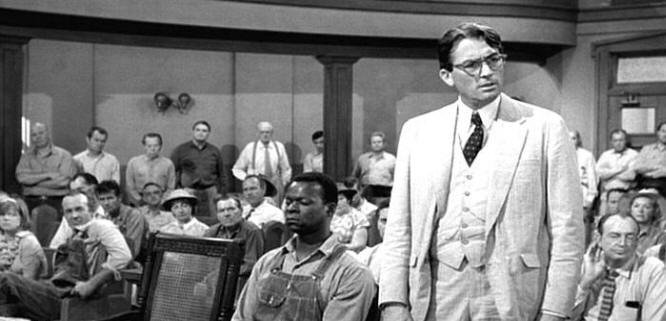
Atticus Finch (Gregory Peck) awaits a lynch-mob, that first—to his initial dismay 
and then wonder—is shamed and turned away by his own children. He shouldn't have wondered.

The children in To Kill a Mockingbird learn the world isn’t nearly as simple as they thought. That the Radley “kid” may not be the evil thing they whisper about in the dark before they go to sleep. That other peoples’ lives may not resemble their own. That their father is many things—but he is also fallible. Jem breaks down when Tom Robinson is convicted of raping a white woman, but I would doubt that he’s crying for Robinson. He’s crying for his father’s failure—a disappointment as palpable as his father being not willing to play football for the Methodists. Jem and Scout are too young to understand the idea of integrity. No, that's not quite accurate. They’re too young to understand the pressures of a world where integrity might be compromised. And they’re too young to understand that their father’s belief in right and good could actually cause them harm. 

But it is that integrity that makes their father dependable, despite the tragedies of the summer. It is that integrity in a fragile, changing world that will sustain and endure and remain a constant as sure as the north star in the void. And that echoes long in our minds at the end of the film with its last line of narration: “He would be in Jem’s room all night. An he would be there when Jem waked up in the morning.”
When the American Film Institute held a vote for the cinema’s best hero, the honor did not go to the Sergent Yorks or the Skywalkers or the Bonds or any of the roles played by Eastwood, Willis or Schwarzenegger. It went to a character of gentle heroics who in the course of the movie only fires one shot, who does not raise a hand in anger, and with jaw set and quiet voice does what he knows to be right. It was a shock that Atticus Finch would be voted the greatest movie hero, but it was the best choice possible, and legitimized the idea of holding such a silly poll in the first place.

Stephen Frankfurt's evocative title sequence.
Music by Elmer Bernstein


Horton Foote died March 4th, 2009. Director Robert Mulligan died right before Christmas, 2008. William Windom, in 2012. Brock Peters died in 2005. Rosemary Murphy died in 2014. Peck, in 2003. My favorite actor in this and many things, Frank Overton, died in 1967. Survivors are Robert Duvall (Arthur "Boo" Radley), and the Finch kids.

And Harper...Harper "Nelle" Lee died February 19, 2016, just shy of her 90th birthday.

Except for her one gentle novel that stood like a golden spike in the Civil Rights Era, Nelle Harper Lee published no other major works, only a scattering of essays. Not a recluse, she merely avoided the public spotlight. She, in her shy ways, did no public speaking. She said what she is going to say. And that should be enough.**

Harper endures.


Anytime Movies:
To Kill a Mockingbird
Goldfinger
Bonus:  Edge of Darkness


* And, on Sunday, we'll put up a "Don't Make a Scene" feature from each week's film.

* * Just before her death, her agent published her first submitted work, "Go Set a Watchman," the rejected first novel that inspired her editor to tell her to try again and "write about the kids" which became "To Kill a Mockingbird."

Friday, May 28, 2021

Anytime Movies #5: The Searchers

While I catch up on the reviews still in "Draft" phase here, I'll re-run a feature I ran when I first started this blog seven years ago,**** when it was suggested I do a "Top Ten" List.

I don't like those: they're rather arbitrary; they pit films against each other, and there's always one or two that should be on the list that aren't because something better shoved it down the trash-bin.

So, I came up with this: "Anytime" Movies.


Anytime Movies are the movies I can watch anytime, anywhere. If I see a second of it, I can identify it. If it shows up on television, my attention is focused on it until the conclusion. Sometimes it’s the direction, sometimes it’s the writing, sometimes it’s the acting, sometimes it’s just the idea behind it, but these are the movies I can watch again and again (and again!) and never tire of them. There are ten (kinda). They're not in any particular order, but the #1 movie IS the #1 movie.


It’s a film that chills me right down to my bones and makes me cry every single time.* It throws itself into the deepest pits of despair and within moments, prat-falls into low comedy. It’s a western…about race relations, and in the house of mirrors of a “genre” piece deflects the self-righteous tone of a sermon. It stares into the soul of people at their worst, and exults in their best.

It is arguably
John Ford’s best film (and he made many great ones). It is inarguably John Wayne's finest performance on-screen, while completely working against the image that Marion Morrison had built as “John Wayne,” American Hero.

Oh no. We’re talking about
The Searchers—a “western” made during the somnambulant 50’s …and with John Wayne, ferchrissakes! How corny can you get?

Back up, pilgrim.

The Searchers has just been re-released (to mark its 50th anniversary**) in a
gloriously re-mastered DVD, and has come under critical review for being too corny, too obvious, and more than a little dated. 

Worse still, it has been branded a “film-school darling” that has skated too long on an undeserved reputation as a masterpiece.
Bullshit.

Like Pauline Kael’s faulty detective work
dissecting Citizen Kane and Elvis Mitchell’s naïve un-analysis of 2001, the work in Slate smacks of a critic either looking for something to write about or make a name for themselves bucking “conventional wisdom.” Having to spend a summer reviewing the third X-Men movie, the fifth “Superman” opus AND an entirely superfluous “Pirates of the Caribbean” sequel is bound to make anyone crabby.

But it shouldn’t lower one’s standards, and there’s enough slip-shod work in the article to indicate that’s the case. At the very least, it’s a terrible gloss-over.

At the worst, it displays a film reviewer who hasn't even seen the film he was supposedly watching for the prejudices and pre-conceived notions that he would rather cling to rather than objectivity.

The Searchers is a masterpiece—the culmination of decades of film-making experience that John Ford had accumulated since the silent era—while crystallizing Ford’s growing disenchantment with the Myth of the West. In a time when westerns were still basically built around the simplistic formula of “Cowboys vs. Indians,” Ford was starting to speak out more explicitly for the latter sixteen years before such accepted “consciousness-raising” films as Little Big Man or Soldier Blue. Like any masterpiece, it displays the sum of a body of work and breaks new ground, paving the way for the future.

The Searchers tells the story of an obsessive 10 year hunt for a lone family member taken in a violent Comanche raid. It’s led by the worst person possible: the child’s uncle--a hate-obsessed confederate soldier, self-exiled from his family, who still carries his saber on his hip, bitterness in his soul and his heart on his sleeve. Mix in a venomous race-hatred for all non-whites and you have the most flawed anti-hero to appear in movies. Ethan Edwards starts his search to bring his niece back alive, but as the years pass and she matures into womanhood, he gives her up as one of the Enemy, and sets out to kill her. At the center of the film’s black heart is that most archaic and useless word: miscegenation.

It’s rough stuff. Rougher still are the attitudes of the settlers towards the Indians that border on hysteria. There’s a haunting scene late in the film where Edwards and his fellow traveler (played by future "Star Trek" Captain Pike and “Teenage Jesus,” Jeffrey Hunter) ride into a fort on the Trail of Tears to inspect some kidnapped white women who have been re-captured—"rescued" they would say—by the Cavalry. 

“It’s hard to believe they’re white” a sergeant says. 

“They ain’t white,” spits Edwards, and at the sound of a shriek from one of the women, he turns to look at her. Ford trucks in the camera fast onto Wayne’s face (mirroring the shot he used to introduce Wayne in their first film together, Stagecoach) and it’s amazing. Wayne was always blessed with a mug that the camera loved***—it could read every emotion that played across it—and in a performance minus the “hero façade” and that turns on the full after-burners that usually blew his co-stars off the screen, this one quiet moment radiates a combination of hate, disgust…and abject fear. No words need to be said to make the point. No words could.

It's what made Ford a great director and Wayne a great actor.

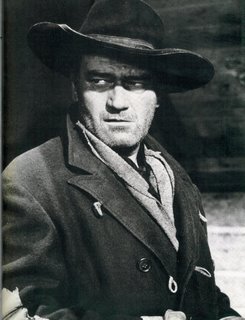
"No, Ethan!  No, you don't!"
And yet, for all its depths of despair amid bloodshed and the race-hysteria, Ford tries to balance it with entertainment. That’s quite the tight-rope walk. But then, it’s not a sermon. It’s a Western. Ford was never so pretentious to be caught lecturing. He’d say if you want to send a message, use the Pony Express. Better to sneak the lessons into the fabric of the story, and distract with shenanigans about wayward lovers, goony old men, and green cavalrymen with pointy swords. One of the incidents involves the unintended marriage of Hunter’s character to a portly Indian maid. It’s the source of raunchy comedy in the vein of Ford’s The Quiet Man—all roughhouse and bad taste. But when Ford’s good guys “The Cavalry” decimate a Native village and the luckless character along with it, Hunter is left to ask “What’d they have to kill her for? She never hurt anybody!” The question hangs in the air with indictments all around.
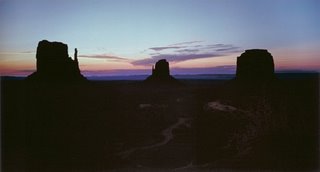
The Searchers begins and ends with a black screen. In the beginning, the blackness gives way to the vast magical vista of Monument Valley (which figures in two of my anytime movies. If God lives anywhere on Earth, I think it’s on that vast acreage of land overseen by the Navajo) that to Garry Wills suggests an irising lens, but to these eyes seems more of a proscenium arch. At the end it shuts out Ethan Edwards who is left out of the warmth of a family embrace to wander the desert (Of course, Wayne’s character is going to come in eventually and eat…but Ford chooses to leave Edwards outside). His prejudice does not belong with home and hearth...and society…and Civilization. Yet it is also Ford’s choice to leave the character alive, the wolf always at the door.
It’s as if having made his plea for tolerance, Ford cautions us that it will always exist, somewhere.

Will we ever...finally...lose the hate?

“That’ll be the day.”

Robert McGinnis' portrait of Wayne in The Searchers.
Anytime Movies:
The Searchers

* A comment on this post and movie—when it was stationed at another blog—asked: "
The Searchers makes you cry?!?!? Is it because of all the dead Indians?" Sure. Go with that. But, a lot of settlers are killed, too, and the hunt in The Searchers is precipitated by one such massacre, the matriarch of which is the one woman that Ethan Edwards loves. It's what entwines his search into one of need and of vengeance. 

No, the thing that makes me cry is the act that comes right before the line "Let's go home, Debbie." That line. From that character. At that time. Despite all evidence to the contrary. It's what gives one a small tiny quantum of hope that belies the sentiment of "That'll be the day..."

** And now, it's a few years shy of its 70th.  I wasn't even a year old when it was released.  It's like an old friend that's grown up with me.

*** Screenwriter Robert Towne has a better term for it, the "camera-love" phrase implying a happy accident that doesn't give enough credit to the actors, their craft and experience. He says that actors like Wayne, Henry Fonda, and Gary Cooper are "ruthlessly efficient" in that they can communicate differing emotions with an economy of expression. Those words are particularly apt for Wayne's performance in The Searchers.

**** And, on Sunday, we'll put up a "Don't Make a Scene" feature from each week's film.