I don't like those: they're rather arbitrary; they pit films against each other, and there's always one or two that should be on the list that aren't because something better shoved it down the trash-bin.
So, I came up with this: "Anytime" Movies.
Anytime Movies are the movies I can watch anytime, anywhere. If I see a second of it, I can identify it. If it shows up on television, my attention is focused on it until the conclusion. Sometimes it’s the direction, sometimes it’s the writing, sometimes it’s the acting, sometimes it’s just the idea behind it, but these are the movies I can watch again and again (and again!) and never tire of them. There are ten (kinda). They're not in any particular order, but the #1 movie IS the #1 movie. And we begin in as contrary a way as possible (so as to avoid any comparison to a "Top Ten" list). This one is unusual in that it's a bonus (like the joke in This is Spinal Tap, "Anytime Movies" go all the way up to eleven).
And that's not all that's different about this entry:
 What the hell is this? It’s not a classic movie!
Oh, it’s worse than that! It’s not even a movie! It’s a British mini-series.
Okay, so what’s so special about it that it squeezes into the “Wild Card” position of the “Anytime Movies” list over, say, Casablanca or Gone With the Wind, or your favorite film?
1. It’s a police procedural, as steeped in the gritty realism of shabby interrogation rooms and bad neon-tube-lighting as “NYPD Blue” or “Prime Suspect.”
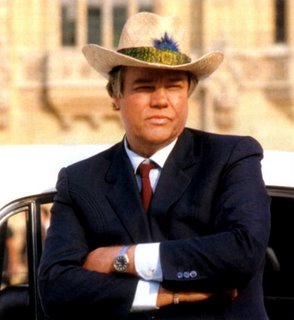
2. It’s a spy story, with rogue undercover operatives (particularly an eccentric CIA operative by the name of Darius Jedburgh, played in the performance of his career by Joe Don Baker), chases (two stand out--an edge-of-your-seat hacking exercise, and another through an abandoned nuclear facility) and intrigue on the part of government, and commerce.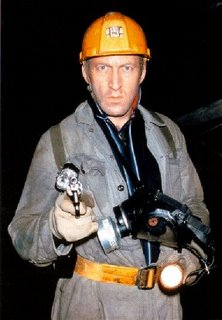
3. It’s a political thriller, with investigations into government corruption and collaboration with a privatized nuclear industry, that involves Union-busting, suppression of environmental groups, and murder.
4. It’s a revenge story, as a police investigator attempts to find who murdered his daughter...or whether the bullet was meant for him?.
5. It’s a ghost story, as that murdered daughter keeps coming back to advise and inspire her father’s efforts, as he sinks deeper and deeper into an ever-expanding investigation, that, in the real world, he is being encouraged to abandon.
6. It’s a psychological thriller—because maybe she isn’t really there, and is just a figment of his severe grief. 7. It’s a black comedy—it has some of the most absurd sequences ever put to film (a sumptuous dinner in an underground "hot" room), and some of the funniest lines ("He's in the field," but you have to be there).
 8. On top of that, it’s a story of myth, although grounded in reality, for, impossibly, one of the main protagonists (and an alarming participant in the story) would appear to be the Earth goddess, Gaea.
10. It crosses genres, and expectations and always keeps you guessing not only what will happen next, but what COULD happen next. It seems to revel in going 90° from normal at every juncture. It is truly a thrilling film.
11. It has one of the most down-beat endings ever put to film. But it’s okay—it's assured the bad guys will lose. The Good Earth will win. After years of kvetching about there being no DVD release, BBC Home Entertainment finally released an impressive 2 disc set of this one in 2009, directed by Martin Campbell, who ushered in two new James Bonds in two of the best movies in the series and the two Antonio Banderas Zorro films (and, subsequently, the theatrical film version with Mel Gibson, which doesn't compare). One should also make note of the exceptional Troy Kennedy-Martin screenplay, and the music by the late Michael Kamen and Eric Clapton. Peck is gone now, as well, and it would have been nice to see him in other things, so good is he in this. But it’s another in a long string of sad eventualities for this odd, crazy, thrilling piece of film-making.
You gotta love the British. We could never do this in the States.
They deserve the Falklands.

Oh, it’s worse than that! It’s not even a movie! It’s a British mini-series.
Okay, so what’s so special about it that it squeezes into the “Wild Card” position of the “Anytime Movies” list over, say, Casablanca or Gone With the Wind, or your favorite film?
1. It’s a police procedural, as steeped in the gritty realism of shabby interrogation rooms and bad neon-tube-lighting as “NYPD Blue” or “Prime Suspect.”
2. It’s a spy story, with rogue undercover operatives (particularly an eccentric CIA operative by the name of Darius Jedburgh, played in the performance of his career by Joe Don Baker), chases (two stand out--an edge-of-your-seat hacking exercise, and another through an abandoned nuclear facility) and intrigue on the part of government, and commerce.

3. It’s a political thriller, with investigations into government corruption and collaboration with a privatized nuclear industry, that involves Union-busting, suppression of environmental groups, and murder.
4. It’s a revenge story, as a police investigator attempts to find who murdered his daughter...or whether the bullet was meant for him?.
5. It’s a ghost story, as that murdered daughter keeps coming back to advise and inspire her father’s efforts, as he sinks deeper and deeper into an ever-expanding investigation, that, in the real world, he is being encouraged to abandon.
6. It’s a psychological thriller—because maybe she isn’t really there, and is just a figment of his severe grief.
 8. On top of that, it’s a story of myth, although grounded in reality, for, impossibly, one of the main protagonists (and an alarming participant in the story) would appear to be the Earth goddess, Gaea.
9. It has one of the best performances I’ve ever seen, by the hawk-faced Bob Peck (you might remember him as the game warden Muldoon in Jurassic Park. You don’t? One line: “Clever girrrl…” Now you know him)
10. It crosses genres, and expectations and always keeps you guessing not only what will happen next, but what COULD happen next. It seems to revel in going 90° from normal at every juncture. It is truly a thrilling film.
11. It has one of the most down-beat endings ever put to film. But it’s okay—it's assured the bad guys will lose. The Good Earth will win.

You gotta love the British. We could never do this in the States.
They deserve the Falklands.

Craven (Bob Peck) finds a gun in his dead daughter's teddy-bear.
* And, on Sunday, we'll put up a "Don't Make a Scene" feature from each week's film.


