Land of the Pharoahs (Howard Hawks, 1955) Director Fritz Lang once said famously that Cinemascope—a popular widescreen movie format in one of the studios' experiments to lure people away from their televisions and back into theaters—was only good for shooting "a funeral, or for snakes, but not for human beings; you have a close-up and on either side, there's just superfluous space."
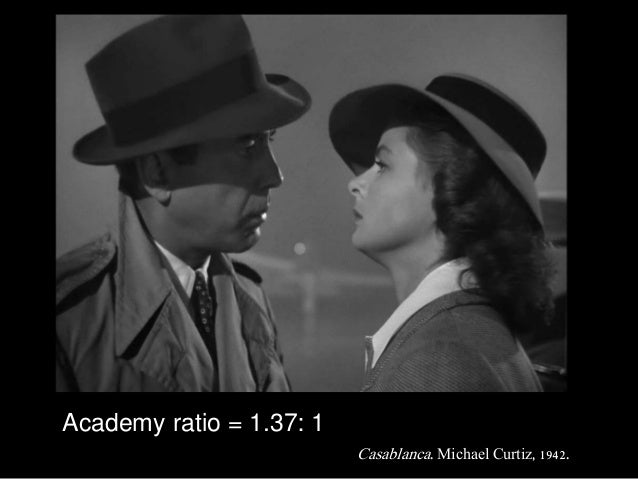
The aspect ratio of 2.66:1 proved a challenge for film-makers and one determined to solve it was Howard Hawks, one of the least "showy" of directors when it came to camera-angles and presentation. Hawks' formula up until that time had been the standard boxy Academy ratio (1.37:1) in an unpretentious un-fussy style, shooting at mid-height and without a lot of distracting camera movement. The focus was actors and performances; you showed off in front of the camera, never behind.

But Cinemascope was a challenge for any film-maker and Hawks began to design a movie that might showcase the format's strengths by story, and chose the building of the pyramids as its theme (after all it was a great source for snakes and funerals).
And parades...lots of parades. For the story, Hawks turned to his frequent collaborator, the acclaimed author William Faulkner (Hawks' brother was his Hollywood agent). Faulkner had worked wonders "breaking" problematic stories for the screen (including Hemingway's self-admitted "worst story" To Have and Have Not). To flesh out the story, Harry Kurnitz—who could be counted on to lighten up entertainments and would write Hawks' Hatari!—and Harold Jack Bloom (who had just won an Oscar for his first screenplay, Anthony Mann's The Naked Spur) were brought in to make something more of a movie about the construction of the pyramids.

What they came up with somewhat ingenious, mixing elements of biblical tales with soapy melodrama. In ancient Egypt, the conquering Pharoah, Khufu (Jack Hawkins), decides that the world is not enough and decides that he must make a place for himself in the after-life. He decides that he will create a great tomb for himself, using the labor garnered from all the civilizations that he has under his thumb. Knowing full well that he is approaching the end of his life and that the project may take years (if not decades), he begins the process of making his final kingdom. He begins by taxing all of the territories of his empire to pay for it (government is government), and to take as many treasures with him to impress the many kings and queens and gods that have gone before him.

From one of the kingdoms, he enlists the aid of the greatest architect, Vashtar (James Robertson Justice), but like any construction project there is a "punch list": the tomb must be vast to hold Khufu and his treasures and impressive in its scope; it must be impenetrable, unable to be entered or exited, in order to discourage any would-be grave-robbers attracted to the treasures within; to make sure that its secrets will never be disclosed, Vashtar must die upon the pyramid's completion—an extreme example of termination after work is finished. In return, Khufu will free Vashtar's people...the ones that survive building the thing, of course. No such concept as worker's comp in the slave trade. Vashtar agrees, and, with his son (Dewey Martin) Senta's assistance, begins the plans for the intricate tomb.

But, he's not the only one doing any planning, as the relationships plotline starts to get rather soapy ("like sand through the pyramid run the days of our lives..."). Cyprus, pleading poverty, instead sends its Princess Nellifer (Joan Collins) as tribute. She's haughty and gives Khufu so much attitude that he decides to have her whipped. Then, just to show how stable Pharoahs could be back in that day and age, Khufu takes her as his second wife over the objections of Queen Nailia (Kerima) and his old friend, confidante and High Priest, Hamar (Alexis Minotis). Sounds healthy...

Joan being Joan, she immediately starts to make big trouble in little Egypt: she begins by challenging just how much gold Khufu is amassing (since her kingdom contributed none of it), and demands to see it for herself. Khufu thinks she's being a little impudent, but, being Khufu, he has to prove his worth to the woman from the country that pled poverty. Nellifer is impressed and decides to take a necklace for herself, which really pisses off Khufu, who removes it forcibly and throws it back in the pile. But (Joan being Joan) all that does is to light the fire of some serious plotting, first seducing Khufu's captain of the guard (Sydney Chaplin) and plotting with him to kill Queen Nailia, her son, and Khufu himself, so that she can rule Egypt and keep all that gold for herself. She's just a bad person...

The project takes decades to complete, and Hawks keeps track with slave-working montages, the graying of characters' hair and Senta's growth from child to young hunk. It is an engineering marvel, but anyone who enters must be blindfolded, lest they betray the secrets of the tomb and be killed for it. Vashtar hedges the bet, though, for Senta, who his father tasks with completing the Pyramid should he die. Senta's knowledge is kept secret for the plan to work.

It's a good thing, too. On an inspection tour of the work, Khufu is injured by a falling beam and Senta reveals to him that he can prevent any premature burial by helping the Pharoah out of the complicated interior. Khufu, having better taste in friends than he does in wives, gratefully thanks Senta but refuses to forestall his death for knowing the secret of the Pyramid, but offers the young man anything in return for his help. Senta chooses to free Nellifer's slave-girl Kyra, who he's sweet on and who risks being punished with the lash by the evil Queen.

The plot is far less intricate than the tomb itself (which is something of a sand-powered marvel and would whip Indiana Jones), and turns out being the most effective thing in the script, becoming something truly sought after by all parties and a way to resolve all conflicts. For all the machinations in the court, it's the grave that...appropriately...settles all accounts in a very satisfying way. It just takes a long time to get there and tries the patience and nerves while the House of Pharoah unravels and the audience waits for anything that seems noble happens.

And that's unusual for Hawks. His films, at their most entertaining and thoughtful, feature disparate individuals forming a working unit, a clan, a force to be reckoned with. Land of the Pharoahs has disparate tribes and peoples working to build a pyramid, yes, but they're doing it as slaves, not by choice, which is a perversion of the Hawks paradigm. The lead figure is a complete narcissist, no matter how accomplished he may be, and a bit of a fool. The closest comparison Land of the Pharoahs comes to in previous Hawks films is, unusually, Scarface, where another "Kingpin" is undone by his weaknesses and passions. But, where Hawks could work contemporaneously with a gangster, the Pharoah left the filmmakers...and audiences...high and dry.

The film was a box-office failure, a rarity in Hawks' career and costly in both time and money—two years and 3 million dollars. Years later, he would offer up that he "should have had someone in there that you were rooting for. Everybody was a son of a bitch." Not exactly true, as Vashtar and Senta are at least noble people and competent, as well. But, it was missing Hawks' banter that generated wit and humor—Hawks told Peter Bogdanovich "we didn't know how a Pharoah talked." He did, however, make a picturesque film filled with crisp detail and thousands of extras that filled that daunting Cinemascope frame almost to bursting.*
The film's failure weighed on Hawks and he spent the next years travelling in Europe and when he came back, he came all the way back—to the western genre (he hadn't made one in ten years) and that film's star John Wayne, making Rio Bravo, which was a box office smash.
* Interesting about the old directors—they could figure out what to do with those unusual fame aspect ratios—John Ford was surprisingly adept using Cinerama during How the West Was Won.
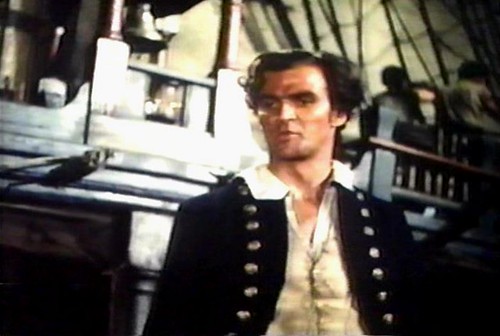
 Captain Horatio Hornblower (R.N.)* (Raoul Walsh, 1951) Supposedly C.S. Forester himself adapted his first three Hornblower novels to make the screen-story for this swashbuckling distillation of the Royal Navy's fictional hero. It is 1805, and his majesty has sent the HMS Lydia on a secret mission. England is at war with Spain and France, and Hornblower must enlist the aid of a mad South American dictator in the war efforts a world away. But, upon arriving, Hornblower's distaste for the assignment and the "El Supremo" (Alec Mango) has him violating the Admiralty's standard orders, and when he captures the massive El Natividad (commanded by a very young Christopher Lee), he is forced to turn over the ship to the mad-man. Heading for home, he finds out that Spain is now England's ally (oops!) and he must re-take the massive ship on open seas, risking his crew and an unwanted passenger, Her Ladyship Barbara Wellesley (Virginia Mayo), sister to tthe Duke of Wellington and betrothed to Admiral Leighton (Denis O'Dea).