or
"Look for the Blood and the Smoke! That's Where We Are!"
Warfare just drops you into it. The film, written and directed by Alex Garland (Ex Machina, Civil War) and Ray Mendoza (who lived it) tells the story of an insignificant little troop deployment of Navy SEALS in Ramadi, Iraq in 2006 to lend support to a Marine operation nearby (in fact only 300 meters away!). Standard stuff. In and out. No mess no fuss.
They come in under cover of darkness, enter a strategically placed household, subdue the inhabitants, isolate them, put them out of operations' way, then monitor for any suspicious activity among the locals, any amassing, any weapons sightings, any what we call in the U.S. "assembly." Just basically "watch the backs" of the Marines. The radio contact is "5 by," they are well-armed and well-ammo'd, and they have a bird's eye view of the area from aerial surveillance that can track any warm body that comes into view. And they're frequently being updated on the mission status. Everything is nominal. From that point on, the movie runs in "real time."

Alpha One pumping up before the mission.
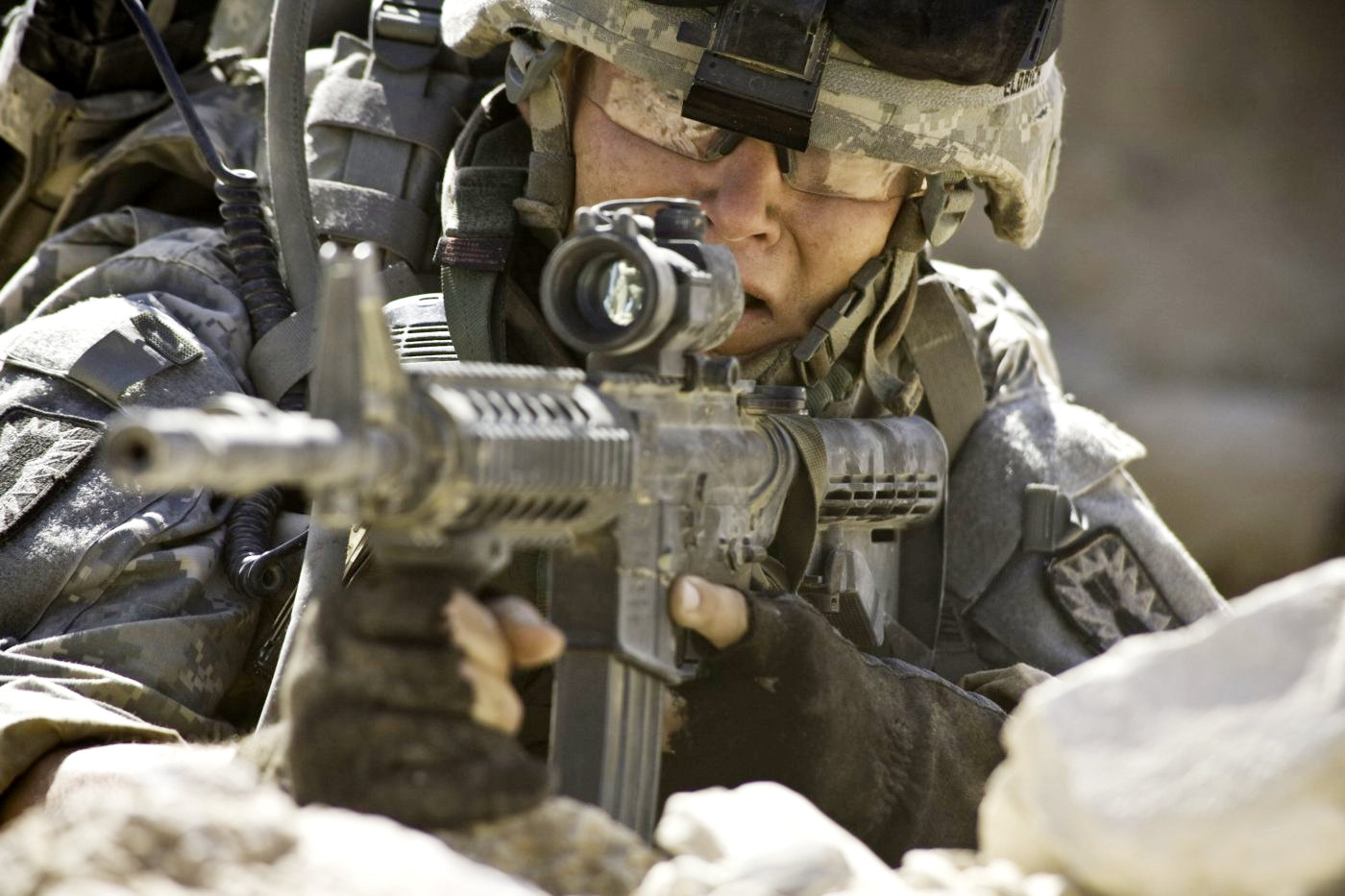
On top of that, they've punched a hole in the outer wall of an upstairs bedroom for Elliott Miller (Cosmo Jarvis), their lead sniper, to lay prone on a mattress for hours on end, peering through the telescopic sight of his M110 SASS rifle to take out anyone or anything that seems suspicious or out of place at a market across the street. It's maximum concentration for minimum movement, but you can't be too careful. Anything suspicious could be prelude to an attack on them, and if you have to pull a trigger to prevent yourself or your troop from dying, that's the job.

Of course, when the clock is ticking and you're just waiting for the sortie to be over, everything looks a little suspicious. But no shots are fired. Sure, they're being watched...by people who duck so they're not being watched...and the aerial view shows there might be some amassing on the roofs, but things are merely heightened anticipation and they can be Bradley'd out of there within minutes. It's going to be fine.

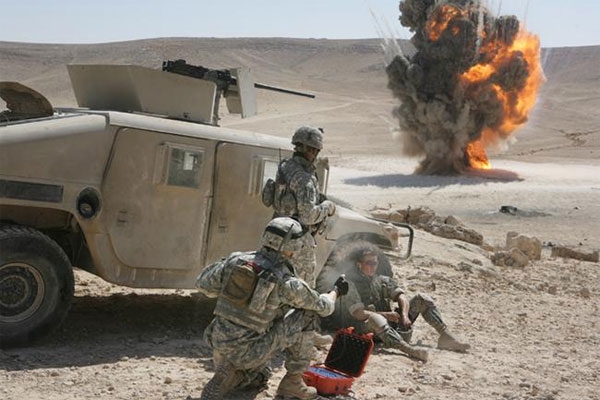
Until a grenade is dropped through that sniper's nest hole into the bedroom where Miller and another SEAL are positioned. They're able to move quickly and out of the blast-radius, but the resulting explosion instantly turns the monitoring mission into an evac mission. Miller's left hand is bleeding, but treatable if they can get him back to the base quickly and so Bradley tanks are called while the crew sweats the minutes it will take to get them out of there. They are under attack, after all. And the sooner they can get Miller out the better. But, even with the best equipment American tax-dollars can buy, they are still trapped in a house (along with the civilians) and targets. They're surrounded.
And things will only get worse. The legal disclaimer ("This is a work of fiction", etc. etc) at the end of the movie is unlike any I've seen. I didn't have time to write it down and I haven't found anything that quotes it on the internet, but basically it says it's based on a true incident that was parsed from several interviews (and Mendoza was part of the SEAL team) and any inaccuracies are entirely due "to memory." And, indeed, Miller—who's a real guy—has no recollection of the incident, even though he lost a limb, received severe burns and lost the ability to speak. In part, Mendoza wanted to make the film for him and dedicated it to him.
 And from what I've been reading online, a lot of Iraq vets are saying that it's brutally accurate. If true, it is harrowing what we put our fighting men through, even if the the mission depicted was only in a support capacity. There is no safe place in a war-zone (for anybody) and no action taken does not attract a reaction. And with the sophistication of the weaponry, the destruction is catastrophic. It makes you wonder why anybody does it? Why do governments launch wars knowing that the end-result is winning rubble and destroyed infrastructure? What is "gained" by that? But, over the last couple years, that's all we've seen on a day-to-day basis, escalating destruction and death over cratered territory. For what?


One hopes there won't be a sequel. But hopes...and prayers...are ultimately...useless. And...finally...comes the realization that that is the one word that accurately describes the unholy act of war.


 (aka "Un long dimanche de fiançailles")




.jpg)