Showing posts with label Sarah Miles. Show all posts

Saturday, January 30, 2021

The Big Sleep (1978)

Saturday is usually "Take Out the Trash" Day...

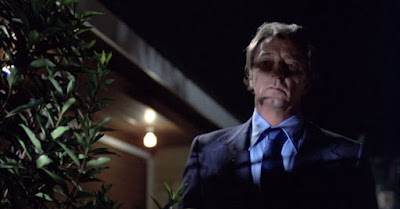
The Big Sleep (Michael Winner, 1978) You already know that it's going to be a bit problematic with the very first shot of this adaptation. This later version of Raymond Chandler's first detective novel—cobbled together from elements of his short stories and published in 1939—starts right where the novel starts—with detective Philip Marlowe (played, as in 1975's Farewell, My Lovely, by Robert Mitchum) driving up to the Sternwood Estate for an interview to taking a job. 

The thing is he's driving on the wrong side of the road. That's a clue. When you've been over-stewed in Chandler pot-boilers about L.A.'s most geographically-associated gumshoe that sort of thing stands out like the proverbial tarantula on angel food. He's not in Los Angeles, where they drive on the right (that is "non-left") side of the road, he's in London, held over from The War, it seems, and he's driving a Mercedes. Already you feel that something is very wrong, even before he does his interview. It's not your Grandfather's Philip Marlowe.
The interview with Sternwood (James Stewart) goes well, as far as it goes. The General is being blackmailed—it's not the first time—and his son-in-law Rusty Regan usually handled such things one way or another. But, Rusty has disappeared. There are rumors, but just that. Marlowe has been recommended by Scotland Yard and he accepts the assignment, but not before he's been told about the Sternwood girls, Charlotte (Sarah Miles, Mitchum's co-star in Ryan's Daughter) and Camilla (Candy Clark), who Marlowe has already met ("She tried to sit on my lap...while I was standing up," a line used in the book and both movies. For this version, the names have been changed—from "Vivian" and "Carmen"—to protect the not-so-innocent.
After taking his leave of the General, who has complained of fatigue, he is commanded to the bedroom of Charlotte, who demands to know what Marlowe has been hired for—possibly to find her missing husband? Marlowe says it's the general's business and none of hers, and she leaves unsatisfied and unimpressed.
Marlowe's first stop is to the bookstore of H. R. Geiger, whose name is on the notes. By subterfuge, he concludes that the shop is not a book store, per se, but rather a front for a pornography distributor. He has a bit of disagreement with the shop's receptionist, Agnes (Joan Collins), who develops an instant dislike to Marlowe's pestering.
Marlowe stakes out Geiger's flat and sees lights flashing inside. The last flash, though, is from a gun-shot and Marlowe breaks in to find much amiss: Camilla, drugged and naked in front of a camera, the film missing, drug paraphernalia  strewn about, and Geiger dead on the floor with a gunshot wound in the forehead. He checks the backway to look for the killer, but has missed him. Camilla is certainly in no shape to have done it, she's high out of her mind, the bar of which is set pretty low to begin with. The best thing to do is throw something on Camilla and get her home, pronto. He'll come back to the house later.
That's after he gets some well-deserved shut-eye; the bags under Mitchum's eyes are starting to look like suitcases. But, he gets called by The Yard (in the person of John Mills) to watch a car being dragged from the water. In it is the Sternwood's chauffeur, dead. A little too close to home, even if your home is a mansion, ain't it? Heading back to his office, Marlowe finds older sister Charlotte waiting for him, still wanting to know what the General has hired him for—no dice, lady—and to tell him they're being blackmailed by somebody else, this time with naked pictures of Camilla...from the previous evening's recreations. Marlowe tells her to pay up and she says she can borrow the money from gambling boss Eddie Mars (Oliver Reed in full hissing snake mode). Hmmm. Isn't there a rumor that Rusty ran off with Mars' wife? Bears investigating.
Well, one can get into the weeds very quickly here, and the movie's only 30 minutes in. There is a famous story about the Howard Hawks-Humphrey Bogart-Lauren Bacall version done in the 40's where there was a body but nobody had any idea who killed him. The writers didn't know. Hawks didn't know. Chandler didn't care—"that's your job" he told the movie-makers. By that time, Hawks didn't care, either. There's a line in both movies "so many guns. So few brains." Well, there are so many corpses that keeping track of them all without a toe-tag is an exercise in fatality. The 1978 version wants everything nice and tidy and explained, whether we care or not. Where, the 1946 version kept that information vague and unresolved, Winner doubles down to explain it with voice-over and a flash-back sequence introduced with a picture-spinning rotation (the edge of the frame threatening to slap us awake). He needn't have bothered.
What this version of The Big Sleep does well is to fill the film with so many good British actors that one gets dizzy remembering them all: Miles, Mills, Reed, Harry Andrews, Collins, Edward Fox (he's good!), Colin Blakely, Richard Todd, James Donald, who are clearly enjoying their versions of American 1940's types. It's just that it's set in the 1970's and the transition makes some of the scenes a little bit campy, like the actors are having too good a time "slumming." But, this one doesn't feel like one of those old B-movie shadow-fests. It's film-noir with the lights on, and one fairly squints from that and volunteering too much information. 
There's no style, just a lot of substance. And although it's a slightly more faithful version of the Chandler novel in the tawdry specifics, thanks to deep-sixing the Hays Code, nothing much is gained—other than the feeling that this would have been really racy in the 1940's, but in the era of buying nudie mags at the 7-11, it's merely people going to too much trouble for little return.
One of my favorite lines from the earlier version is in the scene when Vivian comes to Marlowe's office and gives him the envelope with Carmen's nudes. He takes a look at them and cracks "She takes a good picture..." It's funny and sick and rude and if you didn't know what he was talking about, you'd never know, so far does it fly beneath the censor's radar.

And it's clever, something that Winner's "bleed-by-the-numbers version" never really achieves. Should have known when I first saw the Mercedes driving up the left lane. This movie was going the wrong way.

Tuesday, March 17, 2020

Ryan's Daughter


Ryan's Daughter (David Lean, 1970) This is director David Lean's supposed "big flop," although, now, given a few decades of perspective (40 years?), Time can be seen to be quite kind to it, revealing it to be solid as a film, and as film-making, unburdened by the need to survive in the capricious tastes of film-critics during the "youth-culture" cusp of the 1970's. While so many of the films that were sending the filmophiliacs into paroxysms of tortured metaphor have crumbled into the dust of pretentiousness, this one still stands up as a story well told...even if the story might be a little frayed and dog-eared.

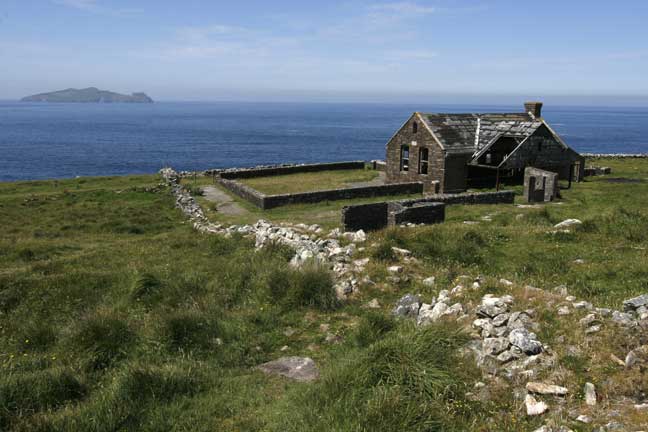
One can quibble. Yes, it's elephantine in a way that a small-scale story shouldn't be (it's more than 3 hours, time enough for an epic, or at least a couple more infidelity stories thrown in!) and the huge landscapes that Lean favors tend to dwarf the participants of the tiny Irish town of Kirarry (not to mention there's a LOT of people in the crowd scenes...where do they all LIVE!). But, the only serious charge is that Lean is merely being Lean (as in being himself, as opposed to the inelegantly penny-pinching film-making of its era—he spent a year making it "just-so," due to the ever-changing coastal climate of the location, and another year editing and fine-tuning it). Lean may not have been a versatile director, altering his technique for every film (nor does a leopard change its spots...because it's a gall-durned leopard and doesn't have to) but he certainly achieves the maximum in every shot...and one is never confused or questioning what is going on. For all the big vistas, there's a lot of small nuance going on, that merely represents good story-telling.
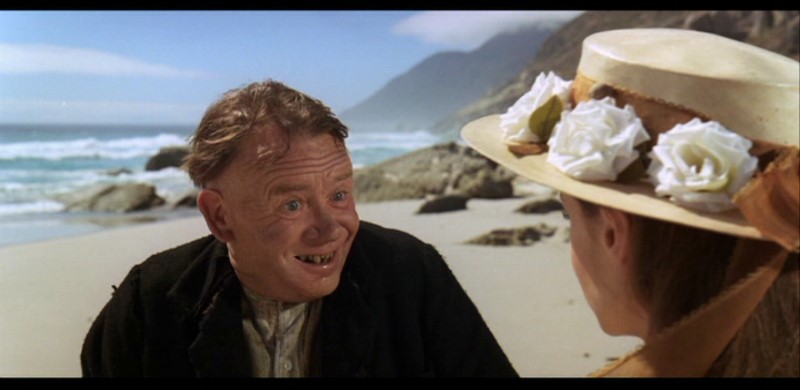
Sure, there are things that grate: Maurice Jarre's egregiously "mickey-mousing" score, or maybe a couple of scenes are pushed a little hard—the post-traumatic stress incident that erupts from John Mills' "village idiot" swinging his leg against the wall, the venality of the town's citizenry—but, one can see why Lean did what he did, and the drama benefited, ultimately, from such touches.
It started out as an adaptation of Flaubert's "Madame Bovary" by screenwriter Robert Bolt. By this time, Bolt and Lean had a working relationship as tight as Powell and Pressburger ("The Archers") did. Lean told the writer he was not interested, even if it was written for Bolt's wife-at-the-time, Sarah Miles. Lean had higher ambitions for his films now. Like Lawrence of Arabia and Doctor Zhivago, he wanted the problems of his figures in a landscape to have political overtones, rather than just the caprices of their natures. And with present day tensions in Belfast between British Army forces and the IRA in the headlines, locales were switched, accommodations made, and, one feminist nice concession, the female adulterer didn't have to pay the ultimate price for her crimes of indiscretion. Oh. She pays...(things hadn't advanced that far!), but it's the male (a cute, but out-of-his-depth, Christopher Jones) who sacrifices himself...in the guise of destroying evidence.
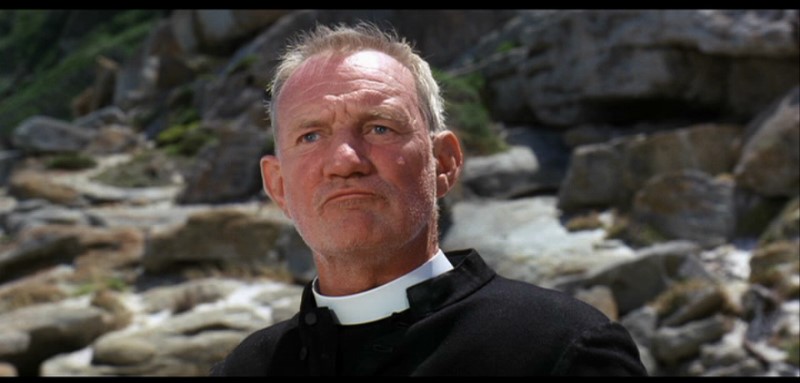
Bolt wrote his "Irish Bovary," but called it "Michael's Day," after John Mills' poor unfortunate—unfortunate, maybe, but he's the only character who doesn't judge, the lowest of the social strata, but the highest in moral character, followed by the priest Father Hugh (Trevor Howard), who is judgemental, but doesn't allow that to not seek the judged's salvation. In Kirarry, the first one now will later be last, and those who are triumphant by film's end will suffer a life of misery due to it...just by being themselves.
Lean's Irish crowds can be seen in the cackling crones of John Ford's Irish films, or the scandalously rich elite in George Cukor's films—these film-makers are only too happy to take down the gossips and gadabouts in the eyes of the audience, showing their true colors despite the trappings of civility. In truth, they are more like barnyard animals taking full advantage of pack mentality and pecking order.  It's not the only instance of Lean using Nature to tell the story, not with so much scenery and weather filling his frames perfectly. But, their shallow triumphs have no permanence, because their attitudes leave a lasting impression, long after they've left the screen.
The actors, save for the callow Jones, are great: Miles is not afraid to show her Rosy Ryan as a selfish brat, Mills creates a character as pathetic (and sometimes as mawkish) as Chaplin's Little Tramp (and he won an Academy Award for it), Leo McKern, bold and blustery as Rosy's too-eager-to-please Conformist-father, but the best are Robert Mitchum, cast against type as Rosy's cuckolded older husband—a bull in a china shop just aware of breaking his first dish—and Trevor Howard, who even whispers in a roar as the Kirarry parish priest—a great, bold, stamping performance of ingenuity and froth.
But, in the end, it is Lean's film, as personal as he could make it with those wide Earth-framing lenses. The figures may be fighting the crags and spray of the Irish coast, but when Lean chooses to bring them front and center, it is always with the best design sense and a painter's eye. Look at the two frames below: as Rosy runs from her husband's bed to join her wounded soldier of a lover, smoke inexplicably—chimney fire, maybe?—roiling over the hill, darkening the moment; and the next shot, as Mitchum's school-master Charles Shaughnessy, sees with his own eyes and not his suspicions, his betrayal out in the open, trapped behind glass and bars, he retreats, his eyes falling into shadow, displaying the loss he is reluctant to express. 
It doesn't get much better than that.  And there's over three hours of this meticulousness and beauty. It might be a bit rich. But it's quite the banquet.