Nora Ephron directed movies have the same half-circle trajectories as "Star Trek" films: you get a good one, the next one stinks. Whether by virtue or vice of over-confidence or coasting, it seems you can't have two good Nora Ephron movies back to back. For every Sleepless in Seattle, there's a Mixed Nuts and for every You've Got Mail there's a Bewitched.
That's if you're a normal person. For me, I have yet to see an Ephron effort that hasn't made my toes curl inward in their shoes. There's a slap-happy spunkiness to her movies that just make me want to plunge my fore-head into the seat-back in front of me. Her nadir came with her last movie: how in the Hell can somebody screw up Bewitched? It wasn't due to the Kidman Komedy Kurse, but a clear case of a writer-director trying too hard, Bewitched showed the ruination of tailoring material to attract a star—Jim Carrey as Darren—and then not going back to Square One to re-tool it when they don't get him. Will Farrell could be an astonishingly good Darren, but in another movie, not so driven by the character as it was re-tooled. And her efforts to make it a one-off Bewitched just seemed pitifully neutered—here's a concept where the woman has all the power, and Ephron compromised it. I know a lot of women who were fans of the TV show could not believe how badly the movie botched the premise. They felt betrayed.

Fans of Julia Child and "The French Chef" might feel the same way, but at least the effort was made to make a better film. Julie & Julia is based on the book written by Julie Powell cribbed from her Salon.com blog, a breezy chatty thing done for the same reasons as the blog you're currently reading: to write. And the only way to improve your writing is by writing, and then writing more. I don't write about cooking (but I know people who do), and it is that discipline to produce and take stock and put it Out There that (supposedly) makes you better at it, whether it's writing or cooking or (non-committal generality). Sometimes, like Powell, you get an audience, but it doesn't matter: becoming a better (non-committal generality) is what matters. This is my way of giving kudos to Powell, who's gotten a lot of stick lately for a) not being a good cook—she blogged about cooking out of a recipe book (doy!) and b) being successful when there are a lot of food-bloggers out there who aren't (see a).*

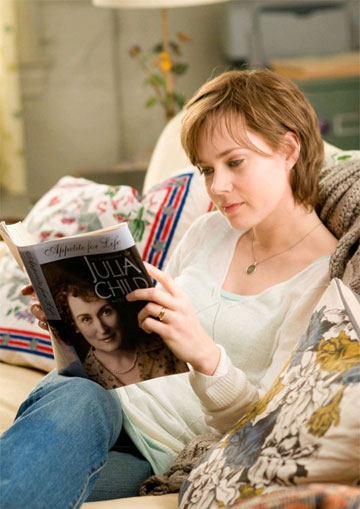
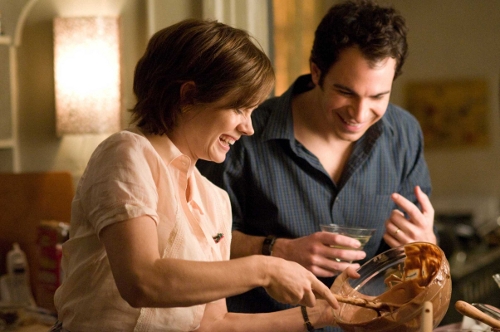
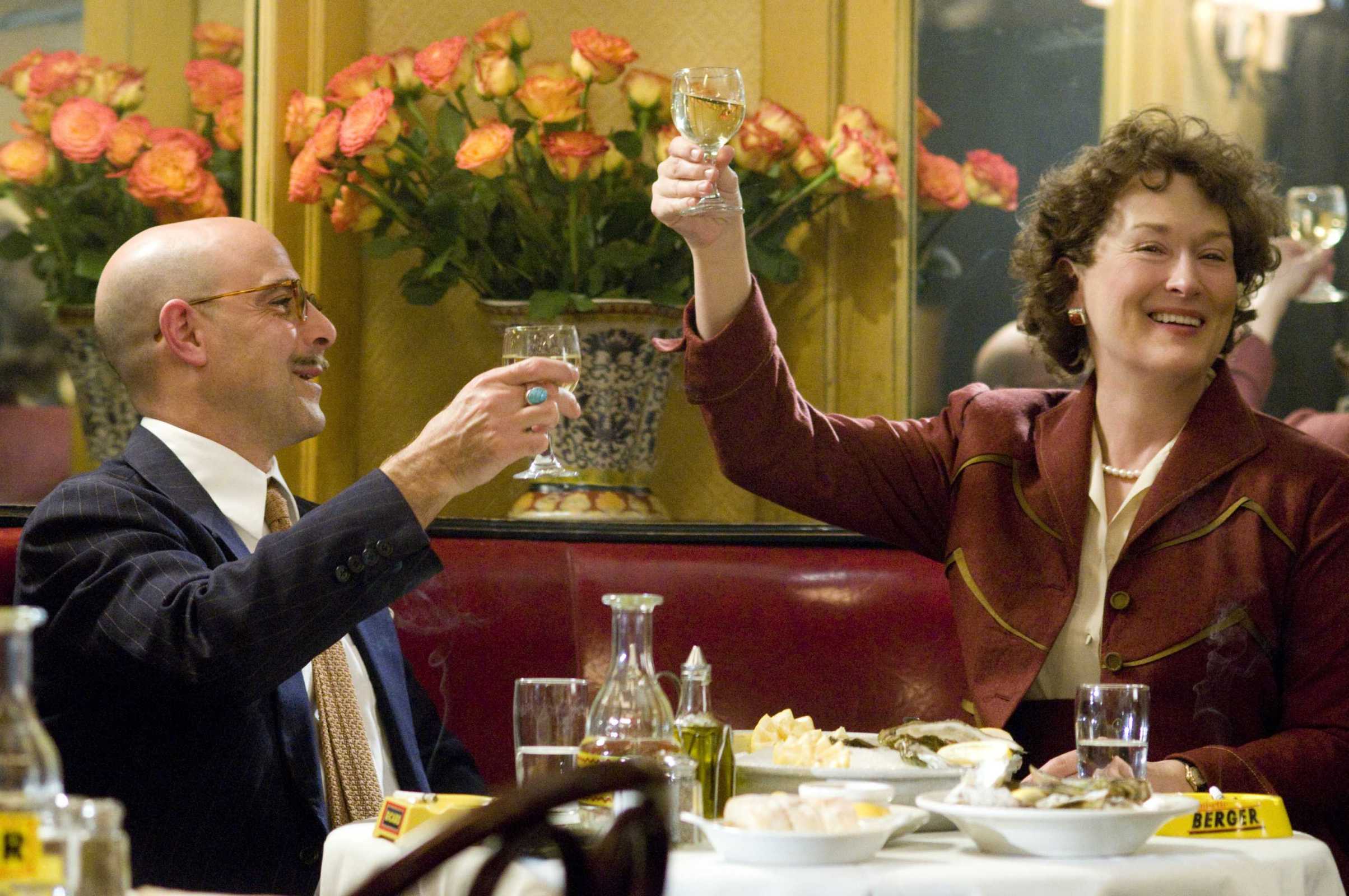
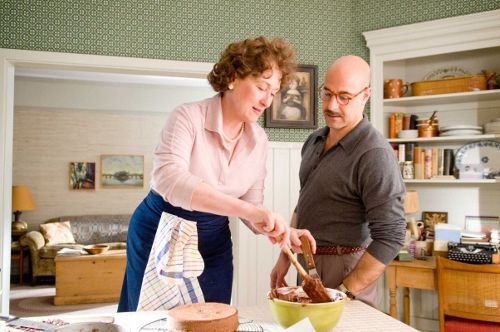
Having said that, Ephron made a stupendously wise choice to actually combine Powell's story with that of 1948 Parisian-based Julia Child (Meryl Streep) on a parallel course. Both women find themselves tethered and adrift: Julia, after working for the OSS, and married to diplomat/spy Paul Child (Stanley Tucci's best role in years) does not know what to do in Paris other than effuse, and Julie Powell (Amy Adams) finds herself in a bad Queens apartment,** at a bad job (at a post 9/11 Lower Manhattan management company), and with nothing satisfying in her life—her dream of writing a distant memory. JC decides to take cooking classes—in a class entirely of men, while JP decides that since she finds solace in cooking she's going to spend a year following Child's recipes and writing about the experience. Ephron's film then follows the two women through their various experiences until reaching their final triumphs—both of which involve being published.

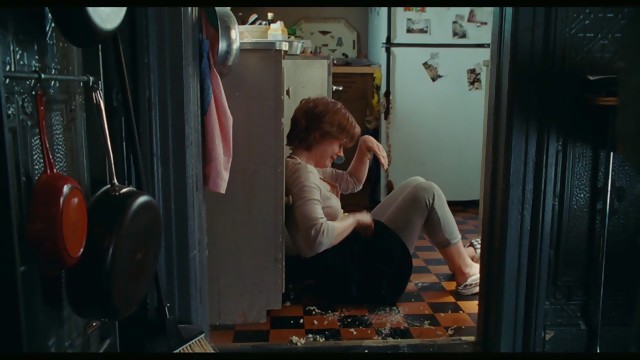
Good enough. Enticing enough, actually. But, truth to tell, despite the best efforts of the impeccable Amy Adams (trooper that she is—she's perfected a mono-syllabic babble in moments of confusion), the movie just stops being interesting every time we jump to the present day story, probably because that story goes through the Ephron story-grinder—get a goal, have your effervescent highs, have your debilitating lows, but everything works out in the end (Cue Uplifting "Standard" Song).

 The Julia Child sections fare much better
  because Child was doing something a bit revolutionary and she was a fascinating personality and is played wonderfully well by Meryl Streep. But it's like banging the oven door on the soufflé every time we move away from the past because like a good balloon, you can't take your eyes off something that defiantly floats. That Child has interesting people to play off of—Tucci's husband and, in what might be the acting scene of the year, Streep bouncing off the brilliant Jane Lynch playing her sister—while Adams struggles in relative self-involved*** isolation, might be part of the problem.
But, truth be told, just as Julie falls in love with Julia the person, the audience does, too, and the movie falls victim to its own story; when the person keeps stating over and over what a great person "blank" is, you tend to believe it, even over the person who's stating it. And Streep's Child is far more child-like than the real person, finding the charm in everybody and everything, head-strong and a foot taller than everybody else in the vicinity (they did some careful casting and set design for this), crowing with delight and bouncing in triumph, you can't help but love her...and admire, once yet again, how Streep can take ordinary reactions and make them extraordinary.

You can still see Julia Child on TV. There's a new regurgitation by PBS called "Dishing with Julia" which features celebrity chefs watching old episodes of "The French Chef" and making comments—none of which approach critical. The most recent one had Top Chef Carla Hall observing Child slapping bread dough around on a cutting board and doing a hilarious imitation (they all do, actually) with every slap: "THIS isn't precious! THIS isn't precious!"
* Not to belabor the point, but look, she did it for self-improvement—that she made a success of it and is surfing her high tide well is just, well...gravy. Or just desserts.
** That I think New Yorkers might kill for.
*** Ephron hammers the "self-involved" blogger bit a might hard considering the number of bloggers and Facebookers and Twitterers in her audience (so says this self-involved blogger).