Showing posts with label Dan Fogler. Show all posts

Friday, December 27, 2024

A Complete Unknown (2024)

How Does It Feeeeeeeeeel?

or
The Freewheelin' (Inscrutable) Bob Dylan
 
"Seven simple rules of going into hiding: one, never trust a cop in a raincoat. Two, beware of enthusiasm and of love, both are temporary and quick to sway. Three, if asked if you care about the world's problems, look deep into the eyes of he who asks, he will never ask you again. Four, never give your real name. Five, if ever asked to look at yourself, don't. Six, never do anything the person standing in front of you cannot understand. And finally, seven, never create anything--it will be misinterpreted, it will chain you and follow you for the rest of your life."
Bob Dylan
 
Musicians performing on-stage use something called "foldback speakers" so that they can hear themselves accurately against the wash of sound coming from auditorium reverberation or the cacophony of crowd noise fighting against them—modern musicians use ear-buds to have their music pumped backed to them without any deleterious feed-back from similar music sources competing. 
 
That little bit of insider trivia is what I was thinking about walking out of A Complete Unknown, the new bio-pic of a slice of Bob Dylan's life as he was becoming more known and making a name (and history) for himself prowling around the Greenwich Village clubs, riding a burgeoning folk-music wave and expanding the subject matter of the genre like his heroes, Woody Guthrie and Pete Seeger into advocacy-folk or what would become known as "protest songs," which formed the soundtrack of the youth movement of the early 1960's.
 
Dylan has been mixed up with movies before—the documentary Bob Dylan: Don't Look Back, various music videos, he wrote the music for and played in Pat Garrett and Billy the Kid, wrote and starred in Masked and Anonymous, and Renaldo and Clara, and although not mentioned by name is seen through a prism of stories and interpreters in I'm Not There.
Well, this one has his seal of approval, sticks to one actor as Dylan, and covers January 24, 1961 to July 25, 1965 (when Dylan first arrived in New York City at the age of 19 to his controversial performance set at the 1965 Newport Folk Festival). And it does a pretty good job of clearing away all the myths about Bob Dylan, his absences from the public eye (hard to believe these days, he's even done commercials), his changing personas more than Madonna or Bono, and just concentrates on that initial section where he became a performer, then The Brand New Thing, then The Highly Exploitable Thing, to The Voice of His Generation, all the while navigating the rigors of performing, the inanities of being a product, and the desire to start breaking things and doing something fresh.
Frankly, that's enough. It was never his mission to be understood, and the movie never tries to psychoanalyze or explain his actions, but merely the context into which he arrived and the way things changed once he started performing. He came in with talent and a poet's way of putting thoughts into words in a way no one had ever done before, inspired by folk music and its tendency towards metaphor. 
That is immediately recognized by practitioners of the art—Pete Seeger (
Edward Norton, wonderfully essaying the man as appeaser rather than rebel) and a hospitalized-by-Huntington's Woody Guthrie (Scoot McNairy, in a non-verbal performance), and he is promoted, signed by a label (Dan Fogler plays Columbia A & R guy Albert Grossman), and starts playing bigger venues, all the while already established folkies like Joan Baez (Monica Barbaro) start interpreting his material for the mainstream. The maxim is "it's the singer, not the song" but Dylan's "voice" (as far as his writing) was so distinct, he bobbed up through the commercialization as the Genuine Article quickly and, with his ungussied-up vocal stylings, bereft of soothing harmonies and homogenizing orchestrations.
So...back to that foldback speaker: Imagine you're putting yourself out there, performance after performance, and you're leading the field. Then, you start hearing yourself over and over again and not necessarily your voice. People are singing your songs, and then imitating your songs—Pete Seeger's "Where Have All the Flowers Gone" begets your "Blowin' In The Wind" and then that begets Phil Ochs' "There But For Fortune"—or imitating your composing-process, and then parroting and parodying your songs and then you're suddenly surrounded by the newest versions of "you" while (as movie-Dylan gripes) "you just want me singing 'Blowin' In The Wind' solo for the rest of my life." It's stifling. It's maddening. It makes you want a change.
But, that's not what your label wants. It's not what your manager wants. It's not what your fans want. They want the rebellion and the "new" sound to be what they're comfortable with...or what they're making money with. You want to create. They want to cash in. Or get their comforting nostalgia. No one gets it.
But it gets creepy. There's a scene in Don't Look Back where Dylan is talking to a fan and the exchange is this:
Fan: I just don't like any of the "Subterranean Homesick Blues" stuff. 
Bob Dylan: Oh, you're that kind - I understand, right now. 
Fan: It's not you. It doesn't sound like you at all! 
Bob Dylan: But, my friends, my friends were playing with me on that song. You know, I have to give some work to my friends too. I mean, you don't mind that, right? Huh? You don't mind them playing with me if they play the guitar and drums and all that stuff, right?
Fan: It just doesn't sound like you at all. It sounds like you're having a good ole laugh. 
Bob Dylan: Well, don't you like to have a good ole laugh once in awhile? Isn't that all right with you?
 
"That's not you." How the "homesick blues" does he know? Because he attended a concert? Because he bought himself a record? It's no wonder that at one point Dylan just blurted "Just because you like my stuff doesn't mean I owe you anything." See it as ingratitude if you must or see it as not "playing the game" but "you gotta do you" because "you" is what got you there in the first place. All artists go through this. Some have even rebelled. Some have got away with it. Some have not. Some have walked the tight-rope of practicality where you're either an "artist" or you pay the bills (you know...like we non-artists do).
A Complete Unknown is wonderful in every way for putting you not in Dylan's head but in his head-space. And if the man is still an enigma after you see it, you can, at least, understand why. If I have anything negative to say about it, it's that Ricky Nelson said the same thing in just over three minutes.* That's efficient.

Now, I've gotta pay the bills, do what's expected of me: how is Chalamet? Spot on. Pretty amazing, actually, but I've never ever been disappointed by a Chalamet performance. Of course, he's prettier than Dylan, but, like Joaquin Phoenix did with Johnny Cash in director Mangold's previous music bio-pic I Walk the Line, he suggests Dylan rather than does a full-on imitation. He has a less-is-more approach which is entirely appropriate for the subject, but there's a nice touch that he brings to his Dylan which is lovely—a defiant, almost predatory stare, observing, analyzing, like a biding-his-time hawk. And, considering his vocal talents in Wonka, of course he can do a dead-on imitation of Dylan's singing style. You have to listen very closely to tell the difference between Chalamet's versions of Dylan's songs and the memories of the real deal.

I mean, the real "real deal."

"I'm not angry. I'm delightful."
Bob Dylan 
*
 

Thursday, November 22, 2018

Fantastic Beasts: The Crimes of Grindelwald

Bébé LeStrange (Losing All Credence)
or
Fantastic Beasts and Where NOT to Find Them.

It is a year after the capture of Gellert Grindelwald (Johnny Depp) in New York during the events of Fantastic Beasts, and Where To Find Them, and he has spent that year locked away in the prison run by the Magical Congress of the United States of America. Unable to break him, or even learn what the dark wizard might be planning, they decide to transport him to England's Ministry of Magic, so as to...well, one isn't sure what they can do with him, exactly. But, transport him they must in order to get the plot going. While Grindelwald is sent by flying Kestrel driven chariot, one of his followers in hiding effectively distracts the guards keeping him under lock-and-wand, and the seemingly placid prisoner, manages to take control of the vehicle and send his keepers plummeting to their deaths. Well, it would be their deaths if they weren't wizards...one of them manages to halt his fall before he hits the briney and then *splash* he goes into the drink, while Grindelwald flies off to what we eventually learn to be Paris, as he has business there and people to find and corrupt.

A wizard's work is never done. 
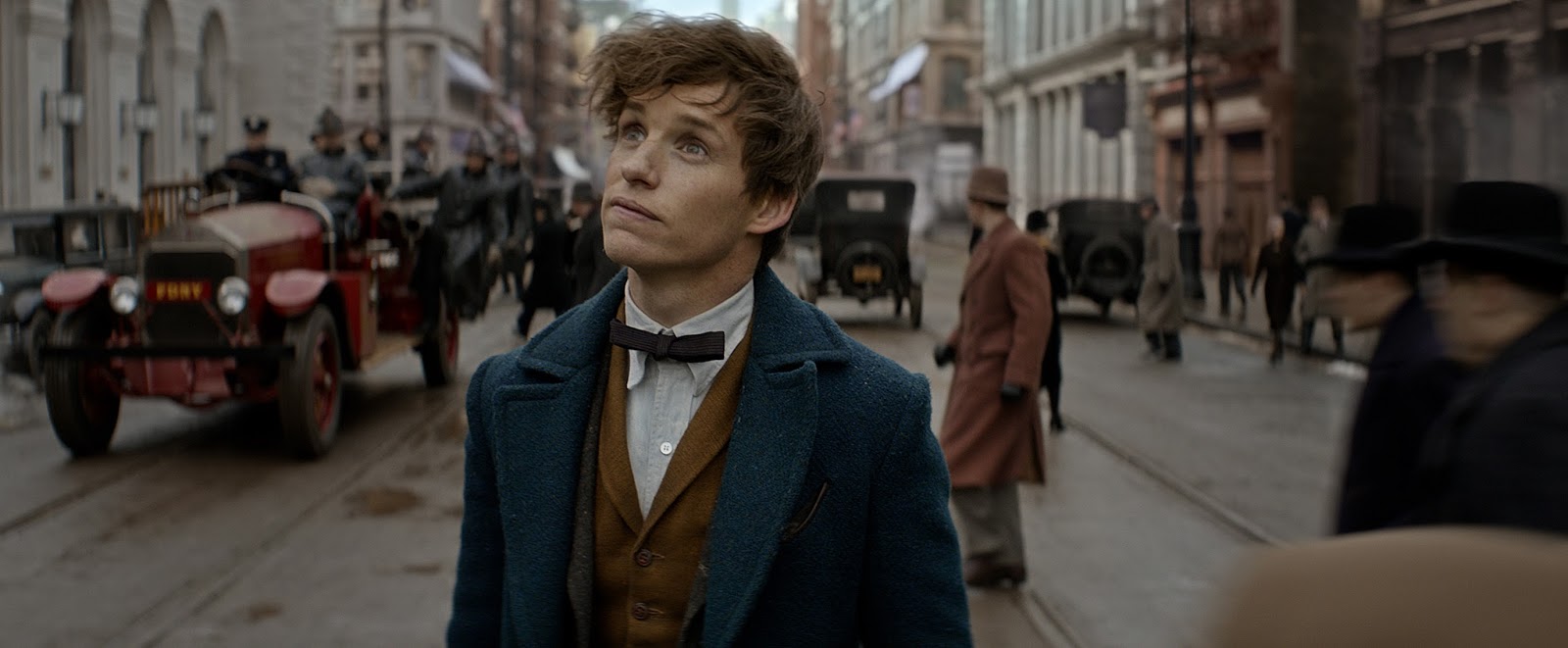
Three months later, Newt Scamander (Eddie Redmayne) is back in London, being called on the carpet (flying, presumably) for his part in the events in New York. The Ministry has revoked his travel privileges (as if they can't be worked around) and offer them as the price to work with the Ministry to find young Credence Barebone (Ezra Miller), an Obscurial he encountered in New York, but has now been located in London. Despite the Ministry's offer and the entreaties of both his brother Theseus (Callum Turner) and his fiance Leta LeStrange (Zoë Kravitz), an old chum of Newt's from their days at Hogwarts—although it is implied that she thinks she might be engaged to the wrong brother). Newt is a magi-zoologist and "doesn't do sides" in what looks to be a nasty struggle. Famous last words.
On his way home, he runs into his old teacher Albus Dumbledore (you remember him, but either as Richard Harris or Michael Gambon, when he was an even older teacher, not, as here, by Jude Law—who is quite good). Dumbledore also asks him to find Credence, but Newt remains a neutral party. He goes home to tend to his Fantastic Charges—such as the underwater critter, a "kelpie", who has a habit of nipping Newt's fawning helper, Bunty (Victoria Yeates), before retiring for the evening. No such luck.
He finds his friends from the last adventure, Jacob Kowalski (Dan Fogler, who's starting to remind me of a fuller Alan Arkin) and Queenie Goldstein (Alison Sudol), have traveled to London on their way to visit her sister Tina (Katherine Waterston) who is doing some investigating for the Ministry in the city of Paris. Coincidence? Hardly. Newt notices that Jacob is behaving strangely—he's completely agog with Queenie and he surmises that she's used a hex on him, of which Newt strongly disapproves. Her reason? She wants to marry Jacob, but there's some dumb rule about magical miscegenation that prevents it—and Jacob is too protective of Queenie to let the Ministry punish her for her actions.
Queenie runs off to find Tina on her own—there's some business about Tina not wanting to see Newt because she read somewhere that Newt and Leta were engaged—"fake news"—and despite her being an investigator she still decides to fall for it and have nothing to do with Newt. Well, now there's a reason for Newt to choose sides, so after getting his marching orders from Dumbledore, he and Jacob go off to Paris to find Queenie and Tina and Credence (which sounds like a heckuvan "oldies" concert).
Then, there's the Ministry's business: they're also looking for Credence, as well, as they think he may be the brother of Leta LeStrange, which is ridiculous because Zoë Kravitz looks gorgeous and Ezra Miller looks...like Ezra Miller. Maybe he could be the brother of Adam Driver, but he's not in this franchise. Grindelwald is looking for Credence, too, as he thinks he's the only person on Earth—the wizarding Earth—who could kill Albus Dumbledore (other than Severus Snape, who isn't alive yet). Oh, did I mention there's a half-brother named Yusuf Kama (William Nadylam), who is also looking for him because he thinks he's his step-brother? Credence is the most popular guy in town, but the one who finds him first is Queenie, when she visits a mystical street-circus where a hunched up Credence is acting as the protector of Nagini (Claudia Kim), who will at one point become the snakey familiar of Voldemort...
See? At this point, the movie kinda breaks down and gets lost in some Potter's field of arcana that only a small handful of people might give two wand-shakes about. There are so many people who think Credence is SOME-thing, that most of them must be wrong...in which case, who cares? Credence is the MacGuffin in this one, like the Sorcerer's/Philosopher's Stone, Chamber of Secrets, Goblet of Fire, or the horcruxes of the Deathly Hallows. It's something everybody wants, but we can't guess at each one's significance until the end.

And this series is set to be five films long.

It makes your brain hurt, sets it rolling with Rowling. But, the film went astray much further than that, at least to my mind. That point came when screenwriter J. K. Rowling decided to abandon the concept of her original "Fantastic Creatures" and make it's font smaller in the title than "The Crimes of Grindelwald." For the truth of the matter is, there aren't that many "Fantastic Creatures" here, after about ten minutes of them, and they are only used as a way out of getting out of a tricky situation, whether as distraction or destructive force. I found this very disappointing. You shouldn't go into any movie with preconceived notions, but after the first, I was hoping the movie would continue its ecology theme of preserving the bewitched bio-diversity of endangered—and vexing—creatures, despite the slimness of the source material.
Instead, the stakes are expanded, creating a world-wide threat by the actions of Grindelwald, which, if we're to believe this movie, are more far-reaching even than Voldemort's: his plan is to unite the many mages throughout the wizarding world and break the 100 year peace established with the Muggles, the unenchanted. 
Newt's greatest fear: "a job in an office"
In a meeting of French wizards in the LeStrange family tomb, Grindelwald makes a case for the magical forces taking over the world out of the hands of the non-magical, starting with telling them that he wants them to live openly and to love openly (which appeals to Queenie). It's how to accomplish that utopia that bubbles the cauldron. That involves taking charge of the Muggles, poor inferior souls, dominating them rather than maintaining any co-existence, then as a capper, Grindelwald plays on their fears by displaying images from the coming second World War that ends with the apocalyptic vision of an atomic explosion. 
But, then, Grindelwald is just telling them what they want to hear—control of their world, making it theirs. You don't have to to walk to the far to the right politically to see a political parallel with today's world—Rowling injected the Potter books with flirtations of authoritarianism. But, here the parallels are far too noticeable and in a series more in line with the blockbuster sensibility of the high-earning Potter films. The studio is Warner Brothers, which used to be known as a sanctuary for letting film-makers be film-makers, but now known for sticking their grubby little hands in their franchise films.
It's a disappointment. There's only a couple of new beasts, only one of which is effectively used and that as a deus ex machina to get the heroes (and the writer) out of a jam. Unfortunately, that would appear to be the template for the rest of the films—re-do the Potter films with their well-connected central villain and just give lip-service to the Fantastic Beasts concept. The idea seems to be it's better to do something that feels more like the popular Potter films than to strike out with something different that might expand the universe and bring a unique experience.
I just participated in a podcast put out by the Large Association of Movie Blogs (LAMB) on the film and the general consensus was that the film was a big drop in quality from the first film, whether you thought the initial movie was good or not. It was amusing that the one thing everybody said was exceptional was the costumes. That sounds like the old trope that you shouldn't walk out of a musical whistling the sets. You shouldn't. But, for a fantasy that should inspire a sense of wonder, it's particularly un-magical.
"Oh! There's one!"

Wednesday, December 21, 2016

Fantastic Beasts and Where to Find Them

Global Swarming
or
The Trials of the Mag-ecologist

I saw all the "Harry Potter" films, but didn't read the books; I only made it half-way through the first one, and it was at that point, I "knew" what style of writing I was in for and I didn't want to invest the time in reading the entire series. Plus, I'd had my fill of young mage's learning their trade, having read Neil Gaiman's "Books of Magic."

But, "Potterer" J.K. Rowling has an entertaining, spunky voice to her writing, and she needn't depend on writing "Potter" in perpetuity to make her living. But, as long as the "magic" happens at the bank, why shouldn't she keep up with the "Potterverse?"


Fantastic Beasts and Where to Find Them started out as a Rowling-penned encyclopedia of things odd and ambulatory, scaled and winged in the wizard's world. Rowling has fashioned that "reference" book with some arcana to make a viable screenplay for the film. If there is one criticism of the whole enterprise, it's that they're trying to squeeze a few films out of the threadbare source and have invented yet another Voldemort-style villain arc to create a through-line for the story. It seems like we've been here before and the basic concept is enough to make a couple less films with a strong story-line with a unique cautionary tale about bio-diversity and preservation without having to resort to the villain plot (especially when it seems so unnecessary to the basic thrust of what she's come up with for the "A" story). When you couple that idea with the character-reveal similar to the one in Harry Potter and the Sorcerer's Stone, one fears that we're going to be making too many trips to the magical well. That's the bad news.
The good news is that Fantastic Beasts and Where to Find Them is a delightful entertainment, even with its bare-bones structure and shorn of the teen-angst of the Hogwarts alums, and the new film's hero, Newt Scamander (Eddie Redmayne) doesn't have the orphan-drama baggage of Master Potter and his class. There's less soap bubbles mixed in with the fairy dust, keeping the larger issue of magic/non-magic relationships and the specific mission of Mr. Scamander, which is the securing and maintenance of endangered beasts of a special nature.
Call him a mag-ecologist (although Rowling labels him a Magizoologist).
It is 1926, as Scamander travels to New York with a valise that that growls and shudders at the most inopportune times—like at the immigration desk. Newt has traveled from England (he was kicked out of Hogwart's and why is not specified in the film) to track down some escaped critters that might cause problems in the Muggle-world by exposing the existence of the magical one.
Things are already dire; as we learn in an opening montage of animated newspaper headlines (Rowling learned that trick from Alfonso Cuaron, who used the same technique in the third HP film), a magical miscreant named Gellert Grindlewald (???)* has escaped from some porous prison somewhere (magical rules are always slippery and the ones that might apply to Dr. Strange don't in Rowling's world) to do something we know not what—it can't be good, or specified apparently, and that's one of the shortcomings of the film.
The escape of Grindlewald is causing a conniption in magic circles (headquartered in New York at the Magical Congress of the United States of America, or MACUSA) because they want to stay secreted away from the Muggle (referred to as No-Maj's in the States) world—a way of life that seems extraordinarily impractical and convoluted, just to keep Muggle/No-Maj's from asking them to do magic favors ("I've got this thing...right here"). Well, MACUSA is all up-in-arms about Grindlewald, but they also know of the beasts that seem to have got loose and aren't doing much about it, other than to send a disgraced Auror, now investigator, Tina Goldstein (Katherine Waterston) to do some perfunctory looking.
The Magical Congress of the United States of America HQ
Newt and Tina encounter each other as the zoologist tries to trap an escaped "Niffler" (attracted to and given to the pilfering of shiny things) who has inconveniently run into a bank. Getting mixed up in the hi-jinx is Jacob Kowalski (Dan Fogler, the welcome "explain-to" character), a No-Maj who is at the bank to try and secure a loan for a bakery he wants to open. It becomes inconvenient to mind-wipe Kowalski and in best silent-movie convenience, he manages to swap valises with Scamander, letting loose a couple more creatures that the mage has hidden there.
A "Niffler" caught red-pawed in the act
One should explain that Newt's valise is the neatest space-bending device since the Tardis and provides all sorts of good comedic effects and a truly wondrous touring experience once we "get into it."
Anyway, "hilarity ensues." But, there are dark tidings beyond the levity. There are the Barebone family (led by Samantha Morton), who are the locus for the New Salem Philanthropic Society, a No-Maj organization that is convinced witches are real and should be expunged from society. She is treated as any crackpot but the MACUSA worry what might come of them if they are exposed as real. They, therefore, have a Chief of Security named Percival Graves (Colin Farrell in a nifty performance), whose radical ideas of security involve putting errant wizards to death.
He'd get along great with the New Salemers—and, in fact, he does, using the insecure young son Credence Barebone (Ezra Miller, the once and future movie-Barry Allen) as both spy and potential ally for seeking out information about both the Society and word on the street about wizards. That seems a little odd, doesn't it?
Director David Yates directed the last few Harry Potter movies in a way that did them service, but, to me, didn't do much else. But here, his direction pops, as if everything he learned from the earlier films freed him to do less with special effects—not that he ignores them, in fact there's more magic and imagination in this film than most of the "Potter's" and delightfully so—and concentrate more on telling a story artfully. The cast, especially Redmayne, do great work in the service of the story and everything comes together in a very entertaining package, quibbles aside.
It's a fine expansion of Rowling's wizard's world, and one hopes that the momentum can be sustained in the succeeding films (4 more of them?) to create something truly magical.

* Grindlewald appeared briefly in Harry Potter and the Deathly Hollows, Part 1 and his reveal at the end of Fantastic Beasts...is a little...disappointing.
Saturday, July 16, 2016

Europa Report

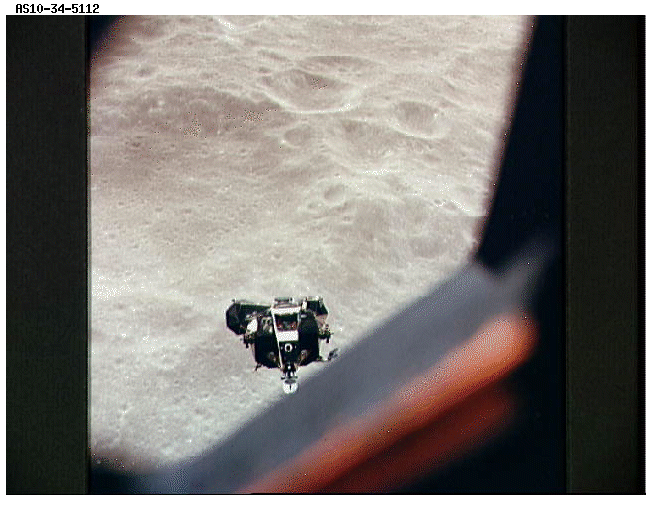
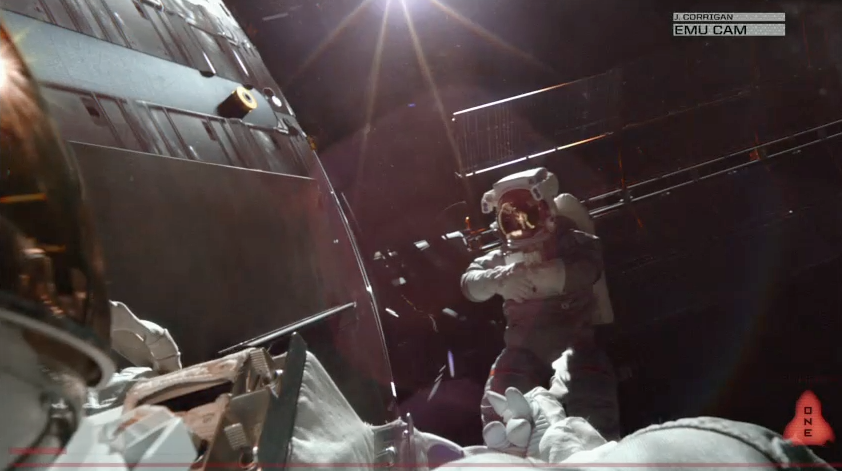
Europa Report (]Sebastián Cordero, 2013)  Sci-fi/adventure film crossing several styles of film-making, but primarily done in a faux-documentary/found footage style about a long-range NASA flight to the Jupiter moon of Europa, which, it has been speculated by many looking at it from afar and across many different spectra, is the most likely of our neighborhood system's bodies that could, maybe, possibly support life as we know it (if all the ingredients and conditions necessary for it outweigh everything that would prevent it).

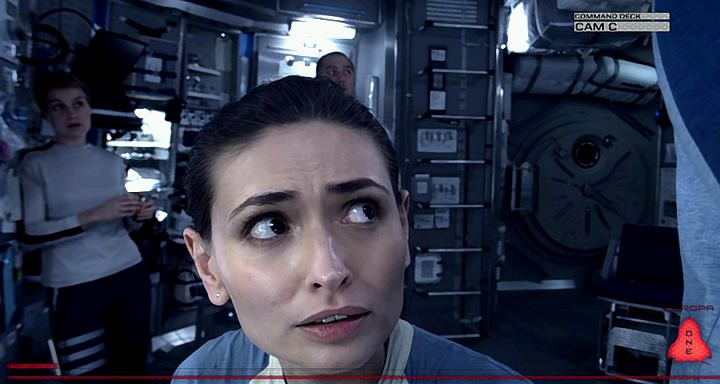
The whole thing is staged like a documentary. There are pre-flight press conference archives, post-event footage of interviews (giving us a nice sense of complacency), some scrambled interference to give us the "fallible narrator" idea, and lots and lots of "normalcy" footage (something that proved useful to The Martian, which makes Europa Report, seem less of a waste of space in presentation). 
The other thing that's neat about it, is that NASA advisers worked with the film-makers to give it a sense of verisimilitude.  The gear is "lowest-contract-bidder" looking, we get a sense of the routine (just so we can tell when it gets broken), and we become acquainted with the various camera set-ups that record what's going on automatically. It looks very authentic, much more so than misfires like that lousy Apollo 18 movie a couple years back, or even the clever Ridley Scott "transmission" footage used to hide the scale models and flaws in its "planet-side" footage in Alien
The film is cast well and game, maybe a little too game, as you don't get the sense that these guys are astronauts or pilots or physicists or ice geologists or whatever they're supposed to be.  But, any more casual "reading you five-by-five, Houston" and you wouldn't have been able to distinguish one from the other at all, and that wouldn't do well with what the film wants to do, which one will become aware of fairly early on in the proceedings. It does cast a couple of fairly well known "anonymous" actors—in other words, it's not George Clooney, Sandra Bullock or Brad Pitt—but it is Michael Nyqvist (from the first versions of the "The Girl with the Dragon Tattoo" series) and Sharlto Copley (of District 9, The A-Team, and Elysium) Embeth Davidtz (of Schindler's List, Army of Darkness and "Mad Men"), and Karolina Wydra (she was briefly Mrs. House on "House, M.D."), all very good international actors that few would recognize. A good strategy, that, even if it does make it it a little hard to keep track of everybody.
And that's the main problem, here. The story is pretty standard stuff in the murder/horror realm, as we lose crew-members one by one, a sort of "Ten Little Astronauts". But by how or by what, we have no idea in a world of possibilities (other than the age-old problem of everybody ignoring the transmission to "get back in"). Ultimately, this is what limits Europa Report, despite the fact that its intention is to expand our horizons and conceptions. We know what's going to happen. We know how it's going to end. And whatever great discovery and what it might mean to our ideas of the Universe as put out by the film are overshadowed by the rote way in which its conveyed. Any uniqueness is swallowed by convention.
Which makes you wonder: if we do find life in the Universe besides us, is our reaction going to be: "Uh-huh, so what else is new?"