"Brilliant...in a Horrible Kind of Way"
From the first jolting burst of rain on the soundtrack to the last exquisitely planned-out shot (and indeed to the thudding end of Alexandre Desplat's Herrmannesque score), Roman Polanski's film of The Ghost Writer is one of the most intricately mapped out paranoid-thrillers since the heady post-Watergate days when they were in vogue. But, more than those austere films of plots, counter-plots and figures in shadows, this film has wit, wisdom and a sorcerer's command of the English language. In fact, it feels more like a Hitchcock film than any of Polanski's other thrillers.
And that's due to the precision of the writing—as it should be, since the film is about writing and word-choice and the differences between truth and artifice. Co-scenarists Robert Harris (who wrote the movie source "The Ghost") and Polanski, set up an intricate puzzle to be solved, ala Hitchcock, that is both visually compelling and haunting.For those of us who live in the Pacific Northwest, it's a familiar story: a ferry pulls into dock, and the off-load of vehicles is stopped by one lone vehicle with no one behind the wheel. Already, there's a story there with several possible outcomes. Did the driver forget he had his car and walked off the ferry? Are they still on the boat, say, in the bathroom?
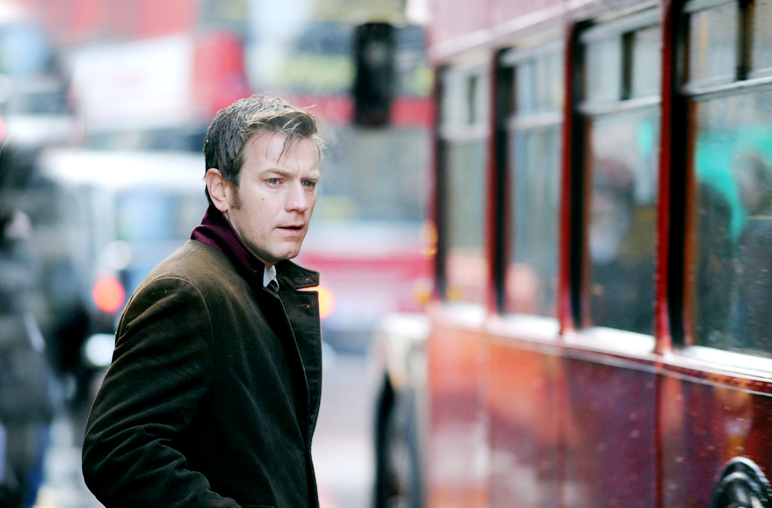
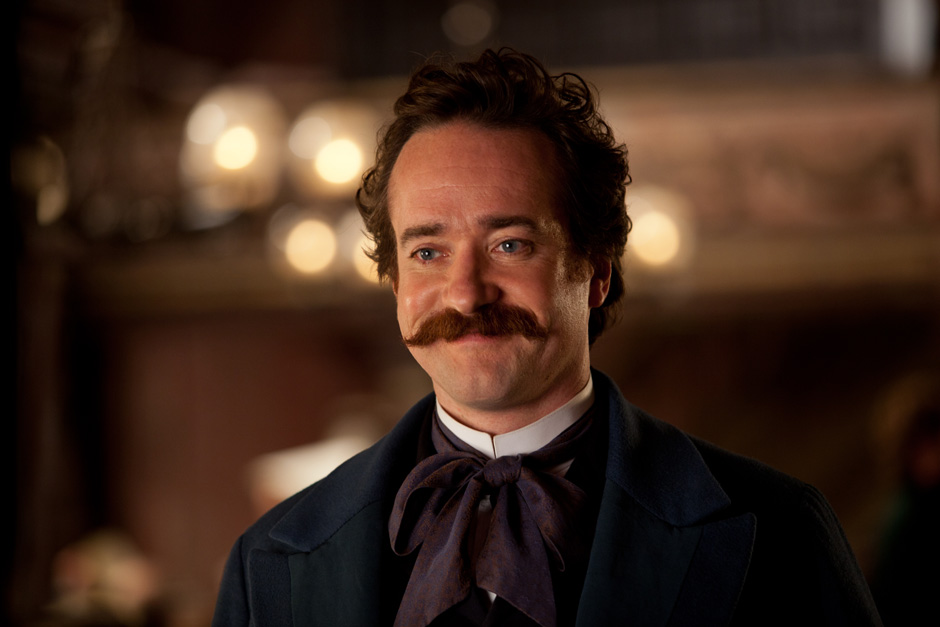
Or did they fall overboard? Or, for that, were they pushed?A simple story line—common, really—but it creates the question: where did the driver go? And for a movie it's a natural, because it can be presented in purely visual terms.Turns out the missing man was a writer—a ghost-writer, specifically, named Mike McAra, and, within days, he's found washed-up on shore with an extremely high blood-alcohol content. McAra, at the time, had been working anonymously on the memoirs of the once popular former Prime Minister Adam Lang (Pierce Brosnan, never better *) A new ghost-writer is hired (Ewan McGregor), and is given access to the top-secret manuscript (and the former PM) only by traveling to the high-security compound owned by the publishers to which Lang and his small staff have retreated to work on the book. The new ghost (he is never named, as he wouldn't be on the book) is de-briefed, patted down, scanned, searched and only then is he allowed to read the draft, which is under lock and key and never to leave its present sequestered location.To his horror, he finds the book a snoozer—he doesn't like political memoirs, anyway—and he's determined to beat it into some kind of readable shape, given a time-limit of only four weeks.The compound he's staying at on Martha's Vineyard is a concrete nightmare that looks more suited to one of the villains Brosnan battled in the Bond series—high-tech-gadgeted, and constantly surveilled. The minimal staff includes Lang's assistant from the No. 10 days, Amelia Bly (a smart, sharp Kim Cattrall), and overseen by Lang's wife Ruth (the wonderful Olivia Williams from Rushmore and An Education). Soon, complications set in and the building goes into crisis mode as it is revealed that Lang, in his dealings with the U.S. on the war on terror, was involved in the kidnapping and torture of terror-suspects, and may be brought up on charges as a war criminal by the International Criminal Court.
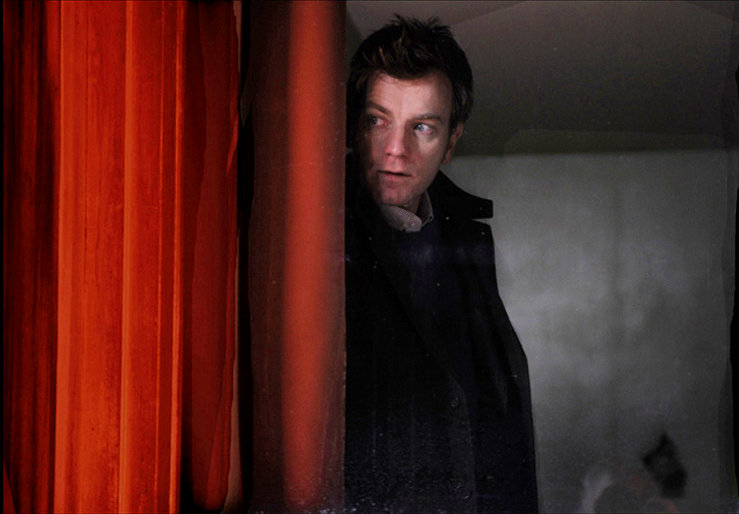
Suddenly, the compound is in a state of siege and that memoir becomes a hot topic: The publisher (Jim Belushi, unrecognizable and nicely brusk) wants the book in two weeks before the headlines get cold, Lang leaves to go on an image-building trip to Washington, the press is bombarding the compound ("the pack is on the move" as Amelia puts it), protesters chant outside the gate, and The Ghost is left there with a few mysteries to unravel. Both he and Lang are nicely metaphored by the compound's gardener trying to keep the dead grass he's just raked into a wheelbarrow on a blustery day.Leave the exposition at that. But it calls to mind past Polanski films of protagonists walking in the foot-prints of people who have come before, and in danger of losing their own identity to them—not that hard for The Ghost, as he has no identity in the film (Lang merely calls him "man," because he has no head for names).There are twists and turns, but where it is enticing is the way Polanski mines the material for suspense and humor. No detail goes unused—not the security, not the weather, not the language, not the technology, not the sound. Small glances through slitted curtains may be significant, as are muffled conversations in the next room, or the insistence by a staff-member to use a car on the island, rather than the bicycle. It COULD be innocent. He really MIGHT be concerned about the weather. But, then again...Then, again. Along with the paranoia are moments of perverse comedy where The Ghost's stealth make him stick out like a sore thumb, or just makes things more difficult for himself. Aware of his position as a replacement, he soon finds himself retracing his predecessor's steps, having to both live up to the trusted writer's reputation, but also to do right by him to find out what happened. If he can escape the same fate.The performer's are uniformly excellent: McGregor is a perfect protagonist, veering between deer-in-the-headlights and the wily hubris of the Man Who Knows Too Much, Brosnan and his character share a theater background, and the actor allows the arrogance and The Act of being a politician look believable in equal measure. Olivia Williams is by turns steel and rubber in her role, and Cattrall is efficiently perfect—you suspect her immediately. There are also nice turns by Timothy Hutton, Eli Wallach and the ubiquitous Tom Wilkinson, and by Robert Pugh as one of Lang's political rivals.But it's Polanski's show—he's the Puppet-Master, the audience-conductor like Sir Alfred, and effective enough that you leave the theater with a heightened sense of awareness, looking around corners, at things out-of-place, that the world is a more dangerous place.
And the most deliciously perverse irony is that Polanski had to complete the film in the place that informed the sensibility and interests of the young Hitchcock's film career: a prison cell.**
* Despite his hard-scrabble up-bringing Brosnan has always been better at playing effete characters. It's why his James Bond was something of a bore—Brosnan seems more suited to knocking someone out with a nerve-pinch than a karate chop.
** "I must have been about four or five years old. My father sent me to the police station with a note. The chief of police read it and locked me in a cell for five or ten minutes, saying "This is what we do to naughty boys." Hitchcock/Truffaut p. 17
Showing posts with label Olivia Williams. Show all posts
Wednesday, November 15, 2023
Saturday, March 25, 2023
Puss in Boots: The Last Wish
Puss in Boots: The Last Wish (Joel Crawford, Januel Mercado, 2023) In a recent podcast I was participating in, one of the other folks mentioned that she'd seen Puss in Boots: The Last Wish. "Trust me," she said "You'll want to see this." I remember being a bit skeptical, but made a note that I should see it at an early opportunity.
I didn't—although even at this late date (it having been released to streaming and on DVD, Blu-Ray and 4K) it is still possible. And I regretted it, after I watched it. It is good. It's hilarious in places, even.
But, I didn't know—until I started pulling screen-shots for this post—that what Dreamworks Animation, and directors Joel Crawford, Mercado and crew were doing with this film was something quite extraordinary. I doubt most people will notice it (or even care) and instead concentrate on the laughs and entertainment value, which is indeed considerable. But, what I noticed is a bit revolutionary while simultaneously not. I'll explain after a plot summary.Puss (voiced, again, delightfully, by Antonio Banderas) is in the city of Del Mar being feted by the townspeople, when the song and dance and ego are interrupted by the presence of a large giant who starts menacing the town. Utilizing one of the musicians' bass strings, the "Stabby Tabby" launches himself at the creature and proceeds to do battle with it in a proximity that the thing just can't handle. Ultimately, Puss escapes death a dozen times and dispatches the horrid beast...only to be crushed by a large brass bell that the cat (who might have resented being belled in the past) used to subdue it.
But, no, Puss wakes up in a doctor's office, a little shaken but defying the cartoon-logic that he's a flat as a pancake or has a bell-shaped divot in his body. Although he has trouble remembering, the doc asks how many of his traditional nine lives Puss has gone through. A quick montage of Puss dying in stupid and Darwin Award qualifying ways...eight times. It seems Puss is living his last life now, and the doctor advises he give up...well, everything he's doing...and go retire with an old cat lady and attempt to die of old age.
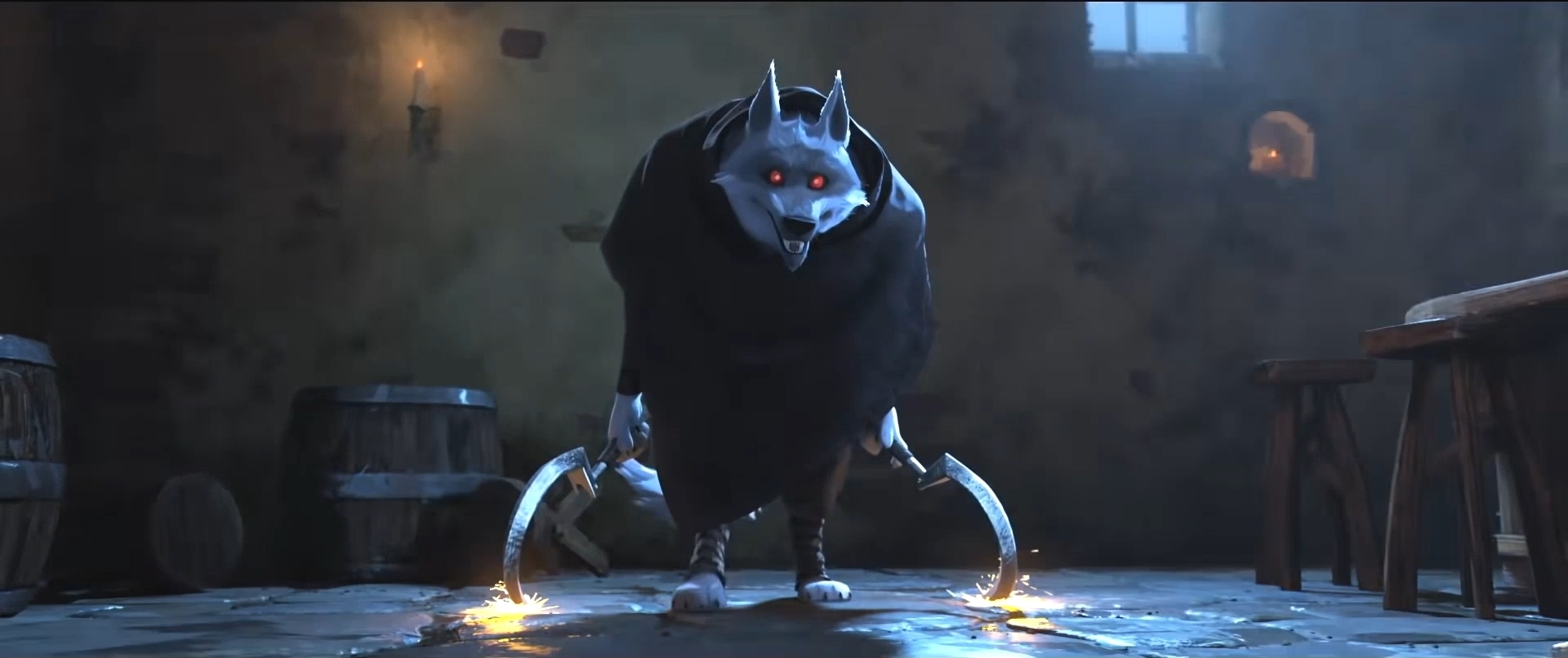
He decides against that until he sits in a kitty-bar—lapping milk, of course—when a tall, dark stranger appears sitting next to him. It's a bounty hunter, Lobo (Wagner Moura) and as wolves go, he's a "Big Bad" right down to the hairs on his chinny-chin-chin, dressed much like The Grim Reaper—right down to the scythe accessories he sports. He's a bounty hunter, but a particularly chatty one, full of complimentary talk about reputations and that sort of thing, but it's merely trash-talk as he's come for a fight and—being a representative of Death—knows he has to win eventually.It's a lovely little conceit, but then the "Puss" and "Shrek" series have always been the most fun skewering fairy-tales and casting their tropes in different lights. The Big Bad Wolf, mainstay as he is in fairy-tales, of course, could be seen as some sort of opportunistic stalker, if you want to put it in an anthropomorphic, modern context, and here he's such a presence that he makes a fine foil for the Cat's foil, and intimidating enough that Puss does, indeed, retire to a cat-lady's house, where the sight of a litter-box makes him gag. "So...this is where dignity goes to die."The plot involves Puss, a chihuahua-in-cat's-clothing named Garrito (Harvey GuillĂ©n)—who was stowing away at the cat-lady's— as well as Puss former fiancee, Kitty Softpaws (Salma Hayek), who are hired by soldiers-of-fortune Goldilocks (Florence Pugh) and The Three Bears Crime Family (Ray Winstone, Olivia Colman, and Samson Kayo, all delightful!) to steal the legendary Wishing Star for that talisman-collecting Baker-turned-Crime Boss "Big" Jack Horner (Imagine John Mulaney
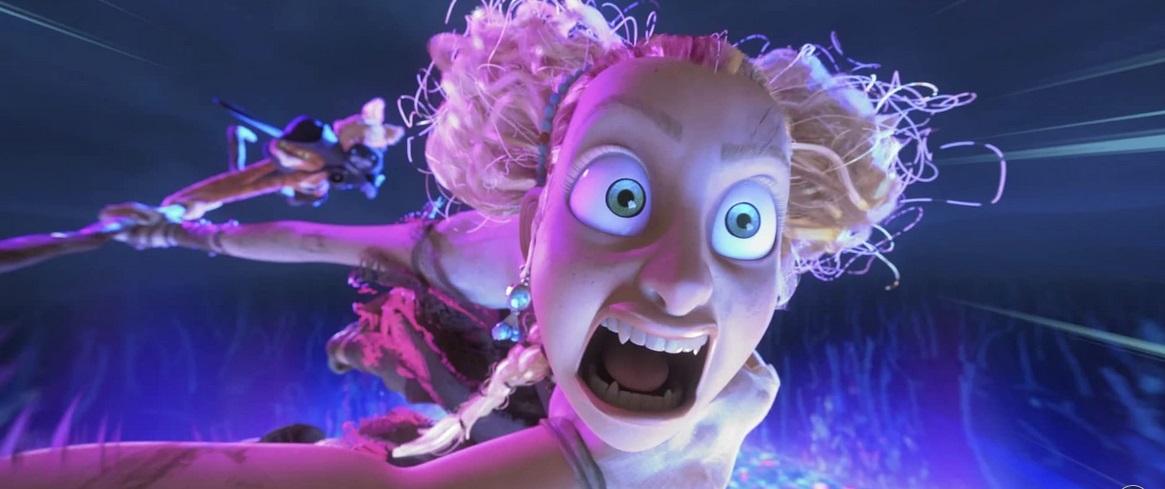
saying "Well, You know what they say—Can't bake a pie without losing a dozen men!" Yeah. He's hilarious.), even with the constant threat of Lobo/Death ("Why the hell did I play with my food?") lurking nearby.It is, quite frequently, laugh-out-loud funny (especially if you co-habit with a cat*), not only because the material is inspired but the voice-actors are hilarious doing it. Pugh, Colman, Winstone, and Kayo all play their parts like they've just come over from "Eastenders" and their quick-bickering banter is fast and a little furious—they're all about "family." If your family is "The Sopranos."Now, what's special about this here Puss in Boots flick is the art. Dreamworks Animation has always been a little bit behind the curve when it comes to their CGI animated features—remember the play-dohish Shrek?—pushing towards verisimilitude and life-like imagery, long after Pixar gave it up starting with Geri's Game in 1997. Now, after the envelope-pushing example of Spider-Man: Into the Spider-verse (which made an example of "playing it rough") they're giving it up.
Blow up any of the images on this page, and you'll see less attention to detail, and more to "the feel" of the thing. Just as realism and romanticism gave way to neo-realism and impressionism, the new crop of animators have discovered that you can do more with less. Here, the images are smeared, like paintings...or the way the old matte artists used to crate camera-realistic landscapes from just "blobs" of paint. Disney went through a "rough" phase of animation in the 1950's, but that was usually due to budgetary reasons. But, this is deliberate. And it is beautiful.One wondered why Puss in Boots: The Last Wish was on the short-list of animated feature Oscars this year, but all questions are pushed aside after seeing the work. The best way to end this post is to post a few more images with the advice that one should skip the home-viewing and side this on the big, big screen.
* Mine (who is nameless), who loves a good Nature program about lions on the Serengeti, scornfully ignored this one, turned her back and went to sleep with a dismissive scowl on her own puss.
Labels:
2023,
Animation,
Antonio Banderas,
Florence Pugh,
Harvey Guillén,
Joel Crawford,
John Mulaney,
Kevin McCann,
Olivia Williams,
P,
Ray Winstone,
Salma Hayek,
Samson Kayo,
Wagner Moura
Tuesday, March 8, 2022
Anna Karenina (2012)
Struggling with writing a review of Cyrano, the latest from director Joe Wright. So, in the meantime, here are a couple reviews from his past work that I haven't put up yet.
Written at the time of the film's release...
or
Anna! Karenina! The! Musical!
Tolstoy's "Anna Karenina" is considered by many the greatest novel ever written, and has been adapted so many times (two of them starring Greta Garbo!), one is tempted to name any version "The Last Remake of Anna Karenina." So, the task for director Joe Wright and scripter Tom Stoppard must have seemed daunting, or as one of Zsa Zsa Gabor's later husbands stated it: "You know what you have to do, you just have to find a way of making it interesting."
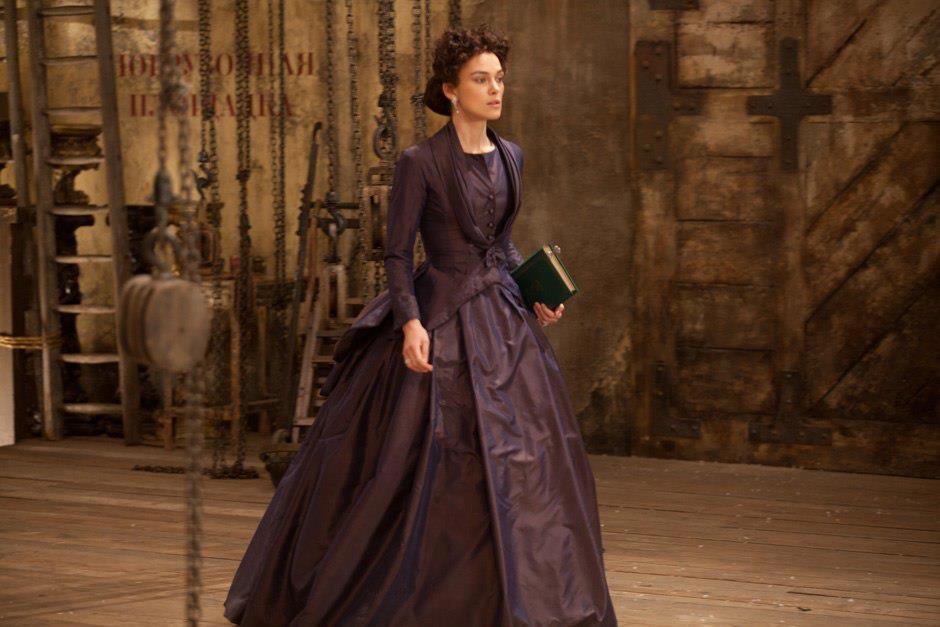
Well, this one is interesting, alright. And it hues closely to Tolstoy's novel in the way that a CliffsNotes Edition sticks close. All the plot points are there, the characters whittled down to their bare essences, or eliminated altogether, and breezily delivered in a theatrical manner, save some significant exceptions. Truth is, Wright makes this version of Anna Karenina the way Baz Luhrmann would, as a grand, operatic experience staged in an extraordinarily choreographed with the emphasis on the "arch" (as in "playfully and affectedly roguish") in Proscenium Arch.
Jim Emerson had a fascinating article* (based around Skyfall) on his "Scanners" blog on the difference between a "theatrical" film and a theatrical film and its use of space as defined by the limitations of the frame and a stage directors' tendency to reflect that frame with its own limitations resembling the dimensions of a stage.
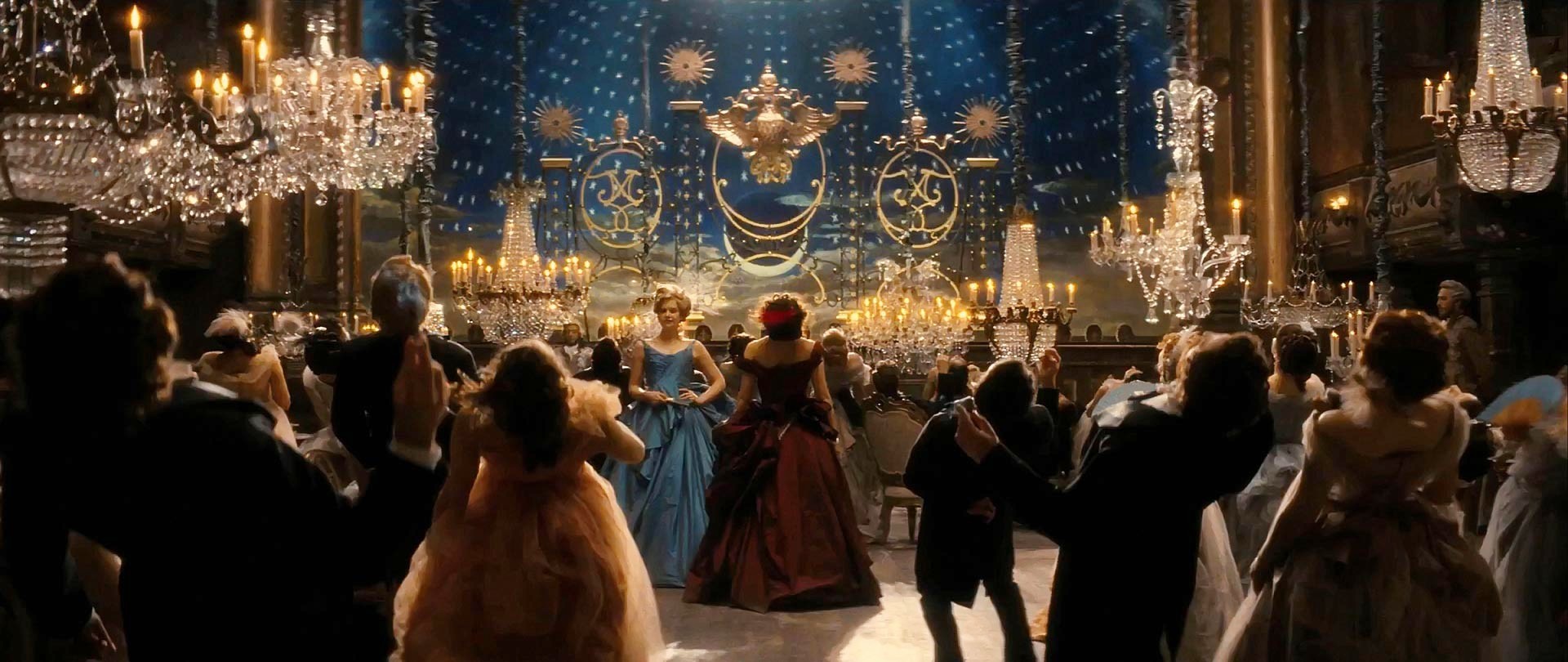
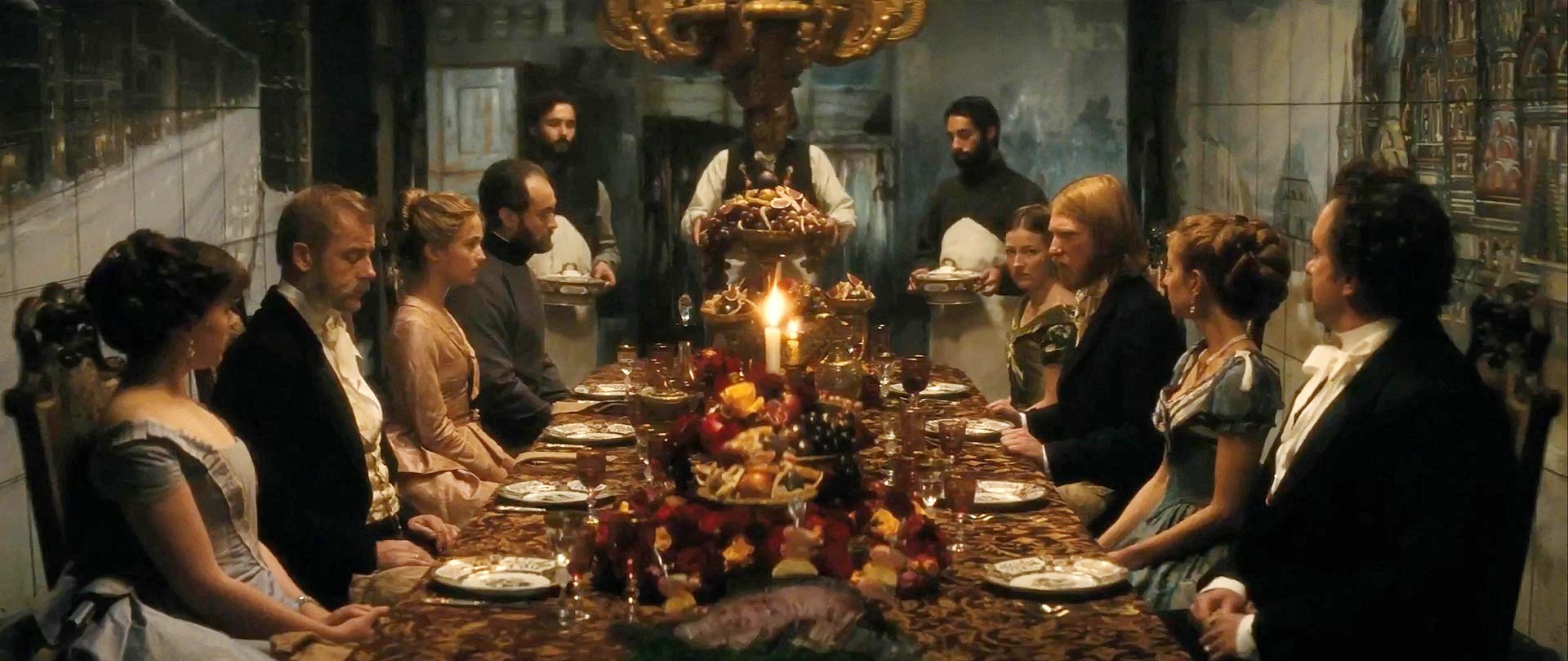
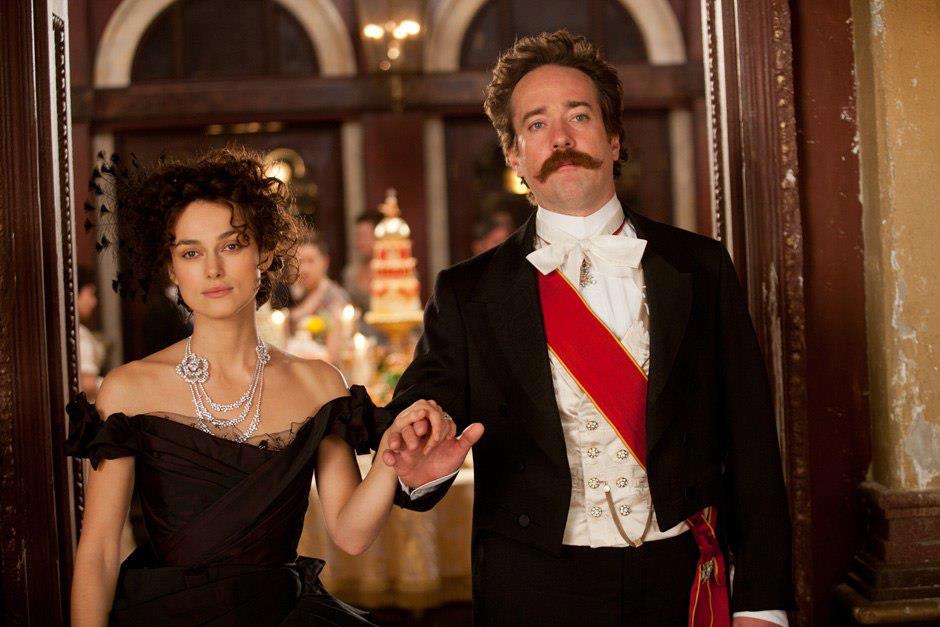
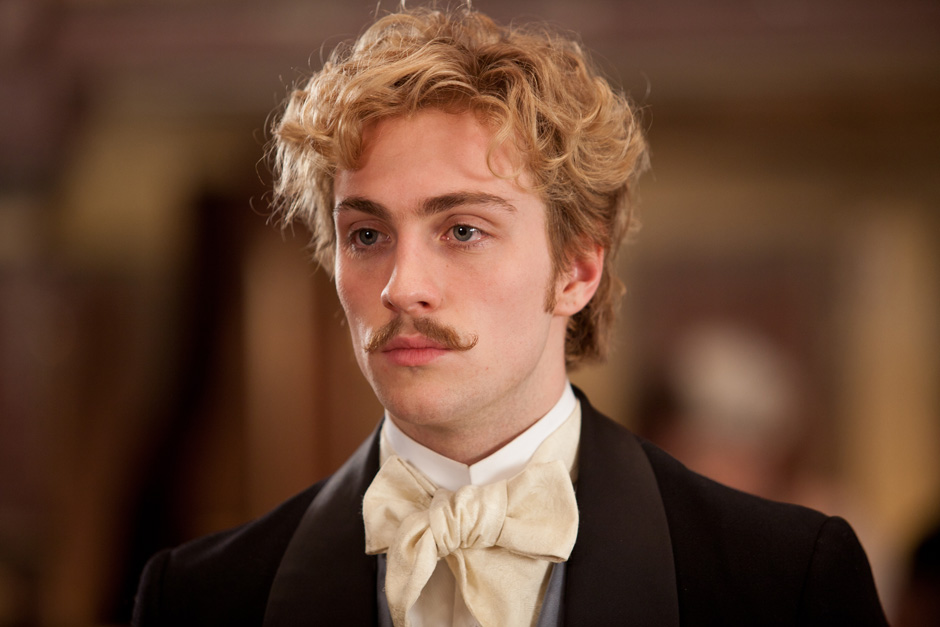
Wright fully embraces that concept and goes further; for the main story of the hoi-polloi and their social and political gamesmanship, all of the action takes place within the false spaces of a theater (at times even using the rafters as locations for traditional street-scenes): train and carriage scenes are decidedly set-bound with no effort made to reflect a "real" world outside the windows; transitions are made "in-camera" without editing, so a very stagy and choreographed bureaucratic work set-up with synchronized rubbing stamping (set to Dario Marianelli's interesting score) segues to a restaurant scene by merely having the "extras" trade in their black business suits for waiter-whites; a formal society ball is not an intricate commingling of dancers that Wright so effectively engineered in Pride and Prejudice, but is an elaborate ballet, where the participants barely touch and their hand movements are intricately swanning in nothing that approaches a traditional dance (at times, to keep track of the principals, the foreground dancers in our field of vision "freeze" to better make out the focus of our attention). Like Francis Ford Coppola's set-bound version of Bram Stoker's Dracula, It's all very elaborate, "stagey," false, and at times clever but, a lot of the time, merely "showy," like a musical with no libretto, something to separate this "Anna" from the more realistic, even if filmed in-studio, versions. The performances run that way, too. Keira Knightley is an exasperating Anna, conflicted but fatally committed to fully expressing whatever is on the surface of her heart. Her P & P co-star, Matthew McFadyen is a burlesque cousin Oblonsky, fatuously showy in a way that reminds of Kevin Kline performing a burlesque role. Jude Law—not one of my favorite performers—here is exceptional as Anna's cuckolded husband, and is so restrained and non-theatrical, that it sets him apart from almost every other performer, isolating him, and is a good short-hand way of showing why Anna might be dissatisfied with him. Olivia Williams has a small part as the Countess Vronsky, whose son (Aaron Taylor-Johnson) is the very florid object of fascination for Anna.
![]() |
| Anna (Keira Knightley) runs from Vronsky at the Ball and experiences a little fore-lightening from an approaching train. It's dangerous in a Joe Wright theater. |
But, almost the entire film is deliriously fascinated with the artificiality that it undercuts the very real passion and consequences of actions of the people in the film, reducing them to "players" as opposed to human beings.
I say "almost" because Wright does change things up to "open up" the segments featuring Levin (Domhnall Gleeson) and Kitty (Alicia Vikander), who already have their disappointing encounter with Vronsky and move on. When they reunite, their segments are set in a real world of sky, clouds and fields befitting the couple who exemplify wisdom, forbearance and patience. Wright puts them in our world, relegating the others to an artificial world that is essentially stage-managed (even at the end with a coda of Karenin and the remains of his family, it is contained in the stage-world that Wright has chosen to house his film.It's different, even interesting in an oddly disrespectful manner, as the flightiness of the bourgeoisie and their concerns are merely shadow-play and window-dressing—it is true to an extent—but by pushing the metaphor so aggressively, it undercuts any feeling one has for the players in the majority of the film itself, and reveals itself as resembling the tut-tutting of the hypocrites who turn against Anna. I'm not sure that Tolstoy had that intention (even strained through Stoppard), and this film might have benefited from a less facile presentation that required less stage-craft and something more resembling (I don't know) empathy?
Labels:
2012,
A,
Aaron Taylor-Johnson,
Alicia Vikander,
Classic,
Domhnall Gleeson,
Emily Watson,
Joe Wright,
Jude Law,
Keira Knightley,
Kelly MacDonald,
Matthew Macfadyen,
Olivia Williams,
Tolstoy
Thursday, April 18, 2019
Hanna
They're making a TV series of "Hanna" for some unfathomable reason (probably money) and it has been promoted with all the regularity of a water torture if you've seen a movie in the last couple months. But, nobody ever talks about the film it's based on...directed by the splendid Joe Wright. This was written at the time of the film's release.
"Grimm's Fairy Spy"
or
"Better Living Through Chemical Brothers"
Hanna isn't like any movie you've seen, that is unless you managed to catch some of the more stylish spy thrillers at the end of the 1960's. When the spy-craze went more mainstream, more A-list directors started to get into the fray and suddenly the thrills started to be taken over by style as those film-makers attempted to impose some of their own creative instincts into the genre. Sometimes the results made for merely a sub-par thriller, with style winning the cold war over substance, while others of their ilk were just plain pretentious. Some...were interesting (like this one is, and like The American was last year).
Joe Wright is one of the better British directors coming out BBC television work. He's done his bit for the classics, old and new (Pride & Prejudice, Atonement) quite deftly handling the drawing room choreography and even putting a nicely modern spin on things. But, his 2009 film of The Soloist showed a director who wanted to experiment with the form, break out of the stodgy "Beeb" way of doing things and shake the story-telling up a bit (in that film, he turned Los Angeles into a living, breathing, rumbling sci-fi character looming over its strata of citizenry). It was interesting to see him attached as director to what looked like a common "actioner," and one wondered what he might bring to it, given his three previous films and how he appeared to be changing his style.
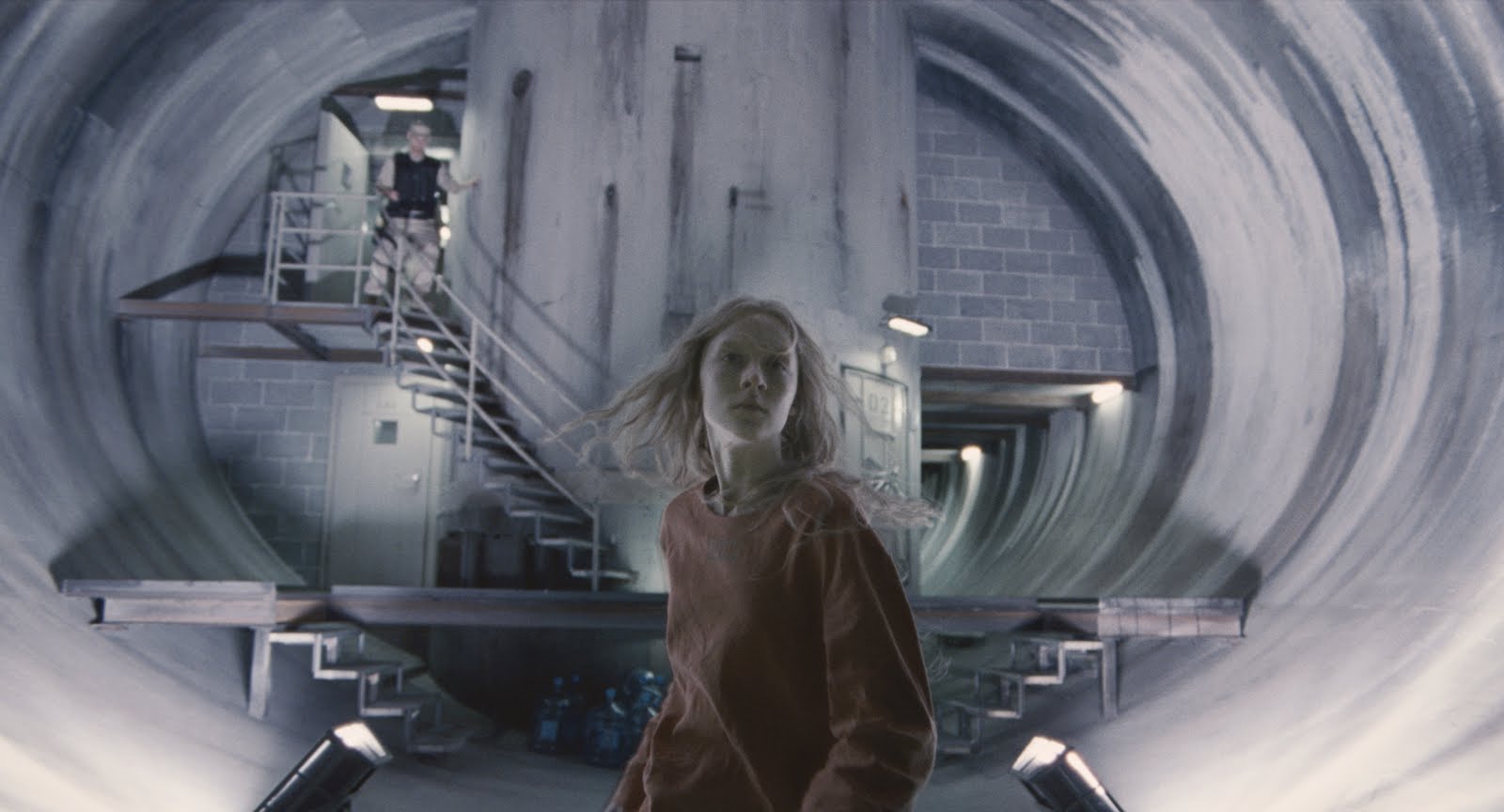
Change it, he did. Hanna is a weird mixture of gloss and QT-perversion, with some very strange camera work that, somehow, never manages to not tell you what is going on, to whom, where and why. No matter how over-the-top the theatrics become, Wright never forgets the basic job of keeping the audience informed, and with a screenplay spare on details and depending on the visual to tell the story, his discipline is critical (imagine, for instance, if Tom Hooper had directed it!) for any basic understanding of the film.
Hanna heaps on the atmospherics, not only with a brazen fairy-tale sub-text, but an all-encompassing sound-design/Euro-electronica musical score by The Chemical Brothers,* that recall some of the '60's/'70's work of such composers as Mikis Theodorakis and Giorgio Moroder. But the thumping, edgy noises permeate the entire soundtrack, not just the music, from the sweet tune that one of the Hanna-hunters (Tom Hollander, cast completely against type) whistles, quite nullifying any element of surprise,** to the pounding chase music that keeps the attention focused while Wright spins his camera or shifts perspective, *** to the creepy metal noises and animal sounds that permeate this world.
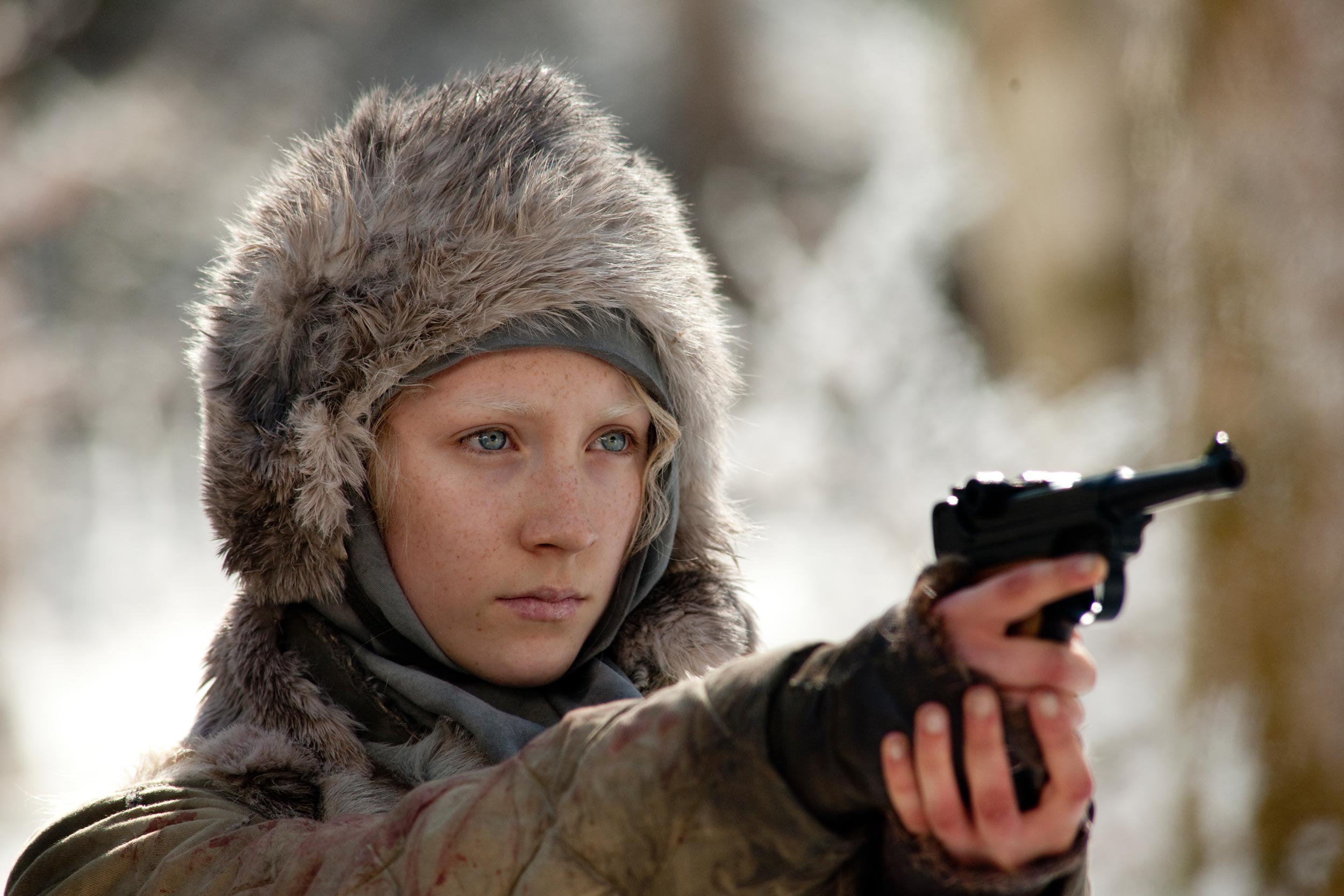
It begins in Finland, in the snow as a caribou is being hunted by a lone figure in fur. She dispatches the animal with one arrow shot ("I just missed your heart"), and begins to dress the animal for food. "You're dead!" says a figure behind her, and a rapid brutal fight breaks out, dependent less on fast editing than rhythm, and she is soon slammed to the ground, a snow angel against her will. "Drag the deer back yourself," says the man, who it turns out is Hanna's father (Eric Bana).
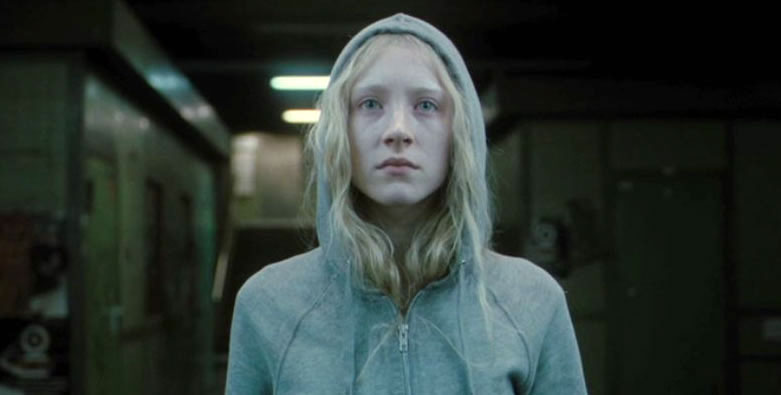
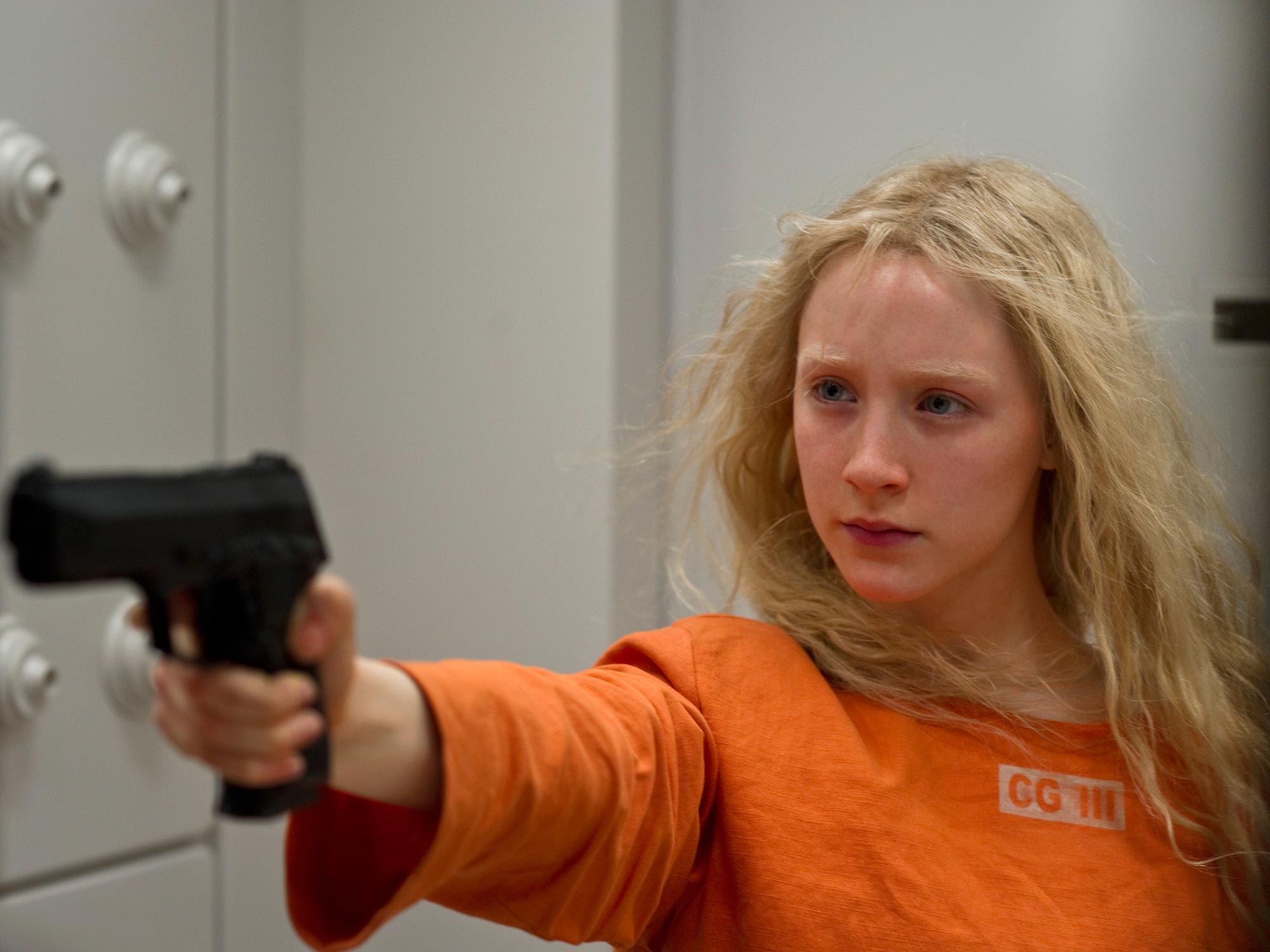
She is Hanna Heller (Saoirse Ronan—pronounced "Seersha"—and she worked with Wright in Atonement, and specifically asked that he direct this) and it is all survivalist training. Hanna has been raised to live on the land, kill and cook her own food, have an encyclopedic knowledge of everything (except electronics, apparently) given that her schooling is from the encyclopedia, speak several languages and have a detailed history that is nothing like her own.
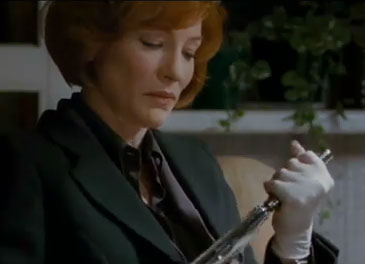
What is her history? What is her father's? We don't get too deep into the film before we learn he's a rogue security agent gone missing, and he's a bee in the bonnet of Marissa Viegler (Cate Blanchett—imagine her being creepy and then go a few steps further), an operative high up the chain of command. And she is Hanna's target. And Hanna must get to her before Marissa can find her. The why's will come, eventually, but already we've invaded a fairy-tale landscape with the sheltered princess (who can snap your neck) and an evil step-mother who stays only a few evil steps behind the whole movie. And given Ronan's goose-like grace throughout the film, one can't help but call to mind all sorts of folk-tales of changelings and bargains and revenge. But it's a spy thriller, too, as cold as they come, so don't expect "happily ever after."
For me, it was a simple story told well that impressed me throughout.
But it just missed my heart.
* Their impact on the film is incredible. I kept imagining what the film would be like with a "standard" thriller score, and always came up with a duller, less propulsive film.
** This recalls Peter Lorre's child killer in Fritz Lang's M (1931). Hollander vaguely recalls Lorre's look, and, later, Wright stages a fight to the tune "M" whistled from Peer Gynt—"In the Hall of the Mountain King," (after The Social Network, this piece is getting a lot of traction).
*** "What does music feel like?" Hanna asks at an early stage of the script. Here, it feels like having a heart attack in zero-g. One of the reasons this film DOESN'T have a traditional score is that Hanna, the character, doesn't know music, and as we're following her struggles, the music reflects her mood, whether placid or on the run. It's rather interesting where those moods show up.
"Grimm's Fairy Spy"or
"Better Living Through Chemical Brothers"
Hanna isn't like any movie you've seen, that is unless you managed to catch some of the more stylish spy thrillers at the end of the 1960's. When the spy-craze went more mainstream, more A-list directors started to get into the fray and suddenly the thrills started to be taken over by style as those film-makers attempted to impose some of their own creative instincts into the genre. Sometimes the results made for merely a sub-par thriller, with style winning the cold war over substance, while others of their ilk were just plain pretentious. Some...were interesting (like this one is, and like The American was last year).
Joe Wright is one of the better British directors coming out BBC television work. He's done his bit for the classics, old and new (Pride & Prejudice, Atonement) quite deftly handling the drawing room choreography and even putting a nicely modern spin on things. But, his 2009 film of The Soloist showed a director who wanted to experiment with the form, break out of the stodgy "Beeb" way of doing things and shake the story-telling up a bit (in that film, he turned Los Angeles into a living, breathing, rumbling sci-fi character looming over its strata of citizenry). It was interesting to see him attached as director to what looked like a common "actioner," and one wondered what he might bring to it, given his three previous films and how he appeared to be changing his style.
Change it, he did. Hanna is a weird mixture of gloss and QT-perversion, with some very strange camera work that, somehow, never manages to not tell you what is going on, to whom, where and why. No matter how over-the-top the theatrics become, Wright never forgets the basic job of keeping the audience informed, and with a screenplay spare on details and depending on the visual to tell the story, his discipline is critical (imagine, for instance, if Tom Hooper had directed it!) for any basic understanding of the film.
Hanna heaps on the atmospherics, not only with a brazen fairy-tale sub-text, but an all-encompassing sound-design/Euro-electronica musical score by The Chemical Brothers,* that recall some of the '60's/'70's work of such composers as Mikis Theodorakis and Giorgio Moroder. But the thumping, edgy noises permeate the entire soundtrack, not just the music, from the sweet tune that one of the Hanna-hunters (Tom Hollander, cast completely against type) whistles, quite nullifying any element of surprise,** to the pounding chase music that keeps the attention focused while Wright spins his camera or shifts perspective, *** to the creepy metal noises and animal sounds that permeate this world.
It begins in Finland, in the snow as a caribou is being hunted by a lone figure in fur. She dispatches the animal with one arrow shot ("I just missed your heart"), and begins to dress the animal for food. "You're dead!" says a figure behind her, and a rapid brutal fight breaks out, dependent less on fast editing than rhythm, and she is soon slammed to the ground, a snow angel against her will. "Drag the deer back yourself," says the man, who it turns out is Hanna's father (Eric Bana).
She is Hanna Heller (Saoirse Ronan—pronounced "Seersha"—and she worked with Wright in Atonement, and specifically asked that he direct this) and it is all survivalist training. Hanna has been raised to live on the land, kill and cook her own food, have an encyclopedic knowledge of everything (except electronics, apparently) given that her schooling is from the encyclopedia, speak several languages and have a detailed history that is nothing like her own.
What is her history? What is her father's? We don't get too deep into the film before we learn he's a rogue security agent gone missing, and he's a bee in the bonnet of Marissa Viegler (Cate Blanchett—imagine her being creepy and then go a few steps further), an operative high up the chain of command. And she is Hanna's target. And Hanna must get to her before Marissa can find her. The why's will come, eventually, but already we've invaded a fairy-tale landscape with the sheltered princess (who can snap your neck) and an evil step-mother who stays only a few evil steps behind the whole movie. And given Ronan's goose-like grace throughout the film, one can't help but call to mind all sorts of folk-tales of changelings and bargains and revenge. But it's a spy thriller, too, as cold as they come, so don't expect "happily ever after."
For me, it was a simple story told well that impressed me throughout.
But it just missed my heart.
* Their impact on the film is incredible. I kept imagining what the film would be like with a "standard" thriller score, and always came up with a duller, less propulsive film.
** This recalls Peter Lorre's child killer in Fritz Lang's M (1931). Hollander vaguely recalls Lorre's look, and, later, Wright stages a fight to the tune "M" whistled from Peer Gynt—"In the Hall of the Mountain King," (after The Social Network, this piece is getting a lot of traction).
*** "What does music feel like?" Hanna asks at an early stage of the script. Here, it feels like having a heart attack in zero-g. One of the reasons this film DOESN'T have a traditional score is that Hanna, the character, doesn't know music, and as we're following her struggles, the music reflects her mood, whether placid or on the run. It's rather interesting where those moods show up.
Wednesday, April 29, 2015
Maps to the Stars
Boo-ray for Hell-y-weird!
or
They Should Have Called the Town "Phoenix," instead.
Los Angeles is a suitable case for Xanaxing it's water supply in the way they used to fluoridate the waters for tooth decay; the Xanax is for the psychic decay of a town whose whose compass in mainly bi-polar. A town built on incoming heights of hope and the gravely-crushed dreams of the downwardly spiraling, L.A. and its tarty step-sister Hollywood have inspired many a cautionary tale since...well, since they started making movies there. Every decade sees at least one or two poison pen letters to Tinsel-town, be it A Star is Born (three versions), The Day of the Locust, Mulholland Drive, The Oscar, The Player, Barton Fink, S.O.B., Postcards From the Edge, The Big Knife, Whatever Happened to Baby Jane? (those by Robert Aldrich), and the most revered and stylish, Sunset Boulevard. Those are the most successful, but there have been others by lesser lights, hoping their screeds to the industry would get them noticed—it's that kind of thinking that might be at the root of their discontent.
David Cronenberg is the latest to poke the wasp's nest in Maps to the Stars (written by Bruce Wagner, who wrote a Nightmare on Elm Street episode, Scenes from the Class Struggle in Beverly Hills and the TV series "Wild Palms"), which is less about the movie business and what it creates and tears down, and more about the culture (or lack of it) swarming around the business. It's more of a self-contained soap opera that exposes the selfishness, egotism, neuroses, incestuousness, and just plain venality that provides the background stink to the town.*
Like a soap, it's convoluted. There are two spheres of influence, one is Havana Segrand (Julianne Moore, in the performance that should have won her the Oscar), child-star of a famous movie-star Mom (played by Sarah Gadon as a 20 year old ghost), who is starting to fade and is such a mess of conflicts she can't seem to get them straight—she's vying for a role in a remake of a film her mother starred in, despite the fact that she seems to have invented a past abusive relationship, when the abuse she seems to inhabit are of her own conjuring. Moore plays her with a valley-girl voice and a wild-animal stare that unnerves—one keeps thinking of Lindsey Lohan while watching her, which seems intentional, as the movie is steeped in name-dropping and gossipy in-jokes. She has visions of her mother that appear, only to break her down and throw her into an emotional melt-down.
or
They Should Have Called the Town "Phoenix," instead.
Los Angeles is a suitable case for Xanaxing it's water supply in the way they used to fluoridate the waters for tooth decay; the Xanax is for the psychic decay of a town whose whose compass in mainly bi-polar. A town built on incoming heights of hope and the gravely-crushed dreams of the downwardly spiraling, L.A. and its tarty step-sister Hollywood have inspired many a cautionary tale since...well, since they started making movies there. Every decade sees at least one or two poison pen letters to Tinsel-town, be it A Star is Born (three versions), The Day of the Locust, Mulholland Drive, The Oscar, The Player, Barton Fink, S.O.B., Postcards From the Edge, The Big Knife, Whatever Happened to Baby Jane? (those by Robert Aldrich), and the most revered and stylish, Sunset Boulevard. Those are the most successful, but there have been others by lesser lights, hoping their screeds to the industry would get them noticed—it's that kind of thinking that might be at the root of their discontent.
David Cronenberg is the latest to poke the wasp's nest in Maps to the Stars (written by Bruce Wagner, who wrote a Nightmare on Elm Street episode, Scenes from the Class Struggle in Beverly Hills and the TV series "Wild Palms"), which is less about the movie business and what it creates and tears down, and more about the culture (or lack of it) swarming around the business. It's more of a self-contained soap opera that exposes the selfishness, egotism, neuroses, incestuousness, and just plain venality that provides the background stink to the town.*
![]() |
| "How's that therapy working out for ya, hun'?" |
Her therapist is a self-help guru of enormous ego named Dr. Stafford Weiss (John Cusack), who specializes in what mathematician-comedian Tom Lehrer used to call "diseases of the rich." He's very touchy-feely (especially with stars) and keeps up a running dialogue with them during his sessions—as opposed to them doing the talking—that encourages the wildest surface instincts. Weiss is married to Christina (Olivia Williams), a chain-smoker and manager of the career of their son Benjie (Evan Bird), a child-star with a franchise to keep up and a drug habit to keep down. Negotiations for him to star in the latest of the "Bad Babysitter" series of movies is going well, but things aren't going well for him—he's being haunted by a patient with Hodgkins that he visited in the hospital and subsequently died. Is she a vision of a flash-back—it's hard to differentiate.
And then (speaking of flashbacks) there's daughter Agatha (Mia Wasikowska), who's just come back to L.A. after "being" in Florida for many years. Why she was living there and not with the family is one of the many suspicions that get revealed eventually in the film (but not really revealed, and even then, circumspectly) but there might be some clue given the burns that she hides with her distinctive haircut and the black gloves that she constantly sports. Agatha meets up with a screenwriter/limo-driver—that's his order of importance, anyway, fantasy/reality—(Robert Pattinson) and lands a job as Havana's personal assistant (convenient!), while planning out how she will individually re-unite with her family, none of whom know that she has returned, as she is one of those many subjects the family avoids.
There's a lot of back-story, some of which may be interconnected, but maybe not, but all of which explains why the people populating this movie might be crazy...now. All kinds of crazy, starting with the merely deluded to the criminally insane. Illusion is the normal—in fact, in L.A., it's business as usual—it's reality that no one has a grasp on, by choice or circumstance.
So, what are we to make of this cloistered, desolate finger-trap of a movie that has little to do with the illusion of movie-making, and more to do with the illusions of our own making. Movie-making is an art, even if it's the art of making a deal, but Maps to the Stars is all about lying to ourselves to get by. Just like movie-making, it takes imagination and a lot of work, but that's the extent of it. It is wasted effort. There's no art to kidding ourselves. All it takes is a bubble-world with no perspective other than our own. Movie-making is designed to leave a legacy. The tragedy of Maps to the Stars is that no one gets out alive, without any marker to show their existence
* I've done some work in L.A. and have mostly stayed in the safety of the studios and hotels, rather than do any sight-seeing. The last time I walked down Hollywood Boulevard ("The Walk of the Stars"), I was so appalled, I couldn't get out of there fast enough. Between the hustlers, screwballs, and weirdo's, the place gave off a vibe of cheapness that I've never been able to shake.
Subscribe to:
Posts (Atom)


.jpg)


.jpg)