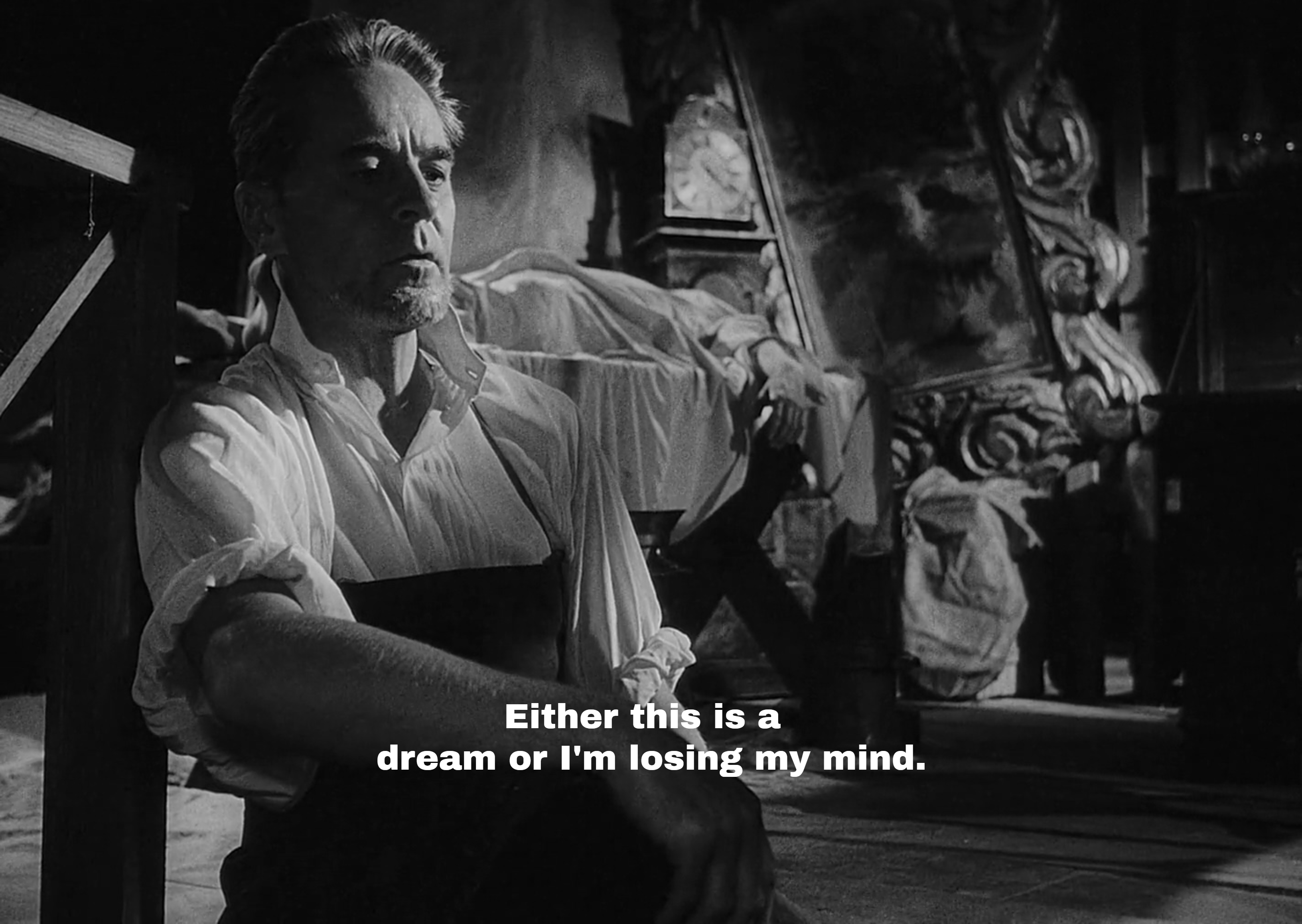
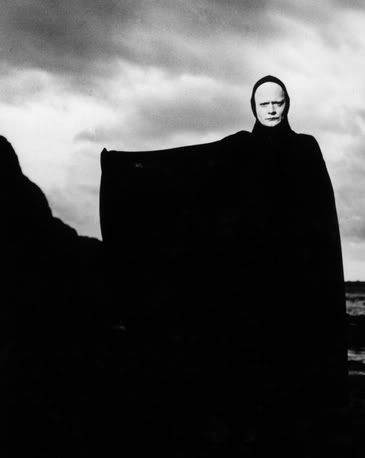
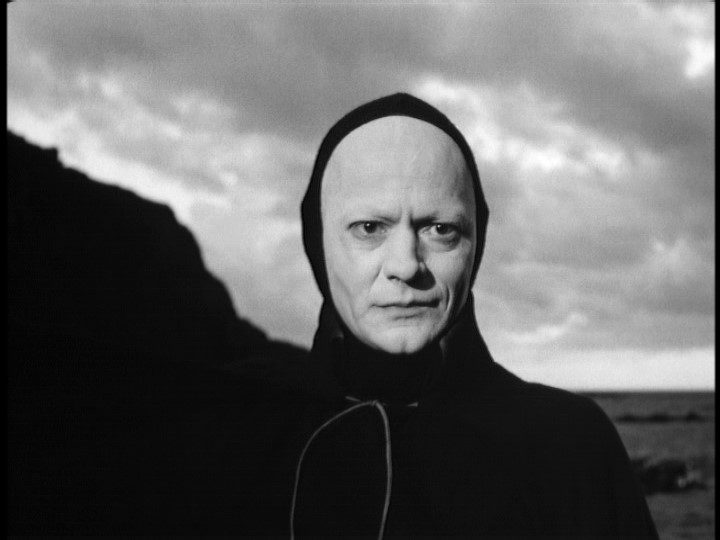
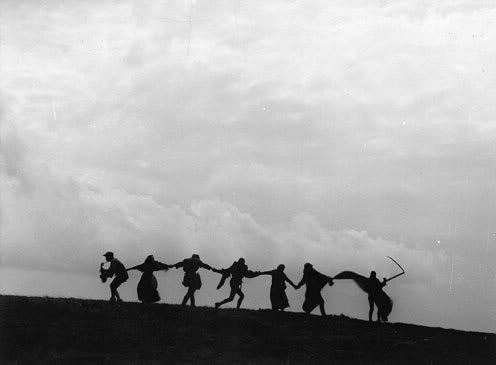
The Magician (aka Ansiktet or "The Face", Ingmar Bergman, 1958) It is a rough day of travel for Vogler's Magnetic Health Theater, a gypsy band of performers just out of Copenhagen and carriaging to Sweden. Their reputation precedes them, having been accused of fraud and blasphemy at various stages of Europe, and some time incarcerated, but still they have a following and luckily it doesn't involve torches and pitch-forks. The troupe moves purposely on demonstrating the awesome powers of animal magnetism and selling potions for the sick and the wantonly healthy. "Sensational marvels never seen before. Magical acts derived from the philosophies of the Orient. Health-giving magnets, and spine-tingling thrills for the senses." That's what the flyers say, anyway. Whether it is true or not, the head of the troupe, Albert Vogler (Max von Sydow) will neither confirm or deny; Mr. Vogler, you see, is mute. Better to neither confirm or deny, the less said the better, and nothing is best of all.In their travel, they come across a sickly actor, Johan Spegel (Bengt Ekerot), who asks for some brandy as he's sure today will be the last day of his life. He is offered that and a ride, and he joins the troupe consisting of Vogler, the severes"Mr. Aman" (portrayed by Vogler's wife, Manda—portrayed by Ingrid Thulin), their assistant and spokes-person Tubal (Åke Fridell), the carriage driver Simson (Lars Ekborg) and "Granny" Vogler (Naima Wifstrand), who "may" be a witch but is skilled at potions.The actor having a mute audience as benefactor, talks and talks, his health gradually declining, his life ebbing away with every word, knowing that Vogler will be fascinated to hear his account with death, but...just as he's about to reveal what death is like...he dies.
Against that backdrop, the troupe continues on to the first village on their way, and are invited by Counsel Egerman (Erland Josephson) and his wife (Gertrud Fridh), both of whom are believers in the supernatural and are fascinated by the claims of the visitors, to join a party held in their behalf. Also attending—with a bit more "official" interest in the theater troupe—are Police Superintendent Starbeck (Toivo Pawlo) and the Minister of Health, Dr. Vergerus (Gunnar Björnstrand). The officials decide to have an informal bet on whether Vogler's group and abilities are frauds.Are they frauds? There's room for interpretation: Egerson and his wife—especially the wife—lean towards belief, but Vergerus is a man of science and is disinclined to buy into any sort of mumbo-jumbo, and Starbeck's fall-back is to believe the band—given their reputation—are fraudsters, looking to separate the populace from their Krona. And given the artifice displayed by the players of the theater—Albert and his wife are both heavily made up and not what they appear to be—there's more than enough reason to think that it's all an act, mere illusion and trickery than any sort of mystic power.
One line haunts, and feels more true these days than at the time of the film's creation: At one point, the ailing actor makes a point:
Ouch. That hits you right in your superstitions. Or is it maybe the one who tells the truth needs to be put down by all the deceivers, lest they be exposed as such. But, in a world of deceivers what difference would being exposed make, especially if it's status quo? Bergman offers no answers, just possibilities. The troupe could be fraudsters, but that fallen actor at the beginning comes back to haunt Vogler, something that only he is privy to. That must be evidence, no? But, evidence of what? Who would it convince but only another believer?
The Magician leaves the stage making you want more. And its questions haunt long after that point.


.jpg)


 Ouch. That hits you right in your superstitions. Or is it maybe the one who tells the truth needs to be put down by all the deceivers, lest they be exposed as such. But, in a world of deceivers what difference would being exposed make, especially if it's status quo?