But, the oddest of the "lost" films of famed directors was the comedy begun by director Ingmar Bergman. Feeling he needed to lighten up after an intense period of experimentation, Bergman responded to a fan letter from his country's greatest star, Greta Garbo, who told him that she might consider coming out of her self-imposed exile from the screen to work with him. Bergman was enthusiastic, and was initially hoping that Garbo might consider a psychological drama of a grandmother more in touch with her grandchildren than her daughter and the fracturing of the traditional family prevalent in Sweden.
Garbo, for whatever reason—whether playing a grandmother (she was 63 at the time) or not relishing the thought of Bergman's intense scrutinizing after so long away from the screen—suggested a comedy, not unlike the breaking of perceptions she enjoyed from making something lighter, like Ninotchka.
Bergman was charmed by the idea and began work on a comedy centered around a retreat for teenagers (on the island of Gotland Lans in a quiet resort by the city of Visby) and their rebellious natures, especially in regards to the couple running the area (played by Bibi Andersson and Nils Poppe), who vainly try to keep things under control, even while their marriage is coming apart at the seams. A rivalry between a rival summer camp (run by Liv Ullmann and Max von Sydow) camps in an end of Summer sports-and-skills competition forms the nexus of the plot. As the couples are having affairs with their distaff camp rivals, the inter-camp competition gets wrapped up in the personal lives of their over-seers in chaotic and vindictive ways.
Poppe's counselor is particularly put upon, because he has a bad relationship with the camp's athletic director (Garbo), who regularly takes advantage of his frequent naps to kidnap him and place him in precarious positions—waking up in the middle of a lake with a paddle-less canoe, or behind the archery targets, or on the roof above the kitchen, face next to the fan-funnel. Garbo's relationship with the kids is like the dark side of Maria with the vonTrapp's in Sound of Music (something Bergman is well aware of—at one point, Maria grabs a guitar during a sing-along and breaks it across a log and throws a ukulele in a camp-fire). And Poppe's frequent disappearances—which aid Andersson's indiscretions—are regularly carried out by the kid-campers under Garbo's directions.
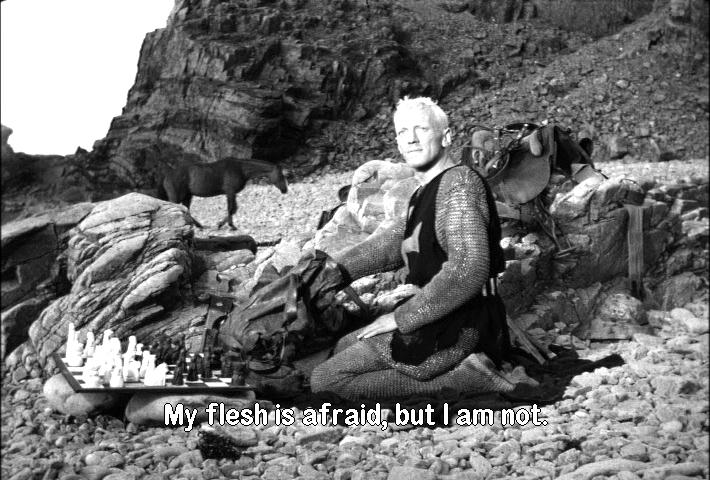
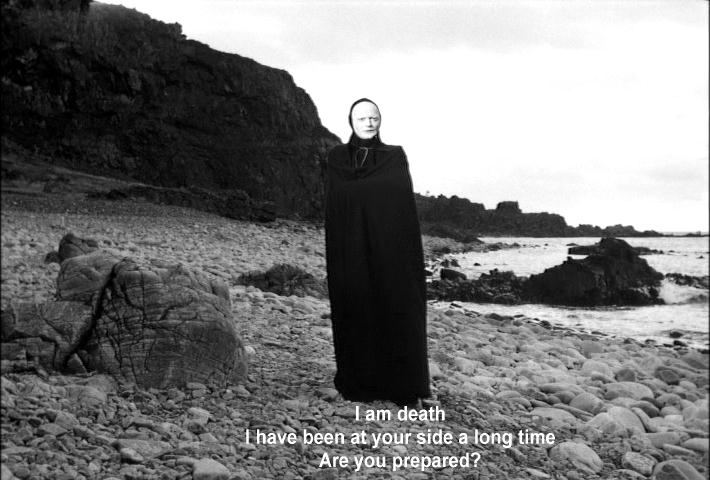
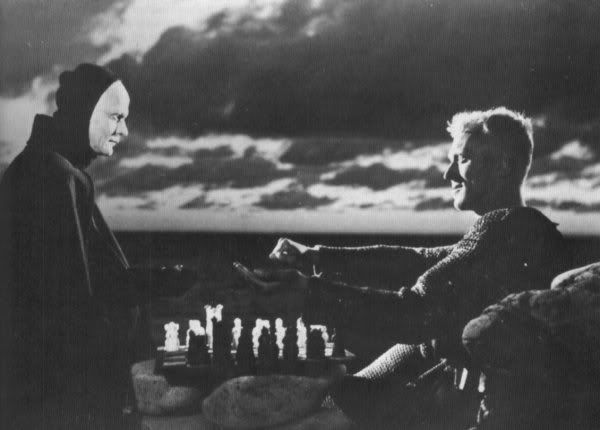
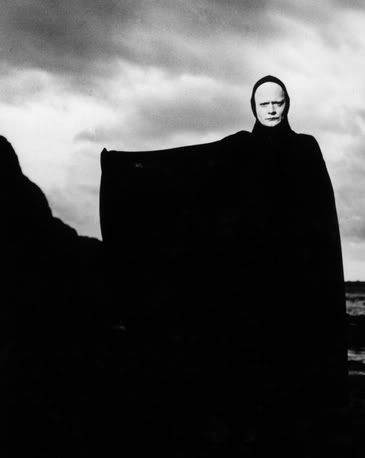
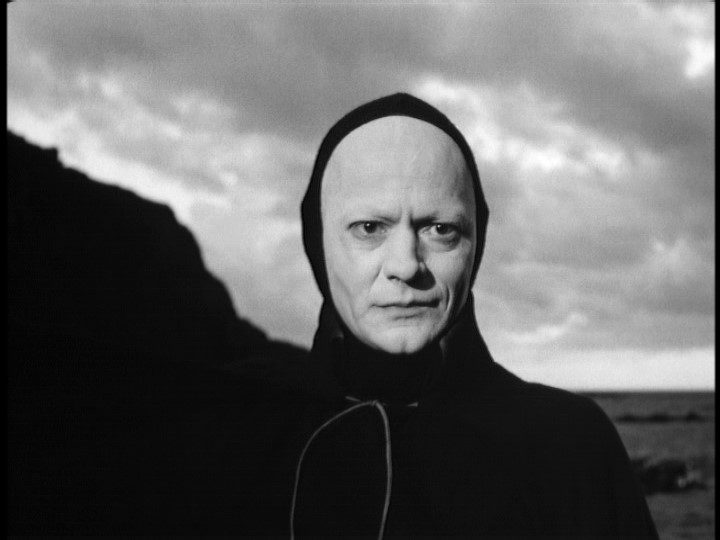
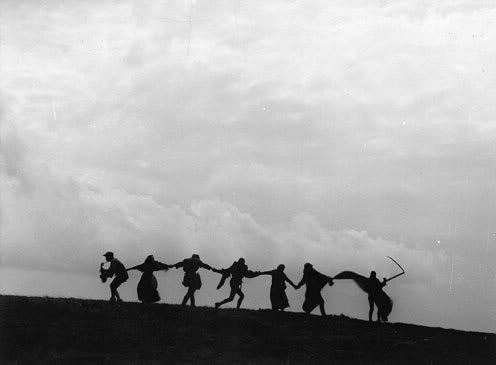
Garbo's athletic director is a dark figure, perpetually dressed in black despite the summer weather. Whether this was a choice by the star or the director is a matter of some controversy (it does make an interesting contrast with the immaculately-dressed children) but Bergman, who already was using call-backs poking at Smiles of a Summer Night, decided to go one better. The Garbo character has visions and hallucinations, and in one—filmed in rather pointless color—plays badminton with Death (Bengt Ekerot, who played the role in The Seventh Seal). Bergman does more cross-cutting in this sequence than three of his other films combined, but ultimately Garbo's character hits the "birdie" out of bounds. The face of Death fills the frame: "Jag har alltid vinner," he intones. ("I always win").
Garbo cracks him over the head with a badminton racket.
The film culminates in the inter-camp competition where despite Garbo's encouragement (at one point her pep talk has the entire camp chanting "Det bara spelar ingen roll!"), they fall way behind until the värmlandskorv-eating contest, which puts them over the top to the somewhat-joyless commendations of the adults, still preoccupied with their own issues, wondering how it will affect their personal relationships at the other camp.
Satisfied with the results, Bergman pushed through with the post-production, and prepared for a robust reception to his first real comedy at select screenings.
There was only one problem.
It wasn't funny.
Preview audiences in Stockholm sat stony-faced, with not even the hint of an encouraging chuckle. Kind witnesses offered that the patrons might have thought this was a serious Bergman film and so refused to laugh and, instead, regarded it studiously. But, when asked if they found it amusing, preview cards said "No." "I don't know what this is," said one remark "Is there a book I can read?" A confused indifference settled over the film. Yes, it was a work-print with no soundtrack (nor would there ever be) and Bergman worked for weeks thinking some editing tweaks might improve the comic timing (and there were rumors Jerry Lewis was hired as a consultant*). It didn't, and instead, merely shortened the film more and more. The director began to bitterly refer to the still-untitled film as "Persona Non Greta."
Bergman finally abandoned it, not sure what to do with it, letting the film languish and ultimately burning it during a particularly stringent winter. Not a frame of the film survives. Garbo, who had returned to New York after filming, resumed her retirement from films, vowing "never to do THAT again."
But, as will often happen, the unrealized project did not completely disappear, as a rough translation, with essentially the same plot, still made the rounds of the studio script mills without much interest until the Canadian Film Development Corporation acquired it for a vehicle for up-and-coming SNL performer Bill Murray. The resulting non-Swedish film was released in the US by Paramount in 1979.