Sky Captain and the World of Tomorrow(Kerry Conran, 2004) Conran's film envisioned a new world—not the homagey 1930's era steampunk film that he created, but in how films were made, given the computer revolution that was exploding every aspect of business and personal life. Could the movies be far behind? George Lucas was perfecting the green-screen process with his Star Wars pre-sequels, so that everything looked exquisite, but it tended to ham-string the actors, who could only emote to hanging ping-pong balls and walk around imaginary architecture and furnishings, making them have to concentrate on other things besides making their memorized lines sound natural or convey something besides exposition. In the mean-time, film-makers saw the potential of shorter shooting times and building expansive/expensive sets—just do it in the box around the actors. Robert Rodriguez jumped in and James Cameron took it to whole new levels, merely motion-capturing the actors for his Avatar. And making a billion bucks.
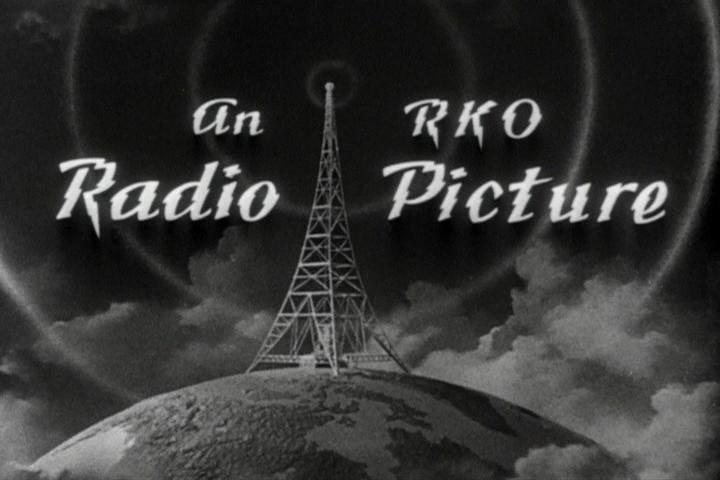
For four years, Conran worked on a MacIIci to make a short promo film (see below) of a 1930's New York where zeppelins dock at the Empire State Building and giant mechanical robots (inspired by a classic Fleischer Studios Superman cartoon seen further below) march through the streets crushing cars and resisting the efforts of machine-gun-wielding police—to shoot them down so they could fall and crush even more things, like the overlayed people looking up with a sense of horror/wonder. It ends with a call to the title character (relayed by an RKO studio-like antenna) and the short ends with the promise of another chapter, like an old-time movie serial.
The strength of the short is it's obvious love for art-deco stylization and Warner Brothers montages and German expressionism—and monster-robots (that one's key). It was enough to excite producer Jon Avnet to take the techniques and design sensibilities and turn it into a feature. For two years, Avnet and Conran expanded the story, with—literally—the sky being the limit. But, the issue was giant robots attacking New York and a guy in a P40 Warhawk to the rescue.
Seems a little limited for a feature.
And it is. Even with an explanation of who and why giant robots, and for the introduction of so many reinforcements needed to take out so many robots, there's not much story. The solution is what Sky Captain provides—more opportunity to add more ships, precious few characters and a lot of flying around dodging the more-than-enough hardware thrown at them—but not a lot of depth. As in this clip...
The details are that Jude Law's devil-may-care Sky Captain—his name is Harry "Joe" Sullivan and leader of "The Flying Legion"—manages to disable one of the robots for examination by his tech-guy Dex (Giovanni Ribisi) and, with the help of plucky reporter Polly Perkins (Gwyneth Paltrow), learns that the mastermind behind the attacks is one Dr. Totenkopf, who has been assassinating top technologists around the globe (by means of a "Mysterious Woman"—that is her name and played by Bai Ling) to hide his intentions. The scientists don't have that much differing them, just slightly more than individual robots do, making it difficult to care about their fates, much less tell them apart.
It is up to Sky Captain to recruit former flame Commander Francesca "Franky" Cook (Angelina Jolie, leathered up down to an eye-patch) of the Royal Navy, to lead a team of "Thunderbirds"-style air-squadrons to stop the ultimate plan of the Dr. Totenkopf at his headquarters on a mysterious island, which involves destroying the human race and starting it anew on a rocket designed as a modern-age Noah's Ark.
But, there's a difference between being "inspired" and being "inspired-by." In the film's desturated, vaseline-smeared world, Paltrow's Polly Perkins works as a reporter for Charles Foster Kane's Chroniclechain, there's a visit to James Hilton's (and Frank Capra's—and Stephen Gooson's) Shangri-La, and during a pitched battle in the skies over New York, King Kong can be seen climbing the Empire State Building (presumably because every plane in the city is otherwise engaged). Ed Shearmur's score is busy "Mickey-Mousing" with John Williams' orchestration-templates, but there's no time to establish anything but the briefest of musical themes.
When Polly meets one of those vulnerable scientist-types, she does so in a nearly empty theater showingThe Wizard of Oz, and control rooms have a similar spark (but a bit more scope) than Flash Gordon serials and Things to Come. Even when Dr. Totenkopf is revealed, it turns out to be an Oz-generated Laurence Olivier using archival footage. There are pop-culture references tucked in corners and hidden in plain sight—you know Sky Captain is sweet on Polly when you look at his plane's serial number, "h11od" (read it upside-down...or head over heels).
During the big reveal it turns out that Dr. Totenkopf is long-dead and his research to create a "perfect world"—"The World of Tomorrow"—has been taken over by his robots, who have been covering tracks, and gathering an example of male and female of every species of creature to be housed upon a giant rocket, the second stage of which will ignite the atmosphere of Earth to wipe out all life currently existing on Earth, sterilizing it for his re-boot.
Uh, yeah...hold on there.
With an atmosphere on fire, that'll pretty much make the planet uninhabitable to the saved species, as well as a long-in-the-works "Adam and Eve" project (Don't worry, it's not Sky Cap and Polly). So, unless Dr. T's robot-minions have a Death Star orbiting (and they don't), their so-called "World of Tomorrow" is going to be extra-crispy rather than regular. The robotic plot to re-populate the planet is a bit short-sighted and then, which, only means that the movie's plot is clunky and blowing off steam.
And that's the problem with Sky Captain and the World of Tomorrow. Oh, it's fun alright, with enough details to satisfy any geek/film-freak willing to watch it over and over again (and maybe capture those images and post them on their movie blog). But, if that same frothy energy that went into those quick call-backs and little details had gone into big things like story and plot, then this might have been a better movie, instead of the cheese-fest that it is.
The devil, here, is in the details. Sure, all the trees are nice. Where's the forest?
Conran's short, made on a Macintosh IIci. Amazing.
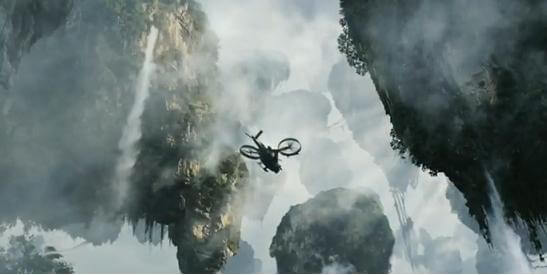
"I Was a Marine in the Na'vi Reserve" or Dances with Smurfs Avataris this Holiday season's elephant in the room. It is too big a target to not take pot-shots at, and will probably be too successful to avoid the temptation. Not that one needs motivation; there's plenty to be critical of. Like that proverbial elephant, take away the visuals and it will be seen as bits and pieces of other films: a little bit of this, a little bit of that. Something old, nothing new, something borrowed, and mostly something blue. Yes, it's derivative*(all James Cameron's films are). Yes, it's 3-D effects are spotty (Cameron can't resist getting too close to the "lens" frequently, so that the tip of things lose their coherence, and close-up ferns tend to become transparent, and there are early sequences that just move too fast for clear 3-D optics). The right-wing pundits will blast it for being "anti-military" (Can't argue with that—an occupying Army force that is the muscle for a rapacious corporation is the villain**—we've seen that in The Abyss and Aliens—on the other hand, Camerongives themthe coolest toys). Yes, it's too expensive. Yes, it's big and obvious and dumb. I'll grant you all of that. Sure.
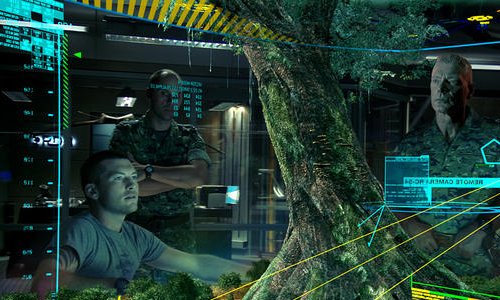
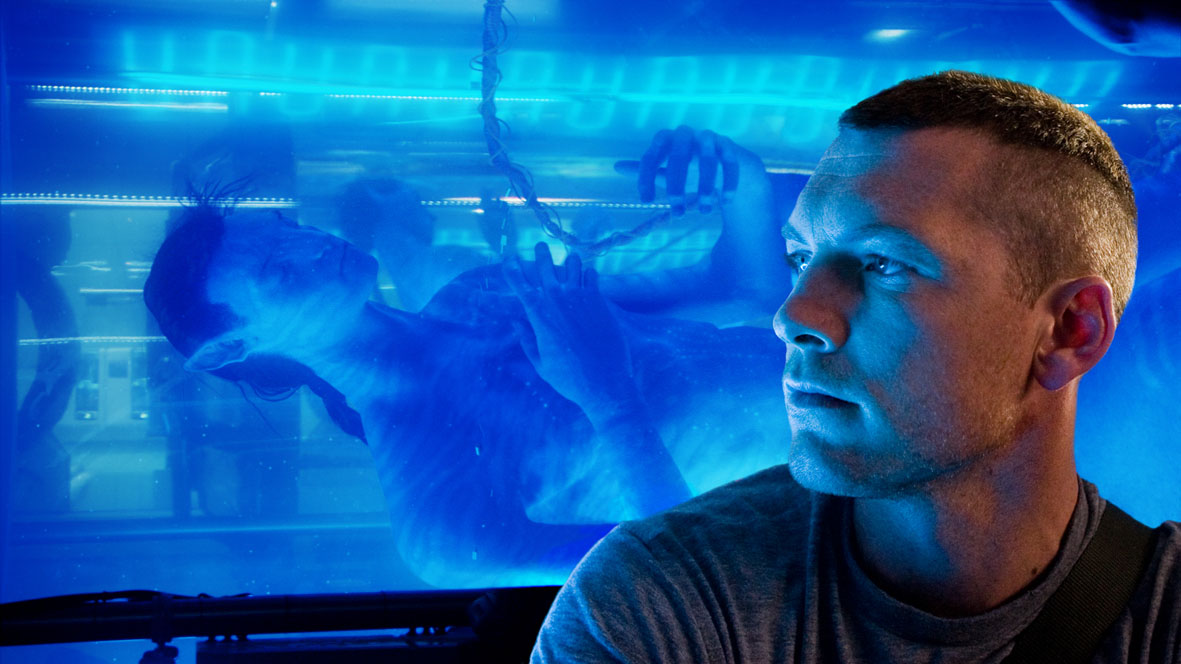
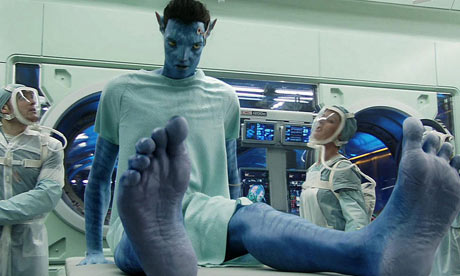
In the year 2175, paraplegic Marine Jake Scully (Sam Worthington—well, his head, anyway, the rest is an actual paraplegic) is offered the chance to replace his late twin brother in a scientific program to blend in with the indigenous tribe of ten foot tall aliens called the Na'vi. Brother Scully had been in training for years for the task, but because Jake's DNA matches his brother's, it's easier to let an untrained rookie with conflicts of interest take his place rather than train a replacement for such an essential mission. That mission is to move the Na'vi off their sacred land that contains a rich source of what the decimated Earth needs to run its machines, a floating mineral called "Unobtainium."***
There were legitimate titters in the audience at that one. It is indicative of Cameron's grab-bag approach to Avatar that he seriously uses a scientific in-joke, as well as exposing how little care he was taking with the story. "Unobtainium" is just lazy writing, like a detective looking for an actual "McGuffin," or a tech explaining that those scanners run using the latest "Vaporware." He couldn't come up with a more clever name like "dilithium," or "adamantium," or "Upsidaisium," or "Wedonthavenuffovum?"****
Apparently not. Because what we have in Avatar is a case of James Cameron becoming George Lucas. The two have been at odds over the years with competing films and competing SFX companies (although Lucasfilm's ILM—not Cameron's acquisition Digital Domain—worked on the FX of Avatar, the majority of which were done by New Zealand's WETA) that now the Tiger-hunter has become the Tiger. Avatar is the equivalent of the sumptuous "Star Wars" prequels, with more care given to how ships look when they land than to how people sound when they talk. We have more of the 22nd century humans using contemporary 20th century idioms and lame wise-cracks. No one's advanced—Earth is infected with a military-industrial simplex whose short-term strategies have decimated the planet (the corporate weasel is played by Giovanni Ribisi, rather than Paul Reiser this time, and the off-his-rocker military honcho is Stephen Lang, rather than Michael Biehn--Michelle Rodriguez plays the Latina soldier in the wife-beater, and Sigourney Weaver...is still Ripley, believe it or not.) Your afterward discussion meal will be peppered with discussions of "Well, if they could do THAT, why couldn't they do THAT?" and so on.
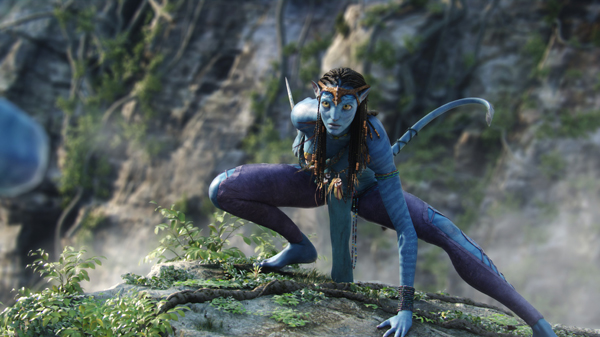
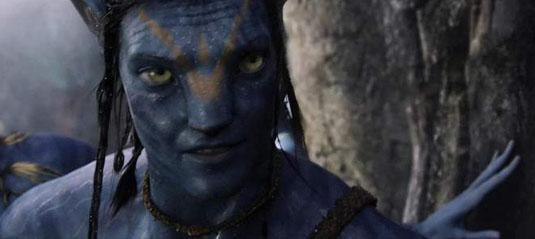
The Na'vi are innocent cat-like savages with golden eyes bigger than those in Keane paintings. They have three fingers and a thumb on their hands and six toes on their feet—if that sounds a little evolutionarily suspect, here's another one for you: the horses on Pandora have six legs, two in the back, four in the front. The people are based on every "noble savage" cliche ever used in the English language—everyone speaks in low, measured pronouncements and the chief is played by Wes Studi (it's always Wes Studi--I love him, but, c'mon!), his obligatorily high priestess of a wife is CCH Pounder, and their daughter, the princess—with whom Sully becomes romantically involved, opening up the floodgates to sources—is played by Zoe Saldana (Uhura of the new Star Trek). Nice cast, but they weren't given much to do to stretch their acting muscles—in fact, the roles are a little regressive. There's more challenges voicing a Disney film.
Get out those 3-D glasses, kids (No, the tinted ones)
One watches with a gob-smacked smile on one's face, but before too long it's apparent how it's going to turn out...and what complications are going to ensue before we get there. One has to conclude that, except for his technological savvy and his rather loopy art design, Cameron just doesn't have any new ideas. If you're looking for revolutionary in your films or film-makers, it is not here.
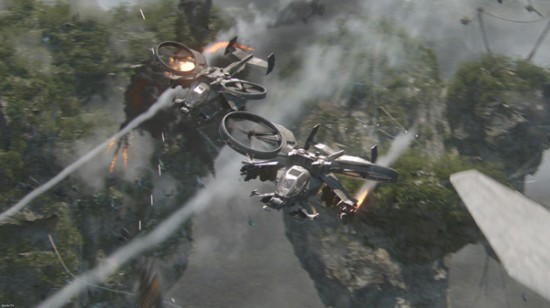
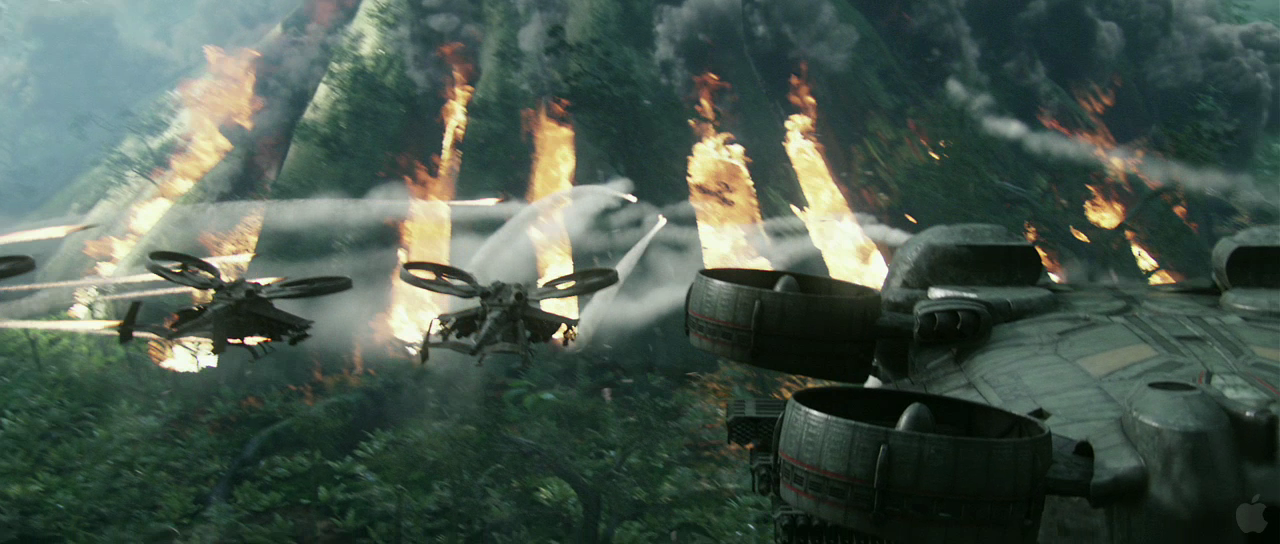
And, as you know it would, it all climaxes with an all-out battle between the Na'vi and the military, which Cameron knows how to direct so it's quite a bit more effective than a "Transformers" battle. It's mighty violent with lots of explosions and death and some nasty punctures by big Na'vi arrows. Parents should be warned—I saw a bunch of kids go into hyper-activity during the battle scenes. You're going to wish you had one of Cameron's heavy-lifting "AMP suits" to get 'em back into the car. But, as a sci-fi re-telling of the "Native" tropes written by European writers, it's fun. Just don't be disappointed once the fancy wrappings are taken away, you find it's the same present you got last year.
* Aw, why drag it out? The sources are Run of the Arrow, the "Pocahontas" story, Poul Anderson's "Call Me Joe"(which is about humans using brain-linked native avatars on Jupiter), Dances with Wolves, "Dune," FernGully, heavy doses of Edgar Rice Borroughs' "Tarzan" and "John Carter of Mars," the "Dragonriders of Pern" series, the original storyline of Star Wars (in which a primitive tribe defeats a technologically advanced one—a Lucas favorite theme), allusions to the decimation of the American Indians, the VietNam War and the War in Iraq. And if it's a "'civilized' man learns from indigenous tribe that they are more civilized than him" story, it's in Avatar. ** There wasn't. I'd forgotten—The company releasing Avatar was 20thCentury Fox, part of Rupert Murdoch's News Corp. There were no conservatives grumbling until after the movie had cleared $1 billion dollars in receipts. *** "Unobtainium" was also used in The Core—it is the metal coating plating the ships to make them resistant to molten temperatures and pressures.
**** "Dilithium cystals" power the U.S.S. Enterprise (rather than what Dr. McCoy prescribes Kirk for...his...ADD), "adamantium" is the metal that coats Wolverine's bones, "upsidaisium" was an anti-grav metal in "Rocky and Bullwinkle," and "Wedonthavenuffovum" I made up.







.jpg)