The
Oscars are this weekend (Lord, help us!) and there are a couple of Best
Picture winners I haven't re-published from "The Olde Site." So, rather
than doing anything "newish" I'll opt, instead, for "timely."
I'm
not a fan of The Oscars (like everybody), but I watch it (like
everybody) and I complain about it the next day (like everybody). You
can't seem to have one without the others. People enjoy complaining
about them but wouldn't dare miss watching them. Everybody has some Oscar-decision that's an obscenity in their eyes...and there are some that are questionable (my Saturday "Trash" post will be one of them)*.
But, most of the time, I just don't care. The Oscars, being voted on
within a year of each film's release, are always going to be
short-sighted, with absolutely no chance of being able to judge a film's
lasting legacy. The decisions are always factored by politicking or
prestige. Maybe trendy. But probably not. They'll always be there
whether one watches them or agrees with them.
Written at the time of the film's release. And there's some post-Oscar bashing at the end.
"Crossing Your Threshold" or "Let's Take it from the Top: 'In Our Darkest Hour...'"
One of my favorite observations from Jerry Seinfeld was his remark that more people are scared of public-speaking than of death: "In other words, more people would rather be IN the coffin, than delivering the eulogy..."
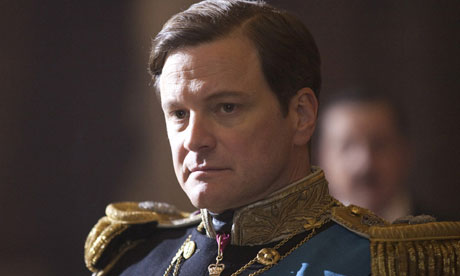
In The King's Speech, this year's Oscar-bait from The Weinstein Company, King George VI (Colin Firth, spot on, really) would rather be dead than speak in public. It's too bad, then, that his father, George V (Michael Gambon) beats him to the choired invisibule, and the next in succession, Edward (Guy Pearce, in an extraordinarily adroit performance) is too much of a self-absorbed ponce to sacrifice "the woman he loves" for such a small thing as the welfare of all of Britannia.
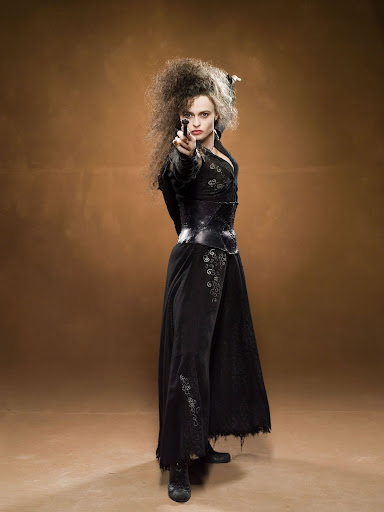
George VI, or Albert, the Duke of York (as he is dubbed before coronation), has a persistent stutter, and a concurrent inferiority complex, given his heightened awareness of his condition and his responsibility—director Tom Hooper makes it clear in his direction and editing choices that we are constantly aware of his audiences' reactions to his stammers, faults and failings, even the portraits of his forebears stare in frozen, condescending judgement.*It is up to his wife, Elizabeth (Helena Bonham Carter, bi-polarly different than her roles for Hubby Burton and Harry Potter)—"Call me 'Liz'" she sweetly says at one point late in the movie—wants to fix the problem, not because her husband is the man who could be King, but because the underlying psychological whipping he imposes on himself is making him miserable. He doesn't even have the wherewithal to blurt out a bedtime story to his two adoring princesses, Elizabeth and Margaret.
With a capricious older brother and an ailing father-king, he is not the most confidence-inspiring potential potentate who can, as his father bellows "stand between us, the jack-boots and the proletarian abyss." And given that the position is more public than ever, what with the King needing to address his subjects via radio, the air of confidence is more important than ever, and Albert's failings as such are even more readily apparent in the Theater of the Mind. Not only is the Empire shrinking for the Royals, but the world is, too, and their enemy's reach is the range of a V-2 rocket.
Presentation is all now, sometimes even more than the message. During the viewing of a newsreel, the Royal Family gets a glimpse of the Player on the Other side, Adolf Hitler at the Nuremberg Rally. "What's he saying, papa?" asks a daughter.
"I don't know," replies the envious Albert. "But he says it rather well."
What do the simple folk do, when they have to carry the burdens of the entire Nation on their backs without hesitancy, and with grace. The short answer is, they don't—the situation is somewhat unique.
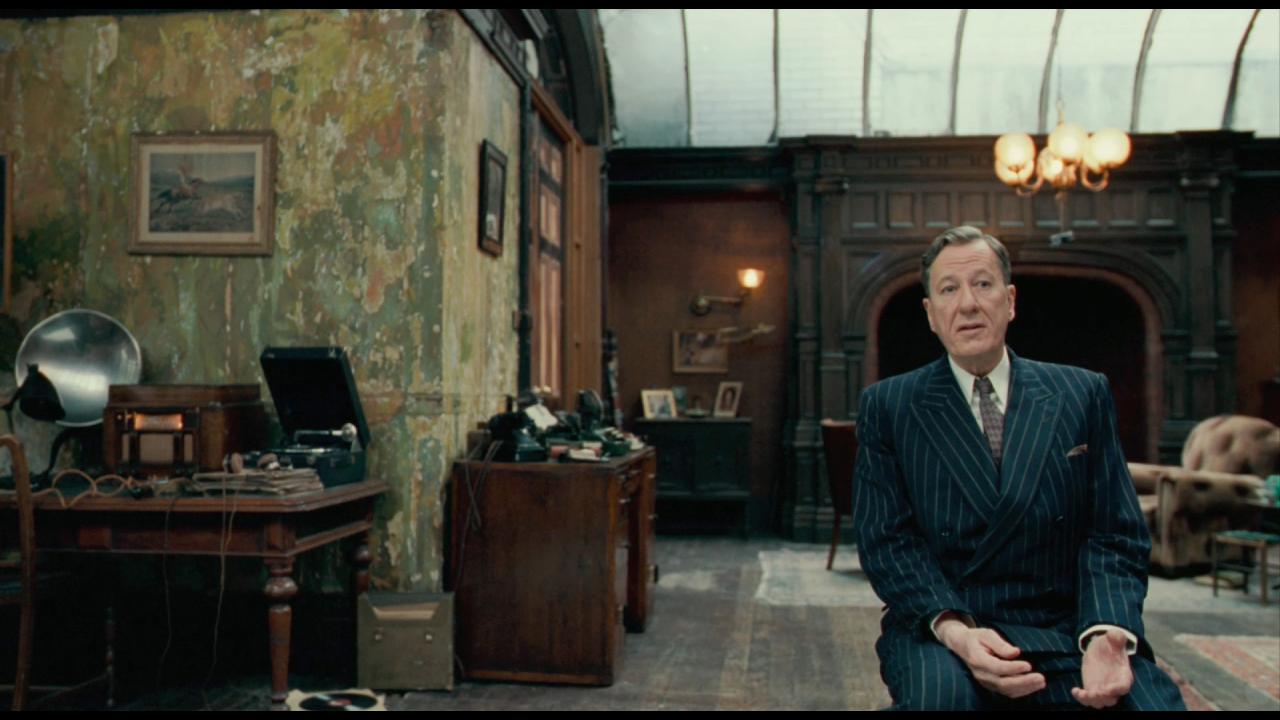
Enter Lionel Logue (Geoffrey Rush), full-time vocal coach, hopeful actor...Australian. He is visited by one "Mrs. Johnson"—the future Queen-Mum—to enquire about services, all the royal outlets proving inefficient, taxing and embarrassing for Albert. Logue has no idea who he's really dealing with—in all senses—explaining that his methods are "unorthodox and unusual."
"Not my favorite words," she sighs.
This is a cracklingly well-done film, subtle and efficient and literate—the script (by David Seidler) leading down as many paths as Logue has techniques, but the most interesting aspect is how the two men, Lionel and Albert (who Logue insists on calling "Bertie" to allow mutual approachability) must rise and lower each other to the occasion, Logue relying on his actor's discipline to gain respect, while Albert uses Logue to gain insight to the common man, essential to his tutelage. And the actors are terrific, not only the ones mentioned, but a small delegation of familiar faces maximizing their small roles. Derek Jacobimakes an early appearance, Anthony Andrews appears as P.M. Stanley Baldwin, Claire Bloom as Queen Mary, and Timothy Spall, doing a fair turn as Winston Churchill It culminates in a moving sequence as the new King must make a radio address to reassure the public after the declaration of war on Germany. Incongruously set to the second movement of Beethoven's Seventh Symphony, George VI, alone, with his coach conducting, must pick his way through his speech, every syllable a struggle to maintain control—the music behind him halting and building. I tell ya, I dropped tears, it's an extraordinary last act to an extraordinary movie.
Now...the rating. The King's Speech is rated "R" (in the United States) for the silliest of reasons—a short sequence where Logue badgers Albert into cursing like a sailor, including a string of "F"-bombs that kept it from achieving the lighter "PG-13," although the film really credits an ever lighter "PG." Don't be put off by the prigs of the Ratings Board. This is a fine, fine film.
* ...but in a style not as annoying as his work on the HBO series "John Adams," and less conventional than his work on The Damned United.
Post-Oscar Bashing: Best Picture? Nah. Not in that gang of 10. But a safe, respectable choice. You can't complain about the script or the performances (I could about director Hooper's win, but as was clear in his acceptance speech, without Hooper—and his Mum—there would have been no film, and the script was certainly worthy). But, ultimately, it's the Best Picture Harvey Weinstein could buy...as has been the case before. Still. Great film. But not Best Picture...not with 127 Hours, True Grit, Toy Story 3 in the running.
The Good Shepherd(Robert DeNiro, 2006) Eric Roth's screenplay for The Good Shepherd seems to have gone through as many hands as states' secrets before actually being put before the cameras. A "personal" telling of the formation of the CIA,Francis Ford Coppola was the first director to have signed to it—then retained enough interest to keep an "executive producer" credit (although Wayne Wang, Philip Kaufman and John Frankenheimer—who interested his Ronin star, Robert De Niro in the project—were also briefly attached before De Niro, who was working on his own CIA project, took it over). Bless my tapped telephone line it has that same sort of "Godfather" family epic-feel to it, with just enough schmaltz and soap to keep it from getting too caught up in its overarching theme of constant paranoia. It also carries the similar pall of "the sins of the father" to it. You just know that the ambitions of the men in the movie will doom their families, if not themselves.
Edward Wilson (Matt Damon) is recruited out of college to join the Skull and Bonessecret society, and with his first ratting out of a professor (Michael Gambon), his career as a spy takes the fast track. It's derailed slightly when a quickie with the Boss's precocious daughter (Angelina Jolie) results in pregnancy and a marriage of convenience. Then, when fencing with the Soviets keeps him overseas for years, his fair-weather family-life causes a Cold War on both sides of the Atlantic.
Soon, Wilson learns, a little too late, that he should trust no one, as he plays against (and develops a mutual admiration with) his equal in the KGB. But its the same old story we've gotten used to in the spy genre. Everybody's a snake looking out for Number One, and trying to make "that Big Score," and yeah, okay, there's only a gray flanneled thread of difference between the spy network and Corporate America.
Which brings us right back to "Godfather" country. CIA-Mafia-GM, there's no (*yawn*) difference. The only likable character in the entire film is director Robert DeNiro's turn as "Bill Sullivan"--a veiled version of Bill Donovan, but he's there for two quick dashes of cold-water perspective and is gone. Matt Damon seems not to age at all during the film, whereas Angelina Jolie does seem to gain twenty years. This film came out at the same time as The Good German, and I was hoping someone would combine them into "The Good German Shepherd". Well, I can dream...
It's interesting (well, to me, anyway) to wonder why Damon chose this part, seeing as how his "Bourne" films are merely the "fantasy" side of the "spy" franchise. If he thought that playing the "button-pusher," rather than the blunt instrument was an acting "stretch," he couldn't be more wrong.
Sky Captain and the World of Tomorrow(Kerry Conran, 2004) Conran's film envisioned a new world—not the homagey 1930's era steampunk film that he created, but in how films were made, given the computer revolution that was exploding every aspect of business and personal life. Could the movies be far behind? George Lucas was perfecting the green-screen process with his Star Wars pre-sequels, so that everything looked exquisite, but it tended to ham-string the actors, who could only emote to hanging ping-pong balls and walk around imaginary architecture and furnishings, making them have to concentrate on other things besides making their memorized lines sound natural or convey something besides exposition. In the mean-time, film-makers saw the potential of shorter shooting times and building expansive/expensive sets—just do it in the box around the actors. Robert Rodriguez jumped in and James Cameron took it to whole new levels, merely motion-capturing the actors for his Avatar. And making a billion bucks.
For four years, Conran worked on a MacIIci to make a short promo film (see below) of a 1930's New York where zeppelins dock at the Empire State Building and giant mechanical robots (inspired by a classic Fleischer Studios Superman cartoon seen further below) march through the streets crushing cars and resisting the efforts of machine-gun-wielding police—to shoot them down so they could fall and crush even more things, like the overlayed people looking up with a sense of horror/wonder. It ends with a call to the title character (relayed by an RKO studio-like antenna) and the short ends with the promise of another chapter, like an old-time movie serial.
The strength of the short is it's obvious love for art-deco stylization and Warner Brothers montages and German expressionism—and monster-robots (that one's key). It was enough to excite producer Jon Avnet to take the techniques and design sensibilities and turn it into a feature. For two years, Avnet and Conran expanded the story, with—literally—the sky being the limit. But, the issue was giant robots attacking New York and a guy in a P40 Warhawk to the rescue.
Seems a little limited for a feature.
And it is. Even with an explanation of who and why giant robots, and for the introduction of so many reinforcements needed to take out so many robots, there's not much story. The solution is what Sky Captain provides—more opportunity to add more ships, precious few characters and a lot of flying around dodging the more-than-enough hardware thrown at them—but not a lot of depth. As in this clip...
The details are that Jude Law's devil-may-care Sky Captain—his name is Harry "Joe" Sullivan and leader of "The Flying Legion"—manages to disable one of the robots for examination by his tech-guy Dex (Giovanni Ribisi) and, with the help of plucky reporter Polly Perkins (Gwyneth Paltrow), learns that the mastermind behind the attacks is one Dr. Totenkopf, who has been assassinating top technologists around the globe (by means of a "Mysterious Woman"—that is her name and played by Bai Ling) to hide his intentions. The scientists don't have that much differing them, just slightly more than individual robots do, making it difficult to care about their fates, much less tell them apart.
It is up to Sky Captain to recruit former flame Commander Francesca "Franky" Cook (Angelina Jolie, leathered up down to an eye-patch) of the Royal Navy, to lead a team of "Thunderbirds"-style air-squadrons to stop the ultimate plan of the Dr. Totenkopf at his headquarters on a mysterious island, which involves destroying the human race and starting it anew on a rocket designed as a modern-age Noah's Ark.
But, there's a difference between being "inspired" and being "inspired-by." In the film's desturated, vaseline-smeared world, Paltrow's Polly Perkins works as a reporter for Charles Foster Kane's Chroniclechain, there's a visit to James Hilton's (and Frank Capra's—and Stephen Gooson's) Shangri-La, and during a pitched battle in the skies over New York, King Kong can be seen climbing the Empire State Building (presumably because every plane in the city is otherwise engaged). Ed Shearmur's score is busy "Mickey-Mousing" with John Williams' orchestration-templates, but there's no time to establish anything but the briefest of musical themes.
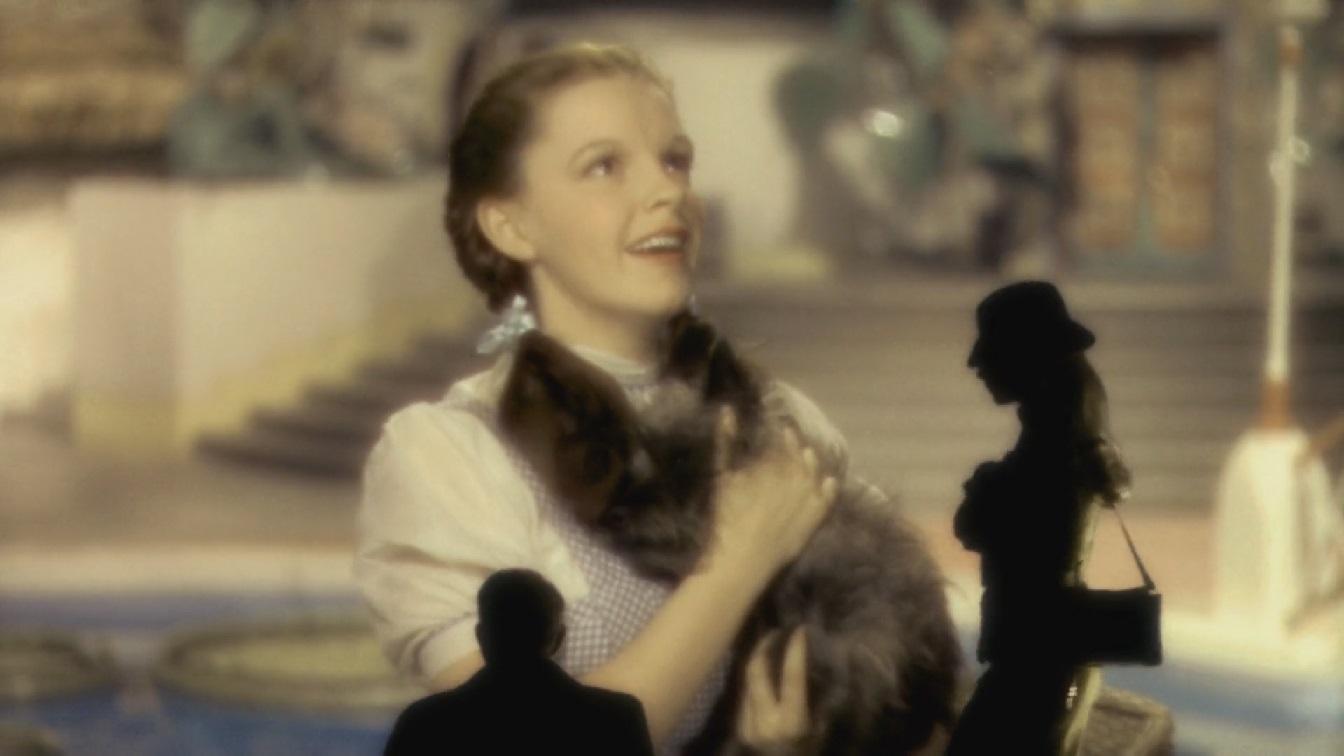
When Polly meets one of those vulnerable scientist-types, she does so in a nearly empty theater showingThe Wizard of Oz, and control rooms have a similar spark (but a bit more scope) than Flash Gordon serials and Things to Come. Even when Dr. Totenkopf is revealed, it turns out to be an Oz-generated Laurence Olivier using archival footage. There are pop-culture references tucked in corners and hidden in plain sight—you know Sky Captain is sweet on Polly when you look at his plane's serial number, "h11od" (read it upside-down...or head over heels).
During the big reveal it turns out that Dr. Totenkopf is long-dead and his research to create a "perfect world"—"The World of Tomorrow"—has been taken over by his robots, who have been covering tracks, and gathering an example of male and female of every species of creature to be housed upon a giant rocket, the second stage of which will ignite the atmosphere of Earth to wipe out all life currently existing on Earth, sterilizing it for his re-boot.
Uh, yeah...hold on there.
With an atmosphere on fire, that'll pretty much make the planet uninhabitable to the saved species, as well as a long-in-the-works "Adam and Eve" project (Don't worry, it's not Sky Cap and Polly). So, unless Dr. T's robot-minions have a Death Star orbiting (and they don't), their so-called "World of Tomorrow" is going to be extra-crispy rather than regular. The robotic plot to re-populate the planet is a bit short-sighted and then, which, only means that the movie's plot is clunky and blowing off steam.
And that's the problem with Sky Captain and the World of Tomorrow. Oh, it's fun alright, with enough details to satisfy any geek/film-freak willing to watch it over and over again (and maybe capture those images and post them on their movie blog). But, if that same frothy energy that went into those quick call-backs and little details had gone into big things like story and plot, then this might have been a better movie, instead of the cheese-fest that it is.
The devil, here, is in the details. Sure, all the trees are nice. Where's the forest?
Conran's short, made on a Macintosh IIci. Amazing.