Showing posts with label Angelina Jolie. Show all posts

Sunday, November 14, 2021

Eternals

You Don't Know Jack
or
The Marvelization of Chloé Zhao!!
 
Jack Kirby was "The King" of comics. That's what Stan Lee called him, anyway—and the two had their disagreements over the years. But, Kirby's influence in the funny-books from the 40's on towards infinity was immense, preceding anything Lee did. Marvel Comics, as we know it, flowed from Kirby's drawing table and legitimately his draftsmanship could be called the "soul" of that comics line, becoming its "house style". I could list the comics series and characters he created, but the list is long and there are other places you could find that information, and this is about a movie version of one of his creations, rather than some obligatory mention of its origins (which I seem to be doing, anyway). 
 
So...briefly...this is that. In the 1970's Kirby left Marvel to go over to the DC comics line—Superman, Batman—and wrote and drew "The New Gods", a series of books joined by a singular history that had nothing to do with Krypton or anything associated with DC's previous output.* The books were canceled at some point (but the characters retained) and Kirby went back to Marvel and did something somewhat similar for them, writing and drawing "The Eternals."
Marvel Studios has now made a film of the Kirby creation, Eternals, and it has a hard duty to fulfill. Kirby basically took the 2001 story-line—he did a comics adaptation of the film that same year—of an extra-terrestrial "god"—called "The Celestials"—who create two off-shoots of primitive life on Earth, homo immortalis ("The Eternals") and homo descendus ("Deviants"). The Eternals defend the nascent humans from the Deviants in order that humanity evolves into a kinder, gentler race where everybody just gets along. It's going to be a long wait, but The Eternals, borrowing Starfleet's Prime Directive, are beholden to not interfering with human history and just defending us mere mortals. That's the gist. The mythos has expanded and gotten wildly complicated since the series debut in 1976.
Eternals doesn't make it any less complicated, but they do put a different spin on it, giving it a couple of Mobius twists that have less to do with the comics and more with basic cosmology and energy equations. That comes up later, but the main thing for movie-viewers to know is that in the year 5000 B.C. ten Eternals come to Earth at the behest of the Celestial Arishem (The Judge) to fight Deviants to protect human evolution. They are (bear with me): Ajak (Salma Hayek) a healer, Ikarus (Richard Madden), with super-strength and heat-vision, Sersi (Gemma Chan) a matter-manipulator, Thena (Angelina Jolie) a warrior who can make any weapon out of cosmic energy, Kingo (Kumail Nanjiani) who can project energy projectiles, Gilgamesh (Don Lee) the strongest fighter, Druig (Barry Keoghan) who can manipulate minds, Sprite (Lia McHugh) a projectionist, Makkari (Lauren Ridloff) who's fast, and Phastos (Bryan Tyree Henry) a weapons and technology expert.
That's a lot of people to introduce in 2 hours, 37 minutes and one can look at them and go "Well, he's Superman and she's Wonder Woman and she's the Flash" and the rest have a lot of left-over powers—in fact, this Marvel movie pays lip-service to Batman's butler and Clark Kent, which is odd (I mean, they're so daaaark!)—but the basics are that over seven millennia they build up a lot of resentment towards the slow evolutionary process of mankind and they have a tendency to rebel and go their own ways. As the movie shows, that's not necessarily a bad thing, and given the proclivity of meat-puppets to do stupid stuff, one could hardly blame an eternal for self-imposed exile or discretionary mind-control.
Now, Eternals writer-director Chloé Zhao just won the Best Director Oscar for Nomadland (deservedly, I thought), and the nuance of that film, the story-telling through images, the lived-in feeling of the performances...and pretty much absent in this movie. Okay, there is some location shooting with battles out in the open instead of a disguised green-screen, but we've seen this before as the Marvel movies have been moving out of the standard New York locations since the second Iron Man movie. Performances are fine, but run the gamut of slipping dialects to "I've-got-to-take-this-garbage-very-seriously" earnestness. One gets the impression that there might be a four to five hour version of the thing because some of the transitions and montage sequences seem a bit disjointed. One says this advisedly as one realizes that the bar for audience satisfaction for these things is an action sequence every ten minutes.
For all the effort, and the obvious attempt to extend the scope of the Marvel Studio output and to make it a more inclusive film—despite stepping on some embarrassing tropes along the way—one has to say that it is considerably less than an involving experience. For all the cosmology bandied about (and it's about 5% of the "woo-woo" Kirby was capable of conveying) it comes down to trying to sell the concept that our Pale Blue Dot amounts to a hill of beans in a limitless, roiling expanse of space-time. I wasn't buying it, even if I was supposed to be rooting for Our Team. The motivations are too random and unearned...or even very well articulated. Given what has happened previously in the MCEU, I suspect that this is all some positioning of structural rebar for a bigger story to be revealed later throughout "Phase IV" of the studio's game-plan. But, at this point, I'm searching for a reason to care and I simply don't.


* Kirby's ink-stained fingerprints are all over comic-based movies—I mean, Thor, Hulk, Cap'—but the first time one of his wholly creator-acknowledged creations was realized on-screen was the character Steppenwolf in Justice League (and also Darkseid, DeSaad and Granny Goodness in Zack Snyder's Justice League).

Wednesday, March 10, 2021

Alexander

Written at the time of the film's release...

Alexander
 (Oliver Stone, 2004) In the two-way race getting the story of Alexander the Great to the screen between Baz Luhrmann and Oliver Stone, the latter got there first, having worked on a screen-play since 1989. Luhrmann's announcement of an "Alexander" project was probably just the thing Stone's film needed to get off the ground, and his thorough planning shows (historical inaccuracies aside): this is one of Stone's deftest film--a combination of his macho liberal ethics and his pre-disposition to turn everything into braying Myth. 

Here he's dealing with Gods and Titans and men who reach beyond their grasp, and if one thinks this one has a political agenda talking about a King wanting to chase his Persian prey into the mountains, you're only scanning the surface for easy targets.*

Stone's going for epic statements here of dreamers and the pains they inflict on Society** and a pretty good tying up of some major themes in several of his films without descending into his fall-back of the "Good and Bad Fathers of our Soul." Oh, there is familial stress going on constantly with two of the more watchable stars as Alexander's warring father and mother King Phillip and Olympias (Val Kilmer and Angelina Jolie***). Their battles for the betterment of Alexander (Colin Farrell) make up the intrigue that Stone keeps flashing back to once Alexander reaches Babylon and established his first Alexandria city-state. But the main focus is Alexander and his battles from Ireland**** Macedonia to Persia to India, each one given their own specific vantage point. The desert combat in Persia is given a neat over-view by a mythic hawk, the latest in a long line of familiars haunting Stone protagonists. The India battle is an epic jungle gore-fest between man and beast that turns into a red nightmare, but is affectionately begun with an old-time movie iris-out.
The film is so full of "rules of thumb," you begin to wonder if there's not a training manual with the thing ("A commander never gives an order he wouldn't carry out himself," "Don't surrender your reason to passion," "Moderation in all things" and the film's mantra "Fortune favors the bold"), and as gritty as Stone makes it (and there's a lot of blood-spatter flying through the battle scenes), it has the pristine quality of those Hollywood sword-and-sandal epics where even the Persian city of Babylon seems immaculately free of dust. Stone seemed inspired by the look of The Lord of the Rings and its way around a vast story-line, but seems to favor his Myths well-scrubbed.
Still, it's an epic that was filmed in 93 days, despite far-flung locations and looks miraculous despite the tight schedule. For all the things that could conceivably have gone wrong, Stone's Cecil B. DeMille styled dream project managed a lot of things right.

* Stone's W. biography would show up at the end of 2008, looking rushed and a little wasted and without much to say. You can't satirize a political satire, and the joke ceased being funny a long time ago.
** In an odd post-mortem, Alexander's kinsman Ptolemy (Anthony Hopkins) supposes that Societies are inspired by dreamers and then exhausted by them to the point of wishing them failure, if not death. That's an interesting thought coming from Mr. Conspiracy Theory. Stone's also one of those liberals who likes to include all of us to enjoy his guilt—"It's all out faults." Hey, speak for yourself, mac!
*** Stone is particularly praise-worthy of his actors on the commentary track of this film and with good cause--Farrell shows off the promise that his over-hyped career has only suggested, Kilmer is as boisterously good as he's been in years, and Jolie again shows why she's one of the most commanding actors on the screen these days. She has a line reading ("Loves. Loves!") that wheels between conflicting emotions with such quick-silver speed that it nearly whips your head around. One would be tempted to see that she's the latter day Ava Gardner if not for one thing—she's a better actor than Gardner. Stone loves a touch of madness in his actors. Jolie is his perfect match.
**** Farrell doesn't disguise his Irish accent, and the kid who plays him (very well) in the early sections of the movie does a fair register of Farrell's brogue. But most of the actors have Irish accents that at times is distracting, but somehow seems fitting for the folk-tale blarney with which Stone tells the story. You go with it, as it feels right. Kilmer's accent is American. Jolie's is faux-Greek.

Tuesday, May 12, 2020

The Good Shepherd (2006)

Written at the time of the film's release...

  The Good Shepherd (Robert DeNiro, 2006) Eric Roth's screenplay for The Good Shepherd seems to have gone through as many hands as states' secrets before actually being put before the cameras. A "personal" telling of the formation of the CIA, Francis Ford Coppola was the first director to have signed to it—then retained enough interest to keep an "executive producer" credit (although Wayne Wang, Philip Kaufman and John Frankenheimer—who interested his Ronin star, Robert De Niro in the project—were also briefly attached before De Niro, who was working on his own CIA project, took it over). Bless my tapped telephone line it has that same sort of "Godfather" family epic-feel to it, with just enough schmaltz and soap to keep it from getting too caught up in its overarching theme of constant paranoia. It also carries the similar pall of "the sins of the father" to it. You just know that the ambitions of the men in the movie will doom their families, if not themselves.
Edward Wilson (Matt Damon) is recruited out of college to join the Skull and Bones secret society, and with his first ratting out of a professor (Michael Gambon), his career as a spy takes the fast track. It's derailed slightly when a quickie with the Boss's precocious daughter (Angelina Jolie) results in pregnancy and a marriage of convenience. Then, when fencing with the Soviets keeps him overseas for years, his fair-weather family-life causes a Cold War on both sides of the Atlantic. 
Soon, Wilson learns, a little too late, that he should trust no one, as he plays against (and develops a mutual admiration with) his equal in the KGB. But its the same old story we've gotten used to in the spy genre. Everybody's a snake looking out for Number One, and trying to make "that Big Score," and yeah, okay, there's only a gray flanneled thread of difference between the spy network and Corporate America
Which brings us right back to "Godfather" country. CIA-Mafia-GM, there's no (*yawn*) difference. The only likable character in the entire film is director Robert DeNiro's turn as "Bill Sullivan"--a veiled version of Bill Donovan, but he's there for two quick dashes of cold-water perspective and is gone. Matt Damon seems not to age at all during the film, whereas Angelina Jolie does seem to gain twenty years. This film came out at the same time as The Good German, and I was hoping someone would combine them into "The Good German Shepherd". Well, I can dream...
It's interesting (well, to me, anyway) to wonder why Damon chose this part, seeing as how his "Bourne" films are merely the "fantasy" side of the "spy" franchise. If he thought that playing the "button-pusher," rather than the blunt instrument was an acting "stretch," he couldn't be more wrong.


Thursday, March 26, 2020

Sky Captain and the World of Tomorrow

Sky Captain and the World of Tomorrow (Kerry Conran, 2004) Conran's film envisioned a new world—not the homagey 1930's era steampunk film that he created, but in how films were made, given the computer revolution that was exploding every aspect of business and personal life. Could the movies be far behind?

George Lucas was perfecting the green-screen process with his Star Wars pre-sequels, so that everything looked exquisite, but it tended to ham-string the actors, who could only emote to hanging ping-pong balls and walk around imaginary architecture and furnishings, making them have to concentrate on other things besides making their memorized lines sound natural or convey something besides exposition. In the mean-time, film-makers saw the potential of shorter shooting times and building expansive/expensive sets—just do it in the box around the actors. Robert Rodriguez jumped in and James Cameron took it to whole new levels, merely motion-capturing the actors for his Avatar. And making a billion bucks.
For four years, Conran worked on a MacIIci to make a short promo film (see below) of a 1930's New York where zeppelins dock at the Empire State Building and giant mechanical robots (inspired by a classic Fleischer Studios Superman cartoon seen further below) march through the streets crushing cars and resisting the efforts of machine-gun-wielding police—to shoot them down so they could fall and crush even more things, like the overlayed people looking up with a sense of horror/wonder. It ends with a call to the title character (relayed by an RKO studio-like  antenna) and the short ends with the promise of another chapter, like an old-time movie serial.
The strength of the short is it's obvious love for art-deco stylization and Warner Brothers montages and German expressionism—and monster-robots (that one's key). It was enough to excite producer Jon Avnet to take the techniques and design sensibilities and turn it into a feature. For two years, Avnet and Conran expanded the story, with—literally—the sky being the limit. But, the issue was giant robots attacking New York and a guy in a P40 Warhawk to the rescue.
Seems a little limited for a feature.
And it is. Even with an explanation of who and why giant robots, and for the introduction of so many reinforcements needed to take out so many robots, there's not much story. The solution is what Sky Captain provides—more opportunity to add more ships, precious few characters and a lot of flying around dodging the more-than-enough hardware thrown at them—but not a lot of depth. As in this clip...
The details are that Jude Law's devil-may-care Sky Captain—his name is Harry "Joe" Sullivan and leader of "The Flying Legion"—manages to disable one of the robots for examination by his tech-guy Dex (Giovanni Ribisi) and, with the help of plucky reporter Polly Perkins (Gwyneth Paltrow), learns that the mastermind behind the attacks is one Dr. Totenkopf, who has been assassinating top technologists around the globe (by means of a "Mysterious Woman"—that is her name and played by Bai Ling) to hide his intentions. The scientists don't have that much differing them, just slightly more than individual robots do, making it difficult to care about their fates, much less tell them apart.
It is up to Sky Captain to recruit former flame Commander Francesca "Franky" Cook (Angelina Jolie, leathered up down to an eye-patch) of the Royal Navy, to lead a team of "Thunderbirds"-style air-squadrons to stop the ultimate plan of the Dr. Totenkopf at his headquarters on a mysterious island, which involves destroying the human race and starting it anew on a rocket designed as a modern-age Noah's Ark.  
But, there's a difference between being "inspired" and being "inspired-by." In the film's desturated, vaseline-smeared world, Paltrow's Polly Perkins works as a reporter for Charles Foster Kane's Chronicle chain, there's a visit to James Hilton's (and Frank Capra's—and Stephen Gooson's) Shangri-La, and during a pitched battle in the skies over New York, King Kong can be seen climbing the Empire State Building (presumably because every plane in the city is otherwise engaged). Ed Shearmur's score is busy "Mickey-Mousing" with John Williams' orchestration-templates, but there's no time to establish anything but the briefest of musical themes.
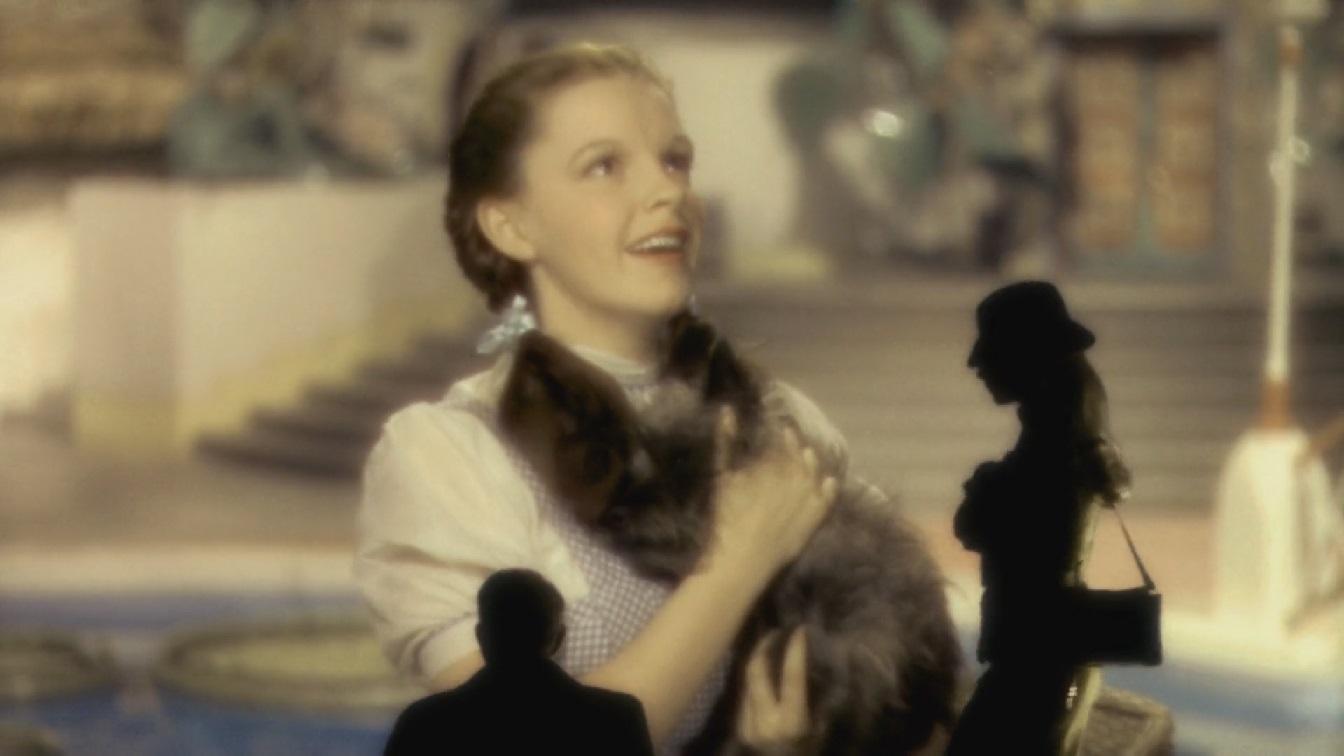
When Polly meets one of those vulnerable scientist-types, she does so in a nearly empty theater showing The Wizard of Oz, and control rooms have a similar spark (but a bit more scope) than Flash Gordon serials and Things to Come. Even when Dr. Totenkopf is revealed, it turns out to be an Oz-generated Laurence Olivier using archival footage. There are pop-culture references tucked in corners and hidden in plain sight—you know Sky Captain is sweet on Polly when you look at his plane's serial number, "h11od" (read it upside-down...or head over heels).
During the big reveal it turns out that Dr. Totenkopf is long-dead and his research to create a "perfect world"—"The World of Tomorrow"—has been taken over by his robots, who have been covering tracks, and gathering an example of male and female of every species of creature to be housed upon a giant rocket, the second stage of which will ignite the atmosphere of Earth to wipe out all life currently existing on Earth, sterilizing it for his re-boot.
Uh, yeah...hold on there.

With an atmosphere on fire, that'll pretty much make the planet uninhabitable to the saved species, as well as a long-in-the-works "Adam and Eve" project (Don't worry, it's not Sky Cap and Polly). So, unless Dr. T's robot-minions have a Death Star orbiting (and they don't), their so-called "World of Tomorrow" is going to be extra-crispy rather than regular. The robotic plot to re-populate the planet is a bit short-sighted and then, which, only means that the movie's plot is clunky and blowing off steam.
And that's the problem with Sky Captain and the World of Tomorrow. Oh, it's fun alright, with enough details to satisfy any geek/film-freak willing to watch it over and over again (and maybe capture those images and post them on their movie blog). But, if that same frothy energy that went into those quick call-backs and little details had gone into big things like story and plot, then this might have been a better movie, instead of the cheese-fest that it is.
The devil, here, is in the details. Sure, all the trees are nice. Where's the forest?


Conran's short, made on a Macintosh IIci. Amazing.

Saturday, March 14, 2020

The Tourist

Saturday is "Take Out the Trash" Day

"Tourist Class"
or
"Just the Thing I Need...How Nice"

In between "Pink Panther" movies and his other comedies, director Blake Edwards used to make elegant truffles of movies with big stars, great locations, and high production values. But whatever the veneer of stylishness they showcased, there was always a kernel of truth to what he did. Edwards understood that even though the wrapping may be exquisite, the present it surrounded should be pretty special too.

So, I guess what I'm saying is The Tourist is a pretty lousy Christmas present.

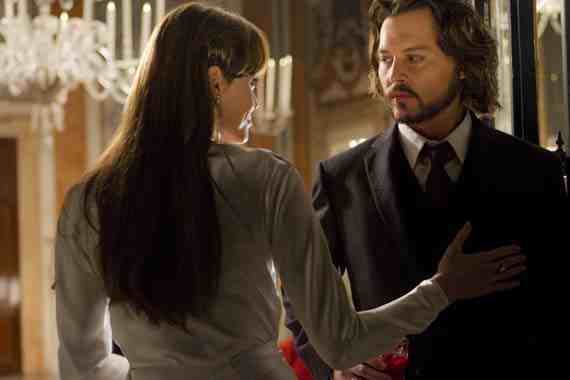
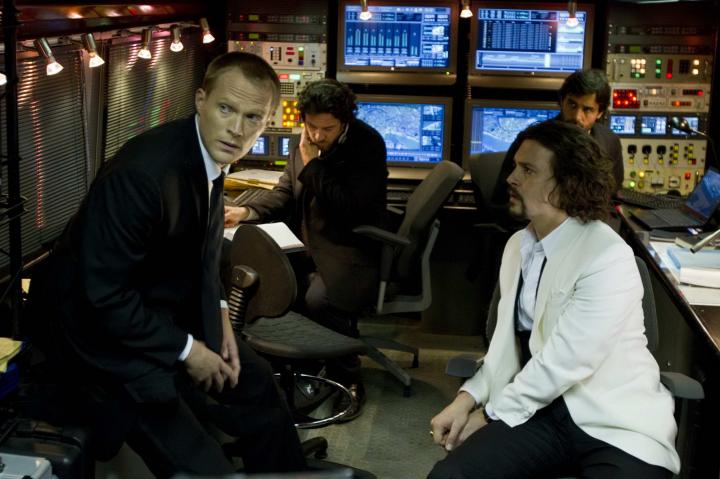
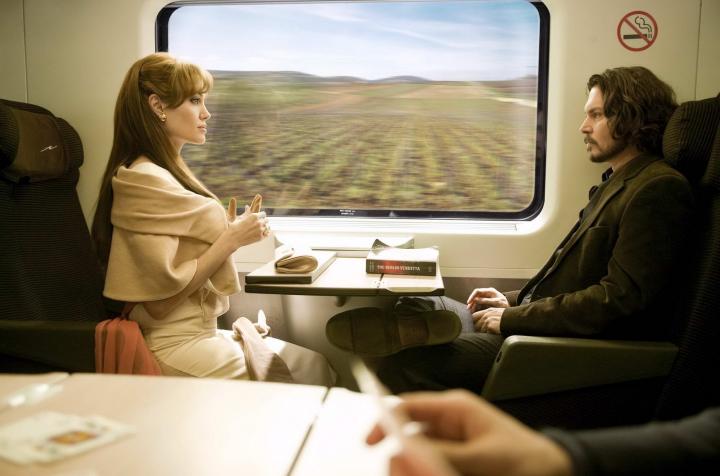
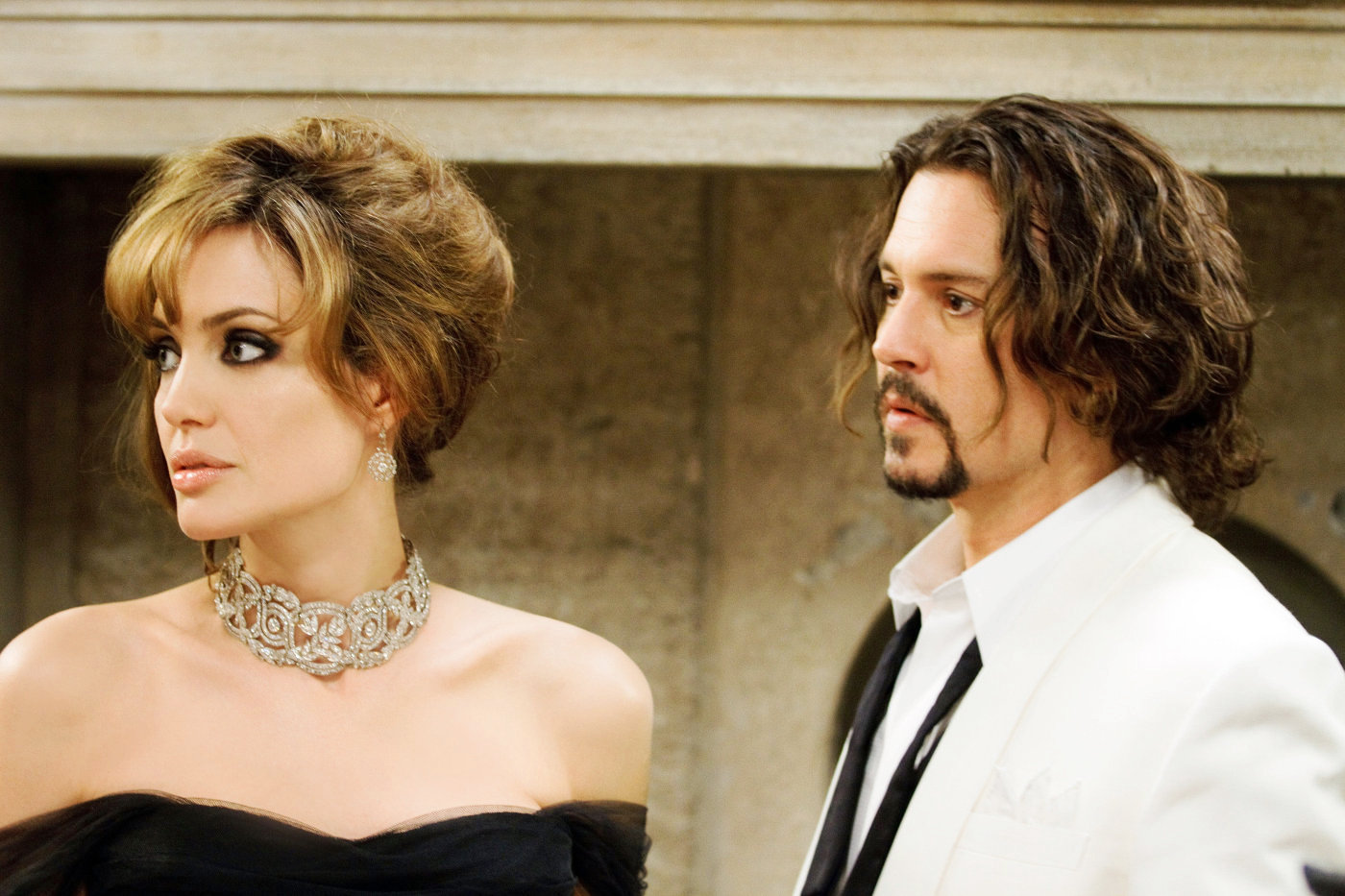
Oh, it looks spectacular, jetting (training and gondoling, actually) from Paris to Venice, all chi-chi and ritzy, but it falls flat as a caper, a romp, or even a good time.* Hell, it even falls flat in the half-hour review of its particulars with so many plot-holes and needless complications that, given the film's resolution, it makes little sense. Oh, you can see how it might work...but if it is what they say it is, then why....??? (Oh, don't ask why, oh, don't ask why....)
And when you start doing that analysis, you know that the thing hasn't really been thought through...they were just making it up as they were going along and hoping nobody would notice that the film only makes sense five minutes at a time. You're supposed to be distracted by the gorgeous decors, the elegant suits (and suites), Angelina Jolie's wardrobe (and how she fits in it**), and Johnny Depp's clowning*** to actually figure out that the movie is a shell-game, and a shell of a movie, as hollow as a chocolate bunny on Easter, and with as much nutritional value beyond being sugary.
Hard to believe, then, that the director—and co-scriptwriter, along with Christopher McQuarrie (The Usual Suspects, Valkyrie, MI-:4 and 5) and Julian Fellowes (Gosford Park, The Young Victoria, Downton Abbey)—is Florian Henckel von Donnersmarck, whose last film was the extraordinary Best Foreign Film Oscar winner The LIves of Others. That was a complex morality-play that moved across the demolition of the Berlin Wall, of how hunter and hunted can come to a mutual respect. But this can't even get its internal logic right. Even a finely-crafted Mercedes can fall apart if you don't throw some oil in it.
Add to the script problems the lack of any frisson between Jolie and Depp, both of their characters going through the motions acting as cool as cucumbers (him, comically; her, glacially). He tries to throw some bits of business around, but they're fairly subtle (and inconsistent)—like his language malapropisms (which will fly over most Americans' heads) and a tipsy act—that they get lost in the shuffle. 
Jolie has a tougher problem; she has to fight herself and her image. This is the second feature (after Salt) where Jolie is tasked with a poorly written role that requires no acting challenge, so much as present herself in an iconic way. In other words, she has reached the point in her career where she no longer has to be good, as she does to look good. This is a movie in Liz Taylor mode, Audrey Hepburn-style, the queen bee with drones hovering to do her bidding. But, she receives no help at all, not from the script, not from the cast (which includes Paul Bettany, Timothy Dalton, and Steven Berkoff—the latter two impressive, as always), the director lighting her well and showing her at her best. She is set apart—the only woman in the cast; she might be able to carry the box-office, but she can't carry the movie, poor as it is, and as enticing as it might look. She is a fine actress, as her awards-gathering early in her career demonstrated. But a few more of these vehicles and she may have to de-glam her career—as Charlize Theron (who left this project) did. 

They should have called it "The Tourist Trap," instead. 


* I'm sure it wasn't the movie, but I started to develop chest pains during it, and I began to think that all this sumptuousness was starting to clog my arteries, maybe I was just distressed, so, I shut my eyes...oh, for about 20 minutes...just listening to the soundtrack, and when I opened them again...gosh, I hadn't missed anything.


** In one sequence, French police are tracking Jolie's Elise Ward with cameras as she glides down a Paris street. Two of the officers zoom in to see if they can see a pantie line, and their superior admonishes them "Be more professional, guys." And as if to show just how professional the filmmakers are, director Von Donnersmarck cuts to a tight shot of Jolie's ass. No VPL. They may have been going for self-deprecation there, but, actually, I think, they nailed the problem. "Be more professional, guys."

*** Okay, I am now calling "b.s." on Depp's maintaining an artist's pose. This and the "Pirates" sequels point to a man picking up a paycheck. I used to have a lot of respect for him...but now...(According to IMDB, Tom Cruise was supposed to play the part—he and Jolie have been circling each other for awhile, as he was supposed to, play Salt—then Sam Worthington, who left over "creative differences")