Showing posts with label Johnny Depp. Show all posts

Wednesday, December 13, 2023

Wonka-vision

This week, we get a new recycling of Roald Dahl's "Willy Wonka"—this time starring the ubiquitous TimothΓ©e Chalamet—but before we dive into that chocolate river, let us wade into the previous films of the subject matter.

 
Come with me/
and you'll be/
in a world of pure imagination"

Well, it's pure imagination on a very limited budget, but what folks remember about this beloved musical film are the script (officially by the book's author Roald Dahl, but amply aided and abetted by 
David Seltzer) and the performances—especially Gene Wilder's risky take on the titular candy-maker who may be a couple rice-krispies off plum. Despite the meager budget (which was financed to promote a line of candy that never materialized) the ideas behind it are more than enough to keep audiences young and old entertained (and featuring mostly great songs from Leslie Bricusse and Anthony Newley including the evergreen "The Candy Man" as well as the most avaricious of all musical "I Want" songs).
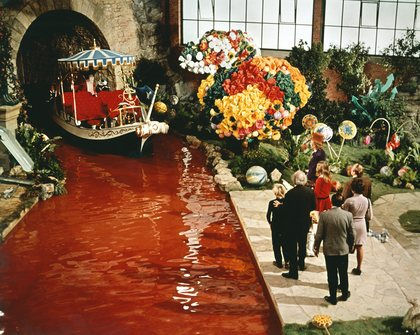
In it, the mysterious head of a chocolate factory (Gene Wilder) holds a world-wide lottery—five golden tickets are hidden in the large Wonka chocolate bars. The possessor of said ticket is given an escorted tour of the wondrous (if very secret) factory by Mr. Wonka himself. The winners turn out to be four very entitled brats and one impoverished lad. The factory itself is a wonderland of confectionery delights (even if it does hold some dangers, besides the obvious ones of brain-freezes, weight-gain, and acne) and is worked by a third-world staff of the diminutive Ooompa-Loompa tribe...and the motives of the CEO are very suspect.
It's smart for both kids and adults, with only one draw-back—I tend to held out to the lobby for a smoke whenever the saccharine song "Cheer Up, Charlie" starts to extrude from the screen. Saccharine and chocolate do not mix.
 
A combination of comedy and kid-horror, Willy Wonka and the Chocolate Factory is wonderful...and semi-sweet, but never bitter.
Gene Wilder insisted on this entrance to give Wonka an edge...
"From that time on, no one will know if I'm telling the truth..."
🍨🍫🍬🍭🍨🍫🍬🍭🍨🍫🍬🍭🍨🍫🍬🍭🍨🍫🍬🍭🍨🍫🍬🍭🍨🍫🍬🍭🍨🍫🍬🍭🍨🍫🍬🍭🍨🍫🍬🍭🍨🍫🍬🍭🍨🍫🍬🍭🍨🍫🍬🍭🍨🍫🍬🍭🍨🍫🍬🍭
 
Charlie and the Chocolate Factory (Tim Burton, 2005) This was a bit of a career-rebound for director Burton on a relatively "safe" project, more in tune with his sensibilities than his previous "re-imagining" of Planet of the Apes.  
 
Charlie... is not so much a remake of the earlier Willie Wonka and the Chocolate Factory so much as a deconstruction/reconstruction that actually stays a bit closer to the source material (despite the fact that Roald Dahl is credited with the earlier movie's screenplay, with a huge uncredited assist from David Seltzer). With far more budget than Wonka, and a bit more slightly impure Burton imagination (and without the burden of the more sappy Anthony Newley/Leslie Bricusse songs), this version, bloated though it is, is a bit closer to Dahl's sensibilities. Danny Elfman uses the author's original texts to create crazy Oompah-Loompah songs in different genres (Bollywood, '60's psychedelia) and performed by Deep Roy in a series of special effects extravaganza's. 
The story is basically the same, but there are two weak spots: a burdensome and rather unnecessary Willy Wonka origin story (though it prominently features the always welcome presence of Christopher Lee); and then there's the matter of Johnny Depp's performance as Wonka, which feels random, is more weird than funny, and (frankly) can't hold a candle to Gene Wilder's psychotic version.
One never gets the sense of danger that Wilder's candy-man radiated, but, in its stead is a selfish cluelessness and a chocolate wizard not particularly in control of his creations...or himself.
At least, it's better than what the studio wanted—they thought Wonka should be more warm and parental, a thought that horrified new parents Depp and Burton. "That's crazy!" Burton says "He's the worst person to be a parent!" 
 
He had it right. The big difference between the two movies is the characterizations of Wonka himself: in the Wilder version, Wonka is a master manipulator with an obvious game-plan, whereas Depp's is another Burton man-child-outsider trapped by his own obsessions, who only manages to socialize at the end. Somehow, I don't think that's what Dahl intended.
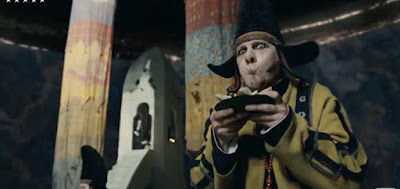
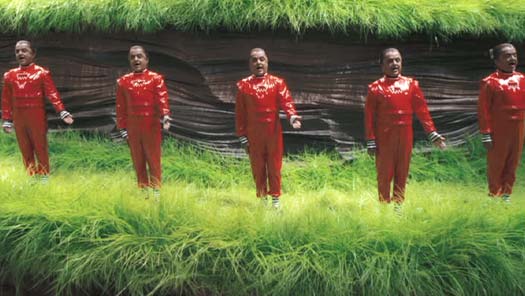
The Oompa-Loompas, all played by Deep Roy

Tuesday, May 3, 2022

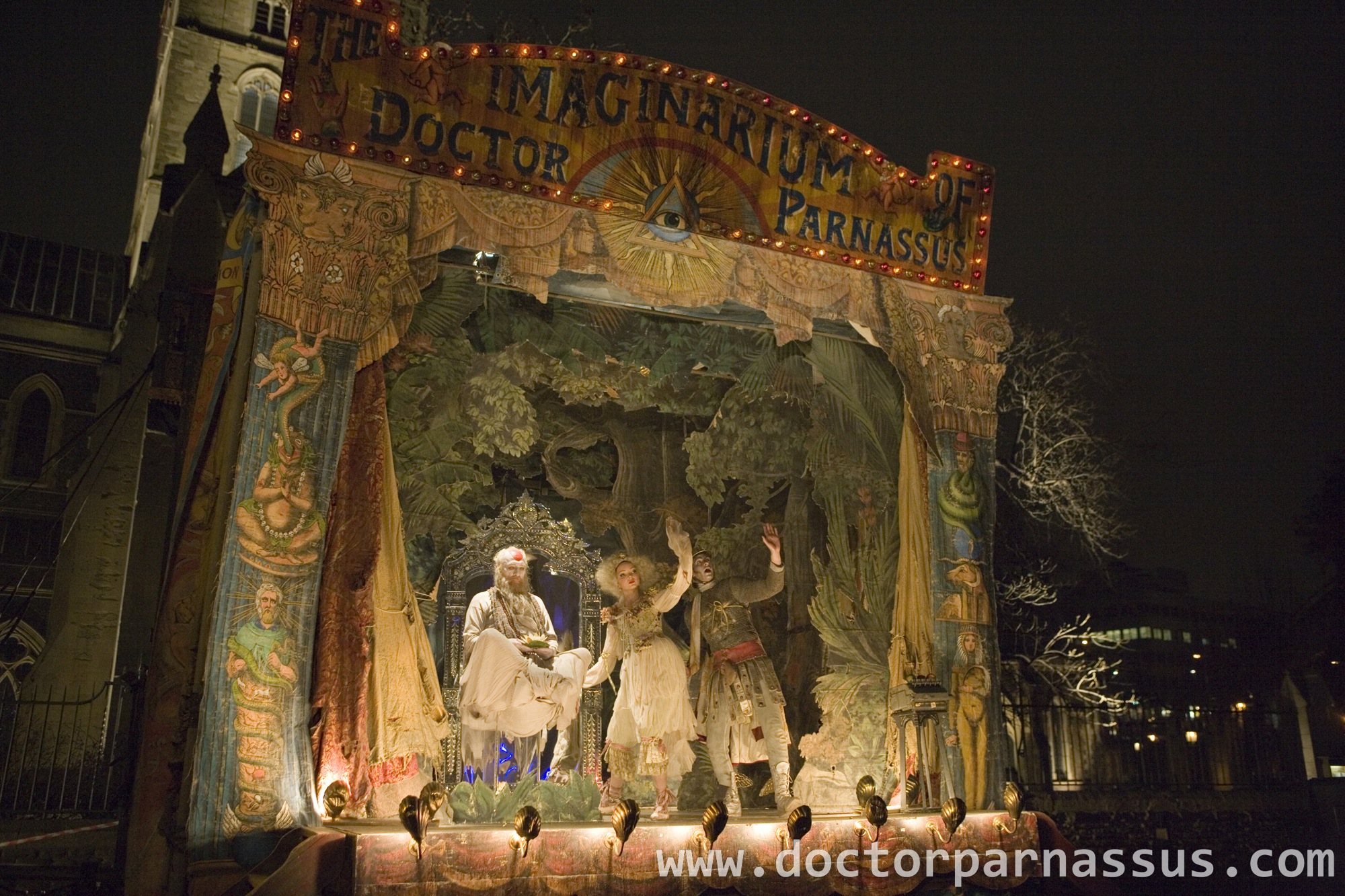
The Imaginarium of Dr. Parnassus

Written at the time of the film's release...
 
And...at the time Avatar had come out and marching towards becoming the "#1 Box Office Champion of All Time." I was underwhelmed by it—there's a link to my review buried down there if you even care. On the other hand, nobody was going to see this film, which, as you can tell if you read it, I found a shame. One can advocate, but people are going to see what they want—it's their money, after all—and it's all a part of the free market (or as some would label it, "cancel culture"—the Supreme Court seems to think what you do with your money is free speech, even if you're paying for it). But, just as I quixotically advocated for The Imaginarium of Dr. Parnassus, I would also urge people to see the wonderful Everything Everywhere All at Once, which, in a multi-plex of less imaginative offerings has far more bright ideas and film-making brio than the rest of the offerings in said multi-plex combined.

"Ladies and Gentlemen, This World is Full of Wonderment for Those with Eyes to See it."
 
 
One must consider the momentum of publicity when one talks about James Cameron's Avatar. The tsunami of NewsCorps force-fed publicity and societal group-think has done its job on the populace and the majority are of one mind. At this point, I've heard too many smart people saying that nobody will ever make movies the same way again, that it's ground-breaking, and (okay) the story isn't much, but the visuals are so spectacular it compensates for the stunning more-of-the-sameness of the blah-blah-blah.
 
You don't know what you're missing. There is more imagination, thought and, gosh, genuine wit going on in the "mirror" sequences of The Imaginarium of Dr. Parnassus than in anything in Avatar. Hell, even the non-CGI "live" sequences are amazing to look at.
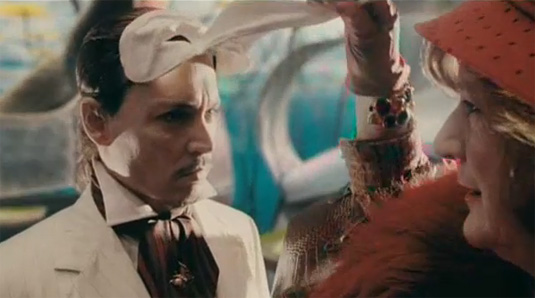
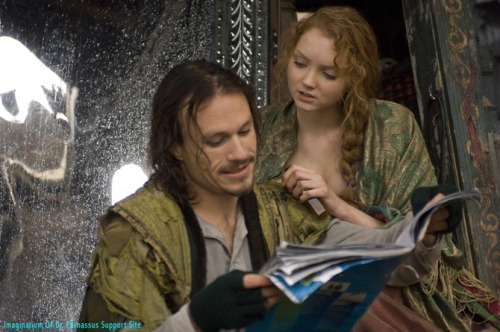
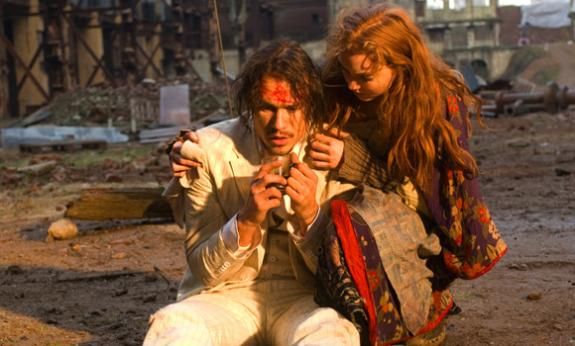
But...nobody's lining up to see Imaginarium. And that's a shame. For, if you want a fantasy film brimming with ideas, some of them quite provocative, it is this one, directed by that most snake-bit of directors, Terry Gilliam. It has been abundantly documented ad nauseum the tragic story of this film: how star Heath Ledger died in the middle of filming, and how a corps of Ledger-Gilliam supporters—Johnny Depp, Jude Law, and Colin Farrell—stepped up to play the visages of Ledger in the "Imaginarium" sequences (actually it seems perfectly natural the way Gilliam does it), but what isn't reported is that Gilliam was hit by a bus and broke his back during the filming.* Despite these alarming developments that would halt anyone other than a crazy "Monty Python" alum, the film is rich in detail, bursting with context, and doesn't have that "scrimping" footage-stretching feel that so many films-in-trouble give off.
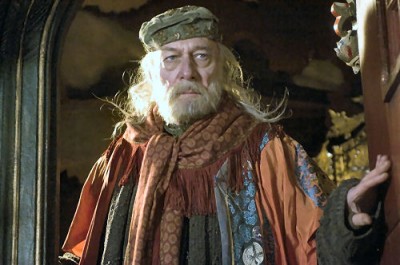
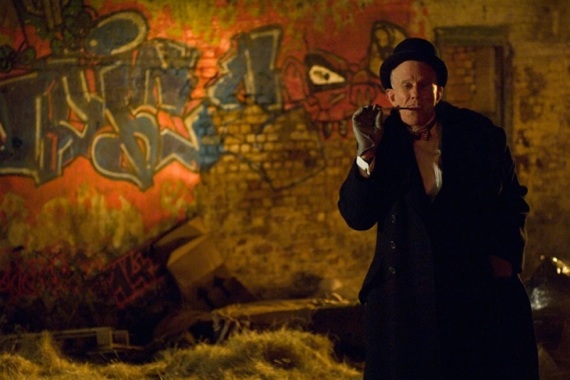
It's basically a fairy-story set in our world (or a delirium dream, not sure) where Dr. Parnassus (Christopher Plummer) is an immortal, who, with his rag-tag theater troupe—assistant Percey (Verne Troyer), barker Anton (Andrew Garfield) and daughter Valentina (model Lily Cole, whose alarming face is that of an alabaster porcelain doll)—travels in an out-sized Bergman-crossed-with-Joad horse-drawn wagon/convertible stage, enticing marks to enter his "Imaginarium," a mirror that sucks the hapless into Parnassus' bizarre mind-scapes, where they either live...or die. Parnassus, you see, has made a deal with the Devil. Inhabiting the old man's mind, as he does most of ours, is Mr. Nick (Tom Waits...of course), who has his own lures to the impure of heart. Enter one of Nick's speak-easy's or one-night-stand motels that stick out like sore toad-stools in the landscape and BOOM! the Devil takes your soul. And the bottom line of the Devil's deal is a certain number of souls before Valentina's sweet 16th birthday ("The age of consent" she trills) or her day of freedom becomes her day of imprisonment, as the Devil claims her for her own. A situation as Grimm...and familiar...as can be.
But Gilliam's Devil is in the details. The little band are aided in their quest by an amnesiac named Tony (Heath Ledger) whom they save and who, in turn, tries to save them, but whose past comes back to haunt and threaten them. Ledger is at his quick-silver best here, his accent wavering through several dialects, his eyes darting (all qualities picked up by his capable alter-ego's), for Tony is a chameleon, a huckster, the trickster of Myth—which Gilliam uses to savage satiric effect—and is a devil of his own, capable of destroying what he seeks to save. The battle between Good and Evil, Duty and Temptation turns complicated, and Parnassus must bargain again, at great sacrifice, to save that which he loves most, whether it's wished for or no.
The Devil's in the details for the look of the film, too. The "real-world" that the "Imaginarium" wagon trundles through is our world, but it's a world of extremes: back-alley garbage-lands with trash-fires that litter the scene (where the rag-tag group seems to fit most) and vast temples of commerce-malls, where Tony, with a marketer's zeal attempts to bring new customers. Each of these victims have their own "Imaginarium" realms: a wealthy dowager emerges into a vision of giant fashion-shoes, another a 2-D pop-up book forest. At one point, a falling "Imaginarium" customer takes an incredible fall, and Gilliam cuts to an improbable "Python" joke—a giant thumb-tack—sitting in the middle of nothingness (Gilliam mercifully, for the moment, has the hapless mark miss the point). And even outside the mirror, there are wonders of movie-making brio. In a scene where Percey walks away from Parnassus with his usual bluster, Gilliam shoots the diminutive Troyer at a heroic looking-up angle—the camera had to be scraping the street.
Now, a confession. It may sound like I'm gushing about Gilliam here, but I've always had a problem with his films: I fall asleep through them. It's not that I'm bored, but there's something about the richness of detail, the constant flow of new things to look at, and the murky lighting that induces narcolepsy in me. Before seeing a Gilliam film, I try to load up on coffee and sugar to get through it. I have no idea why this occurs (maybe it's
Rapid Eye Movement caused from the orbs darting about the screen), but it is inevitable—it occurred here through the Jude Law sequences
—but I managed to keep my eyes open throughout the whole thing this time.
If the film is flawed, it is that it tries to do too much. Even with a simple story, derived from old fairy-tale tropes, Gilliam again attempts to fit 10 pounds of story into a 5 pound film. Complications begin to pile up, revelations are delayed, little troubling details are revealed—there's a convenient pitch-pipe here—and everything becomes resolved in an ambiguous and hasty manner. Like most Gilliam films, a second viewing may make murky matters clearer. 
Plus, the overall story has a premise open to interpretation...
is it a "God versus Devil" story, or merely a fairy tale? The Christian Science Monitor's Peter Rainer thinks it may even be autobiographical with Parnassus a mask for Gilliam, "a mad dreamer forever riven between his imagination and the necessity to sell it."** And like his "Python" fraternity, there's a streak of dark running through this, as with all Gilliam films (remember how Kevin's parents are killed at the end of Time Bandits?), that may be off-putting for some viewers. Fans of Gilliam's films should expect it, but those who prefer their fantasy milkier may not like the taste of the dark stuff. Avatar is far less subtle, more a punch "on the nose," and although dark, gives the impression of a happy-ish ending.
So, it is doubly appropriate that Imaginarium brings me back to Avatar. For what is Gilliam's film but a re-working of the caution "You can fool some of the people all the time, and all the people some of the time," and that includes the Devil, but the Devil gets his own.
What's Gilliam's next movie? Well, he's determined to go back and film his
Don Quixote movie, come hell or high water.*** It is only appropriate for this most quixotic of film-makers, forever charging against the impossible odds at realizing the incredible visions wind-milling in his head.

* Here, the endlessly inventive Gilliam made lemonade—convincing the bus company to provide transport rather than face a law-suit, thus saving lots of production money. And, if all of this wasn't enough, producer William Vince died right after filming. The film is dedicated to Ledger and Vince, and credited as "A Film by Heath Ledger & Friends." 
 
** Nice observation, that. But Rainer also thinks Ledger looks "dispirited" in the film--well, yeah, the character's just gone through a painful transition, but Ledger's performance of it is never less than audacious and energetic. I'm guilty of it, too, but critics shouldn't try to read actor's minds--they're chameleons, after all, when they're doing it right, and we should speculate cautiously when ascribing motivations to surface appearances on film.
 
*** He did. The Man Who Killed Don Quixote was released in 2018.

Wednesday, April 27, 2022

Sweeney Todd: The Demon Barber of Fleet Street

Written at the time of the film's release...

"Tim Burton turns everything into 'Sweeney Todd,' so this should be a natural"
Ken Levine, Nov. 18 2007
 
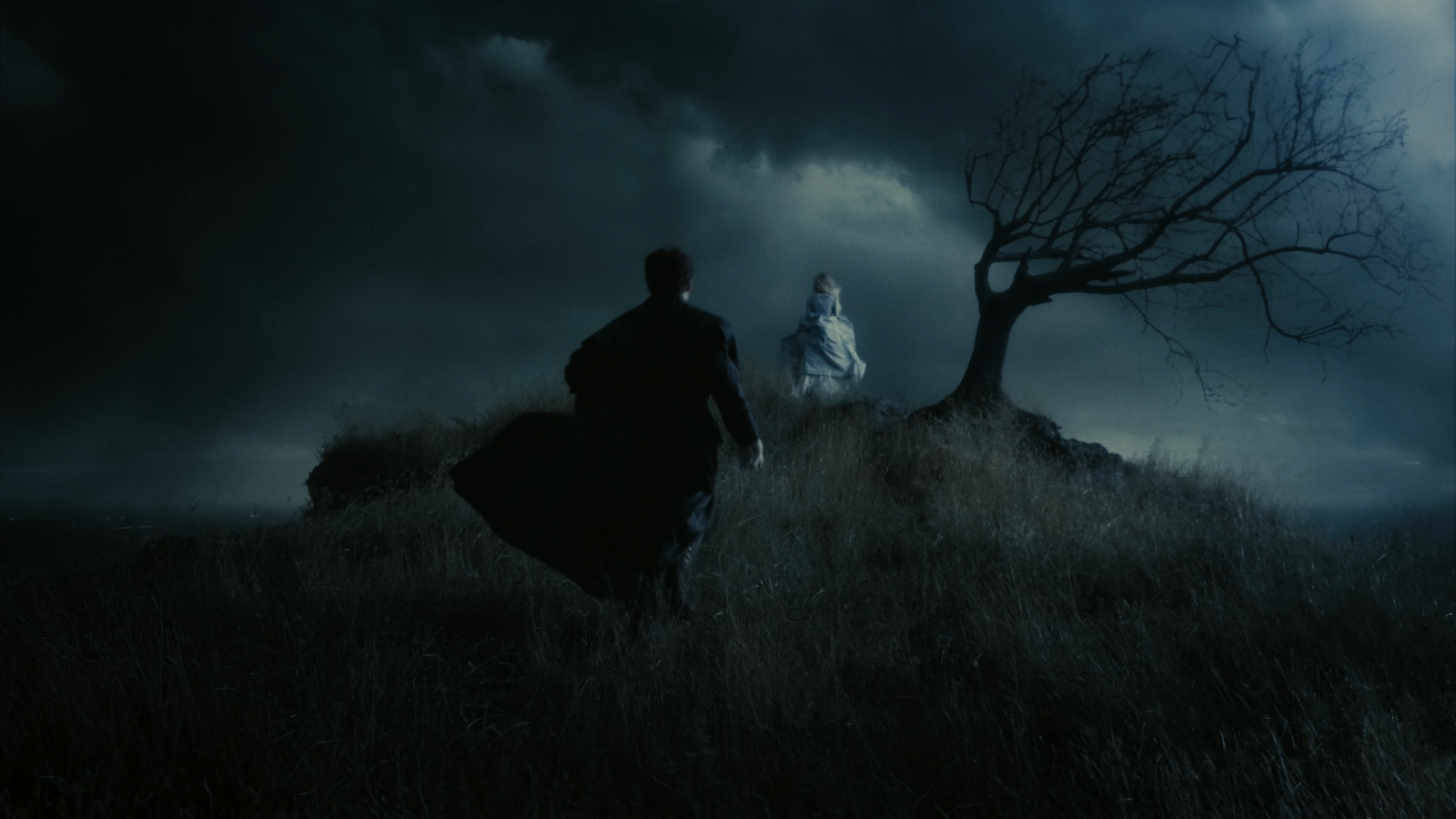
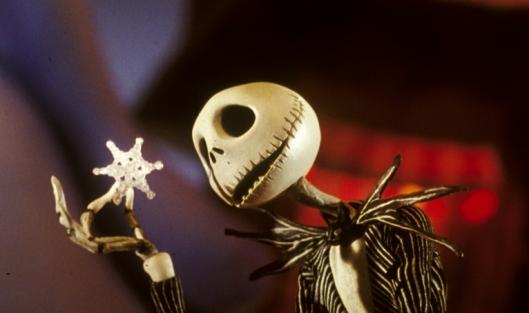
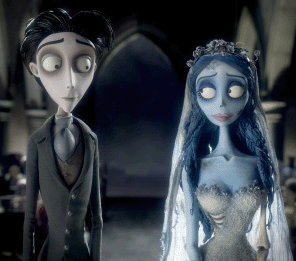
Truer words were never spoken. Tim Burton DOES turn everything into "Sweeney Todd" so there couldn't be a better pairing of director to subject matter. Burton has supervised two of the darkest animated musicals ever made (The Nightmare Before Christmas, and Corpse Bride) and turned them both into charming, imaginative films without once sugar-coating or denying the nightmarish imagery that unearthed those ideas. His favored composer, Danny Elfman (MIA from this film), is a disciple of Bernard Herrmann, whose work was the inspiration for the music lines of Stephen Sondheim's shock-opera. Burton's "usual suspects," Johnny Depp and Helena Bonham Carter , star and, though the major worry was whether they could carry their tunes, they both do exemplary jobs. Depp, especially, only achieves heights of performance in song, so interior is his Todd. And though Carter may not be quite as brassy so much as tremulous, she does more than hold her own with some of Sondheim's trickier tongue-twisters.
Where Burton's Sweeney Todd excels, though, is the design of the thing--from the Edward Gorey-ish 2-D titles to the Pieta-like coda, the film is a masterpiece of muted design and cinematography with a palette restricted to various shades of gray--the visual equivalent of music in minor chords.
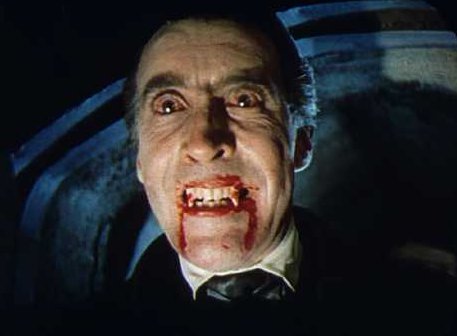
With one exception, of course. The appearance of blood is always startling. Every murder produces a blood so red that it nearly jumps out of the screen. And Burton can't resist taking the Hammer Films one better. When
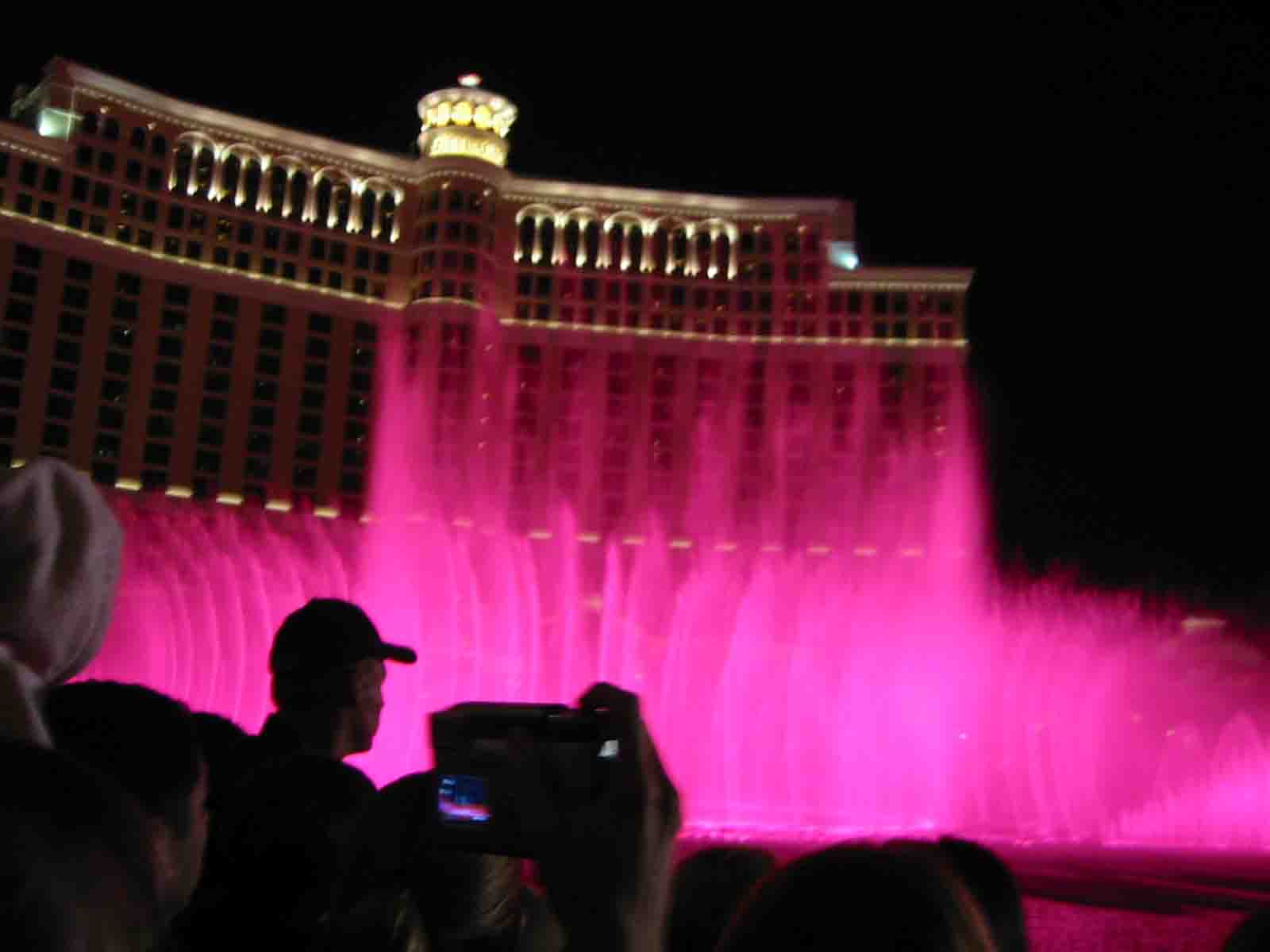
Sweeney Todd takes his razors to give his customers a once-over, there is no fanciful, theatrical whip-saw and it's over. Depp goes in and saws at the neck like he's cutting a thick roast, at which point the special-effects boys take over, producing arterial geysers of blood that spray--once, hitting the camera lens--in patterns that rival the fountains at the Bellagio. 
It's over-done, and in coagulating close-up as well, but given the interior-ness of
Sweeney Todd, it's about the only cathartic action in town. And the bodies really start piling up. I'm sure Sondheim was attracted to the subject matter of a swinish London so mired in nastiness, it more than figuratively begins to feed on its own, and the themes of a transformed man and his insatiable and destructive quest for vengeance was what drove Burton, but the gleefully torrential blood-shedding exposes the adolescent in Burton's tendencies--it's his darkest, grisliest film since Sleepy Hollow--and one wishes to see more of the Burton who could turn out a film like Big Fish. 


Tuesday, April 26, 2022

Benny and Joon

So...I guess there's some trial going on?

Since so many people on the inter-webs are trying to make bank on it by "regurginging" it, I thought I'd do the same thing...but in a nice way. I'm transferring a couple of Johnny Depp movies from my old site to this site (where they'll seem like new content). I have no axe to grind. The reviews are rather complimentary to Mr. Depp, even if they do contrast his light and dark sides. I'd have done the same for Amber Heard, but...I don't have any old reviews of her stuff. Lest I be accused of bias or anything (although I don't think any uber-fans can sign a petition to kick me off my own blog...I think).
 
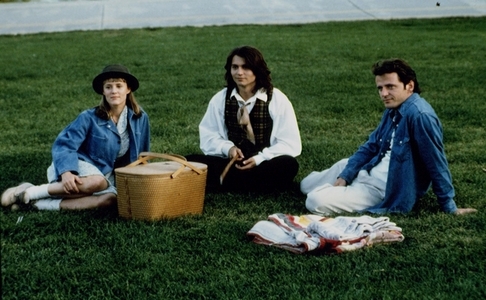
Benny and Joon (Jeremiah S. Chechik, 1993) When examining the career of Johnny Depp, one looks to the blockbusters: the Pirates movies, the many Tim Burton collaborations. But then there are the films that fall through the cracks—not unlike the characters in this film. For anyone doubting Depp's ability to not depend on his looks and create a compelling character, Benny and Joon is a revelation.
 
Filmed in Spokane, Washinton, it tells the story of of an auto mechanic, the 1/3 eponymous Benny (Aidan Quinn) taking care of his 1/3 eponymous but schizophrenic sister, Juniper (Mary Stuart Masterson). He's torn between his commitment to Joon and his desire to live a life, free of her responsibility. But, his sense of duty and brotherly protectiveness trap him into doing nothing else, even though he might be inadequate at the care-taking task.
By luck of the draw, Sam (Depp) drops into their lives...literally; Joon wins him in a poker game. That plot development prat-falls Benny and Joon directly into "twee-ville," but Sam's addition to the cast arrives just in time to avoid it. Sam is a movie-freak, who knows every movie—the weirder the better—and models himself as the love-child of Buster Keaton and The Little Tramp. Eccentric, scruffy, but in a non-threatening way, Depp's head-tilting performance is just the right fizz to put in this Shirley Temple of a movie. You wonder what he's going to do next, and Depp is given enough ground to deliver a number of mute routines that are laugh-out-loud charming.
But, there are more joys to be had with guest-turns by
Julianne Moore, William H. Macy, CCH Pounder, Oliver Platt, and Dan Hedaya—the kind of movie where your attention is slapped every few minutes with a "They're in this?" It might get a little heavy for kids in the third act—"everybody's MAD at each other!"—but there's a satisfying resolve. And if you have a sister or daughter not in love with Johnny Depp yet, this one will do it.
Benny and Joon
is a Chick-Flick that guys can enjoy.
 
2022 Update: I still think Benny and Joon is an enjoyable film—it's enough to make you want to forget his film of The Avengers (almost—he's been doing a LOT of TV since then). I still have the creepy feeling that it's a dumbed-down, sugar-sprinkled look at mental illness, The Child's Guide to Schizophrenia. That's something that will help NO ONE. It does have a couple of good lessons about being a caretaker, though—don't be so regimented and go with the flow because it's easier on the caretaker and caretakee. It's a marathon, a long game, and minor things are spilled milk in the long run. That's something that needs to be said. And Benny and Joon says it very specifically, especially if you think the movie is less about Mary Stuart Masterson (please come back, we miss you) and more about Aidan Quinn.


Friday, October 23, 2020

Dark Shadows (2012)

Written at the time of the film's bloody resurrection...

Camping Vamps and Risible Damp
or
"What Strange Terrain is This?"


"Dark Shadows" has been a cult favorite for Baby-Boomers for more than 40 years (ouch!), long before it was fashionable to have vampires as fodder for young adults. The ABC soap opera ran for several seasons of afternoons replacing the standard plot-lines of cheating spouses and long-lost family secrets with long-buried family relatives—that often didn't stay buried—and a full range of gothic ghoulery that plundered every horror story in the crypt-library, including vampires, werewolves, Frankenstein-ish monsters, time-travel, parallel dimensions and ghost stories. Why, they even robbed from "The Crucible" and "The Turn of the Screw" and got people interested in the I-Ching, for howling out loud. In fact, I kept expecting the fern in their front hallway to turn into Chthulu!
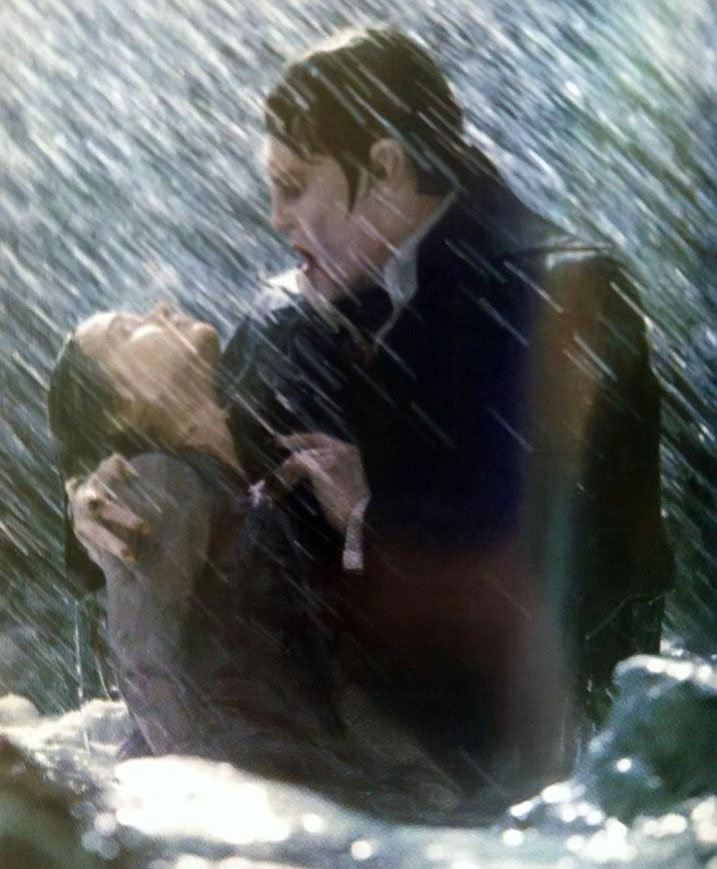
It was a TV habit of mine when I was a kid, timed perfectly to be the after-school tonic for a parochial school education, an occult chaser for the catechism, all those crucifixes I was surrounded by during the day being used for other purposes. It was also a fixation for Tim Burton and Johnny Depp, Burton digging the horror genre and Depp grooving on the character of Barnabas Collins (played by the late—or is he?—Jonathan Frid, who puts in a very brief cameo here along with a couple of other cast-mates), the reluctant vampire who pursued hearts, rather than the blood that pumped through them. The result of their dual obsessions is this version of
Dark Shadows, produced by Depp, directed by Burton.
"It is said that blood is thicker than water," narrates Barnabas Collins (Depp), over the strains of Robert Colbert's alto flute-through-echoplex composition "The Secret Room" from the original series. "It binds us, confines us, curses us." For a moment, things are fairly serious as the 18th century story of young Collins scion Barnabas is unearthed, with his spurning of the witch Angelique Bouchard (Eva Green) and her subsequent dark revenge, killing the Collins elders, forcing the suicide of Barnabas' love Josette and turning him into an eternally cursed vampire. She subsequently sets the townsfolk on the monster who chain him into a coffin and bury him for all eternity.

Depp and Burton get it right at the beginning: Barnabas learns his fate.
The worst-laid plans of mages and men...Eternity is cut short around 1972 as the construction of a new McDonald's in Collinswood unearths Barnabas and he lays waste to a construction crew (who must have been getting overtime working at night!) with an explanatory "You have no idea how thirsty I am!" 
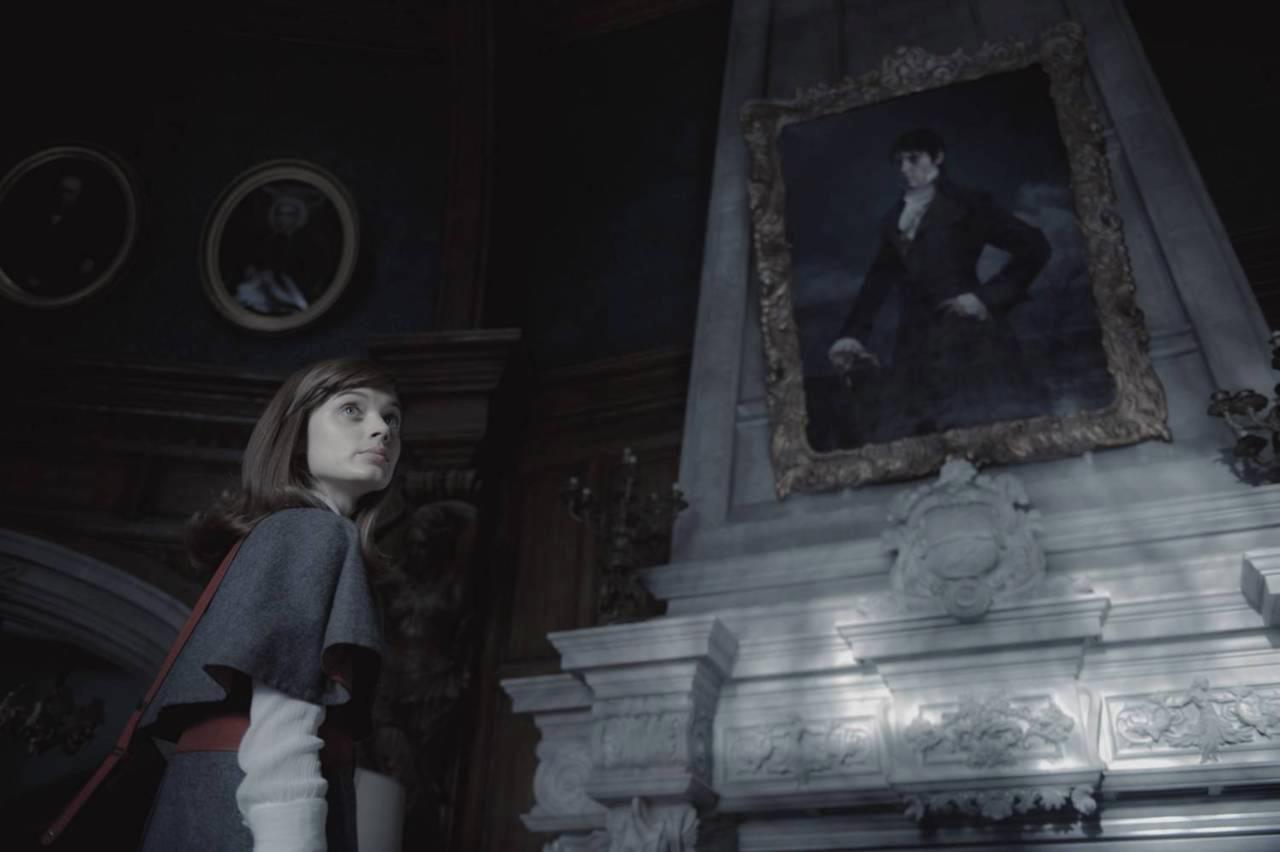
On a parallel course, Maggie Evans (Bella Heathcote, the latest in a long line of Burton ingenues with thin necks topped by big heads with huge eyes and "big" hair) is on a train to Collinswood where she has applied for a job as a governess to young David Collins (Gulliver McGrath), who is having psychological issues from the disappearance of his mother at sea. Abruptly, she decides to change her name to Victoria Winters, indicating a past she wants to run away from, as The Moody Blues tune "Knights in White Satin" burbles over the soundtrack. Hey, Burton may be onto something here. The combining of '70's kitsch and some of its more mordant songs with the gothic mood of "Dark Shadows" works well, setting the tone of the series and the morbid fascination my generation had with it. Can "Don't Fear the Reaper" be far behind?
Then, things get a little weird. She's picked up by a VW van of hippies, and there's some stoned comedy about how they're so wasted, and Vicky is cool, man, and it's easy laughs and you wish it was more clever. It becomes apparent quickly that Burton will be playing this for laughs, which is fine (he always does to a certain extent), but the original material is already so melodramatic and over-the-top that the humor undercuts the effectiveness of what drama there is that ekes through the dramatic stares and the vamping poses. "Dark Shadows" was always "camp" entertainment in the broad sense, but to broaden it even further nullifies whatever chills and thrills can be drained from it. This is why Frid's performance on the show was such an anchor for it—he played it absolutely straight, and in fact, ramrod-stiff; you didn't make fun of Barnabas for fear of his wrath—or his breaking down in tears.
Depp's Barnabas is tortured, of course, but risibly so (in a performance that's a combination of Frid's formality, some Max Schreck thrown in, and a bit of Ed Wood cast-mate Martin Landau's incarnation of Bela Lugosi). And there's the "otherness" factor that Depp brings to so many of his roles, as if he's in a different movie from everybody else—he walks through it, and everybody reacts, usually comedically and derisively. In part, that's the point: it ties in with Burton's feelings growing up as being an outsider-geek, looking on at the rest of the world that he found strange, while it found him odd (and there's a mirroring through-line of humor throughout the film of Barnabas, out of his time, observing to some horror the eccentricities of 1970's life, that reflects it).
*
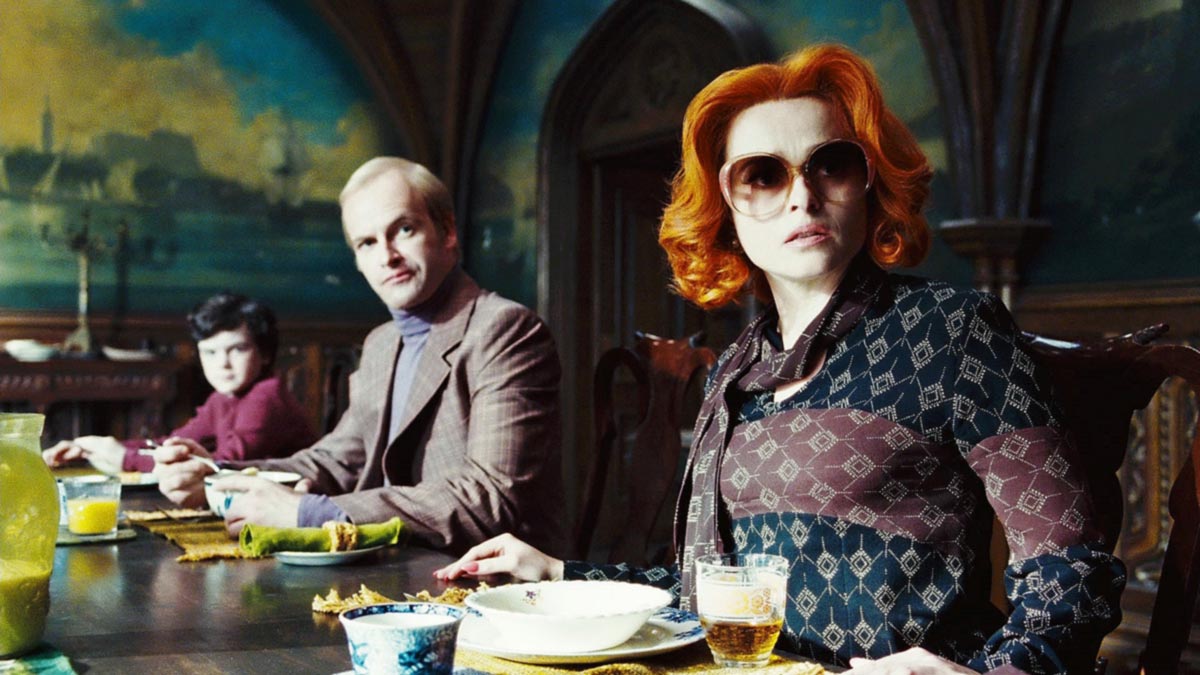
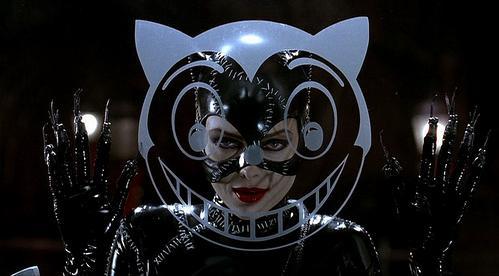
But Collinwood's odd family doesn't bat an eye when Victoria shows up and doesn't react to the disrepair of the gothic Collinwood mansion or to David's assertion that he speaks to his dead mother, and she follows quite readily when the ghost of Josette appears floating down the hallways, whispering "He's coming..." Barnabas' arrival, in Victorian array and the palest of skin, and the oddest of manners only brings up temporary suspicions, but the matriarch of the house (Michelle Pfeiffer, who played Burton's Catwoman) readily accepts him as family, even after revealing his vampirism. The cast is uniformly fine, gamely being archly camp throughout, but the one performer who's best at it is Green, who clearly relishes the villainess role and has fun with it, taking it in some very odd, even poignant places.
It looks great. Burton's films always do, with a superb design sense and his knack for picking terrific, seemingly impossible angles to shoot from. But, like a lot of Burton films, it tends to fall apart in story, snatching hasty explanations and Deus ex machina to get out of trouble, or to provide the director with a bizarre concept that may seem right in retrospective sub-context, but that comes out of nowhere, randomly and jarringly. One has to stop, back-track, only to realize that, no, this has never been mentioned before, and why now?
One suspects it's a whim, a passing "wouldn't-it-be-crazy-if" thought passed between Depp and Burton as they geek out, rocking in their corners, internal logic no longer mattering as much as a superficial entertaining notion. As such, Dark Shadows accomplished their goals. Yeah, it's entertaining, but highly insubstantial, a mere spirit of a movie.

"Yes, yes" I hear you cry. "But, don't you think it was better than the OLD "Dark Shadows"? I mean, have you seen it lately?"

In truth, I have.
My frustration with Burton is not that he desecrated the memory of a classic television show—even with the air fragrant with the nostalgic scent of Mom's Apple Pie, I'm not convinced that "Dark Shadows" was anything more than a quickly put-together variation of soap programming with elements of gothic romance/horror tossed onto it. No, my problem with Burton's version is that he didn't try to make it better, but chose to just mock the absurdity of it. Not much sticking your neck out there, even for a vampire movie. 

But, then, maybe he didn't try because he already saw what happened when somebody did try to do it semi-seriously. That someone being show creator Dan Curtis.

House of Dark Shadows
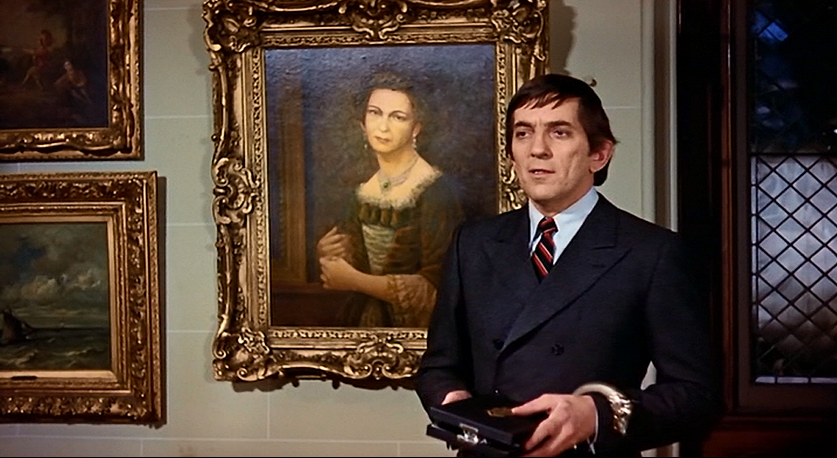
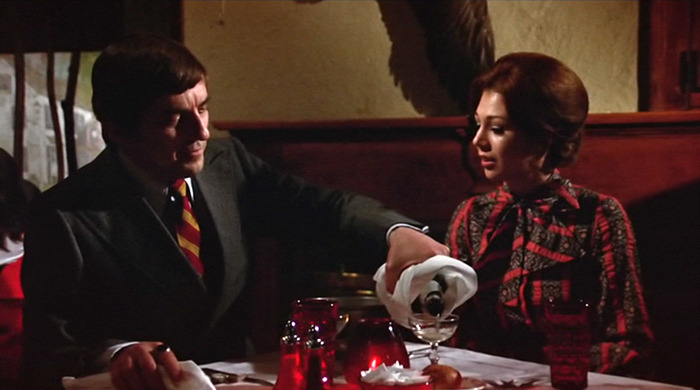
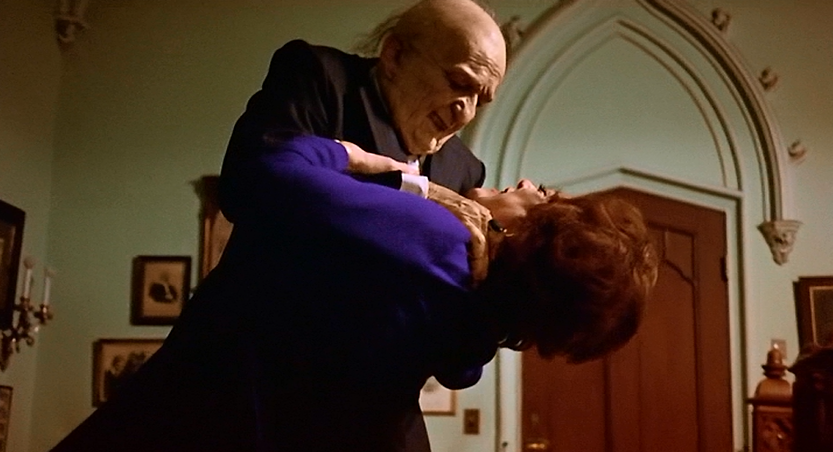
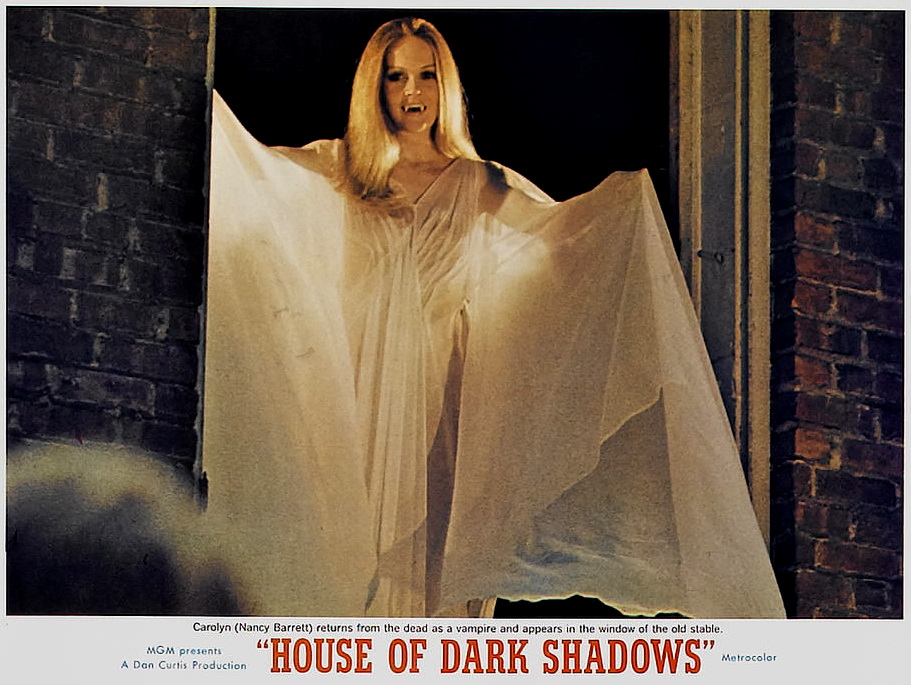
(Dan Curtis, 1970) Filmed while the soap-opera was still running (and so a lot of cast-members "disappeared" for 29 days from the taping). They dragged out the "big-guns" and did a 2 hour version of the "Barnabas Arrives at Collinwood" storyline with Jonathan Frid's character withheld from sight—except for his black onyx ringed hand—until he shows up as the "lost Collins cousin from England." He meets nanny Maggie Evans (Katheryn Leigh Scott), who bears an uncanny resemblance to his lost-love Josette, Dr. Julia Hoffman's (Grayson Hall) attempts at curing him, then, in a fit of jealousy, reneging, turning him into his aged 200 year old self (make-up by the amazing Dick Smith), and a vampire-hunt that ends in a lot of Collins-family vampires. The first is Carolyn Stoddard (Nancy Barrett) who's blond, pretty, and looks good in the Hammer label of diaphanous lingerie, so a lot of screen-time is given to her—poster-acreage, too—even though Barrett was not the most skilled of actresses. The soap languished through repeated exposition and lingering looks in its story-line Monday through Thursdays and put all the "good stuff" on cliffhanger Fridays, and so, compressing it all in one movie makes the movie feel camp and hysterical. Still, once the movie gets going, Curtis starts to be a bit more free with the camera and compositions—it's like half-way through he realized he wasn't dealing with the old studio RCA TK46's anymore and could do something beyond waist-level. Still, in such a quick time-frame, the story doesn't coagulate too well and makes you realize that long-form eased the mis-match of gothic romance and horror.

Night of Dark Shadows
(Dan Curtis 1971) House of Dark Shadows made money, enough to green-light a sequel and, as the television series had been canceled, a newly unencumbered Curtis started on a direct sequel to the earlier film. Jonathan Frid, worried about the curse of type-casting, bowed out of participating. But, the story of Angelique Bouchard, witch and  former lover of young Barnabas, had never been told, so Curtis and series writer Sam Hall cobbled together a story of a young couple (David Selby and Kate Jackson) who inherit the Collinwood estate, only for the man to be haunted, then possessed, by the spirit of his Collins ancestor, who had an affair with his brothers' wife, Angelique (Lara Parker), resulting in her being hung as a witch, and him entombed with her. A somewhat similar story had been used in the series involving Selby as Quentin Collins, but the Angelique angle was new. Returning were John Karlen and Nancy Barrett, as well as Grayson Hall (the writer's wife) and Thayer David.

Anyone who sees Night of Dark Shadows will understandably come away from it wondering what they just saw, and if they'd missed something. They had. The film, was originally 2 hours long, but M-G-M thought that was too long for a movie they'd planned to put as the B-movie in double-bills (No, really, they used to do that), and so they insisted that Curtis cut half-an-hour out of the film—and he had 24 hours to do it. With such hack-work, any slow build-up was excised, and so Night comes off as poorly as a U.S. released foreign film that only includes highlights...and a bit of a muddle. 

Oh...and studios still do that.

* This also sets up a series of sight-gags that are somewhat clever, as Barnabas never seems to be able to find appropriate sleeping arrangements at Collinwood.