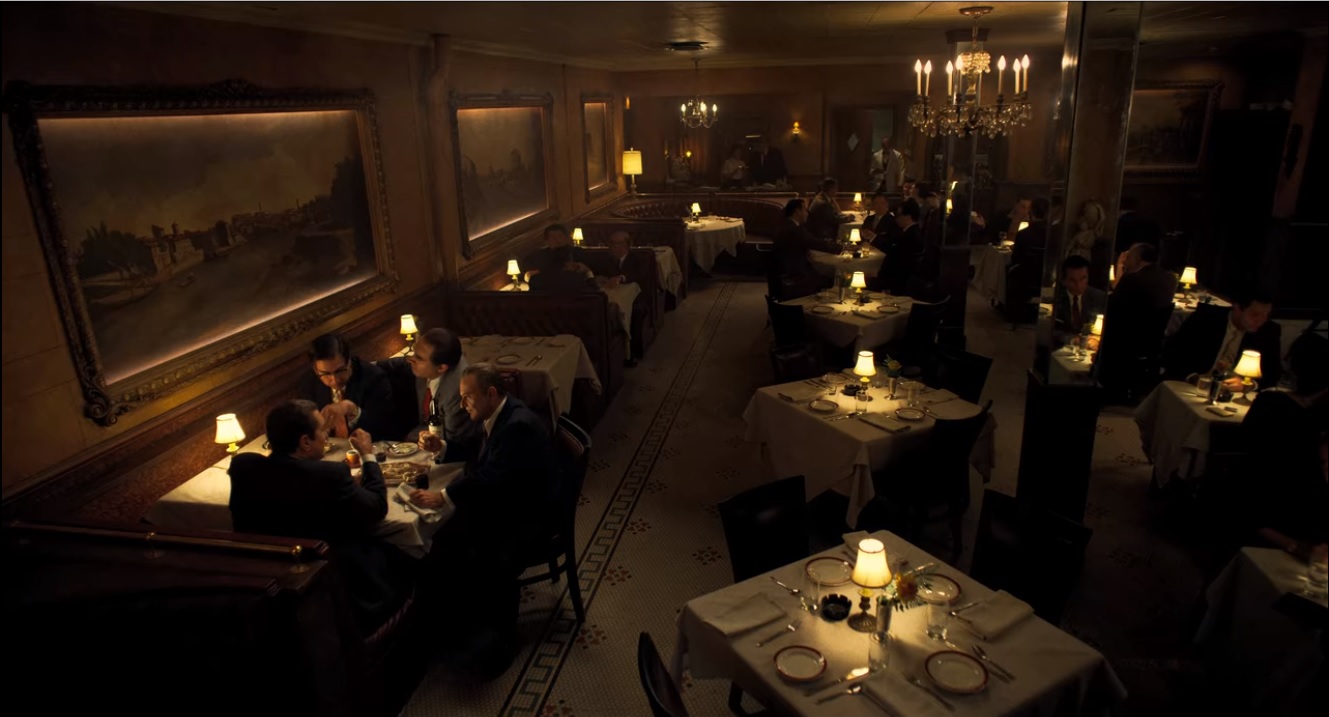
"To sin by silence when we should protest makes cowards of men."
At the time of this film's release, Stone's movie-collage of Kennedy assassination conspiracy theories was more than controversial, it was inflammatory. Experts in "the field" criticized it for playing fast and loose with facts and some went so far as to call it dangerous in its implications. There was so much flummery going on, some of which contradicted other speculations of the film, that it was considered a new form of propaganda, where new possibilities popped up before previous assertions were followed up on, that one was simply overwhelmed with the slew of speculations so that, finally, nothing was ever concluded. There were no answers, merely a mountain of questions, all of them vague and unsubstantiated. Stone was merely throwing stuff up at the screen and seeing if anything stuck. Stone answered these charges by saying that he was making a new kind of film, and that he was trying to build a new narrative for the Kennedy assassination, not provide a definitive answer, but to ask questions, merely. The evidence of film bears it out—at least at first glance—as it's so filled with theories and goes down so many rabbit-holes, unchecked and unverified (Stone has stated he was using the films Rashomon and Z as his models). But, one only has to see how Stone starts the movie to know where he thinks the center of the conspiracy lies. After that quote by author and spiritualist Ella Wheeler Wilcox, he introduces Kennedy's predecessor, Dwight Eisenhower's final address as President, in which he warns of "the military-industrial complex". Like so many openings of so many movies, it is the director's thesis statement, providing that one bit of detail before launching into a history of Kennedy's recent history (narrated by Martin Sheen, who has played both John and Robert Kennedy in the past).


"I'm ashamed to be an American today."
The film proper begins the day of Kennedy's assassination as New Orleans District Attorney Jim Garrison (Kevin Costner, who had, in 1998's Bull Durham, delivered a speech in which his character states "I believe that Lee Harvey Oswald acted alone.") sees the assassination coverage on television initially in his office, then watches mournfully from a nearby bar where the local booze-hounds are free to weep in their beers or grunt their approval of the President's death. At the same point he cuts away to an argument between two men in the bar, New Orleans private detective Guy Bannister (Edward Asner) and an operative Jack Wheeler (Jack Lemmon),* which leads to a fight in Bannister's office when Martin brings up past suspicious activity. Meanwhile, Garrison starts looking into local links to the assassination and brings in pilot David Ferrie (Joe Pesci), who might have had links with Oswald. And despite Ferrie being sketchy and giving conflicting stories, they let him go.

"It's all broken down, spread around, you read it and the point gets lost."
It is only after the Warren Commission Report on the assassination is released that Garrison picks up the threads of the case again. A chance airplane encounter with a Senator (Walter Matthau), whose skepticism —"That dog don't hunt!"—about the report sparks Garrison to again call in Ferrie, but also Martin, who had seen Lee Harvey Oswald in Bannister's office and follow up leads not explored after the initial inquiry was dropped. One name keeps popping up—"Clay Bertrand" but nobody knows who that is. Turns out that "Bertrand" is an alias of Clay Shaw (Tommy Lee Jones), well known in New Orleans business circles as a wealthy benefactor and who had connections with Ferrie and thus Oswald. Garrison and his team have Shaw picked up for arrest despite their inquiries producing only denials.

"Oh, you are so naive"
One aspect of the film that is both a high achievement and problematic is the way that it mixes archive footage with deftly re-created new footage in such a way that it is nearly impossible to determine one from the other. Stone and his cinematographer, the wizardly Robert Richardson, mix and match formats, color and black-and-white, 35mm and 16mm, and all sorts of film stocks to create and re-create source footage and the results are nearly indistinguishable, especially the way they are cross-cut between each other. It lends the air of verisimilitude—and certainly adds a dynamic tension between the transitions—but one is never sure if one should believe what one is seeing. Is that press footage from the day of the shooting or is Stone just fabricating something he wants you to see? It's troubling. There's a fine line between making it look right and obfuscation and given that film, by its very nature, is manipulative—even with documentaries—the level of distrust this attention to detail evokes is extremely high. What are we to believe? The answer is whatever the director wants you to believe. And given Richardson's deserving Oscar-winning work on this film to match the look, the grain and the confusion of archive footage, some of which might even be familiar, distinguishing the true from forgery is almost impossible. And audiences become susceptible.


"And the truth is on your side, bubba."
Stone makes his own case on what happened in a middle sequence where Garrison goes to Washington D.C. to meet an informant, a former military official who only identifies himself as "X" (Donald Sutherland, who's brilliant in a role of pure exposition). That Garrison would fly to D.C. to meet an anonymous source strains credulity (he surely must know his name before agreeing to meet, but then, the reality is Garrison never met this character, communicating with him in un-cinematic exchanges of letters).


The film's last hour is that most deadly of momentum killers, a trial, with Exhibit A being a long speech by one character...in this case Garrison.* That speech wouldn't stand in a court of law and it isn't made clear if it's a closing argument (that barely mentions the defendant Clay Shaw) or a part of Garrison's evidentiary overview (it starts with objections from the defense and then they are never heard from again), but Stone is dramatically stretching truth...and credulity...to make his point. And it goes on forever, like the stultifying final speech in court in Ayn Rand's The Fountainhead. It's only Stone's direction, Richardson's chameleon cinematography and Joe Hutshing and Pietro Scalia's quick-silver editing that keeps it interesting as film. And almost impossible to make counter-arguments against the assertions, they come so fast and furiously.


Remember, "what's past is prologue."
 But, the film did have an impact. 99% of the documents that were sealed after the assassination have been brought to light, particularly to the issues raised in the movie (The President John F. Kennedy Assassination Records Collection Act of 1992 was passed in 1992, the year after the movie's release). Although the stated goal of the act was to release all documents by October 2017, some still have not been released. Trump went back on a promise to release them pushing it back to when he was out of office, then Biden delayed them (COVID...for some reason) then released some in 2022 and 2023.** We're at 99% except for those that would cause "identifiable harm... to the military, defense, intelligence operations,
law enforcement, or conduct of foreign relations... of such gravity
that it outweighs the public interest in disclosure."
But, the film did have an impact. 99% of the documents that were sealed after the assassination have been brought to light, particularly to the issues raised in the movie (The President John F. Kennedy Assassination Records Collection Act of 1992 was passed in 1992, the year after the movie's release). Although the stated goal of the act was to release all documents by October 2017, some still have not been released. Trump went back on a promise to release them pushing it back to when he was out of office, then Biden delayed them (COVID...for some reason) then released some in 2022 and 2023.** We're at 99% except for those that would cause "identifiable harm... to the military, defense, intelligence operations,
law enforcement, or conduct of foreign relations... of such gravity
that it outweighs the public interest in disclosure."

 Not that that will make a difference. We've reached the Age of Un-reason where nobody believes their own eyes anymore. If everything was released, unredacted and transparent, it is doubtful that the truth would be accepted...especially by those who make their livings as professional doubters and skeptics.


Same old excuse. "It'll keep us from doing our jobs" they say, even if those jobs have dramatically changed in 60 years. But, if JFK is worth anything, it is for its shaming of our government agencies' lack of transparency to commit them to act in that 1992 law. Six decades is two generations of secrets. Too many people and too many prominent people have expressed their doubts to not have as many answers as possible to wash away as many questions as possible.

The true conspiracy has always been theirs. As in the mantra of All the President's Men, one merely has to "follow the money."


"It's up to you."
* The film is awash with cameo's and "guest-stars" in what Stone intended to be like the roster of The Longest Day, but it feels more like the many odd cameos in The Greatest Story Ever Told, that seem ill-though-out and are actually distracting and pull you right out of the movie. John Candy?
** This is just part of Garrison's summation from the film:
The Warren Commission thought they had an open-and-shut case. Three
bullets, one assassin. But two unpredictable things happened that day
that made it virtually impossible. One, the eight-millimeter home movie
taken by Abraham Zapruder while standing by the grassy knoll. Two, the
third wounded man, James Tague, who was knicked by a fragment, standing
near the triple underpass. The time frame, five point six seconds,
determined by the Zapruder film, left no possibility of a fourth shot.
So the shot or fragment that left a superficial wound on Tague's cheek
had to come from the three shots fired from the sixth floor depository.
That leaves just two bullets. And we know one of them was the fatal head
shot that killed Kennedy. So now a single bullet remains. A single
bullet now has to account for the remaining seven wounds in Kennedy and
Connelly. But rather than admit to a conspiracy or investigate further,
the Warren Commission chose to endorse the theory put forth by an
ambitious junior counselor, Arlen Spector, one of the grossest lies ever
forced on the American people. We've come to know it as the "Magic
Bullet Theory." This single-bullet explanation is the foundation of the
Warren Commission's claim of a lone assassin. Once you conclude the
magic bullet could not create all seven of those wounds, you'd have to
conclude that there was a fourth shot and a second rifle. And if there
was a second rifleman, then by definition, there had to be a conspiracy.

*** Whether Trump will release any more documents in his next term one can only speculate. I don't believe a word the man says so even if he says he will, I'd be looking at updates on the website: https://www.archives.gov/research/jfk