Showing posts with label Mercedes McCambridge. Show all posts

Friday, November 16, 2018

The Other Side of the Wind

Our Revels Now Have Ended
or
Tonight is for the Freako's and the Snoops, Lady

There is a story, but it might be apocryphal. What is definitely true is that Steven Spielberg bought the "Rosebud" sled from Citizen Kane for $60,5000. What is also true is that Orson Welles was a master film-maker always looking for money. It is said that Spielberg's purchase galled Welles that someone would buy memorabilia from one of his films, but not invest in a new one, but not enough that he couldn't strike back: "But" I said "Steven, we burned the sled!"*

Enough re-hashing of the process that brought about the release of The Other Side of the Wind—the film Orson Welles was working on since his return to Hollywood in 1970. The story's been told enough and we now have the product streaming on Netflix (with a limited release in theaters), so it's now possible to see what all the fuss—and the wait—was about.

The Other Side of the Wind is the story of the last day—July 2nd to be exact—in the life of a well-regarded film director, J.J. "Jake" Hannaford (John Huston), which takes place at a 70th birthday party for him, while he is filming—and trying to save—his current production, entitled "The Other Side of the Wind", an attempt to make a "with-it" youth film as his comeback.

Oh, very. It's the sickest story I've ever thought up in my life.

If Welles had completed his film as intended, it would have been celebrated for the radical way it was filmed and edited. Almost defying continuity issues, it was filmed in a variety of formats—35 mm color for Jake's film-in-progress, and a combination of color and black-and-white in different formats and grains for the party sequences—the conceit being that it's all "found footage" from different sources documenting the party for Jake—and for promoting the film.
For the most part, it works, although there are some intimate conversations that seem devoid of cameras in the vicinity that throws some cold water on the concept, and the film (as is) doesn't take much advantage of reactions to the cameras as an invasion—perhaps it can be explained away as ego by the participants, but you'd think some of them would be careful of what they're saying...or doing when they know they're being watched...and recorded.
The "found footage" is just one aspect of the film, its spine, as it were. The fact of the movie is that it is full-to-bursting with plot, sub-plot, and sub-text, so that it must have seemed a daunting task to corral so much...everything. It is chaos in the making and is at its best when it flies by in Welles' quick (even by today's standards) editing of the sequences. There are other segments where the cutting is respectful, even gingerly, to make sure that points are made. Whether this is part of Welles' blue-print or of the subsequent editors, one shouldn't speculate. One can't really know.
According to a young American critic, one of the great discoveries of our age is the value of boredom as an artistic subject. If that is so, Antonioni deserves to be counted as a pioneer and founding father. His movies are perfect backgrounds for fashion models. Maybe there aren’t backgrounds that good in Vogue, but there ought to be. They ought to get Antonioni to design them.
It's even difficult to decide what to focus on in one's appraisal of it: should one make more of its film-within-a-film, which Welles was using to parody the formless art-house flicks of the late 1960's-early 1970's? Dialogue-less (except for overheard direction by Hannaford via bullhorn) and nearly plot-less, and completely voyeuristic, it follows a woman of supposedly Native American descent (Oja Kodar playing "The Actress") as she leaves a steam-room, is seen by a guy on a motorcycle (Bob Random, playing actor "John Dale") and is followed into a discotheque, then into a car that turns into an erotic episode and finally follows the two onto an abandoned film-set. 
"The movie" is noticeable for its gratuitous nudity, mostly of "The Actress," but also of the "Dale" character—Welles did much the same thing with Kodar on F for Fake, his camera ogling his longtime companion, who was lover, co-conspirator, and muse (Welles gives her a co-screenwriting credit on The Other Side of the Wind)—and as much as Kodar's nudity is a reflection of Welles' fixation—and love—one must also consider the "Dale" character's nudity as also a fixation of sorts, but of Welles' subject, the director Hannaford, who "rescued" his star from the ocean and decided to make him a star of his film...as he has (we learn) with many other male actors...all of whom have decided to not show up for Hannaford's tribute.
He is all the big, macho, hairy-chested fellas...basically Ford, Huston, maybe with some Hemingway thrown in...it's all this big macho thing, you know, which I'm so fed up with, you know. Although I love it, I'm very ambivalent about it, you know, I love Ford and all, but I also think it's a lot of shit that he hit (Fonda)and I love Hemingway and I think it's a lot of shit. It's all that (laughs)You know. And I love this man.And I hate him. And that's what I think is so great about this story—I want to love him and hate him and show him in all that thing.
Hannaford's character is commented on a lot in reviews as auto-biographical (and Hannaford's professional circumstances can be compared to Welles), but he's really a combination, a polyglot of different people—as Charles Foster Kane was, really—of different artists with a macho bent: Hemingway, certainly (his death by suicide was also on July 2nd in the year 1961), but also John Ford, Howard Hawks, and others of the "old" directors whose behavior was overtly macho, while leaning more to the female side of things by nature. Ford's treatment of women was extremely sentimentalized and his favorite actress, Maureen O'Hara, had her suspicions about him, while many of Hawks' works has interesting threads of homosexuality through them, with his many women who were "one of the boys," his frequent emasculation of his male stars (particularly Cary Grant), and...well...ever seen Gentlemen Prefer Blondes? 
Hannaford is a man's man, but he doth protest too much. The story is that he sleeps with his actor's girl-friends to gain some control over them, but is that the reason...is that really the story...? The reason the picture is in some trouble is because it's in a shambles that might be unrecoverable. The reason? Hannaford's treatment of Dale has caused him to walk off the set and not return to work—they either have to re-shoot, with the film already in financial trouble—or carry on with work-arounds (one of the jokes of the film is all the many "Dale" mannequins being carted around as stand-ins for the film—Hannaford ends up shooting them...with a rifle...not a camera).
The hope is that Hannaford's reputation as a great director can secure finishing funds for his experimental film, even though it appears to be in trouble and not on a par with his previous work that is studied, written about, and lectured on by academics, film-buffs and students and by contemporary film-makers who emulate him, and, ironically, overshadow him in the film-marketplace. One of those is Brooks Otterlake (Peter Bogdanovich), a former critic-now-turned-successful director, who enjoys a revered reputation in the new Hollywood, surpassing his idol and mentor. But, who turns him down when he is outright asked for money. Hannaford eventually sees all of his partners and apologists leave him for other opportunities and abandon any sense of loyalty to him, like a mass-reflection of the turning of Prince Hal against Falstaff when he is made King, and refuting what he says earlier in the party: "We imitation Hannaford's have got to stick together."
I was thinking last night about what you told me about these old directors who can't get jobs. And I was thinking of those great conductors...who were at the height of their power after 75.It's why Lear is my favorite play. I think it's just terrible what happens to old people...and the public isn't interested in it. That's always been why Lear is a play that people hate. The only thing that keeps people alive in their old age...is power.
Hannaford puts up a good act, playing the part of the sage. But, his fear is that he's playing the Fool. As a director, he has absolute control—over those who choose to give it to him. But, the money-men are beyond his grasp, and once the money is unattainable, his control is, as well. He has contempt for the scholars and syncophants who fawn over him and use their cameras on him, as much as he uses his camera on others—Welles has sometimes talked about the effect that filming a location brings, that he considers it dead, empty, and no longer of use. These hangers-on are nostalgists, endlessly cataloging the past, with no regard for the future...or the present.
And that's intolerable for Hannaford. He has no truck with being held as a symbol, a relic, a legacy, a thing of the past, with far more yesterdays than tomorrows. Over the night, he puts on the show of the Great Director, but as the scotches are drained, and his choices become fewer as hope is lost, he cracks, becoming "Lear in Hollywood," trapped by his own character and the actions that stem from it.
The one member of the cast and crew who sticks it out for the showings of Hannaford's work in progress (the final site of which is a dilapidated drive-in theater) to the end is The Actress, who's still there when the dawn washes away the image on the screen. Is she there out of loyalty, out of vanity, or what? What is it? The movie engages the mind and leaves things ambiguously, other than Hannaford's fate (and even that leaves questions), but also the remanants or evidence left behind that is the film in its entirety.
One aspect of Welles' work has always been the startling way he makes you look at the world anew, (for me, anyway) as if seeing it with new eyes. That doesn't happen with The Other Side of the Wind. It's world is one of decay and destruction. But, it does stick in the memory and doesn't fade away, in a threadbare skein of ambiguity. It's been on my mind constantly, as I've been trying to unravel its complexities and aspects. In total, it does not seem to be a great work, a failed attempt—how much of this is due to Welles' conception or the ultimate piecing together of it is impossible to say. But, the details are vast in number and mysterious in implication. It cannot be ignored, dismissed or forgotten.

And its message is, as so many of the stories that Welles has told over the years,  a melancholy one: that art, career, life may be a temporary thing, as bright, brief and transitory as fireworks. 

Beautiful in its moment, yes, but fleeting.

* Quotes in the review are from Peter Bogdanovich's recordings of Welles that he made from 1968 to 1973 for his book "This is Orson Welles." What's neat about it is the audio-book presentation of it is the actual recordings.


Friday, November 4, 2016

All the King's Men (1948)

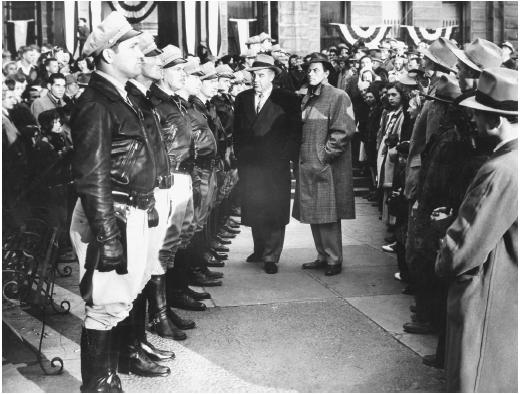
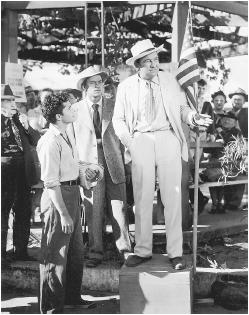
All the King's Men (Robert Rossen, 1948) The Oscar-winner for Best Picture of 1949 and it's hard to argue. Rossen's adaptation of Robert Penn Warren's Pulitzer Prize-winning novel about the corrupting powers of politics, it boasts two powerful (and Oscar-winning) performances: Broderick Crawford as innocent-turned-player Willie Stark (an amalgam of several politicians—as the corruption of power is a fairly universal theme in both the arts and reality—but mostly resembling Huey Long) and Mercedes McCambridge as his cynical-to-the-marrow political assistant.  

McCambridge is so good and so inventive that she might just as well have been given the statue for the next five years. Would that the other performances have been as electric as these two, but one could say that they shine even more brightly next to the lesser lights. 
It's particularly interesting to see Crawford so restrained at the beginning of the film, but once he sees how the game is played he turns on the after-burners and soars over everybody else in the frame with him. Mention should be made of the occasional glimpses of a documentary style in the rally scenes amid the more traditionally blocked studio framing. 
And an interesting stylistic note: the film may seem a bit abrupt in places--but that's because Rossen, determined to get the film below two hours, gave his editor instructions to take most of the scenes and cut precisely thirty seconds from the front of them and thirty seconds from the back (making sure not to clip off any dialogue). What was left was the hard nugget of the scene's core and All the King's Men feels more brutal in its pace and attitude because of this uncompromising strategy. It is a must-see film that shows the dichotomy of the American political system—of appealing to the little guy while also seeking power enough to be able to stand on their necks.
The film was re-made in 2006, with a mind to including the parts that couldn't be utilized in Warren's novel in the more repressed times when the original was made, but ended up looking bloated and shrill. The more soapish aspects of the novel were eliminated from the adaptation of the first film and it has the unanticipated benefit of focusing the film on its larger theme of political corruption and less on human corruption, and, as a result, gives the film a harder, more dangerous edge. Rossen's work is so much more assured and vibrant.

Saturday, October 8, 2016

Olde Review: The Exorcist

This was part of a series of reviews of the ASUW Film series back in the 1970's. Except for some punctuation, I haven't changed anything from the way it was presented, giving the kid I was back in the '70's a break. Any stray thoughts and updates I've included with the inevitable asterisked post-scripts.


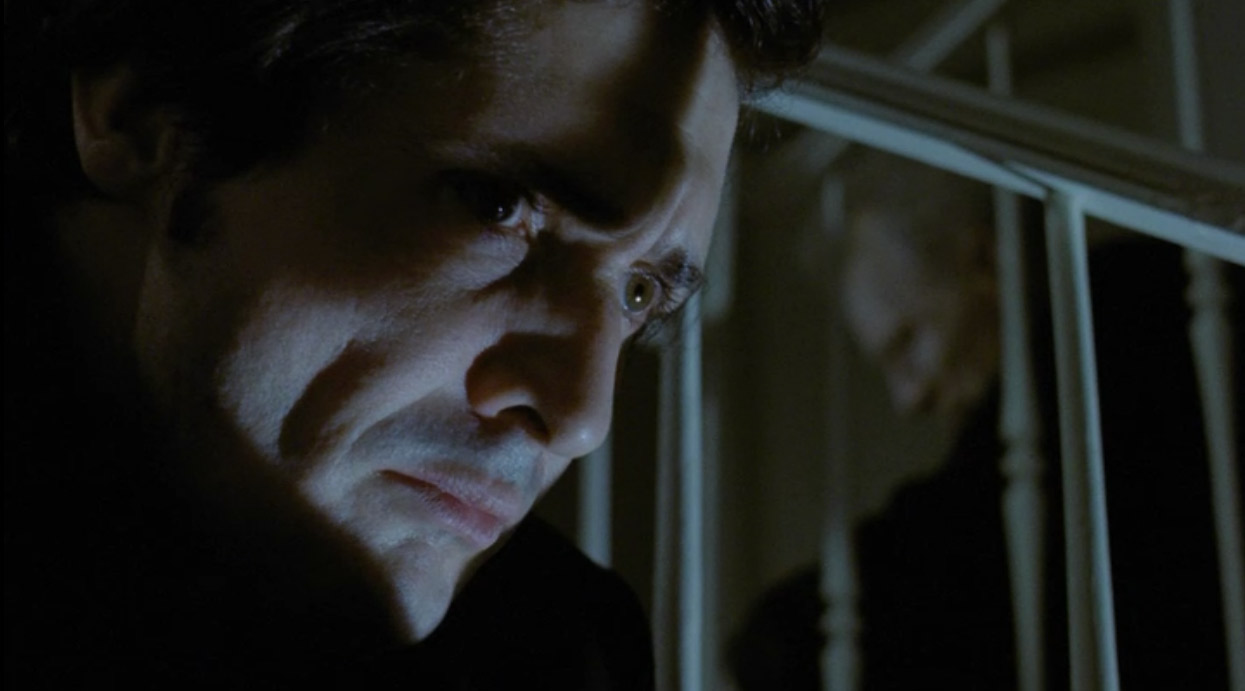
The Exorcist (William Friedkin, 1973) When Ellen Burstyn was in Seattle last year, she was asked why she had chosen to star in The Exorcist. She replied by calling attention the film's first scene after the blood-red titles--the scene which is predominated by an Iraqi morning prayer. That, Ms. Burstyn said, was what she thought the film was about--a call to prayer.

Now, Ellen Burstyn struck me as being a brilliant and sensitive individual. But I'm afraid she was duped, as a lot of us were, by the writer and director of The Exorcist, and by the Warner Brothers promotion department.
 
When The Exorcist came out we were pummeled by newspaper and magazine articles on the authenticity and "religious significance" of the movie. A major "debate" erupted amongst Christian theologians about the devil's existence and the validity of the movie as a "Christian" document.
Well, in the three years since the film was released the furor has died down, so I think I can say what I'm about to say without fear of ex-communication: The Exorcist is nothing more than a horror movie. What is worse it's a horror movie with religious pretensions. This isn't to say that religious ideas can't enter into a horror movie. It can and can be done well. James Whale turned Frankenstein's Monster into a psuedo-Christ figure in The Bride of Frankenstein, and the religious or anti-religious qualities of Dracula have been dealt with very extensively in the Hammer films with Christopher Lee. But these films' religious associations were in the background of the film, or at least are cliche items with the genre so we don't notice them so much. 
They were also done by directors who knew what they were doing. William Friedkin is so hap-hazard about things in this film that he badly slips up with one of his "devices" - a medallion that keeps cropping up in the film, something Friedkin said in an interview would give his film "resonances," has since been the subject of an intelligent article that, because of the medallions' sloppy usage, sees "The Exorcist" as a marriage between Satan and the Church, exactly opposite to the film's supposed religious intentions. Hap-hazard work and a definite lack of thought on Friedkin's part are to blame.
So, The Exorcist is a horror movie with religious pretensions, not unlike 1976's The Omen. The writer of The Exorcist (William Peter Blatty) stated that the film's intention was to "waken" our dormant fear of Satan and sleeping love for God and the innate goodness of man. Instead, The Exorcist sent a number of people to mental institutions and sickened many to the point of vomiting in the theater. Blatty said that the sickness was "healthy, for the film worked on these people's guilts." Many clergymen, notably those who appeared in the film leapt to the film's defense.
One can see by this how religious pretentiousness can pile up like manure in a stable. People didn't throw up because of their sins, they threw up because the film was revolting, disgusting, and at the very least, unsubtle in its depiction of demonic possession and although one can admire the performances of the actors and the very original use of sound in the film, those are about the only things for which the film can be praised.
And looking at the film as a Catholic, I can say that the film did not make me change the belief that there is no personified evil, only the innate evil in various degrees within ourselves. But it did make me lose the belief I held since The French Connection that William Friedkin was a brilliant director.

Broadcast on KCMU-FM on January 21, 1977
Not much to add here, except to say that I am shocked, SHOCKED that Warner Bros. would try to legitimize their little puke show rather than just come out and say "We wanted to scare you so much that you'd plotz, and make a LOT of money!" The Exorcist seems tame these days. The film has had, what, four sequels? (two of them prequels, from the same source material--one from Renny Harlin after Paul Schrader's directed version was considered "not very marketable" (read "didn't have the same amount of gore, violence or queasiness-inducing stuff as in the original") and both were ultimately released to video so folks could judge for themselves, plus there was a "re-possessed" version of the original, with a minimum of new material released domestically which made $40 million) and any number of rip-off's and devil-tail riders in recent years. The immediate sequel—The Heretic—was an unintended laff-riot directed by John Boorman, and Exorcist III was written and directed by Blatty himself, and was—actually—quite good--in fact, the best of the series. All of them experienced studio interference to up the "split-pea soup factor." Christian Document. Call to prayer. Right. Pass the collection plate.
Disclosures about the pedophilic activities of priests and their cover-up by Church authorities does make it seem like there's been a marriage between the Church and Satan to me, and made me lose Faith in any organized religion. Rather than a "lapsed" Catholic, I consider myself a "recovering" Catholic. More fervor was created watching Deliver Us From Evil than The Exorcist. And not the good kind.

And Ellen Burstyn practices Sufism.

Meet the New Boss...

Tuesday, June 14, 2016

Suddenly, Last Summer

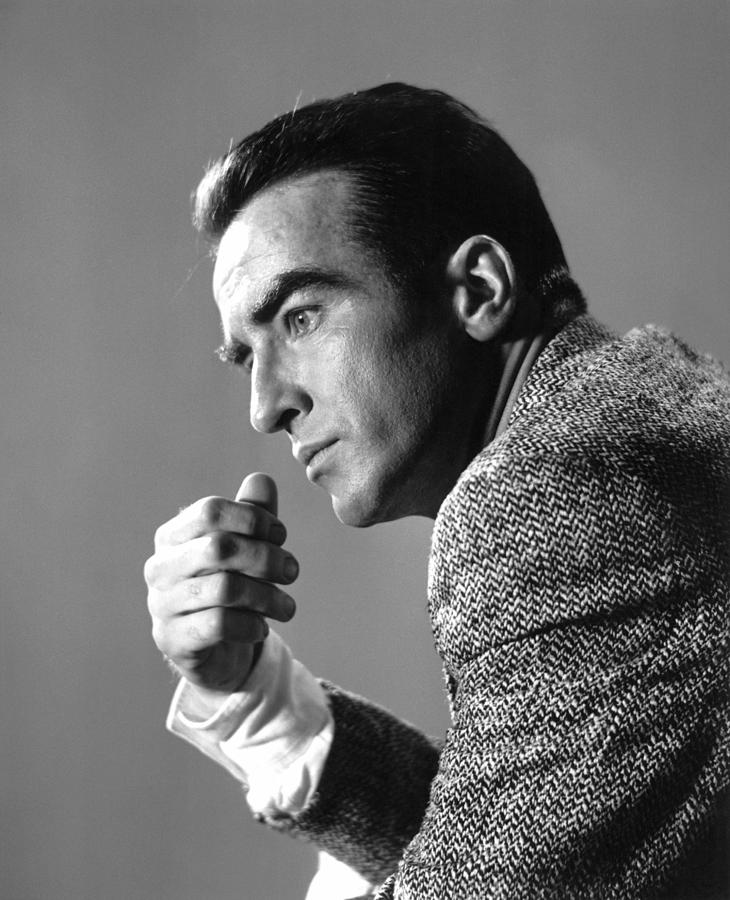
Suddenly, Last Summer (Joseph L. Mankiewicz, 1957) A tawdry gothic-noir that was so compromised by concessions to the moral powers-that-be that nobody associated with its production ended up liking it, not the original author of the play, Tennessee Williams, not his co-screenwriter Gore Vidal, nor the director Joe Mankiewicz. Pity, as its an example of how Mankiewicz could juice up material directorially in a truly unsettling way when given the chance. And he had a great cast in Katherine Hepburn, Montgomery Clift (even in the semi-drug-addled condition he was in), Elizabeth Taylor and Mercedes McCambridge.

What's missing is the person everyone talks about—the late Sebastian Venable, (poet and narcissist) who died (suddenly) last summer, ostensibly of a heart attack, as the whispers state, but has nothing to do with the truth, which is damaging enough that his doting mother Violet (Hepburn) will do anything to keep it secret, even if it means lobotomizing her niece Catherine Holt (Taylor) who witnessed his death and has blanked it from her memory. Mother Violet entreats the local psychiatric hospital and its brilliant lobotomist Dr. Cukrowicz (Clift) to see if Catherine is a suitable case for treatment, with the promise of a large endowment if she can be "cured." "Cured" of the memory stuck in her head, and if not cured, silenced, whether institutionally or medically.

But what those memories are of that led to Sebastian's death "suddenly, last Summer" are only implied for the first 3/4 of the movie. In the first couple of movements battle lines are drawn as Cukrowicz first gets Vi's version of things (as he investigates why she wants to donate so much money to his institute), then, once questions are raised, tries to coax it out of the mostly comatose Catherine without success. The gist of it is that Catherine, at Sebastian's request, had replaced his mother as his traveling companion on his world-traveling jaunts from which he would produce his yearly published book of poems. That Summer, in the town of Cabeza De Lobo, Sebastian died, leaving no book and no issue.
Except for Catherine.  The play's third scene is the explanation in the drawing room scene if this were a detective novel, where Catherine, under the influence of sodium pentathol reveals all (from her point of view), and Mankiewicz goes to directorial town (his point of view) in a weird silent flashback that threatens to crowd out Taylor from the frame, and that veers wildly from realism to German expressionism to surrealism within the course of its run, containing some of the most bizarre imagery just outside the horror realm (or Salvadore Dali's dream sequence from Spellbound).
To tell you what it all means ruins the ending, except that the movie itself doesn't come right out and say anything, owing to the tenor of the times (meaning you couldn't be too explicit) and to the so-called community standards that this particular era of film-making was challenging. This was before ratings systems—G, PG-13, M, R, X and NC-17—but there was The Legion of Decency, over-run by the Catholic Church, that crossed itself, said five "Hail Mary's" and then banned your movie from being advertised. You couldn't talk about homosexuality, procurement, prostitution, drug use, pedophilia, and cannibalism except in closeted code, and the "Truth Serum" sequence obfuscates what's going on to the point of obtuseness. Williams wasn't entirely guilt-free of this; he was just as capable of pulling the shade over a naked light-bulb or turning pleurosis into "blue roses"—he made an art of it. But here, the mother-love perversity at the heart of so many of his plays runs on the hysterical side, and, try as he might, Mankiewicz can't make more of the empty book of poems than he can. All he can do is try and push Hepburn over the brink of sanity, after she's been doing wheelies near the edge that entire movie (Vivien Leigh nearly played the part; can you imagine?)
How far we have come since then—except, of course, for the cannibalism part (unless you were voted to the House of Representatives in 2010).
P.S. there's an excellent breakdown of the film, courtesy of The Last Drive-In, that did an excellent job of pulling screen-caps-two of which I cribbed above.
Liz Taylor glamour shot draped over the rail of an asylum