Friday, April 3, 2020

The History of John Ford: Wagon Master

When Orson Welles was asked what movies he studied before embarking on directing Citizen Kane he replied, "I studied the Old Masters, by which I mean John Ford, John Ford, and John Ford."

Running parallel with our series about Akira Kurosawa ("Walking Kurosawa's Road"), we're running a series of pieces about the closest thing America has to Kurosawa in artistry—director John Ford. Ford rarely made films set in the present day, but (usually) made them about the past...and about America's past, specifically (when he wasn't fulfilling a passion for his Irish roots).


In "The History of John Ford" we'll be gazing fondly at the work of this American Master, who started in the Silent Era, learning his craft, refining his director's eye, and continuing to work deep into the 1960's (and his 70's) to produce the greatest body of work of any American "picture-maker," America's storied film-maker, the irascible, painterly, domineering, sentimental puzzle that was John Ford, John Ford, and John Ford. 


Wagon Master (John Ford, 1950) The western expansion of the American frontier is a standard theme of...the Western. John Ford had featured prospective settlers (and settling prospectors) in many of his films, but made the phenomenon the center of his film Wagonmaster, a modest black and white western, made in between When Willie Comes Marching Home and Rio Grande. Wagonmaster could well be the pilot episode of the television series "Wagon Train" (1957-1965)—which also starred Ward Bond in the first four seasons. There are no A-list stars—just the "Ford Stock Company" stepping front and center in the film, rather than filling the corners and back-stories.

Ford begins the movie bluntly with an almost silent sequence (Ford learned his craft making silent pictures)—the Clegg's (Charles Kemper, James Arness, Hank Worden, Fred Libby, and Mickey Simpson) are robbing the Crystal City Bank, resulting in Pa Clegg being shot in the wing, and, incensed by the inconvenience and the impertinence, shooting the chief clerk in the back without regard to the escalation. The bank's sole source of internal light, a hanging hurricane lamp, swings with the force and the temerity of it. There have been no titles, no studio accreditation, no introduction. The movie begins with a terrible act with no word of warning.
It is only then that the titles appear proudly, diametrically, over footage of a dogged wagon train (complete with dog) accompanied by the "Song of the Wagonmaster" by The Sons of the Pioneers emphasizing the highs and lows of the rolling life. There is a lot of music in Wagonmaster, over such montages, that one might be distracted from some of the more beautifully comp0sed shots, or the rigors it took to achieve them, but to say it's a "musical" (as some appreciative writers have stated) may be stating it too strongly, considering the amount of song and group-musicianship in others of his works.

As the Clegg's silently take to the hills, watching their backs, two horse-traders ("That's my business!"), Travis (Ben Johnson) and Sandy (Harry Carey, Jr.) ride  out of Navajo Country with their latest acquisitions, trying to calculate their fortunes at $30 a head. They pull into Crystal City, the town still recovering from the recent murderous bank robbery and the Sheriff makes a show of checking the ponies while actually appraising the men attached to them—they're neither the type nor the number.
Convincing the Sheriff enough of their innocence to sell him a pony—and play a prank that sets the horse, with the Sheriff temporarily attached, careening into the streets—the two plan to rest up in town to play a few rounds of "High-Low-Jick, Jack, Ginny and the Bean Gun," which, besides the passing of funds, will give Travis his own assessment of the town and his future fortunes, given a conversation he'd had previously that day.
"I'm in"
The film proper doesn't get underway until Travis and Sandy meet the blustery ("I repent my words of wrath") Elder Wiggs (Ward Bond) and a small contingent of his party of Mormons who are being run out of Crystal City by the "fine" folk there who do not like their ways ("that's why I keep my hat on—so the horns won't show"), Their aim is to wagon-train to a "valley reserved for us by the Lord," by the San Juan Rover, hoping to get there before the winter rains come, to set up an outpost for their brethren to follow to. They want to buy the ponies and are in need of "wagon-masters" to negotiate the trail. During an extended negotiation that involves whittling interspersed with some volatile umbrage by the elder over price and the pony-men's lack of availability (even though they don't drink, don't chaw, don't cuss—much—and display no vices, other than a propensity towards gambling), the elder walks away merely with horseflesh and the responsibility for the journey.
Well, if there ever was a gamble...; when the Mormon party is escorted to the city limits, Travis and Sandy are there to meet them as they inform Wiggs that his group is not facing hundreds of miles of unknown alone. Wiggs is grateful for the help, but not all of the party are thrilled, chafing from taking orders from ruffians not part of the flock—they have women and children, after all. Wiggs has to be peace-maker, which is an unusual role for him, and one he's not accustomed to.
It's a big country out West—it was filmed in Moab, Utah (out-of-reach in order to discourage visits by producers) and parts of Monument Valley (to take advantage of extras from the Navajo nation, some familiar faces from other Ford productions can be seen among the Natives), but being close to the outskirts of civilization—that being Crystal City—the wagon train comes across others of their outcasts, which the sheriff listed as "Mormons, Cleggses, showfolk, horsetraders." The Mormons are far enough along that water is in short supply when they come across #3 in the list: Dr. A. Locksley Hall (Alan Mowbray), travelling showman and rumored dentist, selling a healing elixir, accompanied by two women no one would confuse with nurses Fleuretty Phyffe (Ruth Clifford) and Denver (Joanne Dru, who had just featured in Ford's She Wore a Yellow Ribbon). When they're found, they have run out of water, and are staying alive—but not on their feet—with the doctor's snake-oil.
Liquor and loose women are usually not a good mix with Mormons, but as the party is in a terrible spot, they're allowed to be party to the train, at least until they reach water. Being show-folk, they don't quite understand the necessity of rationing water with no shaving and no showers.
But outcasts attract, and though the Mormons keep the "show-folk" at arm's length, Elder Wiggs has enough of a past with (what he calls) "hootchy-kootchy shows", he can see Miss Fleuretty as "a fine figure of a woman" (she's loyal to the doctor, however), and Travis and Denver have one of those passive-aggressive flirtations that pop up in Ford films with strong women and cowed boys. Although the journey involves struggle, generally everyone is doing the right thing, perhaps due to their empathy with their lot as outsiders or undesirables, perhaps to their religious beliefs, regardless of their faith—extending to the Native Nahajo's who welcome them into their camp, as Mormons have a reputation for being less dishonest than other whites.
And far less than the "Cleggses." It is inevitable in the rules of drama that in all the wilderness that they should eventually meet up with antagonists. It's where the good feelings generated within and by the wagon train are challenged and where their dreams are threatened. It's also crucial in the Ford Universe; sure, everybody is an outcast from "polite society," but that doesn't make everyone a saint by default. That list of "Mormons, 'Cleggses', show-folk and horse-traders" has one rough-hewn peg in it and the "Cleggses" have no best intentions other than fulfilling their basic needs with no aspirations beyond that. Ford's heroes, no matter their place in society (or outside of it) have hopes, dreams...plans...purpose.
But, his villains: they may have dreams, but also have no qualms ruthlessly—or cluelessly—quashing the dreams of others. In Wagonmaster, community is all, and once the stakes rise high enough to affect the future, that's when ultimate action must be taken against oppression, even on a wagon train that now, thanks to being overrun by the "Cleggses", has no guns.
Wagonmaster has no stars to bank on, (but, then, neither did Stagecoach)—the one Oscar winning actor of the bunch, Jane Darwell, has very few lines (maybe five) in the entire thing. Stars have a tendency to dominate story, and in the case of Wagonmaster, would distract from it. Better that the story remain distributed among the many, and that the focus be on the journey and the collective that it forms. As it's the story for the quest for settlement and the forging of a community with the best of intentions and with an eye toward the future.
It was one of director Ford's favorite films, despite it lack of success at the box-office. That maybe entirely due to the vision that he held for it and his view of how well the task was accomplished—what we now call the "signal to noise" ratio.* 
Better than The Searchers, though? To my mind, no. But, then, The Searchers is a study in human nature and its worst qualities in regards to race prejudices, whereas Wagonmaster points to the best instincts, despite the impact of such things. Wagonmaster has hope and looks ahead, not back.

It's a beautiful film to watch, and one to cherish.

* A modern example is George Lucas' Star Wars: Oh, sure, everybody loved it, but it was a film that he was disappointed in, despite its success—that he felt that need to tinker with it, erasing the flaws he constantly saw in it, to make it closer to what he originally had in mind.

Thursday, April 2, 2020

Rango

Written at the time of the film's release...
 
"A Fistful of Pixels"
or
"Draw!...The Gun, Not the Computer!!"

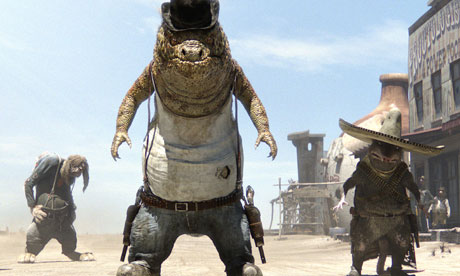
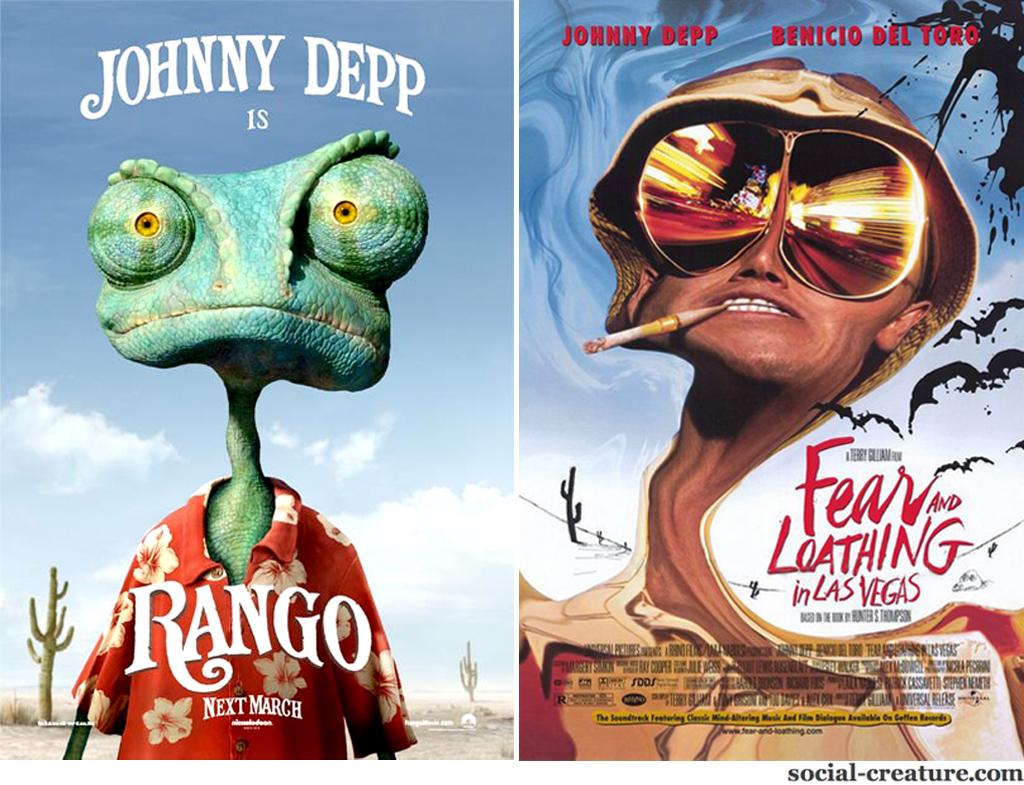
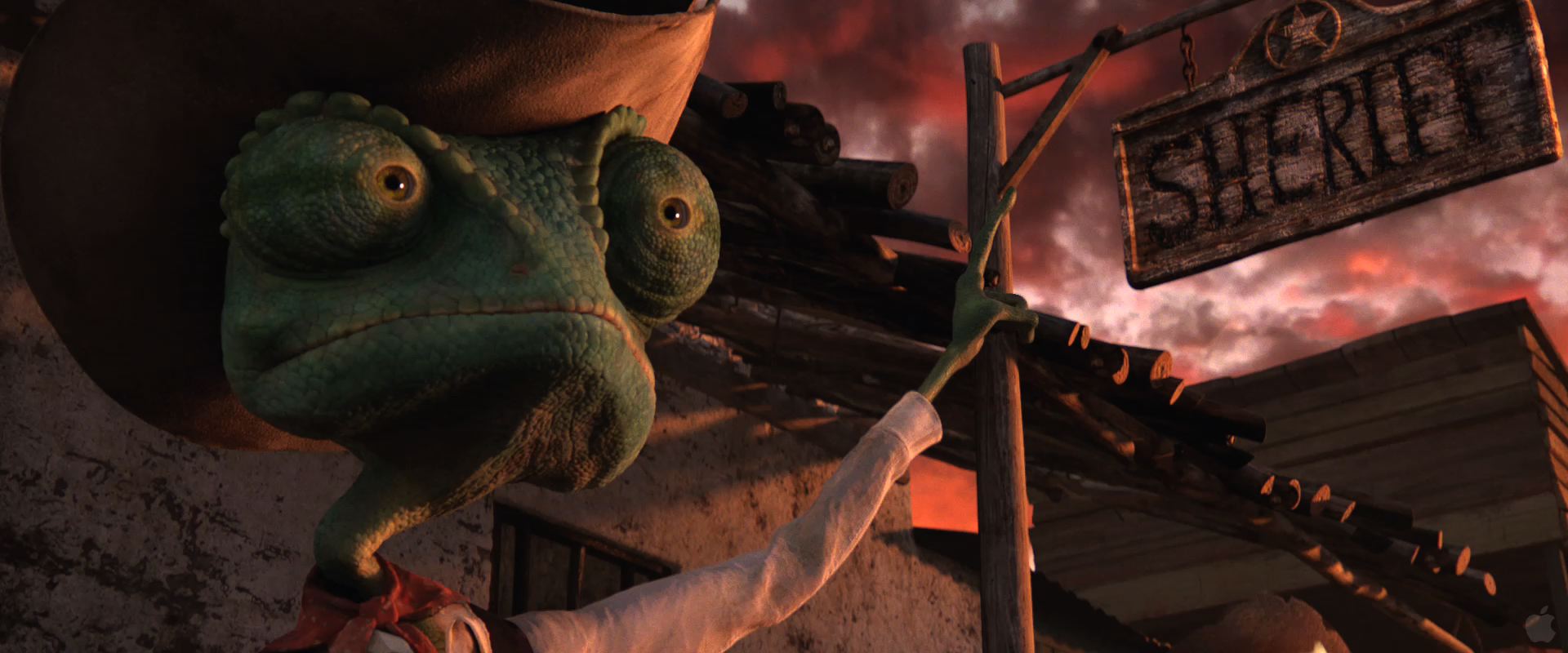
Rango is an amusing hybrid of animated feature and a rather encyclopedic mish-mash of stylized western themes, set in an animal kingdom that could only be imagined in a Ralph Steadman fever-dream. Directed by Gore Verbinski (who manages to make interesting movies from least likely sources, like The Pirates of the  Caribbean*), it boasts a unique look, visually consulted by ace cinematographer Roger Deakins, while being the premiere animated feature to come out of George Lucas' FX house Industrial Light and Magic.

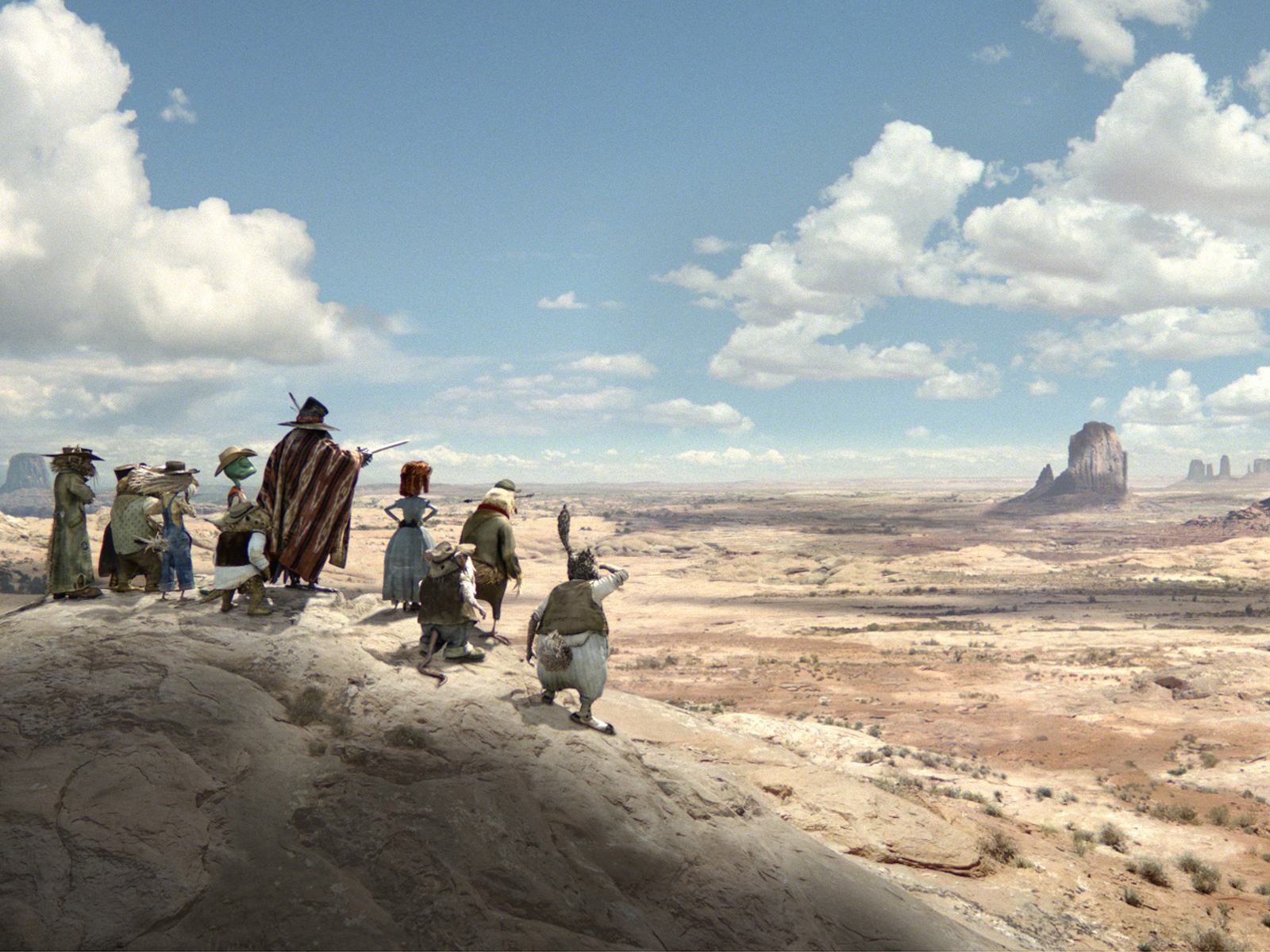
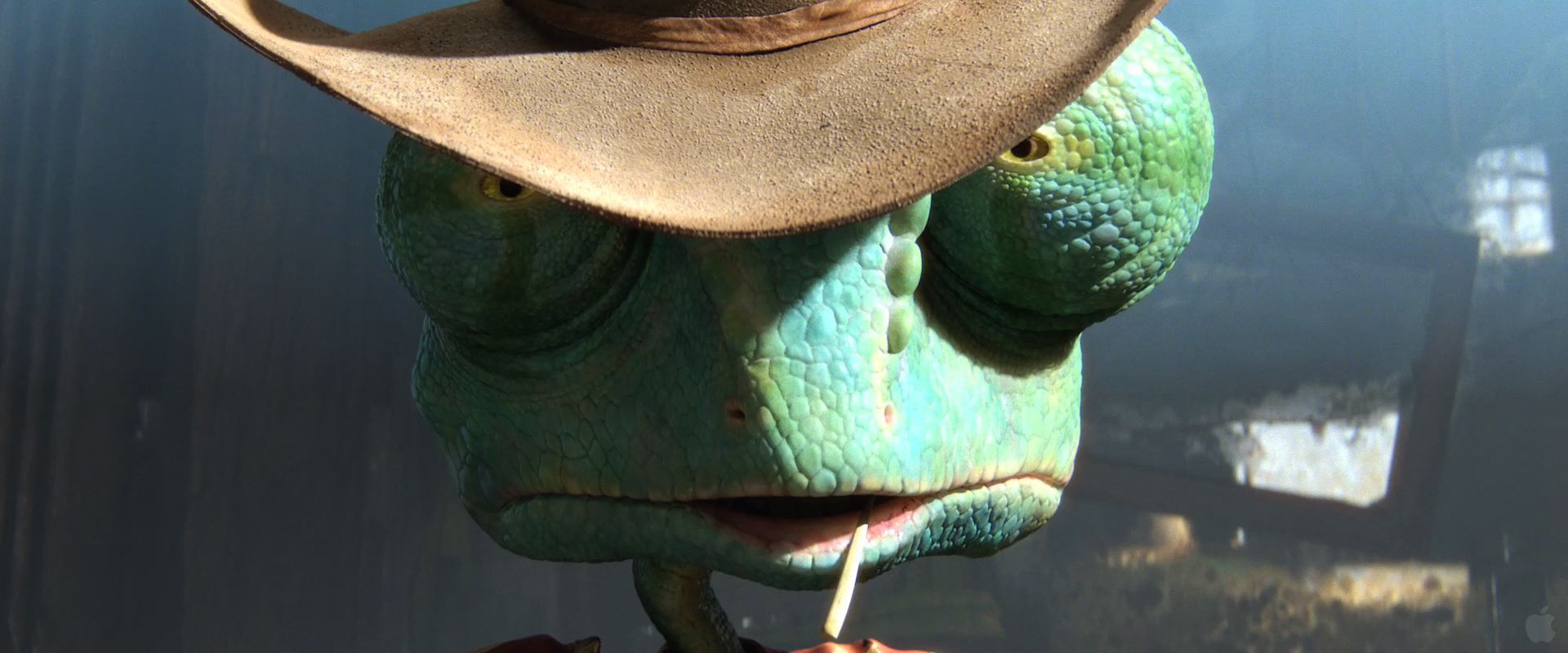
With such a background, the film should be technically interesting, and it is that, rich in detail and texture with a visual look unlike anything previously seen in computer animation. Everything looks real and like it should exist in a real world, even though the physics of things could never, ever work. It's a pixelated bizarro-world of funny animals just over the dunes from a mad civilization, a nightmare-world from inches off the ground.
While on a cross-country trip, a small highway accident causes a major disaster for a family's pet chameleon (with neatly quick-silver voice work by Johnny Depp)—an apt choice as he must change his persona often at times in the story—who finds himself stranded in the crushing heat of the desert, where his life of comfort leaves him ill-prepared for survival. 
Fortunately, he is befriended by a crusty armadillo (voiced by Alfred Molina), who seconds after meeting the lizard is run over by a truck and he's left lying prone on the asphalt with the impression of a Michelin bisecting his stomach...and he enjoins Lars (er, Rango...whatever) to go on a vision quest to face his destiny. Immediately, you know that this one is going to be a little different...not only for the kiddies, but also for producing partner Nickelodeon, which usually plays it a little safer and a little younger for its audiences.
It's something different, but also extremely familiar. I've had to gut-check this review because Rango is so stuffed to the shaded-texture sweat-band with movie references that I had to make sure geek-love didn't color my perceptions. Culled (one hesitates to say "written") by John Logan,** the story does so much reference-rustling that it feels like a pop-culture scavenger hunt—The Shakiest Gun in the West (and thus, Bob Hope's "Paleface" movies), High Noon, Shane, the Sergio Leone "spaghetti westerns," "Looney Tunes" cartoons, and a large back-wash of Chinatown. More like a tsunami, that last one, as the Mayor of the desert town of "Dirt" (clever) is a an ancient tortoise that looks, dresses, and speaks (sometimes verbatim, in the voice of Ned Beatty) like John Huston's Noah Cross from the latter.
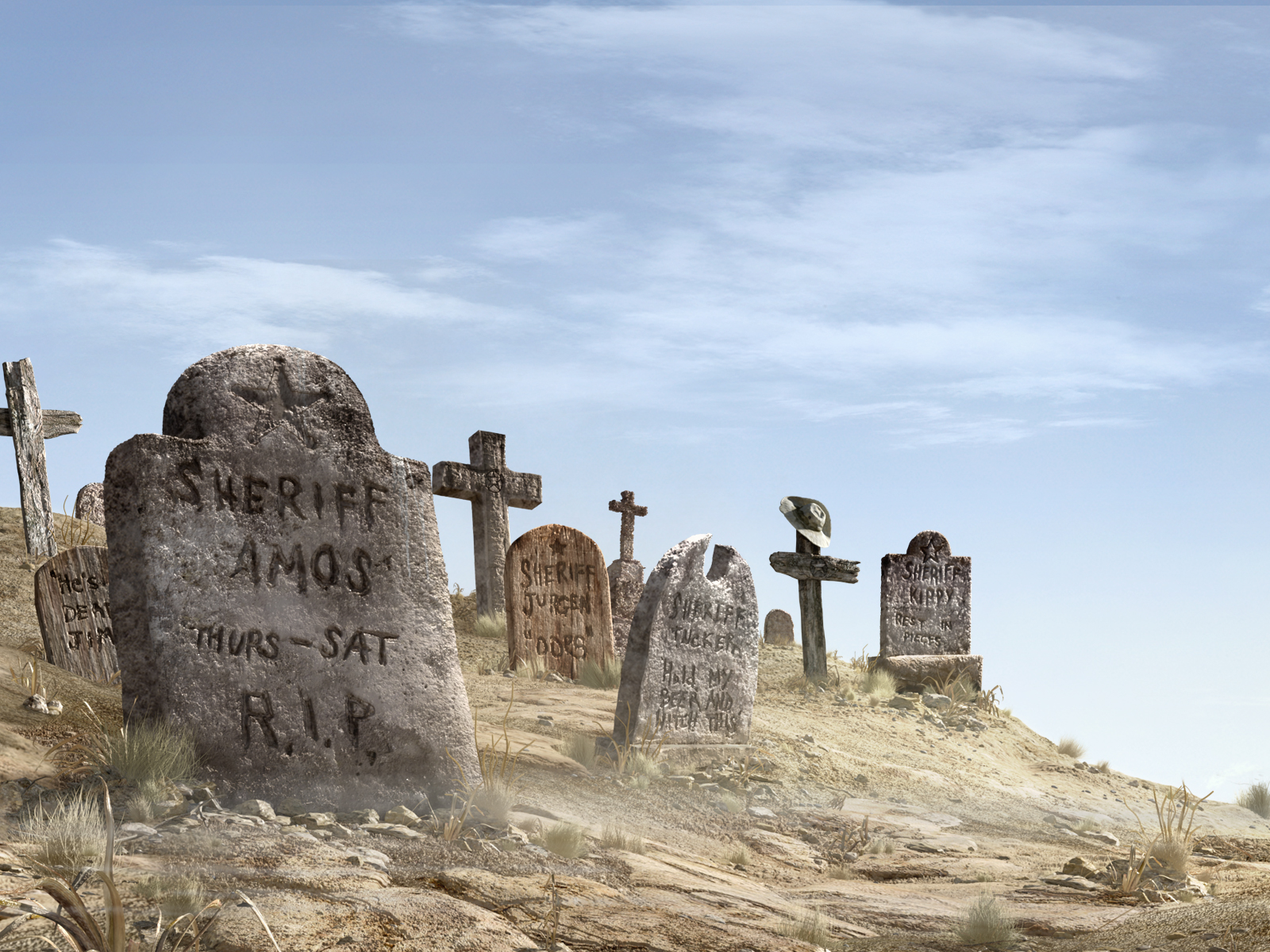
When the chameleon drags into town, the Mayor sees an opportunity to put a patsy into the vacant Sheriff's job (there is evidently a quick turn-around in the job), which also makes the movie resemble Mr. Smith Goes to Washington, thus keeping his claws in charge of the town's water supply, or lack of it. Whatever his effectiveness in the job, one way or another "Rango" is going to be "over his head" in Dirt unless he stops concentrating on "blending in" and changes in ways more than appearance. 
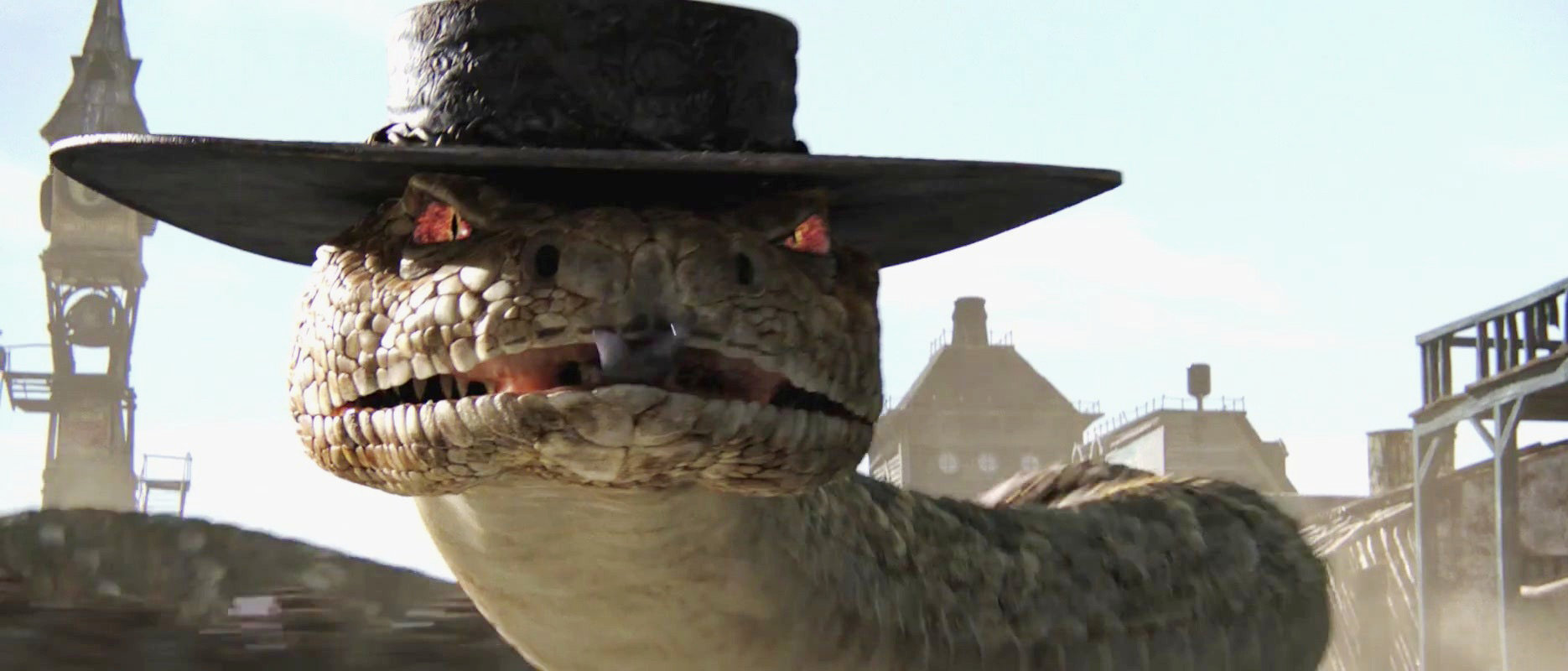
Along the way, he is threatened by bad-guys and helped by unlikely allies in a free-wheeling roller-coaster with enough hi-jinks for the kids and enough "inside jokiness" for adults, done at a speed that Verbinski can't achieve in live-action films (but aspires to). This might give parents in the theater a little too much work to do, explaining things (like water-rights) while trying to deaden the "sugar-rush" the pace will give their kids. And some of the images can be a little scary for the little ones, like big snakes (modeled after Jack Palance and Lee Van Cleef) voiced by Bill Nighy (shudder).
But, it is smart, clever and different, with good performances and that extra attention to detail that shows off the best of the art-form.


* My God, I'd forgotten that he directed Mousehunt, a film I got slapstick-happy chuckles over, but that I know annoys a LOT of people.  There are times when I see a bit of Mousehunt in Rango. 

** Maybe I'm being a little harsh there. I liked this script by Logan and is the first of his that doesn't feel half-baked, and gives me hope that the guy might be able to bring substantial to the next Bond film, despite having replaced the more promising Peter Morgan. NOTE FROM 2020: The "next Bond film" turned out to be Skyfall, and did indeed turn out alright.

Wednesday, April 1, 2020

Don't Make a Scene: Once Upon a Time in the West (Abridged)

The Set-Up: Aw, hell...

I was going to so an April First post. Personally, nothing's really funny right now. Last year, for a "foolie," we did the Screen Junkies parody of 2001: a Space Odyssey. A couple years ago, there was a look at an unfinished Bergman film that never saw the light of day, and one year, I did a "Don't Make a Scene" of the "Dawn of Man" sequence from 2001.

I make fun of because I love.

This post happened by accident. Now, that there's actually time in the day to stay at home and "plan," we've been doing "theme weeks" and, for the next two weeks we're doing westerns, revisiting classics, and finishing drafts of things I've had had stacked up for awhile. Next Sunday, our "Don't Scene" is Once Upon a Time in the West, one of my favorite movies.

Do you think I could find a script or a screenplay to transcribe/borrow/steal for it? Nope. And, for a movie like Leone's epic, a transcription is a bit of a joke—the first 15 minutes of the thing has 13 lines (One of them is "Shhh.")

But, I did come across "an abridged" version on a site called "The Editing Room" (they've been around longer than Google—they say), a Creative Commons site. Their "abridged" version of the movie's opening is part SNL sketch, part Mad Magazine parody. I read it and I saw the frames to use in my head. I had to do it, pandemic be damned.

I make fun of because I love.

The Scene: Well, nothing's happened yet. The movie's just beginning...

Action.

FADE IN: EXT. TRAIN STATION 
ONCE UPON A TIME, in THE WEST, 
gunslingers WOODY STRODE, JACK ELAM, and AL MULOCK gather at a TRAIN STATION. 
WOODY STRODE (to the station manager, slowly) What time’s the next train come in? 
STATION MANAGER (thinks, slowly) About ten minutes. 
JACK ELAM (nods, slowly) I guess we’ll take our positions, then the scene can cut to right before the train gets here. 
AL MULOCK (shakes head, slowly) Now, Jack, you know this is a Sergio Leone movie. Obviously every single second of that ten minutes is going to happen right here on screen. 
JACK ELAM (sighs, slowly) I guess you have a point. Fine, let’s wait in silence for ten minutes. 
JACK ELAM Maybe we can fill in the time by having our own little mini-adventures happen in the meanwhile. 
JACK ELAM Mine will literally be about a fly landing on me. (sits, slowly) 
WOODY STRODE And I will remain perfectly motionless for the majority of mine. (does nothing, slowly) 
Time TRANSPIRES. 
Eventually this has happened sufficiently for the TRAIN to arrive. 
CHARLES BRONSON disembarks. 
CHARLES BRONSON Hi folks. So after all that buildup, it’s time for your standard Leone shootout. 
JACK ELAM Ah, you mean the kind where everybody stands around staring at each other for an extended period of time until suddenly-

EVERYBODY SHOOTS THEIR GUNS AT THE SAME TIME. 
JACK, WOODY, and AL all drop dead, while CHARLES is only GRAZED. 
CHARLES BRONSON Oof, my shooting arm now must be put in a sling! That sure is going to hamper my ability to... 
CHARLES BRONSON ...naaah, you know what I’m just gonna take the sling back off in my next scene and be fine.

Once Upon a Time in the West

Screenplay by Sergio Leone, Sergio Donati, Bernardo Bertolucci, and Dario Argento (abridged by Craig)

Pictures by Tonino Delli Cotti and Sergio Leone

Once Upon a Time in the West is available (unabridged) from Paramount Home Video.


Oh, and one more thing...