or
"To the Barricades!"
I realize I
am not the man to do a critical analysis of Les Misérables, the filmed version of the long-running staged presentation of the concept album produced by Claud Michel Schönberg, Alain Boublil and Jean Marc Natel, (from the novel by Victor Hugo)
for many reasons: 1) I'm not terribly fond of musicals, finding the form
unnatural and artificial—the inclination to burst into song having the
requirement of being necessitated by the surge of emotion, which, if you do it
too much, is a bit unsufferable—but, if the words and music are clever, born
out of character and need, my prejudices can be batted away in the sweep of
sheer admiration; 2) I’ve never seen “Les Miz” on stage, so this is my first
exposure to the material, which I found musically strong, with nice linking
strains between songs, but the lyrics, for the majority of it, trite and of the
“Moon-June” variety, and the propensity to insert (with a guillotine) moments of
light-heartedness in the midst of the most dramatic moments; 3) I have never
liked the direction of Tom Hooper (who directed the mini-series “John Adams”
with a heavy emphasis on unnecessary dutch angles, tortured compositions, and camera
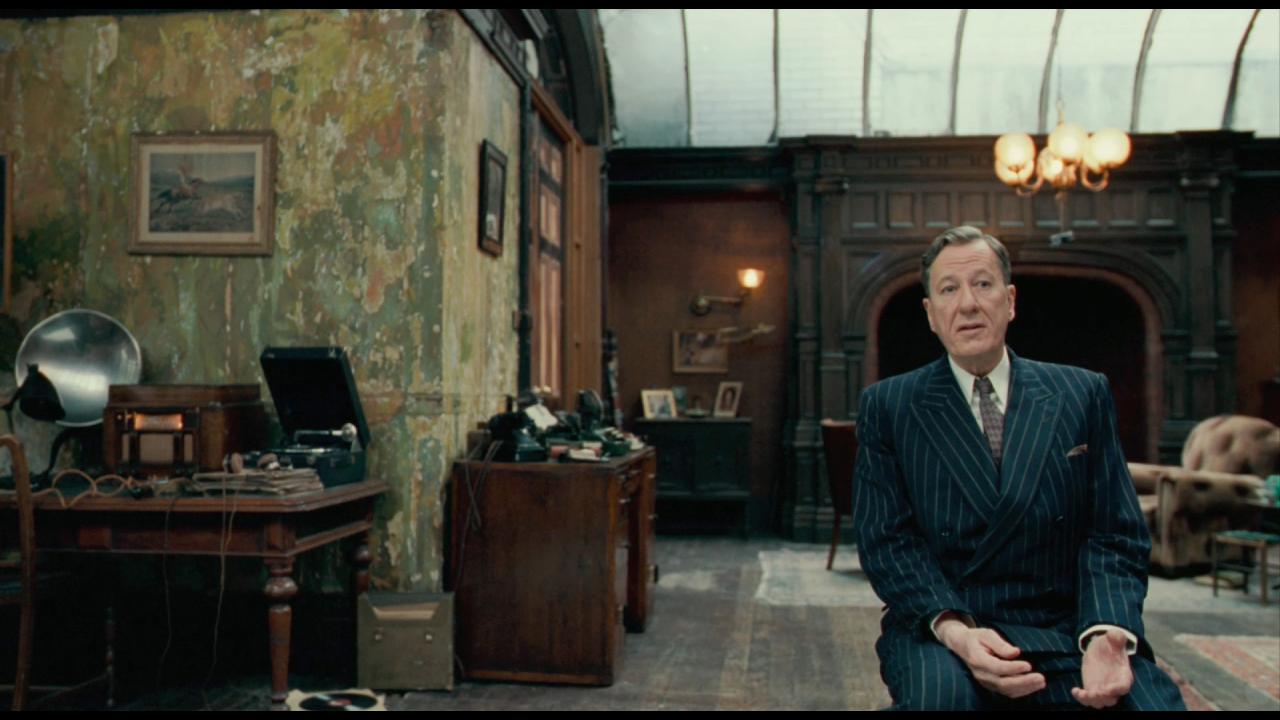
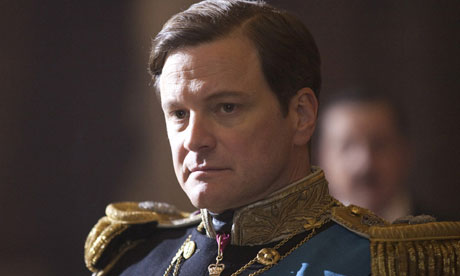
movement “baggage” for its own sake, and then directed The King’s Speech with a somewhat less gaudy eye, but a penchant
for “gilding the lily” of competent performances with camera and lens
tricks.
 So, Les Misérables is almost a “perfect storm” of things I don’t like
in movies, making me feel a bit uncomfortable about even attempting to discuss
it without the need to eviscerate it like an after-meal chicken. Oh, there are things I thought were
marvelous—the grittiness of it, the general down-troddeness of the whole thing,
the brio of the effort in dragging it, naturalistically, to the screen, when
everything cries out to leave it on the stage where it seems the presentation
would be at its optimum.
So, Les Misérables is almost a “perfect storm” of things I don’t like
in movies, making me feel a bit uncomfortable about even attempting to discuss
it without the need to eviscerate it like an after-meal chicken. Oh, there are things I thought were
marvelous—the grittiness of it, the general down-troddeness of the whole thing,
the brio of the effort in dragging it, naturalistically, to the screen, when
everything cries out to leave it on the stage where it seems the presentation
would be at its optimum. So,
kids, let’s get started. I’ll leave out the show itself, which has more than silenced its original critical drubbing by becoming the wildly popular “people’s choice” at the box office, entirely appropriate given its liberté/fraternité themes. Vive “Les Miz” and all that.But the stage presentation was already an odd ying-yang of performers belting out their inner emotions to the cheap seats, confessing their shame at the top of their lungs. To then bring it back down to intimacy, forcing powerful song material to be played out with naturalistic emotions—crying, snuffling, doubt—then compounds the confusion by compromising the musical material from its original intentions.
So,
kids, let’s get started. I’ll leave out the show itself, which has more than silenced its original critical drubbing by becoming the wildly popular “people’s choice” at the box office, entirely appropriate given its liberté/fraternité themes. Vive “Les Miz” and all that.But the stage presentation was already an odd ying-yang of performers belting out their inner emotions to the cheap seats, confessing their shame at the top of their lungs. To then bring it back down to intimacy, forcing powerful song material to be played out with naturalistic emotions—crying, snuffling, doubt—then compounds the confusion by compromising the musical material from its original intentions. Then, director Hooper further piles on the emotional dissonance by shooting everything in very tight close-up, so we have intimate emotions couched in thundering expressiveness delivered at a timid range right in our faces. Hooper did no service to his actors here, threatening to expose every mis-step of their performances (which, by the way, was sung and recorded on set in real time) so close that the audience can’t miss it.
  How’d
they do? Admirably well, considering. Anne Hathaway will surely win an Oscar for the “I Dreamed a Dream” sequence alone, finding the right balance of giving the song its due, while also expressing the grief, humiliation and moments of rage in her character.*
How’d
they do? Admirably well, considering. Anne Hathaway will surely win an Oscar for the “I Dreamed a Dream” sequence alone, finding the right balance of giving the song its due, while also expressing the grief, humiliation and moments of rage in her character.* Towards the end of the film, Eddie Redmayne pulls
off a similar gift with “Empty Chairs at Empty Tables” and, surprisingly, Amanda Seyfried makes the most of her moments with a high, feathery voice that
doesn’t betray fragility. Hugh Jackman and Russell Crowe are other matters. Both great performers with musical pasts (the former on Broadway, the latter with his vanity band), both are very capable, but the material, production and presentation get the better of both of them, exposing Jackman’s reedy voice (somewhere between Anthony Newley and David Bowie) and Crowe’s pop sensibility to pitch to the note he’s seeking.
Towards the end of the film, Eddie Redmayne pulls
off a similar gift with “Empty Chairs at Empty Tables” and, surprisingly, Amanda Seyfried makes the most of her moments with a high, feathery voice that
doesn’t betray fragility. Hugh Jackman and Russell Crowe are other matters. Both great performers with musical pasts (the former on Broadway, the latter with his vanity band), both are very capable, but the material, production and presentation get the better of both of them, exposing Jackman’s reedy voice (somewhere between Anthony Newley and David Bowie) and Crowe’s pop sensibility to pitch to the note he’s seeking.
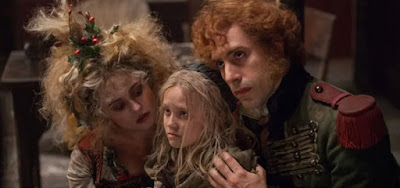 The unlikeliest successes are Sacha Baron Cohen and Helena Bonham Carter, as the unscrupulous Thénadier couple, because their song is a knockabout one with lots of stage business letting them loose from the trap of Hooper’s tight framing, and because Cohen is allowed to throw in a couple of ad-libs (in beat, mind you) between lyrics, allowing a little bit of fresh air into the proceedings.
 For me,
it was a train-wreck that seemed to go on forever, with only a couple of bright
spots to give me hope. But, given the production’s history, I’m sure the people will rise above it all, despite the tyranny of the direction on display.
For me,
it was a train-wreck that seemed to go on forever, with only a couple of bright
spots to give me hope. But, given the production’s history, I’m sure the people will rise above it all, despite the tyranny of the direction on display.


**
The creators of the stage version must have realized this, too, as they
keep turning up and their capering has a tendency to undercut the heavy drama. Entertaining, yes, but at the expense of the rest of the play.