The
Oscars are this weekend (Lord, help us!) and there are a couple of Best
Picture winners I haven't re-published from "The Olde Site." So, rather
than doing anything "newish" I'll opt, instead, for "timely."
I'm
not a fan of The Oscars (like everybody), but I watch it (like
everybody) and I complain about it the next day (like everybody). You
can't seem to have one without the others. People enjoy complaining
about them but wouldn't dare miss watching them. Everybody has some Oscar-decision that's an obscenity in their eyes...and there are some that are questionable (my Saturday "Trash" post will be one of them)*.
But, most of the time, I just don't care. The Oscars, being voted on
within a year of each film's release, are always going to be
short-sighted, with absolutely no chance of being able to judge a film's
lasting legacy. The decisions are always factored by politicking or
prestige. Maybe trendy. But probably not. They'll always be there
whether one watches them or agrees with them.
Written at the time of the film's release. And there's some post-Oscar bashing at the end."Crossing Your Threshold"
or
"Let's Take it from the Top: 'In Our Darkest Hour...'"
One of my favorite observations from Jerry Seinfeld was his remark that more people are scared of public-speaking than of death: "In other words, more people would rather be IN the coffin, than delivering the eulogy..."
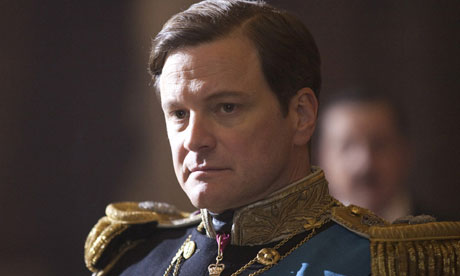
In The King's Speech, this year's Oscar-bait from The Weinstein Company, King George VI (Colin Firth, spot on, really) would rather be dead than speak in public. It's too bad, then, that his father, George V (Michael Gambon) beats him to the choired invisibule, and the next in succession, Edward (Guy Pearce, in an extraordinarily adroit performance) is too much of a self-absorbed ponce to sacrifice "the woman he loves" for such a small thing as the welfare of all of Britannia.
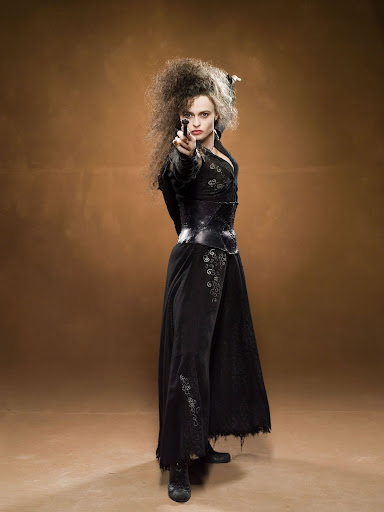
George VI, or Albert, the Duke of York (as he is dubbed before coronation), has a persistent stutter, and a concurrent inferiority complex, given his heightened awareness of his condition and his responsibility—director Tom Hooper makes it clear in his direction and editing choices that we are constantly aware of his audiences' reactions to his stammers, faults and failings, even the portraits of his forebears stare in frozen, condescending judgement.* It is up to his wife, Elizabeth (Helena Bonham Carter, bi-polarly different than her roles for Hubby Burton and Harry Potter)—"Call me 'Liz'" she sweetly says at one point late in the movie—wants to fix the problem, not because her husband is the man who could be King, but because the underlying psychological whipping he imposes on himself is making him miserable. He doesn't even have the wherewithal to blurt out a bedtime story to his two adoring princesses, Elizabeth and Margaret.
With a capricious older brother and an ailing father-king, he is not the most confidence-inspiring potential potentate who can, as his father bellows "stand between us, the jack-boots and the proletarian abyss." And given that the position is more public than ever, what with the King needing to address his subjects via radio, the air of confidence is more important than ever, and Albert's failings as such are even more readily apparent in the Theater of the Mind. Not only is the Empire shrinking for the Royals, but the world is, too, and their enemy's reach is the range of a V-2 rocket.
Presentation is all now, sometimes even more than the message. During the viewing of a newsreel, the Royal Family gets a glimpse of the Player on the Other side, Adolf Hitler at the Nuremberg Rally. "What's he saying, papa?" asks a daughter.
"I don't know," replies the envious Albert. "But he says it rather well."
What do the simple folk do, when they have to carry the burdens of the entire Nation on their backs without hesitancy, and with grace. The short answer is, they don't—the situation is somewhat unique.
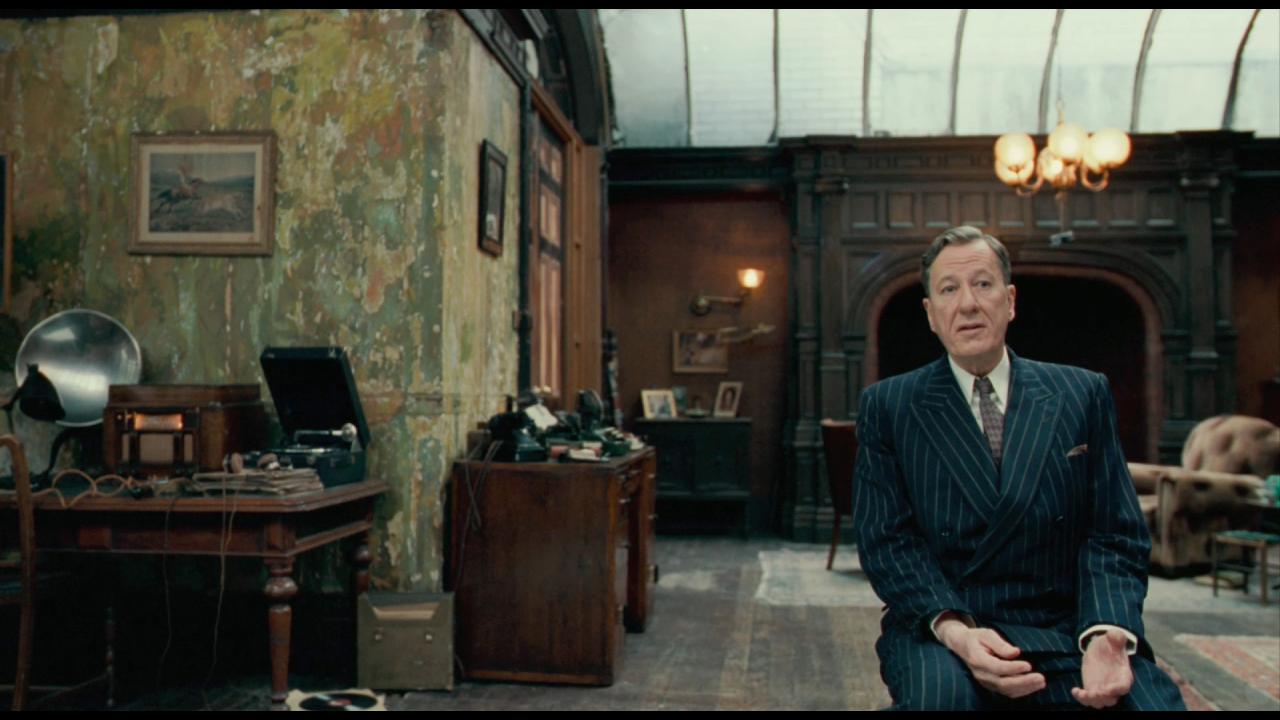
Enter Lionel Logue (Geoffrey Rush), full-time vocal coach, hopeful actor...Australian. He is visited by one "Mrs. Johnson"—the future Queen-Mum—to enquire about services, all the royal outlets proving inefficient, taxing and embarrassing for Albert. Logue has no idea who he's really dealing with—in all senses—explaining that his methods are "unorthodox and unusual."
"Not my favorite words," she sighs.
This is a cracklingly well-done film, subtle and efficient and literate—the script (by David Seidler) leading down as many paths as Logue has techniques, but the most interesting aspect is how the two men, Lionel and Albert (who Logue insists on calling "Bertie" to allow mutual approachability) must rise and lower each other to the occasion, Logue relying on his actor's discipline to gain respect, while Albert uses Logue to gain insight to the common man, essential to his tutelage. And the actors are terrific, not only the ones mentioned, but a small delegation of familiar faces maximizing their small roles. Derek Jacobi makes an early appearance, Anthony Andrews appears as P.M. Stanley Baldwin, Claire Bloom as Queen Mary, and Timothy Spall, doing a fair turn as Winston Churchill It culminates in a moving sequence as the new King must make a radio address to reassure the public after the declaration of war on Germany. Incongruously set to the second movement of Beethoven's Seventh Symphony, George VI, alone, with his coach conducting, must pick his way through his speech, every syllable a struggle to maintain control—the music behind him halting and building. I tell ya, I dropped tears, it's an extraordinary last act to an extraordinary movie.
Now...the rating. The King's Speech is rated "R" (in the United States) for the silliest of reasons—a short sequence where Logue badgers Albert into cursing like a sailor, including a string of "F"-bombs that kept it from achieving the lighter "PG-13," although the film really credits an ever lighter "PG." Don't be put off by the prigs of the Ratings Board. This is a fine, fine film.

Post-Oscar Bashing: Best Picture? Nah. Not in that gang of 10. But a safe, respectable choice. You can't complain about the script or the performances (I could about director Hooper's win, but as was clear in his acceptance speech, without Hooper—and his Mum—there would have been no film, and the script was certainly worthy). But, ultimately, it's the Best Picture Harvey Weinstein could buy...as has been the case before. Still. Great film. But not Best Picture...not with 127 Hours, True Grit, Toy Story 3 in the running.