Showing posts with label Mexico. Show all posts

Thursday, March 2, 2023

Bardo: False Chronicles of a Handful of Truths

Everybody 8½'s Once in a While
or
Maybe Your Navel Isn't As Interesting As You Thought It Was (Please Don't Eat the Dieties)
 
There are only three directors in Academy Award history who have won back-to-back Oscars for Best Director: They are John Ford (one might expect that—he won four BD's in total, the most of any director), Joseph L. Mankiewicz, and Alejandro G. Iñárritu (yes, for Birdman in 2014 and The Revenant in 2015). That is quite an accomplishment—or, more precisely, achievement—and is one of those distinctions that will (as award-winners mock) lede their obituary ("Oscar winner George Clooney—Sexiest Man Alive 1997, "Batman"—died today in a freak accident..."). That is, ultimately, the most those things will affect your life—they don't guarantee work or continued success or even "top-shelf" status—but, there is the perceived burden of living up to it, despite what happenstance tilted the odds and eventuated the win. 
 
And you can't discount Iñárritu's talent; even when his narrative is shredding, there are still images of such resonance in his films that you just want to stare at for awhile, whether to admire them for their beauty, imagination or just to wonder "how in the hell did he make that happen?"
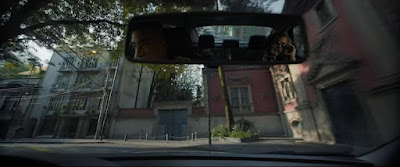
That's the case with his new one—it's on Netflix now—Bardo: False Chronicles of a Handful of Truths, which follows a journalist/documentarian of dual nationality traversing a void of magic realism through his life, relationships (with his family, his fame, and his country), and seeking answers. Sounds familiar. Feels like veiled auto-biography. And as for seeking answers, I'm right there with you, brother.
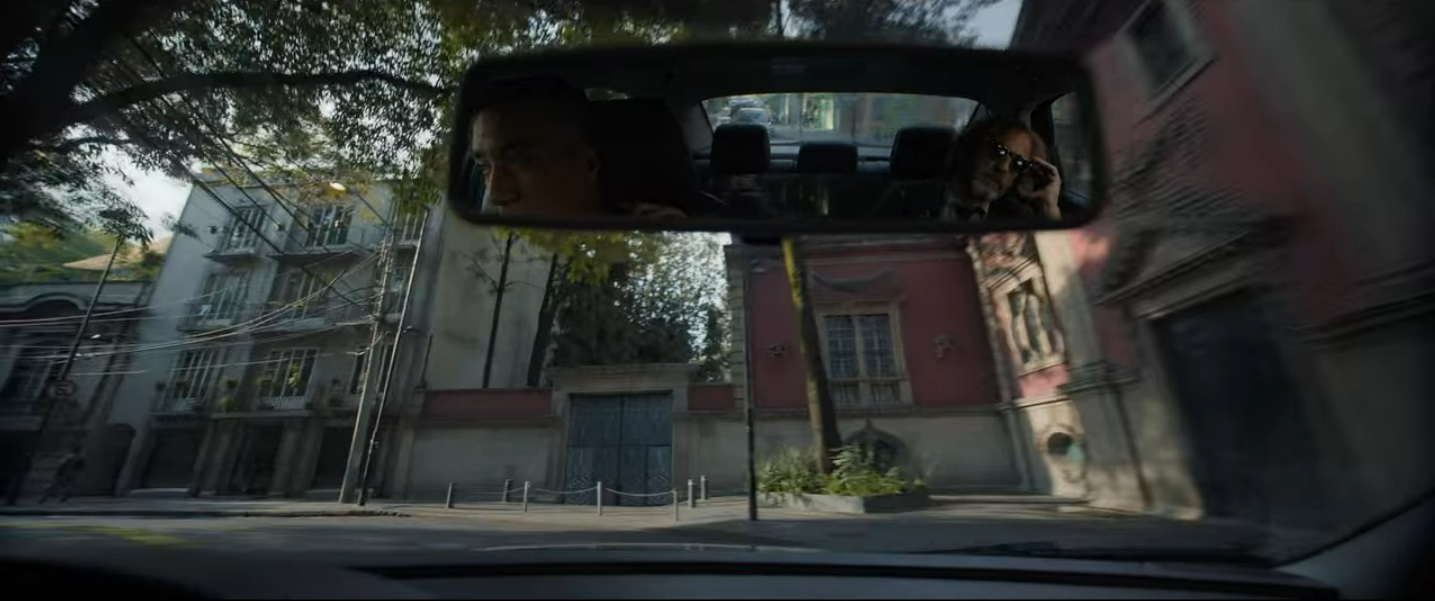
Shot (by the eclectic Darius Khondji) in wide-angle lenses that fold and bend space around the central protagonist, film-maker Silverio (Daniel Giménez Cacho), sucking you into his vantage point, the film follows a journey through various scenarios concerning his life, all linked by surrealistic transitions—for example, he could never walk from a nightclub-bathroom meeting with his dead father directly to the Asilo de ancianos where his alzheimic mother exists in one leisurely stroll—where memory and fantasy merge and coagulate to form the narrative. Figuring that narrative out (or even if you need to) is part of the point—and the problem—with the film.
One clue is the opening. A desert landscape. The shadow of a man runs and lifts into the air, his shadow no longer attached to the ground. It's a shot hop. He does it again. He's in the air a little longer. Third times the charm as he never falls back to Earth, but merely glides over the desert and the movie begins. I've had that dream. I've enjoyed that dream, and the most amazing thing about that dream is the unconscious thought while flying that it was the simplest thing in the world to do. But, I've seen that dream played out in other movies.
Specifically, Fellini's —a movie so diffuse in subject matter that it doesn't even have a title, it's just the eighth (and one-half) movie that Fellini made. Fellini didn't go into complex bifurcated titles, but so many of the navel-gazing movies ("Take a swig of success. Swish it around, spit it out. Otherwise, it'll poison you.") that have been generated over the past few months (was it the pandemic?; too much time in your own head?) that so many of them, especially when they point out hardships with their privileged lives, could all be subtitled with the one that adorned the meta-Nicolas Cage movie from last year, "The Unbearable Weight of Enormous Talent." But, they are all "flights of fancy." Whatever the director fancies, of course.
I have no problems with this, really. I think a movie is really—really—successful when it tells it's story through images, rather than spelling everything out in dialog. This is probably to do with the first "whack-you-over-the-head" moment about the unique communicative power of film, which, for me, was 2001: A Space Odyssey. I couldn't figure that thing out, but after some research I had an epiphany where the movie grabbed me by my theoretical collar, shook me, and said "Everything you need to know to figure out the story is right up there on the screen because I deliberately decided what to show you without any hand-holding dialog, okay? O-kay?" From then on, I was hooked for life.
So, fine, let Iñárritu wander about the "twilight zone-ish" "liminal state between death and rebirth" touching on such things as grief for a life that's barely begun (or one beyond its shelf-life), dual-citizenship, national identity, the battle of Chapultepec, the conquering of the Aztecs by Cortes, the philosophy of Octavio Paz, and the symbolic death of Centéotl (research), and discovering that what a bunch of extras on a movie-set are chanting is actually the name of a popular Mexican game show. All grist for the mill. But, if there's a grain of truth at the end of it, well, as somebody in the film says: You always want to explain things. Somethings are just what they are."
Is it all just the flashes of thought generated by a stroke-fueled coma? Does it have to mean anything so concrete? Is there a mystery that needs to be solved, or are we just hanging out in Marienbad waiting for something to happen—a murder, a scandal, an exploding helicopter, or even just a car smashing a fruit-cart?
Or is it just "Bardo: Stray Thoughts Realised with a Big Budget?"
Iñárritu knows, and, evidently, he's not telling.

Saturday, October 12, 2019

Cronos 1993

Cronos (Guillermo del Toro, 1993) Okay, Cronos is not Citizen Kane. Nothing is. But, for the feature film directorial debut of a new film-maker, it is very, very impressive. That the film-maker's previous film, a short called Geometria, looks as amateurish as can be. But, Cronos is lush, complex, and fascinating to watch. That it is also a vampire movie (of a sorts) makes it a curiosity. That it is the product of Guillermo del Toro, and one of his original works (rather than an adaptation) makes it quite essential to watch.  

It begins with a prelude, setting a historical, supernatural context to its modern story of greed and selfishness.


"In 1536, fleeing from the Inquisition, the alchemist Humberto Oganelli disembarked in Veracruz, Mexico. Appointed official watchmaker to the viceroy, Oganelli was determined to perfect an invention which would provide him with the key to eternal life. He was to name it the Cronos device. Four hundred years later, one night in 1937, part of a wall in a building collapsed. Amongst the victims was a man of strange skin, the color of marble in moonlight, his chest mortally pierced. His last words: Sua tempore. This was the alchemist. The authorities located the residence of the dead man. What they found there was never fully revealed to the public. After a brief investigation, the mansion and its contents were sold at public auction. Never on any list or inventory was the Cronos device mentioned. As far as anyone knew, it never existed."

Nor did anyone know that a bizarre, grisly tableau was found in the mansion: a man hung like a rack of meat, his body drained of blood that was contained in bowls on the floor. But, one man knows the story. Industrialist-millionaire Dieter de la Guardia (Claudio Brook) is dying and has been acquiring statues of archangels that have been rumored to contain the Cronos device that for so many centuries had kept Oganelli alive. Confined to a private hospital room in his complex, de la Guardia dispatches his ruthless American nephew Angel (Ron Perlman) to hunt down any archangel statue he can find that might have come from the Organelli ruins in order to prolong his life. Despite desiring his inheritance does his bidding, if only to maintain the lifestyle he feels he deserves—and for a nose-job operation he craves.
Which brings Angel to the humble antique shop of Jesus Gris (Federico Luppi), a humble religious man who has just been sent a parcel containing an archangel statue for dispensation. Angel throws his weight around the antiguery and tries to wheedle the statue from Snr. Gris, but the parcel has only just arrived and he won't let it go until he's examined it and tried to determine its worth. Angel leaves reluctantly, but threatens to be back.

Examining it, Gris realizes that the statue is hollow and opening its base finds an ornate gold watch-like device, which fascinates both him and his mute granddaughter Aurora (Tamara Shanath). It is very old and piques his curiosity and he becomes determined to find out its secrets. In the meantime, Angel comes back and acquires the statue, thinking he's now obtained the Cronos device.
Alone in his shop, Gris examines the mechanism for the device and engages a fob on it. Six mechanical legs pop out of it, making it resemble a scarab. All well and good, but the old man is surprised when the legs suddenly clamp down on his hand painfully. Then, to his horror, the mechanism unfolds a large needle out of its pattern and jams it into his flesh. Unbeknownst to him—but revealed to the viewer—inside the Cronos, living among its gear-works is a pulsing grub-like creature which injects Gris with a liquid that weakens him. He is tended to by his mistress Mercedes (Margarita Isabel), who worries about the wound but tends to it, removing a stinger, and bandages it.
That night, Jesus can't sleep. Thirsty and feverish, he can't slack his thirst with water. He's drawn to the Cronos and engages it again and, despite the pain, feels better. He goes back to bed, but in the morning, the light is blinding and he draws the curtains. But, looking in the mirror, he appears younger, some of his wrinkles having disappeared. Inspired, he shaves off his mustache, and Mercedes is surprised at how more youthful he appears. He moves better, too, and is more energized. 
But, going to his shop, he finds it vandalized. The Cronos not being found in the archangel statue, de la Guardia has stepped up efforts and doing so less circumspectly. Jesus is brought to the millionaire and feigns ignorance, but de la Guardia gives him a history of the device and of his own worsening condition. Jesus is determined to not let the Cronos go, but the efforts to get them escalate, even as Jesus begins to be stronger to survive them. He even survives Angel locking him in the trunk of a car and tossing it off a cliff. Although appearing to be dead, Jesus survives, but his skin has begun to peel off, exposing a paler, shinier skin underneath. And, as he's discovered before the murder attempt, he has developed a taste for human blood.
Although at times grisly and a bit perverse at times, Cronos fascinates. Del Toro turns the old vampire story on its pointed ear by taking the victimization out of it and any faux-romantic niceties that have perfumed the animalism of it for decades. Oh, there is blood-letting and an instance of neck-sucking, but the violence by the particulars has more to do with common greed and selfishness than with any acquiring of blood. In fact, a lot of blood here goes to waste. It would make a vampire fangs rattle in fear.
But, the artistry with which its done is so far ahead of what others have, that one could see that del Toro would be a unique film-maker with a future that he seems to be living up to.

Tuesday, January 29, 2019

Roma

Casual Cruelty (Till Human Voices Wake Us and We Drown)
or
"No Matter What They Tell You, We Women Are Always Alone!"

Alfonso Cuarón has come down to Earth.* Not only that, he's come home and he's revisiting the past. His latest film, Roma (nominated for a Best Picture Oscar) goes a completely different route than his space epic, Gravity, and is a far simpler story than it or his other most notable films, like A Little Princess, Y Tu Mama Tambien, Harry Potter and the Prisoner of Azkaban, or Children of Men.

The film covers a year in the life of a live-in servant, Cleodegaria "Cleo" Gutiérrez (Yalitza Aparicio, nominated for Best Actress, with no previous acting experience), working for a middle-class family in the Colonia Roma district of Mexico City, during a turbulent time (both politically and geologically) between 1970 and 1971. With her friend Adelita (Nancy García García), she cleans the house and takes care of the four children of Sofia (Marina de Tavira) and Antonio (Fernando Grediaga), a physician. Also, living with them is Sofia's mother, Teresa (Verónica García) and the family dog, Borras.
We go through a typical morning with Cleo as she scrubs the car-port (where Borras resides), gathers the laundry, then picks up the youngest, Pepe (Marco Graf) at school, prepares the children's meals and prepares for dinner for the entire family. At night, she sleeps above the residence with Adelita—aware that Sofia is keeping an eye on how much electricity they use—and begins the day again. She is a part of the family, but more subject to rebuke than any of the children and seems to be getting more criticism from the mistress of the place, as the family is going through a bit of strain—Antonio is spending more and more time away, saying that he's attending a conference in Ontario.
Cleo feels warm towards the children, especially the youngest boy Pepe, and is very deferential to the two elder women of the house, but she can't help but notice things. Still, she keeps busy and looks forward to spending her one day off, as she's been seeing a boy, Fermín (Jorge Antonio Guerrero), a cousin of Adelita's boy-friend. He's pleasant enough, but very proud of his martial arts training—hey, this was before Star Wars, so he has to be obsessed with something.
But, it isn't long before Cleo begins to suspect that she's pregnant—she tells Fermin on one of their dates to the movie-house, but he begs off to go the "lavabo" and...just disappears, leaving her alone to consider her ride home...and her future. She is deathly afraid of telling Sofia, but her employer is entirely sympathetic and insists on taking Cleo to the hospital to be checked out (and so she can inquire about her husband, whose business in Ontario has lasted much longer than was originally predicted). It turns out Cleo is three months along, and she's told to wait in the nursery when the building is shaken by an earthquake. It's just a tembler, but it's enough to send parts of the ceiling down on the incubators in the facility.
Over the next few months, Cleo gets bigger and the family smaller by the absence of Dr. Antonio. It seems he'll be gone over the Holidays and so Sofia decides to take the family to go see relatives over Christmas and New Years, taking Cleo and Adelita with them, and the servant observes there is talk over land-rights and everyone is well-armed should things become a bit rough. She also notices that Sofia is struggling with her aloneness, as she is only too aware that her husband is not at some extended conference in Canada, something that she is keeping from the children. But, Cleo senses it. She knows what it feels like to be abandoned.
Cuarón's style here is strictly controlled (far afield from the loopiness of Prisoner of Azkaban or the POV at all costs and angles of Gravity) consisting of long takes—not unlike the intention of Gravity; the camera takes a position and remains on point, either swiveling slowly to take in the action as it occurs before it, or tracks along perpendicularly to keep the action in frame. It never rushes or jostles and there is no hint of hand-held work, the camera observes without comment or impending any added drama or or psychological intent to the scene. Even the depiction of a riot—the "Corpus Christi massacre" as it was labeled—is photographed with a camera that bides its time, dispassionately.
Roma is photographed in black-and-white, with what appears to be natural light, only a few shots make use of focus, and for the most part the film has a wide depth of field, everything in range in crisp focus and detail. No tricks, no subterfuge. Just recording the scene as it transpires, all of the action reliant on the figures caught in its boundaries.
That ambivalence in the camera extends to the soundtrack as well, certainly the finest work of the year. There is no music to "goose" the emotions or tell you what to think. Any music is source and appropriate to the period and offers no sub-textual comment, even in irony. And the sound design is complex and ever-present; it is a mixture of natural sound and layers and layers of detail, right on up to the sky and its occasional drone from a passing-by plane coming in and out of frame. The sounds are always there, providing a deeper layer to what is going on on-screen, with the sense that life goes on, all around and off in the distance, no matter what happens to the people in out focus. The world moves on indifferently, no matter the attention we pay to the characters we care about.
I love this kind of movie; it gives you plenty to think about, to observe and take things in.
And what one sees is people in turmoil. But, also impacted by what is going on around them, as the world continues to spin and life moves on. It doesn't matter if someone's heart is breaking, the pedestrians still pass by. Nor does a traffic jam care that in the midst of it, a woman is going into labor on her way to the hospital. Newborns are as protected as can be from the germs of the world, but an earthquake makes no concessions for their youth and helplessness; an earthquake quashes humans and germs alike flat. Acts of selfishness are there because those committing them simply do not care about the impact, only the personal benefit.
And that's where Roma hits me in the heart. The writer, John D. McDonald—he of the colorful Travis McGee detective stories—once saged that "the opposite of love is not hate—they're just two sides of the same coin. The opposite of love is indifference."

The world is indifferent. We put God in charge to explain it away, or, in our most kumbaya-moments, link ourselves as one body, troop, congregation or posse, when we're just individual cells commingling and colliding and breaking apart, separate and unequally equal. Laugh and the world laughs with you (if they're paying attention); cry and you cry alone. The world doesn't care. The world's too busy being the world.
That is why seeing the world through Cleo's experiences is so revealing. Her role of servant makes her an ever-present something-to-be-ignored, someone you order to clean the shit and find out, much to your surprise, she's the one you want there when it hits the fan. She is a constant Job on the job, ignored but not ignoring, the paste that holds things together, even under the onslaught of a constant casual cruelty. You care because she cares.

I strongly suspect that Roma will win the Best Picture Oscar and it should, despite some great films competing against it. It has the soul of a great movie, telling its story through image and putting you in another world, apart from your own, a magic lantern of communication. The best of what movies can be.

But, then, I also cynically think it will be because it has a couple scenes in a movie theater. The movie people like that sort of thing.

Wednesday, April 16, 2014

The Brave One (1956)

The Brave One (Irving Rapper, 1956) An almost essential film for children that has fallen by the way-side in the public consciousness, but its story of a boy and his bull, each with their own battles to fight in an uncaring world filled with cruelty will create that sense of wonder in a child (or an adult), while delivering a message of empowerment to the short—and dismissed—in stature.*

There's nothing better in a kid's film, whatever the genre, be it The Wizard of Oz, Willie Wonka, or The Yearling, or even (dare I say it?) Star Wars or Harry Potter.  If you're gonna plop your kid in front of a movie, it's a bonus if there's a life-lesson that will resonate, rather than merely amuse or create short-term product demand.

Like a lot of these, the story involves bonding.  A child, Leonardo (Michel Ray), saves a young bull, separated from its herd, from a terrible storm.  He adopts the bull, names it "Gitano" (for "Gypsy") and raises it (I guess, to "bullhood"), only to have it taken away, because technically, the bull belongs to the wealthy rancher Leonardo's father works for.

But, because of Gitano's rebellious spirit (with anyone but Leonardo), the unruly bull is sent to Madrid for the bull-fighting ring in the nation's capitol. Knowing the bull's chances of surviving the competition don't exist, the boy travels to Madrid to plead mercy for the bull, exhibiting the same courage against the rigid rules of the bullring and of government bureaucracy. 
Now, it's interesting to consider...if one is drawing parallels between films (and one tends to do that)...that the author of this film—"Robert Rich," a nom de blacklist of Dalton Trumbo, who, because of his dealings with Communist publications during the 1940's, would run him afoul of the House Un-American Activities Committee in the '50's and "blacklisting" throughout that decade—would, in three years, be producing another script about another rebel sent to a ring to fight to the death, and started a revolution of his own. That film is Spartacus, and one can't help seeing the similarities between the death-battles in the bull-ring and the gladiator-coliseum, both in the script by Trumbo and the direction of a young Stanley Kubrick.
The director of this one was Irving Rapper, a bit of a maverick in his career as a Warner Brothers dialogue coach and director (Bogart once told him "Skippy, you have one more suspension and you'll be on the San Francisco Bay Bridge!"—this from an actor who had his own run-in's with the Warner brass) Rapper had a varied career (from the classic Now Voyager to the less-than-classic The Christine Jorgenson Story), but he was an intelligent, intuitive director (and he gets a marvelous performance out of young Ray), who could make the most out of good material and struggled mightily with bad.

When it cam Oscar-time, The Brave One won an Oscar for its story credited to "Rich," and the Academy ("brave" industry reps that they were and are) kept up the studio-imposed subterfuge.  It wasn't until 1975 that Trumbo was acknowledged by them as the author of The Brave One.

* It may also be difficult to find as it shares the title of a fairly lousy Jodie Foster vigilante revenge movie, made in 2007 by Neil Jordan.  Make sure which one it is before showing it to your child.