Showing posts with label Justin Timberlake. Show all posts

Wednesday, February 21, 2024

The Social Network

Written at the time of the film's release...(although, here, outdated links have been deleted and more relevant ones have been inserted...and then, I'll post the thing on "Facebook"...which is so "Meta")

"Saving Facebook" ("Every Creation-Myth Needs a Devil")
or
"There's Somethin' Happenin' Here (What It Is Ain't Exactly Clear)"

"O wonder!
How many goodly creatures are there here!
How beautious mankind is!
O brave new world,
That has such people in't!" (The Tempest, Act V, Scene 1)


Maybe it is too early to make a movie about Facebook (out of MySpace and Friendster) and the ramifications of our Brave New World of cyber-relationships. Maybe it is a little too "street-corner sage" to predict The End of the World As We are Sorta Familiar With it (But Not Really...More Acquaintances, Really). But, it is interesting to see a story about the Frankenstein behind the Monster, if only to see how each reflects the other.

And even though we're secretly rooting for The Monster.
And, at this point in time, there isn't a better team to make
The Social Network
than Aaron Sorkin and David Fincher. Sorkin, the mad savant behind some of the better TV shows of the past decade and a half, has always written about people and their "issues," and how personality impacts policy. Fincher has matured from an ILM tech (who was happy to fly cameras through coffee-maker grips**) to an intricate observer of societal pressures on the psyche. For the two of them to make this particular story is a Friend Invitation made in Hollywood Heaven.  "Accept" it. But, you can't "Ignore" it.
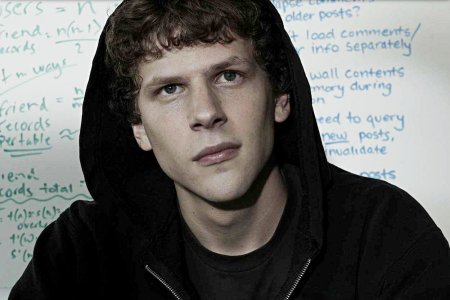
The movie begins with a date going badly between Mark Zuckerberg (Jesse Eisenberg, late of many movies with "...land" in the title) Harvard wall-flower, and Erica Albright (Rooney Mara—she'll play Lisbeth Salander opposite Daniel Craig in Fincher's big-budget version of The Girl with the Dragon Tattoo), an acquaintance. Anyone familiar with the machine-gun dialogue that writer Sorkin is known for, had better duck for cover—or wait for this on DVD so you can...play...it...slooooowly—for he now has an automatic weapon for a word-processor, and a co-conspirator in Eisenberg who can milk every nuance out of a line, despite hyperventilating it at debate-competition speed. His Zuckerberg is a "no Dolby/no squelch" type of unreadable conscience, and Eisenberg plays it with a deadness behind the eyes that interprets the world as a problem, if not necessarily a challenge. He's a bit too candid for a first date, and she stomps off, which sends him on a mission, simultaneously trashing her on his blog (LiveJournal) and culling the pictures of every woman on campus to create a "Who's Hotter" web-competition that becomes so popular so instantly that it crashes Harvard's web-infrastructure.
He becomes both famous and infamous for the stunt,
guaranteeing he'll never get a date in college, and attracting the wrath of the college's board, and the interest of two preppies attempting to create an exclusionary social network on the web. He goes them several steps better, making a system open to everyone on campus that trumps their attempts, and as it gains "friends," expands throughout the college system.
Hindsight is 20/20, and Sorkin constructs the film as a series of depositions after the fact (of Facebook's success) as everyone who thinks they've been burned by Zuckerberg testifies to his vague promises and dealings under the table.*** Of course, they have every right to sue—but they'd only sue if "The Facebook" was a success—and the underpinnings and double-dealings don't resemble a fight for satisfaction, or a Noble Quest, so much as resembling a snake eating its own tail. ****
Which brings us back to Frankenstein and his Monster. The film itself is expertly done—it is a complicated story of hidden motivations and the presentation of masks before public faces—
and Sorkin and Fincher manage to navigate us through the maze of the story, even though one feels there is no cheese at the end. The experience is a bit hollow, which may be a part of the point.
Because the Facebook experience is hollow, as well.
As hollow as Zuckerberg, as portrayed in this film, is. While it is nice that one has the opportunity to "re-connect" with old friends in a virtual environment and satisfy everyone's need to (as one friend commented on blogging) "talk about what you had for lunch," one wonders why one has to re-connect at all...especially if the relationship wasn't maintained in the first place. Not enough time in the world to meet? Because a "real" relationship takes time, takes effort, "gets messy?" Facebook provides the illusion of "staying in touch," without actually touching. Like Zuckerberg's abortive "date," a lot of time is spent broadcasting, but not interacting.
There are, of course, exceptions. But the fact of the matter is Facebook's cyber-community is not a "Brave New World" at all. Just the opposite. It provides a substitute in lieu of commitment. A panacea in a life thought to be full to bursting and without risk. The most precious commodity we can give is time—slices of our lives and our selves. Facebook is a pacifier—a mass-Hallmark card that we can spend a few heart-beats picking out, and send away without a thought and not even sweat the cost of a stamp.

It soon becomes a numbers game—a collection, like the celebration of the 1,000,000th friend portrayed in the film. But who are those million people?  Facebook doesn't know or care. It's just a number. A number of casual relationships, that may lead to something else, but probably won't. A collection, nice to look at, but more often, ignored. Trophies, and ones that don't need to be polished or buffed up.

It's a new world of blithely arrested development, in the image of its creator, where love and commitment do not compute, and the only thing close to it is "hope"—translatable as keystroke F5.

* Except for some dodgy freezing breath-work, the biggest special effect will be invisible to you until the closing credits.  Nice.

** Personally, I'd like to get back all those hours spent on "ZooWorld."

*** An image that kept coming to mind every time I thought of writing this review, where it would subsequently be published...on B/C-L's's Facebook page.

Tuesday, August 16, 2022

Trouble With the Curve

Written at the time of the film's release...

I Am, I Said/To No One There
or
Becoming Eastwood

Amy Adams is amazing, really. Clint Eastwood has had many female co-stars, from Shirley MacLaine to Meryl Streep, and directed a bevy of others, some of whom have given great performances—Laura Linney, Marcia Gay Harden, Hilary Swank, Angelina Jolie, two of them to Oscars—all have studied at the Eastwood school. The results have been a combination of actress' gifts and Eastwood guile. But, none of them have taken to heart that state of naturalness, the implacable restraint and mandarin ironic humor that the actor has demonstrated in the past like Adams does in Trouble with the Curve, Eastwood's latest project (produced but not directed—that job going to Eastwood's assistant director Robert Lorenz) about the relationship between an aged baseball scout and his estranged-but-not-fallen-far-from-the-tree daughter. Linney has played Eastwood's screen-daughter in the past, and she was terrific, but Adams imbues so much of Eastwood's game that one actually believes in the symbiosis, and their scenes together crackle with a lived-in familiarity, a mutual passive-aggressiveness, and a sense of shared past and unspoken tensions. 
Eastwood is the top-liner but it's the daughter's story. Mickey Lobell (Adams) is on track to partner at a law firm (nice line up of of Bob Gunton, George Wyner and Jack Gilpin—in fact, the film is top-loaded with good character actors, not only in the firm, but also in the Braves organization—Robert Patrick—and among the veteran scoutsEd Lauter, Raymond Anthony Thomas, and Chelcie Ross) when she gets wind from family friend, Atlanta Braves scouting coach Pete Klein (John Goodman) that her scout father (Eastwood) is about to be brushed back in the organization—he's old, his eyes are going, and there's a new scout (Mathew Lillard) who's more into stats and remote-controlling his decisions than doing the leg-work of seeing and hearing what the talent can do (this one would make a fine double-bill with Moneyball if double-bills still existed). 
Lobell is given one last chance—check out a kid with a killer swing (Joe Massingill) who looks to be a high draft pick. Lobell's job is on the line, and Klein recruits Mickey to follow the old man on-deck and pinch-hit for him if necessary as a seeing-eye daughter. Against her better instincts, she heads to North Carolina to dog her father by day and work on her client-presentation at night (the film sends mixed messages on the thesis of remote-working, as it seems to be fine for her), the father and daughter trading mutual scowls and muted growls, trying to "get closer" while they couldn't seem more like each other.
That's a lot of scenario for a deceptively simple story about relationships and the importance of "being there" in them.  It is also complicated by the mutual interaction between a fellow scout (Justin Timberlake) that the older Lobell has a past with, and the younger might have a future with—Timberlake does fine, relaxed...even charming...work here, not so strong on the dramatics, but hitting solidly on the humor (best line: "Poor Bruce..."), finding a nice line between Eastwood and Adams and making the most of a convenience role to show growth between the two characters.
It works and works solidly if you, like Eastwood's character, don't look too well at it. And there's some late inning contrivances that come out of left field that tie everything up a little too conveniently and nicely, managing to retire the side and take care of every issue in only three pitches. I smelled a rigged game—we really didn't need a Grand Slam on the last pitch to put up a "W" for this one, and, to my mind, took away from the good things that had come before.

Maybe I was feeling that way, anyway. Personally, I'd've been happy if Clint Eastwood had stuck to his lack of guns and retired from acting (as he said he was doing) with
Gran Torino. The grace-note of that particular character's last act served as a "period" to the syntax of Eastwood's career, full of so many unrealistic face-offs with clusters of opponents throughout the years.  It was the perfect bow and the perfect statement. But, he had to do a friend a favor—get his buddy a director card—and so he came back. I found it a little disappointing to find out that even Eastwood didn't know when the quitting was good. But, his work here is good, even if the eyes are squinting down to a lack of expressiveness (he does a wink here that is probably only visible in HD), and the voice has been reduced to a burned-out husk. The gravitas and irony are still there, though, enough for Adams to latch onto and take advantage of. And it makes for a pretty good show, while it lasts.

Wednesday, February 5, 2014

Inside Llewyn Davis

I'm SO Not There
or
Negatively Fourth Street

Llewyn Davis (Oscar Isaac) is the remaining 1/2 of the singing duo Timlin and Davis, a not-successful folk act—although they have one pressed album floating around. Timlin committed suicide by jumping off the George Washington Bridge, leaving Davis, the talented but not as charismatic part of the group, to fend for himself.  

"Well, shit," says an unsympathetic car companion on a trip to Chicago (played by John Goodman) "I don't blame him. I couldn't take it if I had to sing 'Jimmy Crack Corn' every night."


It's the era when Bob Dylan burst forth in the consciousness during the folk renaissance in New York's Greenwich Village, but this movie isn't about Bob Dylan (although he's alluded to at the end). It's not even based on the life of Dave van Ronk, whose reminiscence, "The Mayor of McDougal Street," inspired Inside Llewyn Davis.  

Don't look for history here, though. This is a Coen Brothers movie; we're in the land of Myth.
It's another in a long line of their "tough luck" films where they play God and some poor schlimazel* plays Job (or maybe Sisyphus—or his Looney Tunes equivalent, Wile E. Coyote—if they've got a screw loose or have stopped caring) like H.I. McDonnough (Nicolas Cage) in Raising Arizona, Barton Fink (John Turturro) in that film, "The Dude" (Jeff Bridges) in The Big Lebowski, or Larry Gopnik (Michael Stuhlbarg) in A Serious Man. All those movies tread the razor's edge of comedy and tragedy, every step a little painful to watch, no matter which tradition the film ultimately lands in. Inside Llewyn Davis falls in the ice-encrusted mud puddle of tragedy, but the protagonist survives. And as we all know, anything that doesn't kill you...

Well, that doesn't really apply here.
The film begins with Davis performing at the Gaslight Cafe. He ends his set with his standard line "If it's never new and it never gets old, it's a folk song." Interesting line. He's then told by the cafe's owner, Papi, that someone's outside waiting for him.
When Llewyn goes outside, a man in the shadows begins to pick a fight, then beats him up, leaving him in the alleyway, bewildered as to what that was all about.
He wakes up the next morning, having crashed at the pad of fans of Timlin and Davis, the Gorfeins, their cat staring him in the face. He pads around the house, finds a Timlin and David album, plays it, and it's the same song he sang at the beginning of the movie, but with Timlin, it's sweeter, more hopeful, more of a crowd-pleaser and less of a lament. It's the same tune, but it's the singer, not the song.
We don't see Timlin much, just his image on that record cover. But folks remember him, talk about him fondly, leaving Davis feeling like a widow and a bit like chopped liver. He's trying to make it on his own and not doing a good job of it, sleeping on a series of couches where he hasn't overstayed his welcome yet and depending on other people's kindnesses, while his mounting frustration with every slight makes him more petulant and ornery.
And there are disappointments around every corner and city-block, unforeseen details and happenstances that frustrate, confound, cost money he doesn't have, or provide a revelation for that thing that happened last week that might have been something if...
Well, if he hadn't been such an asshole. Or was a little more forgiving, or not so reliant on living in the moment, and for the next crisis. But, he's not. He's Sisyphus, the Greek king, who, for his deceit, was punished by the gods to roll a boulder up a hill only to have it roll back down on him to the valley, to begin the long process again and again. Wince and repeat. For all eternity.
Davis has that quality; he has a tendency to make the same mistake more than once and then fall back to the familiar—it's never new and it seems to never get old. That's folk music. And when we reach the end of the movie and he's again beaten up in an alleyway by a "friend," we have to ask ourselves: is this a reality—does he actually get beaten up in the same way by the same guy? Or was that first sequence a dream (we never really see him pick himself up and go to the Gorfeins to crash) and he's just fulfilling the only kind of dream he can? The only one he has? Or is he really doomed to repeat the same sequence over and over. 
There's always that sense of Sisyphusian repetition in the performing arts—a guitarist once told me "As many grains of sand on the beach, that's how many times Carlos Santana has played "Black Magic Woman"—but the Coens turn it into a cruel fate, a myth that reflects life (as it's supposed to), that cautions us and makes us say "...glad I'm not him" no matter how many endless failures we might have looking for a job, or the monotonous grind of the 9-to-5 that has us praying for the weekend (if we get a weekend), the rejections, the humiliations, "the thousand natural shocks."  
"Glad I'm not him." It's tough to recommend Inside Llewyn Davis for the casual movie-goer who "wants to have a good time" (imagine the same argument for 12 Years a Slave!). Its humor is dark, subtle, and he's a creep, and there's no real vicarious satisfaction to be taken in his struggles. It is, however, a great film, one to be appreciated after so many cookie-cutter CGI-fests this past year that are so much pixilated cotton-candy that are out of theater/out of mind. Inside Llewyn Davis stayed with me for weeks, which was a rare treat.
A Columbia recording gig in Inside Llewyn Davis for a novelty song, 
written by Timberlake's "Jim," "Please, Mr. Kennedy.' 
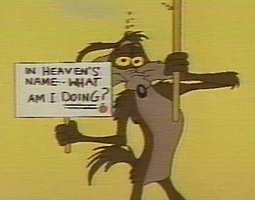
This is Llewyn's bad attitude on "light" and his reactions to the third singer (Adam Driver) are hilarious.
Even this has a downside. 
"Dink's song" (aka "Fare Thee Well") as sung by inspiration Dave van Ronk

 
* At this point, we need to remind you that a schlemiel is the person who spills the soup, the schlimazel is the one who has the soup spilled on them. The distinction is important.