Showing posts with label Jodie Foster. Show all posts

Friday, February 2, 2024

Nyad

Leave Them Wanting More
or
"Jesus, Mary Oliver!..." *sigh* (Can You See it? Can You See It?)
 
On her 60th birthday, Diana Nyad (Annette Bening) is in a funk. She doesn't want a party—she gets one, anyway, by her friend Bonnie Stoll (Jodie Foster). It's been awhile since she was famed for her marathon swimming. For 30 years she's been working for ABC Sports and she's left with the feeling of "where's the excellence?" She has finally gone through her mother's things, collected after her death, and found a book of poetry that she starts obsessing over. She does that...obsessing.
 
One of the things that she obsesses over is one thing she didn't do in her life—swim the 103 miles between Cuba and Key West, Florida. Her attempts in the 1970's were unsuccessful given currents and unfavorable conditions; they made all of her efforts time-consuming and energy-wasting, and success is measured by strokes and calories, wasting any of them you increase the number of miles and the time needed to do it so that the goal becomes increasingly out of reach. Now, she's determined to do it...by any means necessary.
 
Despite being over 60 years old.
Nyad, on Netflix, tells the story of how that obsession takes over the thoughts and life of the swimmer, and, in turns spills over into the lives of her crew assisting in the effort. It may look like a solo effort, but that it's to be done in open ocean complicates matters. Sailors on perfectly fine boats have sunk, gotten lost, or merely disappeared without a trace in the area, and she's just one person, one tiny speck, in a big ocean. Without supervision, navigation, occasional nourishment, one person is sure to be swamped by time and tide—not to mention the predators that share the space and care more about feeding that making records. That crew needs to observe and document, as well, or the achievement won't be recognized. Going solo? That's not a goal; it's a death wish.
So, Nyad trains, day and night. At the same time, Stoll assists in looking for funding, sponsorship, and a crew, taking into account all the factors that presented Nyad from accomplishing the goal previously. Before, she'd done it swimming in a moving shark-tank. She puts the nix on that immediately. Also, the navigation she'd relied on had her swimming off-course, so she finds a local navigator/boat-runner John Bartlett (
Rhys Ifans) who knows the waters between Cuba and Key West so well as to be an irritant—he's not going to make a mistake and will err on the side of caution, rather than blindly plunge forward (something Nyad would do, even if not hampered by stress-induced poor judgment). 
And for her coach, it's Stoll. No one else. Not so much for expertise on sports medicine—she can hire people for that...and does—but because she knows Nyad so well, the bad and the good. Friends for 30 years, and having dated ("for like 30 seconds") back in the past, she knows Nyad's strengths...and weaknesses—it's why they're merely devoted friends—and knows what the swimmer is capable of—endurance, obstinance, and mania—and can negotiate the rocky shoals of Nyad's narcissism and insufferability to see the right thing and do the right thing when Nyad's tunnel-vision can't. It will test their friendship, despite their long history, to the breaking point, just as Nyad's tenacity is capable of breaking her own endurance.
Which is where the actresses playing the leads come in. Both Benning and Foster are acknowledged as being legendary thespians, but their work here, separately and together, is a notch above what you already expect. Foster, for her part, plays Stoll as a long-suffering aide-de-camp, team-player and punching bag, not afraid to call out magical thinking and just BS, but manages to do it in such a breezy and utilitarian way that one can't begrudge her. One sees the paradox etched into Foster's face as she uses facial muscles that she hasn't flexed in a lifetime of performances. And her bantering with Benning perpetually feels like she's making it up on the spot. It hardly feels like a performance, practiced and perfected, as it does a free-wheeling dance of improvisation. There isn't any past fall-backs here; Foster is exploring new ground.
And Benning? You always knew she was "that" good. But, here she commits to the physical demands and the sheer blinkerdliness of Nyad's obsession. She understands that Nyad's devotion to her own physical perfection to be ready for such a feat makes her such a creature of the internal that the outside world is a bit of an irrelevance and frequently merely a road-block. She spends so much time in her own head that empathy could be a symptom of weakness and her own care-and-feeding of her ego and importance becomes a side-effect of her strenuous preparation.
She's in another world than everybody else. She has to be to endure the tortures and the distractions that will come from the mechanical rigors of moving arms forward and back and kicking for every inch of forward momentum. She may protest that the sea is the perfect place for her to be, but she works and practices and trains as if its her enemy, the more dangerous element of a world that potentially blocks her way. Only in her head is she safe, despite the pain in her muscles, the cramps in her legs, the building weariness and decomposition that she is only too aware of and fights to ignore.
You got to be crazy to do something like that, and Benning leans in to the crazy, quite recklessly, not caring that it might sacrifice audience sympathy (after all, Nyad, herself, wouldn't). It's gutsy and unapologetic and just plain fierce.
The directors, 
Jimmy Chin and Elizabeth Chai Vasarhelyi, need something like that. This is their first dramatic film—they've only done documentaries before this, one of which was Free Solo, so they know about athletic rigors and the discipline and the potential for mental anarchy that can ensue. Athletes themselves—they're avid rock-climbers as Free Solo demonstrated—they know about risk and discipline and distraction (a good section of Free Solo was the crew discussing how they could make their work not be a distraction for climber Alex Honnold) and they do a good job of creating the painful monotony (without over-doing it for the audience) of such a challenge while imagining the head-space that Nyad must make for herself. It's a nice "all things considered" approach that only raises the stakes and ensures audience involvement. You fret. Which means the filmmakers have done their job.
It's an amazing piece of work and it would be nice ("nice") if there was some recognition for this during awards season. But, one has to admit, that it's likely to be swamped by its considerable competition. You can't train for that.
 
Time and tide, after all...

Saturday, September 9, 2023

Shoot 'Em Up/The Brave One (2007)

Oh, a two-fer for "Take Out the Trash" Day, both written at the time of these mis-fires' discharges.

"Guns Don't Kill People....But It Sure Does Help!"

"The Angriest Man in the World," Mr. Smith, is sitting on a street bench in a squalid part of town. He's introduced with a Leone-style close-up of only his eyes. Then, cut to his face. It's Clive Owen in full wide-eyed coma look. He brings a carrot up to his face and loudly crunches into it.

What's Up, Doc? 

Well, it's certainly not anybody's IQ.

Next, a very pregnant woman runs past him (shot none too elegantly), followed by a speeding car that noisily and gratuitously slams into another car, trapping the driver. He gets out the passenger door, spewing paper and fast-food bags and garbage out of his car onto the street.


There...right there...maybe two minutes into the film is the only amusing idea in the whole movie. And it was only amusing to me because it reminded me of my car. 
But that's it--the only thing I enjoyed in the entire film, no help from director Michael Davis. In the sums-it-up Shoot 'Em Up, Clive Owen's "Mr. Smith" finds himself charged with protecting a baby, just like Children of Men, but without all that boring social commentary and stuff. With the help of a lactating prostitute (Monica Belluci, shot through a vaseline-greased lens, and utilizing the time-honored 60's-style "Bad Italian Actress" technique), Smith and child evade Mr. Hertz (a bug-eyed Paul Giamatti, reminding me that it was only a few years ago that he starred in stuff like Big, Fat Liar) who has an infinite number of disposable goons, with an infinite number of bullets that seem predisposed to not hit anything, while Smith's gun hits something (usually lethally) every time.
Shoot 'Em Up
tries to align itself with
the Warner Bros. cartoons of Bugs and Elmer but has not the wit, the style or the precise timing (Giamatti starts the movie with a Merrie Melodies lisp, but inexplicably drops it a few minutes in). I was really hoping that at some point Owen would hit him in the face with a frying pan, so we'd see Mr. Hertz's face flatten out, but no such luck.
And, of course, after every set-piece or innovative killing technique (Smith kills with a carrot--twice) there are the
inevitable one-liners that haven't been so eye-rollingly bad since Roger Moore was James Bond, with all the sophistication of the chat-room droolings of pre-teens. After a simultaneous shoot-out and screw where both participants reach their ...climax, Owen turns to the camera and in his best Terminator-in-Chief drone says, "That's what I call shooting your wad." But then there's "Eat Your Vegetables.." (after a carrot-killing), "That's what I call a hand-job," and the immortal "Fuck you, you fuckin' fuckers!" That kind of lummoxy aside reached its satiric punch-line with the antics of "McBain" on "The Simpsons," but it gives me hope that someday I can get just such a writing job. At the end, Belluci looks at Owen and says "What took you so long?" I half expected the lame-ass line that ended Robert Altman's The Player: "Traffic was a bitch."
According to this flick, there's nothing worse than "a pussy with a gun." I dunno, how about "a pussy with a movie camera but without an original idea in his head, a lick of talent, or the smarts God gave a radish?" Yeah. That's worse. A lot worse.
-----------------------------------------------------------------------------
Oof. Talk about your awkward segues.

"The Angriest Woman in the World" Erica Bain (
Jodie Foster) by the end of The Brave One is in the same mode: "Who's the Bitch now?" she screams as she mows down one of the men who beat her into a coma, killed her fiancee...and stole her dog. Not only does she get her revenge, but she gets her dog back (oh...spoiler alert!), so everything's all right, right?*

Never mind that for the preceding two hours--that feel like four--she's bided her time by capping the asses of whatever scum of the earth crossed her path. At least she's an equal opportunity vigilante: one group's Latino, another is black, and three separate white guys--bonus points for the rich one.

Were I John Hinckley, I'd stay in prison.
The critical rags are calling this "
Dirty Harriet,"
* but that's all wrong. Its the daughter of Death Wish, the Charles Bronson viscerally charged revenge-actioner with the same formula and practically the same resolution--except with a gun rather than the earlier film's non-cinematic plea-bargaining.
Erica is a radio-journalist--well, an audio-documentarian, whose love affair (and experience) with New York extends as far as her ear-buds, spinning chatty little stories about the "myth" of old New York, and what gentrification is taking away. Tellingly, one of the first things we see her doing is recording her own foot-steps as she walks the city streets. From there, she goes to her little iso-booths and spins her valentines to "the safest big city in the world" (except it's missing a couple of prominent buildings downtown, and not to gentrification).
After the attack, she's even more isolating, and butches up her wardrobe, symbolically shedding her skin to become a new person that she doesn't know or understand. Oh, and there's that shooting-people-in-subways thing. "Inside you is a stranger," she narrates to herself. "Why don't my hands shake? Why doesn't anyone stop me?" Pretty soon she's doing it not because she's threatened, but because she can, and in a perverse cat-and-mouse game strikes up a friendship with detective Terrence Howard, who is feeling increasingly powerless to stop the newly-empowered vigilante messing up his mean streets. I came away thinking "never give Terry Gross a gun."
Of all people, Neil Jordan (The Crying Game, Interview with a Vampire) directs this,
** and his way of showing fear and Erica's world out of whack is with slowly tilting shots with a steadicam (with its gyroscope knocked out), which made me think we were heading for the Penguin's dastardly bird-themed lair. It's a little tough to take this stuff seriously when it reminds you of the old "Batman" show. About the only pleasure in the film is the beyond-cynical banter of Howard and his partner investigating the crime scenes (My favorites: "Guy had a rap sheet longer than my dick" "No priors?" and "Any idea what killed him?" "Could be the fall--could be the crowbar stuck in his head--I'm thinkin' 70/30, maybe 50/50"). And a tiny scene with a police desk-clerk who routinely mantras "I know how difficult it can be, but if you will be patient and have a seat an officer will be down shortly to help you." It makes the same point about institutional disinterest in 20 seconds that it takes the whole of In the Valley of Elah to make.
And the acting. Even with this type of material,
Foster takes it right down to her marrow, until she no longer looks like the same person. There is a terrific scene of her and Howard in a diner not talking about what they're talking about while "You Don't Know Me" echoes over the PA that's very well done.


Wish it were in another movie.

* 2023 Update: "The dog bit." I thought it was a lame pull-for-the-heart-strings back when this was released, and even more so when John Wick stole it as a semi-serious/semi-jole motivation in that increasingly-escalating-with-diminishing-returns series.
 
** "Dirty Harry," the police-as-vigilante movie was co-written by Rita Fink.

*** Yes, but Joel Silver produces. That might be the answer.

Thursday, August 31, 2023

Shadows and Fog

Shadows and Fog (Woody Allen, 1991) When Woody Allen makes a film in the style of Ingmar Bergman (Interiors), it's done in deadly earnest. But, when he takes on German Expressionism, entering the angular world of Lang, Murnau, with a para-nod towards Kafka, it's a comedy. Not quite sure why; maybe he has an affinity towards one stylization and the other he just finds phony, but the different approaches are like, well, day and night. Allen explored that theme—taking the same story and interpreting it as either comedy or tragedy—in Melinda and Melinda, a bit of a mis-fire—but one suspects that the Nordic tradition he buys completely, and completely dismisses the German (God knows why).

Here, the visual is pure dread, but the subject matter is a mixed bag of precision and vagueness, comedy and darkness. Allen plays Kleinman, a passive-aggressive bookkeeper, who is recruited in the middle of the night by a vigilante mob (including David Ogden Stiers and James Rebhorn) to roam the streets looking for a serial strangler.  Being a professional coward, and only dealing well with facts and figures in black-and-white, Kleinman is ill-suited for the activity and begs off, inviting suspicion from the group. When there is speculation that maybe he won't do his duty as a citizen because he might be the strangler, Kleinman caves.
On his dark journey through the city streets (the largest set ever built in New York's Kaufman-Astoria Studios, making this Allen's most expensive film), he runs across an all-star cavalcade of slothful potential victims: a philosophy student (John Cusack) with a weakness for prostitutes (among them Lily Tomlin and Jodie Foster, madamed by Kathy Bates), a circus love-triangle tangentially related (with John Malkovich, Mia Farrow and Madonna) and the town coroner (Donald Pleasence), who has a purely scientific interest in the killer.
*

Kleinman soon realizes that life simply doesn't add up, that a little slippage occurs, especially when it comes to illusion and reality (in the form of a very handy and practical magician named Armstead, played by Kenneth Mars). The film struggles with the dichotomy throughout, as highly contrasted as the black and white photography, never truly meshing, and finally ends, as many of Allen's weaker films—and one of Allen's strongest ones (Hannah and Her Sisters)—do, with a Deus ex Machina
** that buttons everything up inexplicably, leaving no questions but a lot of raised eyebrows.

Which is fine for the purposes of the film, but it's hardly what you'd find in an example of German Expressionism, where the punishment fits the crime...and where things really are in black and white.

* Yes, the film is top-heavy with fine actors (and Madonna), but if you look in the darkened nooks and crannies of the film you'll also find Fred Gwynne, William H. Macy, John C. Reilly, Josef Sommer, Wallace Shawn, Kate Nelligan, Kurtwood Smith and Philip Bosco. Was this film cast or filmed at a SAG convention?

** Here's a question:  It's a Woody Allen film; Can there be a Deus Ex Machina if there's no Deus?

Wednesday, April 12, 2023

A Very Long Engagement

Written at the time of the film's release in 2004. There have been a lot of movies about WWI since then. Now, you know what they were watching when preparing their movies.
 
A Very Long Engagement (aka "Un long dimanche de fiançailles") (Jean-Pierre Jeunet, 2004) Epic war film, reuniting Jeunut with his Amelie star Audrey Tautou, that tells the story of one woman's search for her lost lover who went to WWI and never came back. The film is full of story and incident (and Jeunet's wind-up mechanism way of telling a story) that it makes the 134 minute film feel a lot longer.The film starts as a story told in flash-back of five soldiers who were court-martialed for self-mutilation (shooting themselves in the hand by various means) in order to get themselves out of the war and the hellish existence in the trenches on the front line. One of them is the Manech (Gaspar Ulliel), lover of Mathilde (Tautou), whose fantasies and re-imaginings of the circumstances of the war make up the bulk of the film's realisation. By various means, she begins to piece together the story of her lover's court-martial and punishment (he and the others found guilty are thrown out of the trenches into "no-man's land" to fend for themselves), which are told "Rashoman"-like from different angles and perspectives.
The war-scenes are appropriately grisly, Jeunet displays his usual penchant for things grotesque--there's a murder of a rotund general by a prostitute that's particularly...interesting--that are part and parcel of his films, and there's the tendency to turn his films into little Rube Golberg-esque mechanisms, that can become tedious as much as they can delight (He always has to thrown in "the mechanism of sex" joke somewhere, too).*
Still, as distracting as his eye for the unusual shot can be, there are moments of "gee-whizzery" and CG-wizardry that are pretty wondrous, and stay in the head long after the details of the movie fade. Jeunet is a master of bending reality to meet his artistic goals, whether lighting and dressing an area to its maximum potential, or employing digital tricks to make it conform to his vision or the past's.

Examples of some of the amazing frames of A Very Long Engagement, some courtesy of Evan Richards and his wonderful blog "Cinematography, Etc.**
A make-shift field hospital set in a dirigible hangar is engulfed in flames
when a bomb sets off the contained hydrogen.
A sinister night meeting is made even more so in Jeuneut's composition
--as the one must come down to the other's level.
Going a long way for a visual pun-a farmer is met by gendarmes to join the war-effort,
and the wind from their car sweeps aside the tall grass leading to their wagon. "Draft," indeed.
Jeuneut makes incredible use of depth-of-field here, as Mathilde seeks out the wife of one of 
the condemned in a market-place (Yes, that is Jodie Foster, whose french is impeccable)
A Luhrmann-esque "post-card" shot told in lettered flash-back.
A CGI recreation of WWI-period Nice, France. Quite Nice, in fact
The crippled Mathilde must stand on her rickety wheelchair to reach for war records.
"MMM"--the initials "Manech's marrying Mathilde" --is a constant icon throughout the film. 
Here, Jeuneut cranes up from the carved initials to Mathilde's obvious bliss.
The shot will continue further up to include an albatross-symbol of tenacity.
The young Mathilde fantasizes that her new boy-friend will save her from falling from the lighthouse. 
The next scene will have them embracing as they gaze from the light in a mock-Hollywood shot.
Jeuneut makes the stair-way leading to the light-house lamp a literal "golden spiral".
From the impossibly soaring crane-move preceding it, it's obviously a set, 
but the breathtaking sun-set looks quite real, even if it is computer-enhanced.
Jeuneut makes Mathilde's family's home warm and earthy by accentuating the color palette of the scene.
The Fog of War--Jeuneut drains the color out of a stark battlefield to shades of gray.
A hospital is drained to a sepia tint, not unlike the jaundiced color of old medicine bottles.
The lighthouse stirs to life

Ultimately, it is such a polyglot of a movie that one can't help feel it might split any potential audience. Those wanting a purely romantic film will be put off by the war scenes and the occasional blunt sexuality, as well as the prolonged sense of hopelessness the film radiates. Those interested in the mystery aspect will be frustrated by the lack of momentum in the progress of acquiring facts and the diverging stories leading to blind alleys. What spurred me on was seeing the amazing scenes like the preceding ones, and seeing a new one around every splice.

It's an amazing film, if not everyone's cup of tea.

* It occurs to me that in the unlikely event Steven Spielberg ever wants to hand over the reins of the "Indiana Jones" films to another director Jeunet would be the perfect choice. ***
 
** Sadly, no longer a part of the Inter-webs. But, credit where it is due.
 
** Uh, yeah. He didn't.

Wednesday, January 25, 2023

Carnage (2011)

Written at the time of the film's release...

Get a Room!

or
Who's Afraid of Nibbles the Hamster?

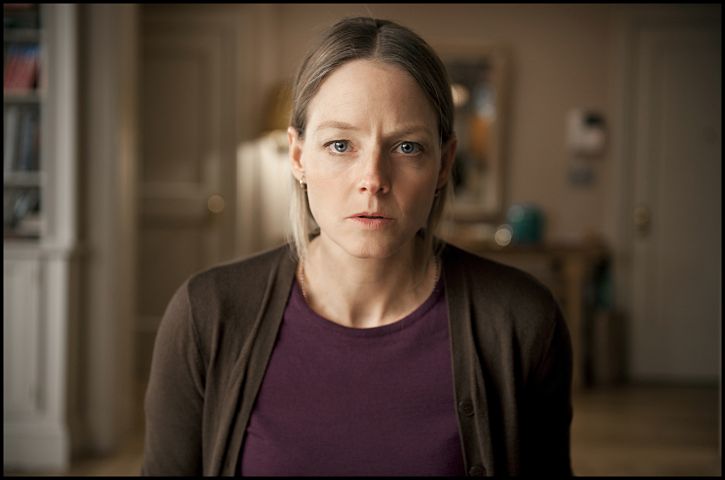
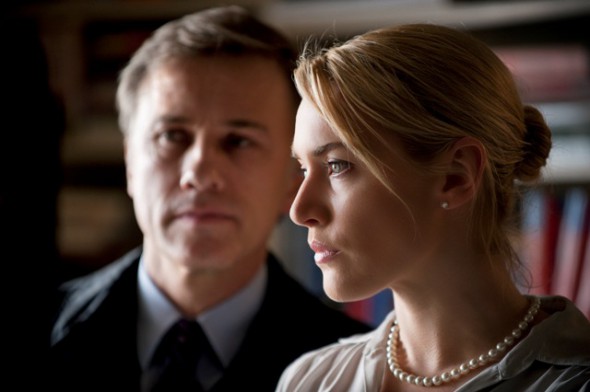
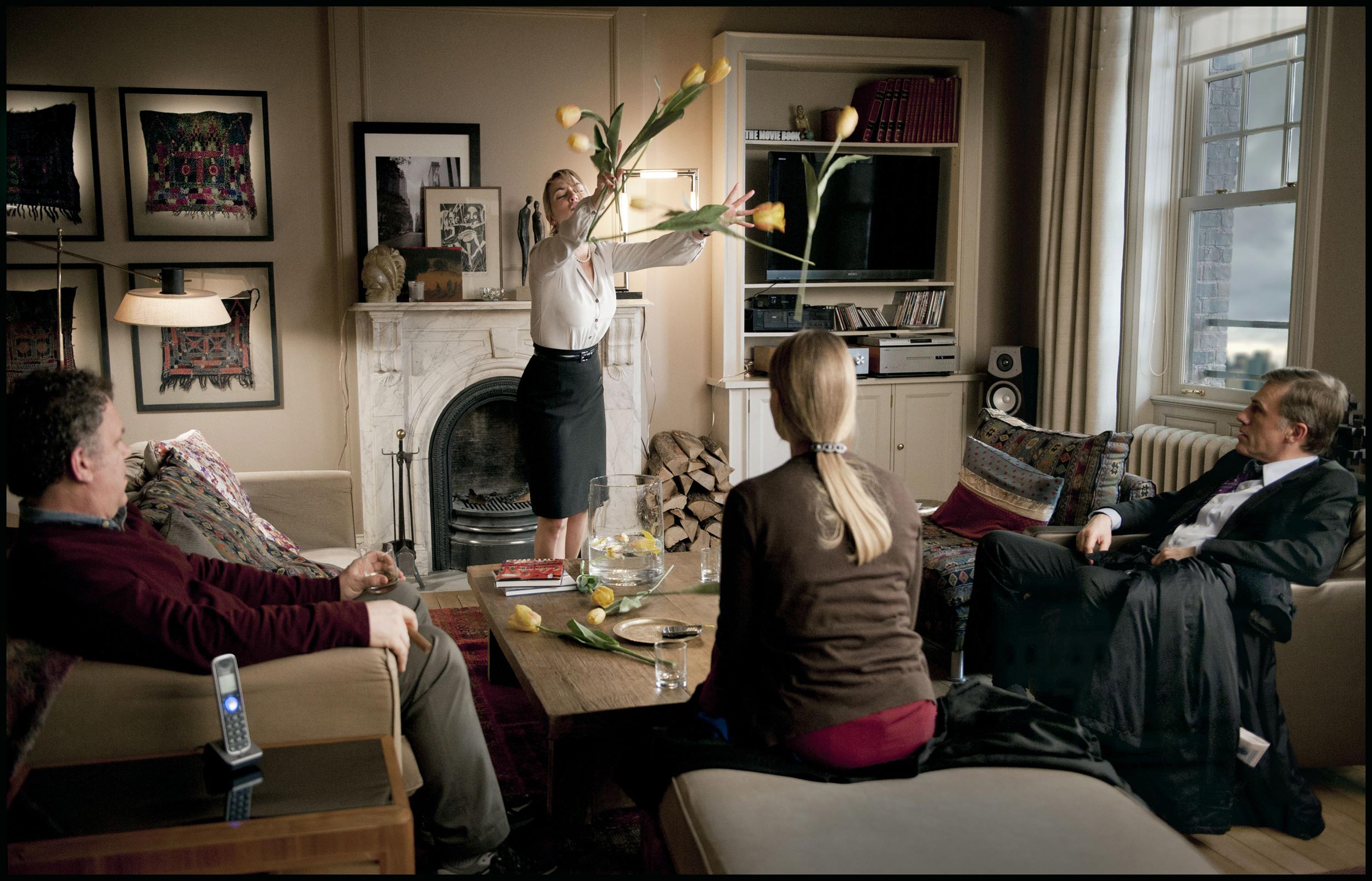
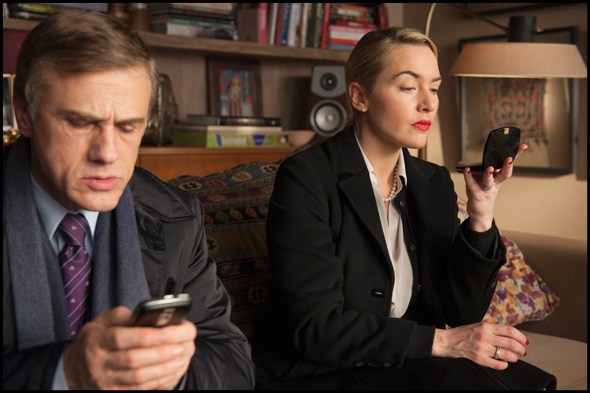
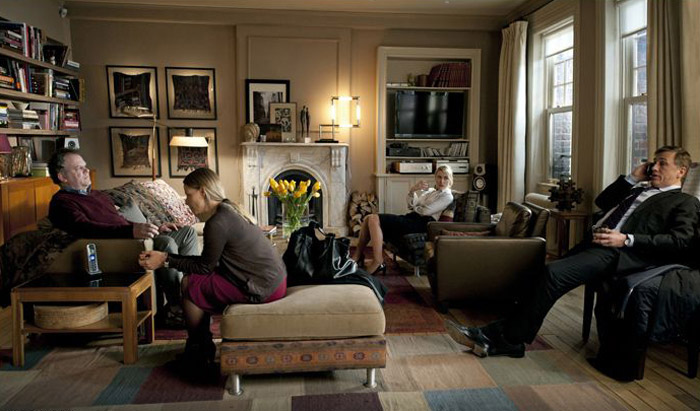
A schoolyard brawl between two kids escalates into a meeting between the parents that only proves the kids are amateurs at it in Roman Polanski's new film Carnage, based on the play by Yasmina Reza.  The meet-and-greet takes place at the New York apartment of Penelope and Michael Longstreet (Jodie Foster, John C. Reilly)— he's in hardware sales and she's an arts afficianado and rights activist, writing a book about African genocide—with Alan and Nancy Cowen (Christoph Waltz, Kate Winslet)—he's in lawyerly mode and she frets. It all starts well enough: cobbler is served and coffee offered, everyone's uncomfortable and on their best behavior.  But the niceties don't last any longer than the cobbler. Penelope starts getting self-righteous, Michael, overly conciliatory, while Alan loses his laser-like focus from a series of interrupting cell-calls that from a client with a wonder-drug for high blood pressure that may have all sorts of side effects.
Then, Nancy...
well, things go down-hill fast after Nancy...


It's basically a one-joke black-comedy that isn't remotely funny (the anti-punch-line comes at the end) turned up to 11 by an all-star cast and a director confined to a minimal set and probably going a little bit insane day by day. Bear in mind that Polanski was probably giggling and encouraging extremism all through shooting, but all these terrific actors have their moments of masonry mastication—Foster coming off the worst, and Winslet the best, with Reilly and Waltz being alternately obnoxious and snaky. Fairly soon, lines are drawn in tasteful carpets and there's a constant tying and untying of boundaries and bonds, that fall along lines of sex, politics and whatever the last subject talked about was. 
There are histrionics galore, and while there are no real baring of souls,
there are all sorts of baring of inhibitions and not in the fun way. These people seem to have absolutely no sense of decorum or restraint or any illusions that their opinions might not be the most pertinent to the proceedings. It's all out there, vomited at projectile force and with no dolby/no squelch. That would appear to be the comedy of it, but unfortunately it comes off a little forced and a little unrealistic. It doesn't matter how set in their ways and high-strung these people are, at some point there is going to be re-assessment and back-pedaling, even if the trajectory is straight down-hill.
Not in this self-contained universe
. There is no tentativeness here, no sticking the toes in to test the waters, everybody belly-flops into the pool from the high-minded-board. Even "Who's Afraid of Virginia Woolf?" is subtle by comparison, although there are some nice behavioral touches, like Penelope raising her level of discussion to an obviously uncomfortable volume to drown out Alan's phone-call.  Common sense is forgotten along with the kids argument and everything degenrates to a tag-team grudge match between and among the couples.

Ultimately, it's a bad night out that you want to forget about in the morning.