Showing posts with label Alan Hale. Show all posts

Thursday, June 3, 2021

The Man in the Iron Mask (1939)

The Man in the Iron Mask (James Whale, 1939) "The Man in the Iron Mask" is a genuine part of French history, and the identity of the man (who probably wore a mask of black velvet cloth, rather than iron—blame Voltaire) is still one of speculation.

But, most people know "The Man in the Iron Mask" from his fictionalized appearance in Alexandre Dumas' last volume of his "D'Artagnan Romances" series, "The Vicomte de Bragellone: Ten Years Later" where the story is the last section, comprised of Chapters 181 to 269. In it, Dumas opines that the prisoner is Phillipe, the twin brother of King Louis IV. The Musketeer, Aramis, learns of this subterfuge and attempts a coup by replacing "The Sun King" with Phillipe, in league with the Musketeers Porthos, but not D'Artagnan. The coup is overturned in no small part due to D'Artagnan's efforts, but he refuses to turn against his old comrades when Louis orders then arrested and killed.
Versions of the story had been filmed in the silent era, and the film follows the story of Allan Dwan's 1929 Douglas Fairbanks version for this, its first foray in the sound era. In that, Phillipe's existence is not erased—merely expunged—by having him raised in Gascony under the care of d'Artagnan (Warren William, "the King of the Pre-Code"*) on advisement of the King's courtier Colbert (Walter Kingsford), who wishes no confusion about the line of succession, and fearing that Phillipe could be used by forces to unseat the future King. Such information is to be kept under the strictest of confidences, as it could lead to blackmail (as it does when cardinal's messenger Fouquet (Joseph Schildkraut) uses the information to become Minister of Finance under the young King Louis IV (Louis Hayward).
King Louis is a foppish lout, and Fouquet uses his position as Minister to impose a crippling tax on his people, including the ones in Glascony and that causes a bit of commotion when it comes time to pay at the d'Artagnan house, where guests Porthos (Alan Hale), Athos (Bert Roach), and Aramis (Miles Mander) hold off the tax collectors, but are captured when confronted by the King's guard. The advisor Colbert alerts Louis to the startling resemblance to him, and, knowing that an assassination plot is imminent, blackmails Phillipe to impersonate him or his friend-Musketeers will be executed.
For Louis, it's a great plan to avoid being killed, but it has a couple of negative consequences: first, when the attack does come Phillipe is able to thwart it and, rather than have them killed, spares their lives, which wins him favor in the public eye; second, Louis's betrothed, the Princess Maria Theresa (Joan Bennett) of Spain finds the false Louis far more attractive than the real king, who's carrying on an affair with the Mademoiselle de la Valliere (Marion Martin).
After a swashbuckling escape from Louis' clutches, Phillipe is recaptured and Louis decides to hang him, but a decree that no royal blood be spilled (and that Louis couldn't stand to see someone who looks like himself swinging from the gallows) gives him a more sadistic alternative—throwing his brother into the Bastille, his face hidden by an iron mask that can only be unlocked with a key in the king's possession. Phillipe will be forgotten in prison, doubly encased, until his beard grows so long inside the mask that he will be strangled by it.
Whale's work on this plays to his many strengths, displayed in his work in the 1930's, starting in 1931 with his iconic Frankenstein and its sequel, the equally iconic (but lesser known) The Old Dark House, The Invisible Man, and Show Boat. The film is designed to the 9's, with extraordinarily elaborate decors and costumes, and the dungeons of the Bastille are things of nightmare. Plus, his special effects work is fully on display in the elaborate split-screen work, allowing Louis Hayward to play both parts, without any seams or noticeable delays in dialogue. And Whale's florid directing is much in display in Hayward's wild-eyed King Louis and his Finance Minister, Fouquet, while Hayward's Phillipe approaches the hyperbolic ministrations (much as Claude Rains did in The Invisible Man) in his dungeon scenes. When one's expressions can't be seen, emotive body language supplies the desperation. It's a remarkable work, and even though produced in 1939, still is the best version of The Man in the Iron Mask I've seen.
* I'm becoming a real fan of Warren William, who is pretty much forgotten in the annals of cinema, despite the fact that he had the swashbuckling verve of Errol Flynn in this, and his heroes—including the first screen version of "Perry Mason" and a Sam Spade twice-removed in Satan Met a Lady—and his villains could be unapologetically moustache-twirling (as in Employees' Entrance).

Wednesday, September 23, 2020

They Drive By Night

They Drive By Night
 (Raoul Walsh, 1940) Warner Brothers-style action-and-intrigue pot-boiler about...wild-cat truckers. Well, that shouldn't be much of a surprise. In lieu of gangsterism, the trucking world could serve as a substitute for rough-and-tumble world of trying to make a fast buck on the legitimate side of the ledger in the world of capitalism The subject hit something of a zenith combining trucking and film-noir in Jules Dassin's Thieves' Highway. This tough little film from Raoul Walsh—who made definitive films on both crooked and straight paths to success concerns the brothers Fabrini (George Raft and Humphrey Bogart) are partners in a truck who decide to stop working for other shipping companies and do the deals themselves. This pushes their murderous schedules to the edge and consequences determine a change of focus. An interesting little movie where two Warner's tough-guys—Raft and his understudy at the time, Bogart*—do "everyman" jobs and mine real drama out of it. Of course, it couldn't be a Warner's picture without action and the film boasts two nail-biters where truck-drivers fall asleep at the wheel, filmed with the snap that one can expect from Raoul Walsh.
Where the movie excels is the smart patter that spins drama in the economic realities of this corps of transport specialists. The movie manages to slip in lessons in Unionization and Modernization amid the wise-cracks and the trumped murder-plot that dominates the film's second half. You begin to feel like you're learning something without being preached to.
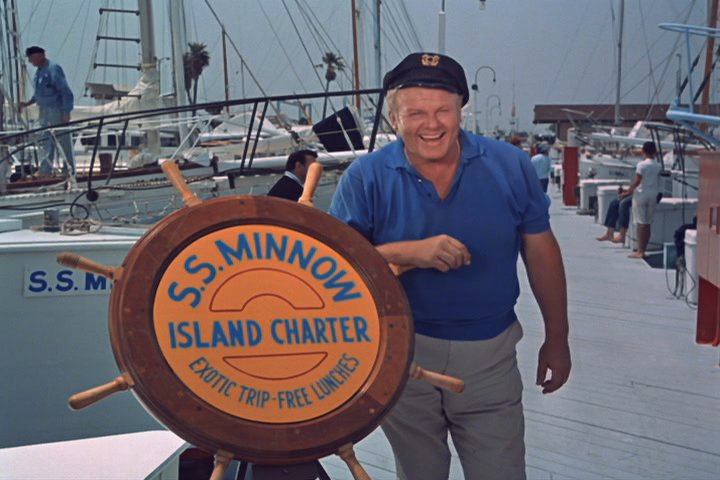
And there's enough good acting going on that raises it above "B" level. Raft is a bit looser than usual in the starring role, but Bogart has the most dramatic...and fun part. Ann Sheridan does well with her wise-acre dialog and Ida Lupino manages a mine-filed of femme fatale neuroses with dexterity and quick-silver reactions. But the stand-out is Alan Hale—"The Skipper''s" dad—who takes the part of a trucker-who-owns-a-company and can't believe his good fortune. Hale's "Ed Carlsen" never has a "down" moment, and is carried out with wolfish good spirits and the sense that he's making it up as he goes along. His performance is the diamond in the rough in this rough little film about trucking. 

*At this time in his career, Bogie was still upset at the way his career was going, he was still doing the occasional western, and just the previous year he starred in the worst movie of his career--The Return of Doctor X! But in his next movie would be a part that Raft tosses aside--"Mad Dog" Roy Earle in High Sierra. And the next part meant for Raft but inherited by Bogart would be detective Sam Spade in The Maltese Falcon.