Showing posts with label Gary Cooper. Show all posts

Tuesday, February 13, 2024

Love in the Afternoon (1957)

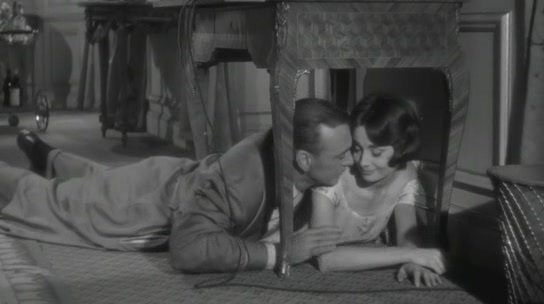
Love in the Afternoon (Billy Wilder, 1957) Light Billy Wilder film from the effervescent days when he was directing Audrey Hepburn at the start of her career.

This one had me smiling immediately with Maurice Chevalier's opening narration—"Zis is the city, Paris France"—echoing Jack Webb's "Dragnet" opening. Chevalier plays a private detective, Claude Chavasse, specializing in "matrimonial work," and lately the case-work has been dominated by one subject, American millionaire Frank Flannagan (Gary Cooper), who is cutting a wide swath through the world's female population, both married and unmarried divisions. The work has turned Chavasse into a cynic about the paths of love—he's gumshoed too many of them—in marked contrast to his daughter, Ariane (Hepburn), a cello player (hold that image in your head for a moment), still wide-eyed at the prospect of romance, and fascinated with her father's work, something he does his utmost to discourage.
When she gets wind that a cuckolded husband (John McGiver, hyperventilating amusingly in fine comic fashion) plans on breaking in on his wife's tryst to ventilate Flannagan, she steps in from the balcony to insert herself into the situation. This leads inevitably (in the movies, at least) to an affair between the elder lothario and the young ingenue, one that she manipulates by trying to talk a competitive game in conquests. The situation is ripe with comic possibilities, which Wilder exploits every chance he gets, even using Flannagan's moving musical accompaniment (the final assault is preceded by a four piece rendition of "Fascination").

Much has been made of Cooper's age in the film, and it is an issue. Cary Grant was supposed to be Flannagan (Wilder had been trying to entice Grant into one of his films for years) but when a deal wasn't reached,
* Cooper, who at 56 was Grant's senior by three years, was hired. Cooper is an odd fit, as opposed to younger men like, say, Gregory Peck (as in Roman Holiday) or William Holden (in Sabrina), but Wilder works around it, initially, keeping Coop' in shadow to emphasize his "mystery man" status, and Cooper's early performance is, interestingly, boyish and somewhat immature.

And that's the point. Flannagan is a man-child, used to getting everything he wants. And Ariane has her choice between younger men—immature and unsophisticated—and Flannagan—sophisticated but immature. All it takes for him to grow up is a level of commitment, something he's avoided his whole life by having a train to catch. Both character arcs feel complete and satisfying, even though it is the "7-10 split" of May-December romances, and one feels a little creepy watching them make out.
And a little guilty, in the same way that it was tough to watch the denouement of Wilder's Sabrina. Okay, it's charming that she likes the old guy, but if he really was thinking this through, with all this new-found maturity, wouldn't he be thinking about her, and what she has to look forward to in a life with him (which can be summed up in one word..."short")?
And then, one considers Wilder, and the blithe, darkly cavalier sensibility that he brought to the movies, moral though his stand-point might be. One can imagine Wilder, the guy who ended Some Like It Hot with "Nobody's perfect," with a similar tag for this movie: "Aren't you concerned about the age difference?"  "If she dies, she dies..."
 At this point, Grant was getting concerned about his age and being paired with young actresses ("robbing the cradle, again" is how James Stewart summarized the situation late in his career), but his misgivings must have subsided enough to co-star with Hepburn in Charade for Stanley Donen six years later.

Tuesday, July 26, 2022

The Wreck of the Mary Deare

The Wreck of the Mary Deare (Michael Anderson, 1959) It was intended to be an MGM production for Alfred Hitchcock—he'd liked the best-seller and he'd wanted to work with Gary Cooper since Foreign Correspondent in 1940—but screenwriter Ernest Lehman found it pretty dull with an extended, dry courtroom scene at the end, and the two decided to fulfill his real ambition—to make the "ultimate Hitchcock film"—which turned out to be North By Northwest.

We are all the better for it. 


As it is, The Wreck of the Mary Deare is an odd picture with a great mysterious opening and a dry-as-dust finale, try as scripter Eric Ambler and director Anderson might to make a suitable action closer to it.  In turbulent seas in the English Channel, a salvage tug, captained by John Sands (Charlton Heston), finds a ghost-freighter marooned and adrift, nearly colliding  and destroying his ship. Pulling alongside, Sands grabs a dangling line and laboriously clambers aboard. The rusting hulk, the Mary Deare, is without power, a large gash in its side that is slowly flooding the engine room, and with no sign of life on-board...at least initially.
One man has remained—First Officer Gerald Patch (Cooper), a merchant marine eking out an existence on the ship, which was recently abandoned, and desperately trying to scuttle it before it sinks of its own accord. The reason is not because he wants it to be salvaged; he needs it for evidence, but why is being kept a closely guarded secret. With the reluctant help of Sands, Patch gets the boiler-room going, the ship under power, and the Captain-by-default's mission accomplished.
All of which is great stuff—the conflicts, the questionable sanity of Patch, Sands' greediness in wanting to claim the salvage on the ship—which would have made a great film if it ended there. Unfortunately, that's only thirty minutes of it. It would have been a great short subject, though, but the movie trundles along over the investigation and trial over who owns the boat and the conflicting testimonies between Patch and the eventually-found crew (ring-leadered by Richard Harris, who can't seem to eke out an interesting performance from the material, try as he might).
Michael Anderson is no one's idea of an innovative director—and he started his career assisting David Lean and Carol Reed! His widescreen compositions look like they're meant to be cropped for a boxy television presentation, although he was known for taking elephantine projects—Around the World in 80 Days, Logan's Run—and making them as quickly and cheaply as possible, There is the sense watching his films that a creative presentation, rather than a practical one, was thought unnecessary—keep the focus, hit the marks, and, as far as lighting, make sure the audience can see the stars' faces.
Both Cooper and Heston are good
, in what seems to be dueling portrayals of earnestness. But, ultimately, the secrets that Patch is keeping just aren't very interesting, and although some attempt is made to salvage it at the end, the movie is, like its namesake, something of a drifting hulk. 

Tuesday, April 9, 2019

Design for Living

Design for Living (Ernst Lubitsch, 1933) High class production about the bohemian class. Noel Coward's play (which had nothing to do with the bohemian class) about a menage a trois (and, by association, a menage a quatre) is given a rinse of the more suggestive parts by Ben Hecht (it's Pre-Code, so they don't go through too many cycles on this one, just to keep both the prudes and the lascivious in a lather) and an added dash of charm by director Lubitsch and cast with a collection of players that folks wouldn't have bat an eye at before, but in retrospect (given subsequent histories), is a bit unexpected.

En route to Paris, graphics artist Gilda Hopkins (Miriam Hopkins) shares a train compartment with two American down-on-their-heels artistic wanna-be's, painter George Curtis (Gary Cooper) and playwright Thomas Chambers (Fredric March), both of whom become enchanted with Gilda, and she with them (“A thing happened to me that usually happens to men. You see, a man can meet two, three, or even four women and fall in love with all of them, and then by a process of interesting elimination, he is able to decide which he prefers. But a woman must decide purely on instinct—guesswork—if she wants to be considered nice. Oh, it’s quite all right for her to try on a hundred hats before she picks one out.”) but agree with her to keep things merely friendly and professional, as she starts to act as confidante and muse for both their lives and their art. That she is also sought-after by her much-too-old boss, Max Plunkett (Edward Everett Horton) only complicates matters.
George, Thomas and Gilda decide to share a loft and make a pact of no hanky, no panky and no combination of the two, as the off-beat living arrangements create a certain amount of tension between the three. Meanwhile, Gilda uses her connections to jump-start the two men's careers. Thomas' latest play is put in the hands of a London producer, and soon, he's flying off to help with re-writes and overseeing production.

"No sex. A gentleman's agreement..."
In his absence, Gilda and George begin an affair while, in London, Tom's absence makes his heart grow fonder and he decides then and there to marry Gilda once the play opens. But running into Plunkett at the theater, he discovers that George and Gilda are now a couple, and rushes back to Paris only to find that the lovers have moved out of the loft. George, however, is in Nice working on a commissioned portrait, and so Tom seizes the opportunity to make a stand. 
"Unfortunately, I'm no gentleman."
Gilda reluctantly agrees to see Tom, and—wouldn't you know it?—she decides she's really in love with Tom and they begin an affair while George is out of town. Except, George comes back and finds the two lovers in his own penthouse love-nest and things turn ugly. It seems that three's company and two's are not to be trusted. What's a girl to do?
She complicates things, of course. Gilda decides to marry her boss, Plunkett, but the marriage cannot be consummated when George and Tom send over potted plants as gifts ("It would have been much more tactful for them to forget!") which so upsets Gilda that she hides in her room, crying. Then, at a large soiree the couple is throwing for Plunkett's clients, Tom and George crash it, making mischief wherever they go, including Gilda's bedroom, which infuriates Plunkett. The marriage is over and the three decide to move back in together.
Now, this is in the Pre-Code era before content restrictions were self-imposed on studio's, so although it may seem raunchy, everything is merely suggested. In fact, Hecht's adaptation (although Coward bitched it was hardly that) makes the trio far more relatable to the movie-going public by taking it out of the rarefied air of British manners and class, and making the two artist-types Americans. You couldn't mistake March, a deft farceur, or Cooper—still in his glamour days before he aged into more rural authenticity—for upper-crust, even if you dress them in tails. And Horton maintains his professional befuddlement. 

Hopkins, of course, has the toughest role, making her designer charming despite an inability to make up her mind and a tendency towards—dare we say it?—capriciousness (we didn't dare say it). But, it's perfectly true that she's merely playing a man's game in the sexually sampling context and the men play by the same rules. This was 1933 and it seems like (now) the only women in movies who take the same attitude are labelled promiscuous or villainous. This is progress?

The film stays light, funny, extraordinarily quotable—without any Coward—and froths with "The Lubitsch Touch." At the same time, in that time or ours, it's also a little revolutionary. Vive le révolution.


Tuesday, May 19, 2015

Ball of Fire

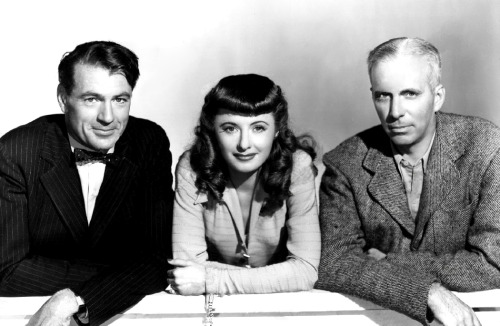
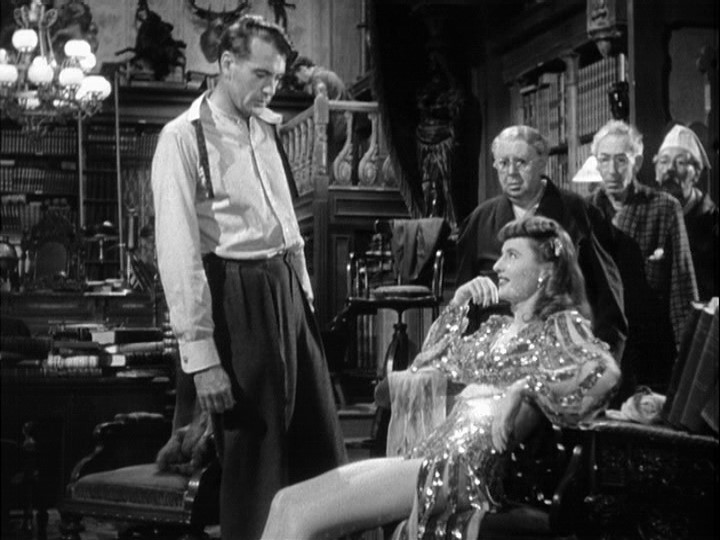
Ball of Fire (Howard Hawks, 1941) It doesn't get much better than this: screenplay by Charles Brackett and Billy Wilder (from a story by Wilder), produced by Samuel Goldwyn, photographed by Gregg Toland, music by Alfred Newman and directed by Howard Hawks. Add that it's a swing-era version of "Snow White" stock-piled by anything-but-dwarvish character actors (Henry Travers, Richard Hayden, Oscar Homolka, S.Z.Sakall), some nifty up-and-comers like Dana Andrews and Dan Duryea, and top-lined by Gary Cooper (in pixie-ish Capra mode) and Barbara Stanwyck (who usually runs on all cylinders, but seems turbo-charged in this one) and you have the makings of a great, stylish and culturally-winking comedy, with lots of great musical material, too.*

It's a charming conceit: years in the making, the Dutton Encyclopedia, written by eight myopic scholars, is hitting the skids just as it's hitting the "S" words. Professor Bertram Potts (Cooper) has just finished a 26 page treatise on "Slang," when a garbage-man walks in with some fancy (and utterly incomprehensible) patter that puts his research to shame. Potts determines that he will leave his ivory tower and venture forth into the world to see what all the...what's the word? *flip/flip*..."rhubarb" is about. He stumbles upon a nightclub (where Gene Krupa happens to be playing) and taking on the lead vocals is "Sugarpuss" O'Shea (Stanwyck, in full "bad-girl" mode), mob-moll to Joe Lilac (Andrews) who's being investigated by the New York cops. The focus of their flat-footing is Sugarpuss, who can give them a lot of inside information, so she has to go on the lam, and the professor's invitation to her to be a part of his slang symposium, gives her the perfect hideout, going "to the mattresses" with the eight encyclopediacs, even though under the distrusting baleful eye of their housekeeper, Miss Bragg.
Complications arise, with the possibilities of broken and/or ventilated hearts, as it turns into a particularly pointy triangle between Potts, O' Shea and Lilac, with a suddenly energized Greek chorus of academics trying to deal, rather haplessly, with the real world. "Snow White" is the inspiration, but fans of "The Big Bang Theory" will also see that show's roots in this and its Grimm ancestor. One also has Ball of Fire to thank for Billy Wilder's directing career, as Hawks let him sit in on the set, auditing during the making of the film, observing, taking notes, prepping for his own directorial turn that year with The Major and the Minor.
This is one of the great unsung Hawks movies, slightly different from his formula, thanks to Brackett and Wilder's script, but it still falls under his M.O. of story material where a team of differently skilled people—in this case scholars—come together under circumstance to form a like-minded unit, even if, as here, it happens a little late in the proceedings. It was Hawks' version of making a film about film-making, but obliquely, showing that any group of gypsies can unite under a common goal despite their differences. It's part of the charm that makes Hawks one of the most American-minded of film-makers, those films being a reflection of the melting pot of the Great National Experiment.
* One of Hawks' trademarks is a musical number in the proceedings, often by amateurs to show they're bonding in their efforts.

  Ball of Fire was re-made eight years later by Hawks in a musical version called A Song is Born (also photographed by Toland, but this time in technicolor) starring Danny Kaye and Virginia Mayo.