Sunday, August 9, 2020

Don't Make a Scene (Redux): Gone Baby Gone

Doing another "Redux" of a scene today. Most of the ones I've done recently have been a bit cynical and bitter. It's "the times."

But, I wanted to repeat this one because it is hopeful, but realistic—sentimental, but not filtered with falsely rose-colored lenses. "Times are haad." We shouldn't be fooled, not even by ourselves.

Oh...and Affleck released another movie since this was written—Live By Night, which just showed that everybody's fallible and nobody hits it out of the park consistently. That's good for growth.

The Story:
  I'm really not fond of Ben Affleck as an actor.


But as a writer...and as a director...I think he's sensational, maybe one of our best. Judging from just three feature films. 

Everybody knows what a splash he made with Argo (the weakest of his films, in my opinion, although there is a lot of good in it), and his second film, The Town, was a modern take on the old gangster films that tested a man's loyalty to his past, his upbringing, and society at large—a story of growing up and growing out within a criminal gang.  My favorite of the three, his debut as a director, Gone Baby Gone, (based on the novel by Dennis Lehane) tells the story of two Boston townies (Casey Affleck, Michelle Monaghan), private detectives, who are asked to investigate the disappearance of a little girl from the house of her dirt-bag mother (Amy Ryan), possibly as revenge for her part in ripping off a local drug dealer.

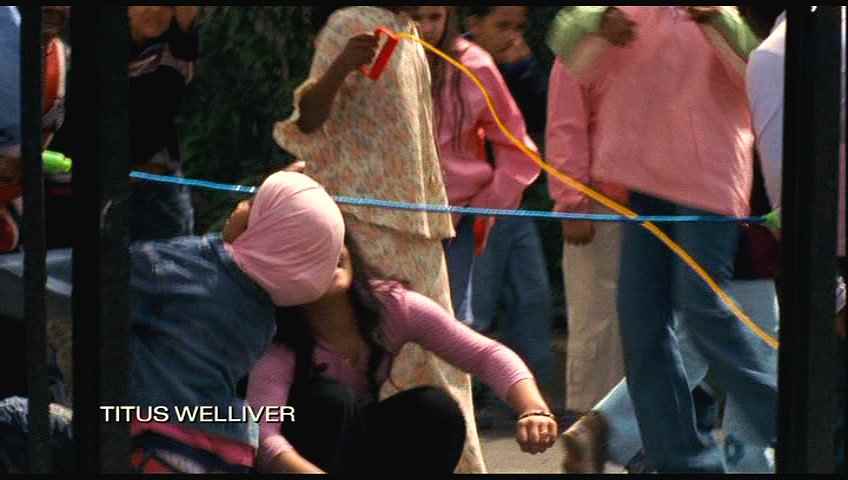
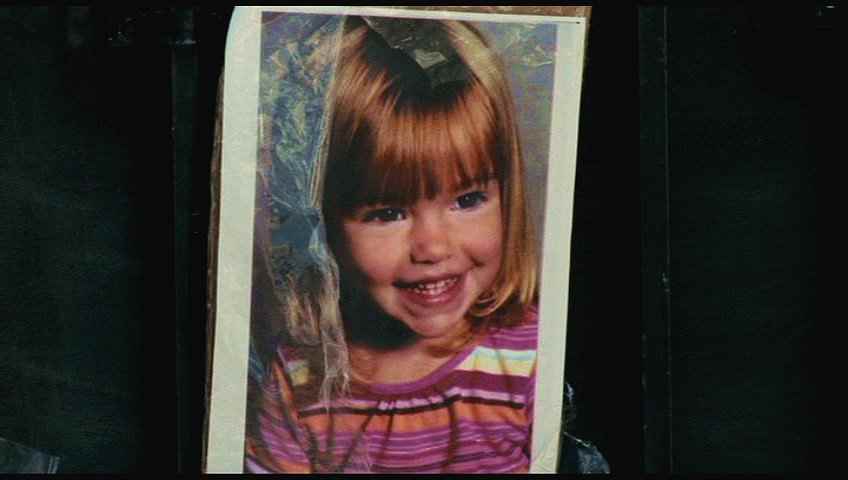
Even as the movie starts, Affleck and his cinematographer set up the scheme with which they'll shoot the movie: crowded, complicated, piece-meal, slices of life, filled with grit. This opening montage, overlayed with Casey Affleck's monotone narration spoken in a high rasp, of everyday people, looking, constantly looking, interacting, watching their backs, their neighbors' backs, cuts through the strata of Boston life, and includes lots of kids mingling in the play-yards and the city-streets, until it lands on a "still-life"—the picture in a shop-window of the child missing in the investigation, and with that, the meditation ends and the story proper begins.

The Set-Up:  Nothing.  The movie's just started.

Action!

Unused sections of the script are in RED.

CREDIT SEQUENCE
Morning.
Clouds moving through the sky.
We see various shots of the city, exterior storefronts, people going about their lives and some wider shots of the city.

As they continue, the hour gets progressively later in the day until the final sequence which takes place at night.

Over this we hear our guy, PATRICK (30) .
PATRICK (V.0.) I always believed...
PATRICK (V.0.) ...it was the things you don't choose...
PATRICK (V.0.) ...that makes you who you are.
PATRICK (V.0.) Your city,
PATRICK (V.0.) ...your neighborhood,
PATRICK (V.0.) ...your family.
PATRICK (V.0.) People here take pride in these things,
PATRICK (V.0.) ...like it was something they'd accomplished.
PATRICK (V.0.) The bodies around their souls,
PATRICK (V.0.) ...the cities wrapped around those.
PATRICK (V.0.) I lived on this block my whole life;
PATRICK (V.0.) ...most of these people have.
PATRICK (V.0.) When your job is to find people who are missing,
PATRICK (V.0.) ...it helps to know where they started.
PATRICK (V.0.) I find the people who started in the cracks...
PATRICK (V.0.) ...and then fell through.
PATRICK (V.0.) This city can be hard.
PATRICK (V.0.) When I was young, I asked my priest...
PATRICK (V.0.) ...how you could get to heaven...
PATRICK (V.0.) ...and still protect yourself...
PATRICK (V.0.) ...from all the evil in the world.
PATRICK (V.0.) He told me...
PATRICK (V.0.) ...what God said to His children.
PATRICK (V.0.) "You are sheep...
PATRICK (V.0.) ...among wolves.
PATRICK (V.0.) Be wise as serpents...
PATRICK (V.0.) ...yet innocent...
PATRICK (V.0.) ...as doves."

EXT. MCCREADY THREE DECKER - NIGHT
A playground at night, completely empty. One of the swings drifts back and forth . . .

Gone Baby Gone

Words by Ben Affleck and Aaron Stockard

Pictures by John Toll and Ben Affleck

Gone Baby Gone is available on DVD from Miramax Home Video.

Saturday, August 8, 2020

Australia

Written at the time of the film's release. 

Oh, and Saturday is "Tyke Aut th' Tresh" Day.

".....Crikey...."

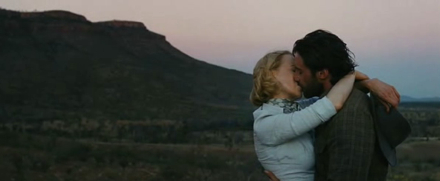
The long-in-the-planning Baz Luhrmann epic Australia tries to cram enough movie as it can into its nearly three hour length, combining elements of Gone with the Wind, Red River, Pearl Harbor, and Out of Africa in a mess of a story that is big, grand, camp and as dumb as a mulga stump.

It doesn't help that
Luhrmann also cribs his style from other movies in a kind of short-hand attempt to stuff as much meaning into the thing as possible. For instance, in the most problematic section of the film—its beginning—"The Drover" (Hugh Jackman) is introduced in a series of shots cribbed from Eastwood intro's directed by Sergio Leone. Nicole Kidman's entrance is a bit like a screwball-comedy version of Out of Africa, which is the cinematic equivalent of oil and water. In fact, rather than reminding one of the Pollack film it is more in line with the unsubtle comedy stylings of Spielberg's 1941— which is to say, faces fill the screen with mouths agape in horror, comedy-lines are buried in the cacophany, and the main comedic engine is not surprise, but shock. The first half-hour is so full of schticky slap-stick and a frenetic cut-around style that circumnavigates what's going on screen, that it feels like you're watching the vicinity of the movie rather than the movie itself.

After Kidman's Lady Ashley arrives at the estate of "Faraway Downs," things calm down a bit, stylistically—in fact, they never go back to that early, dizzying pace. Luhrmann lets one shot stand in for the five he could have scissored together before and so the movie gains a certain amount of coherence for the rest of its run.
That's not too good a thing, as it quickly becomes a series of "Can You Top This" crises that has everything (as the Thelma Ritter line goes) "but the bloodhounds snapping at her rear end." Pageantry stands in for plot, the villainy snears and twirls its mustache in obviousness, and the technical wizardry is of a kind that has the falseness of portraiture heavy on the air-brushed rouge. For all the cooing about the beauty of Australia, it's gussied up like a tart in church. One also gets the impression that a lot of work has gone on behind the scenes to hide imperfections. The shots of the stars galloping to stop a cattle stampede before they throw themselves off a cliff, taking an aboriginal child with them (yes, I'm not joking) are done in claustrophobic close-up, not to show the drama on their faces, but to hide the mechanical horses they seem to be riding and the computer generated back-drop that doesn't quite work.
And this is the essential problem: Baz Luhrmann is not the director for this kind of movie—he might have thought he was, since he wrote the turgid thing, but the direction is quite beyond him. Luhrmann is not a maker of epics, he takes small projects and blows them up to their maximum potential. In Australia, he just seems lost as to which movie he's making: historical, romantic, adversarial, western, advocacy--it's all there, but trotted out one at a time as if suddenly realizing, "Crikey, forgot the romance...we'll do romance for a tic'." Luhrmann is a man best suited on a sound-stage, not a location: under a proscenium arch, not the big sky. He's a man of the theater, and he makes everything theatrical. Under his watch, the natural doesn't stand a chance.
One is left thinking how impractical it all seems, like the entire movie is a propped-up false-front. The costuming is designed tight to show off Kidman's shoulder blades and Jackman's pectorals but not to be in any way practical.
The one joy gleaned from the film is of Aussie film-actors from the past who shine in this: Jack Thompson from 'Breaker' MorantBryan Brown who knows instinctively how to perform in a Baz Luhrmann film, big and grand, Bruce Spence, the indispensable thin-faced character actor and David Gulpilil, who has been the acting face for Australia's aboriginal people for thirty years. Seeing them is like visiting old friends.

You just wish you could have met somewhere else.

Friday, August 7, 2020

Mystery Guest, Sign in Please

I don't like to insert myself too much into my reviews, although it's a bit inevitable. If you're giving your opinion—if you're writing a blog—you're writing about yourself. But, as these stories involve other people...and interesting people, I'll give a brief glimpse into my past life—a couple stories about my time as a recording engineer that I'd like to share. They're two instances when I got to see a glimpse of things to come, and they are a clear example of sentiments expressed in "The Last Word" that always ends this blog-page: "A great talent can come from anywhere."

I was working on a radio play series for National Public Radio, here in the States, sponsored by the Boeing Company called "Sixteen Stories of
Anton Chekhov." One of the plays had the cream of Seattle acting all in one room. Folks like John Aylward and Ted D'Arms, who've done decades of stage plays and made it to Hollywood. This particular radio script was based on Chekhov's "Sleepy," an unblinking, unsentimental story about a young nanny who is basically a slave in a 19th Century Russian household: she cooks, she cleans, she does laundry, she takes care of the baby--the constantly fussing baby. She's exhausted--sleep-deprived, actually, and haunted by visions of her mother and others trudging as refugees through a driving rain. Tough story. Tough in content, and tough to execute in that the girl narrates most of the story. Especially, when at the end, in her delirium, the girl smothers the baby.

It's a devastating, tragic story.

Cast in the role of nanny was a very young girl. She was, actually, the daughter of the fellow who helped secure the Boeing funding, who had inquired if there was a role his aspiring actress-kid could play. Well, yeah, this one. It would be an acting challenge for anyone, but this girl was relatively untried. The director assured us that she seemed okay in the reading, but was prepared to either work with her for a good performance, as well as lowering his expectations.

We assembled the actors in the studio together and hoped for the best.

When she began to perform, it became clear that she was prepared for the arduous task of recreating this part. Her voice was a low, hopeless, exhausted monotone. It drew you in. You hung on her every word. Early on, we started exchanging looks in the booth. She was good. Could she sustain it? And we noticed something else. The actors in the studio weren't looking at their pages, or fussing with their parts. They were watching her. She was this tiny little frame, huddled, her face intense, focused on the script, and all eyes were on her. When the actors' parts came up, they were always on-cue, and when they had to be rough, they cranked it up a notch in intensity, barking their lines. The actors in the dream sequences, inched closer to their microphones and made their parts more intimate, more haunting. There were very few pauses, not a lot of takes--it had the intensity of being done live and they had to get it right, riding on the wave of this little girl's heart-breaking performance.

By the end, we were all drained, our jaws on the floor. Not only was she better than expected, she was better than we COULD expect. At the end, there was silence as the final haunting words were spoken with a tragic depth, and no one wanted to move, to hold the tension as if it would all go away if anyone said anything to break the moment. "Wow," someone said in the studio. "Yeah!" The actors congratulated the young actress. "Was it okay?" she looked up at the booth. "Yeah, it was VERY good. You'll want to hear this."

"REEALLY?!!"

We brought her in and let her listen to the recordings, and she began to relax. "Who's picking you up?" we asked. "My Dad." "Well, he's going to want to hear this."

Dad showed up. "How'd she do?" We praised her to the skies (in all honesty), and told him he should listen to what she did. We played it for him, and his eyes became cloudy, listening to his daughter's performance. He was obviously proud, as well he should have been. She did an amazing job, and when we put it together and combined it with sound effects, we took extra care with it, she was that good. And doubly amazing because she was so young and the acting was so mature.

This aspiring actress' name?
Anna Faris.


http://www.imdb.com/name/nm0267506/


http://en.wikipedia.org/wiki/Anna_Faris

Since the time I first wrote this, I've found that the series "Sixteen Stories of Anton Chekhov" is available online at The Internet Archive

Here is a link to the episode that contains "Sleepy."

Thursday, August 6, 2020

Mystery Guest, Sign in Please

I don't like to insert myself too much into my reviews, although it's a bit inevitable. If you're giving your opinion—if you're writing a blog—you're writing about yourself. But, as these stories involve other people...and interesting people, I'll give a brief glimpse into my past life—a couple stories about my time as a recording engineer that I'd like to share. They're two instances when I got to see a glimpse of things to come, and they are a clear example of sentiments expressed in "The Last Word" that always ends this blog-page: "A great talent can come from anywhere."

In my studio career, I did lots of auditions. Lots and lots. We'd had whole days where folks came in to read a part, or we'd ask agents to bring folks in we'd never seen before to see who was out there, and if they had some possibilities.

There was an open-call for the part of a kid for a video game company, and we were pretty shy of "young adult" voices, so we held an open casting. People would come in, take a look at the script, and then I'd record them for one or two "takes," say "Thanks! That was great!" (whether it was or not) and go on to the next one. Then, we'd take all the recordings and put them into a nice little collection and ship them out to the producer/director/writer who would do the casting. Sometimes, they'd ask for our recommendations. They'd at least inquire if there were any possibilities. This particular writer/producer/director (we'll call him "Bob") was also an actor, so we could talk about specific qualities that we were looking for in detail. In other words, we could "fine-tune" the search.

The day of the audition, actor after actor showed up to have their voice recorded so that "Bob" could hear what they might do with the material, and as with every audition they ran the gamut from possible to horrible. By two in the afternoon, there wasn't anybody I thought was any good. Oh, there were a couple we could "get by" with, but on the whole it was one of the worst casting sessions I'd ever had. I'd even go so far as to try and direct these people into a performance to little success. In fact, I'd just finished the worst audition of the day when a guy showed up--a late addition to the schedule. He was about six feet, carried a back-pack, it was obvious he came in right off the street. He apologized for seeming unprepared, said he'd just graduated from Cornish and his agent thought he should do some auditions. I said, "Great! Whatever!" And put him into the booth. Then I gave him the standard instructions I gave all the auditioners about the part and what the producers might be looking for. I wasn't expecting anything different than what had come before.

But, a great talent can come from anywhere.

Right off the bat, he was good, with an intensity and a commitment that nobody else gave to the role. Plus, his timing was terrific, making the most of lines that had only a bit of humor to them. And--this was amazing--he had a sense of subtext, like the character actually had a life before he started talking, and it informed what he was saying now. Very rare, and that put him head and tails above all the rest of the auditioners. In fact, when "Bob" asked me if there were any I'd recommend, I said "Just one." That guy. "In fact, I wouldn't consider anybody else." "He's that good?" "He's THAT good."

So, "Bob" hired him. He thought he might be a bit old for the part, but he said, "He knows how to make himself sound younger, so we'll see." He said he was very easy to direct, and did things in a very subtle way. He was very happy with the performance, and the project was completed.

But it was rejected by the game company.

"He's too old!" they said in their infinite wisdom. "We want someone 14 to 15. He sounds 18, youngest." So, "Bob" had to recast the part and do it again, which was too bad. But, the client is always right in these things. So, this guy who was so good ended up getting replaced in the project.

But everything turned out all right in the end. This guy, this young actor who'd just graduated from Cornish, got paid for the part despite being replaced, and went on to do "other things." Lots of other things.

And the client got what they wanted, which was to get someone who skewed a little younger. I'm sure they've forgotten the incident, and that they rejected this particular guy.

His name:
Brendan Fraser.

http://www.imdb.com/name/nm0000409/

http://en.wikipedia.org/wiki/Brendan_Fraser

Wednesday, August 5, 2020

Leatherheads

Written at the time of the film's release...

That Sunday Night Feeling

A director's got to love a project...I mean, really love it... before they devote two to three years of their life, and millions of dollars to it. Maybe the incentive is financial, maybe it's prestige, or getting something someone else wants. But you have to wonder what George Clooney saw in Leatherheads, his "football at the dawn of the pro's" movie. It can't have been financial, although there would probably be a number of ticket-buyers who would go see him or Renee Zellweger in anything. I'm sure there wasn't a bidding war on it, and the studios tend to thumb their noses at "period pictures" (although that's all Clooney's directed so far) because they cost more than a modern-day movie. But Clooney can make any movie he wants as long as he's in front of the camera.

Why this?
Maybe it's a love of football, or the time-frame when liquor sales were banned and speakeasy's were the black-market--when the country was suffering and needed heroes, and when nobody looked twice if you broke the rules...because there weren't any. College football was the game, and pro-football was only for those lugs who never grew up. We believed in heroes hook, line and sinker, and didn't question anything. Life was tough enough. Was that it? Or does Clooney just get his jollies pulling off a movie-trick like making you believe you're really watching a movie set in the '30's, down to the cars, the wardrobe, and the fast way with lines that makes you realize you missed a joke two lines back on the way to the capper. Is it a tribute to Hawks? What is this amiable mutt of a movie?
It works, of course, because Clooney is a good director who's willing to stretch and teach at the same time. He's an artistic director who pulls things off like comic timing and the way a joke is told just by the way it's framed and by the stillness of the thing. He's a director of grace notes that linger because it would just be too sad to waste that held moment that might define a character or make a third-string player a second-string player, and he loves his cast--he knows that the best part of John Krasinski is he's got the wide open face of Gary Cooper hiding something, and he knows that Renee Zellweger should only be doing comedy, pinch-faced or not, because she looks like a kewpie-doll but she's got an iron spine and a zinger of a talent for timing--she's our Jean Arthur.
Or maybe because it's just another in a string of movies about people who do what they have to because it's their nature, and even if they take a flyer, it's worth it because they wouldn't have it any other way, no matter the cost. Because to not do it, would mean compromising their soul. Whether its Danny Ocean, or Edward R. Murrow, or Chuck Barris, or Michael Clayton, or Bob Barnes or Dodge Connelly. Or George Clooney. You do it because its yours to do. And you don't want to wake up on Monday morning knowing you missed your chance.

It's when you know you've grown up.

Sunday, August 2, 2020

Don't Make a Scene: Jaws

The Story: "I read the news today...oh boy..."

So, there was a blurb on the news about closing the local beaches and it ended with a kid saying "Sure they can close 'em, but I'm young and I'm reckless and I'll do what I want!"

"Yoot's," I said to my companion (mimicking Joe Pesci in My Cousin Vinny). "Bone-headed yoot's." "You really didn't need to say the word 'bone-headed'" was the reply (as it was implied).

So, everybody (I heard from a lotta people) are upset about wearing face-masks. The rants on YouTube have been verry entertaining; it's always fun watching snowflakes have a melt-down and the huuuuge issue of wearing a face-mask ("I'm not doin' it 'cause I woke up in a free country..."—Dude, Costco memberships aren't free and businesses have a right to refuse service, "No shoes, no shirt, no shit...") is making people a bit ornery and plumb feisty.

And that's fine. But, they're wrong, frequently stupidly wrong. Because, there are limits to freedom—the length of your arm, for instance, or the extent of responsibility, moral fiber, the limits of one's arrogance, or the depths of one's ignorance. You can't yell "Fire!" in a crowded theater, for instance...and there WON'T be any crowded theaters as long as folks have a hissy-fit about wearing masks. Sure, they can be hot and uncomfortable—ask your doctor, nurse, surgeon, dentist, hygienist, anesthetist, or anybody who's had to wear them as part of their job (while you've been skating all these years). And it's not like they're not available...everywhere...often for free.

But, the issue isn't comfort. It's the impression that this is a free country and you can do whatever you want, so long as your brain has enough of a spark in it to think it up. And that just ain't so, Joe. Freedom has its limits. And it isn't free. Ask your vet-grampa. Ask anybody who went through rationing during the war.

Right now, businesses are struggling. So are our neighbors. We all want to get back to work, but we're gonna have to do it once the "dust" settles (ya know, like, after an explosion...) and it ain't settlin'. And it ain't settling because people want to do what they want when they want it...like that's going to solve anything but their petty little concerns. Right now, the U.S.of A. is far out-distancing the world in the number of cases and deaths. "We're #1!" (yay)

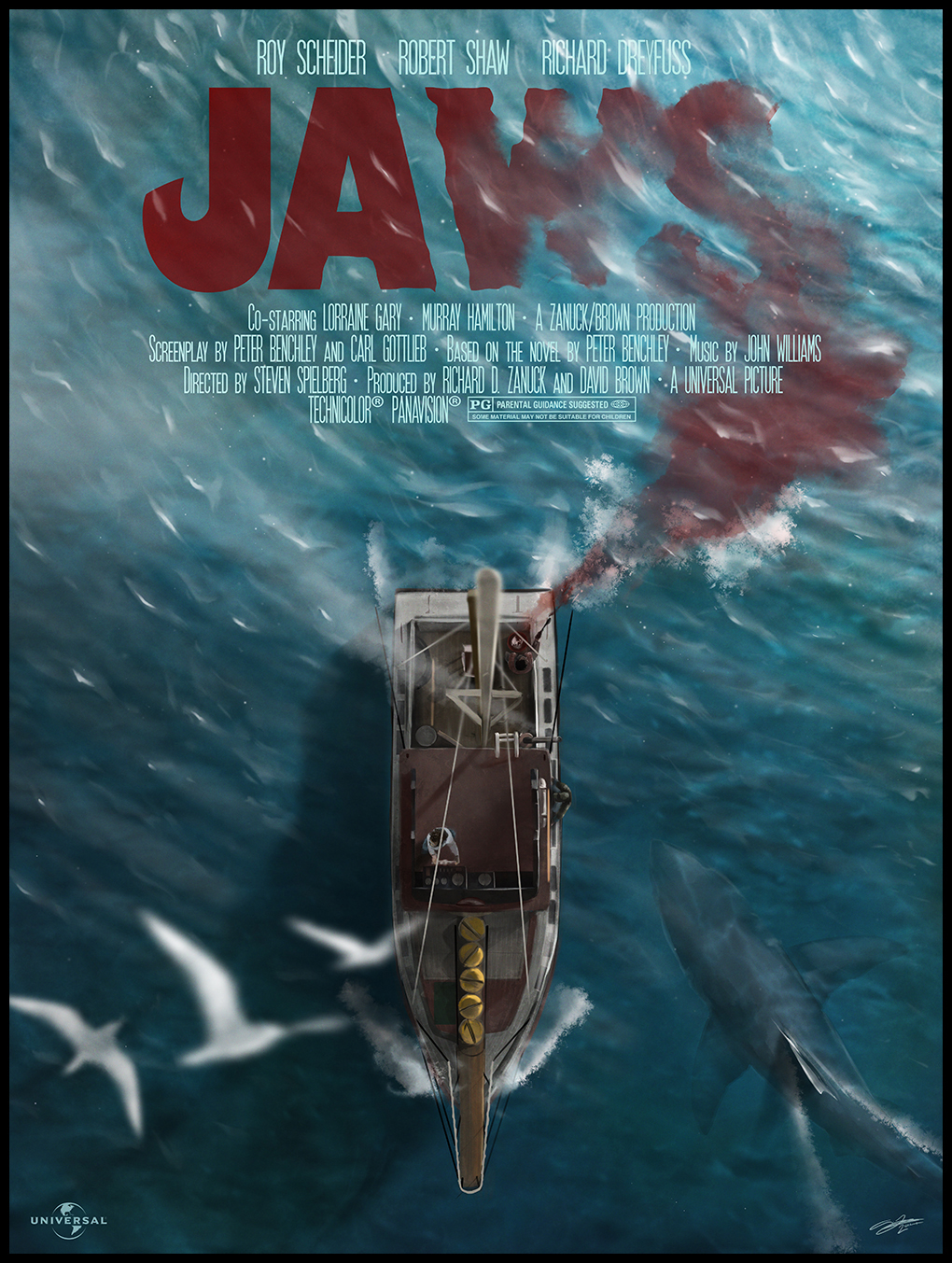
So...this scene from Jaws. When I saw it (in a theater in 1975), it produced quite a laugh from the audience. Mel Brooks once said that the difference between tragedy and comedy is "tragedy is when I cut my finger—comedy is when you fall down a man-hole and die." Now, nobody objecting to masks will probably identify themselves with the guys over-crowding the boat ("what LOSERS they are!"), but it's all a matter of perspective, ain't it?

I'm done. Life is precious and too short to waste. I don't care what people do anymore. Just don't come whinin' to me when you get in trouble.

The Set-Up: The town of Amity is on the menu for a Great White Shark during the height of tourist season. There have already been a couple shark attacks resulting in human deaths, but the town officials want to hush it up because it's bad for business and, besides, do you know anybody who's been killed? 

But Sheriff Martin Brody (Roy Scheider) has seen the results of a couple shark attacks and he wants to close the beaches over the objections of the businesses, the Chamber of Commerce and the Mayor—he was overruled and it resulted in a couple more deaths, including a child. The mother of the boy has offered a reward for the killing of the shark and that has resulted in an up-tick of the loon population—folks who want to bag a shark for $3,000.

Action.
HOOPER: Officer, officer! Wait a second, wait a second! 
HOOPER: Just --
BRODY: Hey! How many guys are you going to put aboard that boat!
FISHERMAN #1: Whatever's safe, right?
BRODY: Yeah? Well that ain't safe! 
HOOPER: Hey! Easy! Watch it, that's dynamite. 
BRODY: Hey, what you gonna...what are you doing with that? Where are you going with that?! 
FISHERMAN #2: I'm going on the boat. 
BRODY: Oh no, no, no! 
FISHERMAN # 2: Why?
BRODY: Please, please. 
BRODY: Help me get those guys out of the boat, will ya please? 
HOOPER: Sure.
BRODY: Come with me... 
HOOPER: Gentlemen, gentlemen?! 
HOOPER: The officer asked me to tell you that your overloading that boat. 
FISHERMAN #3: Ah, get outta here! 
FISHERMAN #1: You ain't going there...
FISHERMAN #1: ...what do you care?
HOOPER: O-kaay... 
FISHERMAN #4: (Hold on there.) 
HOOPER: Well then, can you tell me if there's a good restaurant or hotel on the island? 
FISHERMAN #3: Yeah ya walk straight ahead!
(they all laugh) 
HOOPER: Ha-Ha-Huh...they're all gonna die.

Jaws

Words by Peter Benchley and Carl Gottlieb


Pictures by Bill Butler and Steven Spielberg


Jaws is available on DVD and Blu-Ray from Universal Home Entertainment.