or
"Cheetahs Never Prosper" (Despite Magical Thinking)
In 1985, DC Comics published a "Superman Annual" (#11), that contained a "Superman" story that was much beloved of comic fans called "For the Man Who Has Everything." It was commissioned by Editor Julius Schwartz and the rumor is, he merely wanted the artist Dave Gibbons to draw it and Gibbons had the choice of who to write it.
He chose Alan Moore, who had been writing comics in Britain in 1984 and had achieved acclaim for his work cross-pollinating the "Swamp Thing" comic series and allowing its fortunes to bloom. Moore would go on to write "Watchmen" for DC Comics and "Batman: The Killing Joke" (two of the most critically acclaimed stories in the DC history) when he was allowed to play with "all the toys" in the DC Multi-verse cast-list, but for this "Superman" one-off he wrote a melancholy and savage story of Superman on his birthday being "gifted" by a villain with a present ("The Black Mercy," a telepathic, parasitic alien plant*) that granted whomever it latched on to their heart's desire, lulling them into defenselessness—in Kal-el's case, it is a mental fantasy that Krypton never exploded and that he has grown up on his home planet with his original parents—only to find that, in his fantasies, an un-cracked Krypton is not all it is cracked up to be.
In 1985, DC Comics published a "Superman Annual" (#11), that contained a "Superman" story that was much beloved of comic fans called "For the Man Who Has Everything." It was commissioned by Editor Julius Schwartz and the rumor is, he merely wanted the artist Dave Gibbons to draw it and Gibbons had the choice of who to write it.
He chose Alan Moore, who had been writing comics in Britain in 1984 and had achieved acclaim for his work cross-pollinating the "Swamp Thing" comic series and allowing its fortunes to bloom. Moore would go on to write "Watchmen" for DC Comics and "Batman: The Killing Joke" (two of the most critically acclaimed stories in the DC history) when he was allowed to play with "all the toys" in the DC Multi-verse cast-list, but for this "Superman" one-off he wrote a melancholy and savage story of Superman on his birthday being "gifted" by a villain with a present ("The Black Mercy," a telepathic, parasitic alien plant*) that granted whomever it latched on to their heart's desire, lulling them into defenselessness—in Kal-el's case, it is a mental fantasy that Krypton never exploded and that he has grown up on his home planet with his original parents—only to find that, in his fantasies, an un-cracked Krypton is not all it is cracked up to be.

Director Patty Jenkins, who directed the first sublime WW movie, and scenarists Geoff Johns and David Callaham—he had a hand in writing The Expendables, the latest Godzilla, and Zombieland: Double Tap (which does not inspire confidence)—have "homaged" that story for Wonder Woman 1984, which finds Princess Diana of Themyscira (Gal Gadot, MVP) working for the Smithsonian in Washington, D.C. as Diana Prince and surreptitiously super-heroing as the Amazin' Amazon—we've been told in Batman v. Superman that she's one of the "secret meta-humans" operating under the radar and hasn't been seen since WWI. Not that she hasn't been busy—there are moments (but they are moments) when she takes pains to make sure there's no record of her being there, but they are weak attempts...and one jewelry-heist bust-up is so out-in-the-open that the only way people wouldn't remember it would be unless there was a post-robbery visit by the Men in Black.

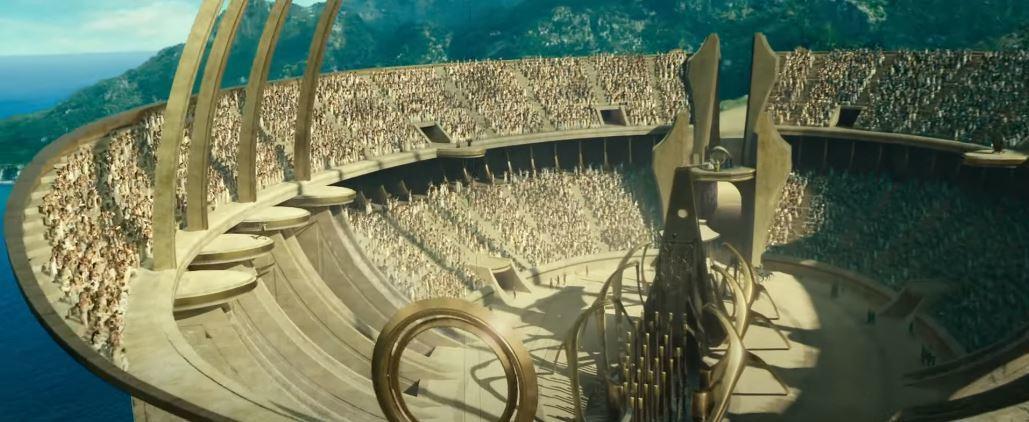
The Themyscira scenes from both Wonder Woman and Justice League are fondly remembered, but here it's limited to a Themysciran version of "The Titan Games" and Quidditch rolled into one. The ten year-old Princess Diana (Lilly Aspell, also back) is competing against women twice her age and when she gets in trouble, takes a short-cut and is prevented from completing the course by Antiope (Robin Wright), much to her consternation: "You took the short path. That is the truth...The true hero is not born from lies, but patience, diligence and the courage to face the truth."
Okay, then, roll credits.


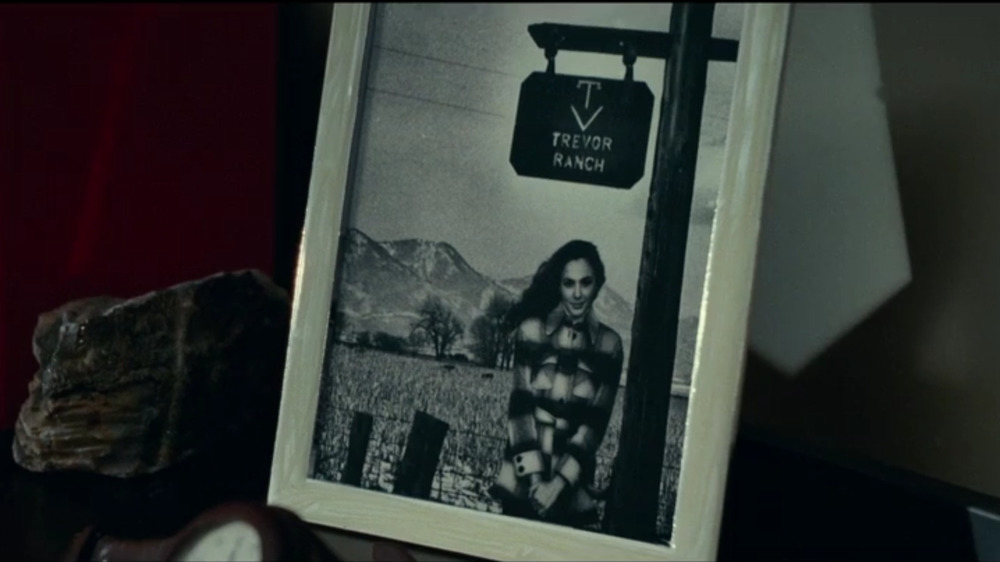
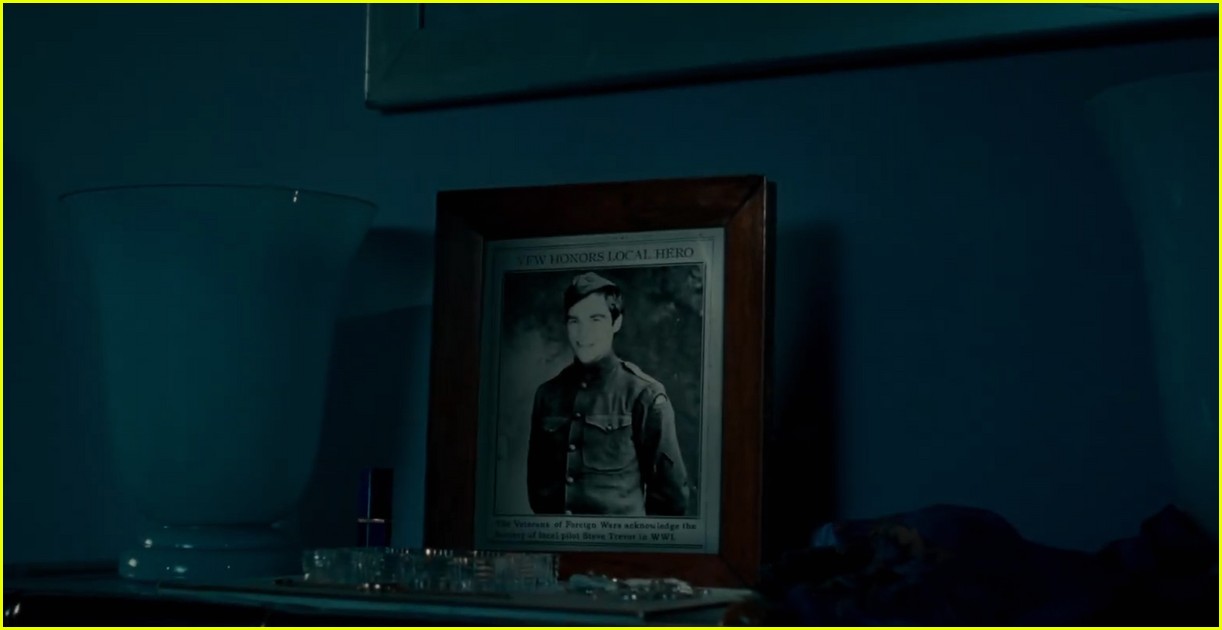
We're given a glimpse of her post-World War I life, literally snap-shots—she lives at the Watergate hotel and scattered throughout are photos: Diana at the double wedding of WWI team-mates Charlie and Sameer, Diana on a New York ferry with an aged Etta Candy, Diana with The Chief comforting a woman at a liberated concentration camp...Diana in plaid flannel visiting Trevor Ranch. Pictures of Steve (Chris Pine). Many pictures of Steve (Chris Pine). That answers some questions—and shows that Diana wasn't just ignoring the ravages of WWII—and instills a certain nostalgic factor.
 That mall-robbery sets up the story: among the antiquities housed in the backroom of the jewelry shop is something called "the Dreamstone"—there's one in the comics but it has a different history involving stories from "Justice League of America" and Neil Gaiman's "Sandman"—and everything gets carted away to the Smithsonian for study by their new hire Barbara Minerva (Kristen Wiig), a multi-doctorate but whose low self-esteem makes her nearly invisible to her co-workers...unless they see her as a door-mat.


Except Diana. The two have a mutual interest in the Dreamstone, but neither realize its importance: It's base has a Latin phrase carved into it—"Place upon the object held but one great wish"—and it gives the bearer it's heart's specific desire...but at a cost not known to the stone-wisher. Diana wishes that Steve Trevor was back. Barbara wants to be more like Diana.


Now, granted, what will stick in people's minds is gonna be that Max Lord is supposed to be Donald Trump in disguise. That will be the people who are "woke" enough to Trump's S.O.P. or those in the Trump Camp who are feeling like Hollywood is picking on Their Savior. Well, Citizen Kane is all about William Randolph Hearst...except it isn't. Similarities, sure, but differences, too. The 1980's has gone down in History as the "Greed" Decade, so any entrepreneur, empowerment coach (Tony Robbins, hello), or televangelist would fit the bill. Jenkins has gone on record that Gordon Gekko—of Wall Street (1987) fame—is a model, but George W. Bush could be, as well, given the oil tactics. Besides, this Maxwell Lord has self-image problems and wants to look like a "winner" to his son. Trump doesn't care what others think about him. All he cares about is maintaining his own self-image. Maxwell Lord is just like his comics character, a snake-oil salesman running a ponzi scheme.
But, he is successful enough with this stone that pretty soon he's a billionaire, has all sorts of mineral rights in the Middle East, has the U.S. and Russia hemorrhaging nuclear missiles and firing at each other, and—via an orbiting communication system—has the entire world making wishes that are destroying the world in an apocalypse of entitlement and self-absorption.


If they'd limited it to Barbara Minerva, whose wish turns her into a being as strong as Diana (by decreasing Diana's power), and then into the sub-human Cheetah, then we could have had The Big Lesson, but not the confusion, or the lame "Kumbayah" at the end of it

But, also, the whole movie is about Magical Thinking...even in regards the film itself. If you build it, the audience will come. They may come, but they may not come to buy. There's another significant Latin phrase, not written on the base of any stone that says "Caveat Emptor." And the movie is full of Magical Thinking: Diana and Steve steal a jet-plane from the Smithsonian to go to the Mid-East—the jet is fueled up? Enough to fly that far? And Steve can fly it when the last thing he flew was bi-planes? Diana suddenly can turn things invisible (thus, bringing into the movie WW's Invisible Jet, which she shouldn't need as she's supposed to be able to fly)? Steve's rather vague notion of flying teaches her to do that? I'm all for ideology and visualization, and you can even have "The Secret," but I've seen too many Roadrunner cartoons to teach me that wishing doesn't make it so.

It is such a disappointment. But, then, second films in a series tend to lag. Oh, it has its moments. Gadot, of course, is splendid and her scenes with Pine are excellently played, especially when their roles are reversed from the first film and Diana have to show him the ropes of life in 1984 (I just wish they hadn't been written), and both Kristen Wiig and Pedro Pascal do terrific work selling their material, as weak and ill-considered as it is. And the movie LOOKS terrific, even if Jenkins seems to have abandoned her wide-screen sensibilities to make this movie look like it was shot to avoid being panned-and-scanned on a square TV (the way directors compensated in the old days before HD TV's). Definitely a big step down.


Stick around for the mid-credits scene for a cameo—not a preview—that will, however, make you smile...another nod to nostalgia. I just wish they hadn't made me nostalgic for the last movie. (See that about wishes?...doesn't work.)

"We can do better..." Yes, you can.


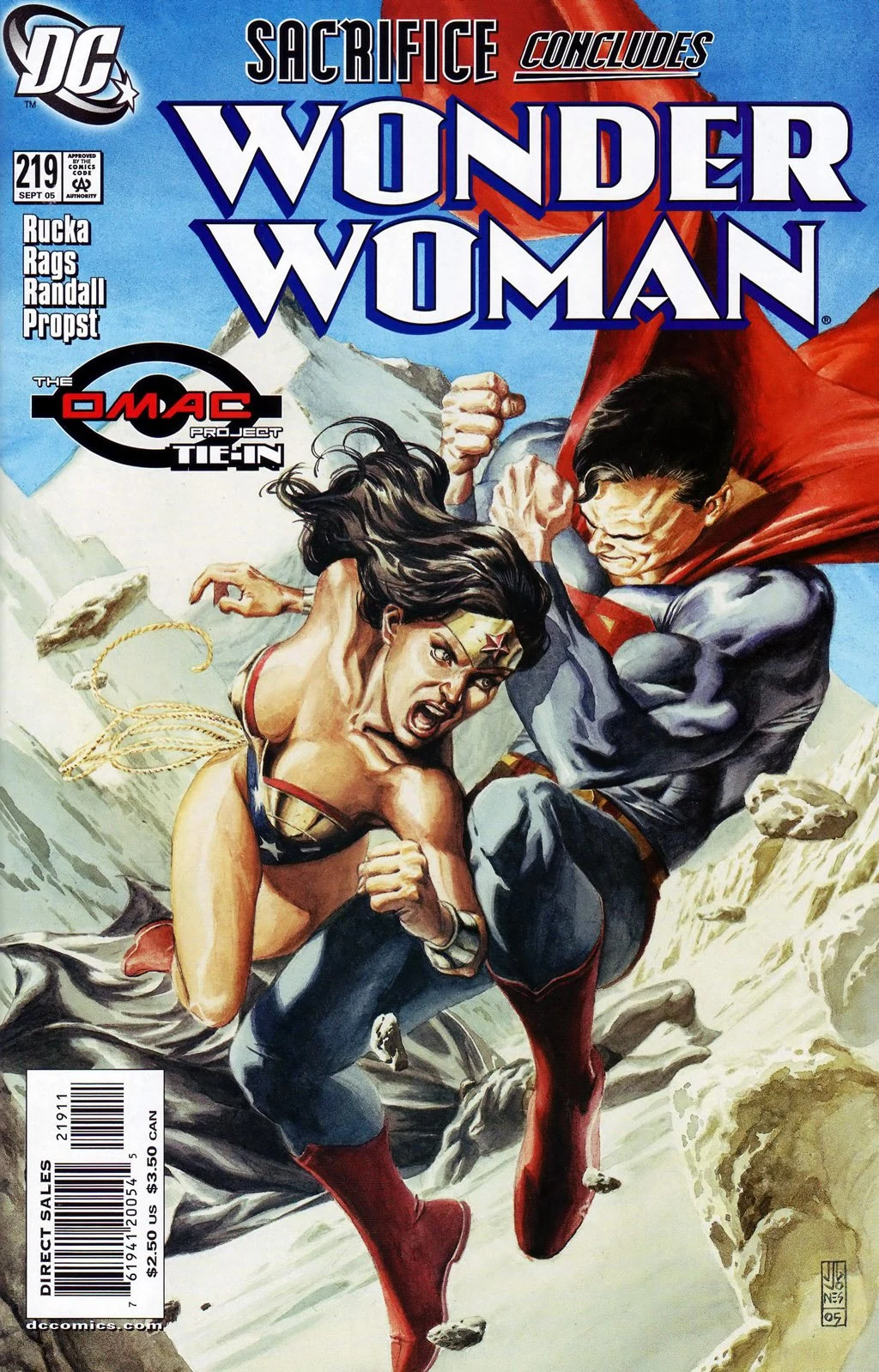
** The choice of Maxwell Lord as the villain of the piece is interesting for his history in the DCU. In the DC comics, Max was an entrepreneur/con-man who brought together an incarnation of the Justice League called Justice League International, which did not operate on U.S. soil (it included Wonder Woman in its original line-up, but due to her being used for her own book and to avoid any character dis-connect, she was never seen in the JLI). In one of the big "event" storylines for their publishing year—called "The Omac Project"—Lord uses an ability to telepathically control others to make the DC super-heroes look bad in the eyes of the press and public (in Wonder Woman Issue 219). When he takes over Superman, Wonder Woman narrowly defeats S-man by knocking him out, and Lord tells her, when bound by her lasso, that once Superman comes to, he'll just control him again. WW asks him how she can prevent that and Lord says, simply, "Kill me." So, she snaps his neck. *Krk!* Not something the comics-Superman or Batman would do, but then, WW is an Amazon warrior. It was still controversial among fan-boys. Lord's neck is saved, in many ways, in WW 1984.
*** I LIKE Chris Pine. He's a terrific actor. Plus, he and Gadot riff off of each other like nobody's business, and they do so in this movie. They're terrific together. But, he wasn't necessary. And there were better ideas that could be explored for that wish trope. As good as he is—as good as THEY are—I hope they don't bring Steve Trevor back in the future. As they used to say on Themyscira, a woman needs a man like a fish needs a bicycle and Wonder Woman doesn't need a bicycle, either. Or an invisible jet. The woman can fly on her own.