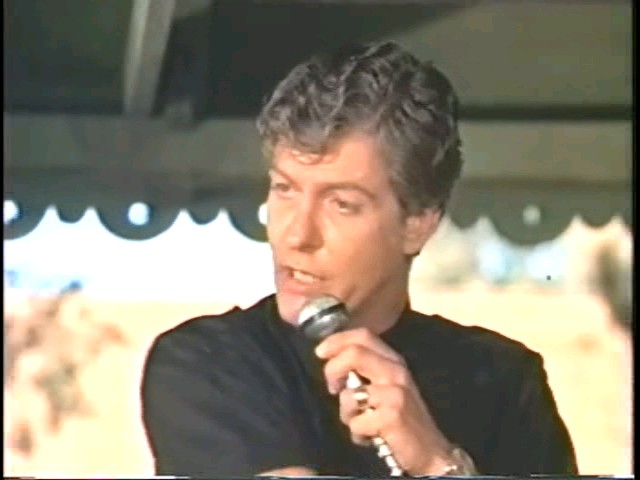
Cold Turkey (Norman Lear, 1971) One of the first movies I saw under my own power and financial resources* at the late, lamented John Danz Theatre (Rest in the "116church," for God's sake!—I wonder what they did with the dolphin sculpture in the lobby?). It's one of the clutch of semi-satirical social comedies that wasn't radical enough to offend the oldsters or attract the kids, and took on its subject in a style reminiscent of a soft-core It's a Mad, Mad, Mad, Mad World.** It also gave TV-sit-com writers a chance to stretch their writing arms with less restrictive material and work during the summer hiatus.
In a PR move, an exec (Bob Newhart) at the Valiant Tobacco Company pushes through a 25 million (!!) dollar incentive to any American city that can quit smoking for a month, in a deal reminiscent of the Nobel Peace Prize. For the depressed community of Eagle Rock, Iowa, that's just lost a military base and is struggling through tough economic times, it's a chance to pull itself up by its filter-tips. And so with the activism of Reverend Clayton Brooks (Dick Van Dyke), the entire town pledges to give up smoking...or die trying.

Low-brow Hi-jinks ensue. The national press (all in the dry forms of Bob and Ray) begin focusing on Eagle Rock, as the nervous population goes through withdrawal and panic attacks and the Valiant executive, fearing that they actually may have to pay up, travels to Iowa to try to sabotage their efforts. 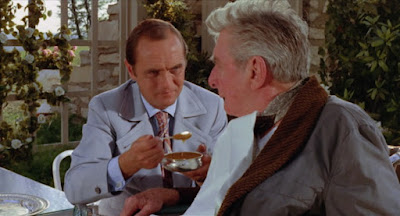 There's a lot of soft-ball satire going on from director Norman Lear (who'd go on to create "All in the Family" and a long string of shows that would require a large book-case to collect all the box-sets), and some low comedy as the Eagle Rockians begin to crack: the mayor's wife (Jean Stapleton) eats pickles (although she calls them "gherkins" ...because it's funnier) to fight the cravings, the town-surgeon (Barnard Hughes) who depended on a relaxing smoke to calm his nerves before surgery is losing his patients, the Reverend turns to the evils of intercourse, of course, (should we call that "taking communion?") and, in the most common sight-gag in the film, any stray animal is kicked and sent flying through the air. It's a sure laugh, but some of the kicks are just brutal. ***


It's a nail-biter for audiences and towns-people alike as the month-clock counts down, but rest assured it ends quite ironically, with some nice cutting jabs at then-President Richard Nixon.
It also boasted the first music score by Randy Newman (years and years before The Natural and Pixar) who wrote a pleasant soundtrack and a positively mordant theme song "He gives us all His love," that left audiences walking out of the theater, perplexed. 

* Come to think of it, the first movie I saw without parent, guardian or hand-out was probably On Her Majesty's Secret Service, the not-so-lucky double-o-seventh in the "official" James Bond series and the first not to star Sean Connery. The vacancy was temporarily filled—like wood-glue—with the unfortunate George Lazenby. They say that the first "007" actor you see becomes your favorite. I was fortunate enough to start with Lazenby and remain objective!
** Cold Turkey was on a double bill with a 1969 comedy called Viva Max directed by Dick Van Dyke Show director Jerry Paris (he also played the Petries' next-door neighbor...Jerry). It starred Peter Ustinov as a Mexican General determined to re-take the Alamo, despite U.S. resistance. Hilarity ensues. It was based on a novel by Jim Lehrer—yes, the anchorman of PBS's "The NewsHour," and frequent presidential debate moderator.
***To this day, I find the fast yelp of a dog or a spitting squeal from a cat a sure laugh-getter whenever I do sound design work—PETA be damned.
2023 Update: Yeah, I don't do that anymore. That was a past life. Things are a lot quieter now.